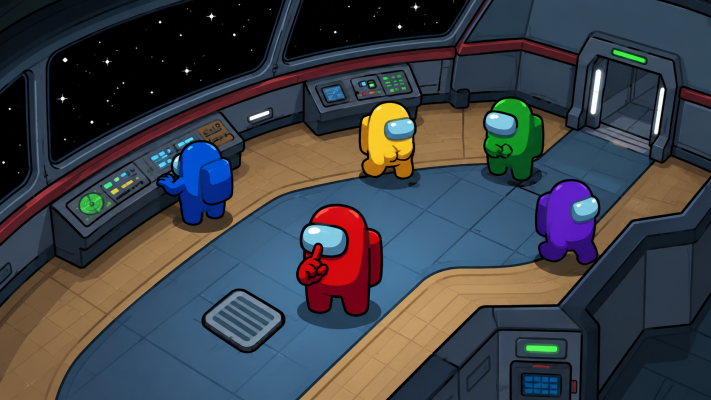
Among Us looks simple at first. You walk around a spaceship, finish tasks, report bodies, vote suspicious players, and try not to look guilty while doing completely normal things like standing silently near a vent. But the longer you play, the clearer it becomes: Among Us is not only about tasks or sabotages. It is a social strategy game built around timing, trust, observation, and very creative lying.
This course is made for players who want to move beyond casual guessing. Maybe you usually play as a crewmate and vote based on vibes. Maybe you become impostor and immediately forget how doors work. Maybe you stay quiet in meetings because everyone else talks faster. That is normal. Among Us can feel chaotic because every round changes depending on who is playing, how they communicate, and how quickly suspicion spreads.
The goal here is simple: help you become a smarter crewmate and a more convincing impostor. You do not need to become dramatic, loud, or overly clever. In fact, trying too hard can make you look suspicious. Good Among Us strategy is often calm, consistent, and just confusing enough to survive one more meeting.
Section 1: How to Play Better as a Crewmate
As a crewmate, your job is not only to finish tasks. Tasks matter, but information matters just as much. Every round gives you small clues: who walked where, who left a room, who stayed silent, who reported a body, who accused too quickly, and who suddenly started explaining their route like they were giving a courtroom statement.
The first habit of a strong crewmate is awareness. Do not run through the map like you are only checking boxes. Notice who is near you. Remember which players were together. Watch movement patterns. If someone enters a room and a body is found nearby seconds later, that matters. If someone claims they were doing a task in a place you know they never visited, that also matters.
- Track player locations. You do not need to remember everything, but remember who you saw recently.
- Finish tasks efficiently. Task progress can win games if the crew stays focused.
- Move with purpose. Wandering randomly makes you less useful and more suspicious.
- Use groups carefully. Staying near others can protect you, but huge groups can slow tasks.
- Do not accuse without a reason. Weak accusations can help impostors create confusion.
A good crewmate does not need to be the loudest person in the meeting. Sometimes the strongest player is the one who says one clear thing at the right moment: where they were, who they saw, and why one detail does not match. Calm information is more useful than panic with a microphone.
Section 2: Reading Suspicion Without Overreacting
Suspicion in Among Us is tricky because innocent players often look guilty by accident. Someone may run away from a body without seeing it. Someone may hesitate because they are new. Someone may give a messy explanation because they forgot the room name. That does not automatically make them impostor. If every awkward player were guilty, half the lobby would be criminals by personality alone.
Instead of reacting to one strange action, look for patterns. Did the player avoid tasks repeatedly? Did they appear near multiple bodies? Did they change their story after hearing other players talk? Did they push a vote too aggressively without evidence? Did they stay silent until suspicion moved away from them? One clue is interesting. Several clues together become useful.
- Compare stories. If two players claim different things about the same moment, ask follow-up questions.
- Watch voting behavior. Impostors may jump onto easy votes or avoid voting when it matters.
- Notice timing. Fast accusations can be real, but they can also be a distraction.
- Separate mistakes from lies. New players forget details; impostors often adjust details.
- Do not tunnel vision. If you focus on one suspect too hard, you may miss the real impostor.
The best crewmates are careful with certainty. Saying “I know it is them” feels powerful, but if you are wrong, the crew loses trust and the impostor gets free entertainment. Use softer, smarter language when needed: “I am not sure, but their route does not match,” or “I want to hear why they were near that area.” That keeps the discussion open while still applying pressure.
Section 3: How to Become a Smarter Impostor
Playing impostor is not about eliminating players as fast as possible. That can work sometimes, but smart impostor play is about control. You control timing, movement, suspicion, sabotage, and conversation. Your goal is not only to avoid being caught. Your goal is to make the crew uncertain long enough for you to win.
The biggest beginner impostor mistake is acting too different from your crewmate style. If you are usually active and suddenly become silent, people notice. If you usually talk calmly and suddenly start defending yourself like a nervous politician, people notice. If you usually do tasks quickly but now wander around pretending to understand wires, people definitely notice.
- Act like your normal crewmate self. Consistency is your best disguise.
- Create believable routes. Know where you came from and where you are going.
- Use sabotages to split attention. A good sabotage creates movement and confusion.
- Do not chase too obviously. Following one player for too long looks suspicious.
- Choose eliminations carefully. A safe elimination is better than a dramatic risky one.
A smart impostor also understands when not to act. Sometimes the crew is already confused. Sometimes two innocent players are accusing each other. Sometimes your best move is to stay quiet and let the meeting destroy itself. Among Us is one of the few games where doing nothing can feel like a professional strategy.
Section 4: Winning Meetings With Better Communication
Meetings are where many games are won or lost. A strong player does not only know what happened; they know how to explain it clearly. Long, messy speeches can sound suspicious even when you are innocent. Short, useful information is often more convincing. Say where you were, what you were doing, who you saw, and what timing matters.
If you are crewmate, avoid emotional voting. Ask questions. Let people explain. Compare routes. If you are impostor, do not over-defend. A calm explanation sounds more natural than a desperate one. The more dramatic your defense becomes, the more people may wonder why you are sweating through a space helmet.
- Start with location. “I was in Electrical” is clearer than “I was doing stuff.”
- Add timing. Say whether you saw someone before or after a sabotage or report.
- Name witnesses. If someone can confirm you, mention them.
- Ask direct questions. “Where did you go after Admin?” is better than random accusations.
- Do not talk over everyone. Chaos helps impostors more than crewmates.
For impostors, meetings are about balance. You want to seem helpful, but not too eager. You want to question others, but not push so hard that it looks planned. A good impostor plants doubt, supports believable suspicion, and avoids becoming the center of attention unless necessary.
Section 5: Map Control, Tasks, Sabotage, and Final-Round Strategy
Among Us strategy changes depending on the stage of the round. Early game is about gathering information and building trust. Middle game is about connecting clues. Late game is about precision because one wrong vote can end everything. Both crewmates and impostors should think differently as the player count drops.
Crewmates should use tasks and map knowledge to narrow possibilities. If several players are confirmed or strongly trusted, protect that information. Stay aware of emergency meetings, sabotage timers, and who is still alive. Impostors should use sabotages to break groups, force movement, delay meetings, or create pressure before the crew can finish tasks.
- For crewmates: finish tasks, share useful locations, and avoid splitting dangerously late in the game.
- For impostors: use sabotage to control where players move.
- For crewmates: be careful with final votes because one mistake can decide the match.
- For impostors: create doubt between two innocent players when possible.
- For everyone: remember that timing often matters more than volume.
Final rounds require calm thinking. If you are crewmate, review the entire game, not just the last body. Who has been consistent? Who avoided suspicion too perfectly? Who gained from the last vote? If you are impostor, do not suddenly change your behavior. Stay steady. The most believable impostor is often the one who looks like they are also trying to solve the mystery.
Conclusion
Among Us becomes much more interesting when you stop treating it as pure guessing. As a crewmate, observe movement, compare stories, finish tasks, and share information clearly. As an impostor, stay consistent, choose smart timing, use sabotage with purpose, and let confusion work for you when the crew creates it on their own.
The best players are not always the loudest. They are the ones who notice small details, stay calm in meetings, and understand how trust changes during a round. Whether you are trying to survive as a casual crewmate or become a smarter impostor, the real skill is reading people without losing control of your own story.
Play patiently, speak clearly, and remember: in Among Us, looking innocent is useful, but making everyone else slightly unsure is sometimes even better.






Leave a comment
Your comment is awaiting moderation. We save your draft here
0 Comments