Review
Poppy Playtime made its strongest impression on me before the first major chase began. I was standing inside the reception area of Play...
Stepping into Mystery: A Comprehensive Exploration of Poppy Playtime's Immersive World
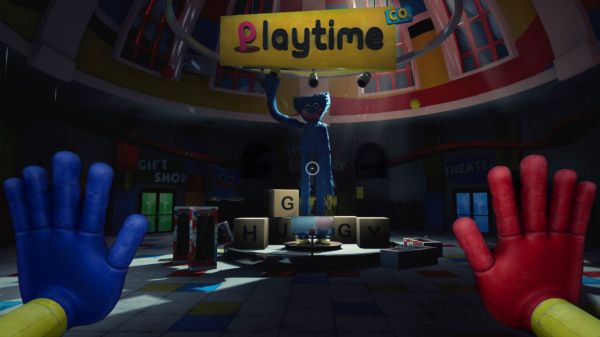
Poppy Playtime made its strongest impression on me before the first major chase began. I was standing inside the reception area of Playtime Co., surrounded by faded colors, smiling character posters, abandoned desks, and cheerful corporate messages that no longer felt cheerful. Nothing was moving, yet the building already seemed hostile. A toy factory should have been noisy, bright, and crowded. This one had been left in the middle of an ordinary working day, and the silence made every oversized display feel suspicious.
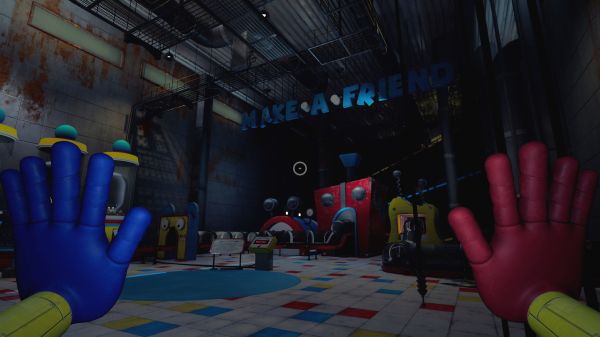
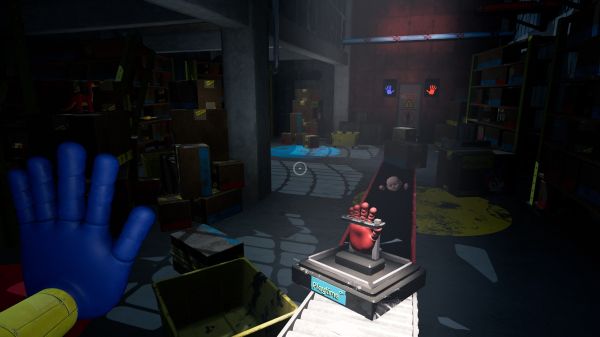
The game uses a familiar horror idea: take something associated with childhood comfort and place it inside an environment where it no longer belongs. Poppy Playtime succeeds because it does not rely only on ugly versions of cute toys. The factory itself creates the anxiety. Conveyor belts disappear into dark production rooms, employee recordings reveal carefully controlled fragments of the past, and colorful play areas sit beside industrial machinery that was never designed to feel safe.
Across five chapters, my journey through Playtime Co. became much larger and stranger than the compact first episode suggested. New areas introduced different puzzle systems, new GrabPack abilities, increasingly complicated environments, and creatures with their own methods of controlling a scene. Some chapters maintained suspense better than others, and the growing storyline occasionally became overloaded with hidden terminology. Even so, the central act of entering another sealed department and wondering what had survived inside remained effective.
Why Playtime Co. Works Better Than a Generic Haunted Building
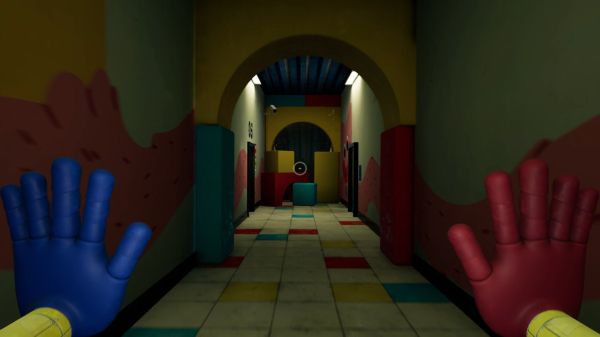
The factory is not simply a collection of dark corridors. It was designed to sell happiness, which means almost every threatening location still carries traces of forced optimism. Posters instruct employees to smile. Recorded voices speak with artificial enthusiasm. Mascots appear on walls, boxes, televisions, warning labels, and machinery. The company tried to place a friendly face on every part of production, and those faces become uncomfortable after I understand what happened behind them.
I enjoyed how the series gradually changed the scale of the environment. Early spaces feel like believable factory departments with reception desks, testing rooms, storage areas, and assembly lines. Later chapters reveal educational zones, underground facilities, institutional rooms, security systems, and sections built around increasingly disturbing company projects.
This expansion prevents every chapter from looking identical. The basic visual identity remains recognizable, but each major area has its own color palette, architecture, and type of unease. One chapter may emphasize bright game rooms and machinery, while another depends on darkness, narrow passages, or environments connected with children who once lived beneath the factory.
The larger scale creates one problem: navigation can become uneven. Some later areas are visually impressive but less readable than the first chapter’s compact layout. I occasionally wandered through similar-looking corridors, unsure whether I had missed an interactive object or simply approached a puzzle from the wrong direction.
The GrabPack Changed How I Read Every Room
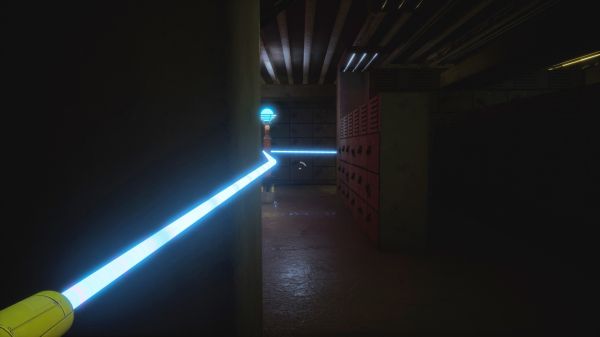
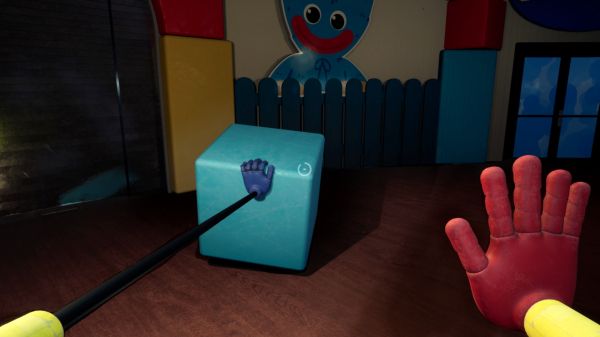
The GrabPack is the mechanic that gives Poppy Playtime its own physical identity. Instead of interacting with everything at arm’s length, I wear a backpack connected to extendable hands. I can reach distant switches, pull objects, conduct electricity, swing across gaps, activate machinery, and interact with several points in a room without standing beside them.
At first, using the hands felt like operating an unusual industrial tool. I learned to fire one toward a handle, maintain the connection, move around obstacles, and stretch the cable toward another device. The best puzzles made me think about space rather than merely searching for a code.
Electrical challenges were especially satisfying when the route was visible but required me to position myself carefully. I would connect one hand to a power source, circle around columns, avoid breaking the cable, and reach the final receptor from the correct angle. These moments turned an ordinary room into a physical puzzle board.
Later abilities expanded the GrabPack and prevented it from remaining one simple two-handed gadget. Different functions allowed the designers to create more elaborate sequences, although the growing number of colors and abilities occasionally made the equipment feel more like a keyring than a believable factory tool.
The controls were usually responsive during ordinary puzzle solving. Under pressure, small inconsistencies became more noticeable. A hand could connect to the wrong surface, an object might fail to move as expected, or a cable could catch around geometry. These moments were minor while exploring but frustrating during timed sequences where one missed interaction forced me to repeat an entire section.
The Puzzles Were Best When the Machinery Told a Story
Poppy Playtime contains switches, memory tests, power routes, production lines, environmental observation, object transport, and multi-stage machine activation. The puzzle design is strongest when each task feels connected with how Playtime Co. once operated.
One early production sequence taught me more about the factory than a long document could have. I activated machines, followed materials through several steps, and watched a product move toward completion. The process was playful on the surface, but it also made me imagine employees performing the same routine every day before the factory became empty.
I preferred these industrial puzzles to abstract challenges that existed mainly to delay progress. Operating a machine, restoring power, or navigating a production system gave me a reason to study the environment. A random sequence of symbols felt less meaningful unless it revealed something about the company or the children connected with it.
Difficulty varied significantly. Some solutions were immediately visible, while others depended on noticing a small cable route, collectible item, or interaction point. The game occasionally confused difficulty with unclear presentation. I spent more time than necessary in a few rooms because the required object blended into the background.
Hints were limited, which preserved exploration but sometimes turned tension into slow inspection. Horror loses energy when I stop fearing the environment and begin rubbing both GrabPack hands against every wall in search of the one surface the game accepts.
Huggy Wuggy Was More Effective Before He Started Running
Huggy Wuggy remains the most recognizable creature in Poppy Playtime because his design communicates the entire concept immediately. He is tall, brightly colored, soft-looking from a distance, and completely wrong in proportion. His smile is wide enough to appear friendly on a package but deeply unnatural when attached to a moving body.
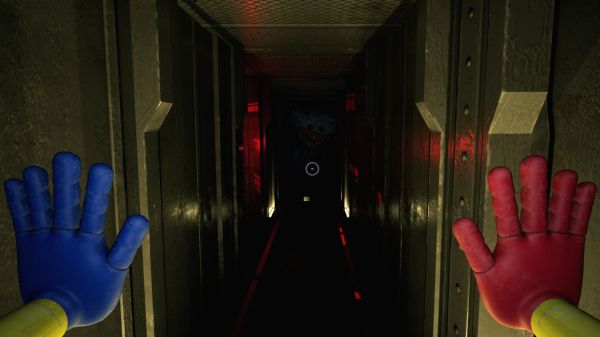
My favorite Huggy moment was not a direct attack. It was the realization that he had disappeared from the display where I first saw him. The empty space created more anxiety than a loud appearance could have produced. From that point onward, every dark doorway became a possible hiding place.
The game understands that visibility changes fear. Huggy is disturbing when I see part of him at the edge of a corridor, a hand moving through a vent, or a silhouette crossing somewhere I cannot reach. The more clearly a creature is shown, the more the design must carry the scene without mystery.
His major pursuit remains one of the most memorable sequences because the route is narrow, the creature is fast, and turning around is a terrible idea. The chase is mechanically simple, but its structure creates panic through confined movement and sudden changes in direction.
Repeating it reduced the impact. Once I learned the correct route, the encounter became a memorization exercise. This pattern appears throughout the series: a chase can be terrifying on the first attempt and strangely mechanical after one failure.
Mommy Long Legs Turned the Factory Into a Cruel Game Show
Mommy Long Legs brought a different type of threat. Huggy mostly depended on silent presence and physical pursuit. Mommy controlled the environment, spoke directly to me, and transformed puzzles into performances where the rules could change whenever she became dissatisfied.
Her elastic movement gave the developers more freedom. She could appear above doors, stretch through machinery, cross large spaces quickly, and occupy areas that would not support a normal humanoid enemy. I rarely felt certain that distance offered safety.
The game-station structure gave Chapter 2 a clearer rhythm than the first episode. Each challenge introduced a separate mechanic and moved me through a recognizable sequence of events. I enjoyed the variety, although some minigames lasted longer than their central idea justified.
Mommy’s dialogue helped maintain pressure between encounters. She was theatrical, controlling, and emotionally unstable without depending entirely on sudden appearances. Her personality made the chapter feel more directed, almost as though I were trapped inside a children’s program hosted by someone who had forgotten where entertainment ended.
The final sections became more chaotic, and a few movement sequences exposed the limits of the controls. Grappling and swinging could feel exciting when the physics cooperated. When they did not, repeating a sequence weakened the atmosphere quickly.
Playcare Was Where the Series Became Genuinely Oppressive
Chapter 3 changed my relationship with the factory by moving into Playcare. The colorful industrial setting gave way to a place built for children but shaped by institutional control. Dormitories, educational spaces, maintenance tunnels, and abandoned play areas created a heavier mood than the earlier factory floors.
This chapter relied more on sustained atmosphere. Darkness became a mechanical concern rather than a decorative choice, and the environment often forced me to prepare before entering unsafe spaces. I felt less like a visitor solving factory problems and more like someone moving through the remains of a system that had harmed everyone inside it.
CatNap was effective because the character was not constantly present. The possibility of his arrival shaped the environment, while his connection with sleep, gas, and altered perception gave the chapter room for stranger visual sequences.
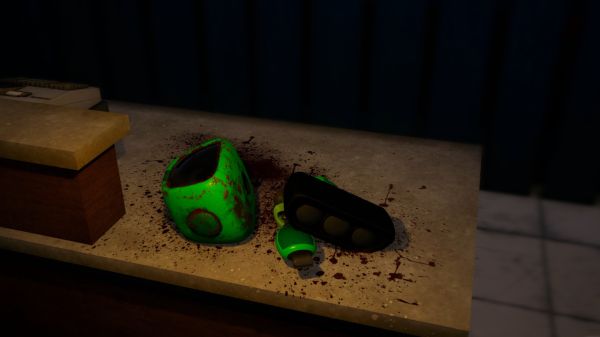
The gas-mask mechanic added practical tension, although inventory-like actions during dangerous moments could feel awkward. Horror controls need to become instinctive. Any moment where I stopped to remember a button weakened my emotional connection with the scene.
Playcare also delivered a large amount of story information. I appreciated receiving clearer answers, but the chapter sometimes moved from environmental storytelling into long explanations. Poppy Playtime is most convincing when I discover the company’s history through spaces, recordings, and consequences rather than hearing every connection described directly.
The Later Chapters Made the Story Larger Than the Monsters
By Chapters 4 and 5, the game was no longer only about escaping individual mascot creatures. The Prototype, Playtime Co.’s experiments, the factory’s internal hierarchy, and the consequences of the company’s work became the central structure holding the chapters together.
I liked that the story developed beyond a repeated formula of entering an area, meeting one mascot, and surviving a final pursuit. New alliances, security systems, damaged sections of the facility, and conflicting character motives gave the series more narrative movement.
The disadvantage was density. Names, experiment numbers, recordings, hidden documents, character histories, and community theories had accumulated across several years. A player who moved through the chapters without carefully collecting lore could understand the immediate objective but miss important emotional context.
I occasionally felt that the series was speaking more directly to dedicated theory audiences than to someone experiencing the story inside the game alone. Mystery is useful, but a central plot should not depend too heavily on outside explanation videos.
Chapter 5 provided meaningful movement toward the heart of the factory and the Prototype’s domain. It also demonstrated how far the project had grown from the compact first release. The experience was larger, more cinematic, and mechanically broader, though not always as focused as the early chapters.
Poppy Was Never the Simple Doll I Expected
Poppy’s design is intentionally traditional compared with the other creatures. She resembles an antique doll, with carefully arranged hair, a delicate dress, and a voice that can sound reassuring even when the situation suggests that reassurance would be foolish.
I never completely trusted her. The game repeatedly placed me in situations where I needed her knowledge while withholding enough information to question her motives. That tension gave her more value than a conventional guide character.
Her role changed across the chapters as the story revealed more about the factory and the surviving experiments. She could appear vulnerable in one scene and unusually determined in another. I found this inconsistency interesting when it felt intentional, though certain decisions required more explanation than the game initially provided.
Poppy Playtime works because its creatures are not interchangeable. Poppy, Huggy, Mommy, CatNap, and the later experiments each occupy a different emotional role. Some are predators, some manipulate, some communicate, and some exist somewhere between victim and threat.
Sound Often Warned Me Before the Screen Did
The audio design carried much of the suspense. Machinery hummed behind walls, distant metal shifted, ventilation systems created low background pressure, and character sounds travelled through spaces before I could identify their source.
I learned to stop moving when the environment changed. A new sound might indicate an active mechanism, a nearby creature, or a scripted event about to begin. Headphones made these details far more effective.
The game also uses children’s music, instructional recordings, and friendly corporate voices. These sounds become uncomfortable because they continue performing happiness inside places where happiness clearly ended long ago.
Chase music is direct and aggressive, which works during the first attempt. After repeated failures, the same musical escalation can become tiring. The emotional rhythm depends heavily on surprise, and repetition turns sound cues into practical instructions.
Voice performances generally support the exaggerated world. Characters sound theatrical because they were created as mascots, hosts, products, or company representatives. The style would feel excessive in a realistic horror game, but it belongs naturally inside Playtime Co.
The VHS Tapes Were More Than Collectibles
I usually dislike collectibles that exist only to increase completion percentages. Poppy Playtime’s tapes mattered because they changed how I interpreted the rooms around them.
An abandoned office was simply an office until a recording explained the work performed there. A harmless testing room became disturbing after I heard how employees discussed the experiments. The contrast between professional language and unethical activity gave the company a believable corporate voice.
The tape system also encouraged slower exploration. I searched desks, shelves, storage rooms, and side areas because a small object could contain important context.
Important story information should not disappear completely when a player misses one hidden item. The series occasionally placed too much narrative weight on optional recordings. I enjoyed finding them, but I would have preferred a built-in archive that clearly showed which tapes remained undiscovered and where they belonged chronologically.
When the Horror Worked and When It Became a Theme-Park Ride
Poppy Playtime frightened me most during uncertain exploration. A quiet room, a partially open vent, or a toy facing the wrong direction created anticipation without confirming what would happen.
Scripted pursuit sequences offered a different pleasure. They were fast, visually dramatic, and easy to remember. They also reduced my freedom. Once a chase began, there was usually one correct route and very little space for improvisation.
This created a repeated rhythm across the chapters: explore, solve, receive story information, activate a dangerous event, and follow a designed escape path. The formula remained entertaining, but I became increasingly aware of it.
I wanted more unscripted enemy behavior. A creature that could appear in several locations or respond dynamically to noise would make repeated play less predictable. The current design produces strong cinematic moments but limited replay value once I know the sequence.
The game also uses sudden loud appearances. Some were effective because they completed a long buildup. Others felt like punctuation added to a scene that was already tense enough.
Technical Problems Hurt More in a Puzzle Horror Game
Poppy Playtime looked increasingly polished as the chapters progressed, but technical inconsistencies remained one of my clearest frustrations. Performance could vary between large open areas, detailed interiors, and heavily scripted sequences.
Frame-rate drops were most damaging during movement challenges. A puzzle can tolerate a momentary pause. A chase built around precise turning and jumping cannot.
Object interaction occasionally lacked consistency. A hand might fail to attach, an item could become difficult to select, or environmental geometry could interfere with a cable. Most issues were not severe enough to stop progress, but they made me question whether a failure belonged to me or the game.
Checkpoint placement improved and changed between chapters, yet certain repeated sections still asked me to replay more setup than necessary. Fear rarely survives the fifth attempt to perform the same mechanical sequence.
Loading times depended on the chapter and hardware. Larger environments understandably required more resources, but transitions sometimes interrupted the momentum created by a major story event.
A Horror Game With an Unusual Relationship to Children
Poppy Playtime uses toys, bright mascots, simple character names, and visual designs that became extremely popular with younger audiences. The actual game, however, contains disturbing themes, threatening scenes, abandoned children’s facilities, and imagery intended to create fear.
This contrast is important. A character appearing on a backpack or short online video does not mean the full game is suitable for every child who recognizes it.
The horror is usually stylized rather than realistic, but later chapters become darker in both story and presentation. Parents should evaluate the actual game rather than judging only by the colorful character merchandise.
As an adult player, I found the contrast central to the atmosphere. Playtime Co. created products for children while hiding systems that treated people as resources. The bright surface is not separate from the horror; it is part of the criticism.
How the Chapter Model Affected My Experience
The first chapter is free, which makes it easy to understand the basic idea before spending money. Each later chapter is sold separately and expands the story, mechanics, locations, and production scale.
I liked having clear chapter boundaries. Each release felt like entering a new section of the factory with its own identity and major threat.
Playing during the original release schedule would have meant waiting long periods between major story developments. Experiencing the available chapters consecutively created stronger continuity, although it also made repeated design patterns easier to notice.
The total price is more significant than the free opening suggests. Someone interested in the complete story needs to consider the combined cost of all paid chapters rather than evaluating only the base game.
The later episodes contain more material, but length alone did not determine quality. I preferred a focused chapter with meaningful puzzles to a longer one filled with repeated corridors or extended setup.
The Moments I Remember Most
I remember looking back at Huggy Wuggy’s empty display. I remember navigating machinery while trying to understand how the GrabPack cables could reach the next power point. I remember Mommy Long Legs speaking as though every dangerous challenge were ordinary children’s entertainment.
I remember the atmosphere of Playcare more clearly than many individual puzzles. Its rooms communicated a history that felt larger than the immediate objective. I remember entering later factory areas and realizing that the cheerful public building had concealed layers of infrastructure beneath it.
These memories explain why the series remained effective despite its flaws. Poppy Playtime understands visual moments. Its monsters have strong silhouettes, its locations are easy to recognize, and its major scenes are designed to remain in my mind after I close the game.
Not every puzzle or corridor achieves that standard. Some sections exist mainly to move me toward the next major reveal. The best moments are strong enough to make the weaker transitions feel less important.
Who Will Enjoy Entering Playtime Co.?
I would recommend Poppy Playtime to players who enjoy story-driven horror, environmental puzzles, mascot horror, hidden lore, cinematic chases, and abandoned industrial settings.
It is especially suitable for players who like examining recordings, posters, documents, and environmental details to build a larger explanation. The central mystery rewards curiosity, even when the game does not answer every question immediately.
Players seeking complicated combat or highly dynamic enemy systems may find the mechanics limited. Poppy Playtime is built around exploration, puzzle solving, scripted danger, and narrative discovery rather than fighting.
Anyone who becomes frustrated by repeated chase sequences, unclear interaction points, or occasional technical problems may struggle with certain chapters. The game can move from smooth cinematic tension to awkward mechanical repetition very quickly.
What I Wanted From the Factory That It Never Fully Gave Me
I wanted more opportunities to use the GrabPack creatively outside predetermined solutions. The tool looks flexible, but most puzzles expect one exact connection or movement. A more systemic environment could allow several approaches.
I also wanted enemy encounters that changed between attempts. Once I understood a pursuit route, the creature stopped behaving like an intelligent threat and became a moving timer behind me.
The story needed a clearer internal record. With five chapters of experiments, recordings, character relationships, and corporate history, a timeline or accessible archive would help players follow the central mystery without leaving the game.
Finally, the technical experience needed greater consistency. A horror game depends on trust. I need to believe that when I fail, it happened because I misunderstood the danger rather than because an interaction did not register.
My Verdict After Five Chapters
Poppy Playtime grew from a compact horror experiment into a large episodic journey through one of gaming’s most recognizable abandoned facilities. Its greatest strengths remained consistent: excellent creature design, a memorable central setting, strong environmental storytelling, and a mechanical identity built around the GrabPack.
The series was less consistent in pacing and technical execution. Some puzzles connected naturally with the factory, while others slowed the story without adding much. Some pursuit sequences created genuine panic, while repeated attempts turned them into rigid obstacle courses. The growing lore rewarded attention but occasionally became too dependent on hidden material and outside interpretation.
I still wanted to continue whenever another door opened deeper into Playtime Co. The factory constantly suggested that the worst section had not yet been discovered. That promise carried me through confusing corridors, awkward interactions, and moments where the story became heavier than necessary.
I rate Poppy Playtime 8.2/10. It is not the most mechanically complex horror game I have played, but it understands anticipation, visual identity, and the discomfort of finding something cheerful in a place where cheerfulness has become impossible.
The moment that stayed with me was not the largest creature or loudest chase. It was the quiet realization that a smiling mascot was no longer standing where I had left it. From that point forward, the factory never felt empty again.
Pros:
- High-quality visuals and audio design that enhance the overall experience.
- Engaging interactive gameplay with challenging puzzle mechanics.
- User-friendly interface and intuitive controls that make navigation simple.
- Strong cross-platform performance ensuring a smooth experience on various devices.
- Regular updates and active community support that continuously refresh the content.
- Optimized performance with minimal system resource usage for efficient gameplay.
- Immersive narrative and suspenseful atmosphere that keeps players engaged.
Cons:
- Occasional performance variations may occur across different systems.
- Limited availability on certain platforms might restrict access for some users.
- Some in-app purchases may affect the pure free experience.

How much storage do you need?
 Poppy Playtime








Recent Reviews

Minecraft

Grand Theft Auto V

Toca Boca World

Roblox

Leave a comment
Your comment is awaiting moderation. We save your draft here
0 Comments