
Review
Zootopia 2 gave me the comforting feeling of returning to a city I remembered, then quickly reminded me that I had only explored a smal...
Zootopia 2: Redefining Animated Storytelling with Heart and Vision
Zootopia 2 gave me the comforting feeling of returning to a city I remembered, then quickly reminded me that I had only explored a small part of it. The first movie introduced an animal metropolis divided into climate districts, social classes, occupations, and species-specific environments. The sequel takes that foundation and pushes beyond the familiar streets, showing neighborhoods and communities that make the city feel less like a clever visual concept and more like a place with a complicated history.
I expected the continuation to rely heavily on nostalgia. Judy Hopps would remain endlessly optimistic, Nick Wilde would answer every serious situation with a sarcastic remark, Chief Bogo would become irritated, Flash would appear for another carefully timed joke, and Gazelle would deliver a new song. Those elements are present, but the film does not simply repeat the first case with a different villain.
The central question is more personal: can Judy and Nick remain effective partners when their differences stop being charming and start creating real consequences? Their contrasting personalities made them entertaining in the original film, but a partnership requires more than shared chemistry during one dramatic investigation. Zootopia 2 understands that becoming friends is easier than learning how to work together every day.
My experience with the movie was energetic, funny, visually dense, and more emotionally thoughtful than I expected. It occasionally moves so quickly that important ideas receive less time than they deserve, but it never feels like a sequel created only because the first film was successful.
Judy and Nick Are Finally Partners, Which Creates New Problems
The original Zootopia built its relationship between Judy and Nick through distrust, necessity, growing respect, and eventual friendship. By the end, they had become police partners. Zootopia 2 begins after that satisfying ending and asks what the partnership actually looks like in practice.
Judy still believes that effort, courage, and moral certainty can overcome almost any obstacle. That idealism remains her greatest strength. It is also capable of becoming stubbornness. Once she decides that a case matters, she pushes forward even when procedure, safety, or Nick’s concerns suggest that she should slow down.
Nick remains observant, socially intelligent, and far more experienced at reading dishonest people. His humor protects him from discomfort, but it also allows him to avoid saying what he genuinely feels. He can identify Judy’s weaknesses immediately while remaining reluctant to discuss his own.
I enjoyed that the film did not transform Nick into a completely obedient police officer. He still has the instincts of a former con artist. He notices shortcuts, recognizes manipulation, and understands how people behave when official rules stop working. Removing those qualities would have made his development feel like personality replacement rather than growth.
Their arguments are not artificial misunderstandings created because the screenplay needs conflict. Judy and Nick approach responsibility differently. She believes that the correct action must be taken immediately. He thinks survival, timing, and information matter just as much as intention. Both perspectives are useful, and both become dangerous when pushed too far.
The Case Begins With a Snake and Expands Into the City’s Past
Gary De’Snake immediately changes the visual and social balance of Zootopia. The city was designed primarily around mammals, and his arrival exposes assumptions that many residents have stopped questioning.
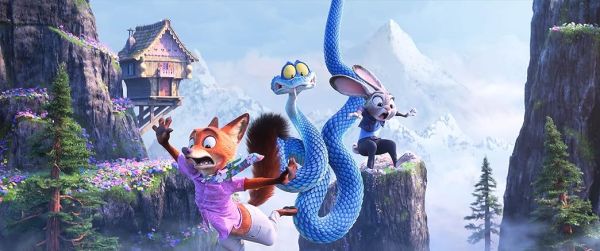
Ke Huy Quan gives Gary a nervous, energetic personality that makes him feel vulnerable without turning him into a passive character. He can be funny, frightened, determined, and suspicious within the same sequence. His movement also gives the animators new possibilities because he interacts with rooms, vehicles, clothing, and other characters differently from anyone in the first film.
I initially expected Gary to function mainly as the mysterious outsider who leads Judy and Nick into the next case. He becomes more important because the mystery is connected with who has been allowed to belong in Zootopia and who has been excluded from its official history.
The investigation moves through family records, hidden spaces, public assumptions, and districts that complicate the city’s celebrated image of harmony. Zootopia has always claimed that anyone can be anything. The sequel asks who was included when that promise was created.
This is familiar thematic territory for the series, but the focus is not identical to the first film. Zootopia dealt with fear and prejudice between predator and prey communities. Zootopia 2 expands the discussion toward erased history, inherited privilege, and the way a city can celebrate diversity while quietly deciding which groups count as part of that diversity.
Gary De’Snake Is More Than a Visual Gimmick
Gary could easily have become a collection of snake jokes. He has no limbs, moves differently from the mammal characters, and creates obvious opportunities for physical comedy. The movie uses those opportunities, but it also gives him emotional importance.
I liked the way his body language communicates personality. He can coil tightly when nervous, stretch forward when determined, or occupy a surprising amount of space when a situation becomes chaotic. His expressions remain readable even though his facial structure differs from Judy, Nick, and the other mammals.
His anxiety never completely removes his agency. Gary understands parts of the mystery that Judy and Nick do not, and he has personal reasons for taking risks. He is not simply waiting for the police officers to save him.
The character works because he changes the rhythm of the central trio. Judy pushes forward, Nick evaluates the danger, and Gary reacts from a position shaped by a history neither officer fully understands. Their conversations contain humor, but they also expose how easily well-meaning characters can make assumptions about someone they consider unfamiliar.
I wanted slightly more quiet time with Gary. The plot often needs him to run, hide, explain information, or move the investigation forward. His strongest emotional scenes suggest a deeper character than the fast pacing consistently allows.
The City Is the Movie’s Most Impressive Character
Zootopia remains one of Disney Animation’s strongest settings because every visual joke is connected with practical world-building. Doors, transportation, furniture, food, clothing, and public spaces need to function for animals of radically different sizes and body types.
The sequel expands that challenge by introducing reptiles and new environments. The animators do not simply place a snake in a mammal-sized room. They consider how he moves through architecture, uses objects, and responds to spaces that were not built for him.
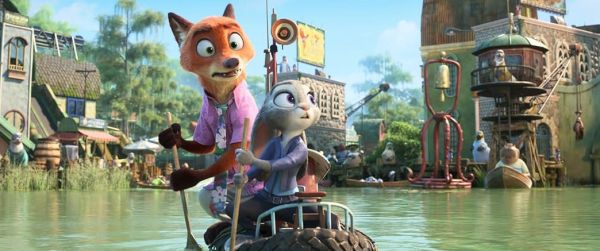
New districts provide different colors, textures, sounds, and crowd behavior. Marsh Market was one of my favorite areas because it felt busy and imperfect. It had the visual energy of a place that developed through everyday use rather than a district created only as a tourist attraction.
I frequently found myself looking away from the main characters to inspect signs, shops, background animals, transportation systems, and species-specific visual jokes. The amount of detail rewards repeat viewing, although it can also make action scenes feel visually crowded.
The movie’s environments support the story rather than serving only as decoration. Older sections of the city reveal which communities were valued, hidden, displaced, or forgotten. Architecture becomes evidence.
The Lynxley Family Adds Polite Threat Instead of Obvious Villainy
The Lynxleys represent a type of power that fits Zootopia better than another openly aggressive criminal. They possess reputation, history, influence, and the ability to define which version of the city’s past appears respectable.
I found them effective because they rarely need to behave like cartoon villains. Social authority allows them to remain calm while other characters face the consequences of their decisions. A pleasant smile can feel more threatening than shouting when it belongs to someone who expects every institution to support them.
The family also gives the mystery a generational dimension. The conflict is not only about one person committing one crime. It concerns a story protected and repeated long enough to become part of the city’s identity.
Some members receive more development than others. The family occasionally operates as a symbol before functioning as a collection of individuals. I understood what they represented, but I did not always feel that every character had a distinct inner life.
The strongest scenes show how inherited status affects ordinary conversation. Judy approaches the case believing that evidence will force everyone to listen. The Lynxleys understand that influence determines who gets to define what the evidence means.
Judy’s Optimism Becomes More Complicated
I have always liked Judy because her optimism is active rather than passive. She does not merely believe the world can improve. She runs toward situations that frighten her and attempts to change them.
Zootopia 2 allows that quality to become uncomfortable. Judy can become so focused on doing the right thing that she ignores the people standing beside her. Good intentions do not prevent her from taking control, dismissing caution, or assuming that everyone should accept her plan.
This is meaningful development because the movie does not make her suddenly cynical. Judy remains Judy. She still believes in the city and in her ability to help. The lesson is that determination without listening can reproduce the same arrogance she wants to challenge.
Her conflict with Nick becomes strongest when she treats his caution as fear or lack of commitment. From her perspective, she is protecting the case. From his perspective, she is deciding that his judgment matters only when it agrees with hers.
I appreciated that the film let Judy be wrong without making her unlikable. She remains brave, intelligent, and compassionate. Growth matters more when it involves a recognizable flaw inside a character’s greatest strength.
Nick’s Humor Finally Stops Protecting Him
Nick is entertaining because he appears relaxed in almost every situation. His sarcasm creates distance between himself and whatever threatens to disappoint him. In the first film, Judy gradually forced him to admit that his cynicism was learned rather than natural.
The sequel pushes him further. Joining the police did not automatically remove his fear that trust can be temporary. Working with Judy matters to him, which means her decisions can affect him more deeply than he wants to admit.
Jason Bateman’s performance is especially effective during scenes where Nick’s voice remains playful while his expression reveals frustration. He does not need a dramatic speech every time he feels ignored.
I liked seeing him use his old skills in an official investigation. Deception, improvisation, social reading, and manipulation can be valuable tools when directed toward the right goal. The film does not pretend that becoming respectable requires abandoning every skill associated with his previous life.
Nick’s emotional arc is quieter than Judy’s, but it gives the partnership balance. Judy needs to learn that leadership includes listening. Nick needs to believe that expressing vulnerability will not automatically give someone power over him.
The Partner-Therapy Material Is Funny Because It Is Accurate
The scenes involving Judy and Nick being treated like a dysfunctional partnership create some of the movie’s easiest comedy. The humor comes from the fact that both characters believe the other person is the obvious problem.
Judy talks quickly, explains intentions, and reframes criticism as evidence that she cares. Nick uses jokes to avoid direct answers and behaves as though emotional honesty is an unreasonable administrative request.
The sessions work as more than isolated comedy because they identify the exact communication problems that later affect the case. The movie is not subtle about the parallel, but the scenes are entertaining enough that I did not mind.
I also enjoyed the idea that police partnership requires emotional maintenance. Action movies often treat loyalty as something proven once during danger. Zootopia 2 suggests that cooperation must be practised during ordinary disagreement.
A few jokes continue after the point has already landed. The film occasionally distrusts silence and adds one more reaction when the character expressions have completed the scene.
Comedy Remains Fast, Visual, and Packed Into the Background
Zootopia 2 uses several kinds of comedy at once. Nick provides dry commentary, Judy creates energetic physical chaos, Gary introduces snake-related movement jokes, and the city itself supplies puns, advertisements, and species-specific behavior.
The best humor emerges naturally from character. Nick knows exactly which remark will irritate Judy. Judy attempts to maintain professional dignity while doing something completely reckless. Gary tries to explain a serious problem while his physical situation becomes increasingly absurd.
Background jokes reward attention without stopping the plot. Store names, warning signs, crowd behavior, and tiny animals navigating large public spaces often made me smile after the main dialogue had moved on.
The weaker jokes depend on recognition. Returning characters sometimes appear primarily because the audience remembers them, and the scene pauses long enough to acknowledge that memory.
I did not dislike these moments, but the sequel is strongest when a familiar character contributes to the current story rather than arriving for applause.
The Mystery Moves Quickly, Sometimes Too Quickly
The central case includes several locations, suspects, historical clues, disguises, escapes, and revelations. The structure maintains energy, and I was rarely bored.
The disadvantage is that emotional scenes must compete with constant movement. A meaningful conversation may last only a few minutes before another pursuit begins. A new district appears, establishes its visual identity, contributes one clue, and gives way to the next location.
I occasionally wanted the film to remain in one neighborhood long enough for it to feel ordinary. Zootopia is fascinating because of how different animals live together, not only because those environments support chase sequences.
The mystery itself is understandable, but certain discoveries arrive conveniently. Judy and Nick are skilled investigators, yet the screenplay sometimes places the necessary clue directly in their path because there is little time for slower deduction.
The first movie balanced its case with a clear progression from missing animals to a larger conspiracy. The sequel’s historical mystery is broader and more ambitious, though slightly less elegant in the way information is revealed.
The Action Is Designed Around Animal Bodies
Action sequences benefit from the differences between species. Judy can move through narrow spaces and change direction quickly. Nick relies on balance, improvisation, and environmental awareness. Gary can climb, coil, stretch, and use spaces that are inaccessible to mammals.
This creates movement that feels specific to the characters rather than copied from human action films. A chase through Marsh Market works because every stall, bridge, vehicle, and crowd contains animals responding according to their scale and anatomy.
The animation remains readable during most large sequences. I understood where Judy was going, what Nick was trying to reach, and how Gary’s movement altered the route.
The busiest scenes occasionally contain too many simultaneous jokes. A dramatic escape may include visual comedy, background references, dialogue, and a new plot clue within seconds. I enjoyed the density while also feeling that the film was afraid to let one idea occupy the screen alone.
Animation Has Become More Expressive Without Losing the Original Style
The sequel retains the rounded, colorful visual language of the first movie while improving fur, lighting, crowd movement, water, fabric, and facial expression.
Judy’s ears remain one of the most effective emotional tools in the film. They change position before she verbally admits fear, embarrassment, determination, or guilt. Nick’s eyes and posture communicate reactions that his dialogue attempts to hide.
Gary presents a different animation challenge because he lacks the limbs used for familiar gestures. The animators give his coils, neck position, and facial movement enough flexibility to make him emotionally readable.
The lighting in the new districts helps separate each part of the city. Bright commercial areas feel crowded and artificial, while hidden historical spaces use shadow and muted color to suggest what the official city prefers not to display.
I noticed a small tension between visual beauty and narrative focus. Some environments are so detailed that they compete with the characters. This is a pleasant problem, but it can make the movie feel like a tour through an animation department’s technical achievements.
The Music Supports the City Without Controlling Every Emotion
The score moves between police investigation, comedy, action, and emotional conversation without making the shifts feel disconnected. It retains the energetic urban identity associated with Zootopia while giving the new communities their own textures.
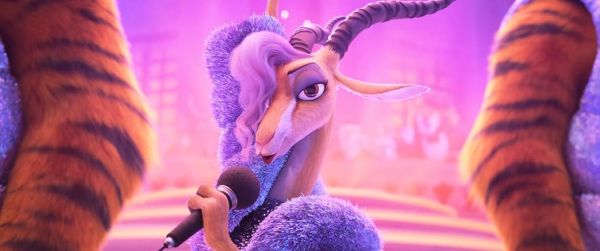
Gazelle’s new song fits naturally into the city’s pop culture. Shakira’s performance provides the expected sense of celebration, though the film does not depend on the song as heavily as a musical adventure would.
I appreciated that quieter scenes were not always overwhelmed by dramatic scoring. Judy and Nick’s relationship works best when voice performance and expression carry the emotion.
The music becomes more assertive during the final act, where the story, action, and historical revelations converge. It is effective, although the climax contains so many visual and narrative elements that the score has limited space to create a separate identity.
The Sequel Understands That Inclusion Can Become a Slogan
Zootopia’s famous promise that anyone can be anything sounds inspiring. Zootopia 2 asks what happens when a city repeats that phrase often enough to stop examining whether it is true.
A community can celebrate diversity while excluding groups that do not fit its preferred story. It can build museums, monuments, and public traditions around an incomplete version of its own history.
The film presents these ideas through animals and family-friendly mystery, but the social implications are clear. Progress is not permanent. Institutions can become proud of earlier victories and use that pride to avoid acknowledging current failures.
I appreciated that Judy is not positioned outside this problem. She believes deeply in Zootopia’s ideals, which makes her reluctant to consider how the city may have failed. Her optimism initially protects the institution as much as it motivates reform.
The message occasionally becomes overly direct. Characters explain themes that the environments and conflicts have already communicated. Younger viewers may benefit from that clarity, but I preferred the moments where the city itself provided the argument.
Not Every Returning Character Needed the Same Amount of Attention
The sequel brings back familiar faces, and most appearances produce an immediate sense of recognition. Chief Bogo, Gazelle, Flash, Clawhauser, and other residents remind me that Judy and Nick belong to a larger community.
Some returning characters contribute naturally to the case or the emotional development of the leads. Others feel more like scheduled reunions.
I understand the pressure facing a sequel to a popular animated film. Audiences want new characters and locations while also expecting every favorite from the original to return. Satisfying both desires can create a crowded cast.
Zootopia 2 generally keeps Judy, Nick, and Gary at the center. I still felt that a few cameo-style scenes could have been shortened to give the new characters more breathing room.
The Final Act Is Exciting but Less Interesting Than the Partnership
The climax combines physical danger, public revelation, family history, and the future of the city. The scale is appropriate for an animated sequel, and several character abilities receive satisfying uses.
I remained more emotionally invested in whether Judy and Nick would communicate honestly than in the size of the final action sequence. Their partnership is the movie’s most specific conflict. Large environmental danger is easier to resolve than years of personal defense mechanisms.
The film recognizes this and returns to their relationship during the climax, but spectacle occasionally interrupts the emotional thread.
I also found the antagonist’s motivations clearer as a representation of inherited power than as an individual psychological portrait. The conflict works thematically, though it lacks some of the personal surprise created by the first film’s villain reveal.
Who Will Enjoy Zootopia 2?
Zootopia 2 is an easy recommendation for families, fans of the original movie, animation enthusiasts, viewers who enjoy mystery comedies, and anyone invested in Judy and Nick’s relationship.
Younger viewers can enjoy the physical comedy, colorful locations, expressive animals, and fast action. Adults are more likely to notice the themes involving institutional history, exclusion, public narratives, and unequal power.
The film may disappoint viewers hoping for a quiet character drama. It contains emotional development, but it remains a large Disney adventure with frequent jokes, chases, and visual spectacle.
Anyone who did not enjoy the first movie’s animal puns, social allegory, or rapid comedy is unlikely to be converted by the sequel. Zootopia 2 expands the formula rather than replacing it.
The Scenes That Stayed With Me
I remembered the large action sequences, but smaller moments remained more important. Judy speaking too quickly because she knows Nick is partly right. Nick turning a serious emotion into a joke and realizing that the joke has not solved anything. Gary attempting to trust people whose city has already decided what he represents.
I also remembered the first view of the new districts. The best world-building moments create the feeling that these places existed before the camera arrived and will continue after Judy and Nick leave.
The movie’s emotional success comes from allowing a partnership to remain imperfect. Judy and Nick do not become effective because they eliminate every disagreement. They improve because they begin understanding what those disagreements reveal.
My Final Verdict
Zootopia 2 is a confident sequel that expands its city without forgetting why I cared about it. The new mystery introduces reptiles, hidden history, influential families, and districts that challenge the clean public image of Zootopia.
Its strongest decision is treating Judy and Nick’s partnership as a continuing relationship rather than a completed reward from the first film. Their chemistry remains funny, but the sequel allows their differences to create frustration, disappointment, and necessary growth.
Gary De’Snake is a welcome addition who changes both the visual language and social structure of the story. The animation is detailed, the comedy is energetic, and the expanded city contains enough background ideas to support several more stories.
The film is not perfectly balanced. Its pacing is frequently rushed, some themes are explained too directly, and the large cast occasionally competes for limited attention. The historical mystery is ambitious but not always as cleanly constructed as the first movie’s investigation.
I rate Zootopia 2 8.6/10. It delivers the familiar pleasure of watching Judy and Nick solve another case while giving their partnership a more mature challenge. I returned for the city, the humor, and the mystery. I stayed invested because the sequel understood that working beside someone is not the same as truly listening to them.
Pros:
- Balanced blend of humor and emotional storytelling provides a multi-layered experience
- Rich world-building that adds depth and nuance to the narrative
- Engaging character development with both returning and new characters
- Thoughtful social commentary that resonates with modern audiences
- High-quality audio design and score that enhance every scene
- Vibrant animation and detailed scenic design that captivate the viewer
Cons:
- Some pacing issues when integrating multiple subplots
- May not fully satisfy viewers looking for a purely lighthearted adventure
- Occasionally veers into overly ambitious allegory that can confuse the audience








Movie Reviews
Minecraft

Grand Theft Auto V

Toca Boca World
Roblox

Leave a comment
Your comment is awaiting moderation. We save your draft here
0 Comments