Review
Stranger Things pulled me in with a feeling I usually get from a well-designed adventure game: a small group of characters enters a fam...


Stranger Things Unraveled: A Deep Dive into Nostalgia, Mystery, and Modern Storytelling
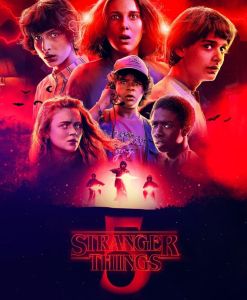
Stranger Things pulled me in with a feeling I usually get from a well-designed adventure game: a small group of characters enters a familiar place, discovers that its rules have changed, and gradually realizes that the danger is much larger than anyone expected. Hawkins looks like an ordinary American town, but every quiet road, school corridor, laboratory hallway, and patch of forest seems capable of hiding something unsettling.
I did not stay with the series only because of its supernatural mystery. The real reason I kept watching was the group dynamic. The characters argue, make poor decisions, hide information, and occasionally lose sight of what matters, yet their loyalty gives the story a strong emotional core. Even during the largest supernatural sequences, Stranger Things works best when it returns to friendship, family, fear, and the need to be understood.
Hawkins Feels Like a Map I Learned Over Time
One of my favorite parts of Stranger Things is how the setting develops across the series. Hawkins is not presented as a huge or glamorous location. It is made up of modest homes, quiet streets, schools, stores, government facilities, wooded areas, and places where young people spend time because there is little else to do.
That simplicity helps the town become memorable. I began recognizing locations in the same way I learn a game map. The school has one emotional meaning, the laboratory has another, and familiar homes gradually become places associated with comfort, conflict, or danger. When the characters return to an established location under different circumstances, the scene immediately carries history.
The town also changes without losing its identity. New businesses, social spaces, underground areas, and hidden routes expand the world, but Hawkins remains connected to its original small-town atmosphere. This contrast makes the supernatural events more effective. A strange creature in a fantasy kingdom would be expected. The same presence behind a quiet suburban wall feels much more disturbing.
The Party Is the Series’ Strongest Mechanic
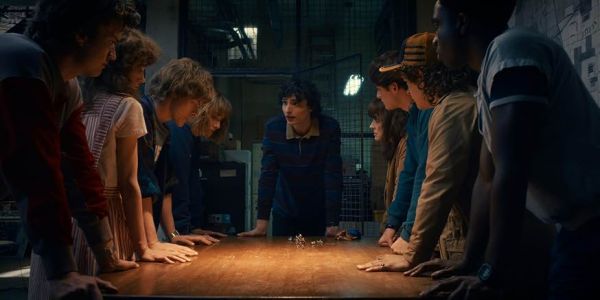
Mike, Dustin, Lucas, and Will initially reminded me of a cooperative gaming group in which every person has a different role. Mike often tries to direct the plan. Dustin brings curiosity, technical knowledge, and enthusiasm. Lucas is more cautious and willing to challenge assumptions. Will is emotionally connected to the mystery in ways the others cannot fully understand.
As the story expands, the group becomes much larger. Eleven, Max, Steve, Nancy, Jonathan, Robin, Joyce, Hopper, and other characters bring new skills and perspectives. The series regularly separates them into smaller teams, allowing different personalities to interact before the story reconnects their discoveries.
This structure gives many episodes the rhythm of a multi-character campaign. One group investigates a physical location, another follows a clue, another handles a personal crisis, and someone else confronts the immediate supernatural threat. I enjoyed watching the separate storylines gradually reveal different parts of the same problem.
The approach occasionally creates pacing issues, especially when one storyline is much more engaging than another. Still, the ensemble format is essential to the identity of Stranger Things. The threat rarely feels manageable by one heroic figure. Progress happens because several people notice different details and eventually trust one another enough to combine what they know.
Eleven’s Power Is Less Interesting Than Her Humanity
Eleven could have been written as a simple supernatural solution to every problem. Instead, the series gives her abilities emotional and physical consequences. Her strength matters, but her isolation, limited childhood, confusion, anger, and desire for belonging matter more.
I was most invested in Eleven when she was learning ordinary experiences that other characters took for granted. Friendship, privacy, family, jealousy, independence, and personal choice are difficult for her because so much of her early life was shaped by control. She is powerful in extraordinary situations but vulnerable in everyday ones.
Her relationship with Hopper gave the series some of its most effective quieter scenes. Both characters struggle to communicate without becoming defensive. Hopper wants to protect her, but protection can become another form of restriction. Eleven wants freedom, yet she does not always understand the risks around her. Their arguments feel messy because both sides are responding to fear rather than calmly expressing what they need.
The series is strongest when Eleven’s supernatural ability does not erase this emotional complexity. Her biggest challenge is not simply becoming more powerful. It is deciding who she wants to be when other people are no longer defining her identity.
Steve Harrington Became My Unexpected Favorite
My opinion of Steve changed more dramatically than my opinion of almost any other character. Early on, I treated him as a familiar teenage stereotype. He appeared confident, popular, and more concerned with his social position than with understanding what Nancy was experiencing.
Over time, the series allowed him to become more responsible without completely changing his personality. He remained vain, impatient, and occasionally confused, but he also became dependable. His willingness to protect younger characters created an unusual role that balanced comedy and sincerity.
Steve works because his development is shown through actions rather than a sudden declaration that he has changed. He repeatedly stays when leaving would be easier. He enters dangerous situations despite having no supernatural ability. He listens more than he once did, even though he still makes mistakes.
His friendship with Dustin is especially entertaining because it gives both characters someone who challenges their usual social world. Dustin gains an older ally who takes his concerns seriously, while Steve receives a role that is more meaningful than maintaining popularity. Their conversations often provide humor, but the bond never feels like a joke.
The Upside Down Works Through Restraint
The Upside Down is frightening because it resembles the real world while feeling fundamentally wrong. Familiar spaces appear decayed, silent, and covered in unnatural growth. The environment suggests that Hawkins has been copied and abandoned rather than replaced by a completely unrelated fantasy realm.
That visual connection creates tension whenever the characters move between worlds. A wall, house, road, or building may exist in both places, but the emotional meaning changes. Locations associated with safety in Hawkins become threatening when seen through the atmosphere of the Upside Down.
I preferred the mystery when the series revealed information gradually. Early uncertainty made every clue feel important. Characters did not understand the rules, the audience could not easily predict the limits of the threat, and even small signals carried weight.
As the mythology expands, the story becomes more ambitious and visually impressive. However, greater explanation sometimes reduces the strange quality that made the concept so effective at the beginning. I enjoy learning more about the supernatural world, but I also think Stranger Things benefits from leaving certain details unresolved.
Each Season Changes Genre Without Starting Over
The first season feels like a compact mystery. A child disappears, a strange girl appears, and several groups investigate events from different angles. The tension comes from limited information and the sense that the adults in authority either do not understand the situation or are actively hiding the truth.
Later seasons become broader and more action-focused. The threats grow, the locations expand, and the characters face challenges beyond the original mystery. At times, the series feels like science fiction, supernatural horror, teenage drama, conspiracy thriller, or large-scale adventure.
I appreciated this variety because the show could have become repetitive by returning to exactly the same structure. The characters age, their relationships shift, and their priorities change. A friendship that once seemed permanent becomes strained. A young character who relied on the group begins seeking independence. Older characters face choices about work, education, family, and the possibility of leaving Hawkins behind.
The changing tone is not always seamless. Some comedic sections appear during moments when I wanted the tension to remain uninterrupted, while certain emotional conflicts are delayed to make room for spectacle. Even so, the genre shifts keep the series from feeling like one story repeated with a larger creature.
The Music Shapes the Experience
The soundtrack does more than establish the period. Synth-driven themes create an immediate connection between mystery, nostalgia, and unease. A simple melody can make a quiet scene feel as though something is waiting just outside the frame.
Popular songs are also used to define characters and emotional turning points. Music becomes a form of memory, identity, and communication. Certain tracks are so closely connected to specific scenes that hearing them later immediately brought those moments back to me.
I liked that the series does not treat every song as background decoration. Sometimes music changes how a character experiences fear. Sometimes it represents a relationship. In other scenes, it creates an ironic contrast with what is happening on screen.
The result feels similar to a strong game soundtrack: I remember not only the track itself but also the location, character, and emotional state associated with it.
When the Nostalgia Helps—and When It Distracts
Stranger Things clearly loves the entertainment and visual culture of the 1980s. Clothing, technology, movie references, shopping spaces, games, bicycles, music, and household details all contribute to the period setting.
Most of the time, these elements make the world feel specific. The characters cannot solve every problem with modern devices, so communication requires more planning. Physical distance matters. Information is easier to hide. Young characters must rely on radios, maps, shared meeting points, and direct investigation.
The references become less effective when I feel the series wants me to recognize an influence more than focus on the current scene. Nostalgia works best when it supports character or atmosphere. It becomes distracting when it appears to pause the story for applause.
Fortunately, the central cast gives the series an identity beyond its inspirations. I may notice familiar genre ideas, but I continue watching because I care about how these specific characters respond to them.
The Larger Scale Has a Cost
As Stranger Things grows, the production becomes more spectacular. The supernatural environments are more detailed, the action sequences are longer, and the story reaches far beyond the original group of children exploring Hawkins.
This scale can be exciting, but it sometimes reduces the intimacy that made the early episodes so effective. A quiet conversation in a bedroom or a tense walk through a dark house can reveal more about a character than an extended sequence filled with visual effects.
The expanding cast also means that some characters receive less attention. A person may play an important role in one season and then spend much of the next reacting to events rather than driving them. I occasionally wanted the series to slow down and allow relationships to develop without immediately introducing another crisis.
Longer episodes provide room for more story, but they do not automatically make every storyline equally necessary. Some sections feel tightly paced, while others delay an outcome that is already easy to predict. I found the series most satisfying when the emotional and supernatural conflicts reached their turning points at the same time.
Why I Stayed Invested
Stranger Things succeeds because it understands that supernatural danger becomes meaningful only when I care about the people facing it. The creatures, alternate dimension, secret experiments, and elaborate mysteries provide excitement, but they are not the complete experience.
I stayed invested because Joyce refuses to abandon her child when others doubt her. I cared because Will wants to return to normal life but cannot simply forget what happened. I watched because Max hides pain behind confidence, Hopper protects others while struggling with his own past, and Eleven searches for an identity beyond what was imposed on her.
The show repeatedly asks whether friendship can survive secrecy, distance, fear, and change. It does not always provide simple answers. Characters hurt one another, separate, reconnect, and discover that loyalty does not remove the need for honesty.
From my perspective as a gamer, Stranger Things feels like a long cooperative campaign in which the party keeps changing, the map reveals hidden layers, and every victory opens the door to a more difficult challenge. Some chapters are more balanced than others, but the characters give me a reason to return to Hawkins. The supernatural mystery may begin each adventure, yet the human connections are what make the journey memorable.
Pros:
- Strong character development with well-rounded, evolving protagonists
- High production quality featuring excellent visual effects and sound design
- Culturally impactful narrative that sparks discussions and debates
- Immersive viewing experience adaptable across multiple streaming and download platforms
- Nostalgic aesthetic that evokes the 1980s ambiance
- Engaging storyline combining supernatural elements with human drama
Cons:
- Potential over-reliance on nostalgia which might overshadow innovative storytelling elements
- Occasional pacing issues that lead to uneven narrative development
- Plot inconsistencies that may confuse viewers during long story arcs









Movie Reviews

Minecraft

Grand Theft Auto V

Toca Boca World
Roblox

Leave a comment
Your comment is awaiting moderation. We save your draft here
0 Comments