
Review
Blooket surprised me because it does not feel like a traditional study tool wearing a thin layer of game graphics. When I joined my fir...

Blooket: Revolutionizing Interactive Learning Through Engaging Educational Gaming
Blooket surprised me because it does not feel like a traditional study tool wearing a thin layer of game graphics. When I joined my first session, the questions were familiar enough, but the way each correct answer affected the match made me pay attention differently. I was not answering only to improve a score at the end. I was earning resources, advancing a strategy, protecting my position, or trying to catch another player before the timer disappeared.
That distinction matters. Plenty of educational platforms turn a quiz into a race by adding points and a leaderboard. Blooket goes further by placing the same question set inside several different game structures. The academic material may remain unchanged, but the decisions surrounding it can make one session feel competitive, another strategic, and another almost relaxed.
My First Session Was Pure Confusion
I entered my first live game without understanding how much of the experience happened between questions. I assumed that answering correctly and quickly would automatically place me near the top. Instead, I watched players with similar accuracy move ahead because they understood the game mode better than I did.
I was focused entirely on the quiz while other players were managing upgrades, choosing targets, collecting rewards, or reacting to random events. By the time I understood the rules, the round was almost over. It felt similar to joining a multiplayer game after everyone else had already learned the map.
That early confusion was not entirely negative. It made me curious enough to play another round. Once I knew what my answers were contributing to, the mode became easier to read. I started thinking about when to spend resources, whether to take a risk, and how much attention I could give the game layer without rushing the educational content.
The Same Questions Can Produce a Different Mood
The smartest part of Blooket is that a question set is not permanently attached to one style of play. I can use the same vocabulary, history, science, or mathematics material in multiple modes, and the surrounding mechanics change how the session feels.
A fast competitive mode encourages quick reactions. A management-focused mode gives me more time to consider upgrades and long-term decisions. A survival or defense-style mode makes correct answers feel like fuel for continuing the run. This variety prevents familiar material from becoming completely predictable.
I noticed this most clearly after replaying a set I already knew well. In a basic quiz, remembering the answers would have removed most of the challenge. In Blooket, knowledge still gave me an advantage, but I also had to understand the rules of the selected mode. The questions became one part of a larger loop rather than the entire experience.
A Typical Live Match From My Side
The host shares a game, players join, everyone chooses a name or identity, and the room gradually fills. Even before the first question appears, the session already feels social. Players recognize friends, compare their selected Blooks, and begin predicting who will finish near the top.
Once the match starts, my attention moves through several repeating stages:
- I read the question and possible answers;
- I try to respond accurately without wasting time;
- I receive an opportunity, reward, or resource connected to the mode;
- I make a quick gameplay decision;
- I check my position and prepare for the next question.
This loop is simple, but it creates more momentum than completing a static worksheet. Every answer has an immediate consequence. A correct response can improve my position, while a careless mistake may interrupt a strategy I had been building for several minutes.
The live leaderboard adds pressure, although it does not always tell the full story. Some modes include enough unpredictability for positions to change quickly. I can play carefully for most of the session and still lose my advantage near the end. That uncertainty keeps the room engaged, but it can also make the result feel less connected to academic performance.
When Randomness Becomes the Main Character
Some Blooket modes are intentionally chaotic. Rewards may vary, players can interfere with one another, and a comfortable lead can disappear after one unfortunate event. During these matches, I learned not to treat the ranking too seriously.
At first, losing progress frustrated me because I felt that accurate answers should guarantee a strong result. After several sessions, I began seeing the randomness as part of the entertainment. It gives players who fall behind a reason to continue and prevents the same knowledgeable participant from dominating every round without resistance.
Still, there is a balance to consider. When the game layer becomes too powerful, I pay more attention to luck than to the questions. I may remember the dramatic reversal but forget the material I was supposed to practise. For casual classroom energy, that chaos can work brilliantly. For careful assessment, I would not treat the final ranking as a perfect measurement of understanding.
Gold Quest Felt Like a Party Game
Gold Quest was one of the easiest modes for me to understand and one of the quickest to create excitement in a group. Correct answers allow players to choose rewards, but the result may involve gaining gold, losing it, or taking it from someone else.
The decisions are simple, yet the emotional reactions are immediate. A player can move from the middle of the ranking to the top, only to lose that position moments later. The leaderboard becomes unstable enough that everyone keeps watching it.
I enjoyed Gold Quest most when I treated it as a social event rather than a serious competition. The unpredictable transfers created laughter and playful frustration. It was less effective when I wanted my position to represent consistent accuracy, because a fortunate choice could matter as much as several correct responses.
Factory Made Me Think Beyond the Next Question
Factory gave me a more strategic experience. Instead of reacting only to a single reward, I had to think about how my collection and upgrades would generate value over time. Correct answers moved the system forward, but my choices influenced how efficiently that progress developed.
I liked the feeling of building a setup gradually. Early decisions appeared small, yet they affected how quickly I could improve later. I began comparing immediate benefits with upgrades that would become more valuable if the session lasted long enough.
This mode worked well for me because it created a clear rhythm. I answered questions, checked production, made an adjustment, and returned to the quiz. The game layer was active without demanding constant movement or complicated controls.
Factory can become distracting when I spend too much time optimizing. I occasionally rushed through a question because I was eager to return to the management screen. That was a reminder that the game is most useful when it supports concentration rather than replacing it.
Tower Defense Changed the Pace Completely
Tower Defense felt closer to a standalone casual game than many of the faster live modes. Correct answers gave me the resources needed to place or improve defensive units, while enemy waves created a reason to plan ahead.
I enjoyed choosing where to place each unit and watching the defensive layout develop. Positioning mattered, upgrades had visible effects, and poor planning could create weaknesses that became obvious during later waves.
The slower structure gave me more room to think. I was not constantly comparing myself with another player or waiting for a sudden random event. I could focus on improving my own run, which made the experience suitable for solo practice.
At the same time, the game can become repetitive when I already know the most effective setup. Once I find a strategy that works reliably, the questions begin to feel like a resource generator rather than the central challenge. Changing the question set or experimenting with different placements helps prevent that routine.
Café Was My Most Relaxed Session
Café gave me a different kind of pressure. Instead of chasing players or defending a path, I managed a small food-service operation. Correct answers helped me maintain supplies and continue serving customers.
I liked that the theme was easy to understand. Customers arrived, requested items, and expected service. I did not need a long explanation before I could start making useful decisions.
The mode encouraged a steady rhythm rather than constant competition. I answered a group of questions, returned to the café, checked what was running low, and prepared for the next wave of customers. It felt less dramatic than Gold Quest but more controlled.
This became one of my preferred options when I wanted to review material without turning every answer into a public race. The management layer kept my hands and attention active, while the question cycle remained predictable enough for actual study.
Battle Royale Exposed Every Hesitation
Battle Royale created a more direct form of competition. Facing another player made every question feel personal because the outcome was immediately visible. I was not simply trying to increase a total score; I was attempting to outperform someone in a short confrontation.
The mode rewarded both speed and accuracy, and I quickly noticed the tension between them. Reading too slowly could cost me the round, but selecting an answer before fully processing the question was even worse.
I enjoyed the compact format because each matchup had a clear beginning and outcome. It worked especially well with familiar material where rapid recall was part of the learning goal. With complex questions that required careful reasoning, the competitive timer could encourage guessing rather than thoughtful work.
Solo Play Feels More Like Practice
Live Blooket sessions create the strongest social energy, but I often found solo play more useful when I genuinely wanted to improve. Without a room full of players reacting to the leaderboard, I could work at my own pace and repeat material without feeling observed.
The game mechanics still gave me a reason to continue. A normal self-test can become tiring after several questions, especially when there is no clear reward beyond completion. In a solo mode, each correct answer contributes to a visible system. I may be strengthening defenses, expanding production, or maintaining another part of the game.
Solo sessions also helped me identify whether I knew the content or had simply become good at following the pace of a classroom round. When no other players were creating pressure, I had more time to notice which answers I truly understood and which ones I was selecting through recognition alone.
Homework Did Not Feel Completely Like Homework
Using Blooket for an assigned task changed the usual experience of completing a question set. Instead of moving through a fixed list and closing the page, I could work toward a clear correct-answer goal while playing a selected mode.
That freedom made repetition easier. When I answered something incorrectly, I was more willing to continue because the session still had a gameplay objective. Repeated questions did not feel as obvious when they appeared between upgrades, customers, enemies, or other events.
However, the game could not make every subject automatically enjoyable. Weak questions remained weak questions. Ambiguous wording, incorrect answer choices, and repetitive sets were still frustrating. Blooket improves presentation, but the quality of the learning experience depends heavily on the question set being used.
Creating a Good Question Set Is Harder Than Playing One
Playing Blooket is straightforward. Creating a set that remains useful across different modes requires more thought. I found that short, clear questions worked best because the surrounding game already demanded part of my attention.
Questions became harder to process when they included long paragraphs, several similar answer choices, or complicated instructions. On a normal test, I might take time to reread them. During a fast game, players are more likely to skim and guess.
From my experience, effective sets usually share a few qualities:
- each question tests one clear idea;
- incorrect options are believable but not misleading;
- the text is readable on different screen sizes;
- repeated questions reinforce knowledge without feeling identical;
- images are used only when they genuinely support the question;
- the difficulty fits the speed of the chosen mode.
A well-designed set made almost every mode more enjoyable. A poorly constructed one remained frustrating no matter how entertaining the surrounding mechanics were.
Blooks Give the Platform Its Personality
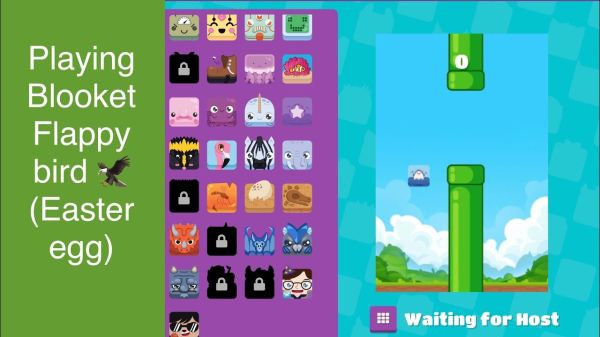
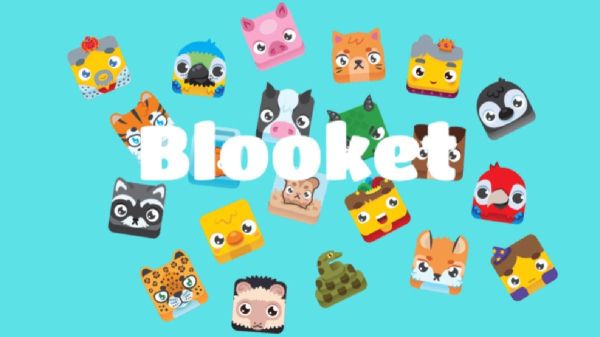
The small collectible characters called Blooks make Blooket immediately recognizable. Their designs are simple, colorful, and readable even when many players appear together. Selecting one before a game gave me a small sense of identity without requiring complicated avatar customization.
Unlocking and collecting Blooks added another reason to use an account. I enjoyed seeing new designs appear, especially when I found one that was less common than the characters I usually encountered.
The collection system is not the reason I continued playing, but it gave progress a visible form outside individual matches. A round could end badly while still contributing to my account activity and future customization options.
I also appreciated that the designs did not take themselves too seriously. Blooket understands that its presentation should feel approachable. The characters are expressive enough to be memorable without filling the screen with unnecessary animation.
The Competitive Side Needs Careful Handling
Competition can increase attention, but it does not motivate everyone in the same way. I enjoy seeing my position and trying to improve it. Another player may become anxious, embarrassed, or disengaged when their name remains near the bottom.
Blooket’s playful graphics soften that pressure, but they do not remove it. A public leaderboard still makes performance visible. In a group where skill levels differ significantly, the same participants may repeatedly lead while others begin guessing simply to keep pace.
Team formats and luck-based modes can reduce this problem because they make the outcome less dependent on one person’s knowledge. Solo assignments also provide a quieter alternative. The choice of mode matters as much as the question set.
I found the platform most enjoyable when the host treated rankings as part of the game rather than a public judgment of intelligence. Celebrating participation, improvement, and clever decisions created a healthier atmosphere than focusing only on the winner.
Small Screens Changed How I Played
Blooket is easy to join through a browser, but the device affects the experience. On a laptop or desktop, I could read questions and manage the game interface comfortably. On a phone, the experience remained playable, although long questions and small interface elements required more attention.
Fast modes felt natural on a touchscreen because selecting an answer required only a quick tap. More detailed management modes were easier for me on a larger display, where I could understand the full layout without covering part of the screen with my hand.
Connection quality also matters during live sessions. When the game moves quickly, a delay can make me feel as though I answered in time even when the server registered the action later. Most of my sessions ran smoothly, but unstable internet was much more noticeable in competitive modes than in solo play.
Where Blooket Stops Feeling Educational
There were moments when I became so focused on the game that the questions turned into obstacles between rewards. I recognized the answer, clicked it, and immediately shifted my attention back to the strategy screen. The session remained entertaining, but I was not necessarily thinking deeply about the subject.
This is especially noticeable with material I can answer through memorized patterns. Blooket is effective for recall and repetition, but it cannot replace detailed explanation, discussion, writing, or hands-on practice. A correct multiple-choice response does not always prove that I understand the underlying concept.
I see Blooket as a strong reinforcement tool rather than a complete learning system. It can make review more energetic, reveal common mistakes, and encourage repeated exposure. It works less effectively when the goal requires complex reasoning or an original response.
My Best Blooket Sessions Had a Clear Purpose
The sessions I enjoyed most were not necessarily the longest or most competitive. They were the ones where the question set, mode, and group matched one another.
A fast recall set worked well in Battle Royale. A longer review felt better in Café or Tower Defense. A casual group benefited from the unpredictability of Gold Quest, while a more focused solo session needed a mode that allowed steady progression.
When those elements did not match, the platform felt less effective. Complex questions inside an extremely fast mode created unnecessary rushing. A long strategic mode felt excessive for a tiny set of basic facts. The best experience came from choosing the game around the learning goal rather than selecting a mode only because it was popular.
Why I Would Open Blooket Again
Blooket gives routine question practice enough variety to remain engaging across multiple sessions. I can join quickly, understand the basic goal, and begin playing without learning a complicated control system. At the same time, the different modes provide more depth than a simple points-based quiz.
I would not use it to judge someone entirely by their final position. Random rewards, strategic choices, speed, device performance, and familiarity with a mode can all affect the outcome. The leaderboard tells the story of the match, not the complete story of what each player knows.
What keeps Blooket enjoyable for me is the moment when a familiar question set feels new because the surrounding challenge has changed. One day I am trying to maintain a café, another day I am developing a factory, and during a live session I may be watching my carefully built lead vanish after another player receives a fortunate reward.
That mixture of knowledge, quick decisions, colorful characters, and controlled chaos gives Blooket its identity. It does not hide the fact that I am answering questions. Instead, it gives every answer somewhere to go.
Pros:
- Diverse educational game modes that cater to different learning needs
- Cross-platform support for mobile, desktop, and Chromebook
- Free access to basic interactive features
- Built-in multiplayer mode that promotes collaborative learning
- Optimized performance even in low-bandwidth or unblocked network environments
- User-friendly interface with intuitive navigation
Cons:
- Potential security risks when downloading APK files from unofficial sources
- Occasional performance lags during high user traffic periods
- Limited advanced customization options compared to premium platforms









Recent Reviews

Minecraft

Grand Theft Auto V

Toca Boca World

Roblox

Leave a comment
Your comment is awaiting moderation. We save your draft here
0 Comments