
Review
The Grinch introduced its title character as a creature who dislikes Christmas, avoids his neighbors, and has built an isolated life ab...

Holiday Redemption Unveiled: A Cinematic Journey Through The Grinch's World
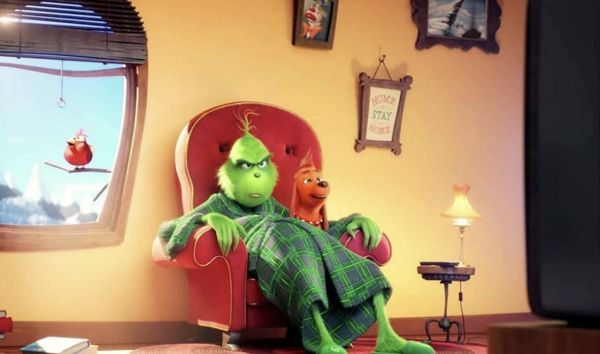
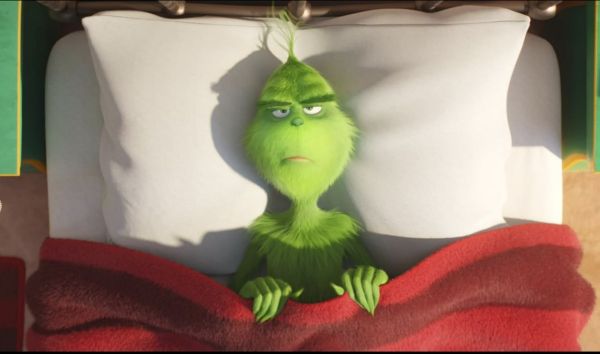
The Grinch introduced its title character as a creature who dislikes Christmas, avoids his neighbors, and has built an isolated life above Whoville. I expected him to feel genuinely threatening. Instead, I found a grumpy, lonely inventor whose cruelty is softened almost immediately by comic routines, awkward social encounters, and his affectionate relationship with Max.
This version of the Grinch is less frightening than irritated. He does not appear to hate everyone equally. He hates noise, crowds, forced cheerfulness, expensive decorations, and the emotional memories that Christmas brings back. That difference makes him easier to understand, although it also reduces some of the sharpness that defines the character.
My experience with The Grinch was warm, visually polished, and consistently pleasant. It is an easy holiday movie to watch with a family because it avoids becoming too dark, too sad, or too emotionally complicated. The same qualities also make it feel safer than I wanted. The film rarely allows the Grinch’s bitterness to become genuinely uncomfortable.
I still enjoyed spending time in this version of Whoville. The animation is energetic, Max is immediately lovable, and Benedict Cumberbatch gives the Grinch enough personality to carry scenes where he is completely alone. The movie understands the emotional destination of the story, even when it chooses the smoothest possible route to reach it.
A Morning Routine Reveals Almost Everything
One of my favorite parts of the film is watching the Grinch move through his ordinary day. His cave is filled with machines, storage systems, inventions, food supplies, and strange solutions designed to minimize contact with other people.
The sequence tells me that he is intelligent, organized, theatrical, and far more dependent on Max than he would ever admit. He presents his isolation as a personal victory, but almost every practical part of his life requires companionship.
Max prepares drinks, operates devices, carries objects, and responds to the Grinch’s moods with patient loyalty. Their relationship prevents the cave from feeling emotionally empty. The Grinch may claim that he wants complete solitude, yet he has built his daily life around one creature who never leaves him.
I appreciated how the film uses physical comedy to communicate personality. The Grinch does not simply walk across a room. He activates a device, improvises a shortcut, complains about an inconvenience, and transforms a small task into an unnecessary performance.
These scenes work better for me than some of the larger holiday action because they allow Benedict Cumberbatch’s vocal performance to control the rhythm. The Grinch sounds intelligent enough to justify his inventions and childish enough to become angry when they do not behave exactly as planned.
Max Quietly Becomes the Emotional Center
Max does not need dialogue to become the film’s most sympathetic character. His expressions communicate patience, concern, confusion, and complete devotion to the Grinch.
He participates in every plan without fully sharing his owner’s hostility. When the Grinch complains about Whoville, Max listens. When the Christmas operation begins, Max helps build equipment, tests inventions, and eventually becomes part of the Santa disguise.
I never felt that Max was afraid of the Grinch. Their relationship seems familiar and affectionate beneath the constant instructions. The Grinch trusts Max more than he trusts anyone else, even if he expresses that trust through another list of chores.
The film occasionally uses Max too perfectly. He can perform almost any task required by the scene, which makes him less like an ordinary dog and more like a highly trained assistant. This is part of the cartoon logic, but his competence often exceeds that of every speaking character.
His best moments are small. A tired reaction, a worried glance, or a simple decision to remain beside the Grinch communicates more than another emotional speech would have done.
Whoville Is a Holiday Display Brought to Life
Whoville looks like an enormous Christmas decoration designed by people who believe empty space is a personal failure. Buildings lean at playful angles, streets curve through crowded neighborhoods, lights cover almost every surface, and residents move through the town with constant energy.
The design successfully reflects Dr. Seuss without trying to reproduce flat illustrations exactly. Shapes are exaggerated, objects bend in unexpected directions, and ordinary technology behaves according to visual comedy rather than realistic engineering.
I enjoyed looking beyond the central action. Shop windows, vehicles, decorations, clothing, and background characters contain enough detail to reward another viewing. The town feels busy even when the main characters are not interacting with it directly.
The visual abundance also supports the Grinch’s frustration. Whoville is beautiful, but it is loud. Decorations become larger, music becomes more constant, and every resident appears determined to celebrate publicly. I could understand why someone seeking silence might find the town exhausting.
The movie never seriously criticizes the Whos for their excess. Their enthusiasm is presented as harmless, while the Grinch’s reaction is the main problem. I think the story could have been more interesting if both sides had needed to understand one another.
Cindy-Lou Wants Something More Meaningful Than Presents
Cindy-Lou Who provides the film’s emotional counterweight. She is cheerful, determined, and excited about Christmas, but her main wish is not a toy for herself.
She sees how hard her mother works and decides that Santa should help. This gives her plan a sincere motivation and prevents her from becoming only another energetic child waiting for Christmas morning.
Cindy-Lou’s attempt to meet Santa includes friends, traps, planning, and several moments where confidence exceeds practical ability. The storyline is playful, but it also shows how children interpret adult exhaustion. Cindy-Lou recognizes that her mother needs support, even if she imagines the solution through holiday magic.
I liked the relationship between Cindy-Lou and Donna. Their home feels busy, affectionate, and imperfect. Donna is tired without being portrayed as incapable, while Cindy-Lou wants to help without fully understanding the pressures her mother faces.
The film could have developed this family material more deeply. Donna’s workload creates Cindy-Lou’s entire goal, yet the story spends more time on the mechanics of trapping Santa than on the daily reality that inspired the plan.
The Grinch’s Inventions Make the Heist Fun
Once the Grinch decides to steal Christmas, the film becomes a preparation comedy. He designs a costume, builds equipment, experiments with transportation, studies the town, and attempts to solve every practical problem through machinery.
These sequences suit the Illumination style. Movement is fast, objects react unpredictably, and inventions are designed as much for visual humor as practical function.
I enjoyed the training scenes because they reveal how seriously the Grinch treats an absurd objective. He approaches holiday theft with the focus of a professional preparing for a major operation.
His ability to create advanced technology raises an obvious question about why he spends his life stealing food and avoiding everyone when he could probably become Whoville’s most successful engineer. The movie wisely does not attempt to explain cartoon economics.
The preparation is more entertaining than the actual theft in some places. Planning allows the Grinch and Max to interact, fail, adjust, and reveal personality. The heist itself becomes a faster sequence built around movement through houses.
Fred Is a Joke That Almost Becomes a Character
Fred, the large reindeer recruited to pull the sleigh, adds another source of physical comedy. He is enormous, relaxed, and not especially interested in behaving like a professional Christmas animal.
The contrast with Max works immediately. Max is small, responsible, and attentive. Fred is powerful but difficult to direct. The Grinch initially sees him as useful equipment rather than a creature with his own priorities.
I enjoyed Fred’s presence, but his role remains temporary. The film introduces him, builds several jokes around his size and appetite, then moves him away when the plot no longer requires him.
This makes the character feel more like an extended comic device than a necessary part of the story. His family scene is sweet, though it arrives partly to explain why he cannot remain involved.
Max carrying the responsibility afterward gives the film one of its most endearing visual ideas. The smallest and most loyal member of the plan becomes the one expected to perform the impossible task.
Benedict Cumberbatch Makes the Grinch Sound Tired Rather Than Evil
Benedict Cumberbatch gives the Grinch a controlled, slightly theatrical voice that works well with the character’s intelligence. He sounds like someone who has spent years preparing arguments against conversations nobody else is having.
His delivery is especially effective during quiet complaints and sarcastic observations. The Grinch can make a minor inconvenience sound like proof that society has completely failed.
The performance becomes broader during action scenes, but it rarely turns the character into a frightening villain. Even at his most determined, this Grinch feels emotionally wounded rather than malicious.
That interpretation supports the family-friendly tone. It also weakens the transformation slightly. A character who begins relatively sympathetic has less distance to travel before becoming generous.
I understood why the Grinch needed to change, but I never felt that he had become completely unreachable. The movie begins revealing his softer side so early that the final emotional shift feels expected rather than surprising.
The Childhood Memory Explains Him Without Fully Challenging Him
The film connects the Grinch’s hatred of Christmas with loneliness from his childhood. Holiday celebrations remind him of exclusion, disappointment, and the feeling that everyone else belonged somewhere.
This explanation gives emotional logic to his behavior. He does not hate joy because joy itself offends him. He hates the way public happiness reminds him of what he lacked.
I found this understandable but somewhat simplified. The movie uses one clear wound to explain years of isolation, social hostility, and resentment. Emotional behavior is rarely that tidy.
The backstory also encourages the audience to forgive the Grinch before he has repaired any harm. Understanding pain does not automatically excuse passing that pain to an entire community.
The film eventually moves toward responsibility, but it focuses more on the Grinch’s emotional realization than on the people whose homes he entered and whose belongings he removed.
Christmas Theft Looks More Playful Than Disturbing
The central operation takes the Grinch through Whoville at night while he removes trees, gifts, decorations, food, and almost every visible sign of Christmas.
The animation makes the sequence inventive rather than threatening. He uses extendable tools, complex routes, rapid disguises, and carefully timed movement to avoid being noticed.
I enjoyed the choreography. Each house provides a slightly different challenge, and the Grinch’s equipment allows one action to flow into another.
The sequence also demonstrates his commitment. He is not removing a few public decorations. He wants to erase the celebration completely, including private family traditions.
The playful tone prevents the moral ugliness of this plan from becoming too strong. That is appropriate for a family film, but it creates a gap between what the Grinch is doing and how harmless the scene feels.
The Meeting With Cindy-Lou Changes the Entire Night
Cindy-Lou believes that the disguised Grinch is Santa. Instead of asking for presents, she explains her concern for her mother.
The scene works because she speaks without knowing she is addressing the person attempting to destroy the holiday. Her generosity reaches him before either character understands the importance of the encounter.
The Grinch does not abandon the plan immediately. That detail matters. One kind conversation creates doubt, but years of resentment do not disappear within seconds.
I liked the discomfort in his response. He is prepared for greed, noise, and predictable holiday behavior. Cindy-Lou offers gratitude and concern for someone else, leaving him without the justification he expected.
The scene is emotionally clear without requiring a long explanation. Her request demonstrates the meaning of Christmas more effectively than any public speech could have done.
The Narration Adds Rhythm but Sometimes Explains Too Much
Pharrell Williams provides narration that connects the film with the rhythm and language associated with Dr. Seuss. The rhyming structure gives certain transitions a storybook quality.
The narration is most effective when it establishes tone, moves quickly between events, or adds a playful observation that the visuals do not already provide.
At other times, it describes emotions that Benedict Cumberbatch’s performance and the animation have already communicated. I could see that the Grinch felt isolated or conflicted without being told directly.
This is a common tension in adaptations of short illustrated books. The original language is important, but a feature-length animated film also needs to trust movement, expression, and silence.
I never found the narration unpleasant. I simply preferred the scenes where the film allowed the characters to carry the meaning on their own.
The Music Is More Modern Than Timeless
The soundtrack combines orchestral holiday material with contemporary songs and rhythmic sequences. This gives the film an energetic identity that clearly belongs to Illumination.
Tyler, the Creator’s interpretation of the central Grinch theme adds a modern sound while preserving the recognizable character of the song. It fits the movie’s faster, more playful version of the story.
Some musical choices work better as immediate entertainment than lasting Christmas atmosphere. They make scenes lively, but they also connect the film strongly with the period in which it was produced.
The orchestral material becomes more important during emotional scenes. It softens the pace and allows the story to feel warmer without relying entirely on dialogue.
I would not place the soundtrack among the most memorable holiday scores, but it supports the movie’s tone consistently.
The Humor Rarely Risks Making Anyone Uncomfortable
The Grinch uses physical comedy, visual exaggeration, sarcastic remarks, animal reactions, and small background jokes. Most humor is accessible to both children and adults.
Max provides the most reliable comedy because his reactions remain understated. The Grinch may create an enormous unnecessary machine, while Max communicates the obvious problem with one look.
The Whos are used for broader jokes involving celebration, shopping, decorations, and crowded public spaces. Their enthusiasm is exaggerated without making them unpleasant.
I laughed regularly, but few jokes surprised me. The film favors warmth and recognition over sharper comedy.
A slightly more uncomfortable Grinch could have produced stronger humor. His dislike of social rituals is relatable, and the movie could have explored that irritation without making him cruel.
The Animation Is Polished Enough to Distract From the Simplicity
Illumination’s animation is bright, smooth, and full of movement. Fur, snow, fabric, lights, food, decorations, and machinery are rendered with enough detail to make every scene visually active.
The Grinch’s body language is especially expressive. His long limbs, flexible face, and hunched posture allow him to move between confidence, irritation, embarrassment, and sadness without changing the basic design.
Max communicates through smaller movements, while Whoville characters use faster and more exaggerated gestures. This creates a useful visual contrast between the crowded town and the quieter cave.
Snow looks soft, food appears carefully designed, and Christmas lights fill the screen without making every image unreadable. The film is extremely easy to place on a television during the holiday season because almost every frame looks festive.
The visual quality occasionally hides how straightforward the scenes are. A simple journey through town becomes entertaining because the background contains so much detail and motion.
The Emotional Change Happens Exactly Where I Expected
After the Grinch removes the physical signs of Christmas, the Whos continue gathering together. Their celebration is not dependent on gifts, decorations, or food.
This realization breaks the logic supporting his plan. He believed Christmas was a collection of objects and noise. If those objects disappear but the community remains, then he has attacked the wrong target.
The scene communicates the story’s central message clearly. Belonging, generosity, and shared presence matter more than the commercial surface of the holiday.
I found the moment sincere, but not especially surprising. The film has softened the Grinch so consistently that his change feels guaranteed long before it occurs.
The emotional power comes less from wondering whether he will change and more from watching him finally admit why he was angry.
An Apology Is More Important Than a Larger Heart
The Grinch’s return to Whoville matters because he does not simply restore the stolen objects and disappear. He enters the community, admits what he did, and accepts the possibility that the Whos may reject him.
This is the character’s most courageous action. Stealing Christmas required machines and planning. Apologizing requires vulnerability.
Donna’s invitation gives him a path into the community without pretending that the earlier behavior never happened. The Whos choose inclusion instead of retaliation.
The forgiveness arrives quickly, which fits the film’s tone but limits the emotional complexity. A community might reasonably need more than one apology after discovering that someone entered every home and removed personal belongings.
Still, the dinner scene provides a satisfying ending because the Grinch does not become a completely different person. He remains socially awkward and uncomfortable with attention. The difference is that he no longer treats isolation as proof of independence.
Where the Film Feels Too Safe
My main criticism is that The Grinch wants me to like its protagonist almost immediately. His sarcasm is mild, his relationship with Max is loving, his childhood explains his resentment, and his harmful behavior is presented as elaborate comedy.
This makes the film pleasant, but it reduces dramatic contrast. The final Grinch is kinder than the opening Grinch, yet the opening version never feels truly difficult to redeem.
Cindy-Lou’s storyline is emotionally sincere but slightly underdeveloped. Her concern for Donna creates the strongest example of generosity in the film, though the plot often treats it as preparation for the Santa trap.
Whoville also remains idealized. Its residents are loud but almost universally kind. The story might have gained depth by showing how cheerful communities can accidentally exclude people who do not participate in the expected way.
The film prefers a simple message: the Grinch misunderstood Christmas because he was lonely. That message works, but it leaves several more interesting questions unexplored.
Why It Still Works as a Holiday Movie
The Grinch is easy to revisit because it creates a complete Christmas atmosphere without demanding intense attention. The story is familiar, the emotional direction is reassuring, and the animation fills the screen with seasonal detail.
Children can enjoy Max, Fred, the inventions, the heist, and the bright Whoville designs. Adults can connect with the Grinch’s dislike of crowds, noise, forced celebration, and social expectations.
The film also offers a useful message without becoming completely focused on presents. Cindy-Lou’s wish concerns her mother, while the Whos demonstrate that the holiday continues after material objects disappear.
I would choose it for a relaxed family movie night rather than for a deep reinterpretation of Dr. Seuss. It delivers comfort more confidently than complexity.
The Version of the Grinch I Remember Afterward
I remember this Grinch as an isolated inventor who has convinced himself that avoiding disappointment is the same as happiness. He is funny because he is dramatic, relatable because he dislikes social pressure, and sympathetic because his cave contains more loneliness than freedom.
I also remember Max carrying much of the emotional work. His loyalty proves that the Grinch has never been completely disconnected from affection.
Cindy-Lou provides the idea that finally reaches him: Christmas can be used to care about another person rather than demand something for oneself.
The film’s most effective moments are not the largest. A quiet memory, Max’s reaction, Cindy-Lou’s request, and the Grinch hesitating before an apology matter more than the machinery used to remove every decoration.
My Final Rating
I rate The Grinch 7.7/10. It is a beautifully animated, warm, and accessible adaptation with strong comic timing, an expressive central performance from Benedict Cumberbatch, and an excellent silent companion in Max.
The film understands the emotional foundation of the story: resentment often hides loneliness, and belonging cannot be stolen with physical objects. It delivers that idea clearly enough for younger viewers while giving adults several relatable moments involving holiday exhaustion.
Its greatest weakness is caution. This Grinch is softened so early that his transformation lacks the dramatic force it could have had. The movie explains his pain, protects his likability, and turns most of his worst behavior into playful spectacle.
I still enjoyed returning to Whoville. The colors, music, snow, inventions, and background details create a festive experience that works well as seasonal comfort viewing.
The Grinch begins the movie believing he wants silence. By the end, he understands that silence was never the same as peace. That idea may be predictable, but the film expresses it with enough warmth to make another holiday viewing easy to justify.
Pros:
- Nuanced character development that adds depth to the well-known Grinch character.
- Innovative narrative structure with clever non-linear storytelling.
- A perfect blend of humor and heartfelt emotion that appeals to diverse audiences.
- Outstanding performances that elevate the overall film experience.
- Wide accessibility across modern streaming platforms ensuring ease of viewing.
- Visually stunning cinematography that brings vibrant holiday hues to life.
Cons:
- Some pacing inconsistencies can make the film feel uneven at times.
- Availability may be limited on certain regional streaming platforms, affecting access.
- The complex narrative might be challenging for very young viewers.








Movie Reviews

Minecraft

Grand Theft Auto V

Toca Boca World

Roblox

Leave a comment
Your comment is awaiting moderation. We save your draft here
0 Comments