
Review
I first opened Love Tester because I wanted something quick to play between longer gaming sessions. I had just finished an intense even...






Love Tester: A Playful Journey into Compatibility and Connection
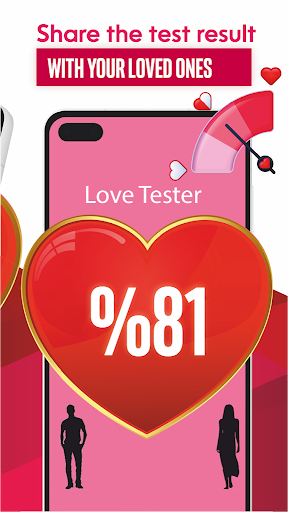
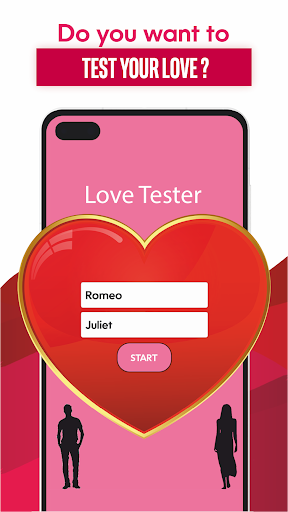
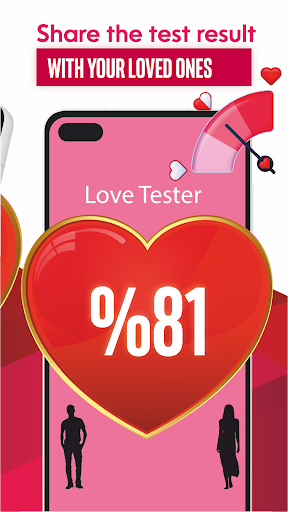
I first opened Love Tester because I wanted something quick to play between longer gaming sessions. I had just finished an intense evening with a competitive multiplayer game, so I was not looking for complicated controls, character upgrades, or another tutorial filled with menus. Love Tester offered the complete opposite experience. I entered two names, pressed the main button, and received a compatibility percentage almost immediately.
The result was simple, colorful, and obviously designed for entertainment. I did not treat the number as meaningful relationship advice, but it still made me curious enough to try another pair of names. A few minutes later, I had tested fictional couples, gaming characters, friends, celebrities, and increasingly ridiculous combinations. What looked like a ten-second novelty gradually became a surprisingly enjoyable social activity.
My First Five Minutes
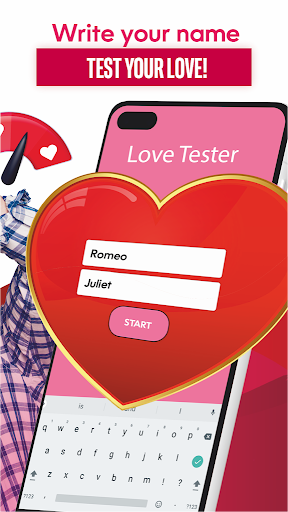
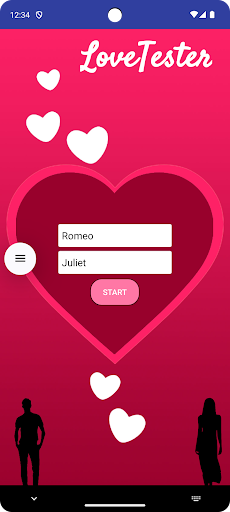
The game does not hide its purpose behind unnecessary features. Two text fields sit at the center of the experience. I typed one name into each field, started the test, and watched the game generate a match score. There was no account creation, no character customization, and no long explanation of how the system worked.
That immediate accessibility was the main reason I continued playing. Some casual games spend more time explaining their mechanics than allowing me to interact with them. Love Tester understands that its idea is already familiar. It simply gives me the necessary controls and lets curiosity handle the rest.
My first result was fairly ordinary, so I tried again with different names. The second result was unexpectedly high, which made the game feel more amusing even though I knew it was not performing a serious analysis. The entertainment came from anticipating the number and reacting to it, not from believing that the result could predict anything.
The Real Gameplay Happens Around the Screen
Love Tester became much better when I stopped playing alone. I shared it with a few friends and asked everyone to suggest combinations. Almost instantly, the game turned into a guessing challenge. Before revealing each result, we tried to predict whether the match would be high, average, or hilariously low.
The screen itself remained simple, but the conversation around it became the real attraction. One person tested their favorite fictional pair. Another entered two characters who constantly argue in a popular series. Someone else tested their own name with a video game protagonist. Every result produced a reaction, even when the percentage seemed completely random.
This is where I think Love Tester works best. It is less like a traditional single-player game and more like a digital party prop. The game provides a number, while the players create jokes, stories, and friendly competition around that number.
How We Turned It Into a Party Game
- Each person selected two names without explaining the connection;
- Everyone predicted the compatibility range before the result appeared;
- The closest prediction earned one point;
- Fictional characters were allowed, but repeated combinations were not;
- The first player to reach ten points chose the next group game.
These rules were not built into Love Tester, but they gave the experience more structure. Instead of repeatedly entering random names, we had a reason to think about each combination and pay attention to every score.
There Is Almost No Learning Curve
I normally enjoy games that reward practice, but not every gaming session needs to test my reflexes or strategic thinking. Love Tester requires almost no mechanical skill. I only needed to type two names and activate the result. That makes it accessible to players who do not normally spend much time with games.
I could hand the device to someone who had never seen Love Tester before, and that person understood what to do within seconds. The buttons were easy to recognize, the text fields behaved as expected, and the result appeared without requiring additional navigation.
This simplicity also makes the game suitable for short breaks. I could complete several tests while waiting for another game to update or while sitting in a voice chat before the rest of my squad arrived. There was no progress to lose and no ongoing session that demanded my attention.
I Tested the Game Like a Curious Gamer
After the initial amusement, I started experimenting with the system. I entered the same pair of names several times to see whether the result remained consistent. I reversed the order of the names. I changed capital letters, shortened names, and tested slight spelling variations.
This kind of experimentation was more entertaining to me than the basic premise. I wanted to understand whether the game treated each entry as a fixed combination or whether it generated a fresh result. The process reminded me of testing the boundaries of a simple game mechanic, even though there was no serious strategy involved.
I also tried entering usernames instead of real names. That made the experience feel more relevant to my gaming circle because many of us recognize each other more quickly by online handles. Testing two squad members, rival players, or characters from the same franchise created funnier conversations than using ordinary names.
The Presentation Fits the Idea
The visual design is bright and immediately communicates the romantic theme. I did not need to search through several screens to locate the central feature. The interface kept my attention on the names and the result, which is exactly where it needed to be.
I appreciated that the presentation did not attempt to imitate a serious dating service. Love Tester behaves like a playful casual game. Its colors, symbols, and result screen support that identity. A more complicated interface would have made the experience slower without adding meaningful depth.
The game also worked well during repeated tests because returning to the input screen was straightforward. I could enter another combination without navigating through a confusing sequence of menus. For a game based on repetition, that quick reset is essential.
When the Novelty Started to Fade
Love Tester has a very narrow gameplay loop. Once I had entered several names and seen a range of percentages, I understood nearly everything the game offered. There were no advanced modes, meaningful progression systems, unlockable challenges, or strategic decisions that encouraged a long solo session.
This did not surprise me, but it limited how long I wanted to play alone. The game was fun for a few minutes by myself and much longer with friends. Without other people contributing ideas and reactions, the repeated name-entry process eventually became predictable.
I would have enjoyed optional challenges that expanded the central concept. A timed mode could ask me to create ten combinations before the clock expired. A guessing mode could hide the percentage while another player predicted the result. A local history page could save recent combinations and allow the group to compare them.
Those additions would not need to transform Love Tester into a complicated game. They would simply provide more reasons to interact with its existing mechanic.
What I Actually Used It For
My most enjoyable session had almost nothing to do with real romance. I used Love Tester as a crossover generator for fictional characters. I paired heroes from different games, matched antagonists with cheerful side characters, and tested names from completely unrelated universes.
The percentages became prompts for improvised stories. A surprisingly high score made us imagine how two characters might meet. A very low result led to debates about which personality trait would cause the first argument. The game did not provide those stories, but its simple results gave us enough material to invent them.
I also found it useful as a quick icebreaker in a gaming chat. When conversation slowed down, I posted a strange combination and asked everyone to guess the result. It required almost no explanation, and people could participate even if they were unfamiliar with the game.
Entertainment, Not Relationship Analysis
I never considered the displayed percentage to be a real measurement of compatibility. A pair of names cannot represent communication, trust, shared goals, personal history, or any of the other factors that shape a relationship. Treating Love Tester as a serious evaluation tool would miss the point of the experience.
I enjoyed it in the same way I enjoy a random character generator or a playful online quiz. The result creates a brief surprise and gives people something to discuss. The value comes from the reaction, not from scientific accuracy.
This distinction is especially important when testing the names of real people. I kept the atmosphere light and avoided using a random percentage to embarrass anyone or create unnecessary tension. The game was far more enjoyable when everyone understood that the results were just part of a joke.
A Better Fit for Groups Than Long Sessions
Love Tester did not become a game I wanted to play for hours. It became something I opened occasionally when the right social moment appeared. That difference shaped my overall experience. Judged as a deep game, it offers very little. Judged as an instant conversation starter, it performs its role effectively.
I liked that it respected my time. I could open it, complete a test, share the result, and leave without abandoning a mission or losing progress. There was no pressure to return every day and no complicated system demanding that I memorize additional rules.
For me, Love Tester worked best during gatherings, voice chats, and short breaks between larger games. Its mechanic is too limited to support extended solo play, but its simplicity makes it easy to share with almost anyone. I arrived expecting a disposable name calculator and ended up using it as a small social game that produced more laughter than its basic design initially suggested.
Pros:
- Unblocked access allows usage even in restricted network environments
- Offers a wide range of features for free without aggressive monetization
- Cross-platform compatibility ensures smooth performance on multiple devices
- Minimal system resource consumption and efficient battery usage
- User-friendly and intuitive interface enhances ease of navigation
- Engaging interactive animations and sound effects create a fun user experience
Cons:
- Potential variability in user experience depending on network restrictions and device compatibility
- Limited availability on platforms like Windows and Mac, requiring alternative solutions
- Simplified compatibility analysis may not satisfy users seeking deeper insights









Recent Reviews

Minecraft

Grand Theft Auto V

Toca Boca World

Roblox

Leave a comment
Your comment is awaiting moderation. We save your draft here
0 Comments