
Review
My first mission in R.E.P.O. ended because our team failed to carry a valuable object through a doorway. There was a terrifying creatur...
R.E.P.O.: A Revolutionary Odyssey in Gaming Innovation
My first mission in R.E.P.O. ended because our team failed to carry a valuable object through a doorway. There was a terrifying creature somewhere behind us, the extraction quota was still incomplete, and four small robots were arguing over the correct way to move an awkward piece of furniture. Someone lifted it too high, another player pushed from the wrong side, and the object slammed into the wall with an expensive crack.
That moment explained R.E.P.O. better than any tutorial could. This is a cooperative horror game where finding valuable items is only the beginning. I also had to move them through dangerous environments without damaging them, losing them, or attracting something hostile. The physics system turned ordinary objects into unpredictable challenges, while proximity voice chat ensured that every mistake became a group performance.
I expected a familiar extraction loop with horror elements placed around it. What I found was a much stranger combination of careful teamwork, physical comedy, resource management, and sudden panic. R.E.P.O. can be genuinely tense, but it is often funniest when everyone is trying their hardest to be sensible.
The Job Sounds Easier Than It Is
Each expedition gave my group a clear objective: explore the location, identify valuable objects, transport enough of them to meet the required quota, and reach the extraction point. The concept seemed straightforward during our first few minutes. Small items could be moved quickly, rooms offered several possible routes, and our robotic characters appeared more capable than their compact bodies suggested.
The situation became complicated as soon as we found larger valuables. Carrying a small vase was easy until I needed to open a door while holding it. Moving a table required coordination between multiple players. A heavy object could swing unexpectedly, collide with the environment, or slip from our grip during an emergency retreat.
The value of an item is not guaranteed to survive careless transportation. I learned to inspect routes before moving expensive cargo. Narrow passages, staircases, closed doors, and scattered debris could turn a profitable discovery into a disappointing collection of damaged pieces.
This made exploration more strategic than I initially expected. I was not simply searching for the nearest valuable. I was evaluating whether my team could realistically transport it. A fragile object located close to the extraction zone sometimes became more useful than a large treasure hidden deep inside the building.
A Piano Became Our Main Enemy
One of my most memorable sessions involved a piano that looked far too valuable to leave behind. It was heavy, wide, and located in a room connected to the main corridor by an inconvenient doorway. Three of us decided that transporting it would be worth the effort.
At first, the operation felt surprisingly professional. Two players controlled the sides while I guided the front. We rotated the piano slowly, corrected its angle, and reached the doorway without causing serious damage. Then someone heard a creature nearby.
Our careful formation disappeared immediately. One player released the piano and ran. The sudden change in weight pulled the object sideways. I tried to save it, but the remaining teammate moved in the opposite direction. The piano struck the doorframe, spun across the room, and blocked our escape route.
We survived, but the piano did not remain in respectable condition. The entire failure was frustrating from a financial perspective and hilarious from a cooperative one. R.E.P.O. repeatedly created these unscripted situations where the physics system became a source of both danger and comedy.
Proximity Chat Changes Every Conversation
Voice communication is not just a convenient multiplayer feature here. It is part of the atmosphere. My teammates sounded clear when they stood beside me, but their voices became quieter as they moved away. A player exploring another room could suddenly sound distant, confused, or alarmed.
This created tension without requiring the game to display constant warnings. I often understood that something had gone wrong because a teammate’s calm explanation turned into a fading shout from the other side of a corridor. Sometimes the voice stopped entirely, leaving the rest of us to decide whether we should investigate or continue protecting the cargo.
The system also strengthened the comedy. Players naturally whispered when danger was nearby, even when nobody was certain whether whispering would help. Instructions became increasingly desperate as a heavy object began sliding down a staircase. Someone might confidently announce a plan, disappear around a corner, and return seconds later with several problems following them.
I enjoyed that communication remained imperfect. We could not rely on a permanent team-wide channel to solve every situation. Staying together improved coordination but increased the chance that one mistake would affect everyone. Splitting up allowed faster exploration but made information less reliable.
My Confidence Never Survived Contact With a Monster
R.E.P.O. became most effective when I started feeling comfortable. After learning a level’s basic layout, I moved faster, carried more valuable objects, and spent less time checking every corner. That confidence usually lasted until a creature appeared somewhere unexpected.
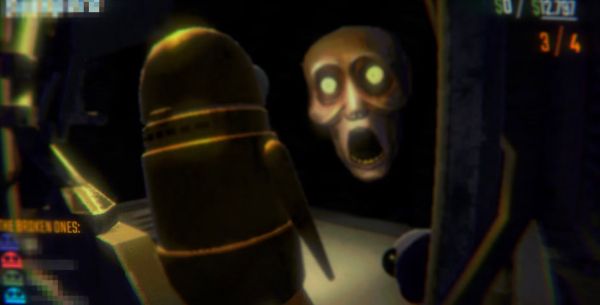
The enemies are not frightening only because of their appearance. Their behavior creates uncertainty. Some threats can be avoided through careful movement, while others force the group to change plans immediately. A previously safe route may become unusable, leaving valuable cargo stranded in the wrong room.
I rarely felt prepared for an encounter, even when I understood what a creature could do. The environment, nearby objects, teammate positions, stamina, and available equipment changed the situation every time. Knowledge helped, but it did not remove the chaos.
The physics system also affects confrontations. Objects can become obstacles, tools, or accidental hazards. A crowded room may provide temporary protection, but it can also trap the team. Equipment can offer an advantage, although using it effectively while everyone is moving and shouting is another challenge entirely.
The Upgrade Shop Became Our Planning Room
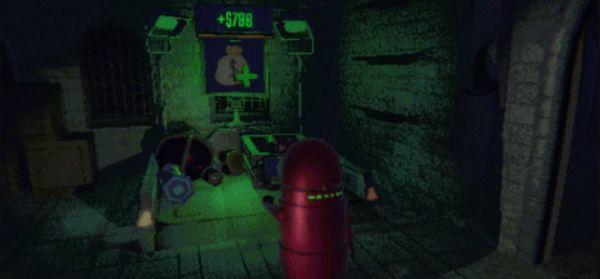
Successful expeditions provided currency that my team could spend on equipment and improvements. This gave each run a sense of continuation. We were not only increasing a number; we were deciding which weaknesses needed attention before the next mission.
Stamina improvements made exploration more forgiving. Strength upgrades helped with heavier cargo. Health-related investments offered additional security, while weapons and utility equipment created new responses to dangerous situations. Every purchase felt valuable because resources were limited and failure could delay future improvements.
My group rarely agreed immediately. One player wanted tools for handling enemies. Another preferred upgrades that made transportation easier. I usually supported anything that reduced the chance of dropping expensive objects, although this sensible position was regularly ignored in favor of buying something more entertaining.
These discussions became an enjoyable break between expeditions. We reviewed what had gone wrong, blamed one another with varying degrees of accuracy, and selected upgrades based on the previous disaster. The shop acted like a planning room where our team briefly pretended to be organized.
I Developed a Real Cargo Routine
After several unsuccessful missions, I stopped carrying every object directly toward extraction. Instead, my team created temporary collection areas. We moved smaller valuables into a secure room, cleared the nearby path, and then transported several items during one coordinated push.
This approach reduced unnecessary travel and made it easier to protect fragile cargo. It also gave us a recognizable fallback point when the level became confusing. However, placing too many valuables together introduced a new risk. One poorly controlled object could collide with several others and reduce the value of the entire collection.
My preferred routine gradually became more deliberate:
- I explored nearby rooms without moving the largest objects;
- I identified a reasonably safe route to the extraction point;
- I opened doors and removed small obstacles in advance;
- I transported fragile items before the team became exhausted or distracted;
- I saved heavy group-carry objects for moments when several players were available;
- I kept enough stamina to react when the environment stopped cooperating.
This method did not guarantee success, but it made our failures more interesting. Instead of losing because nobody had a plan, we lost because the plan encountered a creature, a staircase, or one teammate with excessive confidence.
The Robots Make Every Disaster Look Charming
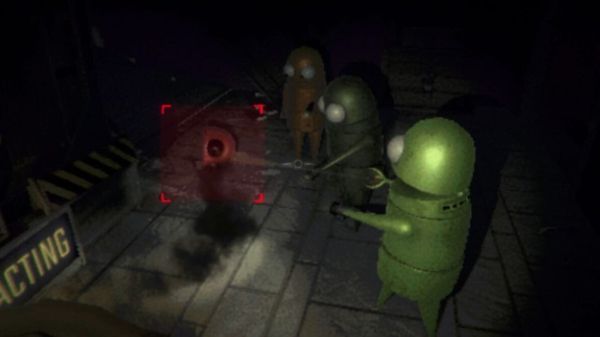
The playable robots are a major part of the game’s personality. Their small bodies, expressive faces, and awkward physical movement make them immediately likable. Even a serious escape can look ridiculous when several robots stumble through a corridor while dragging an oversized object behind them.
I enjoyed how the character design softened the darker atmosphere without removing it. The environments remain unsettling, and the enemies can still create genuine tension. However, the robots prevent the experience from becoming relentlessly grim.
Customization adds another layer of personality. Different cosmetic choices made it easier to recognize teammates and gave our group a stronger visual identity. More importantly, unusual outfits made every poorly planned operation even funnier.
The contrast between the cute robots and the hostile world is central to the game’s appeal. I never felt like a powerful soldier entering a dangerous location. I felt like a small employee sent into an impossible workplace by management that valued the cargo more than the staff.
Solo Play Changed the Entire Mood
I tried several expeditions without a full group and immediately noticed how much the experience depended on cooperation. With fewer players, every task took longer. Large objects became more difficult to transport, exploration felt riskier, and there was nobody nearby to turn a mistake into a shared joke.
The horror became more prominent because silence replaced conversation. I paid closer attention to environmental sounds and became much more cautious when entering unfamiliar rooms. The same locations that felt chaotic with friends became lonely and oppressive.
However, the physics-based objectives were clearly more enjoyable with a coordinated team. Carrying awkward items is entertaining when multiple players are negotiating angles and blaming each other. Alone, the process can feel slower and more mechanical.
I would still enter R.E.P.O. with a smaller group when I wanted a more tense session, but my favorite experiences came from playing with friends. The game’s systems generate stories through interaction, and more personalities create more opportunities for unexpected decisions.
Early Access Is Visible Beneath the Fun
R.E.P.O. already offers a strong central loop, but I could still feel that the game was being developed. Certain interactions were inconsistent, some physics reactions were difficult to predict, and repeated sessions gradually revealed the current limits of the available content.
The same unpredictability that creates comedy can occasionally become irritating. An object may react more violently than expected, or a careful movement may produce an expensive accident that does not feel entirely deserved. Most of the time, I accepted this as part of the game’s identity. During a difficult run, however, losing significant value to an awkward collision could be frustrating.
Enemy encounters also vary in how fair they feel. Learning behavior patterns improves survival, but crowded environments and sudden appearances can create situations with very little room for recovery. Teams that enjoy improvisation will probably accept that uncertainty more easily than players seeking precise competitive balance.
The progression system gave me reasons to continue, although I wanted even more long-term variety. Additional locations, equipment choices, objectives, environmental conditions, and character improvements would make repeated expeditions feel less familiar.
My Favorite Runs Were Never the Cleanest
A perfect expedition would involve locating valuable objects, transporting them safely, avoiding every threat, meeting the quota, and leaving without unnecessary damage. Strangely, those were not the sessions I remembered most clearly.
The memorable runs were the ones where the team recovered from a terrible decision. We carried a damaged object through an unsafe route because the normal path was blocked. We abandoned a valuable item to help a separated teammate. We reached extraction with barely enough value after spending several minutes arguing over whether one fragile object could survive the journey.
R.E.P.O. understands that cooperative games become memorable when systems interact in unexpected ways. The monsters, physics, voice chat, cargo values, stamina, equipment, and player personalities constantly affect one another. The game does not need to script every dramatic moment because players create enough trouble independently.
Why I Kept Returning to Work
I continued playing because each expedition gave my group a new story. The objective remained familiar, but the details changed depending on the location, valuables, enemies, equipment, and behavior of my teammates. Even repeated mistakes felt different because they happened under new circumstances.
The horror kept exploration tense, while the physics made every transportation task uncertain. Proximity chat turned ordinary communication into part of the gameplay, and the upgrade system gave our team something meaningful to discuss between missions.
R.E.P.O. is not a polished power fantasy. It is a game about vulnerable robots performing hazardous work with equipment they barely understand. My team regularly arrived with a sensible strategy and left with damaged cargo, missing resources, and a much better story than the one we had planned.
That combination made the game difficult to replace. Other cooperative horror titles have asked me to identify threats, collect evidence, or escape dangerous locations. R.E.P.O. asked me to perform all the usual survival decisions while carrying a fragile antique through a narrow hallway with five unreliable coworkers. For me, that was where the fear, comedy, and teamwork finally became the same experience.
Pros:
- Rich narrative with meaningful player choices.
- Regular updates and active community engagement.
- Customizable experience with mods and cheats.
- Accessible on multiple platforms with smooth installation process.
- Impressive visual design that captivates players.
- Diverse and flexible gameplay caters to different styles.
Cons:
- Performance challenges on lower-end hardware.
- Steep learning curve for beginners.
- Potential imbalance due to mod and cheat integrations.









Recent Reviews

Minecraft

Grand Theft Auto V

Toca Boca World

Roblox

Leave a comment
Your comment is awaiting moderation. We save your draft here
0 Comments