
Review
Schedule I started me with very little dignity. I did not have a criminal empire, a carefully organized laboratory, a fleet of vehicles...










Schedule I: An Immersive Odyssey Through Storytelling, Strategy, and Innovation
Schedule I started me with very little dignity. I did not have a criminal empire, a carefully organized laboratory, a fleet of vehicles, or employees waiting for instructions. I had limited money, basic supplies, a cheap place to work, and the uncomfortable awareness that almost every useful activity could attract attention.
My first transaction was mechanically simple. I prepared a product, arranged a meeting through my phone, travelled to the customer, completed the exchange, and watched my cash increase. Yet that small payment immediately created several new decisions. I could purchase more supplies, invest in equipment, improve my property, approach another customer, or save toward something that would reduce the amount of manual work later.
This is where Schedule I became difficult to put down. The illegal subject matter provides tension and dark comedy, but the structure underneath it is a detailed business-management loop. I bought materials, processed products, adjusted mixtures, packaged orders, built relationships, expanded into new areas, managed employees, and tried to make the operation efficient enough that I no longer needed to perform every repetitive job myself.
The progression constantly offered one more practical improvement. A better workstation could increase output. A new property could provide room for additional equipment. Another dealer could manage customers while I focused on production. A vehicle could shorten delivery routes. Every solution created a larger system that needed further organization.
Schedule I is at its best when I am standing inside a crowded property at two in the morning, surrounded by half-finished orders, ringing messages, low supplies, and machines placed according to a layout I now regret. It turns expansion into both a reward and a new source of pressure.
Hyland Point Is Small Enough to Learn and Busy Enough to Matter
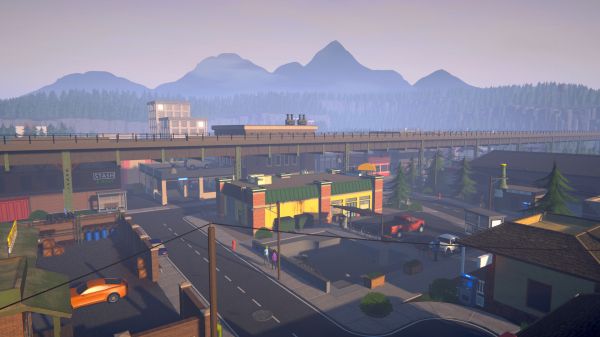
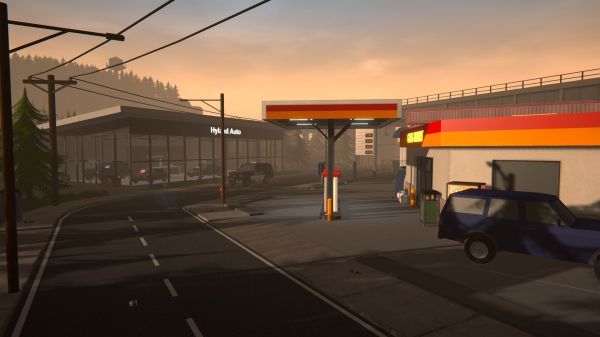
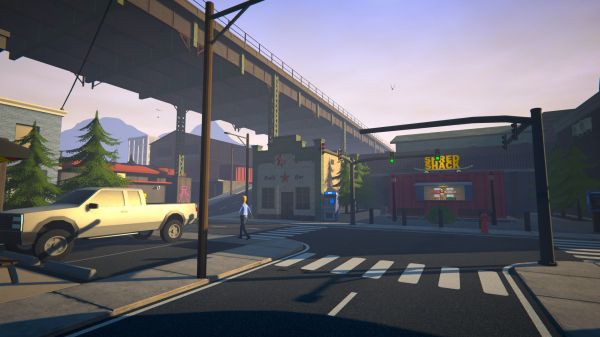
Hyland Point does not feel like a massive open-world city. I learned its major streets, neighborhoods, shops, shortcuts, and dangerous areas relatively quickly. That compact scale supports the game because deliveries and supply runs remain meaningful without becoming extended travel sequences.
Different parts of town gradually acquired practical identities in my mind. One area contained useful customers, another became associated with police patrols, and certain routes offered faster movement at the cost of greater exposure. The map stopped feeling like scenery and became a network of business decisions.
I appreciated how ordinary the city often appeared. People followed schedules, visited shops, stood outside businesses, returned home, and moved through public spaces. My operation existed underneath those routines rather than inside a separate criminal zone.
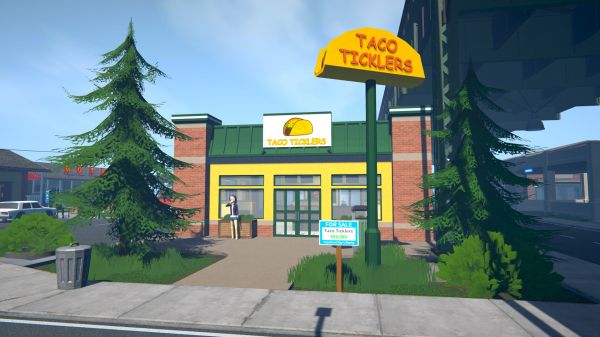
The low-detail visual style prevented Hyland Point from feeling realistic, but it made navigation readable. Buildings have recognizable silhouettes, interactive locations are easy to identify, and important characters stand out without requiring a crowded interface.
Some areas still feel unfinished. Certain buildings exist mainly as visual barriers, pedestrian routines repeat noticeably, and sections of the map contain less activity than their design suggests. Early-access expansion may improve this, but I frequently saw locations that looked as though they were waiting for a future mechanic.
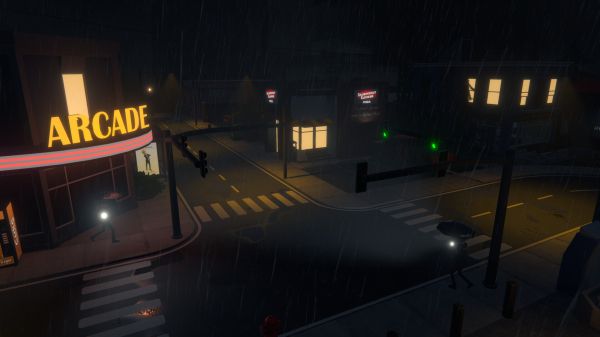
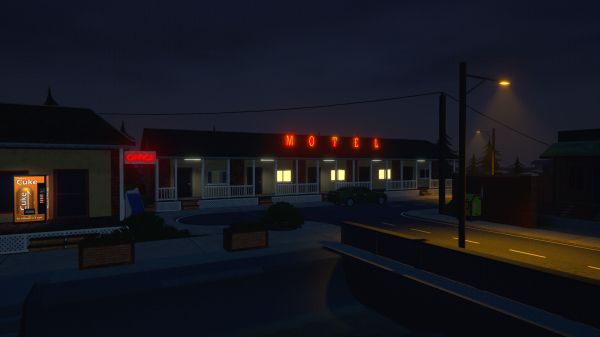
The weather and day-night changes add atmosphere without transforming the basic routes. Rain, fog, darkness, and different lighting conditions can make familiar streets feel less predictable, particularly when I am carrying valuable inventory and trying to avoid police attention.
The Phone Became My Real Headquarters
I spent an enormous amount of time looking at the in-game phone. Customers sent requests, contacts became available, deliveries needed planning, and the growing organization generated more information than I could comfortably remember.
The phone is effective because it keeps the business mobile. I do not need to return to a central office every time someone wants an order. I can check demand while purchasing supplies, travelling between properties, or preparing another batch.
Early in the game, each message feels important. I know the customer, remember their preferred quantity, and personally arrange the exchange. Later, the volume becomes harder to manage. Several requests can arrive while I am already carrying multiple orders, and one inefficient route may consume the time needed for another customer.
This pressure creates the incentive to hire dealers. Delegation is not merely a late-game luxury. It becomes necessary because the player’s attention is the most limited resource.
I wanted stronger filtering and organization tools as the network expanded. Separating customers by dealer, neighborhood, product preference, or urgency would make the phone easier to use. The interface improves through progression and updates, but large operations can still become a wall of small conversations.
Production Starts Like a Chore and Becomes a Puzzle
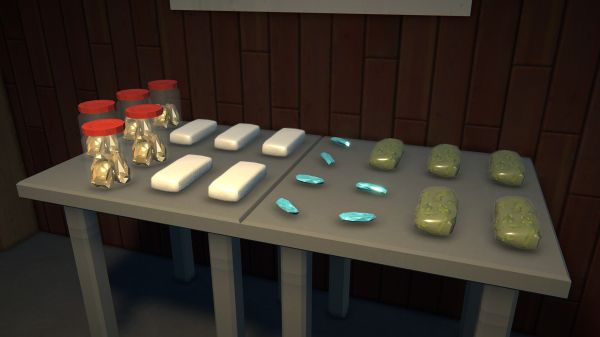
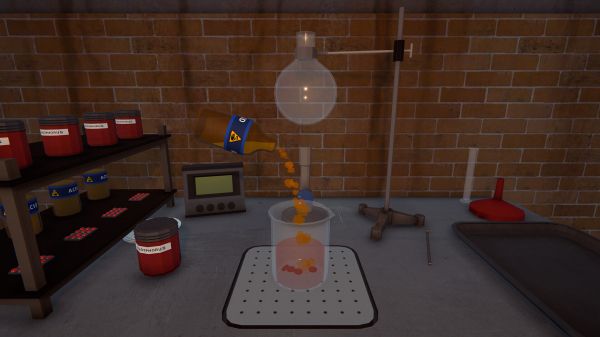
The early production process is deliberately manual. I purchase ingredients, operate equipment, move items between stations, wait for processes to finish, package the result, and arrange it for delivery.
The individual interactions are simple, but their order matters. A missing supply can interrupt an entire batch. Poor workstation placement can force unnecessary movement. Producing too much of the wrong item leaves money trapped in inventory.
I initially placed equipment wherever it fitted. This created an ugly and inefficient room where containers blocked paths, stations competed for space, and completed products ended up in several unrelated locations.
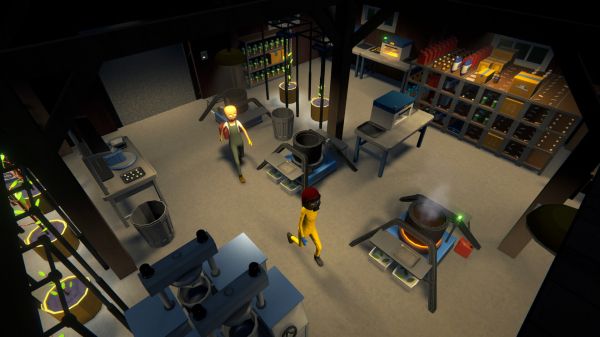
Reorganizing the property became one of the most satisfying parts of the game. I separated raw materials from processing, created a clear packaging area, placed storage near the employees who needed it, and reduced the distance between repeated tasks.
The experience resembles a factory game operating at human scale. Instead of watching conveyor belts move everything automatically, I am personally carrying boxes and trying to understand why one employee refuses to complete an assignment.
Automation never eliminates management completely. Machines require supplies, workers need clear stations, storage must contain the correct materials, and finished products still need distribution. The business becomes easier to operate only if I design the system properly.
Mixing Products Is Where Experimentation Becomes Profit
The mixing system adds a layer of discovery beyond producing standard items. Combining a base product with additional ingredients can create new effects, change value, and appeal to customers differently.
I enjoyed testing combinations because the results were not always intuitive. An ordinary consumer item could alter the final product in a way I did not expect. Discovering a useful recipe felt like finding a business advantage rather than simply unlocking another predetermined upgrade.
The system encourages experimentation, but experimentation costs money and materials. A weak combination may be difficult to sell profitably, while a strong mixture can become the foundation of a product line.
I eventually began naming and organizing mixtures according to purpose. Some were designed for maximum value, others used easily available ingredients, and a few existed because their effects or names were funny enough to keep.
The most profitable approach can reduce variety if I allow spreadsheets to control every decision. Once I identify an efficient recipe, there is little practical reason to continue testing weaker alternatives.
I preferred treating mixing as part business strategy and part creative toy. The game becomes less interesting when every product is reduced to the highest possible margin.
Customers Feel Like Data Until Their Habits Become Familiar
Customers begin as names, locations, preferences, and potential income. Repeated interactions gradually make them recognizable parts of the city.
I learned which people ordered frequently, which were located near useful routes, and which created inconvenient meetings. Some customers became valuable because their demand was high. Others remained useful because they were easy to include in an existing delivery path.
Relationship progression gives each contact a small arc. Consistent service increases trust and opens access to broader networks. The system makes social connections part of expansion rather than presenting every customer as instantly available.
Dialogue remains limited, and many interactions eventually become transactional. I did not feel that most customers had deep personal stories. Their schedules and preferences create functional individuality rather than complex characterization.
This is enough for the management loop, but the game could become significantly richer with more customer-specific problems, rivalries, changing circumstances, or long-term consequences.
The planned introduction of more unusual customers suggests an opportunity to make the network feel less predictable. I would welcome clients who require special handling, create moral complications, or alter the behavior of nearby contacts.
Dealers Gave Me Freedom and New Reasons to Complain
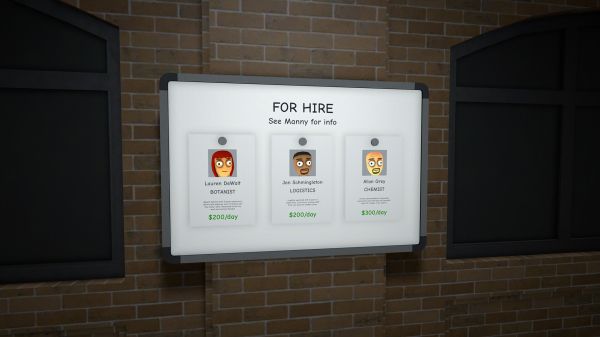
Hiring a dealer felt like a major milestone. I could assign customers, provide inventory, and allow someone else to manage exchanges that had previously consumed most of my day.
The first successful dealer changed the scale of the operation. I no longer needed to personally answer every order. Time became available for production, expansion, exploration, and property management.
Delegation also introduced distance between me and the customers. I needed to keep the dealer supplied, monitor performance, collect earnings, and decide which part of the network they should control.
A poorly assigned dealer can create inefficient coverage. Customers located far apart increase travel demands, while low inventory produces missed sales. Expanding too quickly may give a dealer more responsibility than the current production system can support.
I enjoyed the feeling of moving from street-level work toward organization management. The business became a collection of interconnected workers rather than one character performing every task.
Employee behavior can be frustrating. Pathfinding, workstation access, object placement, and unclear assignment requirements occasionally caused workers to stop functioning as expected. Debugging a human employee felt strangely similar to debugging an automated factory line.
Properties Are Progress Bars I Can Walk Inside
New properties represent more than increased storage. Each one allows the business to change structure.
A small room can support basic production, but expansion creates space for specialized areas. I can dedicate one property to growing, another to processing, and another to packaging or distribution.
The freedom to place furniture and equipment gives these spaces a personal identity. My first property looked temporary because everything had been arranged around immediate need. Later locations became more deliberate.
I liked watching empty rooms fill with useful infrastructure. Shelves, beds, lights, stations, storage, and employee routes turned bare interiors into functioning workplaces.
Building placement is not always smooth. Objects can appear aligned from one angle and awkward from another. Small gaps may prevent interaction or block pathfinding. Repositioning a crowded room becomes tedious because one adjustment can require moving several other items.
The game would benefit from stronger snapping options, blueprint copying, and clearer visualization of employee paths. Designing a property is enjoyable; repeatedly correcting invisible accessibility problems is not.
Growing Is Relaxing Until Scale Turns It Into Logistics
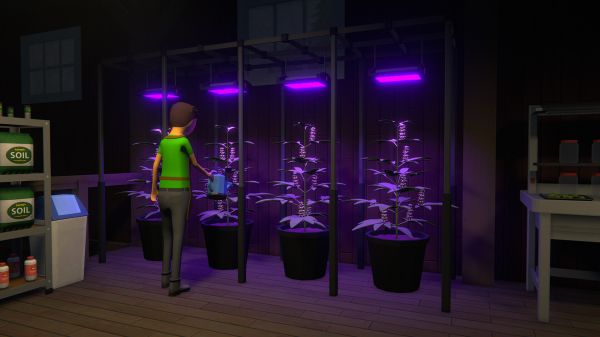
The cultivation process begins with familiar farming actions: obtain seeds, prepare containers, provide necessary resources, wait for growth, and harvest the result.
At small scale, I found the routine almost peaceful. Plants created a visible sense of progress, and checking a growing room provided a break from deliveries and police attention.
Larger production changes the activity completely. I need enough supplies for several plants, organized storage, appropriate equipment, and workers capable of maintaining the routine.
The room layout matters because each unnecessary step becomes multiplied across many plants. A small inefficiency in one container becomes a major time cost when repeated throughout an entire property.
Automation makes cultivation manageable, but it can also turn a tactile activity into resource monitoring. I stopped interacting with individual plants and started checking whether the production chain had enough materials.
This is a natural progression for a business simulator. Personal work becomes systems management. I occasionally missed the early days when one successful harvest felt important on its own.
Police Create Pressure Without Becoming a Full Stealth Game
Police patrols, checkpoints, searches, and pursuit create the primary external threat during ordinary movement. They force me to consider what I am carrying and whether a route remains worth the risk.
The wanted system is readable enough to understand quickly. Suspicious actions attract attention, while escaping and remaining unseen can reduce immediate pressure.
I enjoyed the tension of crossing town with valuable inventory while officers occupied the most convenient route. A simple delivery becomes more interesting when I need to choose between speed and safety.
The stealth mechanics are functional but not especially deep. Visibility, obstacles, distance, and movement matter, yet enemy behavior can sometimes feel mechanical. Learning patrol patterns reduces much of the uncertainty.
Chases can become comic rather than frightening because of the game’s visual style and unpredictable collisions. Vehicles, fences, narrow passages, and pedestrians can turn a serious escape into physical chaos.
Police attention sometimes feels inconsistent. An action I expected to be noticed may pass without consequence, while another interaction triggers suspicion from farther away than anticipated. Updates have improved visibility logic, but the system still reveals its early-access condition.
Getting Arrested Is Annoying in Exactly the Right Way
Failure needs consequences or the illegal-business theme loses pressure. Schedule I punishes careless behavior through confiscation, lost time, money problems, and disruption of the current plan.
I rarely found arrest catastrophic enough to destroy an entire save, but it could ruin a carefully prepared day. Losing valuable inventory before several scheduled meetings forced me to reorganize production and explain the shortage through gameplay rather than dialogue.
This level of punishment works for me. A completely unforgiving system would discourage experimentation, while a harmless arrest would make police irrelevant.
The frustration feels personal because the loss often results from one unnecessary risk. I might carry more inventory than needed, choose the shortest route, or remain outside after attention has already increased.
The game repeatedly taught me that efficiency and greed are not the same thing. One large delivery trip saves time only if I actually reach the destination.
Vehicles Turn the City Into a Supply Network
Walking works during the early hours because the operation is small. As the network grows, vehicles become essential.
A car reduces travel time, increases carrying convenience, and makes distant properties feel like parts of one organization. It also creates new problems involving parking, police attention, collisions, and storage.
Driving has a loose, slightly awkward quality. The vehicles are responsive enough for ordinary travel but can behave unpredictably around curbs, obstacles, and crowded areas.
This lack of perfect control produces enjoyable comedy during multiplayer sessions. A carefully planned delivery can begin with someone reversing into a wall while the rest of the team waits.
Vehicles also change escape strategy. Speed provides safety in open streets but attracts attention and can become useless when a route is blocked.
I appreciated the newer recovery options for stuck vehicles because physics problems should not become permanent business disasters. The game still needs refinement in collision behavior and traffic interaction.
Combat Feels Secondary Until It Suddenly Does Not
Schedule I is primarily a management simulator, but conflict with rivals, police, and hostile characters introduces direct combat.
Melee encounters have a rough, physical comedy that fits the presentation. Movement is not elegant, and fights can become a collection of swings, obstacles, and desperate repositioning.
Ranged weapons provide greater control but also increase risk and resource demands. Ammunition, visibility, and the consequences of public violence make them more than simple upgrades.
I did not find the combat deep enough to support the game by itself. Enemy behavior, weapon handling, and encounter variety remain less developed than the economic systems.
That is acceptable when combat interrupts business activity rather than replacing it. A rival confrontation becomes memorable because it threatens an operation I have spent hours building.
The game becomes weaker when success depends on repeated direct fighting rather than preparation, positioning, or organizational strength. Its most distinctive power fantasy is building a network, not becoming the best fighter in Hyland Point.
Co-op Turns Every Efficient Plan Into a Social Experiment
Playing with friends changes the pace dramatically. Tasks can be divided across production, deliveries, shopping, employee management, and expansion.
A coordinated group grows faster because several activities happen at the same time. One player can prepare products while another completes sales and a third reorganizes a property.
The same freedom creates disorder. Friends may spend money without discussing priorities, produce incompatible items, move equipment, or use a vehicle that someone else expected to be available.
I found the chaos more enjoyable than perfect efficiency. Schedule I is funny when a supposedly professional organization depends on several people making confident decisions without sharing the same plan.
Voice communication helps enormously. Explaining inventory shortages, customer routes, and employee assignments through text would slow the experience considerably.
Co-op technical behavior has improved, but version mismatches, connection problems, synchronization quirks, and object interaction inconsistencies can still appear. The host’s progress and save structure also make it important to understand whose world the group is developing.
Money Stops Being the Only Measure of Progress
Early money is exciting because every purchase changes what I can do. A small amount can buy supplies, equipment, or enough inventory to complete the next set of orders.
Later, cash becomes one resource among several. Space, employee capacity, production speed, customer coverage, legal access, and my own attention can limit growth more than money.
This transition keeps progression interesting. A large bank balance does not automatically solve an inefficient property or an unreliable distribution network.
Laundering adds another stage between earning and safely using income. Businesses and legal fronts become part of expansion, turning money management into a broader system.
The mechanic is simplified rather than economically detailed, but it provides enough friction to prevent all revenue from becoming immediately useful.
I wanted more depth in legal business management. Fronts could have their own staffing, customer demand, operating costs, and risks. At present, they often feel like useful financial tools rather than complete businesses.
The Humor Comes From Treating Absurd Work Seriously
Schedule I rarely needs to deliver formal jokes. The systems produce comedy naturally.
A customer may send an urgent message while I am reorganizing shelves. An employee may stand beside the required item and insist they cannot work. A police chase may end because both vehicles become trapped against street furniture.
The character models and animations support this tone. People look expressive without appearing realistic, allowing serious situations to become ridiculous without completely losing tension.
Product names, unusual mixtures, customer behavior, and property layouts give players tools to create their own jokes. A business can be meticulously organized or resemble a storage room after a minor disaster.
I appreciated that the game does not constantly announce when something should be funny. Much of the humor emerges from the difference between the scale of my ambition and the amateur condition of the operation.
The Visual Style Is Functional Rather Than Beautiful
Schedule I uses simple models, clean surfaces, readable objects, and exaggerated characters. It does not attempt to compete with large open-world games through realism.
This approach supports performance and makes interactive items easy to identify. Ingredients, containers, tools, money, furniture, and products remain readable even inside cluttered rooms.
Lighting and weather provide much of the atmosphere. Hyland Point feels different during a clear afternoon, heavy rain, fog, or late-night delivery route.
Some textures, animations, and environmental details appear unfinished. Repeated assets and empty interiors remind me that the game remains in development.
I accepted the roughness because the systems create strong engagement. A beautifully rendered production room would not compensate for weak management mechanics. Schedule I prioritizes the correct area.
Continued optimization is important because large properties, numerous objects, employees, traffic, weather, and multiplayer activity can create performance pressure despite the simple art.
The Sound of a Message Can Interrupt Any Plan
The audio design supports routine more than cinematic drama. Machines operate, phones notify me of messages, doors open, vehicles move through the streets, and police cues warn that a normal trip has become dangerous.
The phone notification became one of the most recognizable sounds because it often represented potential profit and additional work simultaneously.
Production spaces develop their own mechanical rhythm. Stations, packaging actions, footsteps, and employee movement make a busy property sound productive even when the layout is causing problems.
Music supports the relaxed, slightly comic atmosphere without dominating long sessions. I often played for extended periods, so restraint was more valuable than constant dramatic scoring.
Repeated sounds can become tiring during high-volume production. More variation for machines, customer messages, and employee activity would help large operations feel less mechanical.
Controller Support Makes the Sofa Possible, Not Every Task Perfect
Gamepad support makes movement, driving, combat, and ordinary interaction more comfortable for players who prefer a controller.
The challenge is that Schedule I contains many interfaces designed around cursor movement, item selection, property placement, inventory management, and small menu actions.
A virtual cursor makes these systems accessible, but it cannot make every click-heavy process feel natural. Organizing storage or placing furniture remains more precise with a mouse.
I appreciated the effort to add controller-specific prompts, menu behavior, and assistance rather than mapping every input mechanically.
The game is now more suitable for relaxed play away from a desk, although detailed property construction still benefits from keyboard and mouse control.
Early Access Is Visible in the Empty Spaces
The core loop is already substantial, but Schedule I regularly reminds me that it is unfinished.
Some characters have limited dialogue. Certain businesses and buildings suggest mechanics that are not fully developed. Employee behavior can fail in confusing ways, and balance changes as new updates arrive.
The advantage of early access is active expansion. New systems, optimization work, weather, weapons, controller support, interface improvements, and future customers continue changing the experience.
The disadvantage is uncertainty. A strategy may become weaker after an update, a planned feature may move, and technical problems may require patience.
I would not recommend purchasing it while expecting a completely polished final product. I would recommend it to players comfortable watching an ambitious management game develop over time.
The Repetition Is Both the Hook and the Main Weakness
Schedule I depends on repeated production and sales. I prepare products, package them, distribute inventory, collect money, purchase supplies, and begin again.
This repetition becomes satisfying when each cycle improves the system. A better station, employee, property, recipe, or route makes the next cycle more efficient.
It becomes tedious when I am repeating manual actions without working toward a meaningful change. Packaging many identical items or carrying supplies between poorly connected storage locations can feel like unnecessary friction.
Automation is the game’s answer, but reaching effective automation requires substantial manual work. Players who dislike repetitive setup may stop before the organization becomes interesting.
I found the progression compelling because inefficiency was usually temporary. There was almost always a tool, worker, layout change, or investment capable of improving the process.
I Became More Interested in Organization Than Expansion
At first, I wanted more customers, more products, and more money. Later, I became obsessed with reducing unnecessary movement.
I reorganized shelves so employees could reach ingredients faster. I changed dealer assignments to create cleaner territories. I moved stations closer together and separated finished products from raw supplies.
These improvements produced smaller numbers than a major sale, but they made the business feel genuinely mine.
Schedule I rewards players who enjoy examining a system and asking why it is inefficient. The game provides enough freedom for the answer to be personal.
My organization never became perfect. Growth constantly introduced another bottleneck. Solving production increased packaging demand. Improving packaging exposed delivery limitations. Hiring dealers created the need for more inventory.
This endless chain of bottlenecks is the real progression system.
Who Will Enjoy Schedule I?
I recommend Schedule I to players who enjoy business simulators, automation, open-world progression, property customization, logistics, co-op disorder, and games where a small operation gradually becomes a complex network.
Fans of factory and tycoon games may appreciate the production chains, even though the systems operate through characters and rooms rather than large industrial machinery.
Players interested mainly in action may find the combat too simple and the management too repetitive. The illegal theme does not turn the game into a constant open-world action spectacle.
Anyone uncomfortable with fictional drug production and distribution should avoid it. The subject is central to the mechanics rather than a brief background detail.
Players expecting a finished, technically polished experience should also remember that the game remains in early access. Bugs, rebalancing, unfinished areas, and changing systems are part of the current package.
The Empire Was Never the Most Interesting Part
Schedule I presents itself as a game about building an illegal empire, but the largest numbers were not what kept me interested. I cared about whether the production room worked, whether a dealer had enough inventory, and whether the new property had finally solved the storage problem.
The fantasy of expansion succeeds because it begins with ordinary manual work. Every automated process has value because I remember performing it myself. Every employee represents time I have recovered.
The game’s strongest systems are production, mixing, distribution, property design, and gradual delegation. Hyland Point provides a compact environment where those systems can interact with customers, police, businesses, and other risks.
Its weaknesses are visible. Employee logic can become frustrating, combat lacks depth, interfaces become crowded, building placement needs refinement, and repeated production actions can become tiring before automation arrives.
I rate Schedule I 8.6/10 in its current early-access form. It is already one of the more absorbing business simulators I have played, not because its subject is provocative, but because every stage of expansion creates a practical problem I want to solve.
I began with one small transaction and a nearly empty room. Much later, I stood inside a property filled with equipment and employees while messages arrived faster than the organization could comfortably answer them.
That was the moment I realized I had succeeded.
It was also the moment I realized the business needed another building.
Pros:
- High replay value with dynamic content
- Smooth gameplay across various platforms
- Supports mods and custom content
- Engaging audiovisual design
- Regular updates and strong community support
- Intricate and immersive storyline
Cons:
- Non-linear narrative can be confusing for newcomers
- Mod and cheat support might reduce challenge for purists
- Challenging difficulty may frustrate some players









Recent Reviews

Minecraft

Grand Theft Auto V

Toca Boca World

Roblox

Leave a comment
Your comment is awaiting moderation. We save your draft here
0 Comments