
Review
I entered Wicked: For Good expecting a larger, darker continuation of the first film. I assumed the spectacle would expand, the politic...
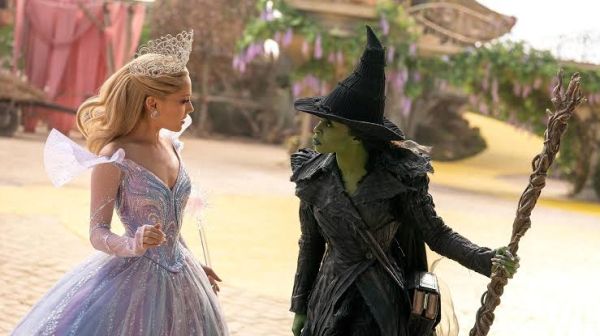

A Cinematic Spell: Exploring the Enchantment of Wicked For Good
I entered Wicked: For Good expecting a larger, darker continuation of the first film. I assumed the spectacle would expand, the political conflict would become more direct, and the familiar story of Oz would begin closing around Elphaba and Glinda. All of that happened, but it was not what stayed with me most strongly. The film worked best whenever it stopped treating its heroines as legendary witches and allowed them to be two people dealing with the consequences of choices they once believed were necessary.
The first Wicked gave me discovery, school rivalries, unexpected friendship, romantic confusion, and the exhilaration of Elphaba finally refusing to cooperate with a dishonest system. Wicked: For Good begins after that exhilaration has faded. Defiance has become isolation. Popularity has become responsibility. The women who once shared a room now inhabit opposite versions of Oz, each surrounded by people who want to control what she represents.
That shift gives the second film a more serious emotional temperature. It is less interested in asking who Elphaba and Glinda might become and more interested in showing what becoming those people costs them.
Two Lives Moving in Opposite Directions
Elphaba now lives as a hunted figure, hidden from the society she tried to challenge. Her name has been transformed into a warning, and her actions are interpreted through stories created by people with far greater control over public information. I could feel the exhaustion beneath her determination. She is still fighting for the Animals of Oz and still trying to expose the Wizard, but her resistance has become lonelier and more dangerous.
Cynthia Erivo plays that isolation without reducing Elphaba to constant anger. I noticed the quieter expressions: the hesitation before trusting someone, the frustration of being misunderstood, and the sadness that appears whenever she recognizes how completely Oz has accepted the official version of her identity. Her strength remains impressive, but the performance is most affecting when strength no longer looks sufficient.
Glinda’s life appears brighter. She has status, public affection, beautiful clothing, and a carefully maintained place near the center of power. Yet the luxury feels increasingly like a decorative enclosure. She can influence how people feel, but she cannot always influence what the Wizard and Madame Morrible decide to do.
Watching these parallel lives was one of my favorite elements of the film. Elphaba seems physically free but socially imprisoned by propaganda. Glinda appears socially powerful but emotionally trapped by the role she has accepted. Neither woman possesses the freedom she imagined when their paths separated.
Glinda’s Smile Becomes Part of the Costume
Ariana Grande’s performance surprised me because it relies on restraint more often than the first film did. Glinda still has comic timing, social polish, and the ability to turn an entrance into an event. However, her cheerful public identity now requires effort. I began watching the difference between the smile she gives Oz and the expression that remains when nobody important is looking.
Her position is complicated because she is not presented as completely unaware. She understands that the political story surrounding Elphaba is dishonest. She knows that her own popularity is useful to people whose goals she does not fully share. The painful part is that she continues participating because she believes proximity to power may allow her to soften its decisions.
I found this more interesting than turning Glinda into either a secret revolutionary or a shallow celebrity. She compromises, rationalizes, hesitates, and occasionally discovers that good intentions do not erase the effects of cooperation. The film allows her mistakes to remain meaningful while still showing why she made them.
Her glamorous appearance reinforces the conflict. Every gown, hairstyle, and public ceremony makes her look more like the ideal figure Oz wants to see. At the same time, those visual details create distance between Glinda and the young woman who once shared private jokes with Elphaba. Her transformation is beautiful to watch and uncomfortable to understand.
The Wizard’s Most Effective Weapon Is a Story
The political conflict in Wicked: For Good does not depend only on guards, magical force, or formal authority. The Wizard and Madame Morrible control the narrative that reaches ordinary citizens. They give the public a frightening enemy, repeat the same simplified explanation, and allow fear to turn uncertainty into obedience.
Jeff Goldblum’s Wizard remains charming enough to make the manipulation unsettling. He does not present himself as a traditional fantasy tyrant. He behaves like someone who wants to be admired, forgiven, and entertained while other people manage the harsher consequences of his rule. His friendliness makes his lack of accountability more disturbing.
Michelle Yeoh gives Madame Morrible a colder form of authority. She understands the value of presentation and knows exactly how Glinda can be used to reassure the population. Her influence often feels administrative rather than theatrical. She does not need to dominate every room physically because she has already shaped the choices available inside it.
I appreciated how the film showed propaganda working through repetition and emotional convenience. Many citizens of Oz do not personally know Elphaba. They know the version of her that has been provided to them. Accepting that version is easier than questioning the institutions offering safety, celebrations, and certainty.
Fiyero Finally Has to Choose
Fiyero’s position becomes much more difficult in this chapter. In the first film, his relaxed confidence allowed him to move through social situations without appearing deeply committed to any side. Here, avoiding commitment is no longer possible.
Jonathan Bailey gives the character a useful combination of charm and growing seriousness. Fiyero still understands how to perform confidence, but his relationship with Elphaba has changed what he is willing to ignore. His engagement to Glinda creates a polished public image, while his private loyalties pull him in another direction.
I was glad the film did not treat the romantic triangle as a simple competition between two women. The deeper issue is that all three characters have developed incompatible relationships with truth. Elphaba refuses to publicly accept a lie. Glinda believes she can survive within it and gradually redirect it. Fiyero reaches the point where remaining neutral becomes another form of participation.
His choices carry emotional consequences because affection alone cannot solve the political conflict surrounding them. Every personal decision has become public, and every attempt to protect one person places someone else in greater danger.
The Story of Oz Begins Closing In
One of the film’s most fascinating tasks is connecting Wicked more directly to the familiar events of The Wizard of Oz. A girl from Kansas approaches the story, recognizable figures move toward their established identities, and objects that once seemed like background details gain new meaning.
I enjoyed recognizing these connections, but the film generally avoided turning them into a parade of references. The strongest moments were those that reinterpreted familiar ideas through Elphaba and Glinda’s perspective. Events that appear simple in the traditional Oz story become morally complicated when viewed from the lives happening outside Dorothy’s understanding.
This creates a strange emotional experience. I often knew where certain characters or situations were heading, yet I still hoped the film might find a gentler route. Familiarity did not remove suspense because the important question was not always what would happen. It was how the characters would experience it and what the official story would later leave out.
The overlap also reinforces the film’s interest in reputation. History remembers labels such as good witch and wicked witch because they are easy to repeat. Wicked: For Good keeps asking what had to be removed from the story before those labels could appear so certain.
The Songs Feel Like Private Decisions Made Public
The musical numbers in this film carry a different energy from the bright school sequences of the first chapter. Many songs emerge from characters who can no longer avoid a decision. They are not simply expressing desire; they are recognizing what their desires have already cost.
Erivo’s voice gives Elphaba’s material enormous force, but I was most engaged by the emotional control beneath the power. She can make a song feel physically large while still preserving the sense that Elphaba is speaking from a deeply personal wound. The vocal performance never becomes detached from the character.
Grande’s musical moments often reveal what Glinda cannot comfortably say in ordinary conversation. Her polished tone can shift into uncertainty without losing its clarity. The contrast between the elegance of her voice and the instability of her situation makes several songs feel more vulnerable than their staging initially suggests.
The title song carries the inevitable weight of audience expectation. Rather than treating it only as a showcase for two exceptional singers, the film keeps the focus on the history between the characters. Their voices matter because of what Elphaba and Glinda have survived together, not merely because the notes are technically demanding.
When the Film Slows Down, It Becomes Stronger
Wicked: For Good has many narrative responsibilities. It must continue the conflict with the Wizard, develop several supporting characters, connect with established Oz mythology, resolve relationships, and deliver the emotional ending of a two-film adaptation. At times, I could feel the story working through that list.
Some developments arrive quickly because so many transformations need to occur. Boq, Nessarose, Fiyero, Dorothy, the Wizard, and Madame Morrible all occupy important positions around the central friendship. The result occasionally feels crowded, especially when a major emotional event receives limited time before the plot moves toward the next one.
The film becomes more convincing when it pauses. A private conversation between Elphaba and Glinda can carry more tension than a large public sequence because the history between them fills every silence. I wanted more of those pauses. The performances are strong enough that the film does not always need another visual effect or immediate story development.
The faster sections still contain impressive filmmaking, but the emotional meaning sometimes needs a moment to catch up with the plot.
Oz Looks More Beautiful as It Becomes Less Trustworthy
The visual design continues to make Oz feel handcrafted rather than empty and digital. Emerald City remains extravagant, theatrical, and slightly artificial. Its beauty supports the government’s preferred image of stability. Public spaces shine because they are designed to be seen, celebrated, and believed.
Elphaba’s environments offer the opposite experience. Forests, hidden spaces, and damaged areas feel less orderly but more honest. Nature does not provide the same polished reassurance as the city, yet it is where she can act without constantly performing for an audience.
I noticed how often the composition separated characters even when they occupied the same location. Doorways, staircases, crowds, and architectural lines created emotional boundaries. Glinda could stand at the center of a magnificent room and still appear isolated. Elphaba could move through an open landscape and still seem surrounded by pressure.
The costumes continue this visual storytelling. Glinda’s clothing becomes increasingly ceremonial, while Elphaba’s appearance reflects practicality, resistance, and the identity that Oz has projected onto her. Neither wardrobe feels like decoration alone. Each character is wearing the role the world expects, even when she is trying to redefine it.
Nessarose and Boq Bring the Story Into Uncomfortable Territory
The material involving Nessarose and Boq is intentionally difficult. Their relationship is shaped by dependence, resentment, unreturned affection, and decisions made from emotional desperation. I did not find these scenes pleasant, but they were important because they show how pain can move through people who do not possess the emotional tools to handle it responsibly.
Nessarose wants control over a life in which she has frequently felt controlled by circumstances and by other people’s assumptions. That desire is understandable, but it does not justify the way she attempts to secure affection. The film allows me to recognize the source of her fear without asking me to excuse the harm that follows.
Boq is also more complicated than a passive victim of circumstance. His earlier choices were influenced by his fixation on Glinda and his unwillingness to be completely honest with Nessarose. By the time the truth becomes unavoidable, several people have built expectations on top of his silence.
Their storyline is one of the clearest examples of the film’s darker direction. Wishes do not remain harmless, love cannot be created through obligation, and magical solutions frequently expose the emotional problem they were supposed to hide.
The Final Meeting Is the Real Center of the Film
For all its magic, politics, romance, and Oz mythology, the film ultimately depends on whether I still believe in the connection between Elphaba and Glinda. I did.
Their friendship has never been simple. It began with irritation, developed through curiosity, and became strong because each woman saw something in the other that the surrounding world had ignored. Their later separation does not erase that understanding. It makes the understanding more painful because they know exactly what has been lost.
When they finally confront each other honestly, the scene does not pretend that friendship can reverse every consequence. They cannot return to Shiz and become the people they were before the Wizard, Fiyero, fame, exile, and public fear changed them. What they can do is recognize how profoundly they affected one another.
I found the emotional power in the absence of an easy victory. Their bond matters even when it cannot produce the future either of them once imagined. Each woman must continue with knowledge received from the other: Elphaba learned that being understood was possible, while Glinda learned that goodness requires more than being admired.
What I Carried Away From Wicked: For Good
I did not leave the film thinking primarily about who had the greatest magical ability. I thought about the difference between identity and reputation. Elphaba knows who she is but cannot control what Oz calls her. Glinda can influence how Oz sees her but struggles to understand who she has become beneath that image.
The film is not as light or immediately exhilarating as its predecessor. Its structure is busier, its relationships are more painful, and its musical moments often arrive with emotional consequences rather than youthful possibility. That change felt appropriate to me. The characters have moved beyond the stage where talent and courage alone can solve their problems.
Wicked: For Good affected me most as a story about two women who choose different methods of surviving the same dishonest world. One confronts it from outside and becomes a public enemy. The other remains inside and risks becoming part of the machinery she hoped to influence. Their approaches separate them, but neither can fully understand her own journey without recognizing what the other taught her.
The magic makes Oz spectacular. The friendship gives the spectacle a reason to matter.
Pros:
- The musical score and sound design create an immersive experience.
- The narrative effectively blends classic themes with modern sensibilities.
- The production offers flexibility with streaming and downloadable options.
- The balance between dramatic depth and humor adds to its charm.
- Visual effects and cinematography are outstanding.
- Character development and performances are strong and evocative.
Cons:
- Inconsistent pacing in certain subplots can detract from the overall experience.
- The complex narrative may be challenging for viewers seeking a straightforward storyline.
- Some traditional fans might find the reinterpretation of classic elements disappointing.







Movie Reviews

Minecraft

Grand Theft Auto V

Toca Boca World

Roblox

Leave a comment
Your comment is awaiting moderation. We save your draft here
0 Comments