Review
I Failed Before the Music Reached Its Best PartMy first serious Geometry Dash session followed a simple pattern. I tapped too early, wa...
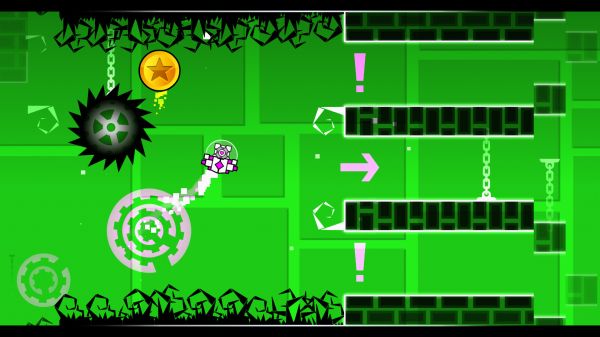
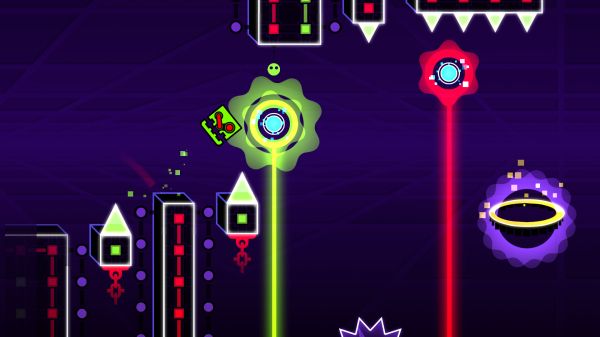
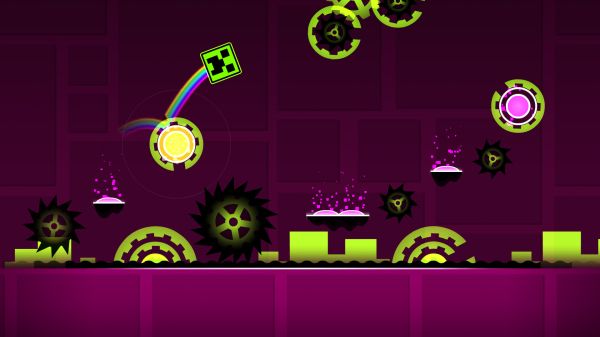
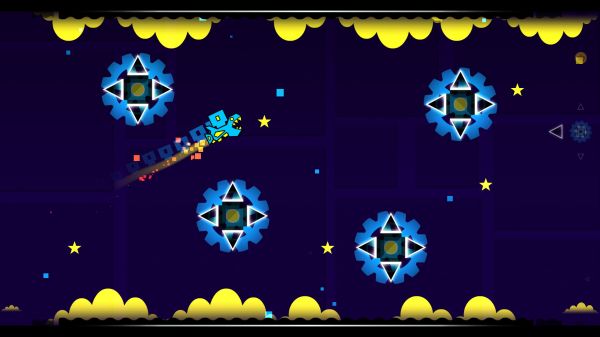
Geometry Dash Unleashed: Mastering the Rhythm of Precision and Innovation
I Failed Before the Music Reached Its Best Part
My first serious Geometry Dash session followed a simple pattern. I tapped too early, watched my cube hit a spike, restarted instantly, and promised myself that the next attempt would be different. It usually was different. Sometimes I survived two more jumps. Sometimes I failed even earlier because I was thinking about the obstacle that had defeated me before.
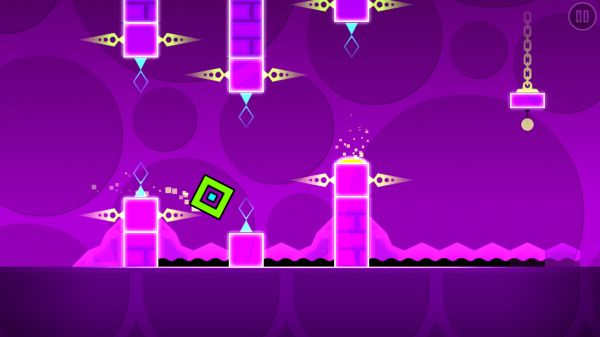
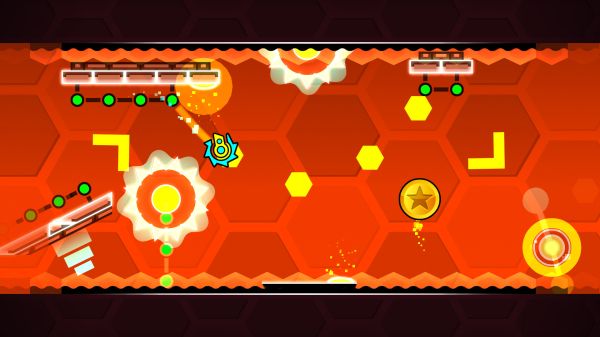
Geometry Dash looks almost absurdly simple when someone else is playing it. A geometric character moves forward automatically while the player taps to jump, fly, change gravity, or interact with whatever movement form the level has introduced. There are no complicated attack combinations, inventory screens, branching conversations, or character statistics. Most failures can be explained with one sentence: I pressed at the wrong time.
That simplicity is deceptive. The game asks me to read visual information at high speed, recognize rhythmic patterns, memorize transitions, control the duration of inputs, and remain calm after reaching a section I have rarely survived. A level that initially appears impossible slowly becomes understandable, then manageable, and finally familiar enough that my hands begin reacting before I consciously describe the obstacle.
This progression is why I kept returning. Geometry Dash rarely rewards me with a new weapon or a larger number. It rewards me with proof that something I could not do twenty minutes ago has become possible.
The punishment is immediate, but so is the opportunity to try again. There is almost no distance between frustration and another attempt. That restart button has probably consumed more of my time than any individual level.
One Button Creates More Decisions Than It Should
The basic cube form jumps when I press and returns to the ground according to the level’s gravity. That sounds like one action, but timing changes everything.
A short tap can clear a small spike while keeping the cube low enough for the next platform. A delayed jump may produce more distance but leave me unable to land safely. Holding the input can create repeated jumps on certain surfaces, while releasing at the wrong moment can completely change a later alignment.
The level moves automatically, so I cannot stop to inspect an obstacle. Every decision happens inside the speed chosen by the creator. My only control is how I respond.
This limitation gives Geometry Dash unusual clarity. When I fail, I usually know which input caused the problem. The game does not hide mistakes behind random enemy behavior or complicated physics. The obstacle was visible, the rhythm existed, and my timing was incorrect.
That clarity can also feel merciless. A tiny timing error near the end of a long level erases the entire attempt. I may have played almost perfectly for more than a minute, but the game does not award partial survival.
I occasionally wanted checkpoints in normal play, especially during long community levels. Yet removing that pressure would change the emotional structure. Reaching the final section matters because every previous obstacle must be completed again.
Stereo Madness Is a Better Teacher Than It Looks
Stereo Madness appears visually basic compared with modern community creations, but it introduces the game with remarkable efficiency. It teaches ordinary jumps, stacked obstacles, jump pads, airborne timing, and the importance of watching slightly ahead of the character.
The level does not interrupt itself with instructions every few seconds. Its geometry communicates what the controls can do. Early spikes are separated clearly, while later combinations demand more deliberate timing.
I remember initially treating every obstacle as a separate problem. That approach worked until the patterns became faster. Eventually I began recognizing groups: jump, wait, jump twice, allow the pad to carry me, prepare for the ship portal.
The first ship section changes the game immediately. Pressing no longer creates a fixed jump. Holding raises the ship, releasing lowers it, and small movements become more important than large reactions.
That transition taught me a lesson repeated throughout Geometry Dash: learning one form never means I understand the entire game. Every portal can change the rules while the level continues moving.
Stereo Madness is not difficult by current community standards, but completion still feels meaningful for a beginner. It establishes the relationship between music, memorization, and movement without demanding advanced techniques immediately.
Every Official Level Adds One New Reason to Panic
The official levels gradually expand the mechanical vocabulary. Back on Track emphasizes jump pads. Polargeist introduces jump rings. Dry Out uses gravity changes. Base After Base increases speed and pattern density. Can’t Let Go demands greater consistency from mechanics I thought I already understood.
Jumper feels more energetic and asks for quicker recognition. Time Machine introduces mirrored movement, forcing me to process familiar shapes from the opposite direction. Cycles brings the ball form, where each press changes gravity rather than producing an ordinary jump.
xStep increases visual intensity and combines earlier mechanics more aggressively. Clutterfunk introduces size changes and tighter spaces. Theory of Everything expands the game’s vocabulary again through the UFO, which responds with separate airborne jumps.
Electroman Adventures feels playful and readable despite its increased complexity. Clubstep represents the first official Demon and exposes players to deceptive decorations, narrow ship movement, and obstacles designed to punish assumptions.
Later levels continue adding speed changes, wave control, dual sections, robots, spiders, and increasingly elaborate visual presentation. Fingerdash brings the spider into an official stage, while Dash showcases the enormous design possibilities introduced by update 2.2.
The progression is not perfectly smooth. Difficulty can jump sharply between levels, and some older stages contain awkward sections that feel less refined than newer design standards. Still, the official sequence remains an effective tour through the game’s major mechanics.
The Ship Made Me Understand the Difference Between Tapping and Holding
Ship control initially felt less precise than the cube because movement depends on the duration of the input. Holding raises the ship continuously, while releasing allows it to descend.
My early attempts involved large corrections. I would notice that the ship was too low, hold too long, rise toward the ceiling, release abruptly, and begin another uncontrolled descent.
Improvement came when I stopped trying to correct position and started managing momentum. Small inputs preserve a stable path. Large inputs should be reserved for deliberate changes in altitude.
Gravity portals complicate this by reversing the relationship between input and movement. Mini portals reduce the available control window, while speed changes increase the consequences of every adjustment.
Straight-flying challenges became one of the clearest tests of consistency. They demand repeated small inputs without allowing panic to create a larger movement.
I still find ship sections stressful near the end of a level because tension makes my hands less controlled. The mechanic itself is reliable. My ability to remain calm is not.
The Ball Turned Platforms Into Switches
The ball form changes gravity with each press. Instead of jumping over obstacles, I move between the floor and ceiling while maintaining forward momentum.
This creates a different reading process. I need to understand which surface will catch the ball, where the next input must occur, and whether a jump ring changes the expected route.
Ball sections often feel slower and more deliberate than wave or ship gameplay, but they can become difficult through rapid gravity changes and tight timing.
The mechanic is especially satisfying when the level synchronizes each switch with a strong musical beat. Pressing feels less like correcting movement and more like performing part of the track.
Confusion appears when decoration makes platforms difficult to distinguish from background objects. A good creator communicates where the ball can land. A weaker design expects memorization because the route is visually unclear.
I enjoy the ball because every input has a clear binary consequence. Gravity is either pulling toward one surface or the other. The challenge comes from selecting the right moment to switch.
The UFO Rewards Rhythm Until a Level Changes the Rhythm
The UFO jumps once per press while remaining airborne. It resembles repeated cube jumps without requiring contact with the ground.
At normal speed, the mechanic encourages a steady rhythm. Too many inputs raise the UFO into danger, while waiting too long allows it to fall.
The best UFO sections create patterns where the music suggests the correct sequence. I can hear when another input should occur even before consciously measuring the gap.
The most difficult sections deliberately disrupt that comfort. Gravity changes, portals, narrow obstacles, and unusual spacing can make a familiar tapping rhythm suddenly incorrect.
I sometimes overcorrect after one weak input, pressing several times in rapid succession and transforming a recoverable position into an immediate collision.
The UFO feels playful during forgiving sections and extremely unstable inside narrow spaces. It is one of the clearest examples of Geometry Dash using the same single input to produce a completely different style of control.
The Wave Is Where Confidence Goes to Disappear
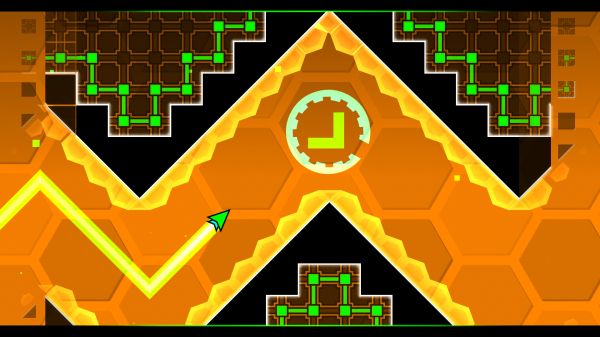
The wave moves diagonally upward while I hold and diagonally downward when I release. Its path is direct, fast, and unforgiving.
There is no gentle curve. Every input creates an immediate change in direction. Narrow corridors therefore demand extremely precise alternation.
My first wave sections felt impossible because I watched the icon rather than the path ahead. By the time I reacted to the current position, the next correction was already late.
Improvement required reading the shape of the corridor as one continuous pattern. Instead of responding to individual walls, I tried to understand the complete movement: rise briefly, descend longer, tap twice through the narrow opening, then hold toward the portal.
Mini-wave sections increase sensitivity and make small hand tension visible. If I grip the mouse or phone too tightly, my inputs become less consistent.
The wave has produced some of my greatest satisfaction and most immediate frustration. A difficult corridor can require dozens or hundreds of attempts, yet one clean run makes the movement appear effortless.
The Robot and Spider Add Control Without Adding Complexity
The robot jumps higher depending on how long I hold. This creates more vertical control than the cube while preserving familiar platform interaction.
I like robot sections that demand deliberate jump height. A full jump may hit a ceiling, while a short input lands safely on a lower platform.
The spider changes gravity instantly and teleports between surfaces. It feels sharper than the ball because there is no travel time between the floor and ceiling.
This immediate movement supports fast rhythmic patterns, but it can become disorienting when the screen rotates, portals change size, or decoration obscures the destination surface.
Both forms demonstrate how Geometry Dash expands a one-button system without making the control scheme difficult to learn. The challenge is not remembering another button. It is understanding what the same button now means.
Swing Initially Felt Like a Mechanic From Another Game
Swing alternates the direction of gravity while the icon moves through open space. Its momentum produces a curved path that feels less direct than the wave and less stable than the ship.
My first attempts were awkward because I tried to control it using ship habits. That caused me to overmanage every movement.
The mechanic became clearer when I began planning arcs rather than positions. Each press changes which direction gravity pulls, and the correct timing determines the shape of the next curve.
Swing sections can feel elegant when obstacles support wide movement. Inside narrow corridors, the momentum becomes much more demanding.
I appreciate that update 2.2 introduced a form that does not simply repeat an earlier control model. It adds another type of timing while remaining compatible with one-touch play.
The mechanic is still less familiar to me than the classic forms, partly because community creators continue experimenting with how it should be used. That uncertainty makes new Swing levels interesting.
Practice Mode Is Where Pride Goes to Become Useful
Practice Mode allows checkpoints to appear throughout a level, letting me study difficult sections without replaying the entire opening every time.
I initially treated practice as evidence that I was not ready for the real level. That attitude wasted time. Repeating an easy beginning does not automatically teach the section causing the failure.
Effective practice means placing checkpoints carefully, repeating one transition until it becomes predictable, and occasionally removing an automatic checkpoint that creates an impossible restart position.
The practice music has become familiar enough to feel comforting, although I prefer options that preserve the original track because synchronization matters to learning.
A successful practice completion does not guarantee a normal-mode victory. Checkpoints remove the pressure of maintaining a long run. The real challenge is connecting every learned section without interruption.
Still, practice transforms an apparently impossible level into separate understandable problems. It is the most important tool for anyone attempting harder official stages or community Demons.
Reaching 90 Percent Is a Different Kind of Failure
Failing near the beginning is easy to accept. I have invested only a few seconds, and another attempt begins immediately.
Failing near the end creates a stronger response. My hands may shake, the music has reached its climax, and I am playing a section I rarely see. One incorrect input sends me back to zero.
This emotional pressure becomes part of difficulty. The final obstacles are not necessarily the hardest in isolation. They are difficult because they follow everything else.
I have failed levels by thinking about victory before reaching it. The moment I realized a run might succeed, conscious attention interrupted the movement I had learned through repetition.
Geometry Dash teaches an unusual form of concentration. I need to remain alert without becoming excited by my own progress.
When I finally complete a level after a high-percentage failure, the relief is stronger because the game forced me to reproduce the entire performance rather than simply continuing from the mistake.
The Music Is a Timing System Disguised as a Soundtrack
Geometry Dash is often described as a rhythm-based platformer, although the relationship between music and input varies by level. I am not pressing every note exactly. Instead, the track gives structure to movement and helps me predict changes.
A strong beat can mark a jump, portal, speed transition, or visual pulse. Melodic changes may signal a new gameplay form. Drops often introduce faster or more visually intense sections.
The official tracks are memorable partly because I hear their openings repeatedly. A level I have attempted hundreds of times becomes attached to every detail of its song.
Repetition can become tiring when I am stuck in the same early section. The first twenty seconds may play so often that I stop consciously hearing them.
Community creators use music more aggressively, building effects, camera movement, object pulses, and complete environments around song structure. A well-synchronized level makes my inputs feel like part of a performance.
A poorly synchronized level creates tension between what I hear and what I must do. Visual timing always controls survival, but music can either support that timing or work against it.
Update 2.2 Turned a Level Editor Into an Animation Tool
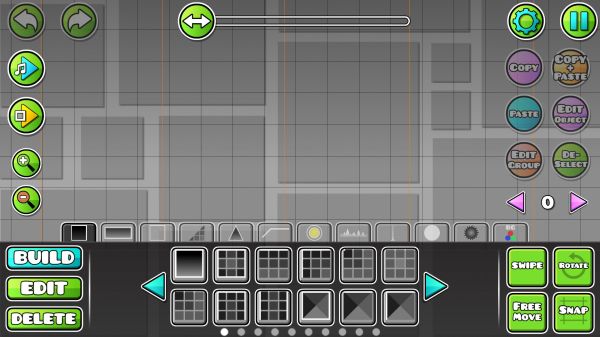
The Geometry Dash editor began as a system for placing blocks, spikes, portals, pads, rings, and decorations. It has grown into something capable of supporting complex visual effects, camera movement, custom particles, shaders, sound effects, keyframes, platformer mechanics, and scripted interactions.
Opening the modern editor for the first time was intimidating. Menus contain huge numbers of objects and triggers, while advanced levels use systems that are not obvious from simply looking at one screen.
Basic creation remains approachable. I can place a platform, add obstacles, choose a song, test the route, and publish a functional level without understanding every tool.
Creating something polished is a completely different challenge. Good gameplay requires readable patterns, consistent difficulty, fair transitions, synchronization, and extensive testing. Decoration adds another discipline involving color, depth, movement, lighting, and optimization.
The 2.2 tools allow creators to build scenes that barely resemble traditional Geometry Dash. Some levels behave like short animated films, puzzle games, boss encounters, or experimental platformers.
This freedom is impressive, but it makes quality standards intimidating for new creators. A simple enjoyable level may receive little attention beside projects built by large teams over many months.
Platformer Mode Changes the Meaning of Failure
Traditional Geometry Dash forces continuous forward movement. Platformer Mode allows direct horizontal movement, jumping, exploration, and checkpoints inside more open stages.
The difference is larger than it first appears. I can stop, observe, return to an earlier platform, search for collectibles, or approach a challenge from a stable position.
This reduces the importance of memorizing one continuous performance and creates room for puzzles, exploration, boss fights, and deliberate precision challenges.
Official levels such as The Tower introduce the concept clearly, but community creators have expanded it into experiences that resemble separate games built inside Geometry Dash.
Platformer checkpoints make long stages more forgiving, though difficult rooms can still demand precise inputs. The pressure comes from completing one challenge rather than preserving an entire level-long run.
I prefer classic mode when I want rhythm and repetition. I prefer platformer mode when I want discovery and more varied pacing. Having both makes the game significantly broader without replacing its original identity.
The Community Is Geometry Dash’s Greatest Feature
The official levels provide a strong foundation, but the user-created library gives Geometry Dash its extraordinary longevity.
There are levels for almost every ability range. Simple stages help beginners practise one mechanic, while Extreme Demons demand precision that only a small percentage of players will ever achieve.
Creators experiment with art styles, storytelling, optical effects, unusual control combinations, memory challenges, minigames, and mechanics that the original levels never attempted.
The rating system, featured levels, Epic and Mythic recognition, Gauntlets, Daily levels, Weekly Demons, lists, and community contests give players several ways to discover content.
Discovery is still imperfect. Popular creators naturally receive more immediate attention, while excellent unknown levels can disappear inside the enormous upload volume.
Quality also varies dramatically. A creative concept may have unreadable gameplay. A visually simple level may play beautifully. Ratings provide guidance but do not guarantee that a stage will suit my preferred style.
The best community levels make Geometry Dash feel almost unlimited. The weakest remind me that powerful creation tools do not automatically produce fair design.
Demon Difficulty Is Not One Consistent Category
Demon levels are divided into Easy, Medium, Hard, Insane, and Extreme categories, but those labels cover many different skills.
One level may demand tight wave control. Another depends on memory, ship consistency, fast sight-reading, or unusual timings. Completing one Demon does not guarantee that another at the same rating will feel equally manageable.
Older Demons often contain design conventions that feel awkward compared with modern levels. Invisible routes, inconsistent transitions, and unusual hitbox expectations can make them difficult for reasons unrelated to raw precision.
Newer levels may be visually clearer but mechanically denser. Decoration can also create performance demands on weaker hardware.
I found progression more useful when based on specific skills rather than labels alone. Practising wave-focused levels improved wave control more effectively than selecting any random Easy Demon.
The community’s obsession with the hardest possible levels is fascinating, but it can distort how the game appears to new players. Geometry Dash is not only about Extreme Demons completed by elite players. Most of its content exists across far more accessible difficulty ranges.
Icons Turn Repetition Into Personal Progress
Geometry Dash contains an enormous collection of cubes, ships, balls, UFOs, waves, robots, spiders, swings, colors, trails, and death effects.
These customization options do not change gameplay, but they provide visible rewards for achievements, coins, chests, shops, quests, and other progression systems.
I became more attached to certain icons than I expected. A preferred combination makes repeated attempts feel slightly more personal, even though the hitbox remains unchanged.
Unlock requirements encourage me to explore parts of the game I might otherwise ignore. Secret coins reward alternative routes in official levels, while user coins add optional challenges to community stages.
Some unlock conditions are obscure, and the number of shops, currencies, keys, shards, chests, and hidden systems can confuse new players.
The customization system is generous, but navigating the complete collection has become less elegant as hundreds of options have accumulated. Stronger filtering and favorite presets would make experimentation easier.
Secret Coins Expose Whether I Really Know a Level
Official secret coins are placed along alternate routes or behind optional timing challenges. Reaching the end of a level proves basic completion. Collecting every coin demonstrates a more complete understanding.
Some coins require obvious detours, while others depend on hidden entrances or unusual jumps. I enjoyed those that were visually suggested and mechanically demanding.
I found hidden routes less satisfying when discovery required entering what appeared to be a solid wall without meaningful indication. Surprise is not automatically clever design.
User coins vary even more widely. A creator may place them as meaningful optional challenges, exploration rewards, or simple objects sitting directly on the normal route.
Coins create replay value because I can return to a completed level with a new objective. They also make risky decisions emotionally interesting. Taking an optional route near the end can sacrifice a run that would otherwise succeed.
The Game Is Precise Enough That Hardware Matters
Geometry Dash depends on consistent input, stable performance, and predictable timing. Small technical differences therefore become more important than they would in a slower game.
Frame rate, display refresh rate, input latency, mouse switches, touchscreen response, and performance drops can affect how control feels.
Recent updates have improved timing options and reduced some historical differences between refresh rates, but experienced players remain highly sensitive to responsiveness.
On mobile, tapping directly on the screen feels immediate and natural. The disadvantage is that my finger can cover part of the display, and device performance may struggle with highly decorated community levels.
On PC, a mouse or keyboard keeps my hand away from the action and provides a consistent physical input. I personally found precise repeated clicking easier with a mouse during difficult wave and ship sections.
The game’s basic visual design runs on modest hardware, but advanced creator effects can become demanding. Low-detail modes help, although they sometimes remove important visual context.
Visual Clarity Is More Important Than Decoration
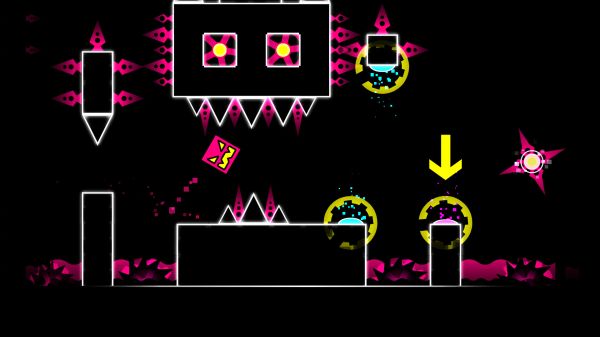
The most attractive community levels are not automatically the most enjoyable to play. Geometry Dash requires immediate recognition of hazards, surfaces, portals, and movement changes.
A creator can build an extraordinary animated environment and still produce frustrating gameplay if the route blends into the decoration.
Good design uses contrast, movement, glow, and color to direct attention. Background effects can be complex as long as the playable path remains readable.
I dislike levels that create difficulty through unclear foreground objects, sudden invisible transitions, or decorations resembling spikes. Memorization can be a deliberate genre, but accidental confusion is different.
Update 2.2 expanded visual possibilities enormously, which makes restraint even more important. More triggers do not require more simultaneous effects.
The levels I remember most often balance beauty with communication. They surprise me visually without hiding the information required to survive.
The Restart Speed Is One of the Best Design Decisions
Failure happens constantly, so restarting must be nearly painless. Geometry Dash returns me to the beginning quickly, preserving momentum before frustration has time to become a reason to leave.
This speed changes my relationship with difficulty. I am more willing to attempt an obstacle repeatedly because each failure costs only a few seconds beyond the progress lost.
Long loading screens would make hard levels almost unbearable. Instead, the beginning of the music becomes part of the attempt cycle.
The immediate restart can also encourage unhealthy persistence. It is easy to say “one more attempt” because the next attempt has already begun before I consciously decide to continue.
I learned to stop after my inputs became less consistent. Continuing while frustrated rarely produced improvement. A short break often allowed a difficult pattern to feel easier upon return.
Geometry Dash Can Be Relaxing, but Not in the Usual Way
A game built around repeated failure does not sound relaxing. Yet familiar levels can produce a state where movement, music, and memory align almost automatically.
Once I know a stage well, each input becomes part of a sequence rather than an isolated decision. The concentration removes attention from unrelated thoughts.
This feeling disappears immediately when I approach a new personal record. My pulse rises, my hands become tense, and the final section feels much faster than it did in practice.
The combination of calm repetition and sudden pressure gives the game its distinctive emotional rhythm.
I can play easy community levels for music and visual creativity, or challenge a Demon that requires focused practice. Both experiences use the same basic controls but produce completely different moods.
What Frustrated Me Most
The first major frustration is losing long progress to one small error. This is central to the design, but understanding that does not make a 98 percent failure pleasant.
The second is visual overload. Some modern community levels contain so many effects that reading gameplay becomes harder than executing it.
Difficulty ratings are also inconsistent. Player voting, changing standards, unusual skill requirements, and older design styles can make two equally rated levels feel several categories apart.
The editor is powerful but intimidating. Learning advanced triggers requires substantial experimentation and external tutorials because the interface cannot explain every possibility clearly.
Online level discovery can become overwhelming. The game contains an extraordinary amount of content, yet finding a specific style or difficulty with consistent quality still requires patience.
Finally, account synchronization and save management demand attention. Progress spread across devices should be saved carefully, especially before reinstalling or changing platforms.
Why I Kept Pressing Restart
Geometry Dash creates one of the clearest improvement loops I have experienced. A section begins as visual noise. Practice reveals a pattern. Repetition turns the pattern into movement. Eventually the obstacle that ended every attempt becomes the easy part before the next obstacle.
The game does not need to tell me that I have improved. I can feel it in the percentage reached consistently and in the reduction of attempts required to return to a difficult section.
Community content ensures that improvement never reaches a final endpoint. There is always a harder level, an unfamiliar mechanic, or a creator using the editor in a way I have not seen.
At the same time, I do not need to chase the hardest possible challenge. Completing a Normal or Hard level with satisfying synchronization can be more enjoyable than spending weeks on a stage selected only for prestige.
The healthiest version of Geometry Dash is the one where difficulty serves curiosity rather than status.
Who Should Play Geometry Dash?
I recommend Geometry Dash to players who enjoy rhythm games, precision platforming, repeated practice, short attempts, electronic music, level creation, and enormous libraries of community content.
It works well for players who prefer clear controls and are willing to improve through repetition. There are no complicated systems to memorize before beginning.
Players who become angry when progress is lost may struggle with the normal-mode structure. Reaching a checkpoint is not part of standard completion.
Anyone sensitive to flashing lights, rapid visual effects, intense screen movement, or high-contrast decoration should review accessibility and visual settings carefully. Community levels vary dramatically in intensity.
Creative players can spend as much time inside the editor as they do completing levels. The modern toolset supports far more than ordinary obstacle courses, though learning it requires patience.
My Final Attempt
Geometry Dash is one of the purest examples of a game turning limitation into depth. The character moves automatically. I control only a small set of context-sensitive actions. Everything else comes from level design, timing, music, visual communication, and my willingness to try again.
The official levels provide a strong progression through cubes, ships, balls, UFOs, waves, robots, spiders, swings, portals, pads, rings, gravity, speed, and dual movement. Practice Mode makes difficult sections understandable, while normal completion preserves the pressure of one continuous run.
The community and editor transform a compact rhythm platformer into a huge creative platform. Players have built detailed animations, difficult Demons, puzzle stages, boss encounters, platformer adventures, and experiences that barely resemble the original 2013 release.
The game is not always fair in practice. User ratings vary, decorations can obscure hazards, technical responsiveness matters, and one mistake can erase several minutes of perfect movement. The editor’s growth has also made creation far more complicated than its simple interface first suggests.
I rate Geometry Dash 9.2/10. Its controls are immediate, its music-driven repetition is difficult to abandon, and its community provides more content than I could realistically complete.
The moment I remember is not my first Demon victory or a rare icon unlock. It is the instant after failing near the end of a level, staring at the percentage for one second, and realizing that I already knew exactly what I had done wrong.
The music restarted.
So did I.
Pros:
- Engaging and challenging gameplay keeps players on their toes.
- Minimalistic design that enhances focus on game mechanics.
- Robust community support with a wealth of mods and cheats.
- Accessibility across multiple platforms including mobile and PC.
- Seamless installation with low system requirements.
- Dynamic audio-visual integration that deepens the immersive experience.
Cons:
- High difficulty levels may discourage novice players.
- Repetitive level design can reduce long-term appeal.
- Limited in-game guidance might leave some players feeling lost.







Recent Reviews

Minecraft

Grand Theft Auto V

Toca Boca World
Roblox

Leave a comment
Your comment is awaiting moderation. We save your draft here
0 Comments