Review
Coco drew me in with a conflict that initially seemed almost ridiculous: Miguel Rivera loves music, while his family has prohibited it...






Coco: A Cinematic Journey Through Life, Legacy, and Musical Heritage
Coco drew me in with a conflict that initially seemed almost ridiculous: Miguel Rivera loves music, while his family has prohibited it for generations. In another film, that setup might have produced a simple story about a child proving that adults should support his dream. Coco becomes much more interesting because the ban is not based on random strictness. It grew from abandonment, grief, and a family story repeated so often that nobody remembers where truth ends and tradition begins.
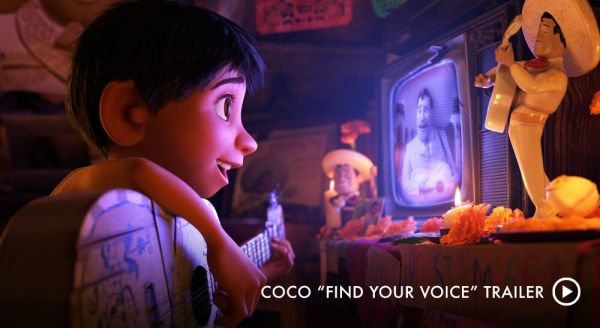
Miguel does not treat music as a casual hobby. He builds a hidden shrine to Ernesto de la Cruz, studies old performances, constructs his own guitar, and practises away from his family. Every note feels like a private act of resistance.
I understood his frustration immediately. He lives inside a loving household that provides work, food, protection, and constant companionship, yet one important part of him must remain hidden. The Riveras care deeply about Miguel, but their care has hardened into control.
The film could easily have made the family cruel so that Miguel’s rebellion appeared unquestionably correct. Instead, Coco gives everyone an understandable position. Miguel wants to express himself. His relatives want to prevent history from repeating itself. Both sides act from love, and both cause harm because they refuse to listen fully.
Santa Cecilia Feels Lived In Before the Adventure Begins
The opening town gives Coco an immediate sense of place. Santa Cecilia is filled with markets, narrow streets, music, family workshops, public celebrations, food, animals, flowers, and neighbors who appear to know one another’s business.
I appreciated that the Rivera family’s shoemaking work is treated as part of their identity rather than a decorative detail. The workshop represents survival, independence, and the life Mamá Imelda built after being abandoned.
For Miguel, however, shoes also represent a future chosen before he was born. He is expected to join the family business because every Rivera does. The work is respectable, but respectability does not automatically make it the correct life for him.
The town’s connection with Ernesto de la Cruz complicates this conflict. Music is not hidden from Miguel. It surrounds him. Public statues, films, performances, and decorations celebrate a musician while his own home rejects the entire art form.
This contradiction makes his obsession believable. Ernesto appears to embody everything Miguel has been denied: talent, recognition, freedom, and the courage to follow a dream.
The Land of the Dead Is Spectacular Without Feeling Empty
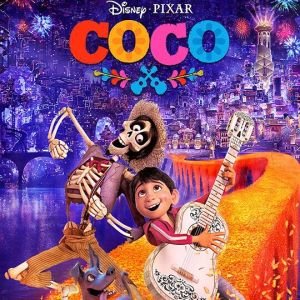
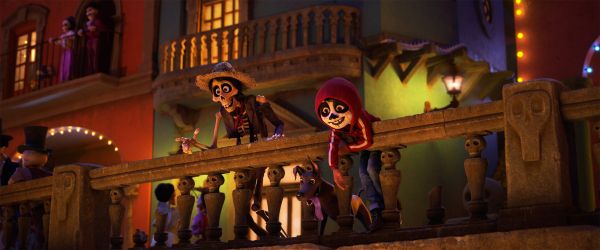
Miguel’s arrival in the Land of the Dead remains one of Pixar’s most visually memorable transitions. The world is enormous, layered vertically, covered in warm lights, and connected to the living world through marigold bridges.
What impressed me was not only the scale. The Land of the Dead contains systems. Its residents pass through checkpoints, visit relatives, travel through districts, attend performances, work jobs, and worry about whether anyone in the living world still remembers them.
This practical structure keeps the setting from becoming a collection of colorful backgrounds. The dead continue having social status, family relationships, ambitions, and financial differences. Ernesto lives in luxury because his fame survives among the living, while forgotten figures exist closer to disappearance.
The skeletal characters are expressive without losing the central design. Faces separate, limbs detach, and bodies survive physical comedy that would look disturbing with living characters. Pixar uses this flexibility for humor while preserving emotional readability.
I occasionally felt that the movie moved through this world too quickly. The city contains enough detail for several stories, yet the plot must keep Miguel moving toward Ernesto. I wanted more ordinary scenes showing how the dead experience daily life outside the holiday.
Héctor Initially Looks Like the Least Reliable Person Available
Héctor enters as a desperate trickster trying to cross into the living world without authorization. His clothes are worn, his plans fail, and other characters treat him as an inconvenience.
Gael García Bernal gives Héctor a restless energy that makes him funny and suspicious at the same time. He talks quickly, changes strategies, and recognizes opportunities almost immediately.
Miguel needs access to Ernesto. Héctor needs someone to place his photograph on an ofrenda. Their agreement begins as mutual convenience rather than instant friendship.
I liked how the film gradually changes my understanding of Héctor without suddenly changing his personality. He remains improvisational, emotional, and capable of poor decisions. What changes is the context behind his desperation.
His fear of being forgotten gives every joke a shadow. Héctor does not merely want to visit the living world for entertainment. He believes the last person who remembers him is beginning to lose that memory.
The closer he comes to the final death, the more his earlier behavior makes sense. He has spent years attempting to preserve one fragile connection while watching every other trace of his life disappear.
Miguel Confuses Fame With Artistic Truth
Ernesto de la Cruz appears to Miguel as proof that talent and courage produce greatness. His films, songs, statues, and public image turn him into something larger than an ordinary musician.
Miguel believes that sharing blood with Ernesto would justify his own dream. If a famous musician belongs in the family tree, then the Rivera ban on music becomes a historical mistake rather than a personal rebellion.
This desire reveals how badly Miguel wants permission. He speaks about independence, but he still wants an ancestor to tell him that he is allowed to become himself.
Benjamin Bratt gives Ernesto the polished confidence of someone who has performed the same heroic identity for years. He knows how to enter a room, hold attention, and turn every interaction into part of his legend.
The film’s revelation about him works because it attacks the difference between artistic image and human character. A person can create beloved work, or appear to create it, while building fame through exploitation.
I appreciated that Miguel’s love of music survives the collapse of his idol. Coco does not argue that discovering a corrupt celebrity should make a child abandon art. It separates music from the person Miguel mistakenly believed owned its meaning.
Remember Me Changes Every Time It Returns
“Remember Me” is the emotional foundation of Coco because its meaning depends entirely on who performs it and why.
As Ernesto’s signature song, it sounds grand, public, and designed for applause. It represents fame and the desire to remain visible.
Later, the song becomes private. Héctor wrote it for his daughter, not for an enormous audience. Its original purpose was to maintain connection during absence.
This transformation affected me more strongly than a completely new final song would have. The melody remains familiar, but the context strips away spectacle and reveals intimacy.
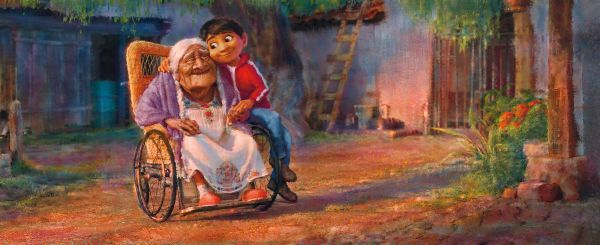
The final performance for Mamá Coco is especially powerful because Miguel does not sing to demonstrate talent. He sings to reach a memory that appears almost inaccessible.
The scene avoids turning music into magical medicine. The song matters because it belongs to a real relationship. It activates a memory tied to a father, a child, and a promise that survived inside her long after the surrounding details faded.
Mamá Imelda Is Strict Because She Had to Become Strong
Mamá Imelda is easy to resist from Miguel’s perspective. She established the music ban, expects complete obedience, and attempts to direct his future even after death.
Her anger becomes more understandable once the film reveals what she experienced. She was left with a child and needed to build a stable life without the person who had promised to return.
Shoemaking became more than employment. It was proof that the family could survive abandonment. Music became associated with the person who caused the wound.
The problem is that Imelda transformed one person’s apparent betrayal into a rule governing descendants who never knew him. Protection became inherited fear.
I liked that her development does not require abandoning strength. She does not suddenly become passive or apologize for keeping the family alive. She learns that the story supporting her anger was incomplete.
Her reconciliation with Héctor matters because both characters lost years through a misunderstanding created by someone else. The film does not pretend those years can be restored, but it allows truth to change what remains.
Abuelita Is Funny Until Her Fear Becomes Visible
Abuelita’s aggressive rejection of music produces some of the film’s broadest comedy. She can threaten a musician with a shoe, interrupt a performance, and enforce the family rule with complete confidence.
Her behavior initially appears excessive, but she inherited the ban as an act of loyalty. Defending the rule means defending Mamá Imelda, the family business, and the story that explains why the Riveras survived.
This is how traditions become difficult to question. A rule may begin as one person’s response to pain, then become proof of belonging for later generations.
Abuelita loves Miguel intensely. Her mistake is assuming that love gives her the right to destroy something important to him.
The moment his homemade guitar is broken is one of the film’s most painful scenes because no villain is responsible. The damage comes from a family member attempting to protect the family.
Coco understands that harm caused by love remains harm. Good intentions do not automatically make the action acceptable.
Dante Is Ridiculous Until He Becomes Necessary
Dante begins as an enthusiastic street dog with poor coordination, a constantly moving tongue, and an ability to appear exactly where food or trouble can be found.
His comedy is physical and immediate. He follows Miguel, interferes with plans, falls through environments, and rarely seems aware of the seriousness surrounding him.
The film gradually reveals that Dante’s presence has a spiritual purpose. His transformation into an alebrije reframes his apparent randomness as guidance.
I enjoyed this development because the character remains Dante. Becoming magical does not make him elegant or suddenly intelligent in a conventional way. He continues moving through the world with chaotic loyalty.
Pepita provides the opposite kind of spiritual companion. She is powerful, controlled, and visually majestic. Dante is useful precisely because his guidance looks accidental.
The Comedy Protects the Film From Becoming Overwhelming
Coco deals with death, abandonment, fading memory, family conflict, artistic theft, and the possibility of being forgotten completely. Without humor, the story could become emotionally oppressive.
The skeleton characters provide natural physical comedy. Heads detach, bones rearrange, and bodies survive falls or impacts without realistic injury.
Héctor’s improvisation creates verbal humor, while Dante supplies visual chaos. Miguel’s encounters with unfamiliar relatives allow the film to make family recognition funny rather than purely sentimental.
Most jokes fit the characters and environment. A few broad reactions feel designed mainly to reassure younger viewers during darker sections.
I never felt that the comedy erased the seriousness of death. Instead, it reflects the film’s view that remembering the dead can include joy, embarrassment, stories, music, and laughter rather than only grief.
The Music Is Part of the Plot, Not Decoration
Coco could not function if its songs were removed. Music drives Miguel’s conflict, connects Héctor with Coco, supports Ernesto’s public identity, and becomes the method through which hidden truth survives.
The guitar performances are animated with convincing attention to hand movement. Miguel does not simply hold an instrument while unrelated sound plays. His fingers, posture, and rhythm help sell the idea that music is a practised skill.
The soundtrack moves between intimate acoustic moments, public celebration, comic performance, and emotional memory. Traditional Mexican musical influences support the setting without making every scene sound identical.
“Un Poco Loco” is particularly effective because it develops Miguel and Héctor’s partnership through performance. They begin the sequence needing to succeed for practical reasons, then gradually start enjoying the act together.
The scene also proves that Miguel’s talent is real. His dream is not based only on admiration for Ernesto. He can listen, adapt, perform under pressure, and connect with another musician.
The Film Treats Memory as a Second Life
The Land of the Dead creates a clear rule: physical death is not the final disappearance. A person continues existing while someone among the living remembers them.
This idea turns memory into responsibility. Photographs, stories, songs, and family traditions are not only sentimental objects. They preserve connection across generations.
The final death is frightening because it is quiet. A character fades when no living person retains a meaningful memory of them.
I found this concept beautiful and emotionally severe. It suggests that identity depends partly on other people, yet memory is fragile and cannot be controlled completely.
The film does not say every person must become famous. Ernesto pursues public immortality, while Héctor needs only one daughter to remember him. One seeks recognition from millions. The other values one genuine relationship.
Coco clearly prefers the second form of remembrance.
Family Is Presented as Support and Pressure
The Rivera family is loud, involved, affectionate, and almost impossible to escape. They work together, eat together, celebrate together, and expect each person to participate in the shared identity.
This closeness provides security. Miguel is never uncertain that his family loves him.
It also creates pressure. Individual desire can appear selfish when everyone else has organized life around collective tradition.
Coco avoids declaring that personal dreams matter more than family or that family duty should erase personal identity. Miguel needs to listen to the history behind the rule. His family needs to recognize that protecting him does not mean choosing his future.
The resolution works because both sides change. Miguel does not abandon the Riveras to pursue fame alone. The family does not preserve unity by continuing the ban.
Music becomes part of family life rather than an escape from it.
The Twist Is Effective but Slightly Too Convenient
The discovery that Héctor, not Ernesto, is Miguel’s true ancestor brings the major emotional and narrative threads together cleanly.
It explains the songs, the photograph, the family misunderstanding, Ernesto’s fame, Héctor’s disappearance, and Miguel’s connection with music.
The construction is satisfying, but it is also extremely precise. Nearly every important mystery resolves through one central act of betrayal.
I accepted the convenience because the emotional consequences are strong. Héctor is not important only because of blood. He and Miguel have already formed a relationship before the truth appears.
This matters because the revelation does not create their bond. It confirms a bond that the story has already developed through shared music, conflict, and trust.
Ernesto becomes a more conventional antagonist after the truth is revealed. His willingness to protect his reputation makes sense, though he loses some of the charm that made his earlier presence interesting.
The Final Return Is More Emotional Than the Larger Rescue
The escape from the Land of the Dead contains danger, flying alebrijes, collapsing spaces, and a public confrontation. It is visually exciting, but the emotional climax occurs after Miguel returns home.
Mamá Coco appears distant, and the family believes Miguel’s adventure has ended in another act of disobedience. He does not have time to explain every detail.
He takes the guitar and sings.
The scene works because the entire movie has prepared the song’s meaning. Miguel is not asking Coco to remember an abstract ancestor. He is restoring her connection with her father.
Her response remains restrained. A small change in expression carries more weight than a large dramatic movement would have done.
When Coco reveals the missing piece of the photograph and the letters Héctor sent, truth finally enters the family through evidence they can preserve.
The Animation Makes Skeletons Feel Warm
Pixar faced a difficult visual problem. The Land of the Dead needed to contain skeletons without making every scene frightening or emotionally distant.
The solution combines rounded shapes, expressive eyes, flexible mouths, colorful clothing, and highly individual movement. Each skeleton remains readable as a person rather than an anonymous set of bones.
Héctor’s loose posture matches his unstable situation. Imelda stands with control and authority. Ernesto moves like someone constantly aware of an audience.
The living world uses warmer domestic textures, while the Land of the Dead expands into saturated color and artificial light. Marigold petals provide a visual connection between both places.
The design occasionally becomes so beautiful that the danger feels less immediate. Even threatening locations remain carefully composed and visually inviting.
That is a minor concern because the story’s strongest fear does not come from physical darkness. It comes from emotional disappearance.
What Frustrated Me
Miguel’s refusal to explain himself can become tiring during the early conflict. He has good reasons to believe the family will not listen, yet several situations become worse because everyone reacts before communicating.
The movie also moves quickly through the Land of the Dead. Its systems, communities, and social differences deserve more exploration than the main plot allows.
Ernesto becomes less nuanced after his betrayal is exposed. He shifts from charismatic idol to a more straightforward threat protecting his image.
Some family members function mainly as a group rather than receiving individual development. Their shared energy is entertaining, but the large cast means only a few relationships become emotionally specific.
The final resolution is extremely neat. The photograph is restored, the truth is documented, music returns to the family, and Héctor’s memory is protected. The emotional satisfaction is strong, though real generational conflict rarely reorganizes itself so completely.
Who Should Watch Coco?
I recommend Coco to families, animation fans, music lovers, and viewers who appreciate stories about memory, ancestry, creative ambition, and relationships between generations.
Children can enjoy Dante, the skeleton comedy, musical performances, colorful environments, and Miguel’s adventure.
Adults may respond more strongly to the fear of losing family memories, misunderstanding the people who came before us, and discovering that inherited stories are incomplete.
The film discusses death directly but not cynically. Sensitive younger viewers may find the final death and Héctor’s fading condition upsetting, even though the presentation avoids realistic horror.
Viewers who dislike emotionally direct family films may find the final scenes carefully designed to produce tears. The storytelling is sincere, but Pixar clearly understands the emotional power of every reveal and musical return.
The Photograph Matters More Than the Celebrity
At the beginning, Miguel looks toward Ernesto’s enormous public image. Statues, films, songs, and crowds appear to prove that Ernesto achieved the greatest possible version of a musician’s life.
By the end, one damaged family photograph matters more.
The photograph does not represent fame. It represents a person being allowed to remain part of a family story.
Héctor’s music survives not because millions repeat his name, but because the song he wrote for his daughter restores a private relationship.
Miguel still wants to perform, yet his dream changes. Music is no longer only a route away from family expectations. It becomes a way to understand, preserve, and expand the family itself.
My Final Verdict
Coco is one of Pixar’s most emotionally complete films because its visual imagination, music, family conflict, and supernatural rules all support the same central idea: people continue shaping us through the stories and love we preserve.
Miguel is an energetic and occasionally stubborn protagonist whose creative ambition feels genuine. Héctor gives the story humor, uncertainty, and its deepest emotional wound. Mamá Imelda transforms from an obstacle into a person whose strength was shaped by incomplete information.
The animation is detailed, the Land of the Dead is unforgettable, and the music performs real narrative work. “Remember Me” changes from a celebrity anthem into a private promise, demonstrating how context can completely transform the meaning of a song.
The film is not flawless. Ernesto becomes less complex after the central revelation, several family members remain underdeveloped, and the resolution arranges every conflict with remarkable convenience.
I rate Coco 9.3/10. Its emotional power does not come from death alone. It comes from the fear that love can be erased when stories disappear, photographs remain incomplete, and nobody remembers which song belonged to whom.
I began the film believing Miguel needed his family to accept his music.
By the end, I understood that the family also needed his music to recover its own memory.
Pros:
- Rich cultural representation and authentic traditions
- Exceptional visual animation and detailed artistry
- Emotionally engaging narrative that resonates with a wide audience
- Seamless integration of music and storytelling
- Family-friendly with a PG rating
- Universally relatable themes of memory, legacy, and family bonds
Cons:
- Some viewers may find the narrative pacing slow
- Cultural specifics might not resonate with all international viewers
- Emotional depth and sentimentality may not appeal to those who prefer action-driven plots








Movie Reviews

Minecraft

Grand Theft Auto V

Toca Boca World

Roblox

Leave a comment
Your comment is awaiting moderation. We save your draft here
0 Comments