Review
BeamNG.drive is the rare driving game where a minor mistake can become more memorable than a perfect lap. I may begin a session intendi...
BeamNG.drive – Revolutionizing Vehicular Simulation with Realistic Physics and Community-Driven Creativity
BeamNG.drive is the rare driving game where a minor mistake can become more memorable than a perfect lap. I may begin a session intending to test suspension settings or complete a clean delivery route, but one badly judged corner can leave the vehicle sliding sideways, bending a wheel, tearing away body panels, and limping toward the nearest repair point with the steering no longer centered.
That unpredictability is why I keep returning. BeamNG.drive is not built around one strict objective. It gives me vehicles, maps, scenarios, physics systems, and enough freedom to decide whether I want a serious simulation, an off-road challenge, a cinematic crash, or ten minutes of completely irresponsible experimentation.
I originally approached it as a game about vehicle destruction. The damage system is certainly one of its most recognizable features, but I eventually realized that deformation is only the visible result of a much deeper simulation. Weight transfer, tire grip, suspension geometry, drivetrain behavior, surface conditions, and vehicle construction all influence what happens before the impact.
Session Log: The Delivery That Lasted Thirty Seconds
One of my first career-style deliveries looked simple. The vehicle was not especially powerful, the road was mostly familiar, and the destination appeared close enough that I did not expect trouble.
I accelerated too aggressively through a bend, allowed the rear of the vehicle to become unstable, and overcorrected. The van crossed the road, struck a barrier, and damaged the front suspension badly enough that the steering wheel no longer pointed in the same direction as the tires.
The vehicle still moved, which made the situation more interesting. In many games, the crash would trigger an immediate reset or leave the car visually damaged but mechanically normal. Here, I had to decide whether the van remained controllable enough to continue.
I drove the remaining distance slowly, compensating for the damaged steering and listening to mechanical sounds that had not existed before the impact. Completing the delivery felt more satisfying than it would have without the crash because the objective had changed naturally. I was no longer trying to arrive quickly. I was trying to preserve a vehicle that wanted to travel diagonally.
The Cars Feel Heavy Before They Feel Fast
The first difference I noticed in BeamNG.drive was how much vehicles communicate their weight. Braking changes the balance of the chassis. Hard acceleration shifts weight toward the rear. A sudden steering input can unsettle a tall vehicle far more dramatically than a low sports car.
I could not drive every model with the same habits. A compact hatchback tolerated quick corrections that made a larger SUV feel unstable. A powerful rear-wheel-drive car demanded careful throttle control, while a basic commercial vehicle required patience because its brakes, suspension, and tires were not designed for aggressive cornering.
This made even ordinary vehicles enjoyable. I did not need a supercar to experience interesting handling. A slow wagon carrying additional weight could become a challenge because the load changed braking distance and body movement.
The simulation encourages me to feel what the vehicle is doing rather than treat the car as a camera attached to four wheels. I pay attention to sound, steering response, tire behavior, and the way the body moves over uneven surfaces.
I Learned More From Replays Than From Resetting
My early instinct was to reset immediately after every failure. The recovery controls make it easy to return the vehicle to a usable condition, so I treated mistakes as interruptions.
That changed when I started watching replays and using slower camera movement. A crash that felt sudden from the driver’s position often revealed a clear chain of errors.
I could see the front tires lose grip before the car left the road. I noticed that a vehicle had become unstable because I applied the brakes while turning. A rollover that appeared random was actually caused by one wheel catching an uneven surface while the suspension was already compressed.
Replays became a diagnostic tool. Instead of only watching the final impact, I examined the seconds before it:
- where the vehicle’s weight was moving;
- whether the tires had enough grip;
- how sharply I changed direction;
- which wheel contacted the obstacle first;
- whether braking or throttle made the instability worse;
- how the chassis absorbed the initial force.
This made the game unexpectedly educational. It did not provide a driving lesson through text. It allowed the physics to demonstrate why my decision failed.
Damage Is a Mechanical Story
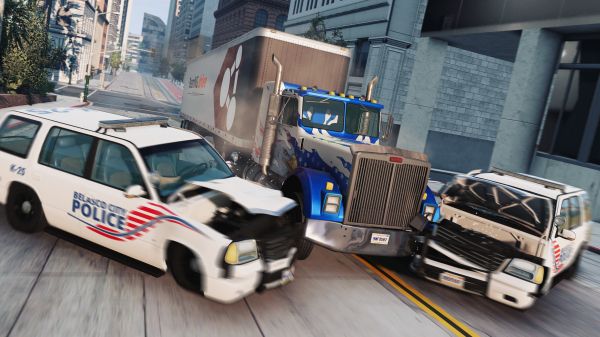
The soft-body damage system gives every collision a visible history. A front impact may crush the engine compartment, distort the frame, damage cooling components, and alter wheel alignment. A side impact can trap a door or bend the body around the cabin. A hard landing may leave the exterior looking acceptable while damaging the suspension underneath.
I like that damage is rarely limited to one clean visual state. Two similar crashes can produce different results depending on speed, angle, vehicle construction, and the object being struck.
The best moments happen when a vehicle remains partially functional. Complete destruction is dramatic, but a damaged car creates decisions. I may continue with reduced power, unstable steering, overheating, missing bodywork, or a tire that is no longer positioned correctly.
Mechanical survival gives crashes consequences without always ending the session. The vehicle becomes a record of everything that happened to it.
The Sounds That Tell Me I Am in Trouble
I often know something is wrong before I switch cameras to inspect the damage. A new scraping sound suggests that a body panel or suspension component is contacting the road. Uneven engine noise may indicate damage under the hood. Tire sounds change when alignment is no longer correct.
These details make me cautious after an impact. I test the steering, apply the throttle gently, and watch the temperature or warning indicators before deciding whether to continue.
Sometimes the vehicle appears usable for several minutes before a damaged system creates a larger failure. That delayed consequence makes the simulation feel less predictable than a simple health meter.
My Garage Became a Laboratory
Vehicle configuration is where BeamNG.drive becomes much more than a crash sandbox. I can change components, adjust setups, add cargo, select different tires, alter suspension behavior, and create versions of the same vehicle for completely different purposes.
I began with obvious changes such as engine upgrades and stronger brakes. Later, I spent more time on subtler adjustments because they had a direct effect on how the vehicle behaved.
A more powerful engine made straight-line acceleration exciting, but it also exposed weaknesses in cooling, grip, and braking. Stiff suspension improved response on smooth roads yet became uncomfortable and less predictable on rough surfaces. Off-road tires helped in mud and loose terrain but changed road handling.
The garage taught me that upgrades are not always universal improvements. A component may make the vehicle better for one task while reducing its usefulness somewhere else.
I started building vehicles around specific goals rather than installing the most expensive or powerful parts available.
Build One: A Road Car That Became Unpleasant
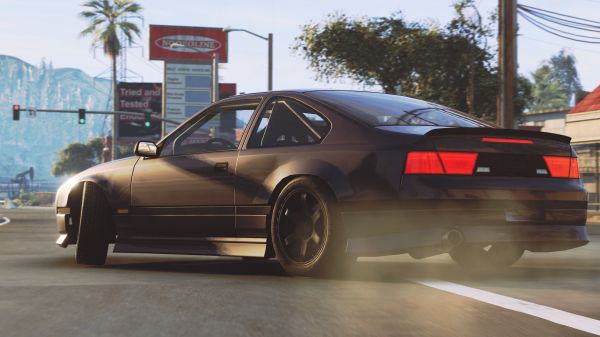
My first serious custom build began as a normal street car. I increased power, lowered the suspension, fitted more aggressive tires, and adjusted the appearance until the vehicle looked ready for a circuit.
On a smooth road, the result felt responsive and fast. On an uneven public route, it became tiring. The suspension transmitted every surface change, the low body caught obstacles, and the added power made small throttle mistakes more dangerous.
The build was not bad. It was simply too specialized for the environment where I wanted to use it.
I softened the suspension, raised the ride height slightly, and reduced the most aggressive settings. The final version was slower in ideal conditions but much easier to enjoy across an entire map.
That experience changed how I evaluate vehicles in BeamNG.drive. Maximum performance is less useful than appropriate performance.
Build Two: The Off-Roader That Taught Me Patience
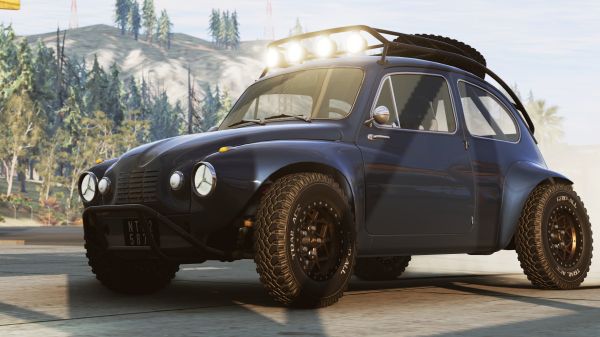
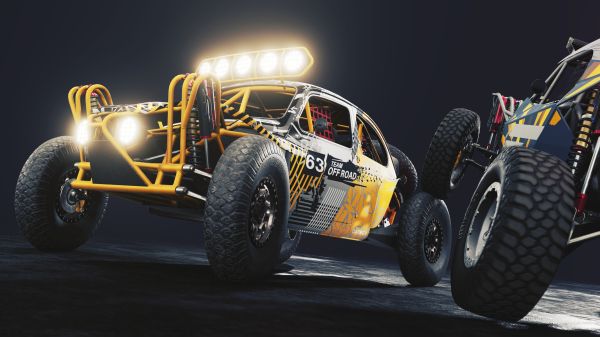
My off-road project began with large tires, increased ground clearance, and the confidence that enough mechanical strength would solve every terrain problem.
The first steep climb corrected that assumption. I applied too much throttle, caused the wheels to spin, and lost the line I needed. The vehicle slid sideways into a worse position and became difficult to recover.
Off-road driving required a different mindset. Momentum mattered, but uncontrolled speed created damage. Wheel placement mattered, especially on rocks and uneven slopes. Differential settings and gearing influenced whether the vehicle could maintain movement without wasting grip.
I learned to approach obstacles slowly, observe the terrain, and select a route before committing. A successful climb felt less dramatic than launching over the hill, but it required much more control.
BeamNG.drive made low-speed driving feel technical. The challenge did not depend on extreme velocity. It came from managing weight, traction, and mechanical limitations one meter at a time.
Build Three: A Cheap Car With a Bad Future
Some of my most entertaining sessions began with an ordinary vehicle and a deliberately poor plan. I would choose a basic compact car, add unnecessary power, leave other components mostly unchanged, and test how long the configuration could survive.
The results were predictable in the broad sense and surprising in the details. Tires struggled for grip, the drivetrain became difficult to control, and the brakes felt inadequate after only a few fast sections.
What made the experiment fun was discovering which system failed first. Sometimes the engine produced more power than the chassis could use. In another build, cooling became the primary limitation. A car that accelerated impressively could still become nearly undriveable when the suspension and differential were not prepared for the new output.
These bad builds helped me understand the relationship between components better than simply choosing balanced presets.
Career Mode Gave My Mistakes a Price
Free-roam experimentation encourages me to reset freely and treat vehicles as disposable. Career-style progression changes that behavior because money, repairs, ownership, and jobs give decisions more weight.
I drive more carefully when damage can affect my resources. A risky shortcut is no longer only a question of whether I can survive the landing. I also consider whether the possible time saved is worth the repair cost.
Buying a vehicle feels different from selecting one instantly in a sandbox menu. I begin paying attention to usefulness, condition, operating costs, and whether the car fits the jobs I want to complete.
Progression adds context to ordinary driving. A delivery in a slow vehicle may not be spectacular, but it contributes to a larger personal garage. A successful trip without damage can feel like genuine progress.
I enjoyed the contrast between careful career sessions and unrestricted free play. One mode made me responsible. The other allowed me to destroy everything I had just learned to protect.
Scenarios Turned the Physics Into Rules
Scenarios provided structured challenges when I did not want to invent an objective myself. They might ask me to race, deliver cargo, escape a situation, complete a route, or control a vehicle under unusual conditions.
The strongest scenarios use the simulation as part of the challenge. A heavy load changes braking. A damaged vehicle forces adaptation. A narrow route punishes poor wheel placement. Limited time creates pressure without making physics irrelevant.
I sometimes repeated a scenario several times because the first failure taught me something specific. I adjusted the route, changed how early I braked, or approached a difficult section with less speed.
The same scenario could produce different stories even when the objective remained unchanged. One attempt ended through a direct crash. Another failed because minor damage gradually reduced the vehicle’s ability to continue.
Time Trials Exposed Every Inconsistent Habit
Racing in BeamNG.drive is not as forgiving as racing in an arcade game. I cannot depend on barriers to redirect the vehicle or expect every car to remain stable during sudden inputs.
My fastest laps came from becoming smoother rather than more aggressive. Braking earlier allowed me to maintain a better line. Gradual throttle application reduced wheelspin. Small steering corrections preserved balance.
The timer encouraged speed, but the physics punished desperation. When I attempted to recover lost time through one heroic corner, I usually created a larger mistake.
Consistency became the real challenge. I could complete one section perfectly and lose the entire run moments later because I changed my rhythm.
I appreciated that the game made clean driving feel rewarding even without exaggerated visual effects. A stable lap has a satisfying flow that is easy to recognize once I stop fighting the vehicle.
Traffic Made Normal Roads Dangerous
Driving alone on a large map can feel peaceful. Adding traffic transforms familiar roads into constantly changing situations.
Other vehicles create speed differences, blocked sightlines, unexpected braking, and intersections that require actual attention. A route I could complete quickly in an empty environment becomes much more demanding when I need to anticipate other drivers.
Traffic also produces excellent unscripted incidents. One vehicle changes lanes badly, another reacts too late, and a small mistake develops into a multi-car collision.
I sometimes drove carefully simply to observe how long a normal trip could remain normal. The tension came from knowing that the simulation could produce a serious event from one badly timed maneuver.
Using traffic made maps feel less like testing grounds and more like functioning regions.
The AI Could Be Convincing and Chaotic
AI-controlled vehicles are useful for traffic, chases, races, and experiments, but their behavior can create unexpected moments. Sometimes an opponent takes a sensible line and applies real pressure. In another session, several vehicles may respond poorly to the same obstacle and create a scene that looks like a failed driving exam.
I rarely treated this inconsistency as entirely negative because the physics allowed the consequences to remain interesting. A confused AI maneuver could produce an accident that developed naturally through momentum and vehicle interaction.
For serious racing, unpredictable behavior could become frustrating. For sandbox sessions, it often became part of the entertainment.
Police Chases Worked Better When I Stopped Driving Like a Hero
My first chases usually ended quickly because I relied on speed alone. I accelerated toward the nearest open road, entered corners too fast, and damaged the vehicle before the pursuing cars needed to make a difficult decision.
Successful escapes required route knowledge and mechanical sympathy. I used narrow roads, elevation changes, and intersections to create separation. I avoided impacts that might damage steering or cooling systems.
The pursuing vehicles also became environmental hazards. Even when I avoided direct contact, their movement could block routes or pressure me into a poor line.
A chase was most exciting when the vehicle remained damaged but usable. One failed turn could bend the rear bodywork, alter handling, and turn the rest of the escape into a fight against my own car.
Crashes Are Better When I Know Why They Happened
BeamNG.drive is famous for spectacular destruction, and I certainly spent time launching vehicles from ramps, placing obstacles in roads, and creating collisions with no practical purpose.
However, random crashes became less interesting after I understood how much control the simulation offered.
A carefully designed test gave the impact context. I could compare several vehicles at the same speed, change the angle, modify the load, or observe how different structures absorbed force.
The damage became more meaningful when I understood the setup. I was no longer watching metal deform only because it looked impressive. I was observing how design, speed, and direction changed the outcome.
Crash Test: Small Car Versus Heavy Vehicle
I tested a compact car and a much heavier vehicle against the same obstacle at similar speeds. The visual results were dramatically different.
The smaller car lost more of its usable structure because the impact force affected a larger percentage of the vehicle. The heavier model carried more momentum and damaged the obstacle differently, although its own components still suffered.
The experiment also showed that visual size alone did not explain everything. Vehicle construction, impact height, deformation zones, and the location of important mechanical parts influenced the result.
I repeated the test from different angles and produced outcomes that were not obvious from the first collision. A slight change in alignment could redirect force into the wheel, cabin, or engine area.
Crash Test: Cargo Changes the Entire Event
Adding cargo affected acceleration and braking before the collision even happened. The vehicle required more distance to slow and moved differently during sudden steering.
During impact, the additional mass influenced how the vehicle continued moving. Poorly controlled cargo could also create its own problems inside or behind the vehicle.
This made delivery challenges more interesting. The load was not only a number connected to payment. It changed how I needed to drive.
I began braking earlier, leaving more space, and avoiding rapid direction changes. The vehicle no longer represented only itself. It carried another source of momentum that I had to manage.
Crash Test: Suspension Failure Is Less Dramatic but More Annoying
A vehicle does not need to be visually destroyed to become difficult to drive. I sometimes survived a hard landing with the body mostly intact but one damaged wheel or suspension component.
The car would pull to one side, vibrate at speed, or behave unpredictably during braking. Continuing was possible, but every input required compensation.
I found this kind of damage more engaging than complete destruction because it changed the driving challenge without ending it.
The vehicle became a puzzle. I needed to identify which speeds remained safe, whether turning in one direction was easier, and how far the damaged machine could travel.
Maps Changed the Genre of the Session
A map in BeamNG.drive is not only scenery. Road width, surface type, elevation, traffic layout, weather conditions, and available open space determine what kind of driving feels natural.
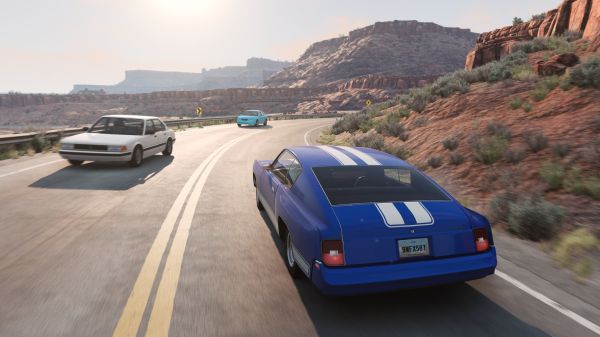
Urban areas encouraged careful navigation, traffic interaction, parking, and short technical routes. Open highways supported high-speed testing. Mountain roads demanded braking and precision. Off-road regions turned ground clearance and traction into the central concerns.
I often selected a map before selecting a vehicle because the environment suggested the activity.
A narrow mountain route made me want a lightweight road car. A large industrial area encouraged delivery vehicles and heavy machinery. Open terrain invited unusual experiments that would be impossible between buildings.
Off-Road Terrain Finally Made Slow Vehicles Exciting
In many driving games, low-speed vehicles feel less interesting because the main challenge is reaching maximum velocity. BeamNG.drive can make a slow climb more demanding than a fast highway run.
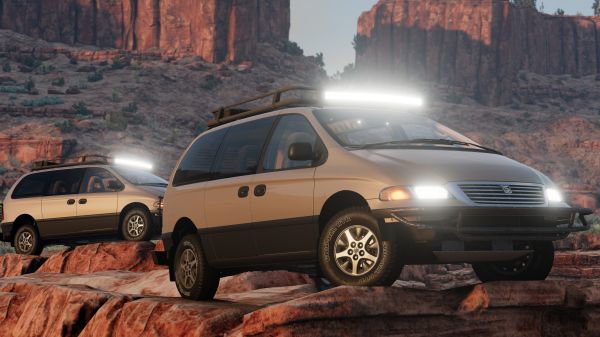
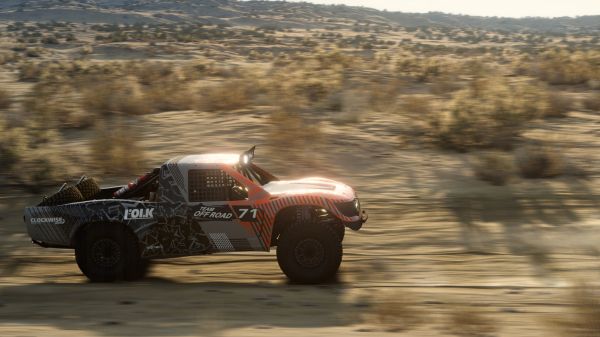
Rocks, mud, loose surfaces, deep water, and steep inclines require control. I watch individual wheels, manage throttle, and adjust the route according to how the suspension responds.
A vehicle may have enough engine power but lack traction. Another may climb effectively until its body shape catches on an obstacle. Long wheelbases and short wheelbases create different advantages.
Progress can be measured in centimeters, and that does not make the session feel inactive. Every small movement communicates whether the approach is working.
Force Feedback Made the Simulation More Informative
Using a steering wheel changed how I understood the vehicles. Force feedback communicated weight, surface texture, tire grip, and instability through my hands.
I could feel the steering become lighter when the front tires lost contact or grip. A damaged wheel created irregular feedback. Rough terrain required more physical correction than a smooth road.
The additional information helped me react earlier, but it also made strong crashes more intense. Settings needed adjustment because excessive force could become tiring or unrealistic for my setup.
A controller remained practical for casual play, free-camera experimentation, and quick sessions. The wheel became most valuable when I wanted to focus on driving technique.
Controller Driving Was Easier Than Keyboard Driving
BeamNG.drive can be played with different control methods, but analog inputs made vehicle management much more comfortable for me.
A controller allowed gradual steering, braking, and throttle application. These small differences mattered because abrupt inputs could destabilize the vehicle.
Keyboard control worked for basic movement and certain experiments, but digital inputs made smooth driving more difficult. Full steering and full throttle were often more aggressive than the situation required.
I could still adapt through assists and careful tapping, but the simulation rewarded more precise input devices.
Camera Choice Changed My Risk Tolerance
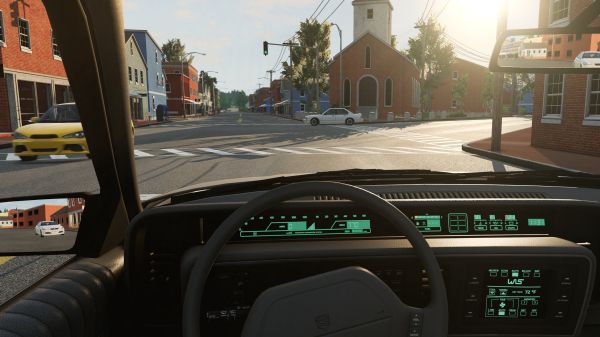
In the cockpit view, speed felt more intense and vehicle size became easier to judge from the driver’s position. Limited visibility made intersections and narrow routes more challenging.
The external camera gave me better awareness of the vehicle’s body, wheel placement, and nearby obstacles. I preferred it for off-road driving and technical maneuvers.
Free cameras were ideal for filming, testing impacts, and studying deformation. They turned the game into a small virtual production studio.
I frequently changed views during the same session. Driving from inside created immersion, while reviewing from outside provided information.
Photography Became an Unexpected Hobby
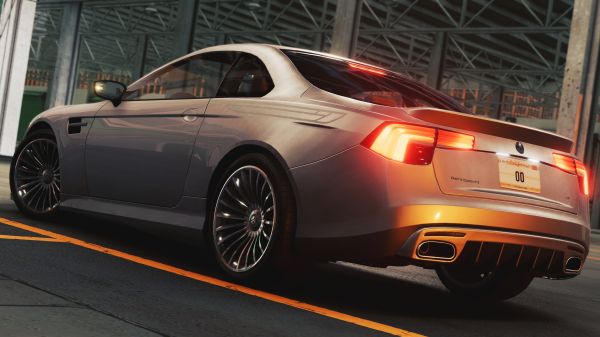
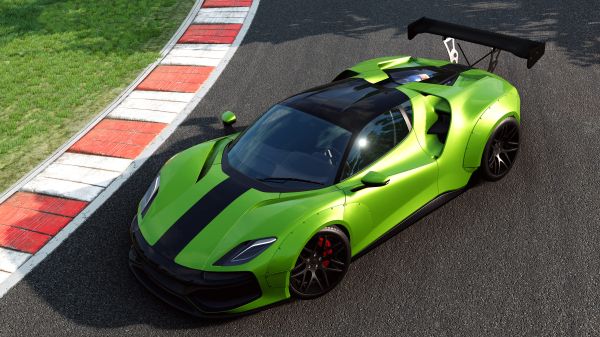
The realistic vehicle models, detailed maps, lighting, and damage states made BeamNG.drive enjoyable as a screenshot tool.
I started capturing clean vehicles in scenic locations, then moved toward more dramatic images involving dust, broken components, traffic incidents, and vehicles suspended in unusual positions.
Damage creates shapes that cannot be reproduced easily through standard customization. A bent panel, missing bumper, or collapsed suspension tells part of the story before I explain what happened.
Using camera placement and replay controls, I could turn a short driving mistake into a cinematic sequence.
This gave failed runs a second purpose. A crash that ended the objective could still become an interesting visual scene.
Mods Made the Sandbox Feel Endless
Community content expanded the vehicle selection, maps, configurations, scenarios, and experimental possibilities far beyond what I initially expected.
A strong mod could feel completely natural inside the game, while a poorly made one might lack realistic handling, damage behavior, or visual detail.
I became more selective after installing too many items at once. A crowded collection made it difficult to remember what each mod added and complicated troubleshooting when something stopped working.
I preferred adding a small number of vehicles or maps, testing them properly, and removing anything that did not match the quality of the rest of the simulation.
Mods are most valuable when they introduce a new kind of activity rather than only increasing the number of similar vehicles in the menu.
Performance Settings Required Real Compromise
BeamNG.drive can become demanding, especially when several detailed vehicles are active simultaneously. Traffic, AI, complex maps, physics calculations, and visual settings all affect performance.
I could increase graphical quality for solo driving with one vehicle, but larger traffic experiments required more conservative settings.
This created a practical choice between visual presentation and simulation scale. A beautiful scene with one or two cars served photography and cinematic driving. Lower settings allowed larger accidents, races, and traffic situations to run more smoothly.
I adjusted the game according to the session rather than expecting one configuration to handle every activity equally well.
Early Access Is Visible, but So Is the Ambition
BeamNG.drive has continued developing over a long period, and I could feel the scale of that ongoing work. Some systems appear mature and deeply simulated, while other areas feel more experimental or incomplete.
Menus, career features, AI behavior, scenarios, and certain interactions may not always have the polish of a tightly scripted finished racing game.
I accepted those rough edges because the central physics system offered possibilities that more polished competitors did not. The game often behaves like a simulation platform receiving new layers rather than a fixed product built around one campaign.
The evolving nature can create inconsistency, but it also explains why returning after a break often reveals meaningful additions or improvements.
There Is No Single Correct Way to Play
I have used BeamNG.drive as a racing game, vehicle simulator, crash laboratory, photography tool, delivery game, off-road challenge, and source of multiplayer-style chaos with AI vehicles.
None of these activities completely defines the experience.
On some days, I want to drive responsibly and see whether I can complete a long route without damage. On others, I build a ridiculous vehicle and send it toward an obstacle at a speed no engineer would approve.
The simulation supports both because it takes the result seriously even when my idea is absurd.
The Game Punishes Cinematic Confidence
BeamNG.drive repeatedly reminded me that a maneuver looking possible does not make it sensible.
A jump that appears manageable from one camera may land with enough force to destroy the suspension. A high-speed drift may work until the tires regain grip abruptly. A shortcut across uneven terrain can save distance and cost the entire vehicle.
I have learned to question the action-movie instinct that speed solves everything. In this game, speed increases the energy that must eventually go somewhere.
That physical honesty makes successful stunts more satisfying. When a difficult landing works, it feels earned because the simulation was willing to punish every error.
The Best Vehicle Is Often the One That Barely Survives
A perfectly repaired car is pleasant to drive, but a damaged vehicle creates a more personal challenge.
I remember the truck that completed a route with a bent front wheel, the compact car that reached a garage while overheating, and the off-roader that finished a trail after losing several body panels.
These vehicles were not objectively effective by the end of the session. Their value came from the history visible in their damage.
BeamNG.drive makes survival mechanical. The scratches and deformation are not cosmetic trophies added after the event. They influence whether the vehicle can continue.
Why BeamNG.drive Remains Different
Most driving games decide what kind of driver they want me to become. A racing game asks for speed. A delivery game asks for reliability. An arcade game asks for spectacular action.
BeamNG.drive gives me a physical system and allows those identities to overlap.
I can begin as a careful courier, become an accidental stunt driver, and finish as a mechanic attempting to understand why the vehicle no longer travels straight.
From my perspective as a gamer, its greatest strength is not simply realistic damage. It is continuity between action and consequence. Steering input changes weight transfer. Weight transfer affects grip. Lost grip changes direction. Direction determines impact angle. Impact angle determines which components deform, and that damage changes every decision afterward.
The game turns one mistake into a chain of mechanical events rather than a brief animation followed by a reset prompt.
That chain is why even short sessions produce stories. I may remember the road, the speed, the first sign of instability, the exact point where recovery became impossible, and the strange way the damaged vehicle continued moving afterward.
BeamNG.drive is not always polished, easy, or immediately rewarding. It asks for patience, appropriate hardware settings, and a willingness to learn from failure. In return, it provides a driving sandbox where vehicles feel less like disposable models and more like machines made from connected systems.
I often enter the game planning to test a car. I leave remembering what happened to it.
Pros:
- Unmatched realistic physics and collision animations.
- Extensive customization options through mods and cheats.
- Engaging sandbox mode that encourages experimentation.
- Detailed vehicle damage modeling enhances the experience.
- Strong, active community contributing mods and continual updates.
- Flexible system requirements and wide platform support allowing diverse gameplay.
Cons:
- Steep learning curve for beginners due to the depth of simulation.
- Occasional performance issues on lower-end systems.
- Mod support can sometimes lead to instability and unexpected gameplay inconsistencies.

How much storage do you need?
 BeamNG.drive
RELATED APPS








Recent Reviews

Minecraft

Grand Theft Auto V

Toca Boca World

Roblox

Leave a comment
Your comment is awaiting moderation. We save your draft here
0 Comments