Review
The Game That Let Me Stop Following ObjectivesMost mobile games introduce themselves by giving me a destination. I need to reach the ne...
Toca Boca World: A Boundless Digital Playground for Creativity and Connection
The Game That Let Me Stop Following Objectives
Most mobile games introduce themselves by giving me a destination. I need to reach the next level, defeat another opponent, improve a score, or collect enough currency to unlock something useful. Toca Boca World approached me differently. It placed several characters, buildings, objects, and interactive rooms in front of me, then quietly stepped aside. There was no urgent mission marker. No timer. No failure screen waiting to judge how badly I arranged a kitchen.
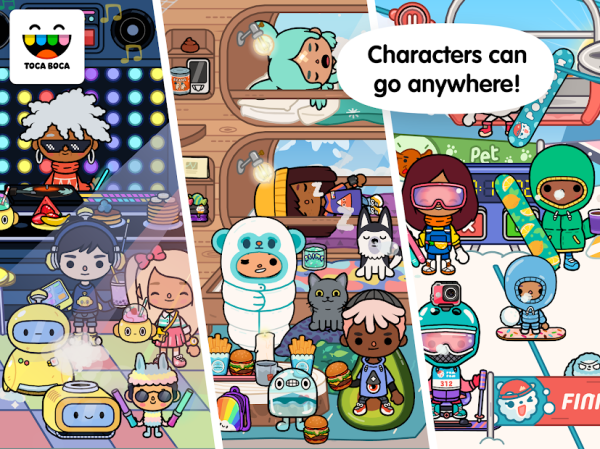
At first, that freedom felt almost suspicious. I kept expecting the game to reveal its real objective. Instead, I realized that the objective was whatever story I decided to create. I could move a family into a new apartment, run a chaotic restaurant, organize a school day, redesign a bedroom, open a beauty salon, prepare characters for a holiday, or make everyone carry watermelons for no sensible reason.
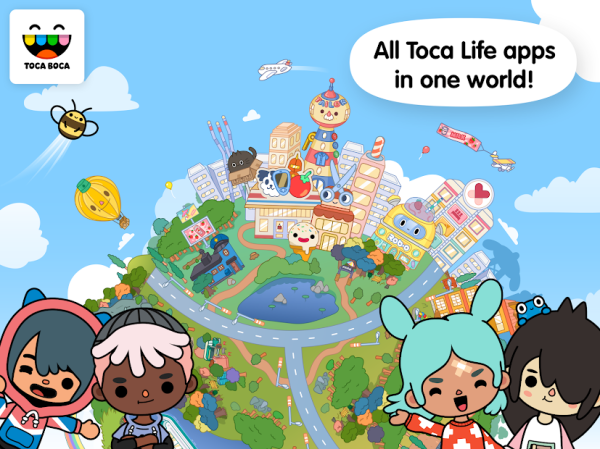
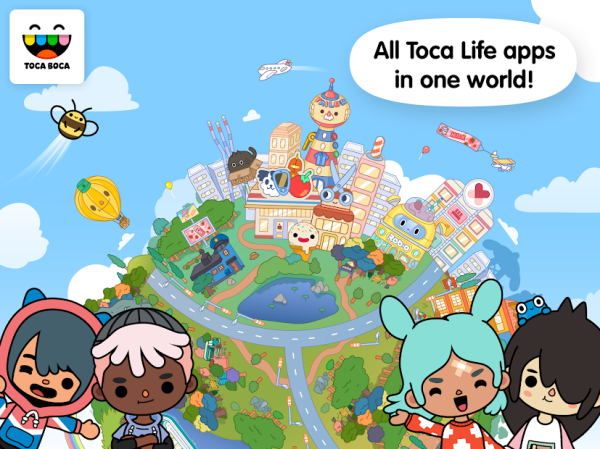
Toca Boca World is not a traditional game built around winning. It is closer to a digital dollhouse, character creator, decorating tool, and storytelling sandbox combined inside one colorful application. My enjoyment depended less on mastering mechanics and more on whether I was willing to invent situations for myself.
That makes it one of the easiest games to misunderstand. Someone looking for quests, competition, combat, or measurable progress may become bored quickly. Someone who enjoys role-playing, decorating, character customization, and open-ended experimentation can spend an unreasonable amount of time adjusting tiny shelves in a virtual apartment.
My First Hour Became a Small Domestic Disaster
I began by exploring the free locations and moving characters between rooms. The controls were immediately understandable. I dragged people around with my finger, placed objects into their hands, opened cupboards, changed clothes, prepared food, moved furniture, and tapped items to see whether they reacted.
Within minutes, I had created a family that appeared to be moving into a new home. The plan was simple: unpack the boxes, arrange the kitchen, and prepare dinner. It did not remain simple for long. One character refused to release a lamp because I had accidentally placed another item beneath it. A child ended up wearing formal clothes while holding a frying pan. Food covered half the table. A pet occupied the only chair I had positioned correctly.
Nothing in the game identified this as a failure. The mess became part of the story. That was the moment I understood why Toca Boca World works. It allows accidents to become ideas instead of mistakes.
The game rarely tells me what an object is supposed to mean. A hospital bed can be used for a serious role-playing scene, a dramatic nap, or a ridiculous fashion show. A school can host lessons, arguments, parties, or a mysterious investigation involving a missing lunchbox. The systems are simple, but their combinations create variety.
Dragging, Tapping, Stacking, and Experimenting
The main interaction is direct manipulation. I drag characters into position, place objects in their hands, tap appliances, open containers, and move items between locations. There are no complicated button combinations or menus interrupting ordinary play.
This simplicity makes the game accessible, especially on a tablet where rooms have more space. On a smaller phone, detailed interiors can feel crowded. I occasionally selected the wrong item because several objects were positioned close together. Moving one tiny decoration without disturbing everything around it required more patience than I expected.
Objects usually behave in predictable but playful ways. Food can be combined, clothing can be changed, sinks and showers work, lights switch on, machines react, and containers hide smaller items. The pleasure comes from testing the environment. I often tapped an object simply to see whether the developers had given it an animation or sound.
Not every object has a deep function. Some exist mainly as decoration, while others perform one small animation. After enough time, interactions can become familiar. Toca Boca World does not simulate life with detailed systems. It provides visual tools that help me pretend those systems exist.
Characters That Feel Like Cast Members
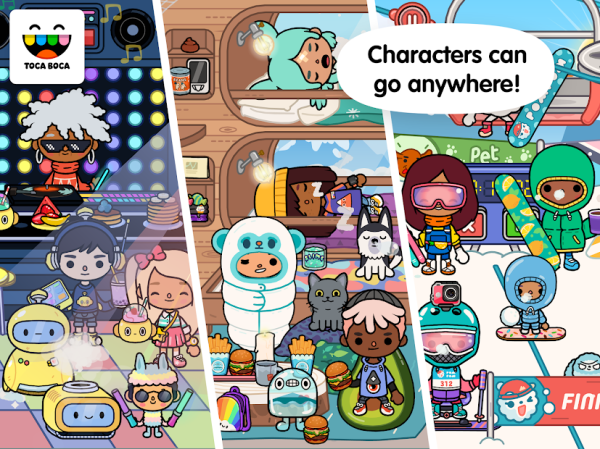
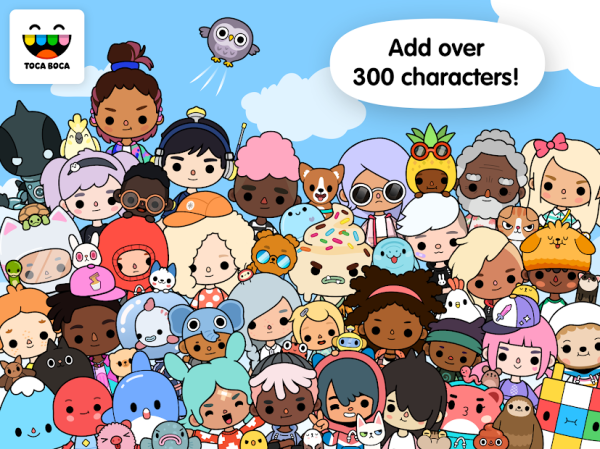
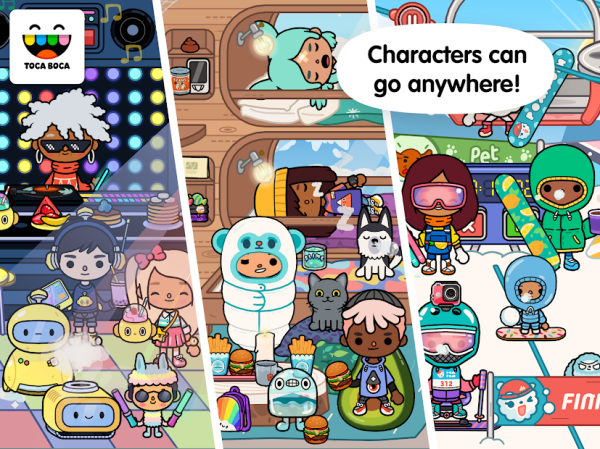
The characters are simple enough to fit many stories but expressive enough to develop personalities. Their faces react to food, movement, clothing, and certain situations. I can place items in their hands, change their appearance, move them between buildings, and assign them roles without selecting a formal profession or personality type.
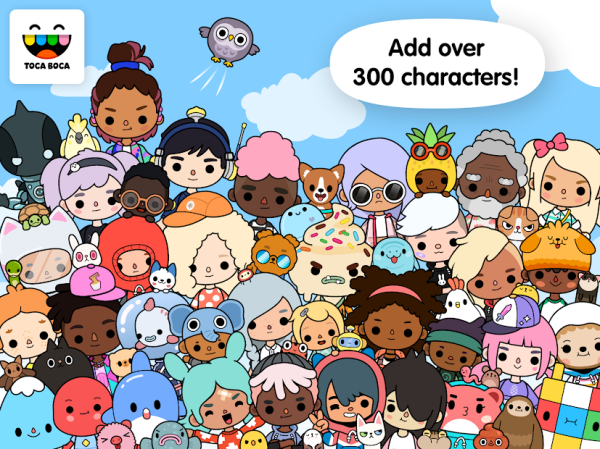
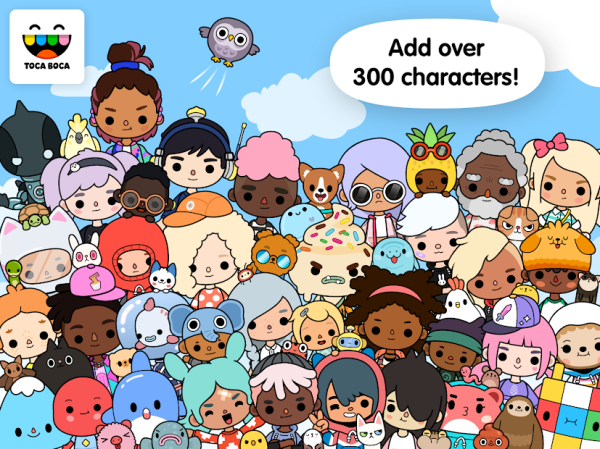
The character creator became one of my favorite areas because it let me build a cast rather than depend only on existing residents. I could adjust hair, facial features, skin tone, clothing, accessories, and general style. Creating one character often led to another because I began imagining relationships between them.
I made a confident older sister, a younger brother with terrible fashion choices, a tired parent, and a neighbor who appeared in every location without explanation. The game never confirmed these identities. They existed because I remembered them and continued using the same characters consistently.
This flexibility is stronger than a detailed personality system would have been. Toca Boca World does not decide that one character is brave or shy. I communicate those traits through clothing, expressions, locations, and actions.
The limitation is that characters do not act independently. They do not walk around, form relationships, or continue stories when I leave. Every meaningful action requires my input. This is creative freedom, but it also means the world can feel frozen when I stop moving things.
Home Designer Became My Real Endgame
I expected character stories to hold most of my attention. Instead, decorating homes became the activity I returned to most often. Building and furnishing rooms offered a satisfying combination of creativity and organization.
I could choose furniture, change wall designs, create bedrooms, arrange kitchens, build studios, and place small decorative items almost anywhere. The process felt less restrictive than many life simulators because I was not constantly calculating budgets or waiting for construction timers.
The best rooms emerged when I designed around a specific person. A musician needed instruments, posters, unusual lighting, and a messy corner filled with unfinished ideas. A quiet student needed books, plants, a practical desk, and enough storage to make the room appear unrealistically organized.
Small items made the biggest visual difference. Cups, cushions, lamps, photographs, food, toys, and bathroom products turned an empty layout into a believable home. I frequently spent more time deciding where to place a plant than I spent creating the family living beside it.
Furniture placement can become awkward when rooms are crowded. Objects sometimes overlap unexpectedly, and selecting an item behind another object is not always smooth. I also wanted more precise control over depth and positioning. The game prioritizes simple touch controls over professional decorating tools, which is understandable but occasionally frustrating.
Stories Exist Only While I Am Telling Them
Toca Boca World does not provide dialogue trees or written story campaigns. I create the conversation in my head, speak it aloud, record it externally, or simply move characters through the scene.
This approach makes every session personal. One player may use the hospital for a realistic story, while another turns it into a secret headquarters. The same location can support comedy, family drama, school adventures, shopping trips, or supernatural ideas.
I enjoyed creating stories in short episodes. A character would lose an important object, visit several locations, meet other people, and eventually discover that the item had been sitting in an obvious place. The game did not track the plot, but moving through different environments gave the story a sense of progression.
The weakness is that imagination must perform almost all the narrative work. Players who need written prompts may struggle to decide what to do. The game could benefit from optional scenario cards or gentle idea generators that suggest a starting situation without converting the experience into a fixed campaign.
I would not want mandatory missions. The absence of pressure is essential. Optional creative prompts, however, could help when the world feels large and my imagination has temporarily stopped cooperating.
A World Built From Small Discoveries
Exploration is rewarding because locations contain hidden objects, unusual reactions, secret compartments, and visual jokes. I learned to open every cupboard, inspect shelves, tap suspicious decorations, and move objects that looked slightly too intentional.
The secrets are rarely difficult in a traditional puzzle sense. They reward attention rather than advanced reasoning. Finding one feels like discovering a private joke left by the designers.
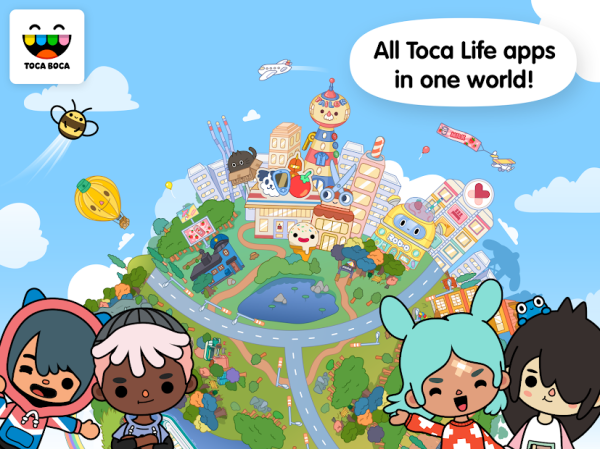
Some items can be carried between locations, which makes the world feel connected. A character can obtain clothing in one place, food in another, and decorations elsewhere before returning home. This encourages me to treat locations as parts of one larger setting rather than isolated screens.
Transporting many items can become inconvenient. I occasionally lost track of where I had placed something important. Because the game contains so many small objects, organization becomes a challenge created by abundance rather than complexity.
That challenge is strangely appropriate. My virtual homes developed drawers filled with random objects, tables covered in snacks, and storage rooms that were supposed to solve clutter but became clutter themselves.
The Free Version Gives Me a Beginning, Not the Whole World
Toca Boca World can be downloaded without an initial payment, and the starting content is enough to understand the game’s central idea. I could create characters, visit locations, arrange objects, and build stories before purchasing anything.
The free selection does not feel like a short demonstration that ends after five minutes. There is legitimate play value, especially for someone new to the application. Regular gifts and occasional additions can also provide more items over time.
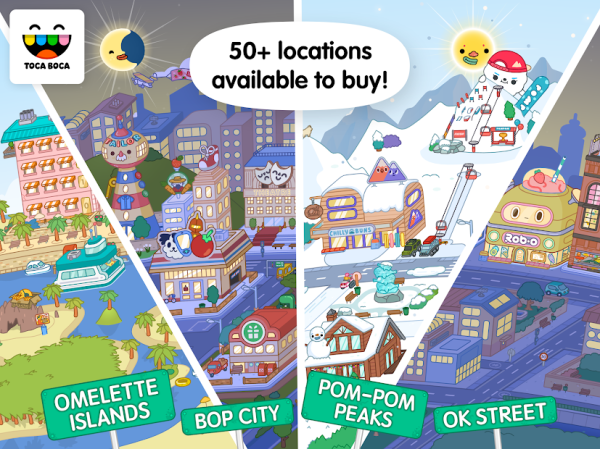
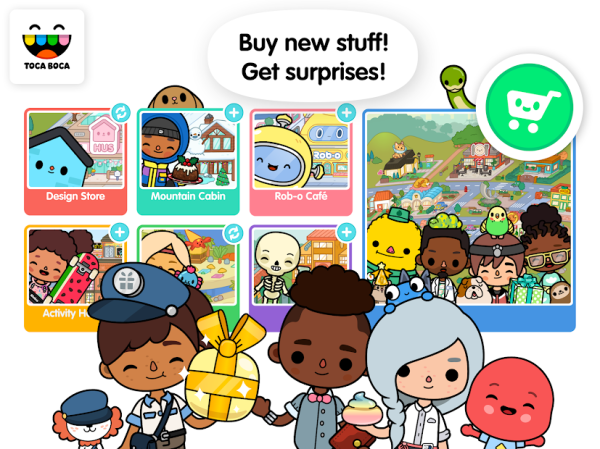
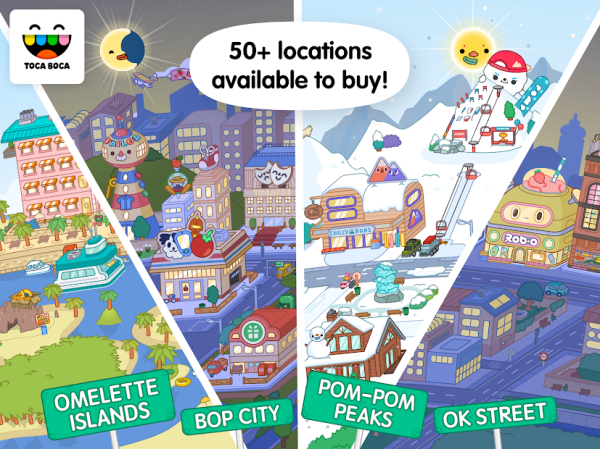
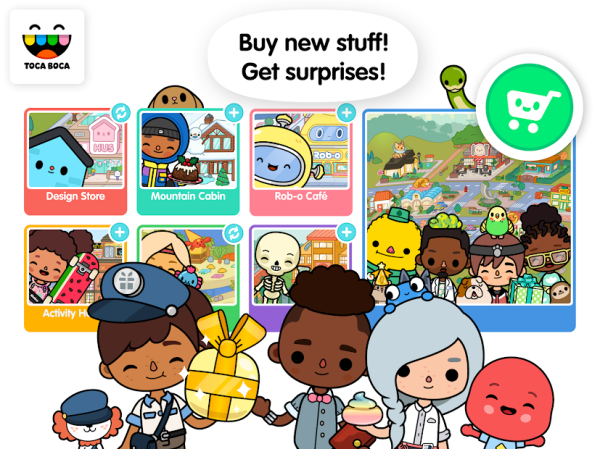
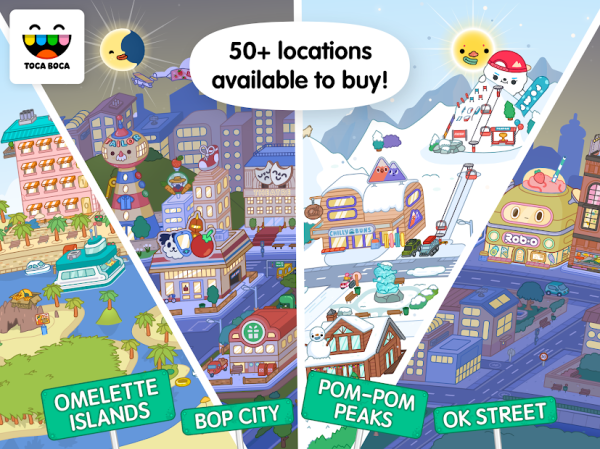
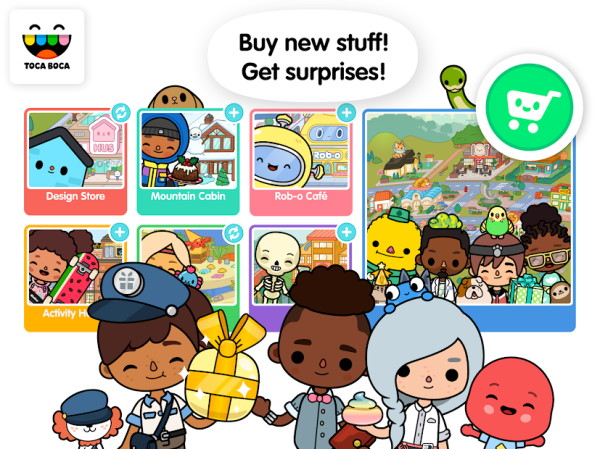
However, the in-app shop is always relevant because many of the most attractive houses, furniture collections, character packs, and themed locations are sold separately. Once I began imagining a larger world, I could see how easily individual purchases might accumulate.
One pack may appear inexpensive. Several houses, furniture sets, locations, and character additions create a much larger total. The store does not use competitive advantages, but it sells creative possibilities. That can be equally persuasive because every attractive pack suggests another story I could tell.
I appreciated the absence of third-party advertisements interrupting play. The commercial pressure comes from optional content rather than random video ads. This creates a cleaner experience, although parents should still manage purchasing controls carefully because the shop is central to expanding the world.
Why the Store Is Both Exciting and Dangerous
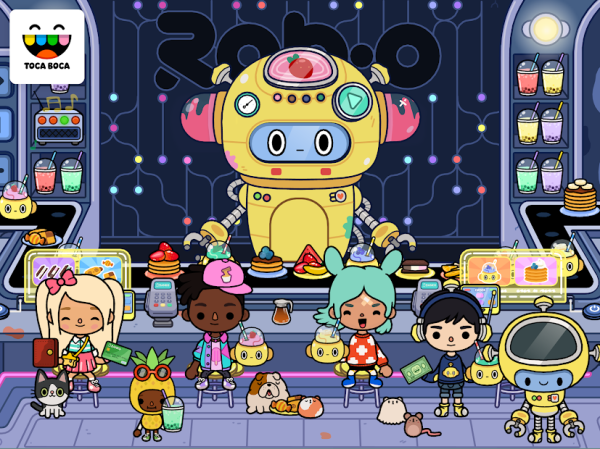
The in-app store is visually effective because packs are presented as complete themes. A new house is rarely just an empty structure. It suggests a lifestyle, characters, furniture, and possible stories. A restaurant pack immediately makes me imagine staff, customers, menus, and disasters in the kitchen.
This is good product design, but it also means the purchase decision is emotional. I am not comparing statistics. I am imagining future creativity.
I found it useful to choose content based on versatility. A furniture pack that works across many homes provides more long-term value than a highly specific decorative set. A location with multiple rooms and interactive objects may support more stories than a small themed area.
Buying everything is unnecessary. The game becomes visually richer, but too much content can create decision fatigue. A smaller collection of locations I understand well often produces better stories than a huge map I barely explore.
Visual Style That Makes Clutter Look Friendly
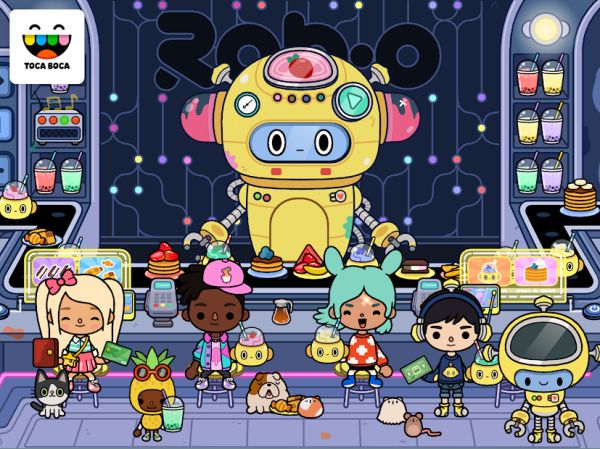
Toca Boca World uses rounded shapes, strong colors, expressive faces, and environments filled with tiny objects. The style is cheerful without making every location identical.
A hospital still looks different from a salon, apartment, school, shop, or vacation setting. Each location has its own visual identity while remaining part of the same world.
The character designs support customization because unusual clothing, hair, and accessories still fit the overall art direction. I can create a strange outfit without making the character look imported from another game.
Rooms can become visually crowded, especially after I add personal decorations. This is partly my fault. The game provides so many small items that restraint becomes an advanced decorating skill.
Animations are short and readable. Characters react clearly without lengthy sequences slowing down play. The game understands that I may want to move several people quickly while arranging a scene.
Sound Design That Stays in the Background
The audio is light, playful, and responsive. Objects produce small sounds, appliances react, characters make simple vocal noises, and locations use music that supports their atmosphere.
I liked that characters do not speak full written dialogue. Complete voices might limit the roles I assign to them. Their small reactions communicate mood without defining personality too strongly.
Sound can become repetitive during long decorating sessions. I sometimes lowered the volume when repeatedly moving objects or changing rooms. The audio is pleasant, but the game does not depend on it, which makes silent play completely practical.
Music-related objects provide another creative layer. I could treat them as ordinary decorations or build an entire performance scene around them. Like most systems in the game, their value depends on the story I attach to them.
How It Felt on a Phone Compared With a Tablet
Toca Boca World is playable on a phone, but I preferred the larger display of a tablet. More screen space made it easier to move small items, decorate rooms, and manage several characters at once.
On a phone, zooming and careful selection became more important. Crowded rooms occasionally turned into finger-navigation challenges. I could still play comfortably, but detailed design work required more patience.
Loading between locations was generally manageable during my sessions, though a larger world naturally created more waiting than the basic starting setup. Performance can depend heavily on the device, available storage, and the amount of content installed.
I encountered occasional moments where an item did not remain exactly where I expected or a crowded scene behaved awkwardly after moving between locations. These issues were annoying because storytelling depends on the world preserving my setup.
The game benefits from regular updates, but updates can also introduce temporary problems. For a player who has spent hours designing characters and homes, any reset or missing item feels more serious than a minor visual error.
The Safety of a Private Single-Player Space
One of the most valuable qualities is that Toca Boca World does not depend on conversations with strangers. I could create stories without public chat, competitive ranking, or pressure from unknown players.
This private structure supports experimentation. There is no audience judging whether my room looks impressive or whether my story makes sense. I can play slowly, repeat scenes, or create something completely absurd.
For younger players, the lack of open social interaction removes many common online risks. That does not eliminate the need for parental involvement, especially around purchases, device permissions, screen time, and external promotional material.
The game is safe by design in several important ways, but it is still a commercial digital product. Adults should understand which content is free, which packs require payment, and how purchases are protected on the device.
Why Older Players May Enjoy It Too
Toca Boca World is clearly designed with younger audiences in mind, but creativity does not become irrelevant after childhood. I enjoyed it as a relaxing sandbox when I wanted something without competition or demanding controls.
Decorating rooms provided the same satisfaction I find in life simulators, while character staging resembled arranging scenes for a comic or animation. The game can also function as a visual storytelling tool for screenshots and short videos.
Older players may find the interactions mechanically shallow. There are no advanced economic systems, relationship statistics, or long-term simulation. Everything happens because I move it manually.
That manual nature can be calming. I was not managing a list of needs or preventing characters from becoming unhappy. I controlled the pace completely.
Where My Imagination Started to Repeat Itself
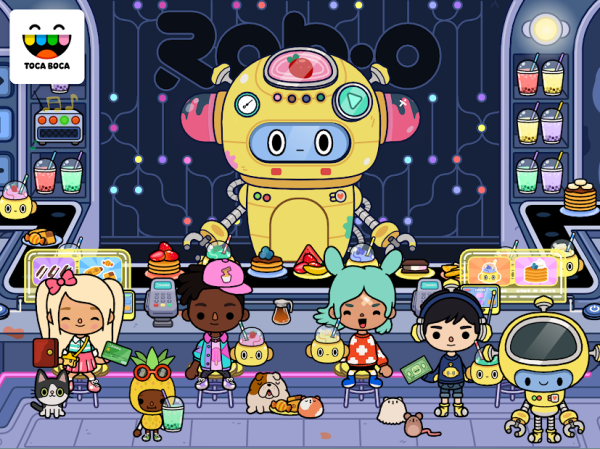
After many sessions, I noticed certain stories returning. A family moved house. Someone opened a shop. A character prepared for school. Friends visited a café. A room received another redesign because I had no new narrative idea.
The game provides many objects but few evolving systems. Characters do not remember events, locations do not change without my involvement, and no unexpected visitor arrives to disrupt a routine.
This means long-term variety depends on new content or stronger personal creativity. Players who enjoy inventing stories can continue for years. Players who rely on the game to generate surprises may reach a limit sooner.
I would enjoy more optional environmental events: weather changes, day-and-night settings, seasonal controls, simple random prompts, or location-specific events. These could refresh familiar places without restricting open-ended play.
The Difference Between Playing and Creating Content
Toca Boca World is especially well suited to players who record their stories. The clear character expressions, colorful rooms, movable objects, and customizable cast make scenes easy to understand visually.
While playing privately, I did not need every action to look perfect. When imagining a recorded story, I became much more careful about character placement, room design, clothing continuity, and background clutter.
The game can become a simple production studio. A creator can prepare sets, design characters, stage scenes, and add external narration or editing. The application does not provide every professional filming tool internally, but it supplies the visual pieces.
This creative use explains part of the game’s continued popularity. Players are not only consuming updates. They use the world to produce their own stories, challenges, house tours, and character dramas.
What Parents Should Understand Before Installing It
Toca Boca World encourages imaginative play more effectively than many mobile games built around constant rewards. There is no need to defeat strangers, maintain a competitive ranking, or watch third-party advertisements between activities.
The main parental concern is the amount of optional paid content. A child can easily understand that new houses and characters exist but may not understand how quickly several small purchases add up.
Device-level purchase protection is essential. I would also agree on a clear budget before browsing the store rather than making decisions during an emotional reaction to a newly released pack.
It is worth asking children to explain the stories they create. That conversation reveals whether they are actively imagining situations or only collecting new items. The most valuable part of Toca Boca World is not owning every location. It is using available locations creatively.
My Most Honest Complaint
The game sometimes sells the solution to boredom instead of solving boredom through deeper systems. When familiar locations begin to feel repetitive, the shop offers another house, pack, or theme. New content genuinely adds possibilities, but the cycle can encourage purchasing rather than reimagining existing tools.
I also wanted stronger organization. As my collection grew, finding a specific object or remembering which location contained it became difficult. A searchable inventory or improved storage system would make large worlds easier to manage.
These complaints did not remove the game’s appeal. They became more noticeable precisely because I had spent enough time creating rooms and stories to care about organization and preservation.
Who Will Actually Keep Playing?
Toca Boca World is ideal for players who enjoy dollhouses, character creators, interior design, pretend play, visual storytelling, and sandbox games without strict objectives.
It is particularly strong for children who naturally create stories with physical toys. The application translates that style of play into a portable digital environment with more locations and objects than most bedrooms could hold.
Players looking for action, strategy, difficult puzzles, competition, or a traditional campaign should probably choose something else. Toca Boca World will not create motivation for someone who needs clear goals.
It also suits creators who want to stage screenshots or videos. The game’s expressive design makes simple scenes visually readable, even without spoken dialogue.
My Final Experience With Toca Boca World
Toca Boca World became most enjoyable when I stopped waiting for it to entertain me automatically. The game gives me a stage, actors, props, houses, shops, food, clothing, pets, furniture, and strange hidden objects. I provide the reason they are all in the same room.
Its interaction systems are easy, its art is charming, and its private single-player design creates a comfortable space for experimentation. Building homes and creating characters gave me more satisfaction than completing another predictable mobile level.
The weaknesses are tied to the same freedom. There is little structure for players who cannot invent their own goals. Objects can become difficult to organize, touch controls are occasionally imprecise, and the growing collection of paid packs can make the complete experience expensive.
I would not judge Toca Boca World by how many locations I own or how quickly I can unlock content. I would judge it by whether one room and a few characters can produce a story I remember afterward.
For me, they often did. My virtual family never completed its peaceful dinner, the kitchen remained a disaster, and the neighbor continued appearing without invitation. That unfinished chaos felt more personal than many mobile games with carefully written objectives.
I rate Toca Boca World 8.7/10. It is not demanding, competitive, or mechanically deep. It is a flexible creative space that becomes as interesting as the imagination I bring into it.
Pros:
- User-friendly design with straightforward download and installation
- Well-optimized performance across multiple platforms
- Dynamic content updates and evolving community events
- Customization options that allow personal expression and mod support
- Immersive creative sandbox that encourages exploration
- Vibrant and artistic visuals that make every element engaging
Cons:
- Social interactions and community features may be overwhelming for some users
- Gameplay might feel simple for those seeking deeper challenges
- In-app elements and optional purchases can detract from a fully free experience

How much storage do you need?
 Toca Boca World







Recent Reviews

Minecraft

Grand Theft Auto V

Roblox

Geometry Dash

Leave a comment
Your comment is awaiting moderation. We save your draft here
0 Comments