Review
The first time I entered Gorilla Tag, I expected a simple VR game built around chasing other players. Instead, I spent my opening minut...
Gorilla Tag VR: Redefining Movement and Community in Digital Playgrounds
The first time I entered Gorilla Tag, I expected a simple VR game built around chasing other players. Instead, I spent my opening minutes trying to understand why everyone else could climb trees, launch themselves across the map, and disappear over walls while I struggled to move in a straight line. There are no traditional movement controls to rescue a beginner. My arms became the controller, the floor became something I had to push against, and every awkward mistake was visible to the other players around me.
That rough introduction is exactly what made the game interesting. Gorilla Tag does not give me smooth artificial movement or a convenient button for jumping. I have to swing my arms, strike surfaces, manage momentum, and learn how the virtual environment reacts to every motion. The result feels less like controlling a character and more like physically learning a new sport.
Movement Is the Entire Game
Most VR games use hand tracking to support combat, object interaction, or menu navigation. Gorilla Tag builds almost everything around locomotion. I move by pushing my hands against the ground and nearby surfaces, using each motion to propel my gorilla avatar forward. There are no legs to manage, so my arms handle running, jumping, climbing, balancing, and changing direction.
At first, I moved slowly because I was using large, exaggerated swings. I assumed more force would always create more speed, but that approach quickly made my movement inconsistent. Once I started using shorter and more controlled motions, I could maintain momentum without constantly losing my direction.
This learning process gave the game a natural sense of progression. I did not unlock a faster character or purchase a movement upgrade. I simply became better at using the mechanics. Every new technique changed what I could do inside maps I had already visited.
My Early Movement Mistakes
- I pushed downward when I should have pushed backward;
- I used both hands at the same time and lost control of my direction;
- I stared at my hands instead of watching the route ahead;
- I tried to climb too quickly and repeatedly slid back down;
- I swung my arms too widely and became tired before the session was over.
None of these mistakes felt like a problem with the game. They were part of learning its physical language. After several sessions, movements that once required concentration started to feel automatic.
The Moment Climbing Finally Made Sense
My first successful climb was more satisfying than completing many scripted VR objectives. I had watched experienced players scale surfaces with rapid alternating hand movements, but copying them without understanding the timing did not work. I would gain a little height, panic, and lose all my progress.
The technique became clearer when I slowed down. I placed one virtual hand against the wall, pushed in the opposite direction, and used the other hand before my momentum disappeared. The movement was not realistic climbing, but it had its own internal logic. Once I understood that logic, vertical spaces stopped feeling decorative and became usable routes.
Wall climbing also changed how I approached chases. Staying on the ground made my path predictable. Moving upward gave me more options, but it also required better timing. One poor hand placement could send me back toward another player. The risk made vertical movement exciting rather than simply advantageous.
A Playground Where Players Create the Drama
Gorilla Tag does not need a complicated story because the players create one during every round. A basic chase can produce temporary alliances, betrayals, risky escapes, loud celebrations, and surprisingly clever tricks. The rules provide a starting point, but the memorable moments come from how people use them.
I have entered matches where everyone played competitively and searched for the most efficient routes. I have also joined rooms where players gathered in one area, demonstrated movement techniques, or invented their own challenges. The same map can feel completely different depending on the people inside it.
The voice chat contributes heavily to this atmosphere. Hearing another player react in real time makes a chase feel more immediate. I can tell when someone is nearby even before I see them, and a sudden voice from above often reveals that an experienced climber has been following me across the map.
Voice chat can also be unpredictable because the community includes players with very different communication styles. I sometimes mute individual users or reduce how much attention I give to public conversations. The strongest sessions are the ones where players remain playful without turning the room into constant noise.
Maps Feel Different Because My Body Moves Differently
I initially thought new environments would mainly provide visual variety. In practice, each layout changes how I use my arms, how quickly I make decisions, and which movement skills matter most.
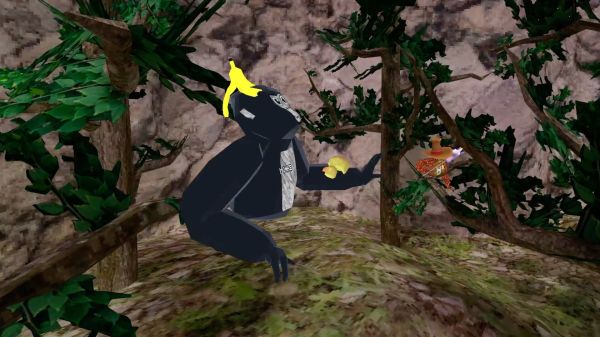
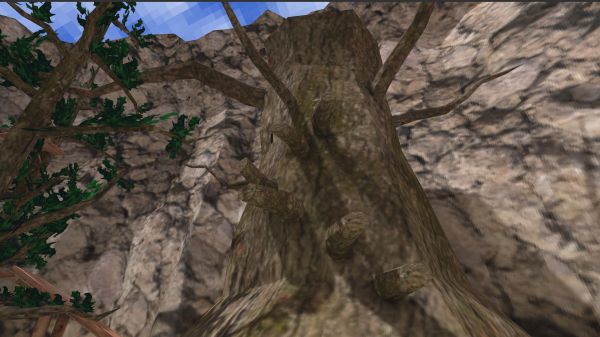
Open forest areas give me space to build speed and experiment with trees, platforms, and walls. These spaces are forgiving enough for practice but still offer advanced routes for skilled players. I often use them to warm up because they allow me to switch between ground movement and climbing without feeling trapped.
Tighter locations create more pressure. Corners become important, changes in elevation happen quickly, and another player can appear from an unexpected direction. I cannot rely only on speed. I have to read the environment and choose a route before I reach it.
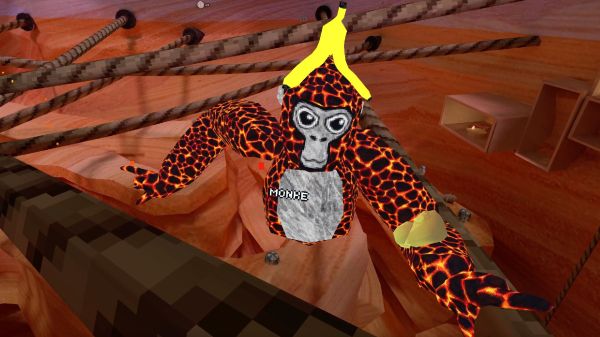
Maps with larger vertical sections are the most demanding for me. They reward confidence and smooth transitions between surfaces. When I hesitate, my momentum disappears. When I commit too early, I may miss the next hand placement. These areas make every successful escape feel earned.
Learning From Better Players
Gorilla Tag has one of the clearest skill gaps I have encountered in a social VR game. An experienced player does not merely move faster. They understand angles, momentum, surface contact, and route selection. Watching them can feel like observing a completely different control system.
I improved most when I stopped trying to chase these players immediately and began studying what they were doing. Skilled users rarely waste motion. Their hands move with purpose, and they often prepare the next action before the current one has finished. They also use the environment creatively, turning walls, branches, ledges, and corners into connected movement paths.
Some players willingly explain techniques to beginners. I have received useful advice about keeping my arms closer, changing my hand angle, and avoiding unnecessary upward swings. Because movement is physical, a brief demonstration is often more helpful than a long explanation.
There Is No Easy Way to Fake Improvement
Many multiplayer games allow me to compensate for limited skill by changing equipment, selecting a stronger ability, or following a highly effective build. Gorilla Tag gives me fewer shortcuts. Cosmetic items change appearance, but they do not perform the movement for me.
This makes improvement easy to notice. I can compare how I moved during my first sessions with how I move now. Routes that once seemed impossible become normal. A wall that used to stop me becomes part of a larger path. I spend less time thinking about each hand movement and more time watching other players.
The game’s simplicity makes this progress feel honest. I am not looking at a number that claims my character became stronger. I can physically recognize that my timing and coordination have improved.
My Play Area Matters More Than Expected
Gorilla Tag is energetic, and that energy can create problems in a small room. During my early sessions, I became so focused on escaping another player that I forgot about the real furniture around me. The virtual space encourages wide movement, but the physical room still sets the true limit.
I now clear the nearby area before playing and check my VR boundary carefully. I also avoid positioning myself directly beside a wall, desk, monitor, or other hard object. The game works with standing play, but I feel more comfortable when I have enough space to rotate and move my arms without hesitation.
Long sessions can also become physically demanding. Gorilla Tag made my shoulders and arms feel more active than most seated games. I learned to take breaks instead of continuing until my movement became sloppy. When I become tired, my timing gets worse, and frustration replaces the playful rhythm that makes the game enjoyable.
The Visual Style Helps More Than It Seems
The graphics are intentionally simple. Gorilla avatars do not need detailed facial animation, and the environments avoid unnecessary realism. At first glance, the presentation can appear basic compared with more cinematic VR releases, but the style supports the gameplay extremely well.
Clear shapes make surfaces easier to read while I am moving quickly. I can identify branches, walls, platforms, and gaps without studying detailed textures. The simple avatars are also easy to recognize from a distance, which is important when I need to track several players during a chase.
The lack of visual complexity gives the game a playful identity. It feels like an oversized virtual playground rather than a simulated real location. That tone matches the movement, social interactions, and unpredictable behavior of the community.
Cosmetics Add Personality Without Replacing Skill
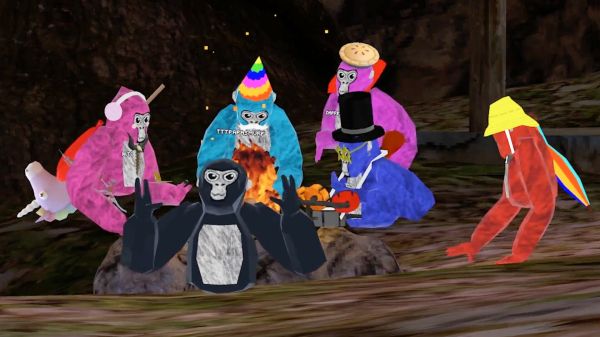
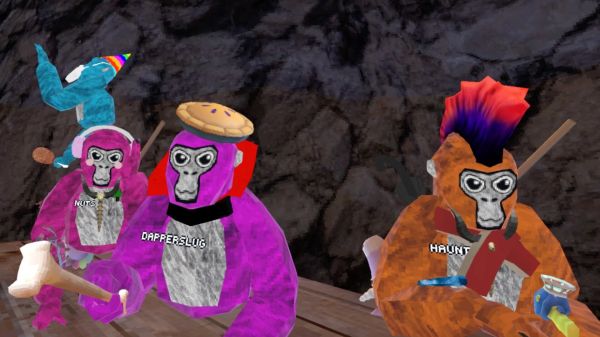
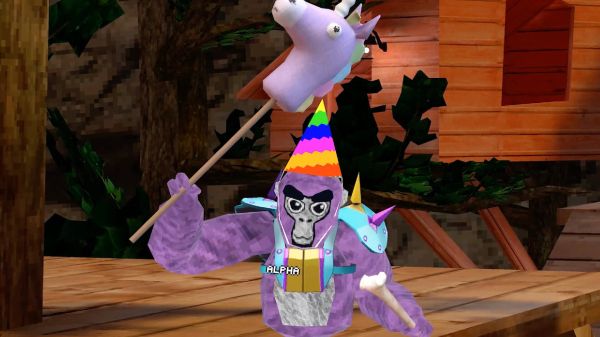
Customization gives me a reason to make my gorilla look different, especially in social rooms where appearance becomes part of how players recognize one another. Hats, badges, glasses, and other accessories can make a simple avatar surprisingly distinctive.
I appreciate that cosmetics do not change the core movement mechanics. A player wearing an elaborate combination of items still has to climb, jump, and escape using the same physical system as everyone else. The visual items support self-expression without turning each match into an equipment comparison.
I usually prefer a simple combination because overly large accessories can distract me during movement. Other players enjoy creating unusual looks, and those outfits often become part of the humor inside a room.
Why I Keep Returning
Gorilla Tag is easy to understand but difficult to master. I can explain the basic idea in one sentence, yet I can spend hours improving a single movement technique. That balance makes the game accessible without making it shallow.
Every session gives me a different reason to stay. Sometimes I want a competitive chase. Sometimes I want to practice climbing alone. On other days, I enter a social room and spend more time watching player-made challenges than following an official mode.
The game is at its best when I stop worrying about perfect movement and allow the mechanics to create spontaneous moments. A missed jump can become an unexpected escape route. A failed climb can place me directly beside another player. A simple race across the map can turn into a lesson from someone far more experienced.
I would not describe Gorilla Tag as a relaxing VR experience. It is physical, noisy, and occasionally chaotic. That is also why it feels so different from more controlled multiplayer games. My body, timing, available space, confidence, and understanding of the map all influence what happens.
After enough practice, the awkward arm swings gradually turn into fluid movement. I begin to see routes instead of individual surfaces, and I react without planning every push. That transition is the real reward. Gorilla Tag makes me feel clumsy before it makes me feel capable, and the journey between those two states is where I found most of the fun.
Pros:
- Immersive VR experience with intuitive controls.
- Regular updates enhance both gameplay and stability.
- Minimalistic design ensures clear visuals and audio.
- Diverse maps encourage exploration and parkour-style gameplay.
- Accessible and free-to-download, lowering barriers for new players.
- Unique movement mechanics that engage physical skills.
Cons:
- Limited content compared to more expansive VR titles.
- Occasional technical issues on lower-spec VR devices.
- Initial steep learning curve for new players.

How much storage do you need?
 Gorilla Tag







Recent Reviews

Minecraft

Grand Theft Auto V

Toca Boca World
Roblox
Leave a comment
Your comment is awaiting moderation. We save your draft here
0 Comments