Review
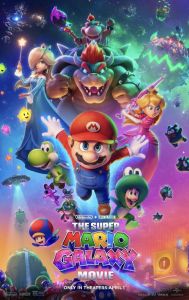
The Super Mario Galaxy Movie opened the door to space and immediately began throwing ideas through it. Tiny planets, shifting gravity,...

Celestial Odyssey: Reigniting the Magic of the Mushroom Kingdom
The Super Mario Galaxy Movie opened the door to space and immediately began throwing ideas through it. Tiny planets, shifting gravity, Lumas, Yoshi, Rosalina, Bowser Jr., flying vehicles, power-ups, familiar melodies, and references to several Nintendo games appeared so quickly that I sometimes felt as though I were watching an entire theme park rush past the window of a moving train.
I enjoyed that energy at first. The original Super Mario Bros. Movie already moved quickly, but its journey followed a relatively simple direction. Mario needed to find Luigi, learn how the Mushroom Kingdom worked, and help Peach confront Bowser. The sequel begins with a much larger world already established, so it has less patience for introductions. Mario and Luigi are comfortable heroes, Peach governs her kingdom, Bowser remains under supervision, and the next threat arrives from beyond the world they know.
My experience with The Super Mario Galaxy Movie was exciting, funny, visually impressive, and frequently overcrowded. It contains some of Illumination’s most imaginative Mario animation, especially when gravity changes direction or characters leap between small planets. It also repeats the first film’s biggest weakness by treating quiet character development as something that must be completed quickly before the next chase begins.
The result feels like an excellent collection of Mario moments connected by a story that occasionally struggles to keep up with them. I rarely felt bored. I often wished the movie would stop trying to prevent boredom and allow one location, relationship, or musical theme to remain on screen for longer.
Yoshi Became My Favorite Source of Chaos
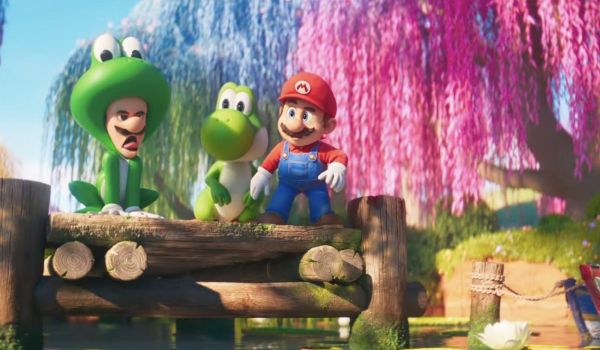
Yoshi enters the film as a physical problem before becoming part of the group. He is curious, hungry, fast, and capable of turning an ordinary repair job into a sequence of escalating destruction. Donald Glover gives him a playful vocal personality without making him sound like a fully conversational adult.
I liked that the movie did not reduce Yoshi to a cute passenger. His abilities repeatedly affect the action. He can swallow objects, use his tongue to reach distant targets, carry characters across difficult terrain, and react to danger with an instinctive confidence that Mario and Luigi do not always share.
The animation gives him enough expression to communicate with limited dialogue. His eyes, posture, and small sounds make his intentions clear, especially when food appears. Several jokes are predictable because I know Yoshi is going to eat the suspicious object, but the timing usually works.
His connection with Luigi was more enjoyable than I expected. Luigi approaches him with affection mixed with constant concern, while Yoshi appears to understand that Luigi is easy to surprise. Their scenes give the film a lighter relationship that does not require a large emotional conflict.
I wanted more information about Yoshi’s life before joining the brothers. The film moves him into the central group almost immediately. His personality is charming, but his personal motivation remains simple. He participates because he likes the characters and because the adventure keeps placing interesting things in front of him.
Bowser Jr. Gives the Sequel a More Personal Threat
Bowser Jr. is not trying to create a completely new identity. He wants to restore his father’s power and prove that he deserves to stand beside him. That makes his plan emotionally understandable even when it becomes dangerously excessive.
Benny Safdie voices Junior with a mixture of confidence, frustration, and youthful need. He wants to sound like a ruler, but much of his behavior reveals a child performing the version of leadership he learned from Bowser.
I found him more interesting during conversations than during the largest action scenes. His machines, armies, and galactic weapon provide the physical conflict, but his strongest motivation is approval. He has built an enormous operation because he wants his father to look at him and see a worthy successor.
This creates an effective problem for Bowser. The first movie treated Bowser’s obsession and theatrical confidence mainly as comedy and danger. The sequel forces him to see how his behavior shaped his son.
Junior’s weakness is that the film sometimes makes him too noisy. His frustration is expressed through shouting, attacks, and larger machines when a quieter reaction would reveal more. The character becomes most memorable when the performance briefly drops and I can see how afraid he is of disappointing Bowser.
Bowser Is Funniest When He Has No Control
Jack Black remains the most reliable comic performer in the cast. Bowser begins the sequel without the size or authority he once possessed, yet his personality has not adjusted to his situation. He still expects fear, respect, and dramatic attention from everyone around him.
The difference between his enormous voice and reduced physical condition creates immediate comedy. He gives commands while being carried, protected, ignored, or placed somewhere for safekeeping. Every humiliation becomes funnier because Bowser behaves as though dignity can be restored through louder delivery.
His reunion with Bowser Jr. adds emotional value that the first film did not attempt. Bowser enjoys being admired, but he is less prepared to accept responsibility for the worldview Junior has inherited.
The father-and-son material occasionally becomes unexpectedly sincere. Bowser understands the desire to appear powerful, yet he also begins recognizing that Junior’s need for approval is pushing him toward complete destruction.
I missed a musical sequence equal to the first movie’s most famous Bowser song. Jack Black still uses rhythm, performance, and exaggerated emotion effectively, but the sequel gives him less room for a complete musical joke. The family storyline partly replaces the romantic obsession, though the soundtrack never finds an equally memorable comic anthem.
Rosalina Brings Calm Into a Movie That Rarely Wants It
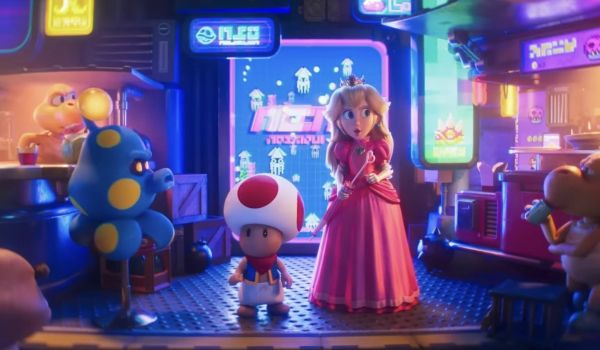
Rosalina is visually and emotionally different from most of the cast. Mario, Luigi, Toad, Yoshi, and Bowser react loudly and quickly. Rosalina speaks with greater restraint and moves as though she is accustomed to observing events across enormous distances.
Brie Larson gives her a quiet confidence that suits the Comet Observatory and the Lumas. Her power is clear, but the character is not defined only by strength. Responsibility has separated her from ordinary life, and caring for the Lumas has created a family that exists outside conventional kingdoms.
The film connects Rosalina with Peach’s missing history, giving both characters a personal reason to pursue the conflict. Their relationship contains some of the movie’s strongest emotional possibilities. Peach has spent years wondering where she came from, while Rosalina has lived with knowledge and distance.
The problem is time. Their conversations must share the film with Bowser Jr., Yoshi, Bowser, Fox McCloud, multiple galaxies, and constant action. I understood the importance of their connection before I fully felt it.
I wanted one scene where Peach and Rosalina simply spent time together without discussing rescue plans, cosmic danger, or family history. Small ordinary details could have made their relationship more believable than another explanation delivered during movement.
Peach Finally Receives Answers, but Not Enough Space to Process Them
Princess Peach remains capable, organized, and prepared to enter danger without waiting for Mario to lead. Anya Taylor-Joy maintains the confident performance established in the first movie, though the sequel gives Peach more emotional uncertainty.
Learning about Rosalina forces Peach to reconsider the story she has built around herself. The Toads raised her, the Mushroom Kingdom became her home, and leadership became central to her identity. Discovering a biological family connection does not erase those experiences, but it changes the unanswered part of her past.
I appreciated that the film does not suggest Peach must choose between her old family and the new connection. Rosalina matters because she adds to Peach’s identity rather than replacing it.
The theme works well with Rosalina’s role as the adoptive mother of the Lumas. Both women demonstrate that family can be created through protection and shared life, not only origin.
The movie communicates this clearly, sometimes too clearly. Several emotional ideas are explained in dialogue after the characters’ actions have already made them understandable.
Mario Is No Longer the Only Hero in the Room
Mario begins the sequel with confidence earned from the first adventure. He knows the Mushroom Kingdom, understands power-ups, and has already faced Bowser. Space immediately challenges that confidence because many of its rules are unfamiliar.
Chris Pratt’s performance remains warm and energetic. His Mario rarely becomes cynical, even when a plan fails. He treats movement as the natural response to danger.
The sequel introduces a useful insecurity: Mario is surrounded by characters with cosmic knowledge, royal responsibility, advanced technology, and specialized abilities. He cannot solve every problem by jumping toward it.
This could have created a deeper arc about accepting a supporting role. The film touches the idea but usually gives Mario another action sequence before the discomfort has time to develop.
He remains likable because his heroism is practical. He does not need to be the most powerful person present. He needs to act when someone is in danger. One of his best decisions involves helping a character he has every reason to distrust, demonstrating that his moral instinct has developed beyond simple rivalry.
Luigi Has More Courage Without Losing His Fear
Charlie Day continues to make Luigi sound as though every new discovery has violated a personal agreement about how dangerous life should be. The difference is that Luigi now moves forward despite the fear.
He has already survived Bowser’s prison and supernatural threats. That experience does not make him calm. It makes him more capable of acting while afraid.
I enjoyed seeing Luigi contribute practical solutions rather than existing mainly to be rescued. He notices dangers Mario ignores, works well with Yoshi, and occasionally becomes the person holding the group together when Mario rushes ahead.
His relationship with Mario remains emotionally simple but important. The brothers argue, react differently, and occasionally underestimate each other, yet their loyalty never becomes uncertain.
The sequel still gives Mario more central action, but Luigi feels less like a secondary passenger. I would happily watch a future story that separates the brothers for longer and allows Luigi to complete a full mission through caution, improvisation, and reluctant bravery.
Fox McCloud Is Exciting and Slightly Distracting
Fox McCloud’s appearance expands the film beyond the Mario universe and immediately changes the kind of adventure being presented. His ship, confidence, and familiarity with space make the Mushroom Kingdom characters appear inexperienced.
Glen Powell gives Fox a smooth heroic performance with enough irritation to create comedy. He sees himself as a professional pilot surrounded by passengers who treat every vehicle like another platforming level.
His flight sequences are visually exciting. The Arwing allows the movie to move through asteroid fields, attacks, and changing gravity without depending only on Mario’s jumping abilities.
I also felt the machinery of a larger franchise becoming visible. Fox sometimes seems less like a necessary character and more like evidence that Nintendo is preparing future crossovers.
He contributes to the plot, but his arrival increases an already crowded cast. A separate Star Fox movie could give him the development that this story has no time to provide.
Honeyhive Galaxy Is Beautiful Enough to Deserve Its Own Movie
Honeyhive Galaxy gave me the strongest sense of entering a location directly inspired by the games. Small planets, enormous flowers, warm sunlight, honey-covered surfaces, and bee inhabitants create a setting that feels playful before any action begins.
The Bee Mushroom transformation is used effectively because flight remains limited. Mario cannot move anywhere without restriction. He needs to manage height, distance, and safe surfaces, preserving some of the game mechanic’s identity.
The Honey Queen brings authority and humor, while the surrounding population makes the galaxy feel like a functioning community rather than an empty obstacle course.
Then the movie leaves.
This became my repeated frustration. The environment contains enough visual ideas for an entire sequence of exploration, but the story needs to reach another location. Honeyhive becomes one attractive stop among many.
Super Mario Galaxy created attachment through return visits. I would land on a small world, learn its movement, discover hidden areas, and revisit it for another star. A movie cannot reproduce that repetition easily, but it could slow down long enough to create familiarity.
Gravity Is the Sequel’s Best Visual Mechanic
The animation becomes most inventive when the concept of up and down stops behaving normally. Characters run around spherical planets, leap between separate gravity fields, fall sideways, and enter buildings where the floor changes according to position.
These sequences preserve the physical pleasure of the games without copying exact levels. Mario’s movement remains readable even when the environment rotates around him.
Illumination uses gravity for comedy as well as action. Luigi reacts to standing upside down with appropriate horror, while Yoshi accepts impossible movement almost immediately.
The best scenes allow the camera to follow one continuous path around a planet. The movement feels natural because the characters behave according to local gravity rather than treating the environment like a normal flat stage.
Some larger scenes become visually overwhelming when gravity shifts, enemies attack, dialogue continues, and several power-ups appear simultaneously. The technical execution remains polished, but understanding every action requires concentration.
The Lumas Are Sweet, Strange, and Used Too Often as Reaction Machines
The Lumas bring warmth to Rosalina’s story. Their small bodies, glowing colors, and childlike voices immediately communicate why she feels responsible for them.
They also support the movie’s idea of chosen family. Rosalina is their mother because she protects, teaches, and lives with them, not because they share a conventional biological relationship.
Several individual Lumas display different personalities, although most remain part of a collective group. Lumalee continues offering darker humor, creating a useful contrast with the others’ optimism.
The movie occasionally uses the Lumas too aggressively for cuteness. Serious scenes are interrupted by wide-eyed reactions or small voices designed to make the audience laugh.
I preferred the quieter moments where they gathered around Rosalina or responded to her danger. Their emotional value is stronger than their merchandising value, even when the film occasionally appears more interested in the second one.
The Soundtrack Understands the Games Better Than the Screenplay Does
Brian Tyler’s score combines cinematic orchestration with recognizable Mario melodies. Familiar themes appear in new arrangements suited to space, action, comedy, and emotional scenes.
The music often creates the wonder that the pacing does not leave enough time for visually. A melody associated with Rosalina or the observatory can make a short scene feel larger and more reflective.
I enjoyed hearing game themes transformed rather than inserted without adjustment. Small musical references reward familiarity, while larger arrangements support the film even for viewers who do not recognize the source.
The soundtrack occasionally moves through references as quickly as the visual Easter eggs. A melody appears, produces recognition, and disappears before developing fully.
The quieter music around Peach and Rosalina is especially effective. Those scenes benefit from restraint, and the score often understands when the dialogue should stop carrying every emotion.
The Comedy Is Fast, Familiar, and Usually Effective
The humor depends heavily on established personalities. Luigi panics, Mario remains confident, Toad approaches danger with unreasonable enthusiasm, Bowser protects his pride, and Yoshi eats objects that clearly should not be eaten.
Jack Black and Charlie Day remain the strongest comic performers because their voices can create humor even when the written joke is simple.
Physical comedy works especially well in low gravity. Characters fail to control their movement, objects float away, and serious plans collapse because one person misunderstands the environment.
The weaker jokes arrive during emotional scenes because the film seems nervous about silence. A reaction shot or interruption sometimes appears after the dramatic point has already worked.
I also noticed how often recognition functions as humor. A familiar character, item, or sound appears, and the movie pauses briefly for the audience response. This is enjoyable for fans but less meaningful than a joke built around personality.
The Story Feels Like a Third Act That Lasts Almost the Entire Movie
Once the central threat begins, the movie rarely returns to ordinary life. Mario and Luigi meet Yoshi, Rosalina is in danger, Bowser Jr. attacks, Peach enters space, Bowser becomes involved, Fox McCloud appears, and the group moves rapidly toward the final confrontation.
The constant movement makes the film easy to watch with a family audience. Younger viewers are unlikely to become restless because another location or character is always arriving.
The cost is development. Rosalina’s past, Peach’s questions, Bowser Jr.’s need for approval, and Bowser’s responsibility as a father are all stronger than the time devoted to them.
The movie often resembles a collection of selected highlights from a much longer adventure. The individual scenes are polished, but the transitions can feel like shortcuts.
I wanted twenty additional minutes, not for another battle, but for conversation and exploration. The galaxy should feel enormous. Here it sometimes feels like a sequence of decorated rooms connected by immediate transportation.
References Reward Fans but Cannot Replace Character
The Super Mario Galaxy Movie contains visual and musical references to Mario games across several eras. Power-ups, enemies, locations, background objects, sound effects, and secondary characters appear constantly.
Many references support the action naturally. Yoshi’s abilities matter, Bee Mario changes movement, and Rosalina’s observatory belongs to the central story.
Others appear briefly and disappear after producing recognition. I enjoyed spotting them, but recognition alone did not make me emotionally invested.
The movie is strongest when game material becomes part of character. A power-up is more memorable when Mario uses it to make a difficult moral decision than when it appears only because fans recognize the costume.
Fox McCloud represents the largest example of reference-driven expansion. His appearance is exciting, but it also asks me to think about another franchise while the current characters still need development.
The Father-and-Son Story Surprised Me Most
I expected Rosalina and Peach to provide the emotional center. Their relationship matters, but Bowser and Bowser Jr. created the most unexpected tension for me.
Junior believes that repeating Bowser’s ambitions will earn love and respect. Bowser initially enjoys the admiration because it restores his damaged pride.
The relationship becomes more interesting when Bowser understands what Junior has built in his name. He must decide whether being worshipped matters more than protecting his son from the consequences of their shared ambition.
The film does not transform Bowser into a completely different person. He remains selfish, theatrical, jealous, and dangerous. That makes the small signs of parental concern more believable than an immediate heroic conversion.
I wanted the final conflict to remain focused on this relationship. The enormous machines and universe-level danger sometimes reduce a specific family problem into general spectacle.
What Worked for Me After the Credits
I remembered Yoshi’s movement and comic timing. I remembered Rosalina surrounded by the Lumas, Mario moving across impossible gravity, and Luigi reacting to space as though the universe had personally offended him.
I also remembered Bowser trying to maintain authority in situations where no one treated him seriously. Jack Black continues making the character larger than the amount of screen time alone would suggest.
The film’s visual design remained in my mind more strongly than the exact sequence of plot events. Several galaxies are beautiful enough to become posters, game levels, or complete short films.
The emotional material stayed with me as unfinished potential. Peach and Rosalina deserved longer conversations. Bowser Jr. needed quieter scenes. Mario needed more time to accept that heroism does not require being central to every solution.
Who Will Have the Best Time With It?
The Super Mario Galaxy Movie is easy to recommend to children, families, Nintendo fans, and viewers who enjoyed the first film’s fast pace and constant game references.
Fans of Super Mario Galaxy will appreciate the gravity mechanics, Rosalina, Lumas, Bee Mario, observatory imagery, and musical themes. They may also be the viewers most aware of how quickly the film moves through material that the games explored patiently.
Viewers looking for detailed character drama may find the story thin. The movie has emotional ideas, but it rarely allows them to dominate the experience.
People unfamiliar with Nintendo can still follow the basic rescue story, though several cameos and visual jokes will feel less important without previous knowledge.
Anyone sensitive to constant movement, loud action, and crowded visuals may find the film tiring. It is bright, active, and reluctant to remain still.
My Final Rating
I rate The Super Mario Galaxy Movie 7.8/10. It is a visually inventive, cheerful, and generous animated adventure that gives Nintendo fans almost continuous reasons to point at the screen.
The new characters add real value. Yoshi is immediately charming, Rosalina brings calm and emotional history, Bowser Jr. gives the threat a personal motivation, and Fox McCloud expands the possible future of Nintendo’s film universe.
The movie’s biggest flaw is not a lack of content. It contains too much content competing for the same limited time. Galaxies become brief attractions, character development becomes compressed, and emotional conversations are interrupted by the need to reach another action sequence.
I had fun throughout most of the film, but I rarely experienced the quiet sense of wonder that made the Super Mario Galaxy games special to me. Those games understood that standing alone on a tiny planet beneath a huge sky could be as memorable as reaching the next star.
The film understands Mario’s energy, movement, humor, and visual identity. It understands the galaxy as a source of endless spectacle. I only wish it had trusted the silence between the stars.
Pros:
- Engaging storyline with rich character development.
- Innovative narrative structure that adds depth and replay value.
- Stellar animation quality and technical brilliance in every frame.
- A perfect balance of nostalgic elements with modern storytelling.
- Accessible across multiple digital platforms, enhancing viewer convenience.
- Vibrant visuals that bring the iconic Mushroom Kingdom to life.
Cons:
- Certain pacing issues arise due to the episodic storytelling format.
- Some supporting characters receive limited screen time, reducing their development.
- Occasional narrative complexity may confuse some younger viewers.







Movie Reviews

Minecraft

Grand Theft Auto V

Toca Boca World

Roblox

Leave a comment
Your comment is awaiting moderation. We save your draft here
0 Comments