
Review
I went into Avatar: Fire and Ash expecting another enormous visual showcase, but the film surprised me by feeling more emotionally unse...
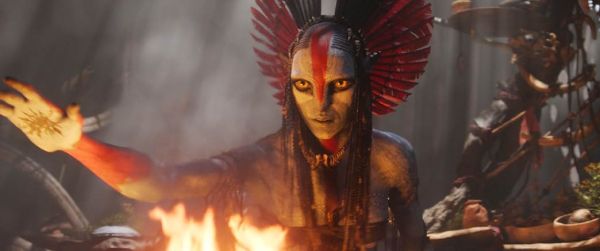



Immersive Realms of Fire and Ash: A New Age Cinematic Odyssey
I went into Avatar: Fire and Ash expecting another enormous visual showcase, but the film surprised me by feeling more emotionally unsettled than the previous chapters. Pandora is still beautiful, colorful, and filled with creatures that seem designed to make every cinema screen look too small. Yet the atmosphere has changed. There is more tension in the landscapes, more uncertainty between the characters, and a stronger sense that this world cannot remain divided into simple heroes and obvious enemies.
As someone who has spent hundreds of hours exploring fictional worlds in games, I often judge a movie environment by the same standards I use for an open-world map. Does it feel like a place that continues beyond the camera? Does each region have its own identity? Can I imagine wandering away from the main story and discovering something unexpected? Fire and Ash consistently gave me that feeling. Pandora no longer appears to be a beautiful backdrop created only for major action sequences. It feels like a living ecosystem with cultures, dangers, traditions, and unresolved conflicts.
The Atmosphere Changed Before the Story Did
The first thing I noticed was the heavier mood. The Way of Water often surrounded its characters with bright oceans, playful movement, and a sense of discovery. Fire and Ash introduces a harsher personality. Even when the scenery is visually spectacular, there is an uncomfortable energy underneath it. The environments feel less welcoming, and the characters appear more aware that every decision may have consequences for the entire family.
I appreciated that the film did not simply repeat the emotional rhythm of the previous installment. Instead of presenting another straightforward journey into a new Na’vi culture, it explores people whose experiences have shaped a very different relationship with Pandora. This gives the story more friction. The Na’vi are not treated as one perfectly united group with identical beliefs, and that makes the world far more convincing.
In gaming terms, it feels like entering a new region and realizing that the faction living there does not automatically share the values of the allies I already know. There is no convenient reputation meter telling me who is trustworthy. I had to pay attention to expressions, rituals, alliances, and small changes in behavior.
Watching the Sully Family Under Pressure
Jake Sully remains an important presence, but I did not feel that Fire and Ash belonged exclusively to him. The family dynamic is the real center of the experience. Every member carries a different form of grief, responsibility, frustration, or confusion, and those emotions frequently collide.
Jake approaches danger like a commander who is constantly calculating the next move. Neytiri reacts with far more visible intensity, and her pain gives several scenes an unpredictable edge. Their relationship is still strong, but it no longer feels protected from the damage surrounding them. I found that tension much more interesting than another collection of perfectly coordinated family moments.
Lo’ak continues to feel like the character most likely to act before considering the complete situation. Normally, that type of personality can become exhausting, but here his impulsiveness is connected to loyalty and a need to prove that he can protect the people around him. Kiri remains more mysterious. Her connection with Pandora gives her scenes an almost dreamlike quality, yet the film also allows her to feel uncertain rather than turning her into a convenient solution for every problem.
Why the Family Scenes Worked for Me
- The disagreements feel connected to earlier events rather than invented for temporary drama;
- Each family member responds differently to grief and responsibility;
- The younger characters receive meaningful decisions instead of simply following Jake;
- Neytiri is allowed to show anger, fear, devotion, and emotional exhaustion;
- The quieter conversations often carry as much weight as the large-scale encounters.
A New Side of the Na’vi
The introduction of the Ash People was the element I was most curious about. Earlier Avatar stories often created a clear contrast between human expansion and the natural balance represented by the Na’vi. Fire and Ash complicates that idea by presenting a Na’vi community with its own severe worldview.
Varang immediately changes the energy of the story. She does not feel like a character who exists only to provide another physical threat. Her authority comes from conviction, experience, and the loyalty of the people around her. I was especially interested in how the film uses her to challenge the assumption that every Na’vi group interprets Eywa, nature, and survival in the same way.
This made the conflict feel closer to the faction-based storytelling I enjoy in role-playing games. The most memorable antagonistic groups are rarely the ones that simply enjoy destruction. They are the groups whose beliefs make sense from inside their own history, even when their methods are frightening. The Ash People bring that kind of tension to Pandora.
The Screen Became a Window Again
It is easy to describe an Avatar film as visually impressive, but that phrase barely communicates the level of detail on screen. Fire and Ash combines huge environmental shots with tiny physical elements that make Pandora feel tangible. Skin textures, drifting particles, reflections, smoke, fabric, eyes, and creature movement all contribute to the illusion.
The fire-based imagery creates a strong contrast with the aquatic beauty of the previous film. Warm light spreads across faces differently, ash changes the appearance of the air, and darker environments give the Na’vi designs a more intimidating silhouette. I could often understand the emotional tone of a scene before anyone spoke because the visual composition had already established it.
The creature animation remains one of the film’s strongest achievements. They do not move like decorative fantasy animals waiting for the human-shaped characters to finish talking. They react to their surroundings, communicate through posture, and appear to possess instincts that continue independently of the plot.
Action That Feels Like a Playable Set Piece
The major action sequences reminded me of the best cinematic missions in adventure games. Characters move between the ground, air, water, and moving creatures without making the geography impossible to follow. I usually understood where everyone was, what they were trying to reach, and why a particular obstacle mattered.
That clarity is important because the sequences are packed with detail. A weaker production might become visual noise, especially when several groups are moving through the same environment. Here, the camera frequently gives the scene enough space to breathe before increasing the intensity again.
I also liked that the action is shaped by character decisions. The impressive technology and creatures are not the only attractions. A reckless choice, delayed reaction, or personal disagreement can completely change the direction of an encounter. That connection between spectacle and personality prevented the larger scenes from feeling like detached technical demonstrations.
The Parts That Tested My Patience
Fire and Ash is not a light or compact experience. The film takes its time establishing environments, emotional states, and new relationships. I enjoyed most of that world-building, but there were moments when I felt the story was holding the same emotional note for slightly too long.
Several conflicts also depend on characters refusing to communicate clearly. This is understandable when emotions are intense, but repeated misunderstandings occasionally made me feel as though I was watching a party of players ignore the mission briefing and then act surprised when the plan collapsed.
The number of characters can also be challenging. The Sully family, returning allies, human forces, new Na’vi figures, and multiple secondary relationships all compete for attention. Some characters receive strong emotional material, while others temporarily feel like they are waiting for their larger role in a future chapter.
Sound That Gave Pandora Physical Weight
I felt the sound design almost as much as I heard it. Wings push through the air with a convincing sense of force, distant creatures create an active background, and environmental sounds help distinguish one region from another. Fire has its own aggressive presence, while quieter scenes use subtle natural audio to remind me that Pandora is always alive.
The music supports the scale without constantly announcing that every moment is important. Some of my favorite scenes used a restrained score, allowing voices, movement, and environmental details to carry the emotion. When the music does expand, it gives the sequences the same rush I associate with reaching a major location after a long in-game journey.
Why This Chapter Stayed With Me
What stayed in my mind was not one creature, battle, or landscape. It was the film’s refusal to keep Pandora morally comfortable. The world remains magnificent, but beauty does not automatically create harmony. Different communities can experience the same planet and develop opposing ideas about faith, family, power, and survival.
That complexity made Avatar: Fire and Ash feel less like another tour through an expensive digital world and more like a genuine continuation of a long story. I left with questions about the characters rather than only memories of the technical presentation. For a film operating on such an enormous scale, that emotional uncertainty may be its most valuable achievement.
Pros:
- Innovative storytelling that intertwines ancient lore with futuristic concepts.
- Strong character development that allows for deep emotional connections.
- Advanced technical craftsmanship in CGI and motion capture.
- Multi-platform accessibility offering options to stream or download.
- A compelling soundtrack that elevates the overall narrative.
- Vivid visual effects that enhance the immersive experience.
Cons:
- An extended runtime may not appeal to all audience segments.
- Some plot elements might feel derivative compared to previous works.
- The complex narrative can be challenging for casual viewers.









Movie Reviews

Minecraft

Grand Theft Auto V

Toca Boca World

Roblox

Leave a comment
Your comment is awaiting moderation. We save your draft here
0 Comments