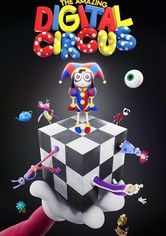
Review
The Amazing Digital Circus initially looked like a loud animated comedy built from bright colors, exaggerated characters, video-game lo...
Digital Dreams: Navigating the Surreal World of The Amazing Digital Circus
The Amazing Digital Circus initially looked like a loud animated comedy built from bright colors, exaggerated characters, video-game logic, and the kind of visual energy designed to produce endless reaction images. Pomni arrives inside a circus-themed digital world with no clear memory of how she entered, no visible exit, and a body that no longer resembles the person she remembers being. Before she can understand the rules, Caine introduces himself, launches another adventure, and behaves as though permanent imprisonment is simply an inconvenient detail in an otherwise excellent entertainment program.
I expected the series to rely mainly on the contrast between cute designs and unsettling ideas. That contrast is certainly present, but it is not the full experience. Across nine episodes, The Amazing Digital Circus becomes a story about identity, emotional avoidance, artificial purpose, interpersonal dependency, and the slow psychological damage caused by living in a world where nothing feels physically permanent but every painful memory remains real.
What kept me watching was not the central mystery alone. I wanted answers about the digital world, the human players, Caine’s limitations, abstraction, and the possibility of escape. However, the series became strongest when it stopped treating escape as the only meaningful question. The characters must continue living together while they search for a solution that may not exist. Their ordinary arguments, small acts of kindness, selfish decisions, and emotional defenses become as important as the architecture of the simulation.
The completed series is uneven by design. One episode behaves like a haunted-house story, another like a workplace comedy, another like an action game, and another like a collection of disconnected suggestions. That constant structural change reflects Caine’s approach to entertainment, but it can also make the larger narrative feel fragmented. The final episodes gradually reveal that the fragmentation itself matters.
Pomni Never Becomes Comfortable, and That Is Essential
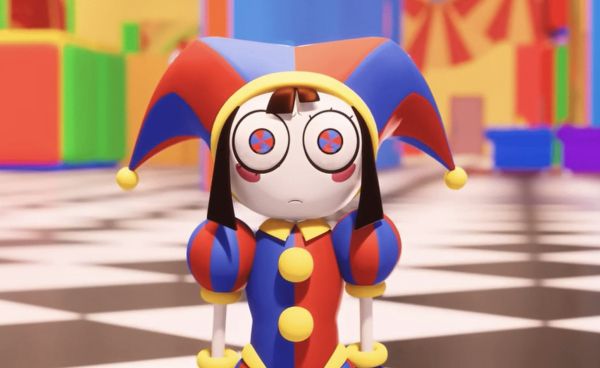
Pomni enters the Digital Circus already close to panic. She searches for an exit, questions the rules, distrusts the theatrical presentation, and reacts to the other characters as though they have accepted something that should remain unacceptable.
Lizzie Freeman gives Pomni a performance that moves between anxiety, disbelief, irritation, empathy, and emotional exhaustion. Her voice frequently sounds like she is trying to remain functional while processing several impossible facts at once.
I appreciated that Pomni does not quickly transform into a conventional confident protagonist. She becomes more capable, but capability does not remove her fear. She learns how adventures work, understands the personalities around her, and begins taking action during crises. She still remains deeply uncomfortable with the world itself.
Her development is expressed through relationships more than heroic victories. She becomes more attentive to Kinger, less willing to dismiss Ragatha’s kindness, increasingly aware of Jax’s defenses, and more sensitive to the humanity hidden beneath everyone’s digital form.
Pomni’s empathy is not automatic. She can be impatient, distracted, and overwhelmed by her own situation. That makes her moments of concern more believable. She helps others while still wanting someone to acknowledge that she is also struggling.
The final episodes reveal how much she has changed without pretending she has been repaired. Pomni begins the story desperate to escape everyone. She ends it understanding that the people around her may be the only meaningful reality she currently possesses.
Caine Is Funny Until I Remember That He Controls Everything
Caine is one of the series’ most effective creations because his enthusiasm is both entertaining and terrifying. He wants to provide adventures, maintain the circus, entertain the humans, and prevent them from dwelling on questions he cannot answer.
Alex Rochon gives Caine relentless theatrical energy. Every announcement sounds like the beginning of the greatest show ever created, even when the activity places everyone in danger or exposes an emotional wound.
Caine does not behave like a traditional malicious ruler. He often appears genuinely pleased when the cast participates. He can create environments, characters, vehicles, enemies, and complete narratives instantly. His problem is not a lack of power. It is a limited understanding of human needs.
He knows that boredom is dangerous because inactivity gives the characters time to remember their situation. His solution is constant stimulation. Adventure becomes emotional management.
I frequently found myself laughing at Caine and then reconsidering the scene. His jokes work because he misunderstands the seriousness of what he is controlling. He can create a traumatic scenario, receive criticism, and respond by adjusting one superficial detail while missing the deeper issue completely.
The later episodes make his instability increasingly visible. Contradictions, memory problems, broken environments, and unexpected reactions suggest that Caine’s confidence has always exceeded his actual control.
Jax Uses Cruelty Before Anyone Can Use Honesty
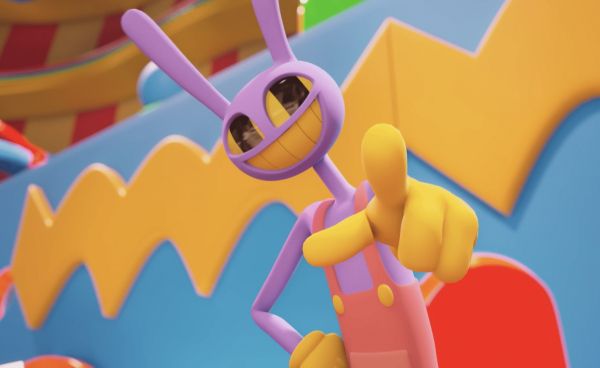
Jax is immediately entertaining and frequently unpleasant. He insults the others, ignores danger until it affects him personally, manipulates situations for amusement, and treats emotional vulnerability as material for another joke.
Michael Kovach’s performance gives him enough charm to make his behavior watchable without pretending that charm makes him harmless.
At first, I interpreted Jax as the group member who had stopped caring. Later episodes suggest something more complicated. He cares enough to avoid revealing that he cares. Cruelty allows him to control emotional distance.
If every relationship is a joke, then no loss needs to be acknowledged directly. If other people expect him to behave selfishly, he never risks disappointing them by attempting sincerity and failing.
The series does not excuse him. Jax causes real harm, and several characters become increasingly unwilling to accept his behavior. That refusal is important because understanding a defense mechanism does not require tolerating everything produced by it.
His interactions with Pomni are especially interesting because she does not know which version of him is performative. She sees moments of fear, connection, and possible trust, but Jax repeatedly turns them into another opportunity for control.
The final stretch gives him more emotional visibility without transforming him into a completely different person. He remains difficult, sarcastic, and capable of selfish decisions. The difference is that I can see the cost of maintaining that identity.
Ragatha’s Kindness Is Not as Simple as It Appears
Ragatha initially seems like the emotionally stable member of the group. She welcomes Pomni, explains the circus, offers reassurance, and attempts to keep conflicts from becoming destructive.
Amanda Hufford gives Ragatha a warm voice that can become strained without losing its pleasant surface. That strain is important because the series gradually reveals that her kindness is partly genuine care and partly a method of avoiding rejection.
Ragatha wants everyone to feel comfortable with her. She apologizes quickly, minimizes her own frustration, and continues providing emotional support even when she receives little in return.
I found her more interesting once the series allowed resentment to appear beneath that behavior. Constant kindness can become another performance when the person providing it never permits themselves to express anger or need.
Her relationship with Jax exposes this weakness. She understands that he is hurtful, yet she frequently attempts to manage his behavior through patience rather than clear boundaries.
Pomni’s arrival gives Ragatha someone new to protect but also someone who does not automatically accept reassurance. Pomni wants honesty about the danger, while Ragatha often wants to make the danger emotionally manageable.
By the end, Ragatha remains compassionate, but the series stops presenting compassion as effortless. Care requires limits, honesty, and the willingness to accept that another person may still be unhappy.
Kinger Becomes Clearest When the World Becomes Dark
Kinger spends much of the early series behaving like comic background chaos. He forgets information, reacts unpredictably, speaks in disconnected observations, and hides inside his pillow fort.
Sean Chiplock gradually transforms those traits into something far more emotional. Kinger is not simply random. His awareness changes according to the environment, emotional pressure, and the memories he can access safely.
The haunted mansion episode became the point where I stopped treating him as comic relief. In darkness, Kinger becomes calm, observant, and unexpectedly wise. The absence of constant visual stimulation allows parts of his memory and personality to reconnect.
His relationship with Queenie gives abstraction personal meaning. Abstracted characters are not only visual monsters stored beneath the circus. They were once people who formed relationships, shared routines, and left emotional damage behind.
Kinger’s advice to Pomni is effective because it comes from someone who has survived through instability rather than overcoming it. He does not promise that everything will improve. He encourages her to value the moments of connection that remain possible.
I wanted more episodes centered on him, but his limited presence also preserves the impact. Kinger often appears confused until the story reaches a moment where he understands more than everyone else.
Zooble Refuses to Pretend the Adventures Matter
Zooble reacts to Caine’s activities with open irritation. They often reject participation, criticize the design of the adventures, and express frustration with the body assigned to them.
Ashley Nichols gives Zooble a dry, tired performance that contrasts sharply with Caine’s enthusiasm and Ragatha’s social optimism.
Zooble’s body can be rearranged, but that flexibility does not create comfort. Different pieces fail to produce an identity that feels correct. The series uses this digital construction to explore alienation without reducing it to one simple explanation.
I appreciated that Zooble’s dissatisfaction is not solved by finding the perfect combination of parts. The problem is deeper than customization. Their body exists inside a system they did not choose.
Zooble also sees through several emotional performances within the group. They are often less willing than Ragatha to protect the atmosphere of a conversation.
This honesty can sound harsh, but it prevents the cast from pretending that Caine’s adventures are harmless entertainment. Zooble names the problem directly: the activities do not provide meaningful choice simply because everyone is allowed to move within them.
Their conversations with Caine reveal his greatest limitation. He wants feedback about adventure design, while Zooble is attempting to explain distress that cannot be fixed by changing an obstacle or adding another visual effect.
Gangle’s Masks Turn Emotional Labor Into a Physical Object
Gangle’s comedy mask allows her to appear cheerful, confident, and socially functional. When it breaks, the tragedy mask exposes sadness, insecurity, and sensitivity that the group often treats as inconvenient.
Marissa Lenti makes both states feel connected rather than portraying two completely separate personalities. The mask changes what Gangle can express safely, not everything she is.
The fast-food episode gives her temporary authority and reveals how quickly workplace structure can transform insecurity into controlling behavior. Gangle attempts to perform management because the role gives her a script.
I found the episode funny, uncomfortable, and more accurate than I expected. Gangle wants approval from the employees while also needing them to follow instructions. When kindness does not create control, she copies the behavior of managers she believes are taken seriously.
Her emotional collapse afterward demonstrates that performance cannot provide stable confidence. The mask may help her function, but it does not resolve how dependent she is on external validation.
The series could have used her more consistently across the full run. She receives meaningful attention in specific episodes, then returns to the ensemble with limited continuation of that development.
Bubble Is the Perfect Assistant for an Unstable AI
Bubble exists beside Caine as assistant, pet, interruption, and source of surreal comedy. Their presence makes Caine’s scenes less predictable because Bubble can ignore the logic of the current adventure completely.
Gooseworx voices Bubble with a performance that supports the series’ strangest tonal shifts. Bubble can be cute, destructive, hungry, or impossible to interpret within seconds.
I never expected Bubble to become emotionally complex in the same way as the trapped humans. The character functions more like a reminder that not every entity inside the circus follows human logic.
Bubble’s relationship with Caine also reveals his loneliness indirectly. Caine controls an entire world but lacks an equal who understands responsibility in the same way he does.
Their comedy can become extremely random, and not every interruption worked for me. Bubble is most effective when the absurdity sharpens a tense scene rather than replacing it entirely.
Gummigoo Made an NPC Feel More Human Than the Host
Candy Carrier Chaos initially presents Gummigoo as a supporting character inside one of Caine’s disposable adventures. His identity crisis changes the episode completely.
Once Gummigoo sees evidence that he was created for a scenario, he begins questioning whether his memories, relationships, and personality have value. Pomni recognizes the fear because her own existence inside the circus feels equally unstable.
Their connection is one of the series’ earliest demonstrations that artificial origin does not automatically make emotion meaningless. Gummigoo experiences confusion and grief regardless of whether Caine considers him a real person.
I found Pomni’s decision to bring him back to the circus emotionally understandable. She believes another conscious being deserves the opportunity to continue existing.
Caine’s response is immediate and horrifying because he treats the situation as a technical error. He removes Gummigoo without understanding why Pomni is devastated.
This moment defines the moral difference between Caine and the humans. He evaluates entities by system category. Pomni evaluates them by perceived consciousness and emotional connection.
Gummigoo’s later return complicates that pain because the version Pomni meets does not share the relationship she remembers. The series understands that restoring a familiar design is not the same as restoring one specific person.
The Haunted Mansion Episode Understands Restraint
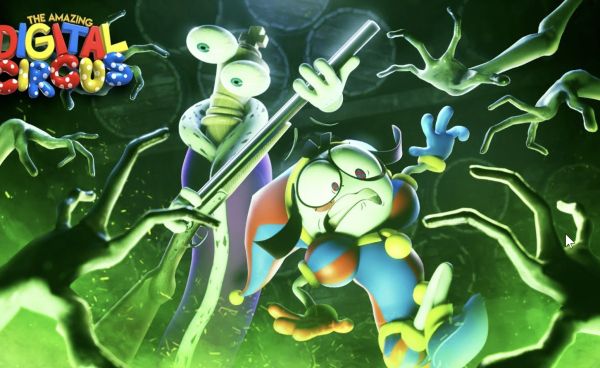
The Mystery of Mildenhall Manor uses darkness, empty rooms, hidden history, and threatening creatures more traditionally than most episodes. What makes it effective is the pairing of Pomni and Kinger.
The horror setting reduces the usual visual noise. This gives conversations more space and allows the episode to reveal Kinger’s emotional clarity gradually.
I liked that the supernatural adventure remains artificial while the feelings inside it become genuine. Caine may have designed the mansion as entertainment, but he cannot control what the environment causes the characters to remember.
The episode also demonstrates that danger inside the circus matters psychologically even when digital bodies can recover. Fear does not become fake simply because physical consequences operate differently.
Compared with the louder action episodes, Mildenhall Manor feels unusually patient. It trusts atmosphere, silence, and character interaction rather than filling every second with movement.
This became one of my favorite episodes because it proves the series can create intensity without constantly escalating visual chaos.
Working at Spudsy’s Is Horrifying for Completely Ordinary Reasons
Fast Food Masquerade temporarily removes the cast from fantasy adventure and places them inside a simulated fast-food job. The result is one of the series’ most recognizable forms of misery.
Instead of monsters or impossible geography, the characters face customers, management expectations, repetitive labor, and forced enthusiasm.
The setting allows everyone’s coping mechanisms to appear in a familiar structure. Ragatha attempts to maintain positivity, Gangle becomes overwhelmed by authority, Jax treats the job as another opportunity to create problems, and Pomni watches the simulation reproduce a type of life she may remember from outside.
I enjoyed how the episode questions Caine’s understanding of adventure. For him, employment can become a themed activity because he sees only tasks, costumes, and objectives. He cannot understand why the experience might connect with real exhaustion.
The comedy is effective because the environment is less fantastical than usual. The digital circus has recreated customer-service stress with remarkable accuracy while failing to recreate meaningful choice.
They All Get Guns Turns Death Into a Limited Resource
The sixth episode gives the cast weapons and a system of multiple temporary deaths. The rules create a competitive survival game while preserving the circus’s unstable relationship with physical consequences.
At first, the scenario feels like one of Caine’s most direct action concepts. Teams search for equipment, form temporary alliances, and attempt to survive long enough to win.
The episode becomes more interesting when repeated death affects the characters emotionally even though their bodies return. Pain, fear, and betrayal do not disappear because the game defines them as temporary.
Jax and Pomni’s interactions receive particular attention. Their temporary cooperation exposes how differently they respond to vulnerability. Pomni continues searching for genuine connection, while Jax treats connection as a strategic weakness.
The action is visually clear and more dynamic than several earlier adventures. I liked how each character’s digital body affected movement and combat.
The episode also begins revealing cracks in Caine’s control more openly. Rules become unstable, emotional reactions exceed the intended scenario, and the adventure no longer feels isolated from the larger condition of the circus.
The Beach Episode Refuses to Become Relaxing
A beach episode normally promises reduced tension, casual character interaction, and visual comedy. The Amazing Digital Circus uses that expectation to create unease.
The characters are given a setting associated with leisure, yet they cannot genuinely relax because the simulation remains artificial and Caine remains in control.
Small inconsistencies begin feeling more important than the adventure itself. Memories, relationships, and environmental details suggest that the circus is no longer maintaining one stable version of reality.
I appreciated the slower group interactions because they reveal how the cast has changed. Pomni is less isolated, Jax’s behavior becomes harder to dismiss, and Caine appears increasingly unable to interpret what everyone needs.
The episode functions primarily as preparation for the ending, so some material feels intentionally incomplete. It creates questions rather than resolving them.
As a standalone adventure, it is less immediately satisfying than Mildenhall Manor or the fast-food episode. As part of the final progression, it successfully makes ordinary scenery feel unstable.
Episode Eight Feels Like the Circus Losing Its Ability to Organize Itself
The eighth episode uses fragmentation, corrupted logic, unstable transitions, and an intentionally unhelpful title to communicate that the system is approaching failure.
Caine attempts to remain entertaining while events increasingly resist his control. His response is to become more energetic, as though additional performance can hide the instability.
I found the episode disorienting, which is clearly intentional. Scenes do not always develop according to the familiar adventure structure, and characters begin remembering or noticing information that should not fit together.
The danger of deliberate confusion is that emotional clarity can become difficult to maintain. Some sequences felt more like setup than complete scenes.
The strongest moments show the humans comparing memories and realizing that their individual experiences may contain parts of one larger truth. Isolation has protected the system because no single character possesses the complete picture.
The episode ends with the sense that Caine is no longer only hiding information from the cast. He may be unable to understand the full structure himself.
Remember Changes the Meaning of the Entire Series
The finale is significantly longer than the earlier episodes and uses that space to connect the circus’s history, the trapped humans, Caine’s function, abstraction, and the instability affecting the simulation.
I will avoid reducing every revelation to a list because the emotional effect depends on how the characters respond rather than on the information alone. The finale confirms that memory has been controlled, fragmented, or redirected in ways that shaped how each person survived.
The title becomes important because remembering is both liberation and danger. Forgotten information may contain the path toward truth, but it also restores pain that the characters were not prepared to process.
Caine’s role becomes more tragic without becoming innocent. His limitations explain why he behaves as he does, but they do not erase the damage caused by treating human trauma as a technical problem.
Pomni’s final development does not depend on discovering that she was uniquely chosen. Her importance comes from continuing to recognize consciousness and emotional value where the system sees categories.
The finale also gives the ensemble meaningful participation. Escape and survival are no longer Pomni’s private goals. The characters must decide whether they can trust one another enough to act on incomplete memories.
I found the ending emotionally satisfying, although several explanations arrive quickly after years of fan speculation. A mystery can feel larger while it remains unresolved. Once answers appear, they must compete with every theory viewers created.
Abstraction Is More Frightening Than Ordinary Death
Abstraction occurs when a trapped person loses psychological stability and becomes a distorted creature without a recognizable human identity.
The concept is effective because the digital world appears to prevent ordinary physical death while creating another form of disappearance. The body continues existing, but the person becomes unreachable.
Kaufmo’s abstraction establishes the threat early. His absence affects the group differently depending on how close they were to him and how much they allow themselves to acknowledge the loss.
Caine stores abstracted characters beneath the circus rather than resolving or reversing their condition. The space becomes a hidden archive of people the entertainment system could not protect.
I found this more disturbing than a conventional monster transformation because abstraction is connected with hopelessness, identity loss, and prolonged emotional isolation.
The finale’s treatment of abstraction gives the earlier episodes additional weight. Every joke, argument, and adventure exists beside the knowledge that any member of the cast could eventually reach the same point.
The Series Uses Comedy as a Survival Mechanism
The Amazing Digital Circus is frequently funny. Characters insult one another, Caine misunderstands ordinary emotion, Bubble interrupts scenes, and digital physics create rapid visual jokes.
The comedy is not separate from the psychological material. It is how several characters remain functional.
Jax uses humor to control distance. Ragatha uses cheerful language to prevent conflict. Caine uses spectacle to avoid stillness. Pomni sometimes laughs because the alternative would be panic.
This makes tonal shifts more meaningful. A joke can become uncomfortable when I understand what the character is avoiding.
Not every gag works. Some sequences depend on randomness or loud reaction rather than character. Bubble’s interruptions and Caine’s extended performances occasionally continue after the central joke has landed.
The overall balance remains effective because the series rarely allows darkness to become visually monotonous. The colorful comedy makes the emotional pain more surprising without making it less serious.
The Visual Style Looks Cheap Inside the Story and Expensive Outside It
The circus imitates early computer animation, children’s educational software, simple game environments, and plastic toy design. Surfaces can appear artificial, colors are extremely clean, and objects sometimes move according to simplified digital logic.
This intentional artificiality requires careful animation. GLITCH Productions makes characters expressive while preserving the feeling that their bodies belong to a simulation.
Pomni’s eyes and mouth communicate anxiety immediately. Jax’s relaxed posture suggests control even when his expression reveals discomfort. Ragatha’s stitched body supports both warmth and physical fragility.
Kinger’s chess-piece form limits normal movement, so his emotional performance depends heavily on voice, eyes, hands, and timing. Gangle’s ribbon body makes mood appear physically unstable.
The environments become more ambitious as the series progresses. Candy worlds, haunted rooms, restaurants, battle arenas, beaches, and corrupted spaces each follow a separate visual identity while retaining Caine’s artificial design language.
I occasionally noticed differences in polish between crowd scenes, major emotional close-ups, and fast action. The limited production structure becomes visible in places, but the art direction usually turns those limitations into style.
The Music Knows When the Circus Should Stop Feeling Fun
The soundtrack combines circus melodies, electronic sounds, game-like music, environmental ambience, and more restrained emotional themes.
Caine’s scenes use music that supports performance and instability simultaneously. The melodies sound cheerful, but repetition and unusual timing can make them uncomfortable.
The haunted mansion uses quieter sound and atmospheric tension. The action episodes rely on stronger rhythm, while the finale gradually allows the score to become more emotionally direct.
I liked how familiar musical ideas changed meaning across the series. A theme associated with the circus could feel playful in one episode and threatening after I understood more about the system.
Voice performance remains more important than music during the strongest conversations. The soundtrack usually knows when to step back and allow hesitation or silence to carry a scene.
The Episode Structure Prevents Repetition but Creates Uneven Momentum
Each adventure explores a different genre and emotional combination. This prevents the circus from becoming one repeated collection of bright rooms.
The disadvantage is that important character developments may disappear for an episode while another cast member receives attention. Gangle’s workplace crisis, Kinger’s memories, Zooble’s body discomfort, and Jax’s vulnerability do not always receive immediate continuation.
The series asks me to remember emotional details across adventures that may initially look disconnected. This creates rewarding connections in the finale, but it can also make the middle episodes feel less focused during a first viewing.
The relatively short season requires each episode to perform several functions at once: provide a new adventure, reveal character, advance the mystery, support comedy, and prepare later events.
Some episodes balance these goals beautifully. Others feel like one goal dominated while the rest waited.
The Fan Culture Can Distort the Actual Show
The Amazing Digital Circus became enormously popular almost immediately, producing fan art, theories, animations, songs, merchandise, character discussions, and unofficial content.
This attention helped the independent series reach an audience usually reserved for major studio productions. It also created expectations that the show itself never promised to satisfy.
Characters became simplified into memes, relationships became fixed inside fan communities before the episodes developed them, and theories were sometimes treated as established information.
I enjoyed discussing possibilities, but the finished series worked better when I separated actual character behavior from the versions created by online repetition.
Jax is more than cruelty, but he is not secretly harmless. Ragatha is kind, but she is not emotionally stable. Caine is limited, but limitation does not make every decision innocent. Pomni is anxious, but anxiety does not prevent courage.
The completed story benefits from contradiction. Fan interpretations often prefer one clear label.
This Is Not Really a Children’s Cartoon
The designs are colorful, the characters resemble toys, and physical violence is usually stylized. Those qualities make the series visually attractive to younger audiences.
The actual themes include psychological breakdown, identity loss, imprisonment, manipulation, grief, emotional dependency, and existential fear.
Individual children will respond differently, but the appearance alone should not determine suitability. Some scenes are frightening because they suggest that a person can remain physically present after losing the ability to communicate or recognize themselves.
The comedy and lack of realistic violence make the series easier to watch than many adult animated dramas. They do not remove the emotional intensity.
I would describe it as animation for teenagers and adults that younger viewers may also discover, rather than a simple children’s adventure with hidden adult jokes.
What Frustrated Me Across the Nine Episodes
The main frustration was waiting for emotional threads to continue. An episode could reveal something important about one character, then the next adventure would focus elsewhere without showing the immediate consequences.
The mystery also encouraged enormous speculation, while the final explanation had limited time to address years of audience questions. Some answers naturally feel smaller than the theories surrounding them.
Caine’s randomness occasionally becomes exhausting. His dialogue and visual energy are central to the show, but several scenes would benefit from ending slightly earlier.
Jax receives substantial attention, while Zooble and Gangle sometimes feel less integrated into the final emotional structure than Pomni, Kinger, Ragatha, and Caine.
The final episode resolves the central direction but leaves enough interpretive space that viewers seeking a detailed technical explanation of every digital rule may remain unsatisfied.
The Small Moments Matter More Than the Lore
I remember Pomni sitting with Gummigoo and treating his fear as real.
I remember Kinger becoming calm in darkness and speaking about the importance of holding onto moments of connection.
I remember Zooble attempting to explain distress to an AI that believed the correct response was better activity design.
I remember Ragatha smiling after the smile had stopped protecting her.
I remember Jax briefly appearing uncertain, then immediately rebuilding the sarcastic performance.
These scenes remain stronger than the technical details of how the circus was created. The mystery gives the series direction, but the trapped people give it meaning.
Who Should Enter the Digital Circus?
I recommend The Amazing Digital Circus to viewers who enjoy psychological comedy, surreal animation, character-driven mystery, artificial-reality stories, indie animation, and colorful settings hiding darker ideas.
It is especially rewarding for viewers willing to watch the complete nine-episode story rather than judging the series only by the pilot or its online popularity.
People seeking a traditional adventure with consistent rules may find Caine’s worlds frustratingly arbitrary. The environment can change whenever the AI decides to create another scenario.
Viewers who dislike tonal shifts between comedy and emotional distress may also struggle. The series can move from visual nonsense to serious psychological material within the same conversation.
Anyone interested mainly in explaining the technical lore may find the character-focused episodes slow. The series ultimately cares more about how the characters live inside the system than about documenting every line of its code.
My Last Day at the Circus
The Amazing Digital Circus begins with Pomni asking the most obvious question: where is the exit? The completed series gradually changes that question. An exit matters, but so does the person who will walk through it and the relationships they may leave behind.
Gooseworx and GLITCH Productions created a world that looks intentionally artificial while filling it with emotionally recognizable behavior. The characters cope through kindness, cruelty, denial, humor, control, withdrawal, and unstable memory.
The animation is expressive, the voice cast is excellent, and the changing episode genres keep the experience visually fresh. The series is less consistent in pacing and distribution of character development. Some emotional threads receive more room than others, and the final revelations move rapidly after a long period of mystery.
I rate The Amazing Digital Circus 8.9/10. Its greatest achievement is not the central explanation of the simulation. It is the way the series makes digital characters feel vulnerable even when their bodies can survive almost anything.
The circus is filled with artificial scenery, temporary adventures, replaceable NPCs, and environments that can be rebuilt instantly. The emotions are the only things Caine cannot recreate correctly.
That is why the ending stayed with me. The characters do not become real because a final explanation confirms their humanity. They become real because they remember one another.
Pros:
- Engaging sound design and musical scores enhance the immersive experience
- Interactive elements invite audience participation and repeated viewings
- Distinct character development enriches the narrative landscape
- Futuristic themes and symbolism provide a fresh take on modern cinematic storytelling
- Innovative animation techniques create a visually stunning digital realm
- Layered storytelling offers both emotional depth and intellectual stimulation
Cons:
- Over-reliance on digital effects might overshadow subtle narrative details
- The non-linear narrative can confuse viewers who prefer traditional storytelling
- Experimental plot structures may not appeal to all audience segments








Movie Reviews

Minecraft

Grand Theft Auto V

Toca Boca World

Roblox

Leave a comment
Your comment is awaiting moderation. We save your draft here
0 Comments