Review
Minecraft is the game I open when I want freedom but do not yet know what kind of freedom I need. Sometimes I want the quiet routine of...

Minecraft: Unleashing Creativity in a Blocky Universe
Minecraft is the game I open when I want freedom but do not yet know what kind of freedom I need. Sometimes I want the quiet routine of gathering wood, organizing storage, and improving a small home. On another day, I want to cross an ocean, search for rare structures, descend into dangerous caves, or begin an enormous construction project that will take far longer than I originally planned.
I have played many sandbox games that offer large maps and hundreds of activities, but Minecraft feels different because the world is not merely a place where objectives happen. The terrain itself is material. A mountain can become a fortress, a forest can become a village, and an unattractive hole in the ground can eventually turn into the most carefully designed room in my base.
The game rarely tells me that a project is worth completing. I decide that for myself, and that decision gives even simple actions a personal purpose.
My First Night Is Still the Best Tutorial
Every new survival world begins with a familiar sequence. I look around, identify nearby trees, collect wood, create basic tools, and begin searching for food and shelter. I know these steps well, yet the starting terrain changes how I perform them.
A forest provides plenty of building material but can hide approaching enemies after dark. A desert offers long sightlines but fewer immediate resources. A snowy area creates a beautiful starting location while making food and early farming less convenient. An island can feel peaceful until I realize how limited my supplies are.
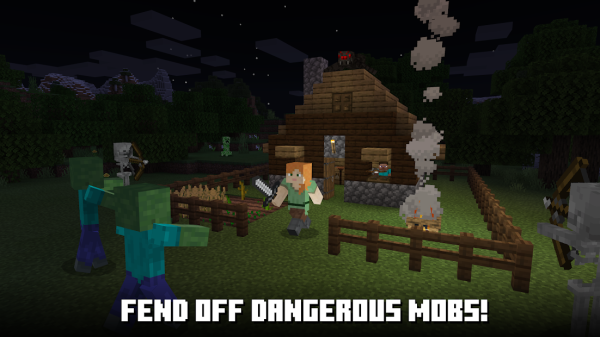
The approaching night creates natural urgency. Minecraft does not need a long introductory mission explaining why shelter matters. The changing sky communicates the objective clearly. I can continue exploring, but the darkness will eventually introduce consequences.
My early shelters have included:
- a rough wooden box with no windows;
- a hole carved into a hillside;
- a temporary room beneath a village house;
- a platform built above the ground;
- an unfinished tower that looked better from far away;
- a small cave entrance blocked with dirt.
None of these structures were impressive, but each one felt important during its first night. Safety changes the meaning of a building. A single torch and a closed door can make an ugly room feel like home when hostile sounds are moving outside.
I Never Build the House I Originally Planned
My bases usually begin with one practical room. I place a crafting table, furnace, bed, and several chests inside it. Then I decide that the storage needs better organization. That leads to another room, which requires a connecting hallway, which makes the exterior shape look strange.
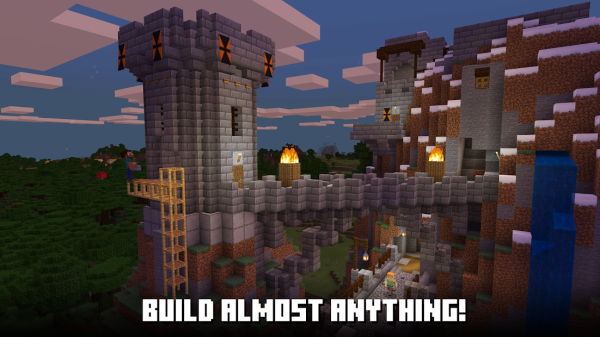
Before long, the simple house has become a larger project involving farms, towers, bridges, workshops, animal areas, underground passages, and decorative spaces with no practical purpose.
This gradual expansion is one of Minecraft’s most satisfying qualities. Buildings can develop according to need rather than following a complete blueprint from the beginning. I can preserve the original small room inside a much larger base, creating a visible record of how the world changed.
I often keep early mistakes instead of correcting them. An uneven wall or awkward staircase may look poor by normal design standards, but it reminds me of the stage when I had limited resources and little understanding of the surrounding area.
My best bases are not always the most visually polished ones. They are the places where every section has a history.
Mining Is Repetitive Until It Suddenly Is Not
Mining can involve long periods of breaking similar blocks, collecting common materials, and placing torches. On paper, that sounds monotonous. In practice, the possibility of discovering something unexpected keeps the process engaging.
A narrow tunnel can open into a huge cave system. A quiet passage can reveal hostile movement nearby. A patch of valuable ore may be positioned above lava, turning a simple collection task into a careful excavation.
I rarely enter a cave feeling completely prepared. Even with good equipment, food, shields, and plenty of light, the environment can create difficult situations quickly. An enemy attacks from a dark ledge, water pushes me into a lower chamber, or a damaged tool forces me to decide whether to continue or return home.
Caves also affect my sense of direction. I place torches consistently and try to mark important intersections, but complicated systems still confuse me. There have been many occasions when I discovered valuable resources and then spent longer searching for the exit than I spent finding them.
The Inventory Decision That Always Hurts
Eventually, every long expedition reaches the same problem: my inventory is full, but I am not ready to leave.
I begin comparing items as though each slot has become a strategic choice. Common blocks feel disposable until I remember a building project that needs them. Food appears essential until I find a rare material. A nearly broken tool takes space but may still be useful in an emergency.
I often leave the cave carrying a strange collection of resources and regretting at least one decision. That limitation makes exploration more meaningful because I cannot collect everything without preparation.
Diamonds Changed Less Than I Expected
Finding my first diamonds in a new world still creates excitement. The visual recognition is immediate, and the discovery represents progress toward stronger tools and equipment.
However, I learned that better gear does not automatically make me a better survival player. Strong armor can reduce damage, but it cannot repair poor navigation. An advanced tool can work quickly, yet it can also disappear after one careless fall.
My most painful losses usually happened after I became confident. I would carry valuable equipment into an unfamiliar area, assume I could handle any threat, and continue after the sensible moment to turn back.
Minecraft constantly creates tension between progress and risk. The more valuable my inventory becomes, the more every dangerous decision matters.
That is why returning home after a successful expedition can feel more satisfying than finding the resources themselves. The materials only become useful once they are safely stored.
Storage Became a Game Inside the Game
At the beginning of a world, I place items wherever space is available. One chest contains stone, food, tools, plants, and several objects I do not yet understand. This system works until I need one specific item and spend several minutes opening every container.
Eventually, I build a dedicated storage room. I separate materials into categories, label containers, and create space for future resources. For a short period, everything feels organized.
Then the system begins collapsing. New blocks do not fit the existing categories. Valuable items remain inside the wrong chest because I plan to move them later. Temporary project supplies become permanent clutter.
I have restarted storage rooms more often than I have redesigned entire houses. Organization sounds like a minor part of Minecraft, but it affects almost every project. When materials are easy to find, building feels creative. When they are scattered across several locations, even a simple wall becomes an administrative challenge.
Villages Made the Empty World Feel Inhabited
Discovering a village changes the atmosphere of a survival world. Before that moment, the map can feel like a wilderness created only for me. Villagers introduce routines, buildings, farms, occupations, and the impression that life existed before I arrived.
I usually explore every house, inspect available resources, and look at the surrounding terrain before deciding whether the location could become part of my larger plans.
Sometimes I improve the village carefully by adding lighting, repairing paths, expanding farms, and protecting dangerous openings. On less responsible days, I take useful materials and continue traveling.
Trading gives villages long-term value. A resident who initially appears ordinary can become important because of the items they offer. This encourages me to protect particular villagers and create safer working spaces for them.
The process can become highly practical, but I still enjoy giving villages visual identity. I redesign houses, build walls, add community areas, and connect structures with roads. The village gradually becomes a shared project rather than a collection of generated buildings.
Farming Is Where I Become Patient
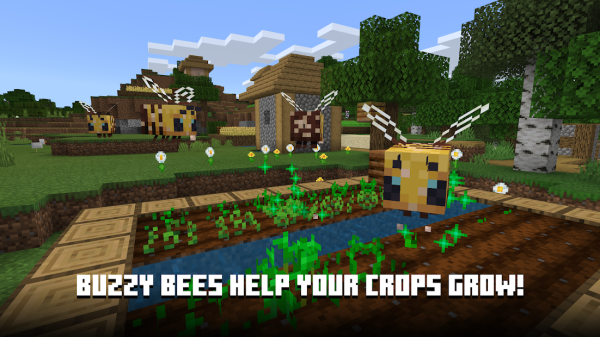
Farming creates a slower rhythm than exploration. I prepare the land, plant crops, wait, harvest, and repeat. The work is predictable, but that predictability provides relief after a dangerous expedition.
A productive farm also changes how I experience survival. Once food becomes reliable, I can spend more time exploring without constantly hunting for supplies.
I enjoy designing farms that fit the surrounding landscape. A compact farm beside a starter house feels natural. A large automated system near an advanced base feels like proof that the world has entered a new stage.
Animal farming can become less peaceful because managing multiple creatures in a small space creates noise and confusion. Gates remain open, animals escape, and one careless movement can damage the carefully separated groups.
These small problems are rarely serious, yet they give the base everyday activity. A survival world feels more personal when returning home involves routine responsibilities rather than only storing treasure.
Redstone Makes Me Feel Brilliant and Incompetent
Redstone is the system that most clearly reveals how differently people can play Minecraft. Some players create advanced machines, automated farms, hidden doors, calculators, and mechanisms that look impossible inside a game built from blocks.
My early redstone projects were far less impressive. I began with simple switches, doors, lamps, and basic item systems. Even these mechanisms required me to understand power direction, timing, spacing, and how components interact.
When a circuit works, I feel as though I have solved a genuine engineering problem. When it fails, I may stare at the blocks for several minutes before discovering that one connection is facing the wrong direction.
I like that redstone is optional. I can enjoy Minecraft for years without becoming an expert, but the system is always available when I want a more technical challenge.
It also changes the meaning of construction. A building does not need to remain visually static. Doors can open automatically, lights can react to switches, and farms can process materials with limited manual work.
The Nether Punished My Confidence Immediately
Building a portal feels like opening access to a new stage of the world. The Nether is not simply another biome. It changes navigation, environmental danger, available resources, and the emotional tone of exploration.
My first steps through a portal are always cautious because the destination can create problems immediately. The portal may appear near lava, inside a confined area, or beside hostile creatures.
The landscape requires different habits. Normal water-based safety options are unavailable, vertical drops are common, and large open spaces can expose me to attacks from far away.
I mark routes carefully because losing the portal would create a serious navigation problem. Blocks, signs, torches, and recognizable structures become essential in an environment where many areas share similar colors.
The Nether is also valuable enough that I cannot ignore it. Important resources and structures encourage me to enter despite the risk. This creates a strong progression moment: the comfortable routines of the main world no longer provide everything I need.
The End Felt Like a Destination, Not an Ending
Preparing to reach the End gives a survival world a clear long-term objective. I gather equipment, improve armor, prepare food, collect useful items, and search for the route toward the final dimension.
The battle there feels important because it is connected to everything I built before it. The farms supplied food, the mines provided materials, and earlier expeditions taught me how to react under pressure.
Defeating the central threat does not make the world feel complete. Instead, it unlocks a different stage of play. New exploration opportunities and movement options can transform how I travel and build.
This is one of the reasons Minecraft survives beyond its apparent final objective. The credits may suggest reflection, but the world remains available. My unfinished projects, distant maps, villages, and unexplored structures still exist.
The game acknowledges progression without removing possibility.
Creative Mode Changes My Relationship With Every Block
In Survival, materials represent time and risk. A rare block may require a difficult journey, specialized tools, and careful transport. In Creative mode, the same block becomes one option among hundreds.
This freedom changes how I design. I can test dimensions, experiment with palettes, replace entire walls, and fly around a structure to inspect it from every angle.
Creative mode is where I attempt projects too ambitious for my survival patience. Large castles, futuristic cities, fantasy landscapes, and oversized statues become possible without spending hours gathering resources.
The absence of resource limitations does not remove every challenge. I still need composition, scale, color balance, and an understanding of how shapes read from different distances.
Sometimes unlimited access makes decision-making harder. When every material is available, choosing the correct one becomes more complicated than working with a limited survival palette.
Building With Friends Changes Ownership
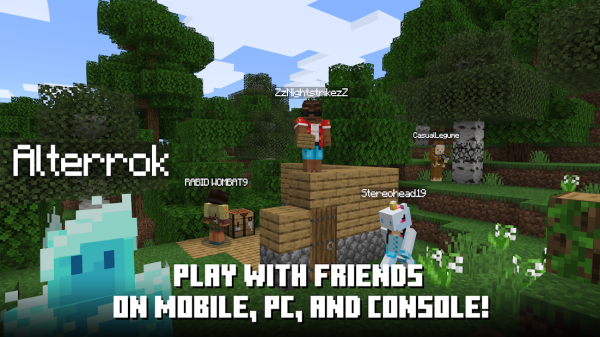
Multiplayer worlds develop differently because no single player controls every decision. One person may focus on mining, another on farming, and someone else may begin constructing an enormous tower without explaining how it fits the rest of the settlement.
The result is often less visually consistent than a solo world but more memorable. Every structure reflects a different personality.
Communication helps when resources are shared. Without clear storage rules, valuable materials disappear into private chests, tools are borrowed without warning, and building supplies become difficult to track.
Despite the chaos, cooperative survival gives routine tasks more meaning. Returning from a mining trip and seeing that someone expanded the base makes the world feel active. Another player’s project can create new goals I would never have chosen alone.
Shared worlds also produce stories through accidents. A pet disappears, a machine damages part of a building, or someone returns from exploration with several hostile creatures following them.
Servers Show How Far the Basic Game Can Stretch
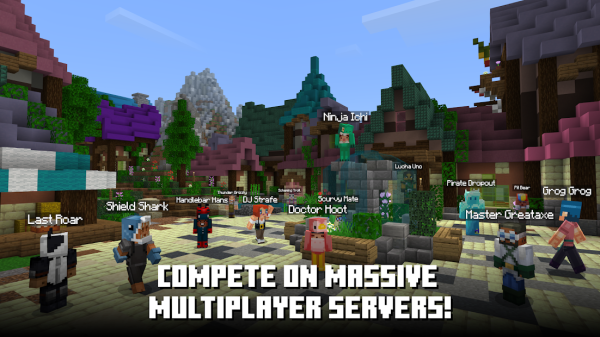
Multiplayer servers can make Minecraft feel like an entirely different product. Custom modes, minigames, economies, role-playing systems, competitive challenges, and community rules build experiences on top of the familiar movement and block interaction.
I have entered servers where construction was the main attraction and others where building barely mattered. Some emphasized combat, while others focused on social spaces or short arcade-style rounds.
This flexibility demonstrates the strength of Minecraft’s foundation. The controls are simple enough to remain recognizable even when the objective changes completely.
Community quality varies, and a server’s rules can affect whether the experience feels welcoming or exhausting. I usually enjoy smaller communities where repeated players begin recognizing one another.
The strongest servers create a clear identity instead of adding systems without purpose. A good custom mode feels as though it understands which parts of Minecraft support its central idea.
Mods Turn Familiar Systems Into New Discoveries
After learning the standard progression, modifications can restore the feeling of entering an unknown world. New creatures, materials, technologies, dimensions, and interfaces change what I need to understand.
Large mod collections can become overwhelming because several systems compete for attention at once. I may collect unfamiliar items without knowing which ones matter or discover structures connected to mechanics I have not started learning.
I prefer modded experiences with a clear theme. Technology-focused worlds encourage automation and resource networks. Exploration collections make travel more unpredictable. Visual modifications can change atmosphere without altering the central mechanics.
Mods reveal that Minecraft is not only a game but also a framework. Players and creators can reinterpret survival, construction, progression, and adventure without discarding the recognizable block world.
The Visual Simplicity Creates Strong Memories
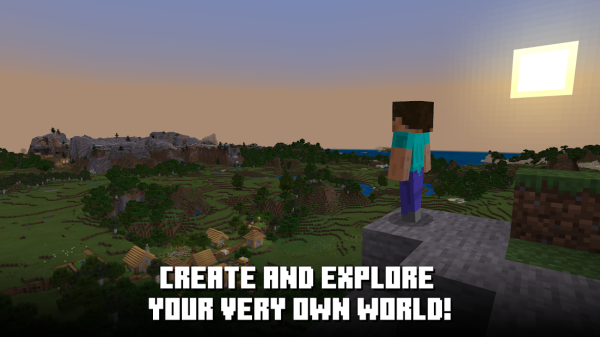
Minecraft’s block-based presentation looks simple, but the procedural landscapes can create surprisingly memorable scenes. A village beneath a mountain, a forest surrounding a lake, or a base glowing during sunset can become visually distinctive without realistic detail.
The art style leaves room for imagination. A small collection of blocks can represent a table, machine, statue, or architectural ornament depending on how I arrange them.
Lighting has a major effect on atmosphere. A cave lit by torches feels warm but uncertain. A house with visible windows feels welcoming from across a dark field. The Nether’s glow creates constant danger, while open daylight can make the same world feel peaceful.
I remember my worlds partly through geography and partly through mood. Certain locations become connected to music, weather, successful expeditions, or difficult losses.
The Soundtrack Knows When to Remain Quiet
Minecraft does not fill every moment with music. Long periods may contain only footsteps, animals, water, wind-like ambience, or the sounds of blocks being placed and removed.
When music begins, it can make an ordinary task feel reflective. I may be building a roof or walking through familiar terrain, yet the soundtrack suddenly gives the moment emotional weight.
The quieter approach suits a game where players create their own pacing. Constant dramatic music would make peaceful construction tiring and reduce the impact of dangerous environments.
Environmental sound also provides useful information. Hostile noises can reveal nearby caves, flowing water can suggest an opening, and movement outside a shelter can warn me that leaving may not be safe.
My Most Painful Loss Became Part of the World
Every long survival save eventually contains a defeat that changes how I play. Mine happened after a successful expedition when I continued exploring instead of returning home.
I carried valuable tools, rare materials, and equipment I had spent significant time improving. One poor decision led to another, and recovery became impossible.
The loss was frustrating because the items represented real time. For a moment, I considered abandoning the world and starting again.
Instead, I rebuilt. I returned to older tools, visited familiar mines, and replaced the missing equipment gradually. The process was slower than the original progression because I knew exactly what had been lost.
That recovery made the world more meaningful. The defeat became part of its history rather than evidence that the save was ruined.
Updates Can Disrupt Comfortable Habits
Minecraft has grown through new blocks, creatures, structures, biomes, systems, and adjustments to existing mechanics. Returning after a long break can make familiar progression feel slightly unfamiliar.
I sometimes miss older habits because they were efficient and predictable. New systems can require different exploration routes or make previously simple decisions more complicated.
At the same time, change gives me a reason to start another world. A new biome or structure is more exciting when I discover it naturally rather than reading every detail in advance.
I try to avoid learning every new mechanic immediately. Partial uncertainty helps recreate the experience of my earliest worlds, when almost every item and sound was unfamiliar.
Minecraft Does Not Protect Me From Boring Ideas
Freedom does not guarantee that every session will be interesting. Sometimes I begin a project with no clear concept, place several blocks, and realize that I do not care about finishing it.
Large builds can become repetitive when the design requires thousands of similar placements. Resource gathering may feel slow when the only goal is supporting a project whose excitement has already disappeared.
The solution for me is not always greater ambition. Smaller projects often provide more satisfaction because they reach a finished state quickly and improve the world immediately.
A bridge, decorated path, compact farm, watchtower, or redesigned room can restore momentum better than beginning another enormous castle.
Minecraft gives me tools, but I still need to choose goals that match my available time and energy.
I Play Differently Depending on the Day
When I want challenge, I enter Survival mode and accept that mistakes have consequences. When I want to design without delay, I use Creative mode. Multiplayer gives me social unpredictability, while a private world provides control and quiet.
Even inside one save, my priorities change. I may spend one evening underground, another decorating interiors, and another traveling without a specific destination.
This variety prevents the game from demanding one permanent playstyle. I do not need to enjoy advanced combat, engineering, farming, architecture, and exploration equally.
The systems overlap enough that progress in one area can support another. Mining provides building materials. Farming supports exploration. Exploration introduces new blocks, and new blocks inspire construction.
Why Minecraft Remains Installed
I keep Minecraft available because it does not require me to remember a complicated story or return at the exact point where I stopped. I can enter an old world, look around, and choose one unfinished task.
The game supports ambition without requiring it. I can build a huge city or improve one doorway. Both actions change the world permanently.
From my perspective as a gamer, Minecraft is a rare experience where progression is measured in more than equipment or completed objectives. It appears in roads connecting distant bases, tunnels through mountains, farms beside villages, and storage rooms filled with evidence of earlier journeys.
Every block I place becomes part of a record. Even abandoned projects show what I once intended to do.
The most important reward is not reaching the End, collecting the strongest equipment, or finishing a large building. It is the moment when a randomly generated world stops feeling random.
A hill becomes the place where I survived the first night. A cave becomes the route where I found my first valuable resources. A village becomes a community I protected, and an ordinary house becomes the center of a landscape shaped by hundreds of small decisions.
That transformation is why Minecraft continues to work for me. The world begins as terrain. Eventually, it becomes memory.
Pros:
- Unlimited creative freedom that lets players build and explore unique worlds
- Flexible game modes including survival and creative that suit various play styles
- Strong community support through mods, updates, and public servers
- High accessibility across multiple platforms such as PC, Mac, Android, and iOS
- Educational benefits by teaching basic programming, design, and problem-solving skills
- Regular updates and mod integrations keep the game fresh and innovative
Cons:
- Simple graphics may not appeal to players seeking realistic visuals
- Performance can be an issue on older or lower-spec hardware when using heavy mods
- Limited in-game guidance may be overwhelming for new players without external tutorials








Recent Reviews

Grand Theft Auto V

Toca Boca World

Roblox

Geometry Dash

Leave a comment
Your comment is awaiting moderation. We save your draft here
0 Comments