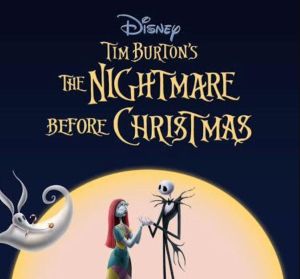
Review
The Nightmare Before Christmas has always felt to me like a game built around one brilliant character making the worst possible decisio...
Dark Enchantment: Navigating the Timeless Magic of A Dark Holiday Classic
The Nightmare Before Christmas has always felt to me like a game built around one brilliant character making the worst possible decision with complete confidence. Jack Skellington is already successful, respected, and surrounded by people who admire his work, yet none of that gives him a sense of purpose. The moment he discovers Christmas Town, he treats an unfamiliar world like a newly unlocked expansion and immediately assumes he understands how to recreate it.
What makes the film memorable is that Jack’s mistake is not caused by cruelty. He is genuinely fascinated by Christmas. He wants to understand its warmth, color, music, and emotional power. The problem is that admiration quickly turns into control. Instead of allowing Christmas to remain something outside his expertise, he decides to rebuild it according to the rules of Halloween Town.
The result is visually imaginative, musically unforgettable, and emotionally more complicated than I expected from such a compact animated story.
Halloween Town Already Felt Like a Complete Game World
Before Jack discovers anything new, Halloween Town has a strong internal identity. Its residents know their roles, the architecture reflects their values, and every public event revolves around preparing the next Halloween celebration.
I liked how quickly the film established the town without relying on lengthy explanation. The opening song introduces characters, traditions, visual themes, and the community’s collective pride. The town does not appear disorganized or unhappy. It functions well according to its own strange logic.
That detail is important because Jack is not escaping a failed world. He is escaping repetition.
As the Pumpkin King, he has reached the highest possible status within his environment. Everyone expects him to continue doing what he already does exceptionally well. His boredom therefore creates a more interesting conflict than simple ambition. Jack does not need more success. He needs a reason to feel surprised again.
From my perspective as a gamer, he resembles a player who has completed every challenge in the main campaign and no longer receives satisfaction from repeating perfected strategies.
Jack’s Opening Song Explained Burnout Better Than Dialogue Could
Jack’s exhaustion becomes clear after the Halloween celebration. The town is pleased, the event has succeeded, and his performance has once again impressed everyone. He should feel rewarded.
Instead, he walks away alone.
I appreciated that the film did not present his dissatisfaction as ingratitude. Jack understands that others value him, yet their praise reinforces the role he is tired of performing. Every compliment is another reminder that the community expects the next Halloween to resemble the last one.
His loneliness comes from being recognized only through one identity. Nobody asks whether the Pumpkin King wants to remain the Pumpkin King forever.
The sequence made me think about progression systems that continue increasing numbers without changing the experience. A higher score has little value when the player no longer cares about the activity producing it.
The Holiday Doors Were a Perfect World-Selection Menu
The clearing filled with holiday-themed doors is one of my favorite visual ideas in the film. Each tree represents a completely different world, but Jack is drawn toward the Christmas door before he understands what waits behind it.
The scene feels like discovering several hidden levels and selecting one based entirely on icon design. Jack has no mission description, difficulty warning, or information about the inhabitants. He sees a decorated tree and enters.
That impulsiveness fits him perfectly. He has spent years mastering a world where he knows every rule. The possibility of entering somewhere incomprehensible is more exciting than the risk.
I also like that he does not begin by stealing Christmas. His first reaction is wonder. He touches the snow, studies the decorations, watches the residents, and responds to the environment with almost childlike excitement.
For a brief period, Jack is not a leader or performer. He is simply exploring.
Christmas Town Worked Because Jack Could Not Categorize It
Christmas Town is designed as the opposite of Jack’s familiar environment. Halloween Town is angular, dark, narrow, and theatrical. Christmas Town is rounded, bright, soft, and filled with movement that appears joyful rather than threatening.
Jack tries to understand every object using the mental tools he already possesses. Snow becomes a mysterious substance. Elves appear strange but fascinating. Gifts, lights, stockings, and decorated trees become pieces of a system whose purpose he cannot fully identify.
This is where the story becomes especially effective. Jack recognizes the emotional impact of Christmas before he understands its meaning.
He sees that the holiday creates excitement, belonging, and warmth. He wants access to that feeling, but he approaches it like a mechanic trying to reverse-engineer an unfamiliar machine.
The problem is that Christmas is not only a collection of visual components. It depends on intention, cultural context, and the expectations of the people receiving it.
Jack Turned Wonder Into a Research Project
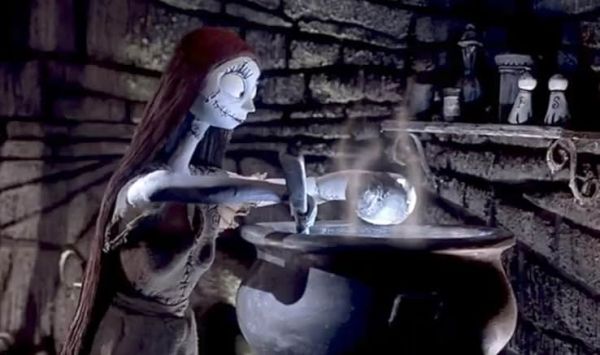
After returning home, Jack attempts to study Christmas through objects. He examines decorations, performs experiments, reads books, and tries to identify a formula that explains why the holiday feels different.
These scenes are funny because he applies scientific seriousness to things such as ornaments and toys. They are also revealing. Jack cannot tolerate an experience he does not understand.
Instead of accepting that mystery may be part of Christmas, he assumes that enough analysis will produce control.
I recognized the gamer mentality immediately. When I encounter a new system, I often begin breaking it into mechanics, resources, rules, and repeatable patterns. That approach is useful until the experience depends on something that cannot be optimized easily.
Jack eventually reaches a conclusion not because he has truly understood Christmas, but because he has become tired of not understanding it. He replaces uncertainty with confidence.
His Presentation to Halloween Town Was a Failed Design Pitch
Jack’s attempt to explain Christmas to the residents of Halloween Town is one of the film’s smartest sequences. He describes snow, stockings, gifts, and Santa Claus, but the audience interprets everything through its own cultural language.
They are interested in fear, danger, darkness, and physical transformation. When Jack presents a harmless object, they search for the threat hidden inside it.
This communication failure becomes the foundation of the entire disaster. Jack believes he has explained the project clearly. The residents believe they understand what he wants. Neither side recognizes how different their assumptions are.
I have seen the same problem in cooperative games. One player gives instructions that appear obvious from their perspective, while the rest of the team interprets the objective according to completely different habits.
Jack responds by simplifying the message. He does not tell Halloween Town to understand Christmas. He tells them that they will take control of it.
The Christmas Plan Was Ambitious but Fundamentally Misaligned
Once Jack assigns roles, Halloween Town becomes highly productive. Residents create gifts, prepare transportation, redesign clothing, and organize the operation with impressive enthusiasm.
The project does not fail because the town lacks skill.
It fails because every participant applies excellent Halloween craftsmanship to a Christmas objective.
The toys are technically creative, but they are frightening. The decorations are detailed, but they communicate the wrong emotion. Jack’s sleigh works, yet its delivery transforms celebration into panic.
This distinction made the story more interesting to me. Competence does not guarantee success when the team misunderstands the user experience.
Halloween Town produces exactly what its culture has trained it to produce. Jack expects the final result to feel like Christmas simply because he has renamed the project.
Sally Understood the Problem Before Anyone Else
Sally is the character who sees the emotional truth of Jack’s plan most clearly. She is quiet, observant, and accustomed to living under someone else’s control, which makes her sensitive to the difference between genuine care and possession.
Her warnings do not come from jealousy or resistance to change. She recognizes that Jack is forcing an idea into a form it cannot survive.
I appreciated that Sally does not challenge him with a competing technical plan. She responds through intuition. Her vision of danger reflects what Jack’s analysis cannot detect.
Jack dismisses the warning because it does not fit his current emotional momentum. He has finally found something that makes him feel alive, and any objection sounds like an attempt to return him to the boredom he escaped.
Sally’s frustration is painful because she understands Jack well enough to see that his excitement has become self-deception.
Sally’s Story Was Also About Escaping Ownership
Jack’s crisis receives most of the attention, but Sally is living inside another form of control. Doctor Finkelstein created her and expects obedience, treating her independence as a malfunction.
Her repeated escape attempts show that she is resourceful long before the Christmas crisis begins. She studies his habits, prepares distractions, and accepts personal risk for the possibility of freedom.
From a gamer’s perspective, Sally behaves like a character who has learned every patrol route inside a restrictive level. She cannot overpower her creator directly, so she relies on timing, preparation, and environmental knowledge.
This makes her relationship with Jack more meaningful. She is drawn to someone whose public confidence represents the independence she wants. At the same time, Jack initially fails to recognize her inner life because he is too focused on his own transformation.
Both characters want to escape assigned identities. Sally approaches that goal with awareness of consequences. Jack approaches it by taking control of an entire holiday.
Zero Was the Most Reliable Companion
Zero does not receive much dialogue or complicated development, yet he gives Jack consistent affection without demanding that Jack perform as the Pumpkin King.
That simple loyalty matters. Many residents admire Jack because of what he represents publicly. Zero follows him when he is alone, confused, or wrong.
The glowing nose also becomes a clever variation on familiar Christmas imagery. Jack uses a companion from Halloween Town to solve a practical Christmas problem, and this is one of the few adaptations that genuinely works.
I liked that Zero never becomes a tool without personality. His movement and reactions make him feel playful and emotionally connected to Jack.
Oogie Boogie Belonged to a Different Genre
Oogie Boogie changes the tone whenever he appears. Halloween Town is macabre but communal. Oogie is cruel in a more personal and selfish way.
His environment resembles a casino-themed boss arena filled with traps, hazards, and theatrical lighting. He treats danger as entertainment and other characters as pieces in a game designed for his pleasure.
This makes him an effective contrast with Jack. Jack causes harm through arrogance and misunderstanding. Oogie understands that others are suffering and enjoys the control it gives him.
His song functions like a villain introduction and gameplay tutorial at the same time. The room reveals its mechanics while Oogie explains his personality through rhythm.
I found his visual design especially effective because the outer shape appears simple, but the body is literally held together by a fragile surface containing something much more disturbing.
Lock, Shock, and Barrel Were an Unreliable Quest Team
Jack’s decision to assign Santa’s capture to Lock, Shock, and Barrel demonstrates another failure of leadership. He knows they are associated with Oogie Boogie, yet he assumes a clear instruction will be enough to control them.
The trio understands the task but not Jack’s moral limits. They treat kidnapping as entertainment and immediately look for ways to make it more chaotic.
Their bathtub transportation is one of the film’s most playful designs. It moves like an improvised vehicle from a platform game, carrying them through environments with complete disregard for normal physics.
I enjoyed their chemistry because each child contributes a slightly different kind of trouble. Together, they behave like a multiplayer group that has accepted the objective but ignored every optional requirement about safety and discretion.
Their loyalty is also unstable. Jack assumes they work for him because he gave the order. Their true interest is causing trouble and pleasing Oogie.
Santa Claus Was the Only Person Who Fully Understood Christmas
Santa is physically vulnerable within Halloween Town, but he possesses the authority of someone who understands exactly what Jack has disrupted.
He does not need a long explanation to identify the problem. Christmas is not merely a delivery route that another character can operate after copying the equipment.
I liked his frustration because it prevents the film from treating Jack’s actions as harmless experimentation. Jack has endangered people, disrupted a global event, and placed Santa inside Oogie’s control.
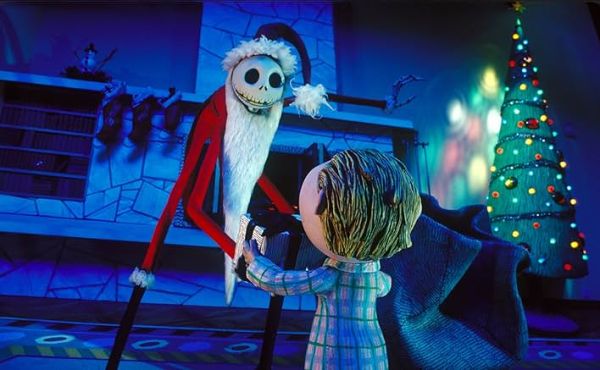
Santa’s anger is justified, yet he still repairs the situation. He does not wait for Jack to understand every consequence before returning to work.
This practical competence contrasts with Jack’s dramatic leadership. Santa knows what Christmas requires because he has spent years serving the holiday rather than using it to solve his personal crisis.
The Gifts Were Brilliantly Wrong
The Halloween Town gifts are among the clearest examples of the film’s central misunderstanding. They are not lazy imitations. They are imaginative objects produced by artists who sincerely believe they are helping.
A toy can move, surprise the recipient, and display impressive craftsmanship while still being completely inappropriate for the intended audience.
The delivery sequence becomes funny and disturbing because Jack interprets screaming as excitement. He has already decided that the project will succeed, so every reaction becomes evidence supporting that belief.
This is confirmation bias presented through musical animation. Jack does not evaluate whether children are enjoying the gifts. He filters their responses through his desired conclusion.
I found the sequence visually exciting because each delivery introduces a new miniature threat. It feels like a series of short levels where the player character is unknowingly creating enemies instead of rewards.
Jack’s Sleigh Ride Was His Moment of Maximum Delusion
During the Christmas flight, Jack finally occupies the role he imagined for himself. He wears the costume, controls the sleigh, carries the gifts, and sees an entire world responding to his presence.
The scene is triumphant from his perspective and increasingly alarming from everyone else’s.
That contrast is essential. The film allows me to feel Jack’s excitement without pretending the mission is working. He is living his fantasy at the exact moment the consequences become impossible to ignore.
When military forces respond, Jack initially treats the attack like part of the celebration. He interprets explosions as a ceremonial display because he remains trapped inside the story he has written for himself.
Only after the sleigh falls does the fantasy collapse.
The Graveyard Scene Was Jack’s Real Character Upgrade
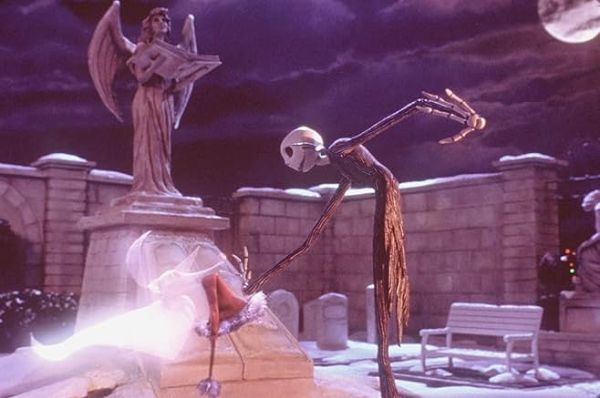
After the crash, Jack finally confronts failure without an audience. There is nobody available to praise his creativity or reassure him that his intention matters more than the result.
His first response is disappointment and self-pity. He had wanted to create something wonderful, and the world rejected it.
Then his perspective changes.
He recognizes that trying Christmas revealed something valuable even though the attempt failed. The experience reminded him that he still loves his own identity. He does not need to become Santa to escape creative stagnation.
This moment worked for me because Jack does not simply decide that Christmas is bad and Halloween is good. He accepts that admiration does not require ownership.
He can return to Halloween with new inspiration without continuing to distort Christmas.
The Film Treats Failure as Discovery
Jack’s plan causes serious damage, but it also forces him to understand what his earlier success had hidden. He was not tired of Halloween itself. He was tired of repeating it without new curiosity.
Christmas gives him a different visual and emotional language. His mistake is believing he must reproduce that language directly.
By the end, Jack can carry the experience back into his own work. Failure therefore becomes information rather than a permanent loss of identity.
As a gamer, I appreciated this progression. A failed build or strategy can reveal what I actually enjoy about the system. I may not need to abandon the game. I may need to approach the same mechanics differently.
Jack’s Rescue Mission Finally Gave Him a Clear Objective
Once Jack understands the damage, his actions become more focused. He needs to rescue Santa and Sally, stop Oogie Boogie, and give Christmas back to the person capable of restoring it.
The film’s final confrontation works because Jack is no longer chasing personal recognition. He is correcting a problem he created.
Oogie’s lair provides the most game-like action in the movie. Platforms move, traps activate, characters hang above hazards, and Jack must navigate an arena controlled by an enemy who treats probability as entertainment.
Jack’s body design becomes especially useful here. His long limbs and flexible movement allow him to cross the environment with an agility that matches his personality.
The victory does not erase his responsibility, but it demonstrates growth. He no longer assumes that good intentions are enough. He takes action to repair the consequences.
The Stop-Motion Style Made Every Character Feel Physical
The visual texture is one of the main reasons the film remains so distinctive. Characters do not look like smooth digital models. Clothing, skin, bones, fabric, wood, snow, and machinery all seem to occupy real miniature space.
This physical quality makes Halloween Town especially convincing. Buildings lean at impossible angles, yet they appear constructed from tangible materials. Streets curve like hand-built pathways rather than perfectly generated geometry.
The character animation also gives personality to movement. Jack is elegant and theatrical. Sally moves with a gentler physical rhythm. Oogie Boogie shifts with loose, heavy unpredictability.
Because the figures are stylized, small gestures become important. A head tilt, hand movement, or change in posture communicates emotion clearly.
From my perspective, it feels like exploring a handcrafted gothic platformer where every environment has been physically assembled instead of rendered only as background.
The Character Shapes Tell Their Stories Before They Speak
Jack is tall, thin, and visually open. His long limbs allow expressive poses, and his skeletal body makes him appear both elegant and fragile.
Sally is stitched together from separate pieces, reflecting both her artificial creation and her ability to survive damage by repairing herself.
Doctor Finkelstein’s mechanical and physical details communicate control, calculation, and emotional limitation. Oogie’s rounded sack hides a body made from countless smaller creatures, giving him the appearance of one personality constructed from chaos.
Even minor residents are recognizable through silhouette. This matters in crowded musical scenes where many characters appear together.
The designs make Halloween Town feel like a collection of individuals rather than a repeated army of monsters.
The Songs Function Like Playable Story Chapters
The musical structure keeps the film moving quickly. Songs introduce worlds, reveal emotional states, explain plans, and transform dialogue into visual sequences.
“This Is Halloween” establishes the town and its residents. “What’s This?” captures exploration and discovery. “Jack’s Lament” reveals burnout, while “Making Christmas” turns preparation into a dark production montage.
I never felt that the strongest songs paused the plot. They were the plot.
Each major number has its own visual rules and emotional objective, almost like a separate level. The environments change with the rhythm, characters interact through choreography, and important information is communicated without reducing momentum.
The music also strengthens replay value. I remember not only melodies but the specific locations, expressions, and movements attached to them.
The Film’s Compact Length Helped the Story
The Nightmare Before Christmas does not spend much time on secondary explanations. Jack discovers Christmas, attempts to reproduce it, fails, and returns with a clearer understanding of himself.
The short runtime gives the film a storybook quality. Scenes move quickly, and every musical sequence contributes to the central arc.
I occasionally wanted more time with Sally, Halloween Town’s residents, and the mechanics of the holiday worlds. The setting appears large enough to support much deeper exploration.
However, extending every idea could have weakened the elegant structure. The movie leaves enough unexplained to preserve mystery.
I do not need a detailed map of every holiday world. The doors are powerful partly because they suggest more than the story shows.
Halloween and Christmas Never Truly Merge
The ending does not create one combined holiday where every tradition becomes interchangeable. Santa restores Christmas, while Jack returns to Halloween Town.
I liked this choice because the story respects difference. Jack can learn from another culture without absorbing it completely.
Snow falling over Halloween Town becomes a more meaningful exchange. Santa brings one piece of Christmas into Jack’s world voluntarily, and the residents experience it without claiming ownership.
This moment succeeds where Jack’s project failed. The two holidays touch without one replacing the other.
Sally and Jack Needed Honesty More Than Destiny
The romantic resolution is gentle because the film has already shown how often Jack overlooks Sally. She supports him, warns him, and risks herself trying to reduce the harm caused by his plan.
Jack does not recognize her importance until he has stopped focusing entirely on his own reinvention.
The final scene works because he finally sees the person who understood him throughout the crisis. Sally does not admire only his title or public performance. She recognizes both his creativity and his ability to become lost inside it.
Their connection is not built from perfect compatibility. It comes from two characters who feel constrained by assigned roles and want space to define themselves.
Why I Continue Returning to Halloween Town
I revisit The Nightmare Before Christmas because its visual identity is immediately recognizable, but the story remains relevant beyond its style.
Jack’s problem is creative dissatisfaction. He becomes fascinated by someone else’s work, mistakes inspiration for ownership, and nearly destroys the thing he admires by forcing it through his own habits.
That conflict feels surprisingly modern. Inspiration is valuable, but imitation without understanding can produce something technically impressive and emotionally empty.
From my perspective as a gamer, Jack behaves like a player who imports mechanics from another genre without understanding why they worked in the original design. Halloween Town has excellent artists, strong production skills, and complete commitment. The project still fails because the experience is built for the wrong audience.
The movie never argues that Jack should stop exploring. Curiosity is not his flaw. His flaw is assuming that discovery gives him mastery.
By the end, he learns that another world can inspire him without becoming his possession. Christmas can remain Christmas, while Halloween gains new energy from the experience.
That lesson gives the film more emotional weight than a simple holiday crossover. Jack begins the story believing he needs a different identity. He ends it understanding that his existing identity still has possibilities he has not explored.
The Nightmare Before Christmas remains special to me because it celebrates creativity while warning against the arrogance that sometimes follows it. Jack is imaginative, talented, and capable of inspiring an entire town. He is also wrong for most of the story.
His greatest achievement is not stealing Christmas or defeating Oogie Boogie. It is recognizing that failure has not made him empty. It has reminded him who he is.
Pros:
- Unique visual style with meticulously crafted stop-motion animation
- Rich narrative that explores themes of self-discovery and nonconformity
- Iconic characters with deep emotional resonance
- Hauntingly memorable musical score that enhances the storytelling
- Timeless design and artistic innovation that continues to influence animation
- Cult classic status with a lasting cultural impact
Cons:
- Some scenes may be too eerie for younger viewers despite a PG rating
- Stop-motion technique might not resonate with fans of modern digital animation
- The narrative pacing can feel slow to viewers seeking more action








Movie Reviews

Minecraft

Grand Theft Auto V

Toca Boca World

Roblox

Leave a comment
Your comment is awaiting moderation. We save your draft here
0 Comments