Review
The Polar Express always feels like a Christmas movie built around one long nighttime level. A boy leaves the safety of his bedroom, bo...



Beyond the Tracks: Rediscovering the Magic of The Polar Express
The Polar Express always feels like a Christmas movie built around one long nighttime level. A boy leaves the safety of his bedroom, boards an impossible train, crosses frozen landscapes, survives a sequence of increasingly strange obstacles, and arrives at a destination that may or may not prove what he wants to believe.
What keeps me interested is not simply the trip to the North Pole. The real journey happens inside the Hero Boy. He begins as someone who wants evidence before accepting wonder, yet he is surrounded by characters who respond to uncertainty in completely different ways. Some believe immediately, some doubt themselves, and others behave as though confidence can hide loneliness.
From my perspective as a gamer, the film resembles an adventure where the visible objective is reaching Santa, while the hidden objective is learning which sounds, people, and choices deserve trust.
Departure: The Invitation Arrived Without Instructions
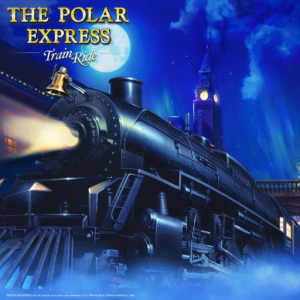
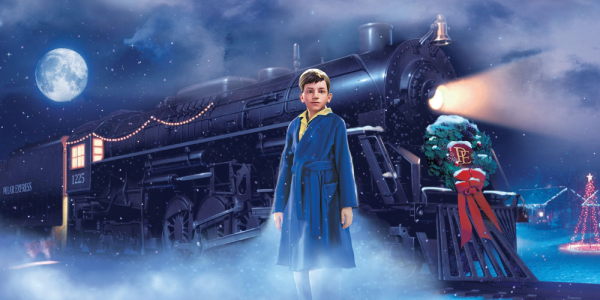
The train does not arrive quietly. It appears in the middle of an ordinary street with enormous weight, noise, steam, and confidence. There is no attempt to make its presence subtle or easy to explain.
I like that the Hero Boy is not forced onto it. The conductor offers him a choice. The door remains open, but the train will not wait forever.
This immediately establishes the central conflict. The boy wants certainty before acting, while the experience requires action before certainty is possible.
That dilemma reminded me of entering a hidden game area without knowing whether the route will remain available later. I can stay in the familiar map and remain safe, or I can accept that discovery often begins before I understand the rules.
The Hero Boy hesitates because hesitation is part of who he is. When he finally climbs aboard, the decision feels important precisely because belief has not yet arrived.
The Train Functioned Like a Moving Social Hub
Once aboard, the Polar Express becomes more than transportation. It is a temporary world filled with children who have brought their own fears, expectations, and social habits into the same confined space.
The passenger car acts like a multiplayer lobby. Everyone appears to be traveling toward the same destination, but each person is experiencing a different version of the journey.
The Hero Girl responds with responsibility and confidence. Billy remains distant and uncertain about whether the experience truly includes him. The Know-It-All speaks as though information guarantees importance.
I found this group effective because nobody is present only to fill a seat. Their personalities create friction, and that friction gives the trip emotional direction.
The train repeatedly separates and reconnects them, almost like a cooperative game that changes the active party according to the challenge.
The Conductor Treated Time Like a Rule, Not a Suggestion
Tom Hanks gives the conductor an unusual balance of authority, humor, impatience, and mystery. He seems to know exactly what the journey requires, yet he rarely explains more than necessary.
His obsession with schedules gives the train a sense of structure. This may be a magical journey, but it is not random. Tickets matter, departure times matter, and each passenger appears to have a reason for being there.
I sometimes viewed the conductor as a quest manager who refuses to reveal the complete objective. He points characters toward the next stage, corrects obvious mistakes, and expects them to learn from situations rather than receive a full tutorial.
His strictness can feel intimidating, especially when Billy’s missing ticket creates panic. However, the film gradually shows that his authority is not based only on punishment. He understands that some lessons cannot be delivered through reassurance alone.
The Ticket Became a Traveling Objective Item
The ticket sequence is one of the clearest examples of the film turning a small object into a complete adventure. A simple piece of paper leaves the train, moves through the environment, and repeatedly appears close to being lost forever.
I enjoyed how the ticket travels through wind, snow, machinery, and animal movement before returning to the story. Its journey is far more dramatic than its practical value would suggest.
In game terms, it behaves like a quest item with unusually aggressive physics. Every system in the world seems determined to move it farther from the character who needs it.
The sequence also reflects Billy’s emotional position. His place on the train feels uncertain, and the missing ticket appears to confirm his fear that he does not belong with the other children.
When the ticket returns, it is not only a convenient resolution. It supports the idea that Billy’s journey matters even when he assumes nobody is paying attention.
The Hot Chocolate Scene Was a Reward Room
The hot chocolate musical sequence temporarily transforms the train into a celebration. Servers move through the carriage with impossible precision, cups appear at exactly the right moment, and the entire routine feels designed to overwhelm the passengers with warmth and abundance.
Visually, it works like a reward room after an early challenge. The characters have entered the adventure, and the world responds by showing them what kind of spectacle it can provide.
I liked the physical rhythm of the scene. Tables, cups, trays, movement, and music are coordinated so tightly that the train appears to have its own internal choreography.
The moment is also important for Billy. While the main carriage receives a performance, the Hero Girl notices that he has been left alone and takes a cup to him.
Her decision changes the sequence from pure entertainment into an early test of empathy. She does not need an instruction from the conductor. She sees that another passenger has been excluded and responds.
The Hero Girl Played Like the Most Reliable Team Member
The Hero Girl consistently acts before the others have finished debating. She notices problems, accepts responsibility, and often becomes the person most willing to help Billy.
I appreciated that her confidence is practical rather than theatrical. She does not spend time explaining why she should lead. She begins making useful decisions.
Her strength also creates risk. Confidence can lead her into situations where she assumes responsibility for more than she fully understands.
This prevents her from feeling like a perfect guide. She is capable because she acts with concern for others, but she still needs help when the journey becomes physically dangerous.
In a cooperative game, she would be the player who reads the objective, checks whether everyone is present, and moves toward the solution before the rest of the group has agreed on a plan.
Billy Made the North Pole Feel Personal
Billy’s storyline gave the film its strongest emotional weight for me. He does not approach Christmas with the same excitement as the other children because celebration has not always felt equally available to him.
He stays in the rear car, physically separating himself before anyone else can reject him. That distance reflects more than shyness. Billy seems accustomed to expecting less.
The Hero Girl’s effort to include him matters because she does not treat his isolation as a permanent personality trait. She recognizes it as something that can be challenged through kindness.
I found Billy’s hope more fragile than the Hero Boy’s belief. The Hero Boy doubts whether Santa exists. Billy appears unsure whether generosity and belonging exist for someone like him.
That difference makes their journeys complementary. One child needs to believe in wonder. The other needs to believe that wonder might include him.
The Know-It-All Turned Information Into Armor
The Know-It-All is designed to be irritating, but I understood the insecurity behind his behavior. He speaks quickly, corrects others, and treats every new detail as a chance to prove that he already understands it.
His knowledge is often genuine. The problem is that he uses it to control social situations rather than help the group.
I have encountered the same type of player in multiplayer games: someone who has studied every mechanic but communicates in a way that makes teamwork harder.
The character is funny because his confidence regularly exceeds his actual awareness. He can explain technical details while missing the emotional meaning of the moment.
The film does not punish him harshly or demand a complete personality change. It simply places him in situations where information alone cannot produce connection.
The Roof Sequence Changed the Genre
When the Hero Boy reaches the roof of the train, The Polar Express briefly stops feeling like a warm Christmas adventure and becomes something closer to a surreal survival level.
The scale changes immediately. The train is no longer a safe interior moving through scenery. It becomes a narrow platform surrounded by darkness, wind, snow, and dangerous machinery.
The Hobo’s appearance adds uncertainty. He may be a ghost, a guide, a test, or something the Hero Boy’s mind has created. The film refuses to define him completely.
I liked that ambiguity because the Hobo understands the boy’s doubt but does not respond with simple reassurance. He challenges the idea that seeing automatically produces knowing.
The roof sequence is one of the few parts of the film where the Hero Boy meets someone who appears more skeptical than he is. That forces him to hear his own doubts expressed from outside.
The Hobo Was a Glitch, Guide, and Warning
The Hobo behaves as though he belongs to the train and exists outside its normal rules at the same time. He appears in impossible places, knows details he should not know, and disappears without explanation.
From my gamer’s perspective, he resembles an optional non-player character hidden beyond the intended route. Finding him reveals information, but not the kind that can be added cleanly to a quest log.
He questions belief, performs strange acts of rescue, and seems amused by the Hero Boy’s need for certainty.
I never interpreted him as a straightforward villain. He creates fear, yet he also prevents the boy from falling and directs him through danger.
The Hobo may represent the form doubt takes when it becomes part of the journey rather than an obstacle that must be eliminated completely.
The Ice Sequence Was the Film’s Most Game-Like Challenge
The frozen lake sequence feels built around momentum, timing, and route correction. The train loses its safe relationship with the tracks and begins sliding across a surface that offers almost no reliable control.
The engineers must manage enormous weight while the ice shifts beneath them. Small steering decisions become critical because the train cannot stop or turn like a normal vehicle.
I enjoyed the changing sense of scale. From inside the passenger car, the situation feels chaotic. From outside, the train appears tiny against the frozen landscape.
The sequence works because the threat is mechanical rather than supernatural. Nothing is chasing the train. Physics, speed, and limited control are enough to create danger.
It reminded me of a vehicle mission where the controls remain familiar but the surface removes the assumptions that normally make them useful.
The Train Kept Surviving Impossible Conditions
The Polar Express is presented with enough mechanical detail to feel heavy and real, yet it repeatedly performs actions that no normal train could survive.
This balance is central to the film’s identity. Wheels, brakes, steam, couplings, and metal surfaces appear physically convincing. Then the train moves across collapsing ice or descends impossible tracks like a roller coaster.
I never needed the mechanics to be realistic because the film remained consistent in its emotional logic. The train is powerful, but not invulnerable. It can carry the children into wonder while still making the journey feel dangerous.
The design gives magic a machine-like body. Instead of traveling through a glowing portal, the children enter a vehicle filled with noise, heat, controls, and moving components.
Reaching the North Pole Did Not End the Uncertainty
When the train finally arrives, the North Pole does not provide immediate clarity. It is huge, crowded, industrial, and organized around systems the children do not fully understand.
I liked that the destination feels more like a functioning city than a small decorative workshop. Gifts move through enormous facilities, elves follow schedules, and the entire operation appears to depend on coordination.
The scale makes Christmas look less like one magical gesture and more like the output of a massive hidden network.
However, the Hero Boy still cannot hear the bells. Physical arrival has not solved his internal problem.
This is important because the film refuses to treat evidence as a simple cure for doubt. He has ridden the train, crossed impossible landscapes, and reached the North Pole, yet belief remains a choice rather than an automatic reward.
The Elf Control Room Looked Like a Holiday Strategy Game
The control room is one of the film’s most playful locations. Elves monitor behavior, track children, manage information, and respond to developing problems through a complex system of screens and communication.
I interpreted it like the command center of a Christmas management simulator. Every child is a data point, every gift has a destination, and one mistake can interrupt a much larger schedule.
The sequence also adds humor by treating childhood behavior with bureaucratic seriousness. A small act can receive analysis as though it were a major operational event.
The elves are energetic and comedic, but their work gives the North Pole structure. Christmas happens because magic and logistics cooperate.
The Lost Gift Became a Multi-Character Mission
The journey involving the lost gift connects the Hero Boy, Hero Girl, and Billy in a challenge that requires movement through the operational side of the North Pole.
They travel through storage areas, transport systems, and enormous gift-processing spaces that make them appear very small.
I enjoyed how the environment keeps changing the immediate objective. Finding the gift is not enough. The characters must keep it from disappearing into another part of the system.
The sequence also gives Billy’s story a clear material symbol. A present carrying his name confirms that he has not been forgotten, even before he receives it.
That detail is simple, but its emotional value is much greater than the object itself.
The Bell Was a Test With No Visible Interface
The silver bell becomes the central symbol of the film because it produces sound according to belief rather than physical ability.
The Hero Boy can see it. He can hold it. Others react to it. Yet he cannot hear it until he stops demanding a form of proof that removes all uncertainty.
In a game, the bell would be a strange item because its effect is not controlled by a button or character statistic. It responds to an internal decision.
I liked that the change happens quietly. The boy does not deliver a long speech before the sound appears. He simply chooses to believe, and the bell becomes audible.
The sound is delicate rather than overwhelming. That restraint makes it feel personal, as though the reward belongs specifically to the listener.
Santa Was More Effective Before He Spoke
The film delays Santa’s full appearance, using crowds, movement, sound, and anticipation to build his importance.
This works because Santa is not simply another character waiting at the destination. He is the idea around which the entire journey has been organized.
When the Hero Boy finally sees him, the moment carries the weight of every earlier doubt. Yet seeing Santa is still not the same as hearing the bell.
I appreciated that distinction. The film suggests that wonder cannot be reduced completely to visual confirmation.
Tom Hanks gives Santa a calm authority that differs from the conductor’s stricter energy. He appears aware of each child’s journey without needing to explain everything they experienced.
The First Gift Was Smaller Than Expected
When the Hero Boy is chosen to receive the first gift of Christmas, he could request almost anything. He chooses the bell.
This decision shows that his goal has changed. At the beginning, he wanted proof. By the end, he values the experience of belief itself.
The bell is not a conventional reward. It does not give him power, wealth, or public status. Its meaning depends on whether he can continue hearing it after returning home.
I found that more satisfying than a large material prize. The journey gives him something that remains invisible to people who no longer share the same openness.
Losing the Bell Was an Important Final Setback
The Hero Boy places the bell in a pocket that has been damaged earlier, and it falls away before he can bring it home.
This is a small but effective piece of continuity. An earlier problem returns at the exact moment the reward appears secure.
In game terms, he completes the mission but loses the item because he failed to repair an inventory slot.
The loss is painful because he cannot simply return to the North Pole. The train is already leaving, and the opportunity appears gone.
This prevents the ending from becoming too immediate. The Hero Boy must return to ordinary life without knowing whether the journey will leave behind any physical evidence.
Christmas Morning Was the Real Verification Screen
The bell’s arrival as a wrapped gift gives the Hero Boy one final piece of confirmation, but the response of his family matters just as much.
He and his sister can hear the sound. The adults cannot.
This moment could be interpreted as sad, but I found it more reflective. The adults do not appear cruel or foolish. They simply no longer have access to the same experience.
The bell therefore becomes a private test that can be repeated throughout life. Its sound reveals whether the Hero Boy has preserved the part of himself that made the journey possible.
The Animation Felt Both Impressive and Unsettling
The Polar Express uses performance-capture animation that gives characters realistic movement while retaining stylized proportions. This produces an unusual visual effect.
At times, the characters feel physically convincing. Clothing moves, faces react, and the train’s environments carry impressive detail.
In other moments, the human expressions can feel slightly distant or unnatural. Eyes, smiles, and small facial movements do not always create the warmth I expect from more stylized animation.
I did not find this completely negative. The slightly unreal quality suits a story that may exist between dream, memory, and physical experience.
The train, snow, North Pole machinery, and large environmental sequences have aged more comfortably for me than some of the close human animation.
The Camera Frequently Behaved Like a Ride System
Many sequences move with the energy of a theme-park attraction. The camera travels along tracks, flies past machinery, follows falling objects, and places me directly inside high-speed movement.
The ticket journey, steep train descent, frozen lake, and North Pole transport systems all use motion as a form of spectacle.
These scenes occasionally prioritize visual excitement over character development, but they give the film a strong sense of adventure.
From a gamer’s perspective, they resemble scripted traversal sequences designed to show the scale of the world while moving the player toward the next major area.
The Music Created the Feeling of an Old Memory
The score gives the film a nostalgic tone even during scenes I am seeing for the first time. Bells, orchestral movement, quiet piano, and choral elements make the journey feel connected to a memory the Hero Boy may later struggle to explain.
The music is especially effective when the train appears. Its arrival feels large and mechanical, but also magical.
Quieter themes support Billy’s loneliness and the Hero Boy’s uncertainty without making those emotions overly dramatic.
The songs vary in effectiveness for me. Some deepen character, while others function mainly as spectacle. The strongest musical moments are the ones that make the journey feel reflective rather than simply loud.
The Film Is Not Really About Proving Santa Exists
The physical evidence in The Polar Express is overwhelming. The train appears outside the Hero Boy’s home. He reaches the North Pole, sees elves, meets Santa, and receives a gift.
Yet the story continues treating belief as something deeper than accepting observable facts.
I interpreted belief here as the willingness to remain open to meaning that cannot always be explained to other people. The Hero Boy’s challenge is not a lack of intelligence. It is his fear of trusting an experience without complete control over how it can be verified.
The bell represents that tension perfectly. It is real, but not equally accessible to everyone.
Each Main Child Needed a Different Gift
The Hero Boy needs belief. The Hero Girl needs confidence in her ability to lead. Billy needs proof that he deserves inclusion and generosity. The Know-It-All needs humility.
The train does not simply carry them to one shared destination. It places each child inside situations that reveal a personal weakness.
This is why the trip feels more meaningful than a normal group excursion. The destination is the same, but the emotional objectives are different.
I appreciated that these lessons are not delivered as rewards on a screen. They emerge through decisions, mistakes, and interactions.
The Conductor’s Final Message Worked Like a Character Summary
The punched words on the tickets give each child a compact message connected to the journey.
This is one of the film’s most game-like details. The ticket begins as permission to board, survives several dangers, and eventually becomes a summary of the character’s progression.
The words are simple, but they gain meaning from everything that happened before them.
The conductor does not provide a full explanation. He trusts the children to understand the message when they are ready.
Why I Still Board the Train
I return to The Polar Express because it captures a specific kind of childhood uncertainty. The Hero Boy wants to believe, but he is already becoming aware that adults often treat belief as something to outgrow.
The film does not portray doubt as a moral failure. Doubt is the starting point of his journey.
From my perspective as a gamer, the Polar Express itself is a moving campaign designed around hidden character checks. The Hero Boy faces uncertainty, the Hero Girl faces responsibility, Billy faces exclusion, and the Know-It-All faces the limits of information.
The train does not remove these problems. It creates situations where the children must respond to them.
The adventure remains memorable because its greatest reward is not located at the North Pole. It appears years later, whenever the bell continues to ring.
The Hero Boy cannot preserve childhood exactly as it was. He can preserve the ability to recognize wonder when it returns.
That is why the final narration matters more to me than the spectacle. The train ride becomes part of a larger life, and the sound of the bell becomes quieter for many people as they grow older.
For those who can still hear it, the journey never completely ends.
Pros:
- Innovative digital animation techniques that paved the way for future films
- Visually stunning sequences that capture the magic of a winter wonderland
- A heartwarming narrative that resonates with audiences of all ages
- A memorable soundtrack that enhances the emotional depth of the film
- Pioneering use of technology that blends realism with surreal elements
- Nostalgic appeal that reminds viewers of the wonder and excitement of childhood
Cons:
- The digital animation may sometimes fall into the uncanny valley
- Pacing issues in certain moments can disrupt the immersion
- Some viewers may find the blend of traditional storytelling with digital effects less engaging








Movie Reviews

Minecraft

Grand Theft Auto V

Toca Boca World

Roblox

Leave a comment
Your comment is awaiting moderation. We save your draft here
0 Comments