
Review
p>Candy Cane Lane begins with a recognizably modern form of holiday anxiety. Chris Carver does not merely want his family home to lo...

Candy Cane Lane: Embracing Holiday Traditions in a Modern Cinematic Wonderland
p>Candy Cane Lane begins with a recognizably modern form of holiday anxiety. Chris Carver does not merely want his family home to look festive. He wants to win. The annual neighborhood decorating competition has become a public measure of imagination, effort, status, and seasonal superiority, and Chris approaches it with the intensity of a man who has confused Christmas spirit with competitive achievement.
I found this opening idea promising because it gives the film a slightly sharper foundation than the usual family comedy about rediscovering holiday joy. Chris is not hostile to Christmas. He loves it so aggressively that the celebration has become another arena in which he needs to prove himself. His decorations are expressions of affection, but they are also extensions of pride.
Director Reginald Hudlin builds the film around the inevitable punishment of that pride. Chris accepts magical assistance without understanding the terms, and the cheerful visual language of Christmas begins turning against him. Ornaments become dangerous, familiar lyrics acquire literal consequences, and the comforting imagery of the twelve days of Christmas develops the logic of a curse.
The result is an unusually crowded holiday fantasy. At its best, Candy Cane Lane has the energy of a family adventure that has accidentally wandered into a fairy tale with sharper teeth. At its weakest, it resembles a collection of expensive seasonal ideas competing for space inside the same film.
Chris Carver Wants Recognition More Than Victory
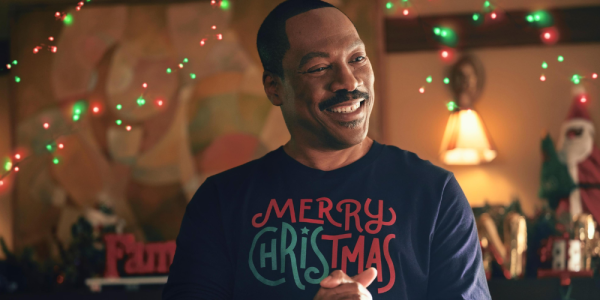
Eddie Murphy plays Chris as a man whose competitiveness is rooted in insecurity rather than simple vanity. He wants to win the decorating contest, but the trophy is not the only attraction. Victory would confirm that his work, creativity, and place within the neighborhood deserve attention.
The screenplay strengthens this motivation by placing Chris in a period of professional uncertainty. His employment situation changes, leaving him with more time and less confidence. The decorating contest becomes something he can still control, or at least something he believes he can control.
I appreciated this connection because it gives his obsession emotional weight. Chris does not suddenly become unreasonable because the plot needs him to make a magical mistake. He is already vulnerable to any promise that appears to restore purpose.
Murphy plays this frustration with restraint. His Chris is not one of the actor’s explosive comic creations. The performance is quieter, more domestic, and occasionally more weary. He can still deliver a skeptical glance or irritated response with perfect timing, but the film asks him to function primarily as a concerned father rather than an unstoppable comic force.
This choice makes Chris sympathetic, though it also limits the amount of comic unpredictability Murphy brings to the production. I frequently sensed that the screenplay had access to one of cinema’s most distinctive comic performers without fully designing scenes around his strengths.
Tracee Ellis Ross Gives the Family Its Center of Gravity
Tracee Ellis Ross plays Carol with an alertness that immediately exposes the weaknesses in Chris’s thinking. She loves her husband, recognizes his disappointment, and supports his creativity, but she is less willing to treat the decorating contest as the most important event in the family’s life.
Ross gives Carol a necessary combination of warmth and authority. She does not exist only to warn Chris that his magical bargain seems suspicious. She has professional responsibilities, expectations for her children, and an understanding of the family that extends beyond the crisis of the moment.
Her comic timing also helps stabilize scenes that threaten to become overwhelmed by visual effects. Ross can communicate disbelief without stopping the movement of the sequence. A look toward Chris often tells me that she has already identified the poor decision he is still trying to defend.
The marriage between Chris and Carol is one of the film’s more convincing elements. Their disagreements do not suggest that the relationship is fundamentally broken. They behave like two adults who have accumulated years of shared habits, private jokes, and recurring frustrations.
I wanted more scenes focused on that relationship. The magical plot becomes so elaborate that Carol is frequently required to respond to events rather than shape them. Ross gives the character enough presence to remain memorable, but the screenplay does not always reward that presence with equal dramatic influence.
The Carver Family Feels More Interesting Before the Magic Takes Over
The film introduces three children at different stages of independence. Joy is preparing for the next phase of her life, Nick is attempting to define himself through music, and Holly remains closest to the childhood excitement of Christmas.
These differences give the family a useful emotional structure. Chris is trying to create one perfect shared holiday at precisely the moment when his children are beginning to move in separate directions. The decorating competition therefore becomes an attempt to preserve family unity through spectacle.
I found this idea more emotionally compelling than the curse. Parents often discover that traditions do not remain stable simply because they repeat them. Children grow, priorities change, and rituals that once produced effortless excitement begin requiring negotiation.
The film touches this tension but rarely explores it deeply. Joy’s independence, Nick’s insecurity, and Holly’s belief all become useful during the adventure, yet their individual stories are compressed by the number of magical complications.
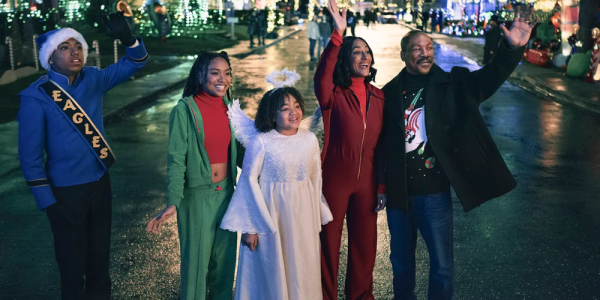
The performers create a believable family rhythm. They interrupt, tease, complain, and cooperate without sounding as though every exchange has been designed to deliver a lesson. Those ordinary interactions are among the film’s warmest moments.
Pepper Is More Dangerous Than Her Festive Appearance Suggests
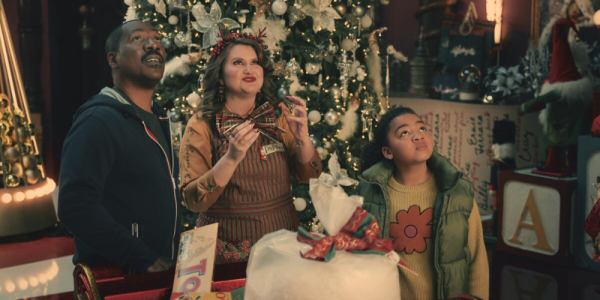
Jillian Bell plays Pepper, an elf who operates a mysterious Christmas shop filled with objects that appear charming enough to disarm suspicion. Her friendliness has an artificial brightness, as though every welcoming gesture has been rehearsed for customers who will not read the conditions of their purchase.
Bell understands that Pepper becomes more entertaining when she does not immediately behave like a conventional villain. Her performance combines resentment, theatrical politeness, and the rigid logic of someone who believes every punishment is justified by a technical agreement.
The character belongs to an older type of fairy tale. She offers exactly what the protagonist requests, then reveals that the wish was phrased carelessly. The victim is responsible because the rules were available, even if they were concealed beneath distraction and enthusiasm.
I liked the darker possibility inside this idea. Christmas mythology is usually presented as generous and protective. Pepper represents a different tradition in which magical beings are literal, proud, and dangerous when insulted.
The film never allows her to become genuinely frightening for long. Bell’s comic energy keeps the character lively, while the family-friendly tone prevents the consequences from becoming too severe. Even so, Pepper gives Candy Cane Lane a welcome edge that separates it from more sentimental seasonal fantasies.
The Twelve Days of Christmas Become a Production-Design Challenge
The film’s largest comic device is the literal transformation of the song “The Twelve Days of Christmas” into a sequence of escalating physical problems. Birds, dancers, milkmaids, drummers, rings, and other familiar images move out of lyrics and into suburban streets.
As an idea, this is clever. The song is widely recognized, repetitive, and increasingly absurd when translated into actual quantities. The screenplay uses that absurdity to make each new day more difficult to contain.
The production design embraces visual excess. Lawns, rooftops, vehicles, houses, and public spaces become crowded with moving decorations and enchanted figures. The neighborhood’s existing competition already encourages spectacle, so the magic feels like a monstrous extension of its values.
I admired the ambition, but the accumulation eventually becomes tiring. Each new element requires screen time, explanation, choreography, and visual effects. The film begins to resemble the overdecorated houses it gently mocks: impressive in individual sections, but resistant to a coherent overall shape.
The best manifestations are those that interact meaningfully with the characters or transform an ordinary location into something unstable. The weaker ones appear briefly because the song requires them, then disappear before developing comic identity.
The Glass Figurines Bring the Film’s Most Distinctive Personality
Among the film’s many magical creations, the living glass figurines are the most memorable. Their appearance evokes the handmade stop-motion quality of older television specials while remaining part of the film’s glossy digital world.
Pip, Cordelia, Gary, and the caroling group provide exposition, commentary, and comic support. They understand Pepper’s rules because they have already suffered under them, making them both victims and reluctant experts.
The decision to render them as decorative figures is thematically effective. They look like objects designed to sit safely inside a Christmas display, yet they contain personalities, frustrations, and histories. Their imprisonment transforms holiday decoration into something slightly unsettling.
The vocal performances add more energy than the visual effects alone could provide. Nick Offerman, Robin Thede, Chris Redd, and the members of Pentatonix give the figures sharply differentiated personalities despite limited physical scale.
I often wished the film had reduced some of its other magical material and spent more time with this group. Their situation contains humor, pathos, and a clear connection to Pepper’s past. They make the curse feel older and more consequential.
Hudlin Directs the Domestic Comedy More Confidently Than the Fantasy
Reginald Hudlin previously worked with Eddie Murphy on Boomerang, and that familiarity may explain the relaxed quality of the film’s early family scenes. Murphy is allowed to underplay, while reactions and conversational rhythms carry much of the humor.
Hudlin is effective when characters occupy the same domestic space and respond to Chris’s growing obsession. He understands how to frame family disagreement without turning it into melodrama.
The fantasy sequences are more uneven. The direction remains clear enough for a family audience to follow the changing objectives, but the visual scale frequently exceeds the emotional scale of the scene. A new magical event arrives before the previous one has had time to establish atmosphere.
The film often moves directly from dialogue into digital commotion. This creates momentum but not necessarily wonder. Magic becomes another source of activity rather than a disruption of ordinary reality.
I wanted more pauses in which the family could process what they were seeing. Awe, fear, and disbelief require time. Without those reactions, even imaginative effects can begin to feel routine.
Sunny California Changes the Familiar Christmas Mood
Candy Cane Lane takes place in a Southern California neighborhood rather than a snowy small town or wintry city. This gives the film a different visual identity from many Christmas productions.
The absence of snow places greater responsibility on decorations, lighting, music, and color to create seasonal atmosphere. Houses become the primary source of Christmas imagery, which suits a story about competitive displays.
I found the setting thematically appropriate even when it did not always feel visually magical. Christmas here is something the residents actively construct. Lights, artificial snow, oversized figures, and coordinated displays transform an ordinary warm-weather street into a temporary fantasy.
This supports the film’s interest in performance. The neighborhood does not naturally look like the cultural image of Christmas, so everyone works harder to reproduce it. Chris’s obsession is an extreme version of that shared desire.
The cinematography is bright and accessible, though it sometimes carries the flat polish of a streaming family comedy. Night scenes filled with colored lights are more atmospheric than the daytime material, when the suburban locations can feel visually ordinary.
The Competition Satire Never Becomes as Sharp as It Could
The neighborhood decorating contest offers an opportunity to examine how community traditions become commercial, performative, and emotionally exhausting. Residents claim to celebrate together while privately measuring themselves against one another.
Chris’s investment in winning reflects a broader environment that rewards excess. The prize money intensifies the stakes, but the competition already carries social importance before the financial incentive appears.
I enjoyed the film’s observation that seasonal joy can become another form of labor. Families must purchase more lights, create larger displays, and maintain constant enthusiasm. The house that looks most festive may belong to the person experiencing the greatest anxiety.
However, the satire remains gentle. The film does not explore the economic waste, environmental absurdity, or social pressure of the competition in much depth. It prefers to treat excessive decoration as both ridiculous and charming.
This choice is understandable in a family comedy, but a sharper approach might have given Chris’s transformation greater force. He eventually learns that family matters more than winning, yet the surrounding culture is never seriously challenged.
Eddie Murphy’s Restraint Is Both Refreshing and Frustrating
Murphy has often been at his most exciting when shifting between charm, irritation, improvisation, and verbal speed. Candy Cane Lane uses only portions of that range.
His restrained performance makes Chris believable as a father and husband. He does not appear to be waiting for every other actor to finish so that he can dominate the scene. The ensemble has room to function as a family.
At the same time, the screenplay gives Murphy surprisingly few opportunities to create extended comic momentum. Many jokes depend on digital creatures, visual chaos, or reactions to magical rules rather than his ability to reshape language and behavior.
I could sense flashes of the performer who can make a simple argument unpredictable. His exchanges with Carol, Pepper, and the figurines occasionally come alive through timing alone. Those moments left me wanting scenes with stronger verbal construction.
The film treats Murphy as a reassuring family star more than a dangerous comic presence. That approach is pleasant, but it also makes Candy Cane Lane less distinctive than it might have been.
The Marriage Provides Better Stakes Than the Contest
Chris’s bargain places his family in danger, but the emotional tension begins earlier. His disappointment and competitiveness are already affecting the way he communicates with Carol.
He wants support without admitting how deeply the professional setback has wounded him. Carol wants honesty without humiliating him. Their disagreement grows because both are attempting to protect the relationship through different forms of concealment.
Murphy and Ross are most convincing when the magical crisis temporarily disappears and the couple must discuss responsibility. Carol is not angry merely because Chris made a foolish purchase. She is angry because he allowed pride to influence decisions that affected everyone.
The film wisely avoids turning the conflict into a threat of separation. The marriage feels stable enough to survive disagreement, which makes the arguments more recognizable. Long-term relationships often involve frustration without immediate catastrophe.
The resolution would have been stronger with more direct acknowledgment of Carol’s emotional labor. She repeatedly adapts to Chris’s decisions, organizes the family, and helps solve a crisis she did not create. The screenplay recognizes her competence but does not examine its cost.
The Children Receive Lessons More Than Complete Arcs
Each Carver child is given a personal obstacle that connects to the larger adventure. Joy must balance family responsibility with her desire for independence. Nick must develop confidence in his musical ability. Holly must translate belief into courage.
These arcs are clear and appropriate for a family film, but they remain schematic. The magical events provide convenient opportunities for each child to demonstrate growth, after which the story moves quickly to the next challenge.
I was most interested in Joy because her movement toward adulthood mirrors Chris’s fear of family change. Her plans represent a future in which Christmas traditions may no longer gather everyone under the same roof.
Nick’s musical storyline allows the soundtrack and caroling figures to connect with a character rather than remain decorative. His insecurity is understandable, though the resolution arrives with little complication.
Holly functions as the family member most prepared to accept magic. Her openness allows the film to preserve wonder when the adults become focused on rules and consequences.
The young cast performs with warmth, but the screenplay does not give them enough quiet interaction to establish relationships independent of their parents.
The Rules of the Curse Keep Changing Shape
Fantasy-comedy plots benefit from clear limitations. The audience should understand what the characters must accomplish, what will happen if they fail, and which actions are possible.
Candy Cane Lane establishes a contract, a deadline, and a transformation as the central threat. Yet the details become increasingly complicated as Pepper reveals additional conditions and the figurines explain previous attempts to escape.
This allows the screenplay to introduce surprises, but it occasionally makes the resolution feel arbitrary. When magical rules are discovered only when the plot needs them, suspense becomes difficult to measure.
I understood the general objective but not always the exact boundaries. Could Pepper intervene directly? Which parts of the song had to be completed? Why did certain magical objects behave differently from others? The film moves too quickly for these questions to become major obstacles, but they weaken the internal logic.
A simpler curse might have created stronger comedy. Restrictions force characters to become inventive, while constantly expanding possibilities can make any solution feel available.
The Action Grows Larger as the Comedy Becomes Less Precise
The final act fills the neighborhood with enchanted figures, moving vehicles, dangerous ornaments, family members pursuing separate objectives, and Pepper attempting to complete the transformation.
The scale is appropriate to the buildup. A story about competitive decorations should end with the entire street becoming uncontrollably decorative.
Visually, the climax is busy enough to occupy younger viewers, and the individual objectives remain mostly clear. The family must work together, interpret the song, collect what is needed, and prevent Chris from becoming another permanent figure.
I found the sequence energetic but emotionally diffuse. The more elements entered the frame, the less attention remained for Chris’s fear or the family’s changing relationships.
Comedy also becomes harder to control when every object is moving. Precise jokes require focus, timing, and a clear relationship between action and reaction. The climax often substitutes accumulation for timing.
The visual effects are competent, though not consistently tactile. Digital birds, objects, and characters sometimes lack the physical weight necessary to make their contact with the environment convincing.
Pepper’s History Gives the Film a More Interesting Moral Question
As the film reveals more about Pepper, she becomes something other than an arbitrary source of evil. Her bitterness is connected to rejection and to her belief that Christmas generosity has not been extended fairly.
This idea mirrors Chris’s insecurity. Both characters want recognition, and both respond poorly when they feel overlooked. Chris attempts to prove himself through victory, while Pepper uses magical contracts to punish others.
The parallel is potentially rich because it suggests that wounded pride can disguise itself as justice. Neither character initially believes they are acting selfishly. Chris claims to be creating joy for his family, while Pepper claims to be enforcing rules.
The film touches this connection without fully developing it. Pepper remains primarily an antagonist, and her emotional history does not substantially alter the final confrontation.
I would have preferred a resolution that forced Chris to recognize something of himself in her. Defeating the curse is necessary, but understanding why both characters became obsessed with recognition could have given the ending greater thematic unity.
Christmas Magic Is Presented as Both Gift and Transaction
One of the film’s recurring ideas is that magic becomes dangerous when approached as a shortcut. Chris does not ask for help in order to serve others. He wants guaranteed success without fully understanding the cost.
The magical shop converts desire into transaction. Decorations can be purchased, wishes can be formalized, and Christmas wonder can be delivered through a contract. This commercial structure reflects the neighborhood competition, where festive expression has already become connected to money and status.
I liked this thematic connection. Chris’s mistake is not simply trusting an elf. It is assuming that Christmas meaning can be acquired through the right product.
The eventual solution depends on cooperation rather than purchase. The family members contribute different abilities, neighbors become involved, and Chris must abandon the belief that one spectacular display can express everything he wants them to feel.
The message is familiar, but the transactional magic gives it a useful form. Christmas becomes threatening when reduced to a mechanism for receiving recognition.
The Film Has Too Many Supporting Ideas for Its Running Time
Candy Cane Lane wants to be a family drama, suburban satire, magical contract story, musical comedy, action fantasy, romance about a long marriage, and celebration of Christmas decoration.
None of these elements is incompatible with the others, but each requires time. The film often introduces an appealing idea, develops it briefly, and moves on before it reaches its strongest form.
The figurines could support their own adventure. Pepper’s history could sustain a more personal fairy tale. The Carver children could carry a quieter family comedy. Chris and Carol’s marriage could anchor a more mature seasonal story.
Instead, the screenplay attempts to preserve all of them. The result is generous but overfilled. I rarely felt bored, yet I frequently wished the film would remain with one emotional or comic situation longer.
Streaming family films often seem afraid of stillness, as though every pause risks losing the audience. Candy Cane Lane illustrates the cost of that fear. The production contains enough imagination, but it does not always give imagination room to become memorable.
The Music Adds Energy Without Defining the Film
The soundtrack combines familiar Christmas material with contemporary energy. Caroling, rhythmic sequences, and the presence of Pentatonix allow music to become part of the story rather than a decorative layer placed over it.
The twelve-days structure naturally creates repetition, and the film uses musical recognition to prepare the audience for each new manifestation. A familiar lyric becomes a warning.
This is an effective device, though the score rarely produces a theme I associated specifically with Chris, Pepper, or the family. The music supports momentum more than emotional identity.
Nick’s interest in performance gives several musical moments a personal connection. I appreciated that his talent contributes to the resolution rather than existing only as background characterization.
The film might have benefited from using music more structurally. Different parts of the song could have shaped the rhythm of the entire narrative, making the progression feel intentional rather than increasingly crowded.
The Ending Chooses Reassurance Over Consequence
As expected from a family Christmas film, the final movement brings the Carvers together, resolves the magical danger, and restores the neighborhood celebration to a more generous form.
Chris recognizes that his obsession with winning has distorted his priorities. The family’s cooperation proves more valuable than the display he hoped to construct alone.
The resolution is emotionally clear, though somewhat too neat. The professional anxiety that fueled Chris’s behavior does not receive the same attention as the curse. His need for recognition is corrected through the adventure without being fully examined afterward.
Similarly, the neighborhood competition remains available as a festive institution despite having encouraged the excess the film critiques. The message is not that competition itself is destructive, only that Chris approached it without balance.
This gentle conclusion suits the intended audience, but it limits the film’s sharper possibilities. A more ambitious ending might have transformed the street’s idea of celebration rather than simply rewarding cooperation within the existing framework.
What Eddie Murphy Brings Even When the Script Holds Him Back
Murphy gives Chris an easy humanity that keeps the film watchable through its busiest passages. He understands how to make pride look comic without making the character contemptible.
His reactions to magical absurdity remain grounded. He does not behave as though every digital creature is equally astonishing. Once the crisis begins, Chris quickly moves from disbelief to frustrated problem-solving, which helps maintain pace.
Murphy also handles the domestic emotion without overstating it. His disappointment after losing professional stability feels more convincing because the performance does not ask for immediate sympathy.
I still felt the film could have offered him more. The premise places a legendary comic actor inside a neighborhood overwhelmed by enchanted Christmas imagery, yet many of the largest jokes belong to effects and supporting characters.
Whenever Murphy and Ross are allowed to argue, improvise, or react without visual interruption, the film becomes warmer and funnier. Their chemistry suggests a more character-driven comedy waiting beneath the fantasy.
A Christmas Film With More Imagination Than Discipline
Candy Cane Lane is difficult for me to dismiss because its excess comes from genuine creative ambition. The film does not simply reproduce the standard image of Santa, snow, gifts, and a child who needs to believe. It builds its fantasy around enchanted decorations, a dangerous contract, living glass figures, and a literal interpretation of a familiar song.
That imagination gives the production identity. I remember Pepper’s shop, the miniature victims of her curse, and the neighborhood gradually consumed by the twelve days of Christmas.
I also remember the strain of fitting everything together. The family relationships, social satire, magical mythology, action, and musical references do not always receive equal attention. The film moves quickly enough to conceal some of these imbalances, but speed cannot replace emotional development.
Reginald Hudlin creates an accessible and energetic family adventure, while Eddie Murphy and Tracee Ellis Ross supply a believable marriage at its center. Jillian Bell adds the necessary edge, and the supporting voice cast gives the figurines more personality than their size suggests.
The film is at its strongest when Christmas imagery becomes slightly threatening and when Chris’s need to win reveals a deeper fear of becoming irrelevant. It is less effective when the climax expands into undifferentiated digital activity or when emotional lessons arrive with too little resistance.
I finished Candy Cane Lane entertained by its ideas and slightly frustrated by their arrangement. It resembles the kind of house that becomes the center of a neighborhood decorating contest: bright, elaborate, generously filled, and difficult to absorb as one complete design.
There is real warmth beneath the lights. I simply wished the film had trusted that warmth enough to remove a few decorations.
Pros:
- Visually stunning cinematography that captures the festive charm
- Heartwarming narrative blending humor with touching moments
- Well-developed characters that resonate with a wide range of audiences
- Strong community focus that highlights the spirit of togetherness
- Balanced mix of traditional holiday elements with modern storytelling
- Accessible on multiple streaming platforms offering flexible viewing options
Cons:
- The plot may feel overly sentimental for viewers seeking a more restrained tone
- Some pacing issues make certain parts of the narrative feel drawn out
- A few subplots might lack the depth of the film's main storyline









Movie Reviews

Minecraft

Grand Theft Auto V

Toca Boca World

Roblox

Leave a comment
Your comment is awaiting moderation. We save your draft here
0 Comments