
Review
Adolescence opens before its characters have time to prepare themselves. Armed police enter an ordinary family home, doors are forced o...
Embracing the Chaos of Youth: A Cinematic Journey into Adolescence
Adolescence opens before its characters have time to prepare themselves. Armed police enter an ordinary family home, doors are forced open, voices overlap, and thirteen-year-old Jamie Miller is pulled from his bed under suspicion of murdering a girl from his school. His parents are confused. His sister watches from nearby. Jamie cries, insists that he has done nothing, and appears physically too small for the accusation surrounding him.
I initially responded to the scene as the family does. The scale of the police operation seems almost impossible to reconcile with the frightened child being arrested. The series uses that discomfort carefully. It does not ask me to decide immediately whether Jamie is innocent, monstrous, manipulated, or misunderstood. Instead, it keeps the camera close enough to observe every reaction while refusing to provide the distance that might make judgment easier.
Created by Stephen Graham and Jack Thorne and directed by Philip Barantini, Adolescence is formally audacious, but its technical achievement never becomes its only reason for existing. Each of the four episodes unfolds in a single continuous take. There are no visible cuts offering relief, no montage compressing difficult moments, and no convenient change of perspective when a conversation becomes unbearable.
The result is not simply immersive. It is morally claustrophobic. I felt trapped inside rooms with people who could not yet understand what had happened, inside a school where cruelty had developed its own coded language, and inside a family forced to reconsider every memory of a child they believed they knew.
The First Episode Turns Procedure Into Horror
The opening arrest is staged with the speed and confusion of a home invasion, even though the officers are following a legal procedure. Barantini does not begin with the crime, the victim, or an explanatory conversation between detectives. He begins with the destruction of domestic safety.
The Miller home is modest and familiar. Its rooms contain the ordinary evidence of family life: photographs, furniture, clothes, and the disorder of people interrupted early in the morning. The arrival of armed officers transforms each of those details. A hallway becomes a route of control. A bedroom becomes a place of public exposure. A family bathroom becomes the setting for a strip search conducted according to rules that cannot make the experience feel less humiliating.
Matthew Lewis’s camera moves through the action without calling attention to its own cleverness. It follows Jamie into the police van, enters the station, observes the formalities of detention, and remains present as Eddie Miller is asked to act as his son’s appropriate adult. The uninterrupted movement gives the episode a terrible momentum. Everyone is carried forward by a process that cannot pause simply because the family is emotionally unprepared.
Stephen Graham plays Eddie as a father trying to remain useful. He asks practical questions, reassures Jamie, suppresses his own fear, and watches the police for any sign that his son is being mistreated. His instinct is protective because protection is the role he understands.
The episode gradually makes that role impossible.
The Evidence Changes the Meaning of Everything Before It
Jamie’s initial denial is persuasive partly because Owen Cooper does not play him as calculated. He appears terrified, confused, and dependent on his father. His repeated claims of innocence sound like the desperate words of a child overwhelmed by adult authority.
When the police reveal video evidence of the attack, the series does not dramatize the moment through rapid cutting or a musical shock. It allows the image and the family’s reactions to occupy the same emotional space. Eddie cannot protect Jamie from what the footage shows. He cannot reinterpret it as police aggression or misunderstanding.
Graham’s response is devastating because it remains contained. Eddie does not immediately deliver a speech or collapse. His face attempts to preserve the fatherly certainty he brought into the room, but that certainty is no longer available. The person sitting beside him is still his child, yet the evidence has made the familiar relationship incomprehensible.
This revelation could have ended the central mystery and reduced the following episodes to an explanation of motive. Adolescence takes a more difficult path. Once the question of what Jamie did is largely settled, the series asks questions that are harder to answer. How did he arrive there? What did the adults around him fail to notice? How much responsibility belongs to family, school, peers, digital culture, or Jamie himself?
The drama refuses to convert those questions into a simple chain of causes. It shows influence without turning influence into an excuse.
Owen Cooper Gives Jamie Several Faces Without Losing the Child
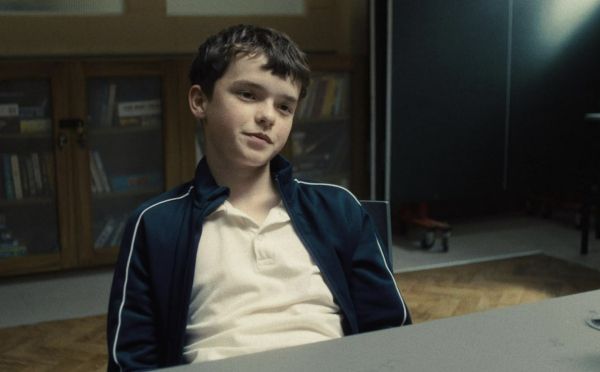
Owen Cooper’s performance is remarkable because Jamie never settles into one comfortable interpretation. He can look frightened, polite, defensive, manipulative, ashamed, and suddenly threatening without appearing like several unrelated characters.
The most disturbing element is how young he remains throughout those changes. The series does not transform him visually into a conventional criminal figure. His school uniform, uncertain posture, and need for adult reassurance remain visible even when his language reveals anger and entitlement.
Cooper understands that Jamie’s power changes according to the room. Around police officers, he may appear intimidated. With his father present, he seeks protection. During the psychological assessment, he tests boundaries, searches for approval, and reacts aggressively when he senses that the conversation is exposing him.
I was especially struck by the speed with which his vulnerability can become hostility. The transition does not feel like a theatrical twist. It feels like a defensive mechanism Jamie has practiced. When sympathy is available, he reaches for it. When he feels judged, he attacks. When he cannot control how another person sees him, his anger becomes a way of regaining authority.
Cooper never asks the audience to admire the complexity of the performance. He keeps Jamie specific, unpredictable, and painfully recognizable as a boy whose emotional development has become entangled with ideas he barely understands.
The School Episode Reveals a Language Adults Cannot Read
The second episode moves into Jamie’s school, where detectives Luke Bascombe and Misha Frank attempt to understand the circumstances surrounding the victim, Katie Leonard. The building is crowded, noisy, and difficult to control. Students move around the adults, information travels through glances and phones, and official authority seems permanently several steps behind.
I found this episode more unsettling than a conventional interrogation scene because the school is not depicted as an isolated place of obvious danger. It is chaotic in familiar ways. Teachers struggle to maintain order. Students perform confidence for one another. Cruelty appears in jokes, symbols, comments, rumors, and social hierarchies that adults can observe without fully interpreting.
A key part of the investigation involves the meaning of emojis and online references used by the students. What appears harmless or incomprehensible to an adult may carry a precise insult within the children’s digital culture. The detectives can read the messages but not necessarily the social meaning surrounding them.
The series does not present technology as a supernatural corrupting force. Phones and social platforms do not create Jamie’s anger from nothing. They provide language, communities, and explanations that can organize existing insecurity into resentment.
This distinction matters. Blaming a device would allow the adults to imagine the problem could be solved through confiscation or stricter rules. Adolescence is interested in something more difficult: the way harmful ideas can become emotionally useful to boys who feel humiliated, ignored, or rejected.
Ashley Walters Brings the Investigation Into His Character’s Home
Ashley Walters plays DI Luke Bascombe with controlled professionalism. He enters the story as an investigator, but the school episode gradually reveals that he is also a father attempting to communicate with his own teenage son.
This parallel could have felt too neat. Instead, Walters gives it a quiet credibility. Luke is capable of questioning witnesses and reading criminal behavior, yet he struggles to understand the emotional and digital world his son occupies.
The case becomes personally destabilizing because it exposes the limits of adult observation. A parent may know where a child lives, what school they attend, and how they behave during family conversations while remaining unaware of the social codes shaping their identity.
Luke’s son does not exist merely to explain the emoji language to the detectives. Their strained interaction demonstrates how embarrassment and generational distance can interfere with ordinary communication. The father wants information, but the son also wants evidence that he is being taken seriously.
Walters is particularly effective during moments when Luke realizes that professional authority cannot substitute for emotional availability. The case offers him knowledge, but it does not automatically teach him how to speak to his own child.
The Third Episode Is an Acting Duel Without a Safe Position
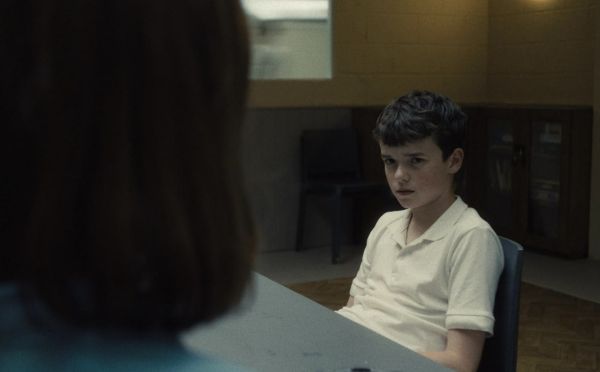
The psychological assessment between Jamie and Briony Ariston forms the series’ most concentrated episode. Nearly the entire hour depends on two people seated in a controlled room, attempting to understand one another while operating under unequal forms of power.
Briony has institutional authority. She can ask questions, observe behavior, take notes, and contribute to decisions about Jamie’s future. Jamie possesses a different kind of power. He can refuse, provoke, flatter, lie, become vulnerable, or make the conversation emotionally unsafe.
Erin Doherty plays Briony with remarkable discipline. She is warm without pretending to be Jamie’s friend, direct without becoming openly confrontational, and attentive to the meanings beneath his answers. Her calmness is professional, but the episode gradually reveals the effort required to maintain it.
I watched her face as closely as Jamie’s. Briony must respond to disturbing statements without rewarding them with fear or outrage. She needs to encourage honesty while recognizing that apparent honesty may be another performance. Every question risks either closing Jamie down or giving him another opportunity to control the exchange.
The one-take format becomes especially powerful here because the conversation cannot be reorganized through editing. Silence remains silence. A shift in posture cannot be replaced by a more flattering angle. The actors must carry every emotional transition in real time.
Jamie Wants Validation More Than Understanding
During the assessment, Jamie repeatedly tries to determine how Briony sees him. He notices small gestures, questions her reactions, and becomes interested in whether she finds him attractive or sympathetic.
This need for validation is central to the episode. Jamie does not simply want to explain his behavior. He wants control over the emotional conclusion Briony reaches. Her professional neutrality frustrates him because it denies the approval he seeks without offering the explicit rejection he knows how to fight.
The conversation reveals how deeply his ideas about masculinity and women have become connected to perceived humiliation. Romantic rejection is not processed as an ordinary part of adolescence. It becomes evidence of social failure and diminished status.
Jamie has absorbed a worldview in which relationships are interpreted through hierarchy, desirability, and power. Girls become judges who can raise or lower a boy’s value. Other boys become competitors. Vulnerability becomes dangerous because it can be used as evidence of weakness.
The series never suggests that Jamie has mastered a coherent ideology. His beliefs are inconsistent, emotionally driven, and partly repeated from elsewhere. That makes them more credible. He has taken fragments of online language and used them to explain feelings he cannot otherwise manage.
Erin Doherty Shows the Cost of Remaining Professional
Briony’s composure is not emotional emptiness. Doherty allows small signs of discomfort to emerge without breaking the character’s professional boundaries. A pause lasts slightly longer. A reassuring expression becomes more deliberate. Her breathing changes after an aggressive movement.
The episode understands that professional care can involve exposure to hostility without permission to respond personally. Briony must remain present even when Jamie attempts to intimidate her. She must continue observing the child inside the threatening behavior without denying the threat itself.
Her eventual departure from the room carries the emotional release the episode has postponed. Away from Jamie, the discipline breaks. The reaction does not suggest that she has failed. It reveals how much she had been containing to make the conversation possible.
I found this ending important because it refuses the fantasy of the perfectly detached evaluator. Briony’s training gives her tools, but it does not make her immune to fear, sadness, or the horror of encountering such anger inside a child.
The One-Take Technique Is More Than a Display of Skill
Single-take filmmaking can easily become self-conscious. The audience begins admiring hidden transitions, coordinated movement, and technical risk instead of engaging with the story. Adolescence avoids this problem because the continuous camera is connected to the drama’s central concern: there is no clean point at which responsibility can be separated.
The camera moves between parents, police officers, students, teachers, psychologists, and children without suggesting that one perspective contains the complete truth. Each person sees part of the situation. The absence of cuts prevents those fragments from becoming comfortably isolated.
The technique also changes time. I experience the waiting, walking, and administrative procedures that conventional editing would remove. These intervals allow tension to accumulate in unexpected places. A journey through a corridor can become as emotionally important as a formal interview because nobody knows what conversation may begin before the destination is reached.
Barantini’s direction remains impressively controlled without making the movement feel mechanically perfect. The camera may follow one character, abandon them for another, pass through crowds, or travel between interior and exterior spaces. These transitions create a sense that the tragedy extends beyond any single protagonist.
The formal achievement is extraordinary, but I never felt that the series asked me to forgive weakness because the episodes were difficult to produce. The writing and performances would remain compelling without the technique. The continuous take intensifies material that is already strong.
Stephen Graham Makes Eddie Both Sympathetic and Uncomfortable
Eddie Miller is not presented as an obviously abusive or neglectful father. He works, provides for his family, loves his children, and believes he has raised them according to decent values. This ordinary goodness makes his later self-examination more painful.
Graham plays Eddie as a man whose identity is connected to protection, physical competence, and being respected inside his home. Jamie’s actions create a crisis he cannot repair through any of those qualities.
The series also allows traces of anger to complicate Eddie’s self-image. He is capable of intimidation. His frustration can become physically threatening. Jamie may not have learned his misogynistic language directly from his father, but the family has not existed outside broader ideas about masculinity, pride, and emotional control.
I appreciated that Adolescence does not transform Eddie into the secret cause of everything. That would offer a false sense of explanation. He is neither innocent in every cultural sense nor directly responsible for Jamie’s crime.
Graham inhabits that ambiguity with painful honesty. Eddie searches through memories for a moment he could identify as the beginning. He wonders whether he worked too much, spoke too little, missed online warning signs, or allowed ordinary anger to communicate something he never intended.
The Final Episode Studies the Family After Public Attention Has Moved On
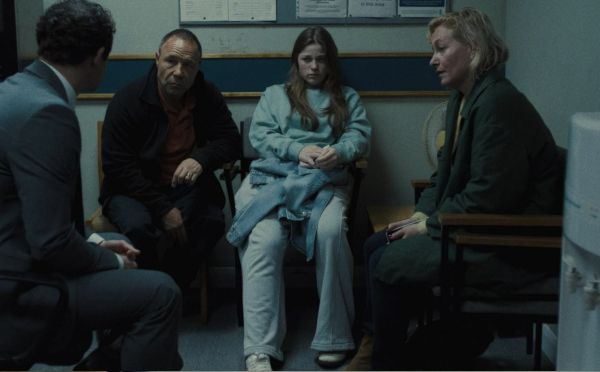
The fourth episode takes place months after Jamie’s arrest and shifts its attention toward the family. The immediate procedural crisis has passed, but the Millers remain trapped inside its consequences.
Their home is still recognizable, yet every room now carries a different meaning. Jamie’s absence has not removed him. Photographs, belongings, and memories keep him physically present while the family attempts to perform ordinary life.
The episode begins around Eddie’s birthday, an occasion that should provide temporary normality. Instead, the family encounters vandalism, public judgment, and the knowledge that strangers now interpret them through Jamie’s crime.
I found the quieter pace especially effective. The earlier episodes are structured around institutions responding to an emergency. The final chapter shows what remains when police interviews, school investigations, and assessments are no longer happening in front of the family.
There is no procedure for returning to ordinary parenthood after a child has committed an act of extreme violence. Eddie and Manda must continue loving Jamie while recognizing what he did. They must support their daughter, manage public hostility, and confront the possibility that every family memory now contains something they failed to see.
Christine Tremarco Refuses to Make Manda Merely the Grieving Mother
Christine Tremarco gives Manda a restrained performance that becomes increasingly powerful in the final episode. She has processed the case differently from Eddie, partly because she has not been exposed to all the same evidence in the same way.
Manda’s grief contains confusion, loyalty, horror, and maternal instinct without allowing any one emotion to cancel the others. She does not stop loving Jamie when she accepts his guilt. That continuing love becomes another source of pain rather than a form of denial.
The series gives her some of its most difficult questions. What does a parent owe a child who has done something unforgivable? Is continued love morally suspicious, or is it an emotional reality beyond conscious choice? Can a mother condemn the act without imagining that the person who committed it has completely disappeared?
Tremarco never turns these questions into dramatic speeches. Her performance remains grounded in domestic movement, interrupted conversation, and the effort to hold the family together when togetherness itself has become painful.
Lisa Miller Represents the Family Member Most Easily Forgotten
Amélie Pease plays Lisa, Jamie’s older sister, with a quietness that reflects her position inside the story. Public attention focuses on Jamie. Parental attention focuses on the crisis. Lisa must continue existing inside a family reorganized around her brother’s actions.
The final episode gives her emotional presence without forcing an artificial confrontation. She loves her parents, misses her brother, and understands that her own grief may feel socially unacceptable because the victim’s family has suffered far more.
Siblings of offenders occupy a particularly difficult position. They may experience shame, anger, loyalty, fear, and loss while receiving little permission to express any of them. Lisa has not committed the crime, but its consequences enter her home, school life, and identity.
I appreciated the series’ refusal to use her only as evidence that Jamie once appeared normal. She is part of the damaged family structure and one of the people who will carry the aftermath into adulthood.
The Series Rejects the Comfort of a Single Explanation
Adolescence addresses online misogyny, bullying, social media, male anger, parental blindness, school culture, and emotional isolation. It would have been easy to arrange these elements into a direct argument that one influence caused Jamie’s violence.
The series refuses that simplicity.
Jamie has been mocked and rejected, but victimization does not absolve him. He has encountered harmful online ideas, but those ideas do not remove personal agency. His parents missed aspects of his digital life, but parental surveillance cannot guarantee moral development. His school contains cruelty, but thousands of students experience cruelty without committing murder.
This refusal to identify one cause may frustrate viewers seeking a clear social diagnosis. I found it essential. Serious violence rarely emerges from a single influence that can be removed cleanly.
The series instead examines an environment in which resentment can become meaningful to a vulnerable boy. It asks how emotional isolation, humiliation, gender expectations, and digital ideology reinforce one another without claiming that any combination makes the final act inevitable.
Masculinity Is Examined Through Fathers as Much as Sons
Jamie’s ideas about masculinity are explicit, but the series also examines the adult men around him. Eddie values strength and protection. Luke struggles to communicate with his son. Police officers rely on controlled procedure. Teachers attempt to maintain authority in a school where respect is unstable.
None of these men resembles the online figures associated with Jamie’s worldview. Yet each operates within expectations that can make vulnerability difficult to express.
Eddie’s final breakdown is therefore more than parental grief. It is the collapse of a masculine role he believed would allow him to keep his family safe. He cannot repair the situation, confront an external enemy, or take Jamie’s place.
The series does not argue that masculinity itself is destructive. It questions versions of masculinity that treat emotional uncertainty as weakness and control as the primary form of care.
Jamie’s tragedy is partly that he has learned to interpret shame through domination. Eddie’s tragedy is that he cannot understand his own helplessness until it overwhelms him.
The Victim’s Absence Is Both Necessary and Troubling
Katie Leonard is central to the story but remains largely absent as a developed character. I felt that absence throughout the series. The narrative focuses on the offender, his family, and the institutions responding to the crime, which risks allowing the victim to become an event in someone else’s emotional journey.
At the same time, giving Katie extensive flashbacks or explanatory scenes could have transformed the series into a more conventional mystery. Adolescence is not attempting to recreate her final days or judge every interaction between the students.
Her absence can therefore be understood as part of the tragedy. Jamie’s action has removed her from every future conversation, while the surviving characters continue producing explanations around the space she left behind.
I still wished the series had offered a stronger sense of her life beyond the social conflict involving Jamie. The moral weight of the crime depends partly on recognizing that Katie was more than the person who rejected or mocked him.
The imbalance may be intentional, reflecting the way public discussion often becomes fascinated by the psychology of a young male offender while the girl he harmed is reduced to a name and photograph. Intentional discomfort, however, remains discomfort.
The Music Appears Where Silence Can No Longer Carry Everything
Aaron May and David Ridley’s music is used carefully. Long stretches rely on environmental sound: footsteps, doors, breathing, school noise, police radios, traffic, and conversation.
This restraint suits the continuous-take design. A constant score would tell me how to interpret scenes that are more powerful when allowed to remain ambiguous.
When music enters, it often accompanies a transition or emotional release rather than manipulating the center of a performance. The series trusts Graham, Cooper, Doherty, Walters, and Tremarco to generate tension without orchestral instruction.
The sound design is equally important. The crowded school feels overwhelming because dozens of voices compete for attention. The assessment room feels exposed because every movement is audible. The Miller home in the final episode feels painfully quiet because Jamie’s absence has changed its normal rhythm.
The Ending Offers Recognition Instead of Resolution
The final movement brings Eddie into Jamie’s bedroom. The room preserves the ordinary objects of childhood, making the violence associated with Jamie feel even more difficult to reconcile with the person his parents raised.
Graham allows Eddie’s remaining defenses to disappear. He apologizes to the absent child, questions himself, and finally breaks down while holding a stuffed toy. The image could have become sentimental, but the performance remains raw and unresolved.
Eddie’s apology is not an acceptance of legal responsibility for the crime. It is the expression of a parent who believes that somewhere inside the history of the family there must have been a moment when he could have acted differently.
The series does not confirm whether that belief is fair. Parents influence children profoundly, but they do not control every idea, relationship, or action. Eddie’s guilt may be an unavoidable attempt to impose cause on an event that otherwise feels unbearable.
I found the ending devastating because it refuses to restore the family’s previous meaning. Jamie may plead guilty. The legal process may continue. The public may eventually lose interest. None of those developments can return the Millers to the people they were before the arrest.
A Technical Achievement That Never Forgets the Human Damage
Adolescence could easily have been discussed primarily as the series in which every episode was filmed in one take. The execution deserves admiration. The movement between locations, coordination of large groups, sustained performances, and invisible technical planning are extraordinary.
What makes the series exceptional, however, is that the form serves the emotional argument. The camera does not cut because the characters cannot escape the continuity of what has happened. One decision moves into another. One person’s pain enters another person’s life. The crime cannot be separated from the family, school, digital environment, or culture surrounding it.
Philip Barantini directs with confidence but avoids presenting the episodes as technical demonstrations. Jack Thorne and Stephen Graham write dialogue that feels interrupted, defensive, incomplete, and shaped by what characters cannot say. Owen Cooper delivers a debut performance of astonishing control, while Erin Doherty and Graham provide two very different portraits of adults trying to understand him.
I finished Adolescence without the comfort of believing that I had received a complete explanation. The series had shown me anger, shame, online influence, parental love, institutional limits, and cultural failure, but it had not arranged them into an answer that could make the tragedy feel preventable in retrospect.
That absence of certainty is what stayed with me. Adolescence does not ask only how a boy could commit an act of violence. It asks how many people can live close to a child, love him, teach him, investigate him, and still discover that an entire part of his emotional world developed beyond their understanding.
Pros:
- Ambitious narrative that challenges conventional storytelling
- Visually arresting cinematography capturing the vibrant energy of youth
- Authentic character portrayals with nuanced emotional expression
- Skillful blending of humor and introspection
- Thoughtful exploration of complex themes such as identity and resilience
- Wide accessibility across multiple digital platforms with options to stream or download
Cons:
- Deliberate pacing might test the patience of viewers expecting a brisk narrative
- Non-linear storyline can be disorienting for some audiences
- The introspective tone may not appeal to those looking for action-driven entertainment









Movie Reviews

Minecraft

Grand Theft Auto V

Toca Boca World

Roblox

Leave a comment
Your comment is awaiting moderation. We save your draft here
0 Comments