Review
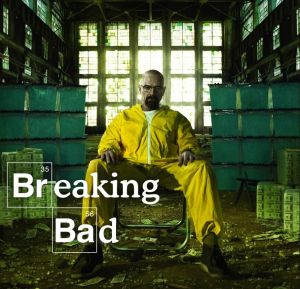
Breaking Bad felt like playing a long strategy campaign in which every successful move quietly changes the character I am controlling....

Breaking the Mold: A Journey Through the Dark Tapestry of Breaking Bad
Breaking Bad felt like playing a long strategy campaign in which every successful move quietly changes the character I am controlling. Walter White begins with an understandable objective: secure his family’s financial future after receiving devastating medical news. The early plan appears limited, practical, and temporary. He will use his chemistry knowledge, earn enough money, and leave before the consequences become permanent.
That exit point keeps moving.
Each season gives Walter another opportunity to stop, confess, accept help, or choose a smaller life. Instead, he treats every setback as proof that he needs more control. Money becomes less important than recognition, recognition becomes authority, and authority becomes an identity he refuses to surrender.
I did not watch Breaking Bad because I believed Walter would remain a sympathetic man making difficult decisions. I watched because the series allowed me to understand every step while making the final destination increasingly difficult to excuse.
Save File One: A Man Who Feels Invisible
Walter’s life initially appears defined by unrealized potential. He is a talented chemist teaching distracted students, working an additional job, and watching other people enjoy the rewards of ideas he once helped develop.
His frustration existed before his diagnosis. The illness does not create his pride, resentment, or desire for recognition. It removes the structure that kept those feelings contained.
Bryan Cranston makes Walter’s early humiliation uncomfortable because it is rarely dramatic enough to attract sympathy from the people around him. He is not publicly ruined. He is quietly dissatisfied, financially strained, and convinced that the world has undervalued him.
From my gamer’s perspective, Walter behaves like a player who believes the character has high intelligence statistics but has been assigned low-level tasks for years. The diagnosis activates a hidden objective: prove that the build was never ordinary.
This makes his first major decision emotionally understandable without making it responsible. Walter has options. He simply rejects the options that require him to accept dependence, gratitude, or help from people he resents.
The Diagnosis Became Permission
Walter often describes his actions as a response to limited time. Death appears close, and he wants to leave something behind for Skyler, Walter Jr., and the baby.
That motivation carries real emotional force. His fear of disappearing without protecting his family is believable.
However, the diagnosis also gives Walter permission to behave in ways he previously considered impossible. He begins testing how much danger, dishonesty, and control he can tolerate.
His medical condition functions less like a countdown timer and more like a justification system. Whenever normal rules become inconvenient, Walter reminds himself that his circumstances are exceptional.
The series gradually reveals how useful that belief becomes. If his situation is unique, then ordinary morality can be treated as advice intended for other people.
Jesse Pinkman Was More Than a Necessary Partner
Walter initially approaches Jesse because he needs access to a world his chemistry knowledge cannot reach. Jesse understands customers, distribution, street behavior, and the practical risks surrounding the product Walter wants to manufacture.
Their partnership begins as an exchange of incomplete skill sets. Walter has scientific precision. Jesse has operational knowledge. Neither can accomplish the objective alone.
I expected Jesse to remain the inexperienced partner who creates mistakes for Walter to solve. Instead, he became the emotional center of the series.
Jesse makes terrible decisions, but he remains capable of guilt, attachment, and genuine concern for other people. Walter often presents himself as the responsible adult, yet he becomes increasingly willing to manipulate Jesse’s need for approval.
The relationship resembles a cooperative game where one player begins with higher technical skill while the other possesses stronger moral awareness. Over time, the supposedly experienced leader becomes the greater threat to the team.
The RV Was the First Mobile Laboratory
The recreational vehicle is one of the series’ most effective early locations. It is a laboratory, transport system, hiding place, and symbol of how improvised Walter and Jesse’s operation remains.
The vehicle looks almost comically inadequate for the precision Walter expects. Equipment is unstable, space is limited, and the desert location offers privacy without true safety.
I liked how the RV forced chemistry and criminal risk into the same physical space. Walter could control temperature, measurements, and reactions, but he could not control who might arrive outside.
Every session inside it felt temporary. The equipment could be discovered, the vehicle could fail, and one mistake could turn an isolated workspace into a trap.
That vulnerability gave the early episodes tension that later operations sometimes replaced with larger organizational stakes.
The Desert Became the Series’ Neutral Arena
Breaking Bad repeatedly returns to the New Mexico desert because it removes the social protections available in homes, schools, hospitals, and businesses.
Out there, characters negotiate without witnesses. Vehicles become visible from great distances, communication becomes unreliable, and small mistakes feel impossible to hide.
The landscape appears empty, but that emptiness creates exposure rather than safety. There are few exits, limited cover, and nowhere to pretend that the criminal world is separate from physical reality.
I began associating the desert with moments when Walter’s carefully constructed identity could no longer survive. The chemistry teacher, husband, father, and businessman disappear. Only the person making the immediate choice remains.
Chemistry Was Walter’s Real Weapon
Walter’s intelligence gives the series a distinctive problem-solving language. He does not begin with physical strength, criminal authority, or established connections. He has scientific knowledge and the confidence to apply it under pressure.
Some of the most satisfying early scenes involve Walter examining materials, environments, and reactions before finding a solution that other characters would not consider.
These moments made me feel as though I were watching a player use an overlooked crafting system to bypass a combat encounter.
The danger is that successful improvisation reinforces Walter’s belief that intelligence can solve every problem. When chemistry works, he becomes more confident. When it fails to address emotional consequences, he often assumes the emotional problem is irrelevant.
Science gives him power, but it does not give him wisdom.
Skyler Was Solving a Different Mystery
Skyler White spends much of the early story noticing that her husband has changed without receiving reliable information about why. Walter disappears, lies badly, alters routines, and responds defensively to reasonable questions.
I found her perspective essential because the audience often knows enough to understand Walter’s pressure, while Skyler experiences only the damage created by secrecy.
Her suspicion is not evidence that she lacks compassion. Walter repeatedly asks her to trust a version of events that does not survive basic examination.
As a viewer, I sometimes felt the temptation to become impatient with anyone interfering with Walter’s plans. The series uses Skyler to expose how dangerous that alignment can become.
Walter may experience each lie as a necessary tactical decision. Skyler experiences a marriage in which reality keeps changing without her consent.
The Family Home Became a Stealth Level
The White residence begins as an ordinary suburban home. As Walter’s criminal life expands, the house becomes a place where every conversation requires positioning, timing, and information control.
He hides phones, money, injuries, relationships, and explanations. A family meal can become more stressful than a dangerous negotiation because one unexpected question may reveal the wrong detail.
I often watched Walter enter the house like a player returning to a safe area while carrying contraband that the non-player characters are scripted to notice.
The difference is that Skyler, Walter Jr., Hank, and Marie are not passive background figures. They remember inconsistencies. Their emotional responses accumulate, and Walter cannot reset the conversation after selecting a poor answer.
Hank Schrader Entered as Comic Relief and Became a Real Investigator
Hank’s early personality is loud, confident, and filled with jokes that often make the room less comfortable. He appears to represent a simple form of law enforcement confidence beside Walter’s quieter intelligence.
That impression changes as the investigation deepens.
Hank becomes observant, persistent, and increasingly affected by the violence surrounding his work. His confidence does not make him immune to fear or trauma.
I appreciated that the series allowed him to develop beyond the role of aggressive brother-in-law. He notices patterns, follows incomplete evidence, and continues working through cases that become personally damaging.
The tension grows because Hank frequently stands close to the truth without recognizing that the person he trusts is connected to it.
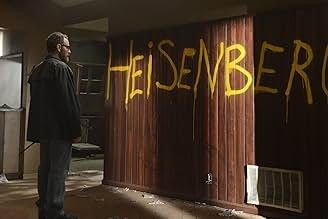
The Heisenberg Identity Worked Like an Equipped Mask
Walter’s transformation into Heisenberg is not a sudden personality replacement. It is a role he develops, tests, and gradually prefers.
The clothing, shaved head, hat, posture, and controlled speech give him a visible identity separate from the uncertain teacher introduced at the beginning.
At first, the persona helps Walter perform confidence in dangerous situations. Later, the performance begins influencing how he behaves everywhere else.
From my perspective, Heisenberg functions like equipment that increases intimidation while reducing empathy. Walter equips it for specific encounters, then forgets to remove it around the people he claims to protect.
The identity becomes attractive because it gives him the recognition missing from his earlier life. People fear the name. They discuss the product. They recognize his expertise.
For Walter, fear begins to resemble respect closely enough that he stops caring about the difference.
Tuco Turned Business Into Immediate Chaos
Tuco Salamanca represents a criminal environment where technical quality does not guarantee stable partnership. Walter can produce an exceptional product, but Tuco responds through unpredictability, ego, and explosive violence.
Every meeting with him feels dangerous because normal negotiation rules remain unreliable. Agreement does not create safety, and success can attract as much attention as failure.
Tuco taught Walter and Jesse that entering a market involves accepting the personalities already controlling it.
I found these episodes tense because Walter’s intelligence remained useful but incomplete. He could create leverage, yet he could not predict every emotional reaction from someone who experienced respect as a constant contest.
Saul Goodman Was a Shortcut With Hidden Costs
Saul enters the series as a source of legal knowledge, criminal connections, and practical solutions. He understands that people operating outside the law still require contracts, money management, cover stories, and professional assistance.
Bob Odenkirk makes Saul entertaining because his humor does not remove his competence. He speaks constantly, but beneath the jokes is a sharp understanding of how systems can be manipulated.
From a gameplay perspective, Saul resembles a merchant who sells access to hidden routes. He can connect the player with specialists, create alternate identities, move money, and reduce immediate danger.
The cost is that every shortcut introduces new people, obligations, and exposure. Saul rarely solves a problem permanently. He converts it into a form that can be managed temporarily.
Los Pollos Hermanos Was the Perfect Front
Gus Fring’s restaurant operation fascinated me because it demonstrates the power of routine, cleanliness, and public respectability.
Los Pollos Hermanos appears ordinary enough to attract no suspicion. Employees work, customers eat, and Gus presents himself as a careful businessman and community supporter.
The criminal operation gains strength from this normality. Gus does not need constant theatrical intimidation because his greatest protection is appearing too controlled to be dangerous.
I saw the restaurant as a fully upgraded base disguised as a common commercial building. Its public systems function correctly, which makes the hidden systems more difficult to detect.
Gus Fring Was the Opponent Walter Wanted to Become
Gus is patient, disciplined, organized, and capable of separating emotion from presentation. He has the infrastructure Walter lacks and the authority Walter desires.
Their relationship begins with mutual usefulness. Walter offers product quality. Gus offers scale, security, and distribution.
The conflict develops because Walter cannot remain satisfied as a valuable specialist inside another person’s system. He wants control over the structure, not only a respected role within it.
Gus also recognizes Walter’s pride early. He understands that intelligence without discipline creates instability.
From my perspective, Gus is the late-game opponent who already mastered the progression path Walter believes he invented. Defeating him requires Walter to become even more calculating, but victory also removes one of the last limits on his expansion.
The Superlab Looked Like the Final Upgrade
The underground laboratory gives Walter the environment he once appeared to deserve. It is clean, organized, well equipped, private, and built for high-level production.
Compared with the RV, the superlab represents extraordinary progress. Walter no longer improvises with inadequate tools. He can focus on chemistry inside a system designed around precision.
For a brief period, it looks like the ideal professional achievement.
However, the laboratory belongs to Gus. Walter’s access depends on obedience, schedules, and production targets.
The better the environment becomes, the clearer Walter’s dissatisfaction appears. He claimed to want money and a way to provide for his family. The superlab offers both. What it does not offer is ownership.
Gale Revealed the Life Walter Could Have Chosen
Gale Boetticher admires chemistry, respects Walter’s knowledge, and approaches the work with intellectual enthusiasm. Their conversations show the possibility of a partnership built around mutual appreciation rather than constant conflict.
Gale is also a reminder that another skilled chemist can eventually replace Walter.
This makes him emotionally dangerous to Walter despite his kindness. If the operation can continue without Walter, then Walter’s sense of uniqueness becomes threatened.
Jesse’s involvement in Gale’s fate becomes one of the clearest examples of Walter transferring the emotional cost of survival onto someone else.
The action protects Walter’s position, but it damages Jesse deeply.
Jesse’s Guilt Never Became a Simple Status Effect
Jesse carries the consequences of violence differently from Walter. He cannot consistently transform guilt into justification.
His emotional collapse is not linear. He may seek distraction, substances, parties, reckless behavior, or approval, but the underlying pain returns.
I appreciated that the series does not treat guilt as a weakness Jesse needs to overcome. His suffering is evidence that he still recognizes other people as real.
Walter often survives morally by converting a person into an obstacle, threat, resource, or strategic variable. Jesse has much more difficulty performing that conversion.
This makes him easier to manipulate and more capable of empathy at the same time.
Jane Changed Jesse’s Possible Future
Jane Margolis gives Jesse a relationship outside Walter’s control. She understands addiction, isolation, and the desire to build an identity separate from other people’s expectations.
Their connection creates genuine warmth, but it also contains destructive patterns. They imagine escape without developing a stable path toward it.
Walter’s involvement in Jane’s fate represents a major turning point because he chooses inaction while fully understanding what is happening.
The moment is horrifying not because Walter creates the entire situation, but because he realizes that allowing it to continue may benefit him.
He chooses control over Jesse’s future by removing the person who might lead Jesse away from him.
Mike Ehrmantraut Played With No Wasted Movement
Mike is one of the most satisfying characters to watch because his competence appears through preparation rather than speeches.
He observes exits, understands risk, verifies information, and rarely confuses emotion with strategy. Unlike Walter, he does not need every room to recognize his intelligence.
From a gamer’s perspective, Mike is the veteran player who has completed the campaign several times and knows which encounters do not require drama.
His frustration with Walter comes from recognizing preventable instability. Walter interprets caution as disrespect because caution limits his ability to dominate the situation.
Mike’s presence also gives Jesse another model of competence. He can see that authority does not need to depend on humiliation or constant manipulation.
The Train Operation Was Breaking Bad at Its Most Mechanical
The train sequence combines planning, timing, engineering, deception, and teamwork into one tightly structured mission.
Every participant has a role. Equipment must function correctly, the timing window is limited, and unexpected observers can disrupt the entire operation.
I enjoyed the sequence because success depends on several systems interacting rather than one character improvising alone.
For a moment, the operation appears almost perfect.
Then the aftermath reminds me that technical success does not control human behavior. The mission can be completed exactly as planned while still producing a consequence nobody intended.
Todd Was Frightening Because He Wanted Instruction
Todd Alquist often behaves politely, listens carefully, and appears eager to prove that he can follow expectations. That surface makes his lack of empathy more disturbing.
He does not always act from visible rage or panic. He may perform something terrible because he believes it is the practical response to a problem.
Todd’s desire for approval allows him to adapt to whichever authority appears strongest. He studies behavior and copies the external form without developing the moral limits beneath it.
I found him frightening because he treats human consequences like operational details.
Money Became an Inventory Problem
Walter begins the series with a specific financial target. That number gives his criminal plan a defined completion condition.
Eventually, the money grows beyond anything the family could reasonably use. Storage becomes difficult, laundering becomes complicated, and the physical volume of cash turns success into another logistical burden.
The image of accumulated money reveals that the original objective has already been completed several times.
Walter continues because the campaign is no longer about resources. It is about authorship, reputation, and the refusal to return to a life where other people determine his value.
The money functions like a score that continues increasing after the player has stopped needing the rewards it unlocks.
The Car Wash Made Crime Look Administrative
The purchase of the car wash turns criminal income into paperwork, staffing, customer service, accounting, and family negotiation.
I liked this part of the story because it shows that earning money illegally is only one stage of the problem. The income must enter ordinary life without revealing its source.
Skyler becomes more involved because she understands financial systems and recognizes the weaknesses in Walter’s explanations.
The car wash also carries personal meaning. It is connected to an earlier period of humiliation for Walter, so acquiring it satisfies more than a laundering need.
He converts a place associated with powerlessness into an asset he controls.
Skyler’s Participation Was Not the Same as Consent
As Skyler becomes involved in managing the money, Walter increasingly treats her practical assistance as acceptance of the entire operation.
The series makes clear that participation can occur under pressure. Skyler acts to protect the family, reduce exposure, and regain some control over a situation Walter created.
Her competence does not erase her fear.
I found their later domestic scenes more disturbing than many direct confrontations. Walter wants the house to function as though his return restores normality. Skyler understands that normality has become another performance.
Walter Jr. Lived Inside a Story Written for Him
Walter Jr. often receives partial explanations, emotional fragments, and carefully managed versions of the truth.
He sees his father as ill, vulnerable, brave, absent, and occasionally misunderstood. He lacks the information needed to understand why the family keeps changing around him.
This makes his loyalty painful. Walter claims that everything is for his children while preventing them from knowing the person making those decisions.
The family story Walter constructs becomes another form of control. Walter Jr. can admire his father only because the most important facts remain hidden.
Marie’s Problems Made the Family Feel Larger Than Walter
Marie Schrader brings her own insecurities, habits, and conflicts into the family. Her presence prevents every personal problem from becoming a direct extension of Walter’s story.
I appreciated this because real families contain several simultaneous struggles. One person’s crisis does not pause everyone else’s behavior.
Marie can be irritating, caring, defensive, loyal, and intrusive. Her relationship with Hank reveals how stress moves between partners even when they do not communicate openly.
As the truth about Walter approaches the family, Marie’s earlier flaws become less important than her response to betrayal and danger.
Hank’s Investigation Became a Personal Boss Fight
Hank’s search for Heisenberg develops across evidence, instinct, professional pressure, and repeated near misses.
The tension comes from dramatic proximity. He spends time with Walter, accepts explanations, and occasionally shares information that helps Walter understand the investigation.
Walter benefits from being underestimated by someone who knows him personally.
When Hank finally connects the evidence, the discovery is quiet. There is no immediate chase or public announcement. Recognition happens privately, followed by the emotional horror of understanding how close the truth has been.
From that moment, the conflict becomes more than law enforcement against a criminal operation. It becomes a family confrontation in which both men possess information capable of destroying everyone around them.
The Garage Scene Removed Every Remaining Mask
The confrontation between Hank and Walter in the garage is one of the series’ strongest scenes because neither character can maintain the old family relationship.
Hank has fear, anger, evidence, and a sense of personal humiliation. Walter responds with denial, warning, calculation, and controlled intimidation.
The physical setting is ordinary. That makes the emotional shift more powerful. A suburban garage becomes the place where Walter allows Hank to see the person hidden beneath years of lies.
There is no large audience and no need for the Heisenberg costume. The identity has become internal.
Jesse Finally Recognized the Pattern
Jesse spends much of the series moving between anger at Walter and dependence on him. Walter alternates praise, protection, threats, guilt, and emotional manipulation to preserve the relationship.
The partnership survives because Jesse wants to believe that some part of Walter’s concern is genuine.
When Jesse fully recognizes how Walter has used him, earlier events change meaning. Moments that seemed protective reveal strategic intent. Acts of trust become methods of control.
This realization gives Jesse a painful clarity. He understands that Walter did not simply make isolated mistakes. He repeatedly selected Jesse’s vulnerabilities as tools.
The Final Season Turned Victory Into Emptiness
After defeating Gus, Walter gains the authority he had been seeking. He no longer serves inside another person’s system. He becomes the person making the rules.
This should represent the campaign’s final reward.
Instead, the atmosphere becomes colder. Walter’s confidence increases, but the personal relationships around him become more damaged and fearful.
The series reveals that Walter did not want freedom from danger. He wanted a position where nobody could tell him what to do.
Once he reaches that position, there is no larger justification available. The remaining choices belong to him completely.
Ozymandias Felt Like Every Consequence Loading at Once
The episode often regarded as the dramatic peak works because years of hidden damage become immediate within a short period.
Walter loses control over the operation, the family narrative, the money, and the relationships he believed he could manage separately.
Every earlier compromise has reduced the number of safe outcomes.
I experienced the episode like a final mission entered with the wrong alliances, damaged equipment, incomplete information, and no remaining save point.
Walter continues attempting to negotiate because negotiation has saved him before. This time, the people and events around him have moved beyond his authority.
The Phone Call Was Both Cruel and Protective
Walter’s call to Skyler after the family collapses is performed as an expression of control and anger. Beneath that surface, he is also constructing a version of events that may reduce her legal exposure.
The scene captures the contradiction at the center of Walter’s character. He can perform an act containing sacrifice while using language designed to wound.
He understands that authorities are listening and shapes the call accordingly. Skyler gradually recognizes what he is doing.
I found the scene devastating because care and manipulation have become impossible to separate cleanly.
Exile Removed the Audience Walter Needed
Walter’s isolation near the end of the series deprives him of the systems that made Heisenberg meaningful. There is no empire to command, family to impress, partner to control, or rival to defeat.
He has money but limited ability to use it. He has a reputation but no community where that reputation creates satisfaction.
The environment is quiet, cold, and repetitive. Walter’s greatest punishment is not only physical danger. It is irrelevance.
From my gamer’s perspective, he has completed the power progression and become locked outside the playable map.
The Final Admission Changed the Entire Campaign
Walter spends years claiming that his actions were for his family. That statement contains some truth at the beginning, but it becomes less accurate as his choices expand.
When he finally admits that he acted for himself, the confession does not erase the damage. It does provide honesty that has been missing from nearly every family conversation.
He liked the power, the competence, and the recognition. He felt alive inside the identity he created.
This admission is essential because it removes the last protective narrative. Walter does not end the series believing that he was simply misunderstood.
The Final Plan Used Everything Walter Had Learned
Walter’s return brings chemistry, engineering, surveillance, manipulation, and timing together one final time.
The plan is elaborate, but it is no longer designed to preserve an empire. It addresses unfinished consequences involving money, Jesse, and the people who took control after Walter’s fall.
I appreciated that the finale allows Walter to use his intelligence effectively without presenting competence as redemption.
A well-executed final mission cannot restore the people harmed across the previous seasons.
It can only determine how Walter chooses to use the remaining time.
Jesse’s Escape Was the More Important Victory
Walter reaches the end of his journey, but Jesse receives the possibility of a future beyond it.
His escape carries exhaustion, trauma, relief, and uncertainty. Freedom does not mean that the damage disappears.
What matters is that Walter no longer controls the next decision.
Jesse’s final movement away from the compound feels like the release of a character trapped inside another player’s campaign for far too long.
The Visual Storytelling Rarely Wasted a Frame
Breaking Bad uses color, objects, landscapes, costumes, and repeated locations to communicate progression without always explaining it in dialogue.
Walter’s clothing changes as his confidence and moral position change. Domestic spaces become colder. The desert repeatedly strips characters of social identity.
Objects such as phones, vehicles, glasses, hats, barrels, laboratory equipment, and money gain emotional meaning through repetition.
I enjoyed how the camera sometimes places me inside an unusual physical perspective. A container, machine, floor, or hidden space can become the viewpoint for a scene.
These choices give the series visual playfulness without reducing tension.
Silence Was Often More Dangerous Than Dialogue
The series is filled with memorable conversations, but some of its strongest scenes involve characters waiting, observing, and calculating.
Gus can change the mood of a room through stillness. Mike’s silence communicates evaluation. Skyler’s quiet reactions often reveal that Walter’s explanation has failed.
Walter himself becomes more frightening as he learns to speak less.
The pauses create space for me to anticipate what a character may decide. That uncertainty often produces more tension than direct action.
The Humor Kept the Series Human
Breaking Bad is dark, but it contains awkward physical comedy, strange professional interactions, absurd criminal logistics, and characters reacting to situations that would sound ridiculous outside their context.
Saul provides obvious humor, but Walter and Jesse’s early partnership creates some of the funniest material through mismatched expectations.
The comedy never makes consequences disappear. It makes the world feel less mechanically tragic and more recognizably human.
People continue arguing about food, clothing, transportation, household repairs, and personal pride while much larger dangers approach.
Walter Was Never Simply Transformed by Power
I do not see Walter as a good man who suddenly becomes another person. The series is more interesting than that.
His pride, resentment, intelligence, capacity for affection, fear of insignificance, and desire for control are present early. Different circumstances reward different parts of that personality.
Power does not create every trait. It removes consequences that previously kept certain traits hidden.
This is why the transformation feels gradual and believable. Walter makes choices that reveal him while also changing him.
Why Breaking Bad Remained Difficult to Stop Watching
I kept watching because every episode altered the strategic position of the characters. A temporary solution created a new liability. A useful relationship became dangerous. A secret protected one person while placing another at risk.
From my perspective as a gamer, Breaking Bad is a campaign where Walter repeatedly expands the objective after already meeting the original win condition.
He earns enough money, survives the illness longer than expected, finds professional recognition, and gains control over production. None of these achievements produces satisfaction because the real objective is never written honestly.
Walter wants to feel important.
The tragedy is that he possesses extraordinary ability. He could have found meaning through family, teaching, research, friendship, or accepting help. Those routes require humility and cooperation.
The criminal world gives him a faster form of recognition, then charges everyone around him for it.
Breaking Bad stayed with me because it never allowed intelligence to excuse cruelty or love to erase control. Walter can care about his family and still destroy their sense of safety. He can help Jesse and still manipulate him. He can make a final honest admission without undoing years of dishonesty.
The series begins with a man afraid that his life will leave no mark. It ends after he has changed nearly every person around him.
The mark is undeniable. So is the cost.









Movie Reviews

Minecraft

Grand Theft Auto V

Toca Boca World

Roblox

Leave a comment
Your comment is awaiting moderation. We save your draft here
0 Comments