
Review
Better Call Saul begins with an ending already written. I knew that Jimmy McGill would eventually become Saul Goodman, the loud, morall...
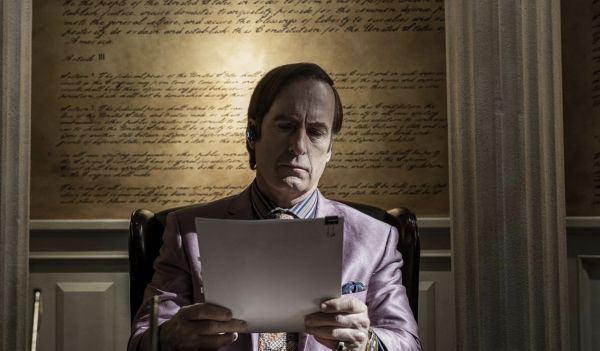
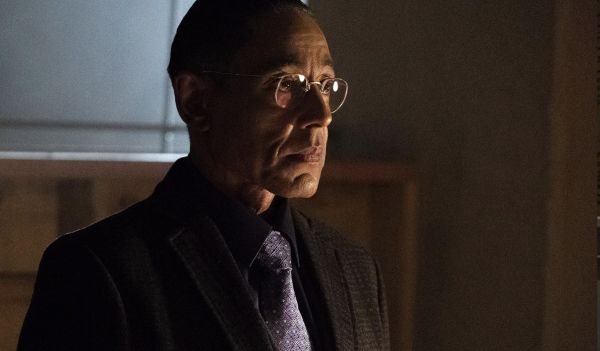
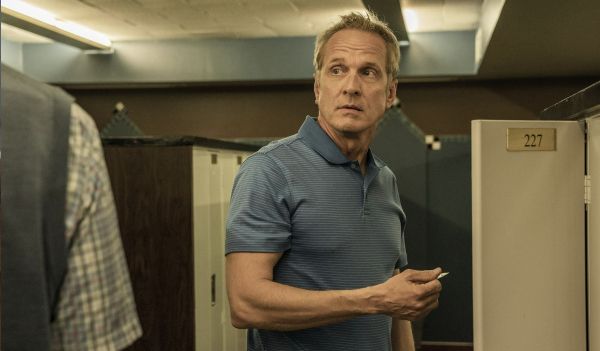
Unveiling Intricacies: A Deep Dive into Better Call Saul’s Narrative and Visual Mastery
Better Call Saul begins with an ending already written. I knew that Jimmy McGill would eventually become Saul Goodman, the loud, morally flexible criminal lawyer introduced in Breaking Bad. I knew his bright suits, exaggerated television advertisements, disposable phones, suspicious clients, and ability to turn legal language into a survival tool.
What I did not know was how painful it would be to watch that identity form.
The series could have treated Jimmy’s transformation as a clever collection of references. It could have explained where he bought the Cadillac, why he selected the name Saul Goodman, and when he first met the people who later surrounded Walter White. Those details appear, but they are not the reason the story works.
I remained invested because Jimmy is not presented as a good man suddenly becoming evil or a secret villain finally revealing himself. He is intelligent, funny, insecure, compassionate, manipulative, hardworking, resentful, and capable of understanding exactly what another person wants to hear.
Every major step toward Saul Goodman appears small enough to justify in the moment. A rule seems unfair. A wealthy client appears dishonest. A brother withholds approval. A shortcut hurts someone Jimmy has decided deserves it. Each choice can be explained separately. Together, they construct a life he eventually cannot control.
Watching Better Call Saul felt less like witnessing one dramatic collapse and more like noticing a crack spreading across glass. By the time the full shape became visible, the damage had already travelled through everything.
Jimmy Is at His Most Dangerous When He Is Trying to Help
Bob Odenkirk makes Jimmy immediately likable because the character understands people. He sees embarrassment, loneliness, greed, fear, and pride before most characters have admitted those feelings to themselves.
He can use that perception generously. Jimmy comforts elderly clients, protects people who appear powerless, works exhausting hours, and often notices emotional needs ignored by more respectable professionals.
The same skill makes him an extraordinary manipulator.
Jimmy does not force people when persuasion will work. He creates a story in which the desired decision feels natural. He changes his posture, tone, clothing, vocabulary, and emotional temperature according to the person standing in front of him.
I often admired his creativity while recognizing that creativity had become a way to avoid boundaries. A conventional attorney sees rules as the structure of the profession. Jimmy sees them as obstacles designed by less imaginative people.
His problem is not simply dishonesty. Jimmy increasingly believes that a successful outcome can retroactively justify the method. If a client receives money, a friend avoids humiliation, or an enemy loses power, he can describe the deception as necessary.
This belief becomes especially dangerous when he acts from affection. Jimmy can convince himself that harming one person is acceptable because he is protecting someone else.
Chuck McGill Is Right About Jimmy and Wrong About What That Means
Michael McKean’s Chuck McGill is one of the most complicated antagonistic figures I have encountered in television drama.
Chuck is brilliant, disciplined, respected, and deeply committed to the law as an institution. He believes legal practice requires standards because attorneys possess the power to affect lives, property, freedom, and public trust.
He also believes Jimmy should never have that power.
The painful part is that Chuck understands his brother accurately. He knows Jimmy cuts corners, manipulates emotions, and treats rules as suggestions when they interfere with his immediate goal.
Chuck’s mistake is turning that insight into a permanent judgment. He cannot imagine Jimmy changing because allowing change would require him to reconsider years of resentment.
I found their relationship devastating because both brothers want recognition from the other while disguising that need as professional disagreement. Jimmy wants Chuck to admit that he has become a legitimate lawyer. Chuck wants Jimmy to admit that intelligence and charm do not make him an equal.
Chuck’s electromagnetic sensitivity adds another layer. Whether the condition is interpreted psychologically or physically, his suffering is real. Jimmy cares for him extensively, bringing supplies, maintaining the house, and arranging daily life around Chuck’s limitations.
That care does not erase Jimmy’s dishonesty. Chuck’s illness does not excuse his cruelty. Better Call Saul refuses the comfort of selecting one innocent brother.
The Courtroom Conflict Is Really a Family Argument
Some of the series’ strongest legal scenes work because the law provides a formal language for emotional conflict.
Jimmy and Chuck cannot tell each other plainly what they need. Instead, they use evidence, professional reputation, procedural rules, documents, witnesses, and disciplinary hearings.
The confrontation involving Chuck’s condition becomes especially difficult to watch. Jimmy constructs an effective strategy by identifying his brother’s psychological weakness and exposing it publicly.
Legally, the plan is brilliant. Emotionally, it is brutal.
I felt satisfaction when Jimmy defended himself successfully and immediate discomfort at the cost. Chuck had attempted to destroy his career, but Jimmy responded by damaging the identity Chuck valued more than almost anything.
The series repeatedly creates this reaction. Victory and loss occupy the same scene. A character obtains the immediate result and sacrifices something less visible.
Kim Wexler Is Not Jimmy’s Moral Supervisor
Rhea Seehorn’s Kim Wexler gradually becomes the emotional center of Better Call Saul. She is disciplined, observant, ambitious, and capable of working with a level of focus that makes the people around her appear careless.
A weaker version of the series would have used Kim as the respectable woman trying to rescue Jimmy from himself. Better Call Saul gives her independent desires, resentment, pride, recklessness, and a complicated attraction to rule-breaking.
Kim does not remain close to Jimmy because she fails to understand him. She often understands him better than anyone.
She recognizes the pleasure he finds in constructing a scheme. More importantly, she discovers that she enjoys participating.
I found their relationship convincing because intimacy develops through shared humor and collaboration rather than constant declarations. A small look across a room can communicate that both have noticed the same weakness in another person. A bottle stopper, cigarette, hotel room, or invented identity becomes part of a private language.
Kim’s tragedy is not that Jimmy corrupts an otherwise perfect person. She has her own capacity for control and rationalization. Jimmy gives that capacity companionship.
Rhea Seehorn Makes Silence More Revealing Than Dialogue
Kim is frequently placed in rooms where she must control her reaction. She listens to clients, partners, judges, colleagues, and Jimmy while deciding what can safely be expressed.
Rhea Seehorn uses that restraint with extraordinary precision. A pause, tightened jaw, controlled breath, or slight shift in eye contact can reveal anger before Kim has chosen its final form.
I often found myself watching her during another character’s dialogue. Kim’s response could completely change the meaning of a scene.
Her physical discipline also reflects her history. She has built her career through preparation and endurance. Unlike Jimmy, she cannot assume charm will rescue her from every mistake.
This makes her eventual willingness to gamble with professional stability especially significant. She knows exactly what she could lose.
Kim is most frightening when she becomes calm after deciding to act. Jimmy’s schemes often begin with visible excitement. Kim can make a destructive decision with the posture of someone organizing a normal workday.
Howard Hamlin Becomes More Human Every Time Jimmy Refuses to See Him Clearly
Patrick Fabian’s Howard Hamlin initially appears to represent everything Jimmy dislikes about prestigious legal culture. He is polished, wealthy, carefully dressed, and positioned at the top of a respected firm.
Jimmy interprets Howard as an arrogant gatekeeper. Early episodes encourage me to share that assumption.
The picture changes gradually. Howard has flaws, including vanity, emotional avoidance, and loyalty to institutional image. He is also capable of regret, self-examination, professional generosity, and genuine attempts to repair damaged relationships.
I found his development especially effective because Howard does not transform into a different person. The series simply allows me to see more than Jimmy’s perspective.
Jimmy and Kim eventually turn Howard into a character inside their private story. They describe him as privileged, condescending, and deserving of humiliation. Those traits contain enough truth to make the scheme emotionally convenient.
The cruelty lies in how completely they ignore his humanity once the game becomes enjoyable.
Howard’s final confrontation with them is one of the series’ most painful moments. He understands that the destruction of his reputation was not driven by money or professional necessity. They did it because they could, because they wanted to, and because hurting him made them feel temporarily united.
The Sandpiper Case Shows Jimmy’s Better and Worse Instincts at Once
Jimmy’s discovery of financial exploitation inside a retirement facility demonstrates why he could have become an excellent elder-law attorney.
He listens to clients other lawyers might overlook, notices irregularities, investigates carefully, and recognizes a large pattern behind small individual losses.
His work begins from genuine concern. The residents trust him because he treats them as people rather than case numbers.
The case also reveals his impatience. Large legal actions move slowly, involve many professionals, and require delayed reward. Jimmy understands the value of the eventual settlement but struggles with waiting.
When he manipulates the elderly clients to accelerate the process, he damages the same community he originally protected.
I found this arc essential because it prevents a simple explanation that Jimmy behaves badly only when respectable institutions reject him. He can betray vulnerable people even after earning a legitimate place, provided he can justify the result.
Mike Ehrmantraut Lives by Rules Because He Knows He Has Already Broken the Important Ones
Jonathan Banks gives Mike a completely different rhythm from Jimmy. Where Jimmy fills silence, Mike uses it. Where Jimmy improvises socially, Mike prepares physically.
Mike is practical, observant, patient, and emotionally sealed behind routine. He studies exits, tools, schedules, people, and likely mistakes before acting.
His personal code initially appears more stable than Jimmy’s morality. Mike avoids unnecessary cruelty, keeps promises, and distinguishes people “in the game” from those outside it.
The series gradually reveals the limitations of this code. A private rule does not make participation in a violent criminal system ethical.
Mike knows this, even when he speaks as though procedure can contain the consequences. His code is partly an attempt to remain functional after recognizing what he has become.
I found his relationship with his family especially painful. Everything he does is supposedly intended to provide for them, yet secrecy and guilt prevent him from being fully present.
The money becomes a substitute for an explanation he cannot give.
Five-O Is the Moment Mike Stops Being a Supporting Character
The episode centered on Mike’s history as a police officer gives Jonathan Banks the space to reveal the grief beneath the character’s control.
Mike’s relationship with his son Matty explains his contempt for moral performance. He taught Matty to compromise in a corrupt environment, believing compromise would keep him safe.
Instead, the advice helped destroy what Mike most wanted to protect.
Banks delivers the confession with exhausted clarity. Mike does not ask for forgiveness or present himself as a victim. He understands his responsibility.
I consider this one of the finest episodes in the Breaking Bad universe because it transforms every later Mike scene. His silence is no longer merely professional coolness. It is a form of self-punishment.
Nacho Varga Is Trapped Between Men Who Believe They Own His Future
Michael Mando’s Nacho begins as a capable criminal attempting to manage dangerous people more reckless than himself.
He is intelligent enough to understand the structure around him but not powerful enough to leave it safely.
Nacho’s relationship with his father gives the character moral tension. Manuel Varga believes in honest work and refuses to accept that survival requires surrendering to criminal power.
Nacho wants to protect him while continuing to operate inside the system threatening him.
The contradiction becomes impossible. Every attempt to gain control creates another person with leverage over him.
I found Nacho’s storyline emotionally exhausting in the best way. He is constantly performing confidence for people capable of destroying him. Michael Mando shows fear through the effort required to hide it.
His final choices matter because they represent one of the few moments when he controls the meaning of his own actions, even if he cannot control the outcome.
Gus Fring Makes Preparation Look Like a Psychological Compulsion
Giancarlo Esposito returns as Gustavo Fring with the calm precision familiar from Breaking Bad. Better Call Saul adds something important: fear.
Gus is not yet the fully established figure who appears almost untouchable. He is building infrastructure, managing the cartel’s suspicion, and preparing for a conflict that could destroy him.
Esposito makes routine behavior threatening. Gus adjusts an object, cleans a surface, chooses his words, and controls his expression with such care that every movement suggests suppressed pressure.
I appreciated seeing the labor behind his apparent perfection. Restaurants, transportation networks, construction sites, surveillance, money, and personnel require constant management.
His greatest strength and weakness are the same. Gus believes sufficient preparation can eliminate vulnerability.
Lalo Salamanca proves that another intelligent person can create variables no system fully anticipates.
Lalo Salamanca Smiles Like He Has Already Entered the Room Through Another Door
Tony Dalton’s Lalo is one of the most effective late-arriving antagonists in television drama. He is charming, curious, physically relaxed, and capable of making friendly conversation feel like an interrogation.
Lalo differs from other Salamanca characters because his danger is not based mainly on visible rage. He listens. He notices inconsistencies. He asks simple questions and waits to see which answer causes discomfort.
Dalton’s smile is essential. It communicates warmth while making me wonder what Lalo has already understood.
I found him frightening because he appears to enjoy uncertainty. Gus builds systems to control risk. Lalo enters those systems and treats the hidden structure as a puzzle.
His presence also changes Jimmy and Kim’s story. The legal and romantic plot can no longer remain separate from the criminal world.
The moment those worlds collide permanently is one of the most shocking transitions in the series, not because it arrives without preparation, but because Jimmy and Kim have convinced themselves that their games exist in a protected category.
The Cartel Story Is Impressive but Occasionally Pulls Me Away From the Better Drama
Better Call Saul contains two major narrative worlds. One follows Jimmy, Kim, Chuck, Howard, and the legal profession. The other follows Mike, Gus, Nacho, Lalo, and the criminal operation.
Both are expertly constructed. The criminal storyline provides suspense, planning, surveillance, and physical danger.
I still preferred the legal material during much of the series. A conversation between Jimmy and Chuck could feel as tense as an armed confrontation because the emotional history was so specific.
The cartel story occasionally becomes a prequel mechanism, explaining infrastructure and relationships already familiar from Breaking Bad.
Its best moments connect directly with character rather than continuity. Mike confronting his guilt, Nacho protecting his father, Gus revealing fear, and Lalo testing Jimmy all feel necessary beyond franchise explanation.
The Series Makes Paperwork Visually Exciting
Better Call Saul is filled with documents, photocopiers, case files, banking forms, architectural plans, mobile phones, legal notices, sticky notes, and office supplies.
That material could have produced visually static television. Instead, the direction turns process into action.
A montage of Jimmy preparing documents can reveal intelligence, exhaustion, obsession, and ethical compromise without dialogue.
The camera often focuses on hands, machines, surfaces, and repeated movement. Work becomes physical.
I admired the patience of these sequences. The series trusts viewers to understand that changing one document or moving one object may have consequences much later.
This attention to procedure also makes deception credible. Jimmy’s schemes work because he invests real labor in them.
The Visual Composition Makes Characters Look Trapped Before They Know It
Better Call Saul uses wide frames, unusual angles, empty space, architectural lines, reflections, and foreground objects to create emotional distance.
Characters are frequently divided by doorways, windows, desks, fences, or large sections of negative space.
I often felt that the image understood their future before they did.
Jimmy may appear small inside a legal institution that will never accept him fully. Mike can become one controlled figure inside an enormous industrial environment. Kim can be framed between the professional world she built and the life she has chosen with Jimmy.
The Gene sequences use black and white to remove the color associated with Saul Goodman’s public identity. The result is not peaceful anonymity. It is a life drained of performance and possibility.
Color Becomes a Moral and Emotional Vocabulary
Jimmy’s clothing changes across the series. Early suits attempt ordinary professionalism. Later combinations become brighter, louder, and more carefully connected with the Saul Goodman brand.
The transformation is not merely cosmetic. Clothing allows Jimmy to stop asking respectable institutions for approval. Saul dresses as though judgment has become irrelevant.
Kim’s professional wardrobe communicates discipline and control. Small changes become meaningful because her presentation is usually so precise.
Gus’s clean, restrained clothing supports his public identity, while the criminal environment frequently uses warmer and harsher visual tones.
I never felt that the color design required decoding like a fixed symbolic chart. It worked intuitively, shaping how each world felt before dialogue explained it.
The Montages Make Repetition Feel Like Destiny
Few series use montages as effectively as Better Call Saul. Music, editing, repeated tasks, and changing environments can compress weeks of work while revealing emotional progression.
Jimmy selling phones, Kim managing cases, Mike preparing a location, and workers constructing the underground laboratory all become miniature stories.
The repetition matters. Characters believe they are making separate daily decisions, but the montage reveals a pattern forming around them.
I especially appreciated montages where success carries discomfort. A business improves, money accumulates, or a plan advances while the music and imagery suggest that progress is moving toward something destructive.
The Humor Makes the Tragedy Harder to Resist
Better Call Saul is frequently very funny. Jimmy’s advertisements, invented identities, courtroom tactics, client interactions, and conversations with frustrated officials create genuine comedy.
Bob Odenkirk understands that Jimmy often performs humor for survival. Making another person laugh gives him control over the emotional direction of a scene.
The series also finds comedy in bureaucracy, corporate language, legal rituals, and the distance between professional dignity and ordinary human behavior.
I laughed enough to forget temporarily where the story was heading. That is why the tragedy worked.
Saul Goodman is entertaining. He is also the identity Jimmy uses to avoid feeling what his choices have cost.
Saul Goodman Is Not Jimmy’s True Self
Characters sometimes speak as though Saul has always existed inside Jimmy, waiting for permission to emerge.
I do not interpret the series that way.
Saul is constructed. Jimmy builds him from resentment, performance, professional rejection, grief, and the desire to make emotional consequences feel unreal.
The persona offers freedom. Saul does not need Chuck’s approval, Kim’s respect, or the legal community’s acceptance. He needs clients and money.
This freedom is also imprisonment. Once Jimmy turns every feeling into a joke or transaction, he loses access to the relationships that made his life meaningful.
The name becomes protective distance. If Saul performs the harmful action, Jimmy can pretend the better version of himself remains somewhere untouched.
The series gradually removes that illusion.
Kim and Jimmy’s Schemes Feel Romantic Until Another Person Pays
Some of the most pleasurable scenes involve Jimmy and Kim planning together. They drink, invent stories, imitate voices, and experience the excitement of understanding each other completely.
The schemes create intimacy because both can reveal parts of themselves hidden from professional life.
I understood why they continued. Deception gives their relationship energy during periods when ordinary life feels constrained.
The problem is that their private entertainment requires a target.
At first, the targets appear rude, wealthy, dishonest, or professionally arrogant. This makes the schemes easy to excuse.
Over time, the need for justification weakens. The game itself becomes sufficient.
The Howard plan is the point where romance and cruelty become inseparable. Jimmy and Kim are happier together while constructing another person’s collapse.
Better Call Saul never allows that contradiction to disappear behind chemistry.
Kim’s Departure Is More Devastating Than a Conventional Breakup
When Kim finally recognizes what she and Jimmy become together, the relationship cannot be repaired through promises of better communication.
She still loves him. That is exactly why leaving hurts.
Kim understands that love has not protected either of them from causing harm. Their connection amplifies qualities they can control more successfully apart.
Rhea Seehorn plays the scene without turning it into anger alone. Kim appears emotionally exhausted by the knowledge that happiness with Jimmy has become morally dangerous.
Jimmy responds by moving further into Saul. Rather than process the loss, he removes the version of himself capable of feeling it openly.
The cut from emotional separation to the fully developed Saul Goodman life is one of the series’ boldest decisions. The missing years are expressed through avoidance.
Gene Takavic Is What Remains When Performance Loses Its Audience
The black-and-white future follows Jimmy living under the identity Gene Takavic, managing a shopping-mall bakery and fearing recognition.
Gene has none of Saul’s public energy. His clothes are ordinary, his routine repetitive, and his apartment emotionally empty.
At first, I interpreted this as punishment. Jimmy has escaped legal consequences temporarily but lost the stimulation and recognition he depended on.
The later Gene episodes reveal that he has not lost the desire to manipulate. Once he discovers an opportunity to run another scheme, energy returns immediately.
This is crucial. Saul was not only a professional disguise. Deception has become the way Jimmy feels alive.
His relapse is less about money than identity. A quiet life offers safety but no applause, no game, and no proof that he remains smarter than the person across from him.
Marion Sees Jimmy More Clearly Than the Criminal World Does
Carol Burnett’s Marion initially appears to be another elderly person Jimmy can charm and use.
That assumption reflects one of his oldest habits. He believes social warmth gives him control over people who want companionship.
Marion’s eventual recognition of Saul Goodman is powerful because it reverses the dynamic. She sees the public identity he believed had disappeared and understands that the kind man she trusted was another performance.
Her fear affects Jimmy differently from physical confrontation. He sees himself through the eyes of someone vulnerable who now understands him as dangerous.
For one crucial moment, he is forced to recognize how far he has travelled from the man who once cared sincerely for elderly clients.
The Final Episode Gives Jimmy the One Victory Saul Could Never Achieve
The finale initially allows Saul Goodman to perform at full strength. He negotiates, identifies leverage, reduces consequences, and proves that he can still manipulate a legal system even after everything has collapsed.
It is an impressive display and an empty one.
Jimmy eventually chooses confession over another successful performance. He tells the truth about his role, Chuck, Howard, and Kim, accepting consequences he could have avoided.
I do not interpret this as complete redemption. A confession cannot restore lost lives, repair every relationship, or erase years of damage.
It is meaningful because Jimmy finally stops controlling the story long enough to accept responsibility for it.
Using his real name matters. Saul Goodman can negotiate punishment. Jimmy McGill must live with memory.
The Final Scene Is Intimate Because Almost Everything Else Has Been Removed
The last meeting between Jimmy and Kim does not attempt a large reconciliation. They share a cigarette, echoing an old ritual from a much earlier period of their relationship.
The physical environment is restrictive, and their future remains uncertain. The series does not promise that love will repair the consequences.
What remains is recognition.
Kim can see Jimmy again because he has stopped demanding that she respond to Saul.
The scene affected me because it refuses easy hope without becoming emotionally empty. They cannot return to the relationship they once had. They can acknowledge that it was real.
What Frustrated Me
The early pacing demands patience. Several episodes focus heavily on legal procedure, office politics, and daily routine before the broader direction becomes visible.
I found that patience rewarding, but viewers expecting the immediate tension of Breaking Bad may struggle.
The cartel storyline sometimes receives more screen time than its emotional connection to Jimmy requires, particularly during construction and operational sequences.
Certain prequel references feel designed mainly to reward recognition. Familiar characters occasionally enter scenes without adding as much as the series’ original figures.
The series’ precision can also create emotional distance. Every image and action appears carefully controlled, which occasionally makes spontaneity feel rare.
Some viewers may find Jimmy’s repeated return to manipulation frustrating after several apparent opportunities to change. I found the repetition psychologically convincing, though it can be exhausting.
Why Better Call Saul Surpassed Its Prequel Status
Better Call Saul does not depend on Breaking Bad for emotional meaning. Prior knowledge adds tension, but Jimmy, Kim, Chuck, Howard, Nacho, and the earlier version of Mike create a complete dramatic structure.
The series develops its own visual language, pacing, humor, and moral concerns.
Breaking Bad often asks how far a person will go after discovering power. Better Call Saul asks how identity is built from repeated explanations.
Jimmy rarely tells himself that he wants to become a criminal lawyer. He tells himself that this client deserves help, that this rule is unfair, that Chuck forced his hand, that Howard will recover, or that one final scheme will change nothing important.
The lies he tells himself are more consequential than the lies he tells anyone else.
Who Should Watch Better Call Saul?
I recommend Better Call Saul to viewers who enjoy character-driven drama, legal strategy, slow moral transformation, visual storytelling, complex relationships, restrained performances, and narratives where consequences develop across years.
Watching Breaking Bad first provides useful context, particularly for Mike, Gus, Saul, and the black-and-white future. Better Call Saul still contains enough emotional independence to stand on its own.
Viewers seeking constant action may find the opening seasons slow. The series often builds tension through paperwork, conversations, professional decisions, and details whose importance appears much later.
Anyone interested primarily in Walter White may be disappointed by how little the story depends on him. Jimmy and Kim are the emotional center.
My Final Verdict
Better Call Saul is one of the finest television dramas I have watched because it turns a familiar supporting character into the center of a patient, funny, and devastating study of self-invention.
Bob Odenkirk makes Jimmy McGill charming enough that I repeatedly wanted to forgive him and perceptive enough that I knew he understood the harm he was causing. Rhea Seehorn gives Kim Wexler intelligence, control, desire, and moral complexity equal to any character in the Breaking Bad universe.
Michael McKean, Jonathan Banks, Patrick Fabian, Michael Mando, Giancarlo Esposito, and Tony Dalton build opposing forms of pride, discipline, fear, loyalty, and control around them.
The series can be slow, and its cartel material occasionally pulls attention away from the more intimate legal drama. Its patience remains one of its greatest strengths because every transformation feels accumulated rather than announced.
I rate Better Call Saul 9.8/10. It made me understand Saul Goodman without using understanding as an excuse.
I knew where Jimmy McGill was going from the beginning.
The tragedy was watching every moment when he could have chosen another direction—and recognizing why, each time, the wrong path felt easier to explain.
Pros:
- Well-developed characters provide deep emotional engagement
- Intricate storytelling offers multiple layers of narrative depth
- Exceptional cinematography captures both beauty and melancholy with precision
- Thought-provoking moral dilemmas invite in-depth reflection
- High production quality enhances the overall viewing experience
- Engaging narrative pace rewards repeated viewings with new insights
Cons:
- Slow pacing may deter viewers seeking rapid plot progression
- The complex narrative can be confusing for casual watchers
- Limited appeal for those preferring straightforward action-oriented dramas









Movie Reviews

Minecraft

Grand Theft Auto V

Toca Boca World

Roblox

Leave a comment
Your comment is awaiting moderation. We save your draft here
0 Comments