
Review
NCIS is one of those shows I can return to after a long break and immediately recognize the rhythm. A body is discovered somewhere conn...

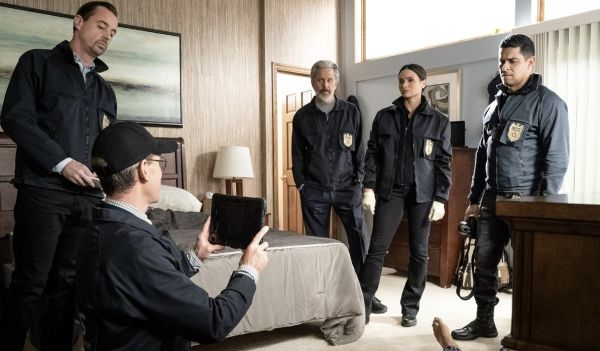

NCIS: The Perfect Intersection of Investigative Mastery and Modern Digital Access
NCIS is one of those shows I can return to after a long break and immediately recognize the rhythm. A body is discovered somewhere connected to the Navy or Marine Corps. The team arrives, studies the scene, exchanges a few jokes, and begins separating military procedure from personal secrets. Evidence moves from the field to the laboratory, suspects provide incomplete stories, and the investigation eventually reveals a problem much larger than the opening crime suggested.
That structure sounds repetitive, especially across more than twenty seasons. Yet repetition is also one of the reasons the series works for me. NCIS does not depend entirely on surprising me with a new format every week. It depends on making me comfortable with the team, then using each case to test their judgment, loyalty, and personal history.
From my perspective as a gamer, NCIS resembles a long-running cooperative campaign in which the mission types remain familiar while the active party gradually changes. Some agents leave, others join, leadership shifts, technology evolves, and old decisions return as new objectives. The headquarters remains recognizable even when the people standing around the central screen are no longer the same.
Case File 001: The Team Was Always the Main Mystery
The investigations provide weekly objectives, but the relationships are what kept me watching. A case might begin with espionage, stolen weapons, a missing officer, or suspicious activity aboard a naval vessel. The procedural details create movement, while the team’s reactions give the episode personality.
NCIS understands that investigators do not arrive at work as empty professionals. They carry habits, family histories, rivalries, grief, private fears, and assumptions about justice. A suspect may activate something personal in one agent while another remains focused on evidence.
The strongest episodes allow those perspectives to conflict without making the team appear incapable. Disagreement becomes part of the investigative process. One person trusts instinct, another demands technical confirmation, and someone else notices the emotional detail everyone overlooked.
I rarely remembered an episode only because of the final suspect. I remembered how Gibbs reacted, what McGee discovered, how Tony interpreted a clue, or which member of the team needed support after the case ended.
Agent Profile: Leroy Jethro Gibbs
Mark Harmon’s Gibbs defines the early identity of NCIS. He is quiet, observant, impatient with unnecessary explanation, and capable of controlling a room without raising his voice.
Gibbs often behaves as though every conversation contains useful information, even when the person speaking does not realize it. He studies pauses, changes in tone, physical reactions, and the difference between what someone says and what they avoid saying.
I enjoyed his leadership because it was built around trust rather than constant instruction. He expected agents to learn, make decisions, and accept responsibility. When he entered an investigation personally, it usually meant the situation had crossed an important line.
His famous rules functioned like permanent mission modifiers. They were short enough to remember and broad enough to apply to work, loyalty, communication, and survival. Team members sometimes joked about them, but the rules gave Gibbs a way to pass experience forward without explaining the painful events that created it.
The limitation of his leadership was emotional distance. Gibbs protected people fiercely while making it difficult for them to protect him. He could recognize pain in an agent or witness but often treated his own grief as classified information.
The Basement Was Gibbs’ Private Save Room
Gibbs’ basement gave the series a location where professional authority could temporarily disappear. He built boats, worked with his hands, and allowed silence to replace the constant noise of investigations.
I saw the basement as his private save room. It was the place where he processed events without needing to perform leadership for the team.
The boats also suited his personality. Building one required patience, precision, and control over physical materials. Human relationships were less predictable. Wood could be measured, shaped, corrected, and joined according to a plan.
Questions about how the finished boats left the basement became part of the show’s mythology. I liked that the series did not rush to explain every practical detail. Gibbs was more interesting when part of his life remained inaccessible.
Agent Profile: Anthony DiNozzo
Tony DiNozzo initially appears to be the team member most interested in jokes, movies, flirting, and proving that he understands the room before everyone else.
His humor can make him look less serious than he is. Over time, the series reveals an investigator with strong instincts, substantial field experience, and an ability to recognize behavior patterns quickly.
Michael Weatherly gives Tony enough vulnerability to prevent the confidence from becoming empty. Tony wants approval, particularly from Gibbs, but he disguises that need through performance.
His movie references became a personal language. He used fictional scenes to categorize real situations, explain suspects, and manage discomfort. As a gamer, I recognized the habit of interpreting unfamiliar problems through stories I already understand.
Tony’s development worked because he did not lose his humor when he became more responsible. The series allowed competence and immaturity to exist in the same character, with one becoming more visible depending on the situation.
Ziva David Entered With a Different Rule Set
Ziva David changed the team’s chemistry immediately. Her background gave her different training, instincts, and assumptions about risk. She could be direct in situations where the others expected caution and emotionally guarded when the team expected openness.
Cote de Pablo made Ziva physically confident without reducing her to action scenes. Her most compelling quality was the tension between professional conditioning and the possibility of building a life based on personal choice.
Ziva frequently had to decide which identity carried the greatest authority: operative, daughter, colleague, friend, or independent person.
Her misunderstandings of English expressions became a recurring source of humor, but they also reinforced that she was constantly translating more than language. She was learning the team’s social codes while deciding how much of herself to reveal.
The relationship between Ziva and Tony developed through conflict, trust, shared danger, and years of emotional avoidance. I preferred the slower progression because the characters rarely had the stability required for a simple romance.
Kate Todd Made the Early Team Feel Balanced
Caitlin Todd entered NCIS with Secret Service experience and a willingness to challenge Gibbs directly. She was capable, disciplined, and often less impressed by Tony’s behavior than Tony believed anyone should be.
Kate helped establish the early team dynamic because she stood between Gibbs’ authority and Tony’s constant attempts at humor. She could participate in the group’s teasing while still demanding professionalism.
Her connection with the team developed quickly enough that her absence changed the emotional foundation of the series. NCIS demonstrated early that long-running procedural characters were not automatically protected from permanent consequences.
The team continued working, but the way they understood danger changed.
McGee’s Progression Was the Clearest Long-Term Upgrade
Timothy McGee begins as a talented but inexperienced agent whose technical knowledge exceeds his field confidence. Tony treats him like a junior player entering a campaign everyone else already understands.
Sean Murray gradually transforms McGee without erasing the qualities that made him distinct. He becomes more confident with suspects, more capable in dangerous situations, and more willing to challenge leadership when necessary.
His technical expertise remains central, but he stops being defined only by computers. McGee learns interrogation, command responsibility, undercover work, and the emotional difficulty of making decisions that affect the entire team.
I enjoyed watching this progression because it occurred across years rather than through one dramatic promotion. His posture, speech, and reaction to pressure changed gradually.
In gaming terms, McGee is the party member whose early support build develops into a balanced endgame character. He retains specialized abilities while becoming reliable in almost every mission type.
Abby’s Laboratory Was the Fast-Travel Point for Evidence
Abby Sciuto’s laboratory brought a different visual and emotional energy into NCIS. Music, decorations, computer screens, scientific equipment, and her distinctive fashion created a workspace that felt separate from the gray offices and military environments surrounding it.
Pauley Perrette made Abby enthusiastic without making her careless. She could become excited about an unusual material or unexpected result while understanding that the evidence represented someone’s suffering.
Her reports often moved investigations forward quickly, but the real appeal came from watching how she approached the work. Science was not presented as a cold process. Abby treated evidence with curiosity, respect, and personal commitment.
Her relationship with Gibbs was especially warm. He rarely displayed affection openly, yet his interactions with Abby revealed trust that required little explanation.
The laboratory functioned like a fast-travel point for the case. Agents brought in objects with no clear meaning, and Abby returned a path toward the next objective.
Ducky Turned Autopsies Into Stories
Dr. Donald Mallard rarely treated the people on his table as anonymous evidence. He spoke to them, considered their lives, and used medical examination to reconstruct the final events they could no longer describe.
David McCallum gave Ducky a calm intelligence and an apparently unlimited collection of stories. A small injury could remind him of a historical event, a former colleague, or an experience from another country.
These digressions occasionally frustrated characters waiting for direct answers, but they made Ducky feel like someone who had lived beyond the limits of the current case.
I appreciated that his empathy was connected to expertise. He could study physical evidence precisely without forgetting that it belonged to a person with relationships, routines, and unfinished plans.
Ducky’s eventual movement toward a historian role felt appropriate. He had always been the team member most aware that every investigation becomes part of a larger institutional memory.
Jimmy Palmer Inherited More Than a Medical Role
Jimmy Palmer begins with nervous energy, awkward timing, and obvious admiration for Ducky. His early presence provides comedy, but the series gradually gives him greater professional and emotional responsibility.
Brian Dietzen’s performance makes Jimmy one of the show’s most openly compassionate characters. He is willing to acknowledge fear, grief, and uncertainty when other team members hide behind procedure.
His progression from assistant to chief medical examiner feels earned because it is connected to years of work and trust. Jimmy does not become Ducky. He develops a different style based on warmth, honesty, and the ability to speak directly about emotional pain.
I often saw him as the team’s support specialist. His medical findings mattered, but so did his ability to recognize when an agent was approaching a personal limit.
Director Vance Played the Strategic Layer
Leon Vance operates above the immediate investigations, dealing with budgets, politics, intelligence agencies, international pressure, and the consequences of decisions that cannot always be explained to the field team.
Rocky Carroll gives Vance authority without making him emotionally unreadable. He can disagree with agents, restrict information, and prioritize the organization while still understanding the personal cost.
Gibbs and Vance frequently clash because they play different versions of the same game. Gibbs focuses on the person standing in front of him. Vance must consider what happens to the entire agency afterward.
Neither perspective is always correct. Their conflict gives the series a useful strategic layer beyond collecting evidence and questioning suspects.
The Orange Wall Was the Mission-Planning Screen
The central NCIS office is one of television’s most recognizable procedural locations. Desks face one another, agents can exchange information without formal meetings, and the large screen turns new evidence into a shared objective.
The orange wall and agency seal create a visual identity that remains familiar across cast changes.
I liked how much character interaction happened while agents performed ordinary work. Someone could search a database, answer a call, tease a colleague, and notice an important detail within the same scene.
The office functions like a party management screen made physical. Everyone has a station, specialty, and personal collection of objects, but information moves constantly between them.
Elevator Conversations Temporarily Suspended the Mission
The NCIS elevator became one of the most useful spaces in the series because it allowed characters to create privacy inside a public workplace.
Gibbs could stop the elevator, interrupt normal movement, and turn a short ride into a confidential meeting. The surrounding investigation would pause while two characters confronted a personal issue or strategic disagreement.
I saw these scenes as manual pause points. The case continued outside, but the characters created a temporary space where rank and urgency could be addressed differently.
The limited environment also removed distraction. Nobody could walk away easily, and silence became part of the conversation.
The Procedural Loop Was Reliable Without Being Identical
Most NCIS episodes use recognizable stages:
- a naval or marine connection introduces the incident;
- the team processes the location;
- medical evidence establishes an early timeline;
- technical analysis exposes hidden communication or movement;
- interviews reveal contradictory motives;
- the initial theory collapses;
- a personal detail connects the evidence;
- the team confronts the responsible person.
The format can become predictable, but predictability is not always a weakness. It gives the writers room to vary character focus, tone, and emotional stakes without rebuilding the entire show each week.
Some episodes emphasize espionage. Others feel like family dramas, survival stories, courtroom conflicts, or technological thrillers. The investigative structure keeps those variations connected to the same series.
Interrogation Rooms Worked Like Dialogue Boss Encounters
NCIS interrogations are most satisfying when agents enter with incomplete evidence and need the suspect to reveal the missing connection.
Gibbs often uses silence and certainty. Tony may appear casual before revealing that he has noticed a contradiction. Ziva can apply direct pressure, while McGee frequently uses technical facts to remove escape routes.
The room is visually simple, so performance becomes the main mechanic. A suspect may begin confident, test the agent’s knowledge, and slowly realize that the available story no longer fits the evidence.
From my perspective, these scenes function like dialogue boss encounters. The objective is not physical victory. It is selecting the piece of information that breaks the opponent’s defense.
The Show’s Technology Aged in Public
Because NCIS has continued for so long, its technology provides an accidental history of digital investigation. Early episodes use devices, software, and communication habits that now look noticeably dated.
Later seasons incorporate smartphones, social media, drones, advanced surveillance, cybercrime, artificial intelligence, and increasingly connected military systems.
I enjoyed this evolution because it changed the type of evidence available to investigators. A modern suspect leaves different traces than someone from the early 2000s.
The series occasionally exaggerates how quickly technical information can be recovered, but that efficiency supports the pace. Waiting several days for realistic processing would not always make entertaining television.
Military Culture Gave Cases Additional Weight
NCIS investigations often involve characters whose decisions are shaped by rank, duty, deployment, secrecy, and loyalty to a unit.
A witness may hesitate because revealing the truth could damage a career. A family may know little about a service member’s work. An officer may protect institutional reputation while believing that doing so protects the people underneath it.
The series is strongest when it treats military service as a complex environment rather than automatic proof of virtue. Service members can be brave, frightened, dishonest, loyal, ambitious, or trapped by expectations.
The team’s responsibility is not only to protect the institution. It is to discover what happened even when the truth is inconvenient for the institution itself.
Family Was the Hidden Theme Behind Most Cases
Many NCIS stories involve biological families, military families, chosen families, or people who have lost access to all three.
The investigative team gradually becomes a family of its own, although few members would describe it that way during an ordinary workday.
They argue, hide concerns, interfere in personal decisions, and appear when someone faces a serious problem. Their support is often practical before it becomes verbal.
Gibbs may provide a task instead of comfort. Abby may use enthusiasm to pull someone out of isolation. Ducky offers perspective, while Palmer often speaks the emotional truth others are avoiding.
This chosen-family structure explains why cast departures affect more than the available skill set. Every departure changes the emotional architecture of headquarters.
Loss Was Never Completely Reset Between Episodes
Procedural television often restores normality after each case. NCIS usually returns to its familiar office rhythm, but major losses remain part of the characters.
Agents carry grief into later investigations. Old photographs, habits, rules, and references preserve the presence of people who are no longer working beside them.
I appreciated this continuity because the team encounters tragedy too frequently for every event to disappear after the closing scene.
The series sometimes uses flashbacks, visions, or returning characters to make those connections explicit. The quieter references are often more effective: an empty desk, a familiar phrase, or an agent applying something learned years earlier.
Ellie Bishop Changed From Analyst to Field Agent
Ellie Bishop arrives with strong analytical instincts and an unusual working style. She processes information physically, sometimes sitting on the floor or surrounding herself with material until patterns become visible.
Her transition into field work creates another long-term progression arc. Bishop must adapt intelligence experience to situations where evidence can change in seconds and decisions carry immediate physical consequences.
I liked that she did not simply replace an earlier female agent. Her personality, marriage, professional background, and relationship with rules gave her a different role within the team.
Over time, her development raises questions about how much a person can change to fit the work before the work becomes their central identity.
Torres Brought Undercover Instincts Into the Office
Nick Torres enters after spending significant time undercover, which affects how he relates to routine, authority, and personal identity.
Wilmer Valderrama gives Torres confidence and physical capability, but his most interesting quality is discomfort with stability. Undercover work trained him to adapt quickly and reveal little.
Joining a permanent team requires a different kind of courage. He must allow colleagues to know him when secrecy is no longer part of the assignment.
Torres often responds to emotional pressure through humor, aggression, or movement. His development is strongest when the series allows those defenses to fail.
Kasie Built Her Own Laboratory Identity
Kasie Hines enters a space strongly associated with Abby, which could have made her feel like a replacement rather than an individual character.
Diona Reasonover gives Kasie a distinct energy based on enthusiasm, anxiety, intelligence, and a desire to contribute responsibly.
Her laboratory has familiar functions, but her relationships with the agents develop differently. Kasie is often more willing to admit uncertainty and explain the emotional pressure attached to her work.
I appreciated that the series did not require her to imitate Abby’s appearance or habits. The lab remains an important investigation hub while gaining a new personality.
Jessica Knight Added Negotiation to the Party Build
Jessica Knight brings experience with high-risk response situations and hostage negotiations. She can act decisively, but her skill is not based only on physical force.
Katrina Law gives Knight a direct, controlled presence. She studies what people need, what they fear, and which part of a crisis may still be negotiated.
Her relationship with Jimmy Palmer introduces a softer dynamic without separating either character from professional responsibilities. Their personal connection develops inside a workplace where plans can change immediately because someone has been called to a scene.
I enjoyed that Knight could challenge the established team while still learning its history. Joining NCIS after so many years means entering a family filled with names, traditions, and losses that existed before her arrival.
Alden Parker Did Not Try to Become Gibbs
Gary Cole’s Alden Parker faced a difficult assignment as both a character and a performer. He needed to lead the team after Gibbs without feeling like a copy.
Parker’s style is more openly conversational, technologically comfortable, and willing to acknowledge uncertainty. He brings his own habits, family complications, and approach to authority.
I liked that the series allowed the team to adjust gradually. Gibbs’ departure did not erase his influence, but Parker could not lead effectively while being measured only against someone else.
Parker earns trust through decisions rather than demanding that the team transfer loyalty automatically. His leadership feels collaborative, though he can become intensely personal when a case touches his family history.
From a gamer’s perspective, Parker is not a replacement skin for the previous commander. He is a new party leader with different passive bonuses and vulnerabilities.
The Parker Era Made Continuity Its Main Challenge
Long-running shows face a difficult balance. They need to respect history without forcing every episode to become a tribute to earlier seasons.
The Parker era works best when old and new elements interact naturally. McGee and Vance provide institutional continuity. Palmer and Kasie preserve the medical and scientific rhythm. Torres and Knight maintain field energy, while Parker gives the team a different center.
Returning characters and references can reward long-term viewers, but the current team still needs conflicts that belong to them.
I found the transition successful because the show’s central premise was always larger than one agent. Gibbs defined NCIS for many years, yet the agency, cases, and chosen-family structure could continue evolving.
Some Cases Became Too Familiar
With hundreds of episodes, NCIS inevitably repeats certain motives, suspect types, and plot reversals. A trusted officer hides a secret. A witness is connected more deeply than expected. A piece of technology points toward the wrong person. A victim’s family contains an old conflict.
I sometimes recognized the responsible character too early because the episode introduced a guest performer with suspicious narrative importance.
The series also relies on convenient timing. Agents may discover the required connection moments before a suspect escapes, and laboratory results often arrive at the exact point when the story needs movement.
These shortcuts can reduce mystery, but they do not always reduce entertainment. A familiar case remains enjoyable when the team interactions are strong.
The Humor Prevented the Formula From Becoming Mechanical
NCIS uses humor to make the workplace feel inhabited. Agents tease one another, argue over food, react to strange evidence, and carry personal jokes across multiple episodes.
The comedy is usually strongest when it grows from personality. Tony’s references, McGee’s frustration, Gibbs’ stare, Ziva’s phrasing, Palmer’s nervous explanations, and Torres’ confidence all produce different rhythms.
Humor also helps the show move between difficult material and ordinary office life. The team cannot remain emotionally overwhelmed after every case, so joking becomes a form of recovery.
The best jokes do not make the victim unimportant. They reveal how investigators protect themselves while continuing the work.
The Cold Opens Were Designed as Miniature Mysteries
Many episodes begin from the perspective of people who do not yet understand that they have entered an NCIS case.
A civilian finds an object, a sailor behaves strangely, a routine event becomes dangerous, or a conversation ends with a discovery that changes the genre of the scene.
I enjoyed these openings because they create a compact mystery before the main team appears. The viewer receives one fragment, then watches the investigators reinterpret it.
The best cold opens turn an ordinary location into evidence. A beach, apartment, ship, road, school, or storage area becomes meaningful because one detail does not belong.
The Black-and-White Transitions Felt Like Case Snapshots
The early visual transitions that freeze moments into monochrome images gave NCIS a recognizable editing style.
They functioned like snapshots from a case file, briefly showing where a sequence was heading before the story caught up.
I liked the small sense of inevitability they created. The image might appear emotional or confusing when first shown, then gain meaning after the surrounding scene unfolded.
These transitions helped distinguish NCIS from other procedurals even when the basic investigative structure was familiar.
Washington Became a Network Rather Than One Location
The series uses Washington, D.C., naval facilities, military bases, ships, suburban neighborhoods, government buildings, and international locations to create a broad operational map.
Cases can move between local crime and national security quickly because the agency sits near military and political institutions.
The geographic variety keeps the show from feeling trapped inside headquarters. One mission may involve a contained interrogation, while another leads to a ship, remote training area, foreign embassy, or covert operation.
The city is less of a romantic character than New York is in some shows. It functions as a network of authority, secrets, and overlapping jurisdictions.
Jurisdiction Was Often the First Opponent
Before solving a case, the team frequently needed to establish whether it belonged to NCIS. Local police, federal agencies, intelligence organizations, and military commands might all claim part of the investigation.
These conflicts could look administrative, but they affected access to witnesses, evidence, and classified information.
Gibbs often treated jurisdiction as something to navigate rather than respect automatically. Vance understood that ignoring it could create political consequences after the case ended.
From my perspective, jurisdiction functioned like a map restriction. The team might know where the objective was located but still need authorization to enter the area.
Crossovers Expanded the Shared Campaign
The larger NCIS franchise allows agents, cases, and organizations to move between cities and teams. Crossovers can give an investigation greater scale while showing how different offices interpret the same agency culture.
I enjoyed seeing familiar procedures change under another leader. One team may emphasize local relationships, another international operations, and another a specific regional environment.
The central series remains the foundation because its history established many of the franchise’s rules, terminology, and expectations.
Crossovers work best when the visiting characters contribute a genuinely different skill or perspective rather than appearing only for recognition.
The Series Survived Because It Allowed Its Party to Change
NCIS could not have continued for so long by preserving the original cast exactly. Actors leave, characters complete arcs, and the emotional needs of the show change.
Every transition risks disrupting the chemistry that made an earlier era successful. The series responds by introducing characters gradually, giving them connections to existing members, and allowing trust to develop through cases.
Not every replacement works equally well for every viewer. Attachment to an earlier team can make any new arrival feel intrusive.
I found the most successful transitions were the ones that acknowledged the absence without forcing the new character to occupy the same emotional role.
Long-Term Viewers Receive a Different Version of the Show
A new viewer can watch an isolated NCIS episode as a mystery. A long-term viewer sees additional layers.
A Gibbs rule carries the memory of earlier agents. McGee’s leadership means more after remembering his first appearances. Palmer’s authority feels different after years beside Ducky. Vance’s decisions reflect losses and conflicts that shaped his entire career.
The procedural format makes entry easy, while continuity rewards commitment.
This balance is one of the show’s greatest strengths. NCIS rarely requires detailed knowledge of every previous season to understand the current case, but history makes emotional moments more powerful.
Why NCIS Still Works for Me
I return to NCIS because it provides the reliability of a familiar mission structure without treating the team as disposable equipment.
From my perspective as a gamer, every episode loads the party into a new investigation. The field agents process the environment, the medical examiner establishes physical facts, the laboratory identifies hidden systems, and leadership manages institutional risk.
The mission ends, but character progress remains.
Gibbs built the early team around rules, intuition, and loyalty. Tony brought humor and instinct. Ziva carried discipline and conflict between duty and independence. McGee grew from technical support into one of the agency’s most dependable figures. Abby, Ducky, Palmer, Kasie, Vance, Bishop, Torres, Knight, and Parker each changed how the same headquarters felt.
The series has uneven episodes, repeated twists, convenient evidence, and cases that occasionally feel assembled from familiar parts. A show with this many seasons could hardly avoid those limitations.
What prevents NCIS from becoming only a production line is the attention given to people returning to work after difficult events. Agents do not always discuss their feelings directly. They show care through coffee, food, transportation, shared silence, protective decisions, and the willingness to remain nearby after the official case has closed.
The agency investigates crimes connected to military service, but the show’s deeper subject is responsibility. What does an agent owe a victim? What does a leader owe a team? How much secrecy can a family survive? When does loyalty become protection, and when does it become an excuse to hide the truth?
NCIS continues changing the people who answer those questions. That is why the series can survive the departure of iconic characters without pretending they never mattered.
The desks remain. The elevator doors open. A new image appears on the central screen, and the team gathers around it.
The case is different. The ritual is familiar. After more than two decades, that combination still makes me ready to follow them out of the building.
Pros:
- Intricate and engaging storylines
- Strong character development
- Balanced investigative procedures with human emotions
- High technical and cinematic quality
- Wide availability across various platforms
- Thoughtful exploration of themes like justice and loyalty
Cons:
- Occasionally formulaic plot progressions
- Some episodes may feel repetitive for longtime fans
- Limited development for certain supporting characters compared to the main cast









Movie Reviews

Minecraft

Grand Theft Auto V

Toca Boca World

Roblox

Leave a comment
Your comment is awaiting moderation. We save your draft here
0 Comments