Review
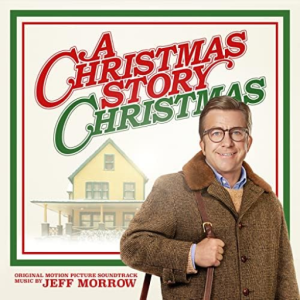
A Christmas Story Christmas understands that returning home as an adult is not the same as revisiting a favorite movie. The rooms appea...

Unwrapping Timeless Traditions: A Modern Reimagining of Christmas Cheer
A Christmas Story Christmas understands that returning home as an adult is not the same as revisiting a favorite movie. The rooms appear smaller, familiar objects carry new emotional weight, and the people who once seemed permanent have begun disappearing.
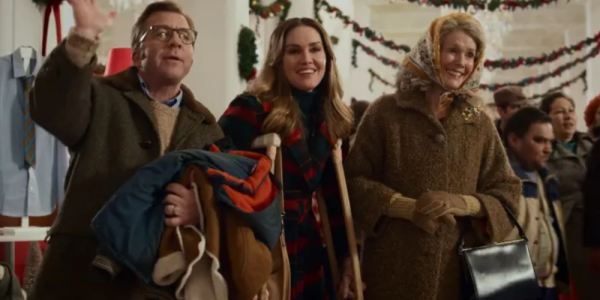
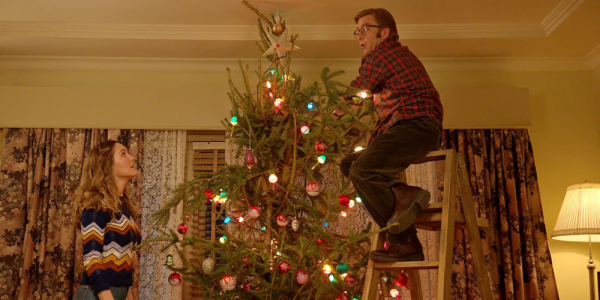
Ralphie Parker is no longer the wide-eyed child determined to receive a Red Ryder air rifle. He is a husband, father, and struggling writer who has spent years waiting for one professional success to justify the choices he made. When his father dies shortly before Christmas, Ralphie returns with his wife Sandy and their children, Mark and Julie, to the house where so many of his childhood memories began.
As a critic, I found the premise more emotionally intelligent than I expected. The film could have reconstructed famous scenes, repeated familiar jokes, and relied entirely on recognition. It certainly revisits old material, sometimes too eagerly, but its strongest question is new: what happens when the child who once received Christmas magic becomes the adult responsible for creating it?
Ralphie discovers that nostalgia is not a service someone else provides. His mother, father, teachers, neighbors, and childhood imagination built the Christmas he remembers. Now the work belongs to him, and grief has arrived at exactly the moment his children expect celebration.
Peter Billingsley Does Not Try to Play Young Ralphie Again
Peter Billingsley wisely avoids turning adult Ralphie into a permanent imitation of his childhood self. The familiar imagination remains, but it has changed shape.
Young Ralphie escaped into elaborate fantasies of heroism, revenge, and dramatic recognition. Adult Ralphie imagines literary success, public admiration, and the moment everyone finally admits that leaving steady employment to become a writer was justified.
The connection is clear without feeling completely repetitive. Ralphie still experiences disappointment through exaggerated internal stories. He has simply replaced schoolyard enemies with publishers and professional rejection.
Billingsley gives him warmth, anxiety, pride, and a convincing layer of exhaustion. Ralphie wants to support his family, honor his father, complete a meaningful piece of writing, and produce the perfect Christmas. He is not equipped to succeed at all four simultaneously.
I appreciated that the performance allows Ralphie to become irritable. Grief does not make him nobly reflective at every moment. It makes ordinary problems feel more personal and reduces his patience when plans begin failing.
The film occasionally pushes him toward broad physical comedy that belongs more naturally to the original child-centered perspective. Billingsley handles those scenes well, but his quieter reactions carry more emotional value.
The Old Man Is Absent From the Screen and Present Everywhere Else
Darren McGavin’s Old Man Parker was central to the original film through his temper, strange pride, household battles, love of contests, and imperfect affection for his family. A Christmas Story Christmas cannot replace him, so it builds the story around the physical and emotional space he has left behind.
His chair, house, car, decorations, habits, and reputation remain. Ralphie encounters reminders before he has decided how to speak about the loss directly.
I found this absence handled with restraint. The film does not rely on constant flashbacks or attempt to recreate McGavin digitally. It trusts objects and reactions to preserve presence.
The most effective detail is that Ralphie remembers his father differently now. As a child, the Old Man appeared unpredictable, powerful, embarrassing, and occasionally mysterious. As an adult, Ralphie begins understanding how much labor was hidden behind those qualities.
His father was the person solving problems while everyone else experienced the holiday. He obtained gifts, managed the house, responded to disasters, and created stability without explaining every sacrifice.
Ralphie’s grief therefore becomes partly an education. He is not only missing his father. He is discovering the adult role his father occupied.
Writing the Obituary Becomes More Difficult Than Writing a Novel
Ralphie’s mother asks him to write an obituary for the local newspaper. The request seems modest compared with the novel he hopes to publish, yet he cannot find the correct words.
This is one of the film’s strongest ideas. Ralphie wants to be a professional writer, but the most important assignment of his life cannot be solved through ambition or technique alone.
An obituary requires him to reduce a complicated person to a public memory. The Old Man was not famous, historically important, or easy to summarize through conventional achievements. Ralphie initially approaches the task like work. He searches for structure, tone, and acceptable language. None of it feels honest.
I related to his difficulty because grief often makes ordinary vocabulary appear insufficient. Formal phrases can sound empty when the person being described existed through private habits, repeated jokes, minor arguments, and moments nobody outside the family witnessed.
The eventual solution is predictable but emotionally correct. Ralphie stops attempting to write the ideal obituary and begins writing the story he actually remembers. The film suggests that his greatest literary material was never located in some distant fictional world. It was waiting inside the house he believed he had already left behind.
Sandy Understands That Supporting a Dream Does Not Remove Financial Reality
Erinn Hayes plays Sandy as a supportive partner who refuses to become unrealistically patient. She believes in Ralphie’s writing, travels with him, manages the children, and recognizes that the holiday is emotionally difficult.
She also knows the family cannot live indefinitely on encouragement.
I appreciated that Sandy is not written as the practical wife whose only function is telling the creative man to abandon his dream. She wants Ralphie to succeed and understands why writing matters to him.
Her concern emerges from responsibility. Rejection letters continue arriving, money is limited, and the promise that success may occur eventually does not solve immediate needs.
Hayes gives Sandy enough comic confidence to stand beside Billingsley rather than remaining outside the film’s nostalgic energy. She participates in family disasters and occasionally responds more creatively than Ralphie.
I wanted more private conversation between them. Their marriage appears stable and affectionate, but much of Sandy’s emotional role involves supporting Ralphie or managing the children. The film would have gained depth by exploring what she has sacrificed while he pursued writing and how returning to his childhood home affects someone without the same memories.
Mrs. Parker Has Become the Quiet Authority of the House
Julie Hagerty takes over the role of Ralphie’s mother and brings a different energy from Melinda Dillon while preserving the character’s warmth.
Mrs. Parker has lost her husband but remains focused on the family’s immediate needs. She welcomes Ralphie, Sandy, and the children while carrying grief through practical behavior.
Hagerty’s performance is light, slightly eccentric, and emotionally controlled. She rarely demands attention, which makes her quieter moments more effective.
I appreciated that the film does not portray her only as a grieving widow. She remains a mother, grandmother, homeowner, and person with habits independent of the Old Man.
Her request that Ralphie create a wonderful Christmas for the children can appear unfair. He has just arrived, is struggling financially, and has not processed the loss.
From her perspective, the request is less about perfection than continuity. The family has already lost one central figure. Allowing Christmas to collapse completely would make the absence feel even larger.
Ralphie’s Children Are Not Replacements for Ralphie and Randy
Mark and Julie occupy the child perspective, but the film does not simply recreate Ralphie and Randy through a new generation. Mark is more cautious and self-conscious, particularly around local children who quickly identify him as an outsider. Julie is younger, direct, and focused on obtaining one specific gift.
Their relationship with Ralphie matters because they know him as a father rather than as the child represented by the old house. Ralphie wants to share memories, but children rarely experience a parent’s nostalgia at the same emotional scale. The house is legendary to him and merely unfamiliar to them.
I liked this small tension. Adults often expect children to appreciate places because of stories they did not live through. Mark and Julie gradually form their own experiences rather than inheriting Ralphie’s exactly. That distinction helps the film avoid becoming a complete museum tour.
Mark’s Conflict Repeats the Original Film Without Matching Its Force
Mark encounters neighborhood children who intimidate and humiliate him, creating an obvious parallel with Ralphie’s childhood conflict involving Scut Farkus. The structure gives Ralphie an opportunity to recognize his son’s fear and remember how powerless childhood social conflict can feel. I understood the thematic purpose, but this material is less successful than the original version. The new antagonists do not possess the same memorable presence, and the conflict feels designed partly to activate recognition.
Mark’s emotional response is believable. He wants his father’s help without appearing weak and struggles with the expectation that courage should arrive naturally. Ralphie attempts to guide him while remembering that adults cannot solve every schoolyard problem directly. The storyline becomes more satisfying when father and son communicate rather than when the film repeats familiar physical confrontation.
Julie’s Radiator Incident Captures the Logic of Childhood Panic
Julie’s pursuit of a gift leads to a sequence where an object becomes trapped inside a radiator. The problem escalates because admitting the truth appears more frightening than attempting increasingly unrealistic solutions.
This is one of the film’s better examples of child-centered comedy. The mistake is small, but secrecy expands it. Children often believe adults will respond more severely than they actually would, so they create a larger disaster while trying to avoid one uncomfortable conversation. The scene also gives Mark and Julie a shared mission, allowing them to interact beyond serving separate story functions. The physical comedy becomes excessive, but the emotional logic remains recognizable.
Schwartz Has Grown Older Without Becoming More Responsible
R.D. Robb returns as Schwartz, giving the film one of its most direct connections with Ralphie’s childhood.
Schwartz remains impulsive, competitive, and capable of turning an ordinary reunion into a questionable decision. His adulthood feels like an extension rather than a transformation. I enjoyed seeing Ralphie relax around someone who remembers him before professional disappointment and parental responsibility. The friendship allows adult Ralphie to become briefly childish again without requiring the entire film to remain in that mode.
Schwartz’s life also complicates nostalgia. Not every childhood friend develops according to the future once imagined for them. The film treats his circumstances mostly through comedy, missing an opportunity to explore how remaining in Hohman shaped him differently from Ralphie, who left and attempted to reinvent himself.
Flick’s Tavern Is a Museum of Local Adulthood
Flick now owns a tavern, transforming one of Ralphie’s childhood friends into a local business owner and social center. The location allows the adult characters to gather, remember earlier challenges, and create new ones. I liked the idea that childhood rituals have become adult competitions. The same personalities remain, but the consequences now involve money, pride, and physical recovery. The tavern scenes provide energy and fan service, though they sometimes feel separated from the film’s grief-centered story.
Flick and Schwartz are entertaining presences, but their return is designed more around recognition than substantial development. I still enjoyed the reunion because the actors avoid treating every shared memory as sacred. They behave like friends who can irritate one another immediately after many years apart.
The Triple-Dog-Dare Returns Because Some Friendships Never Become Sensible
The original film’s frozen flagpole sequence is too iconic for the sequel to ignore. A Christmas Story Christmas revisits the logic of the triple-dog-dare through an adult challenge.
The new sequence understands that repeating the exact event would feel empty. Instead, it uses the phrase as a trigger capable of bypassing adult judgment. I laughed at the idea that one childhood rule still possesses authority decades later. Rational adults can become immediately competitive when an old social ritual returns. The sequence is broad and physically elaborate, and I felt the film pushing harder than necessary to create another memorable disaster. Its best joke is psychological rather than physical: these men have aged, but one phrase can restore the emotional hierarchy of childhood.
Scut Farkus Returns as Evidence That Childhood Memory Is Unreliable
Zack Ward’s return as Scut Farkus initially prepares me for another confrontation. Ralphie still remembers him as the terrifying bully who controlled the neighborhood.
The adult meeting changes that image. Scut’s life did not freeze inside Ralphie’s memory. I appreciated the decision to complicate him rather than presenting a grown version of the same threat. Childhood villains often become permanent in memory because the person who feared them never receives updated information.
Ralphie discovers that one event can carry completely different meanings for the people involved. His act of resistance may have influenced Scut in a way he never imagined. The scene is slightly too neat, but it supports the film’s broader theme. Returning home means encountering the difference between memory and continued life.
The Oldsmobile Is More Than a Nostalgic Prop
The family car represents the Old Man’s presence, practical skill, frustration, and identity. Seeing Ralphie drive it creates an immediate visual transfer between generations. The vehicle is unreliable enough to produce comedy and emotionally important enough that every problem feels personal.
Ralphie wants to preserve it because it belonged to his father. Preservation becomes difficult when the object continues behaving according to its age. I liked how the car connects grief with inconvenience. Meaningful possessions do not stop requiring maintenance. The film occasionally uses vehicle trouble as broad slapstick, but the quieter image of Ralphie occupying his father’s seat is more powerful.
Christmas Shopping Becomes an Exercise in Financial Panic
Ralphie’s family has limited money, and the holiday arrives with expectations he cannot satisfy comfortably. He wants the children to experience generosity while hiding the extent of the financial problem.
This gives the shopping sequences emotional pressure beyond ordinary seasonal comedy. Every purchase carries calculation. I appreciated that the film does not make poverty picturesque. Ralphie’s professional dream has consequences, and Christmas increases the visibility of those consequences.
The movie still protects the family from the harshest outcomes through convenient help and comic structure. This is a nostalgic holiday film rather than a severe economic drama. Even so, the anxiety feels real enough to make Ralphie’s attempts at cheerfulness more complicated.
Theft Turns Ralphie’s Fear Into Failure
When the family’s gifts are stolen, Ralphie experiences the event as confirmation that he has failed as a father. The emotional response is larger than the material loss. He had already attached the success of Christmas to his ability to replace the Old Man’s role.
I understood why he reacts so intensely. The presents represent planning, sacrifice, and his promise that grief will not define the children’s holiday. The sequence risks becoming another exaggerated obstacle in an already crowded plot. Its value lies in forcing Ralphie to admit that he cannot control every part of the celebration. Christmas was never perfect when he was a child. Memory simply edited the disasters into stories.
The Film Uses Nostalgia Best When It Questions It
A Christmas Story Christmas contains familiar music, locations, props, costumes, phrases, camera techniques, and references to memorable scenes. Some of these connections feel organic. Ralphie’s narration, imagination, house, friends, and family history naturally belong to the continuation.
Others appear designed mainly to produce recognition. The film occasionally pauses long enough for the audience to identify a callback before continuing. I became more interested whenever nostalgia created conflict. Ralphie expects home to feel unchanged, but grief and adulthood make that impossible. The stronger message is that the past cannot be recreated. It can only be retold, reinterpreted, and used to build something for the next generation.
The Voice-Over Is Familiar but More Melancholic
Ralphie narrates events with the polished language and exaggeration associated with the original film. The adult voice turns ordinary events into myth, treating neighborhood conflict, shopping, car trouble, and family panic as historic episodes.
This style remains charming, though the sequel sometimes relies on narration to explain emotions already visible in the performances. The difference is that adult Ralphie is now narrating near his own age. The distance between storyteller and subject has narrowed. His words therefore carry less innocent amusement and more self-examination. He is not only describing what happened. He is deciding what the experience will mean when remembered later.
The Production Design Reconstructs a Memory Rather Than a Documentary Past
The Parker house, snowy streets, stores, tavern, school areas, vehicles, and decorations reproduce the visual world of the original film with careful attention. The environment feels slightly heightened, as though reconstructed through Ralphie’s memory rather than objective history. Snow appears constant, warm interiors glow, and familiar objects occupy clear visual positions.
I appreciated the tactile quality. Furniture, clothing, cars, wrapping paper, decorations, and winter equipment feel physically present. The visual consistency supports the sequel, but it also makes new material appear trapped inside an older aesthetic. The film sometimes seems more concerned with matching the memory than establishing its own identity.
The Christmas Music Does Exactly What I Expected
The score uses familiar seasonal warmth, comic movement, and emotional reassurance. Music helps connect the sequel with the original film’s storytelling atmosphere, especially during fantasy sequences and family preparation. At times, the soundtrack pushes sentiment too directly. The grief material is strong enough that it does not always require musical emphasis. I preferred quieter scenes where household sounds, snow, or ordinary conversation carried the emotional weight.
The Comedy Is Strongest When Adulthood Makes Old Habits More Dangerous
The best jokes come from Ralphie and his friends behaving according to childhood logic inside adult bodies. Competitions are physically harder, public embarrassment has greater consequences, and recovery takes longer. The weaker comedy attempts to reproduce the original film’s physical disasters without the same innocence.
Young Ralphie could turn household danger into adventure because he misunderstood the scale. Adult Ralphie should understand better, making some repeated mistakes feel artificially constructed. Billingsley, Robb, and Scott Schwartz share enough history to make their group scenes enjoyable even when the material becomes excessive.
The Film’s Emotional Turn Is Earned but Predictable
Ralphie eventually transforms the obituary into a personal story about his father and Christmas. The writing becomes the narration associated with the original film, connecting the sequel directly with the story audiences already know. I anticipated this reveal early. The film places enough emphasis on writing, memory, and the obituary that the destination is clear. Predictability does not eliminate emotional effectiveness. The idea works because Ralphie’s failure as a novelist has made him overlook the value of his own voice. He has been trying to write something important while treating family memory as ordinary. The Old Man gives him his subject even after death.
Mrs. Parker’s Hidden Preparation Restores the Parent Behind the Magic
The final gift reveal echoes the original film while shifting responsibility across generations. Ralphie believes he has failed to provide the children’s central Christmas wishes. The family discovers that preparation began before the crisis became visible. The moment is warm because it reminds Ralphie that adults worked quietly behind the Christmases he remembers.
Magic was never spontaneous. Someone listened, planned, hid gifts, managed money, and waited for the correct moment. Ralphie has spent the film attempting to become the sole creator of Christmas. The ending shows that family tradition has always been collaborative.
What Frustrated Me
The film relies heavily on callbacks. Several scenes appear designed primarily to reproduce the emotional shape of moments from the original. Mark and Julie receive less personality than Ralphie had as a child. They often function as children requiring a successful Christmas rather than fully developed individuals.
Sandy is supportive and funny, but the screenplay gives limited attention to her own perspective on Ralphie’s career and grief. The bullying storyline feels familiar without becoming equally memorable.
Some physical comedy is extended beyond its strongest moment, particularly during sequences involving vehicles and adult challenges. The emotional conclusion is clear long before the final act. Ralphie’s obituary will become meaningful writing, and the holiday will teach him to recognize his father’s invisible labor.
What the Film Gets Right About Grief at Christmas
Holiday grief does not occur in isolation. Decorations still need to be unpacked, children remain excited, relatives require attention, meals need preparation, and public expectations continue. Ralphie does not receive a quiet period to process loss. Christmas forces him into activity.
I appreciated that the film allows joy and sadness to occupy the same room. The family can laugh without disrespecting the Old Man. Ralphie can become frustrated without loving him less. The holiday does not heal grief. It gives the family a structure through which they begin carrying it together.
Who Should Watch A Christmas Story Christmas?
I recommend the film primarily to viewers who know and enjoy A Christmas Story. Familiarity with Ralphie, the Parker house, Schwartz, Flick, Scut Farkus, and the Old Man gives the sequel most of its emotional power. Families may enjoy the snowy setting, gift problems, neighborhood adventures, physical comedy, and generational Christmas story.
Adults who have returned to a childhood home after losing a parent may connect strongly with Ralphie’s changed perspective. Viewers without affection for the original may find the repeated references distracting and the new characters comparatively thin. Anyone seeking a completely independent Christmas comedy should expect a sequel deeply organized around memory.
My Final Verdict
A Christmas Story Christmas is a sincere, uneven, and emotionally effective continuation that works best when it stops trying to recreate childhood and examines what childhood memories become after loss.
Peter Billingsley gives adult Ralphie enough anxiety, humor, and tenderness to justify returning to the character. Julie Hagerty brings quiet warmth to Mrs. Parker, while Erinn Hayes gives Sandy a supportive presence that deserved greater independent development.
The film leans too heavily on callbacks, and several comic situations feel like softer versions of moments audiences already remember. Mark, Julie, and the returning friends could have received more distinct development.
Its grief story gives the sequel a legitimate reason to exist. Ralphie does not simply revisit Christmas. He learns how much hidden work allowed his childhood Christmases to feel magical.
I rate A Christmas Story Christmas 7.8/10. It cannot reproduce the surprise or cultural impact of the original, but it finds genuine emotion in allowing Ralphie to become the parent standing behind the memory.
As a child, Ralphie believed Christmas happened around him. As an adult, he discovers that someone had always been carrying it. This time, that person was supposed to be him.
Pros:
- The film offers heartwarming storytelling that captures the true spirit of the holiday season.
- It successfully balances nostalgia with modern storytelling elements.
- Outstanding performances bring both humor and genuine emotion to the characters.
- High-quality production design and meticulous period details enhance the overall experience.
- The narrative seamlessly integrates classic holiday traditions with contemporary issues.
- Digital accessibility on multiple streaming platforms makes it easy for audiences to watch.
Cons:
- The pacing may feel uneven for viewers expecting a straightforward narrative.
- Some traditional holiday tropes may seem overly predictable.
- Modern updates might not resonate with purists of the original film.







Movie Reviews

Minecraft

Grand Theft Auto V

Toca Boca World

Roblox

Leave a comment
Your comment is awaiting moderation. We save your draft here
0 Comments