
Review
I’ll Be Home for Christmas begins with a protagonist who understands the transactional side of the holiday far better than its emotiona...


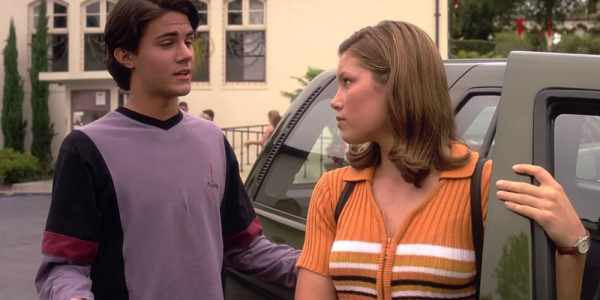
A Modern Holiday Journey: Embracing the Unexpected Charm of Home for Christmas
I’ll Be Home for Christmas begins with a protagonist who understands the transactional side of the holiday far better than its emotional meaning. Jake Wilkinson is charming, resourceful, and exceptionally skilled at persuading other people to solve problems for him. When his father promises him a vintage Porsche on the condition that he returns home by Christmas Eve, Jake suddenly develops a powerful interest in family tradition.
That motivation gives the film a slightly mischievous edge. Jake is not traveling across the country because he has rediscovered a sincere longing for home. He wants the car. His family is initially less a destination than the location where a valuable reward is waiting.
I appreciated the decision to make the central character openly selfish. Many family Christmas films begin with a decent person who has simply become distracted by work or temporary frustration. Jake requires a more substantial transformation. He must learn to see strangers, relatives, and even his girlfriend as people rather than resources within his latest plan.
The road-movie structure gives that lesson plenty of opportunities to develop. Stranded far from home in a Santa suit, Jake moves through a chain of encounters in which his usual confidence is repeatedly challenged. Some episodes are broad and predictable, while others reveal a warmer film beneath the frantic travel comedy.
Jonathan Taylor Thomas Makes Jake Charming Enough to Follow
Jake could easily have become exhausting. He lies quickly, avoids responsibility, and treats personal relationships as negotiations. Jonathan Taylor Thomas prevents the character from becoming completely unpleasant by giving him an alert, playful energy.
Jake is always observing the person in front of him. He identifies what they need, adjusts his personality, and constructs an offer that might benefit him. Thomas makes this social intelligence entertaining even when the behavior is questionable.
The performance works best when Jake’s plans begin failing. His confidence rarely disappears immediately. He continues smiling, speaks faster, and attempts to turn each setback into evidence that the situation remains under control. The audience can see his panic before he admits it.
Thomas also allows small moments of embarrassment to interrupt the polished teenage persona. Jake wants to appear independent and emotionally untouchable, but the Santa costume makes that performance almost impossible. He is visually ridiculous wherever he goes, and strangers respond to the costume rather than the sophisticated image he tries to project.
This loss of control becomes essential to the character’s development. Jake cannot simply charm his way through the journey while remaining unchanged. He must spend time in situations where his social strategies are ineffective or where helping another person provides no immediate reward.
The Santa Costume Turns Jake Into a Public Symbol
The film’s most effective visual idea is placing Jake inside a Santa suit for nearly the entire journey. The costume does more than create comic inconvenience. It forces him to represent generosity while behaving selfishly.
Everywhere Jake goes, people make assumptions based on the red coat and beard. Children expect kindness. Adults treat him as part of the holiday atmosphere. Event organizers imagine he is available for work. He cannot move anonymously because Santa attracts attention.
The contrast between appearance and personality gives the comedy a clear shape. Jake wants transportation, money, food, and information. The people he meets expect encouragement, patience, or assistance. He repeatedly enters an interaction hoping to gain something and discovers that the costume has created an obligation.
I liked how the film gradually changes the meaning of the outfit. At first it is evidence of humiliation. Later it becomes a practical disguise, a source of opportunity, and eventually a reminder that Jake is capable of giving rather than merely bargaining.
The costume also prevents the film from looking like a generic teenage road comedy. The image of a frustrated young man crossing deserts, highways, buses, and small towns dressed as Santa gives the journey a consistent visual joke.
A Cross-Country Journey Built From Convenient Encounters
The screenplay moves Jake from one temporary solution to another. He finds rides, loses them, enters contests, joins strangers, makes promises, and repeatedly discovers that the next stage of the journey is more complicated than expected.
The structure is deliberately episodic. Each encounter provides a miniature conflict and a different lesson about family, honesty, or generosity. This keeps the film moving, though it also makes the journey feel carefully arranged rather than genuinely unpredictable.
Whenever Jake requires a new opportunity, an unusually helpful or emotionally troubled stranger tends to appear. The coincidences suit the tone of a Disney holiday comedy, but they occasionally reduce the feeling of distance. Crossing the country seems less like an enormous logistical problem and more like a series of connected sketches.
The strongest episodes allow Jake’s behavior to create the complication. His dishonesty produces distrust, or his attempt to manipulate someone forces him into a larger commitment. These moments make the journey feel like a consequence of character.
The weaker passages depend on another accident or misunderstanding arriving from outside. They create movement without adding much to Jake’s emotional progression.
The Santa Race Captures the Film’s Broadest Comic Energy
One of the most memorable sequences places Jake among a large crowd of people dressed as Santa for a holiday race. The visual concept is simple and effective: the protagonist’s unusual appearance suddenly becomes completely ordinary.
The sequence gives Jake an opportunity to use his competitive instincts in a setting where the prize may help him continue home. Thomas handles the physical comedy with enthusiasm, while the surrounding costumes create controlled visual confusion.
I enjoyed the absurdity of dozens of nearly identical Santas pushing toward the same goal. The scene briefly turns the holiday symbol into an athletic uniform, replacing quiet generosity with aggressive competition.
This reflects Jake’s original understanding of Christmas. He approaches the race as another transaction. The holiday becomes valuable because it offers a route to something he wants.
The sequence is energetic, though it extends the joke close to its limit. The staging prioritizes movement over precise comic timing, and several obstacles feel interchangeable. Still, it provides the film with one of its strongest pieces of festive spectacle.
Jessica Biel Gives Allie More Patience Than Jake Has Earned
Jessica Biel plays Allie, Jake’s girlfriend, as someone who has already begun recognizing the limitations of his charm. She cares about him, but she is tired of promises designed around convenience.
Allie wants Jake to come home because the trip would demonstrate commitment. Jake initially interprets the same journey through the Porsche. Their different motivations expose the central problem in the relationship.
Biel brings warmth and skepticism to the role. She does not immediately accept every explanation Jake offers, and her disappointment suggests this is not the first time he has placed personal benefit ahead of emotional responsibility.
The screenplay, however, gives Allie limited control over the larger story. Much of her material involves traveling with Eddie and reacting to Jake’s absence. She becomes a reward Jake may lose rather than a fully developed participant in the journey.
I wanted more attention given to why she continues trusting him. Their chemistry is pleasant, but the relationship depends heavily on the assumption that Jake’s underlying potential compensates for his repeated selfishness.
Biel makes Allie likable enough that I understood why Jake wanted to reach her. The film is less convincing about why she should remain available when he finally arrives.
Eddie Provides a Rival Without Becoming a Serious Threat
Adam LaVorgna plays Eddie, the classmate responsible for leaving Jake stranded and later traveling with Allie. He functions as romantic competition and as a version of Jake without the same charm.
Eddie is smug, opportunistic, and willing to use Jake’s absence to move closer to Allie. His behavior gives the audience someone easier to dislike, which helps protect Jake from the full consequences of his own choices.
This is dramatically convenient but somewhat limiting. A more sympathetic rival might have forced Jake to recognize that Allie could reasonably choose someone who treated her with greater consistency.
Instead, Eddie is broad enough that the romantic outcome rarely feels uncertain. His presence creates obstacles, but not substantial emotional competition.
LaVorgna gives the character the required confidence and irritation. The scenes between Eddie and Allie work best when she notices that his interest in defeating Jake is stronger than his interest in understanding her.
Jake’s Father Is Trying to Purchase a Family Tradition
Gary Cole plays Jake’s father with a useful mixture of frustration and restraint. He wants his son home, but he understands that a simple invitation may not be enough. The Porsche becomes a form of emotional leverage.
This creates an interesting parallel between father and son. Jake treats relationships transactionally because the family itself has partly framed the visit as a transaction. Come home by a specific time and receive a valuable car.
The father’s offer is understandable, yet it also reveals the difficulty between them. He does not know how to ask Jake to return for emotional reasons without attaching a material incentive.
Cole avoids making the character excessively stern. The disappointment beneath his conditions remains visible. He wants evidence that Jake still considers the household his home rather than a place he visits when the reward is sufficient.
The film could have explored this relationship more deeply. Jake’s resistance to returning is connected to changes within the family, including his discomfort with his stepmother. Those emotions receive less attention than the external race against time.
The Stepmother Conflict Is Softer Than the Premise Suggests
Jake’s reluctance to return home is partly connected to Carolyn, his stepmother. The household has changed, and he has not fully accepted her place within it.
I appreciated that Carolyn is not written as a cruel intruder. Eve Gordon plays her with patience and genuine affection. She wants Jake to feel included without pretending she can replace his mother.
This makes the conflict more emotionally credible. Jake’s distance does not arise because Carolyn has behaved badly. It comes from his inability to accept that moving forward may alter the family without erasing its past.
The film touches this idea gently, perhaps too gently. A stronger version would have allowed Jake and Carolyn a longer direct conversation. His eventual acceptance arrives as part of his general transformation rather than through a fully developed relationship between them.
Still, the absence of a villainous stepmother is refreshing. The emotional problem belongs to grief, change, and resistance rather than deliberate hostility.
The Journey Becomes Better When Jake Stops Controlling It
Jake begins the story believing every situation can be managed through confidence and negotiation. The road repeatedly places him beside people whose needs cannot be reduced to a simple exchange.
His encounter with an older driver dealing with romantic regret is one of the clearer examples. Jake initially sees transportation. Gradually, he becomes involved in another person’s emotional situation.
These episodes are sentimental, but they serve a necessary function. Jake must discover that helping someone may require time he cannot easily spare. The deadline makes generosity costly.
I found his development most persuasive when he hesitated before choosing another person’s needs. Instant selflessness would have contradicted the character. The visible calculation shows that his priorities are changing rather than disappearing.
The road therefore operates as a series of interruptions to selfish momentum. Jake wants to move directly toward the car, but other people keep forcing him to notice lives beyond his own objective.
The Film’s Comedy Belongs Firmly to the Late 1990s
I’ll Be Home for Christmas carries the visual and comic style of a late-1990s family production. The pacing is quick, the soundtrack is energetic, and teenage confidence is treated with affectionate exaggeration.
Several jokes depend on embarrassment, costume comedy, romantic jealousy, and adults misunderstanding the protagonist. The humor is generally harmless, though not every gag has aged equally well.
The direction by Arlene Sanford remains functional rather than visually distinctive. Scenes are staged clearly, the geography of each obstacle is easy to understand, and the actors receive enough space to carry the dialogue.
I rarely felt a strong directorial personality behind the journey. The film prioritizes accessibility and momentum over atmosphere. Its identity comes more from Thomas’s performance and the Santa suit than from composition or camera movement.
This straightforward approach suits the intended audience, but it also prevents several emotional moments from gaining much depth. The film moves toward the next incident before stillness can become uncomfortable.
The Christmas Atmosphere Comes From Movement Rather Than Home
Most holiday films create warmth through interiors: decorated living rooms, crowded kitchens, fireplaces, family meals, and snowy streets. I’ll Be Home for Christmas spends much of its running time away from those spaces.
Christmas appears through temporary environments. Jake encounters lights, music, costumes, local celebrations, roadside decorations, and strangers participating in their own traditions.
This gives the film a broader vision of the holiday. Home is the destination, but Christmas exists everywhere along the route. Jake repeatedly meets people whose celebrations matter even though they are not connected to his family.
I liked this contrast. He begins believing the holiday has value only because a Porsche waits at the end. The journey exposes him to forms of generosity and connection that cannot be purchased by completing the trip on schedule.
The production does not create the rich winter atmosphere of more visually elaborate Christmas films, but the changing locations keep the story lively.
The Porsche Is an Effective but Obvious Moral Test
The car provides the film with a clear external objective. Jake must arrive by a specific time or lose the reward. Every delay therefore has visible stakes.
The simplicity is useful for a family audience, but the symbolic meaning is never difficult to predict. Jake will eventually have to choose between material gain and emotional responsibility.
The screenplay delays that choice through enough complications to make the final decision satisfying, even when its direction is obvious. What matters is not whether Jake receives the Porsche. What matters is whether he still defines reaching home through the reward.
I appreciated that his transformation is demonstrated through behavior rather than one complete speech. He begins giving away time, effort, and opportunities that could help him reach the deadline.
The car gradually loses narrative power because Jake discovers reasons to return that are not contained in the agreement.
The Emotional Resolution Is Sincere Despite Its Convenience
The final stretch brings the separate storylines together with the efficiency expected from a compact holiday comedy. Jake reaches the point where family, Allie, the deadline, and the promised car can no longer be treated as separate objectives.
His arrival matters because he has changed the reason for making it. The journey that began as a race toward a possession becomes an effort to reconnect with people he has taken for granted.
Thomas handles the warmer material without making Jake feel like an entirely different person. He remains confident and slightly mischievous. Growth has not removed his personality; it has redirected his attention.
The family accepts him quickly, and some of the deeper tensions surrounding his mother, stepmother, and long absence are resolved more neatly than real relationships would allow. The film prefers reassurance to prolonged accountability.
That choice fits its scale. At under ninety minutes, I’ll Be Home for Christmas is designed as a brisk family road comedy rather than an extended examination of grief and blended-family dynamics.
A Holiday Road Movie Carried by an Imperfect Lead
What keeps I’ll Be Home for Christmas watchable is Jake’s imperfection. The film does not require me to admire him from the opening scene. It asks me to remain interested long enough to see whether charm can develop into consideration.
Jonathan Taylor Thomas gives the journey momentum, while the Santa costume creates a reliable contrast between Jake’s selfish instincts and the generosity others expect from him. Jessica Biel brings sincerity to an underwritten romantic role, and Gary Cole gives the family conflict more emotional weight than the screenplay consistently explores.
The episodic structure can feel mechanical, and several supporting characters exist mainly to provide transportation, delay, or a moral lesson. The comedy is broad, the destination is predictable, and the filmmaking rarely moves beyond the polished efficiency of a late-1990s Disney production.
Yet the central irony remains effective. Jake spends most of the film dressed as the world’s most recognizable symbol of giving while trying to secure something for himself. Every mile makes that contradiction harder for him to ignore.
By the time he finally understands why he should be home for Christmas, the car has become the least interesting thing waiting there.
Pros:
- Engaging blend of humor and heartfelt emotion.
- Unique and refreshing take on traditional holiday themes.
- Balanced narrative that mixes light-hearted comedy with emotional depth.
- Nuanced and relatable character development.
- Excellent visual storytelling and cinematography.
- Wide accessibility with modern streaming and download options.
Cons:
- Some viewers may find the unconventional humor slightly irreverent.
- The narrative may feel uneven for those preferring a classic holiday tone.
- Pacing issues might detract for audiences expecting a more traditional storyline.









Movie Reviews

Minecraft

Grand Theft Auto V

Toca Boca World

Roblox

Leave a comment
Your comment is awaiting moderation. We save your draft here
0 Comments