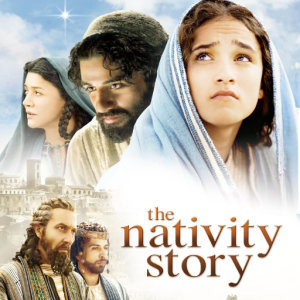
Review
The Nativity Story approaches one of the most familiar narratives in Western culture with unusual physical seriousness. Instead of pres...

Reviving an Ancient Miracle: A Deep Dive into The Nativity Story's Timeless Splendor
The Nativity Story approaches one of the most familiar narratives in Western culture with unusual physical seriousness. Instead of presenting the birth of Jesus primarily through glowing iconography, polished pageantry, or uncomplicated reverence, director Catherine Hardwicke places the story inside a world of rough stone, crowded homes, political fear, exhausting travel, and uncertain survival.
I was struck by how determined the film is to restore weight to details that can become abstract through repetition. Mary is not initially presented as a serene religious symbol. She is a young woman living in a poor village, subject to family expectations and social judgment. Joseph is not simply the loyal husband already prepared to accept a miraculous explanation. He is a working man forced to choose between public custom, private hurt, and an act of trust he cannot logically defend.
This grounding gives The Nativity Story its strongest quality. The film treats faith not as the absence of fear but as movement through fear. Mary and Joseph do not receive complete certainty before every decision. They proceed while surrounded by danger, misunderstanding, physical discomfort, and the possibility that nobody around them will believe what they claim.
Nazareth Feels Like a Community Where Privacy Barely Exists
The film’s Nazareth is not an idealized village separated from political reality. It is crowded, poor, and closely observed. Families work near one another, news travels quickly, and personal choices immediately become public knowledge.
This environment is essential to Mary’s story. Her pregnancy cannot remain a private matter. It threatens her reputation, her family’s standing, and the marriage arrangement already established with Joseph.
Hardwicke repeatedly places Mary inside groups rather than isolating her in visually sacred compositions. She grinds grain, carries water, works beside relatives, and moves through narrow spaces where every gesture can be noticed. The ordinary labor gives her later journey greater credibility.
I appreciated the absence of excessive visual cleanliness. Clothing looks worn, homes feel cramped, and daily life requires constant physical effort. This is not a decorative biblical landscape. It is a place where survival depends on work.
The social pressure becomes almost as threatening as the political one. Mary must carry a private revelation inside a community that has understandable reasons to doubt her.
Keisha Castle-Hughes Makes Mary Quiet Without Making Her Empty
Keisha Castle-Hughes gives Mary a restrained performance built around observation. She does not approach the role through constant expressions of spiritual certainty. Her Mary is thoughtful, cautious, and visibly aware of how little power she possesses over the structure of her life.
Before the annunciation, Mary is already facing an arranged marriage to a man she barely knows. Her future is being discussed by adults who interpret the arrangement through stability and family duty. Mary’s silence during these scenes does not suggest passivity. Castle-Hughes allows resistance, anxiety, and calculation to remain visible beneath obedience.
The annunciation is handled with relative simplicity. The scene avoids overwhelming spectacle and focuses instead on Mary’s response to information that is both sacred and personally dangerous.
I found Castle-Hughes most convincing when Mary’s faith coexists with confusion. She accepts the responsibility placed before her without suddenly becoming emotionally untouched by its consequences. She knows the pregnancy may destroy her standing and place her life at risk.
The performance also preserves Mary’s youth. She may carry extraordinary spiritual importance, but she is still a girl required to face adult judgment before she has fully entered adult life.
Joseph’s Choice Gives the Film Its Strongest Human Conflict
Oscar Isaac plays Joseph as a man whose decency must develop through injury rather than comfort. When he learns that Mary is pregnant, the revelation does not immediately inspire noble understanding. It humiliates him.
This reaction is dramatically necessary. Joseph’s eventual support matters because he first experiences betrayal, anger, and social embarrassment. Isaac allows those emotions to appear without turning Joseph into a cruel man.
The community expects him to respond according to custom. He could publicly reject Mary and preserve his own reputation. Instead, he begins moving toward compassion before he fully understands the situation.
I found Isaac’s performance especially effective in scenes where Joseph attempts to decide what kind of man he wants to be. He cannot verify Mary’s story through ordinary evidence. Trust therefore becomes an ethical decision rather than a comfortable conclusion.
His dream provides spiritual confirmation, but the emotional work has already begun. Joseph’s willingness to protect Mary emerges from character before it is reinforced by revelation. The film makes his faith practical. He builds, carries, negotiates, protects, and continues moving when Mary can no longer travel easily. Belief is expressed through labor.
The Relationship Develops Through Shared Hardship
The Nativity Story does not present Mary and Joseph as an immediately romantic couple. Their marriage begins through arrangement, uncertainty, and mutual caution.
This gives the journey to Bethlehem an additional purpose. Travel forces them into continuous proximity. They must share food, manage animals, cross difficult terrain, and respond to danger without the support of their families.
The relationship grows through small acts rather than declarations. Joseph watches Mary’s condition, adjusts the pace, and attempts to protect her dignity. Mary begins recognizing the generosity beneath his initial reserve.
I appreciated the film’s restraint here. A conventional romantic subplot would have felt inappropriate and historically simplified. Instead, affection develops as trust between two people carrying a responsibility neither fully understands.
Their bond becomes persuasive because it is built from work. They do not fall in love through idealized conversation. They discover one another through fatigue, discomfort, and repeated decisions to remain together.
The Journey to Bethlehem Restores Physical Difficulty to the Story
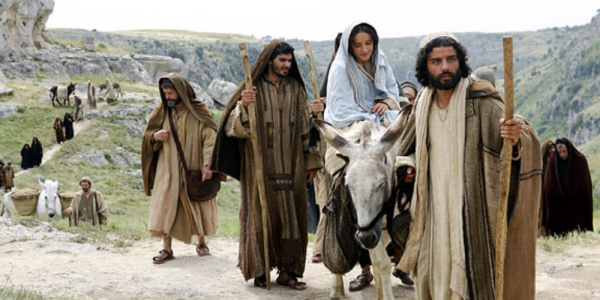
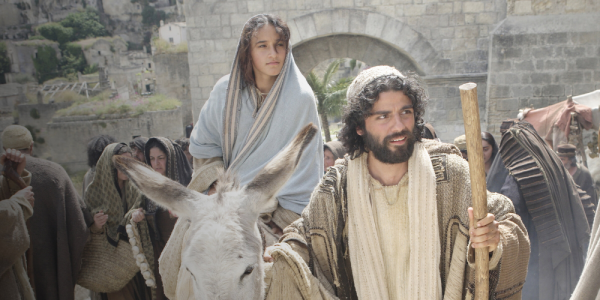
The trip to Bethlehem is often compressed into a gentle image of Mary riding while Joseph walks beside her. Hardwicke emphasizes the actual strain such travel would involve.
The roads are uneven. Weather changes. Food is limited. Rivers, hills, crowds, and animals complicate movement. Mary’s pregnancy makes every stage more difficult, while Joseph must balance urgency with her physical limits.
I found these sequences among the film’s most effective because they make the later birth feel earned through endurance. Bethlehem is not simply the next location in a sacred narrative. It is a destination reached at great personal cost.
The camera frequently keeps the characters small within the landscape. This prevents the journey from becoming heroic spectacle. Mary and Joseph look vulnerable against the scale of the terrain.
The travel also connects them to a larger population displaced by imperial policy. They are not moving freely. They are responding to a census imposed by Roman authority.
Political Power Remains Present Even When Rome Is Distant
The film places the nativity within a structure of occupation, taxation, and fear. Roman power may not appear in every village scene, but its influence shapes movement, poverty, and public life. The census becomes more than a historical detail. It demonstrates how imperial decisions enter ordinary households. Mary and Joseph must leave home because a distant authority requires bodies to be counted and controlled.
Tax collection scenes establish the economic pressure experienced by rural families. People produce food and labor yet remain vulnerable to officials who can take what they need. This political context deepens the film’s central irony. A child understood as a future king is born into conditions defined by poverty and imperial domination.
The Nativity Story does not turn this contrast into a detailed political argument, but it keeps power visible. The sacred event occurs not outside history but within a society structured by inequality.
Herod Is Frightening Because He Understands Power Only as Competition
Ciarán Hinds plays Herod as a ruler unable to imagine authority without threat. The possibility of another king, even a child, becomes intolerable because his political identity depends on control.
Hinds gives the role a tired, suspicious quality. Herod does not appear secure despite his palace, soldiers, and wealth. Power has made him more fearful rather than less.
The contrast with Mary and Joseph is clear but effective. Herod occupies large rooms and commands armies, yet he is emotionally imprisoned by the possibility of losing status. Mary and Joseph possess almost nothing, yet they continue acting from trust.
I found Herod more effective when the performance remained quiet. His calculations and watchfulness create greater tension than open displays of anger.
The film presents political violence as the product of insecurity at the highest level. Herod’s fear moves downward through soldiers and eventually reaches families who have no access to the decisions threatening them.
The Magi Bring a Different Visual and Intellectual Texture
The journey of the Magi runs parallel to Mary and Joseph’s story. Their scenes introduce scholarship, astronomy, debate, and the interpretation of signs.
These characters provide occasional humor, but their presence also broadens the scale of the narrative. While Mary and Joseph move through immediate physical hardship, the Magi attempt to understand the historical meaning of what is happening.
I liked the contrast between their resources and their uncertainty. They possess wealth, education, and the ability to travel with protection, yet they are still following a sign whose full meaning remains beyond them.
The film does not portray them as identical wise figures. They debate interpretation and respond differently to the journey. This gives the group personality without reducing their role to comic relief. Their arrival also creates one of the film’s most important contrasts: powerful visitors kneeling before a child born in extreme simplicity.
Elizabeth Gives Mary a Space Without Judgment
Shohreh Aghdashloo brings warmth and gravity to Elizabeth, whose own unexpected pregnancy gives Mary someone capable of receiving her story without immediate suspicion.
The scenes between them provide emotional relief from the social tension of Nazareth. Mary is no longer required to defend herself. She can experience wonder, fear, and uncertainty in the presence of someone who understands that divine events may also be physically and emotionally difficult.
Aghdashloo’s voice and calm presence give Elizabeth immediate authority. She does not need extensive dialogue to create the sense of an older woman whose faith has already passed through disappointment.
I appreciated that the film allows female experience to exist outside male judgment in these scenes. Pregnancy is not treated only as a theological symbol. It involves bodies, risk, social vulnerability, and the need for practical support. Elizabeth’s household briefly offers Mary safety before she must return to the consequences waiting in Nazareth.
The Film’s Visual Restraint Protects It From Religious Kitsch
Religious cinema often struggles with sacred imagery. Too much visual reverence can make human characters feel like figures in a painting rather than people living through events.
Hardwicke avoids this through texture. The film favors earth, stone, smoke, cloth, animals, and natural light. Interiors are dim, and the landscape frequently looks dry and unforgiving.
The compositions occasionally echo traditional nativity art, but they usually arrive after the film has established the physical reality of the scene. The image gains sacred meaning without losing human effort.
I was especially relieved that the film does not surround every spiritual moment with overwhelming light or music. Restraint allows silence, performance, and environment to carry significance. The cinematography by Elliot Davis creates beauty without making poverty picturesque. The world can be visually striking while remaining difficult to inhabit.
Mychael Danna’s Score Supports Reverence Without Overwhelming the Drama
Mychael Danna’s music combines orchestral emotion with vocal and regional textures intended to place the story outside the sound of a conventional modern drama.
The score is most effective when it remains understated. It adds spiritual atmosphere to journeys, encounters, and moments of private recognition without forcing every scene toward grandeur. There are passages where the music becomes more explicit, particularly as the narrative approaches the birth. Even then, it generally avoids turning the film into pageantry.
I found the quieter sound design equally important. Animals, tools, footsteps, wind, and crowded human spaces keep the world materially present. The birth of Jesus gains power partly because the surrounding environment does not suddenly become unreal. The sacred moment occurs amid breath, pain, dirt, and limited shelter.
The Birth Scene Is Powerful Because It Remains Physical
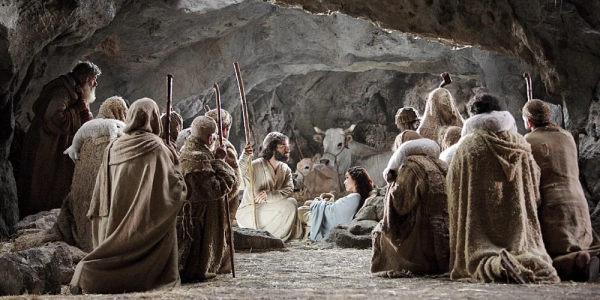
The film’s central event is staged with seriousness but not decorative perfection. Mary is exhausted. Joseph is frightened and practical. The available shelter is inadequate, and the birth requires effort rather than symbolic stillness. This physicality matters. The scene respects the theological importance of the event while remembering that childbirth is painful, dangerous, and dependent on care. Castle-Hughes communicates fear and endurance without excessive dramatization. Isaac’s Joseph cannot remove the pain, so he supports her through presence and action.
I found the scene moving because the film does not rush toward the famous completed image. It allows the process to exist before mother, child, and Joseph become the recognizable nativity arrangement. The result is reverent precisely because it remains human.
The Shepherds Represent Recognition Without Status
The arrival of the shepherds reinforces the film’s interest in social hierarchy. They are not powerful visitors, scholars, or political officials. They are workers living outside elite society.
The film gives them relatively little individual development, but their presence carries thematic weight. The news reaches people without status before it becomes known to rulers.
Their response contrasts with Herod’s. They approach the child with wonder rather than fear because they do not interpret significance as a challenge to their own authority. I appreciated the simplicity of these scenes. The film does not require elaborate speeches. Recognition is expressed through movement, attention, and humility.
The Script Is Respectful but Occasionally Too Formal
Mike Rich’s screenplay attempts to balance scriptural familiarity with natural human interaction. At its best, dialogue feels direct and grounded in immediate need. At times, however, characters speak with a formality that creates emotional distance. The film becomes cautious around material considered sacred, and that caution can make certain exchanges feel less spontaneous.
The performances often compensate. Isaac and Castle-Hughes communicate feelings that the dialogue only partially expresses. I also sensed that the film avoids some psychological complexity to preserve reverence. Mary’s internal transformation, Joseph’s extended uncertainty, and the family consequences of the pregnancy could each support more detailed development.
The restraint keeps the film accessible to a broad religious audience, but it occasionally prevents the characters from becoming as layered as the setting allows.
Catherine Hardwicke Brings Her Interest in Young People Under Pressure
Hardwicke may initially seem like an unexpected director for a biblical drama, but her attention to young characters navigating oppressive social environments suits Mary’s story. She directs faces, bodies, and physical spaces with sensitivity. Mary’s youth remains central rather than being hidden beneath solemnity.
The village scenes show how social systems can determine a young woman’s future before she has developed authority of her own. Marriage, family reputation, religion, and economic necessity all shape the possibilities available to her.
Hardwicke does not turn Mary into a modern rebel placed inside an ancient setting. Her strength emerges through the cultural and spiritual language of her world.
The director is less confident during some of the palace scenes, which occasionally feel more conventional than the intimate material. Her strongest work remains close to Mary and Joseph.
The Film Finds Drama in Trust Rather Than Suspense
Because the outcome is widely known, The Nativity Story cannot depend on uncertainty about what will happen. Its drama comes from how the characters continue toward an event whose meaning they cannot fully see.
Mary must trust that the message she received has purpose. Joseph must trust Mary and his own revelation. The Magi must trust their interpretation of the star. Families must continue living under rulers who cannot be trusted at all.
This structure creates a different kind of tension. The question is not whether Jesus will be born. The question is what each person must endure or risk before reaching that point.
I found this especially effective during the journey, where faith does not remove physical obstacles. Mary and Joseph remain tired, hungry, and exposed even when moving according to divine purpose.
The Film Does Not Turn Poverty Into Spiritual Decoration
One of the production’s most important decisions is its refusal to treat poverty as visually charming. The characters’ limited resources create genuine vulnerability. Joseph’s work, family negotiations, food, transportation, and shelter all depend on material conditions. The sacred story is inseparable from economics.
The contrast between Herod’s palace and the stable is familiar, but the film earns it through sustained attention to ordinary labor. The stable is not humble in an abstract poetic sense. It is the available place because the family lacks influence and access.
This gives the nativity a social dimension that can be softened in more decorative retellings. The child is born among people whose lives are shaped by authorities far above them.
Where the Film Feels Too Careful
The Nativity Story is consistently respectful, but that respect occasionally becomes caution. Emotional conflicts are introduced and resolved without reaching their most difficult form.
Mary’s parents experience fear and social shame, yet their perspective remains secondary. Joseph’s acceptance develops quickly after the dream. The journey includes danger, but the structure rarely allows the audience to believe the characters may become psychologically divided. The result is emotionally sincere but somewhat controlled. The film wants to humanize sacred figures without risking interpretations that might feel too challenging.
I understand that balance. The story carries enormous importance for many viewers, and unnecessary provocation would not automatically create depth. Still, greater attention to doubt, anger, and conflict could have strengthened the faith being portrayed. Trust is most powerful when the alternative remains emotionally credible.
The Final Images Unite Intimacy and Historical Scale
As the shepherds and Magi arrive, the small family inside the shelter becomes the center of a much larger story. The film expands in meaning without dramatically expanding in visual spectacle.
Mary and Joseph remain exhausted parents beside a newborn child. The visitors understand significance that the immediate environment does not outwardly display.
This contrast gives the conclusion its power. Nothing about the shelter resembles political authority. There is no army, wealth, or public ceremony. The film locates importance in vulnerability.
I appreciated that the final reverence does not completely erase the danger surrounding them. Herod’s fear continues, and the family’s safety remains uncertain.
The birth is therefore not presented as the end of struggle. It is the beginning of another journey.
A Biblical Drama Sustained by Its Human Scale
The Nativity Story does not radically reinterpret the biblical narrative, nor does it approach the material with theological complexity beyond its familiar framework. Its achievement is more modest and more effective: it makes the journey feel physically and emotionally lived.
Keisha Castle-Hughes gives Mary youth, reserve, and quiet resolve. Oscar Isaac makes Joseph’s trust a moral choice shaped by pain rather than automatic obedience. Shohreh Aghdashloo brings warmth to Elizabeth, while Ciarán Hinds gives Herod the fear of a ruler who cannot imagine power without possession.
Catherine Hardwicke’s direction is strongest when the camera remains close to ordinary labor, social pressure, and the relationship developing between Mary and Joseph. The production design, natural landscapes, restrained score, and textured cinematography protect the story from becoming a polished religious display.
The film occasionally feels too careful and formally respectful. Some conflicts resolve before they reach their greatest emotional depth, and several supporting figures remain closer to scriptural functions than complete dramatic characters.
Even so, I found the film moving because it understands that sacred significance does not eliminate human vulnerability. Mary still fears judgment. Joseph still experiences doubt. Travel remains exhausting. Political power remains dangerous. Childbirth remains physical.
The Nativity Story finds reverence not by removing these difficulties, but by allowing faith to exist inside them.
Pros:
- Authentic historical production design that recreates ancient settings with detail
- Subtle and immersive storytelling that allows for personal reflection
- Masterful performances that convey deep emotional and spiritual nuances
- Cinematography that uses natural lighting effectively to evoke the era
- A rich and atmospheric musical score that complements the narrative
- Wide accessibility across multiple online platforms for streaming and downloading
Cons:
- The film's deliberate pace may feel slow for viewers seeking faster-paced action
- Its minimalist dramatic approach might not satisfy audiences expecting more sensational effects
- The understated emotional tone could be perceived as lacking intensity by some viewers









Movie Reviews

Minecraft

Grand Theft Auto V

Toca Boca World

Roblox

Leave a comment
Your comment is awaiting moderation. We save your draft here
0 Comments