
Review
The Year Without a Santa Claus begins with an idea that remains surprisingly unusual for a family Christmas special: Santa Claus is tir...

Rediscovering the Spirit: A Timeless Journey Through Holiday Magic
The Year Without a Santa Claus begins with an idea that remains surprisingly unusual for a family Christmas special: Santa Claus is tired. He is not missing, trapped, transformed, or threatened by an external villain. He is physically unwell, emotionally discouraged, and no longer convinced that the world cares whether he arrives.
I find that opening more affecting than the title’s playful tone initially suggests. Christmas stories usually treat Santa as an inexhaustible source of patience and generosity. Here, he experiences something close to professional burnout. He has spent years fulfilling expectations, yet one dismissive doctor and a collection of discouraging observations are enough to make him question the value of continuing.
The special turns that sadness into a compact adventure involving traveling elves, an ill young reindeer, a skeptical child, a warm Southern town, and two spectacularly self-important controllers of the weather. The narrative is uneven, and several developments arrive through convenient intervention rather than carefully built consequence. Yet the production possesses a handmade warmth that allows its emotional sincerity and eccentric humor to exist comfortably beside one another.
Santa’s Exhaustion Gives the Fantasy an Adult Emotion
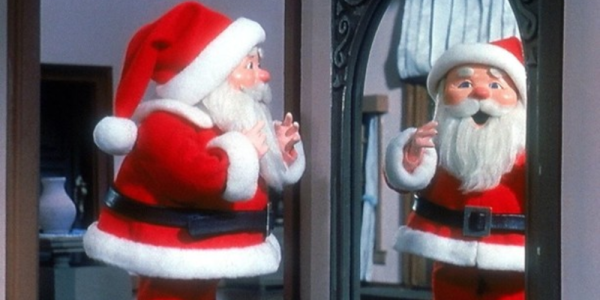
Mickey Rooney voices Santa as a figure who has lost more than physical energy. His cold becomes an outward sign of discouragement. He has begun interpreting doubt as rejection and changing attitudes as proof that his work no longer matters.
I appreciate that the special allows Santa to behave somewhat selfishly without making him cruel. His decision to stay home will disappoint children around the world, but it grows from vulnerability rather than indifference. He wants reassurance that his effort has meaning.
Rooney gives the voice an appealing heaviness. This Santa does not sound like the commanding figure from a grand public ceremony. He sounds like an older worker who has repeated the same enormous task for so long that he can no longer separate duty from identity.
The emotional conflict is simple enough for children to understand while remaining recognizable to adults. Even people associated with joy may become exhausted by being expected to produce it constantly. Santa cannot ask the world directly whether it values him, so he withdraws and waits to see what happens.
Mrs. Claus Is the Actual Leader of the North Pole
Shirley Booth’s Mrs. Claus narrates the story and immediately becomes its most practical adult. While Santa retreats into discouragement, she assesses the situation, considers the consequences, and begins organizing a response.
I enjoyed the quiet authority Booth brings to the role. Mrs. Claus does not challenge her husband through loud confrontation. She understands his pride too well for that approach. Instead, she allows him to believe he is resting while arranging a mission intended to prove him wrong.
The special briefly teases the possibility that she could personally replace Santa. The musical number built around this idea is lighthearted, but it also exposes an important truth: the North Pole already depends on her intelligence, emotional awareness, and administrative competence.
Her plan is not without flaws. Sending two inexperienced elves into the human world creates avoidable problems, and much of the later crisis grows from limited preparation. Still, she remains the character who understands that Santa’s disappointment cannot be corrected through argument alone. He needs evidence of connection.
The Animagic Style Makes Every Movement Feel Handmade
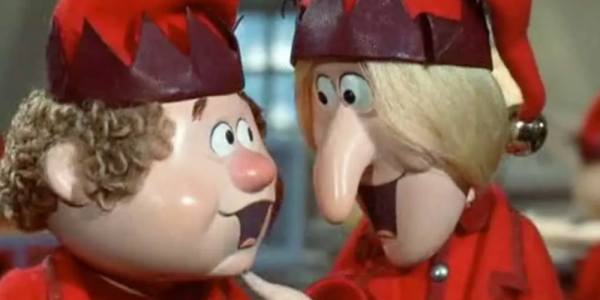
The Rankin/Bass stop-motion style gives the special a visual texture that remains charming precisely because it is imperfect. Characters move with a slight stiffness, fabric and hair retain visible material qualities, and miniature locations feel constructed rather than digitally limitless.
I never forget that I am watching puppets photographed one frame at a time. Instead of weakening the fantasy, that awareness creates intimacy. The world appears touched by human hands.
The rounded faces, exaggerated noses, painted expressions, and simplified bodies give each character immediate readability. Santa appears soft and tired. Mrs. Claus looks composed and alert. The Miser brothers are designed around sharp visual extremes that communicate personality before they begin singing.
There is also pleasure in the scale of the sets. Snowdrifts, workshops, rooftops, streets, and weather palaces are small physical spaces pretending to be enormous. The illusion is never seamless, yet it remains inviting.
Modern animation can create more convincing motion and atmosphere, but perfection would remove part of this production’s appeal. Its limitations are inseparable from its personality.
Jingle and Jangle Carry the Plot With Cheerful Incompetence
The elves Jingle and Jangle are sent into the human world to find evidence that people still believe in Santa. They are loyal, enthusiastic, and almost completely unprepared for the practical demands of the assignment.
Their names, matching clothes, and nervous voices establish them as comic companions rather than heroic adventurers. They become lost, misunderstand local customs, and attract attention through their unusual appearance.
I found their incompetence pleasant rather than frustrating because the special never asks them to solve everything alone. Their main dramatic function is to carry North Pole innocence into a skeptical environment.
They expect belief to be natural. When children or adults question Santa’s existence, the elves respond with genuine confusion. Their surprise reveals how isolated the North Pole is from changing human attitudes.
The characters are not especially deep, but they give the middle of the story a gentle rhythm. Their friendship also keeps the mission from becoming emotionally heavy. Whenever discouragement begins settling over the plot, one of them introduces a practical problem that needs immediate attention.
Vixen Makes the Adventure More Vulnerable
Young Vixen accompanies the elves and becomes ill after entering the unfamiliar Southern climate. Her weakness adds urgency to a story that might otherwise remain a series of comic misunderstandings.
The image of a small reindeer struggling away from the snow gives the special one of its clearest emotional appeals. Vixen is not responsible for Santa’s discouragement or the elves’ poor planning, yet she experiences the physical consequences of the mission.
I noticed how quickly the human characters become compassionate once they encounter her. Belief in Santa may be uncertain, but concern for a vulnerable animal requires no supernatural conviction.
Vixen therefore becomes a bridge between fantasy and ordinary kindness. People may question where she came from, but they do not question whether she needs care.
The special uses her condition somewhat manipulatively, yet the simplicity works. Her illness gives the characters a reason to cooperate before they agree about Christmas itself.
Southtown Provides a Clever Contrast to the North Pole
The elves land in Southtown, a place defined by warmth, sunshine, and the absence of traditional winter imagery. Choosing this setting allows the special to separate Christmas feeling from snow.
The town looks festive in a different way. There are bright streets, friendly residents, children, and civic leaders, but the climate does not match the visual language usually associated with Santa.
This becomes important when the characters attempt to arrange snowfall as proof of Christmas magic. Snow is treated not merely as weather but as a cultural symbol capable of changing public emotion.
I found the setting visually useful even though the townspeople remain broadly characterized. Southtown represents ordinary America rather than a fully developed community. Its residents are present to demonstrate skepticism, kindness, and eventual enthusiasm.
The Mayor is especially theatrical. He does not simply agree to help. He turns cooperation into a challenge that requires an impossible public sign. His demand moves the story toward the Miser brothers, where the special discovers its most memorable identity.
Ignatius Thistlewhite Gives Skepticism a Child’s Voice
Ignatius Thistlewhite, often called Iggy, is the child who tells the elves that he no longer believes in Santa Claus. His doubt is not presented as rebellion. It is a response to the adults and culture around him.
I like that the special does not make him arrogant or unpleasant. Iggy is willing to reconsider, particularly when evidence becomes difficult to ignore. His skepticism is flexible rather than hostile.
The character allows the story to examine belief without treating disbelief as moral failure. Children grow, ask questions, and absorb the attitudes of adults. Santa’s mistake is interpreting that process as a personal rejection.
Iggy’s father also contributes to the discussion by revealing that adult belief may survive in different forms. One does not need to accept every literal detail in order to understand what Santa represents.
The song “I Believe in Santa Claus” expresses this idea directly. The number is openly sentimental, but it gives the special its emotional thesis: belief can refer to generosity, wonder, memory, and the willingness to offer something without expecting repayment.
Heat Miser Arrives Like a Celebrity Who Has Been Waiting Backstage
Heat Miser’s introduction transforms the special. Until that point, the story is a gentle, slightly melancholy Christmas journey. His palace brings theatrical lighting, synchronized assistants, exaggerated body language, and a song designed to announce that the entire production now belongs to him.
George S. Irving voices Heat Miser with magnificent self-satisfaction. Every line sounds like a declaration from someone who considers temperature a form of personal branding.
The character’s design is immediately expressive. His pointed orange hair resembles flame, his face is sharp, and his warm-colored surroundings appear to radiate permanent irritation. He does not merely control heat. He identifies himself with it completely.
His song succeeds because it introduces character, environment, power, and comic rhythm at the same time. The small dancing versions of Heat Miser repeat his movements as though he maintains an entire court of personal admirers.
I do not need extensive backstory to understand him. He is vain, territorial, competitive, and delighted by his own reputation. The efficiency of the characterization is remarkable.
Snow Miser Matches His Brother With Colder Elegance
Dick Shawn’s Snow Miser provides an ideal contrast. Where Heat Miser is sharp and explosive, Snow Miser moves with a looser, cooler confidence. His blue hair, pale surroundings, and relaxed delivery create a different form of theatrical vanity.
The two songs share a structure, but the performances give each brother a distinct identity. Snow Miser appears less openly angry, though his rivalry is equally childish.
I find the repetition part of the joke. Each brother believes he is entirely original while performing almost the same self-celebrating routine. Their musical identities are opposites built from the same personality.
The Miser brothers are memorable because they interrupt the expected tone of a Christmas special. They do not speak in gentle moral lessons or work toward holiday harmony. They negotiate weather like feuding entertainers arguing over territory.
Their scenes are also more visually dynamic than much of the surrounding story. The choreography, lighting, background dancers, and rhythmic editing give the production a sudden burst of modern comic energy.
The Miser Brothers Reveal the Special’s Strangest Mythology
The existence of Heat Miser and Snow Miser expands the story beyond Santa’s workshop. Weather is controlled by powerful brothers who require formal negotiation before allowing seasonal change.
The mythology is never explained in detail. I do not learn how their territories are divided, why they possess authority, or how often Mother Nature must intervene in their arguments. The lack of explanation is part of the charm.
The Christmas universe of Rankin/Bass often feels as though dozens of magical departments exist just outside the story. Santa manages gifts, the Misers manage temperature, and Mother Nature supervises larger environmental balance.
This bureaucratic fantasy gives the narrative comic structure. Creating snow in Southtown is not simply a matter of magic. Permission must pass through competing authorities.
I enjoy how ordinary the characters treat this arrangement. Mrs. Claus does not appear shocked that the weather is controlled by musical brothers. She is frustrated by the administrative difficulty of obtaining cooperation.
Mother Nature Resolves the Conflict With Maternal Authority
Rhoda Mann voices Mother Nature as the one figure capable of controlling both Miser brothers. When negotiation fails, Mrs. Claus appeals to the person whose authority they cannot ignore.
The solution is convenient, but dramatically satisfying. Heat Miser and Snow Miser may behave like powerful rulers inside their own domains, yet they become defensive children in their mother’s presence.
This reversal makes their earlier grandeur even funnier. The palaces, dancers, and weather powers cannot protect them from maternal disappointment.
Mother Nature also prevents the story from rewarding endless competition. Neither brother voluntarily sacrifices territory for the larger good. Cooperation arrives because a higher authority insists upon it.
I would have enjoyed a slightly longer scene exploring their family dynamic, though brevity preserves the joke. The special understands that the Miser brothers are most effective in concentrated appearances.
The Songs Vary in Quality but Give the Special Its Identity
Maury Laws and Jules Bass provide a collection of songs that move between narration, character introduction, emotional reassurance, and comic spectacle.
The Miser numbers are easily the most memorable because their melodies, lyrics, and visual staging form complete character portraits. They possess enough personality to survive outside the special.
“I Believe in Santa Claus” is more traditional and emotionally direct. It communicates the story’s message clearly, though some viewers may find its sincerity overwhelming.
“The Year Without a Santa Claus” establishes the central crisis with a gentle sadness, while Mrs. Claus’s musical moments give Shirley Booth opportunities to guide the tone.
Not every song advances the story with equal efficiency. A few feel included because musical numbers were expected from a Rankin/Bass production. Still, the score creates continuity between the different settings and emotional modes.
The music also compensates for the limited facial movement of the puppets. Personality enters through voices, tempo, orchestration, and repeated lyrical phrases.
The Special Treats Belief as Something Adults Must Protect
Santa initially blames children for losing interest, but the story gradually suggests that adults shape the emotional environment in which belief survives.
Iggy reflects what he has heard. The Mayor treats Christmas as a public performance requiring proof. Santa’s doctor dismisses the importance of the annual journey. Each adult attitude contributes to the discouragement Santa observes.
Mrs. Claus responds differently. She protects belief through action rather than demanding that children produce it on command.
This gives the special a more generous message than a simple warning against skepticism. Children are not responsible for maintaining the emotional confidence of adults. Adults must continue creating experiences worthy of belief.
Santa’s eventual recovery depends on recognizing that affection may remain present even when it is expressed imperfectly.
The Blue Christmas Sequence Changes Santa More Than the Snowfall Does
The special’s emotional turning point is not the magical weather agreement. It is the public response to the possibility of Christmas without Santa.
Children prepare gifts for him, reversing the normal direction of generosity. Instead of waiting to receive, they attempt to comfort the person who has spent years giving.
This reversal reaches Santa because it answers his unspoken question. He wanted proof that his work mattered. The gifts demonstrate that he is remembered as more than a delivery mechanism.
I find the idea emotionally effective despite its obvious construction. Santa’s discouragement is healed when people recognize his needs, not when they simply demand that he return to work.
The story could be interpreted as placing responsibility on children to repair an exhausted adult, but Mrs. Claus and the other adults perform most of the organizing. The children’s role is to express affection once given the opportunity.
The Pacing Is Uneven Even at a Short Running Time
The special lasts less than an hour, yet it sometimes feels divided into separate productions. Santa’s illness, the Southtown mission, Vixen’s condition, Iggy’s doubt, the Mayor’s challenge, and the Miser negotiations each compete for limited space.
The transitions are efficient but not always graceful. A major problem may be introduced, resolved through one conversation, and replaced by another before the emotional effect has settled.
The Miser scenes are so lively that the material around them can appear comparatively restrained. Once they depart, the final emotional resolution must recover the quieter tone quickly.
I do not consider this fragmentation entirely negative. Holiday specials often function as collections of memorable scenes rather than tightly unified narratives. The variety helps explain why viewers remember individual songs and characters so vividly.
Still, the central story of Santa’s discouragement occasionally disappears behind the mission designed to solve it.
Its Sentiment Works Because the Characters Are Allowed to Be Ridiculous
The Year Without a Santa Claus is openly sincere about kindness, belief, and emotional recognition. Without humor, that sincerity could become exhausting.
The Miser brothers, nervous elves, dramatic Mayor, and complicated weather negotiations prevent the production from becoming a solemn lecture. Characters behave foolishly, display vanity, and create problems through pride.
This comic imperfection makes the emotional message easier to accept. Christmas spirit does not exist only among perfectly generous people. It appears inside a world filled with exhaustion, rivalry, doubt, and administrative inconvenience.
Santa himself must learn a lesson. The special does not present him as the flawless adult correcting everyone else. His discouragement has made him unfairly dismissive of the people he serves.
That mutual imperfection gives the ending warmth. The world needs Santa, but Santa also needs the world to remind him why he continues.
The Miser Brothers Became Larger Than the Story Around Them
It is impossible for me to discuss The Year Without a Santa Claus without acknowledging the imbalance created by Heat Miser and Snow Miser. They occupy a relatively limited portion of the running time, yet dominate the cultural memory of the special.
This is partly because their scenes are more self-contained than the larger narrative. A viewer can encounter either song without context and immediately understand the personality, joke, and visual design.
The brothers also offer something absent from many traditional Christmas characters: unapologetic theatrical ego. They are not interested in goodness, redemption, or holiday duty. They want to sing about themselves and defend their preferred climate.
The production wisely resists forcing them into a sentimental transformation. They cooperate because Mother Nature demands it, not because a song suddenly teaches them generosity.
Their continued popularity does not diminish the rest of the special, though it reveals where the creative energy is most concentrated.
A Christmas Classic Built From Weariness Rather Than Wonder
What stays with me most is the decision to begin from exhaustion. Santa’s crisis is not that Christmas has been stolen. He no longer knows whether performing it is worthwhile.
The handmade animation, uneven pacing, formal narration, and simple moral language clearly belong to another era of television. Some supporting characters exist only to move the mission forward, and several resolutions depend on authority figures arriving with exactly the needed solution.
Yet the special retains emotional relevance because its central feeling is not limited to childhood. People who are expected to provide comfort can become discouraged. Traditions can begin feeling like obligations. Generosity can become difficult when appreciation is invisible.
Mrs. Claus understands that Santa cannot be ordered back into enthusiasm. He must witness the connection his work has created. Jingle, Jangle, Vixen, Iggy, the people of Southtown, and even the feuding weather brothers become part of that demonstration.
The special finally suggests that Christmas spirit is not permanent warmth existing automatically inside everyone. It must be renewed through attention, gratitude, and the decision to offer something to the person who usually does the giving.
Pros:
- Classic storytelling with enduring charm
- Heartfelt and family-friendly narrative
- Visually enchanting stop-motion animation
- Rich musical score that enhances emotional depth
- Balanced exploration of tradition and modern sensibilities
- Timeless messages of hope and resilience
Cons:
- Pacing may be slow for viewers accustomed to modern fast-paced storytelling
- Limited character development beyond archetypal roles
- Some animation techniques might appear outdated to modern audiences








Movie Reviews

Minecraft

Grand Theft Auto V

Toca Boca World

Roblox

Leave a comment
Your comment is awaiting moderation. We save your draft here
0 Comments