
Review
Ernest Saves Christmas announces its intentions with complete confidence. Santa Claus arrives in Orlando to find the man who must repla...
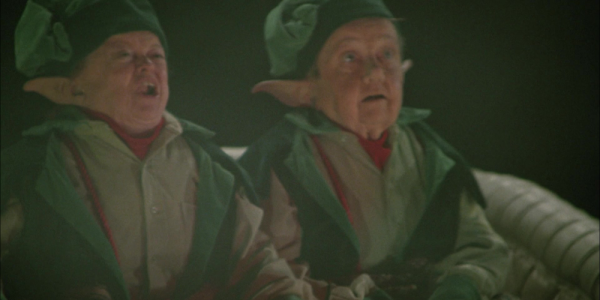

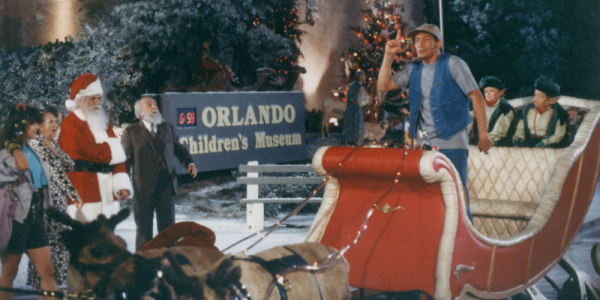
Rediscovering the Unblocked Holiday Magic of Ernest Saves Christmas
Ernest Saves Christmas announces its intentions with complete confidence. Santa Claus arrives in Orlando to find the man who must replace him, loses control of the practical arrangements almost immediately, and becomes dependent on Ernest P. Worrell, a taxi driver whose enthusiasm greatly exceeds his ability to complete a simple task without creating another problem.
I expected the film to treat Christmas mythology as an excuse for broad physical comedy. It certainly delivers collisions, disguises, misunderstandings, damaged property, unusual voices, and the particular form of chaos that follows Ernest wherever he goes. What surprised me was the sincerity underneath the noise. The film does not use Santa merely as a celebrity guest inside an Ernest adventure. It treats the continuation of Christmas as a responsibility that must be accepted by someone capable of valuing children more than personal success.
That idea gives the comedy an unexpectedly thoughtful foundation. The old Santa is not fighting an enemy who wants to destroy the holiday. He is approaching retirement. The danger comes from timing, doubt, and the possibility that his intended successor may choose professional ambition over a calling that appears irrational to everyone else.
Ernest is not selected to become Santa, but he becomes essential because he never doubts that the mission matters. Other characters require proof, contracts, explanations, or personal benefit. Ernest sees an elderly man in trouble and decides to help before he fully understands the situation.
Jim Varney Makes Ernest More Than a Collection of Reactions
Jim Varney’s performance is the reason Ernest Saves Christmas survives its own excess. Ernest is loud, intrusive, physically awkward, and almost completely unable to recognize when another person has stopped enjoying a conversation. In less controlled hands, the character would become exhausting within minutes.
Varney gives him a strange emotional purity. Ernest may misunderstand a situation, but he rarely misunderstands kindness. His decisions are not motivated by status, money, or the desire to appear intelligent. He acts because another person needs something and because helping seems more important than protecting his dignity.
The performance depends heavily on physical rhythm. Ernest’s face changes before his words catch up. Confidence expands across his expression, a plan forms, and then a flicker of uncertainty reveals that he has only just recognized the obvious flaw. Varney can move from pride to panic without interrupting the character’s verbal momentum.
I find Ernest funniest when he believes he is being reassuring. He lowers his voice, adopts the posture of an expert, and explains a plan whose instability is immediately visible to everyone else. His confidence does not conceal incompetence; it advertises it.
Varney also performs several exaggerated characters through Ernest’s improvised disguises and impressions. These moments can feel disconnected from the central narrative, yet they demonstrate the actor’s extraordinary facial and vocal flexibility. He treats every minor social obstacle as an invitation to construct an entirely new personality.
Ernest’s Taxi Ride Establishes the Film’s Moral Logic
Ernest first encounters Santa as a passenger who cannot pay the fare in conventional money. The situation should end with frustration or suspicion. Instead, Ernest becomes fascinated by the man and increasingly concerned with helping him reach his destination.
This opening interaction tells me everything necessary about the protagonist. Ernest needs income and is not especially successful at keeping employment, yet he is willing to ignore the practical problem once he senses that the passenger’s situation matters.
Santa offers information that sounds impossible, but Ernest does not respond with the defensive cynicism expected from an adult. He listens. His belief may partly arise from innocence, but it is also a form of generosity. He does not demand that Santa overcome humiliation before receiving assistance.
The unpaid fare eventually creates professional consequences for Ernest, reinforcing the film’s repeated pattern. His good intentions rarely protect him from immediate inconvenience. Kindness does not make him competent, and competence is not presented as the only measure of goodness.
I appreciated this distinction. Many family comedies reward the protagonist because moral behavior suddenly produces practical success. Ernest often does the right thing and still damages the vehicle, loses the job, or confuses everyone involved.
Douglas Seale Gives Santa Weariness Without Removing Wonder
Douglas Seale plays Santa Claus with a gentle authority that contrasts perfectly with Varney’s restless energy. His Santa is warm, observant, and increasingly aware that his time in the role is ending.
He does not behave like a magical ruler entering the human world to command attention. He arrives as an older man carrying an enormous responsibility while depending on ordinary systems such as airports, taxis, television studios, and public transportation.
This vulnerability is essential. Santa possesses extraordinary knowledge and history, but he cannot simply force Joe Carruthers to accept the role. Succession requires consent. The future of Christmas depends on another person recognizing the value of a life that offers spiritual importance rather than conventional fame.
Seale’s performance carries a quiet sadness whenever Santa discusses retirement. He is not merely tired of work. He must surrender an identity that has defined him for generations.
I was especially moved by the way he watches children. The attention is specific rather than symbolic. He remembers names, desires, and small details, suggesting that the role requires an enormous act of sustained recognition. This Santa is convincing because Seale does not overplay wonder. He allows kindness to feel practiced without becoming mechanical.
The Search for a Successor Gives the Story Unusual Stakes
Most Christmas films place Santa in danger because the sleigh is damaged, the gifts are missing, or belief is declining. Ernest Saves Christmas builds its crisis around retirement and succession.
The question is not whether one delivery can be completed. It is whether the institution can continue after the person associated with it steps away.
This gives the story an almost professional concern beneath the fantasy. Santa must identify someone with the correct temperament, persuade him to abandon another career, transfer the role, and complete the process before the Christmas deadline.
Joe Carruthers appears suitable because he already works with children. He is a television performer and puppeteer whose public persona depends on warmth, imagination, and communication. Yet those same talents have also given him ambitions that compete with Santa’s offer.
The film understands that the right person may still refuse the right responsibility. Joe must choose between an opportunity that could make him famous and a calling that will remove him from ordinary public recognition.
Joe Carruthers Is Tempted by the Wrong Kind of Visibility
Oliver Clark gives Joe a gentle quality that makes Santa’s choice understandable. He does not initially appear selfish. He enjoys working with children and seems naturally comfortable within the imaginative world of his television program.
The conflict begins when he is offered a role in a commercial horror production. The part promises career advancement and adult legitimacy. Continuing as a children’s entertainer may feel safe but professionally limiting, while the new film offers the possibility of being taken seriously.
I found this dilemma more interesting than a simple choice between good and greed. Joe is not pursuing wealth alone. He wants evidence that his abilities can carry him beyond the identity others have assigned to him.
The problem lies in what the role requires him to endorse. The production treats children’s fear as a commercial attraction, directly opposing the care and imagination that define Joe’s best qualities. Santa recognizes that Joe’s ambition has not erased his decency. The question is whether Joe can recognize it himself before the opportunity changes him.
Clark plays the uncertainty with restraint. Joe is not seduced by sudden villainy. He becomes distracted by the understandable desire to believe that professional advancement must always be pursued.
The Horror-Film Audition Creates the Story’s Clearest Moral Contrast
The proposed film within the film represents entertainment without responsibility. Its producers are interested in spectacle, fear, and marketable aggression. Children become an audience to be exploited rather than understood.
Joe’s participation is troubling because his career has been built on communicating with young viewers. Accepting the role requires him to separate professional ambition from the effect of the work.
Santa’s reaction is one of the film’s funniest and most revealing scenes. His calm generosity disappears when he witnesses an adult treating cruelty toward children as harmless entertainment. The resulting confrontation is broad, but it establishes that kindness does not require passivity.
I liked the suggestion that Santa’s moral authority includes anger. He is not endlessly cheerful in the face of exploitation. His patience has limits when vulnerable people are being treated carelessly.
The sequence also prevents the film’s message from becoming anti-ambition. Joe is not wrong to want growth. He is wrong to accept a version of success that contradicts the qualities making him worthy of greater responsibility.
Harmony Begins as a Cynic Because Cynicism Has Protected Her
Noelle Parker plays a teenage runaway who introduces herself as Harmony Star. Her chosen name immediately suggests self-invention. She has separated herself from home, constructed a confident identity, and learned to treat other people’s trust as something that can be used.
Harmony initially responds to Ernest and Santa through opportunity. Ernest is easy to manipulate, while Santa’s story appears useful or ridiculous depending on the situation.
I appreciated that the film does not make her hostility extreme. Harmony is defensive, opportunistic, and emotionally guarded rather than malicious. Her behavior suggests a young person who expects adults to disappoint her and therefore prefers to gain an advantage first.
Her relationship with Ernest develops because he offers trust without requiring her to become immediately deserving of it. This is not always wise, but it gives her an experience she is unprepared to dismiss.
Ernest believes her stories because he wants to see the best possibility. Harmony initially treats that belief as foolishness. Gradually, she begins recognizing that his lack of suspicion is connected to genuine care.
Harmony’s Transformation Gives the Film Its Emotional Arc
Ernest remains essentially himself throughout the story. Santa already understands his purpose. Joe must accept a calling, but Harmony undergoes the most visible change.
She begins by taking advantage of confusion surrounding Santa’s lost sack. Money appears to offer the independence she believes she needs. The choice is practical from her perspective, even if morally wrong.
The film gradually forces her to compare material security with the trust being extended by people who barely know her. Santa does not reduce her to the theft. Ernest continues treating her as part of the mission.
I found her change more convincing when it appeared through hesitation rather than sudden confession. Harmony becomes increasingly uncomfortable with benefiting from people whose kindness she has begun to value.
The Christmas setting gives her a path back toward connection without pretending that one adventure resolves every problem in her life. Her return home remains emotionally simplified, but the movement toward accepting care feels sincere.
Ernest and Harmony Form an Unusual Comic Partnership
Ernest is emotionally open and socially oblivious. Harmony is socially perceptive and emotionally guarded. Their contrasting abilities create a useful partnership.
She can read situations he misunderstands, while he can act with generosity she distrusts. Neither possesses what the other needs most.
The film does not force their relationship into a conventional father-daughter structure, though traces of that dynamic appear. Ernest is too chaotic to function as a stable parental figure, but his instinct to protect her becomes genuine.
Harmony’s sarcasm gives the audience a perspective from which to react to Ernest’s behavior. She can acknowledge how strange he is without completely rejecting him.
Varney and Parker establish an easy rhythm. Ernest expands a simple statement into an elaborate performance, while Harmony responds with the exhausted expression of someone who cannot believe the conversation is still happening. The comedy works because affection gradually enters the irritation.
The Film’s Orlando Setting Separates Christmas From Snow
Orlando is not the most obvious location for a traditional Santa story. The warm climate, palm trees, airport terminals, television studios, and suburban roads create a visual environment far removed from the usual snowy Christmas town.
This contrast gives the film a distinctive identity. Santa appears out of place not because people no longer believe in him, but because the physical surroundings do not match his familiar mythology.
The lack of snow also pushes the production toward other sources of seasonal atmosphere. Costumes, music, children’s programs, decorations, and Santa’s presence must carry the holiday mood.
I enjoyed the ordinariness of the locations. Christmas magic moves through parking areas, warehouses, roads, and institutional interiors rather than remaining inside a perfect village.
The setting supports Ernest’s character as well. He belongs to this world of practical confusion and working people. His participation makes Santa’s mission feel connected to everyday labor rather than distant fantasy.
The Reindeer Warehouse Is Chaotic in Exactly the Right Way
One of the film’s most memorable comic ideas involves Santa’s reindeer being treated as transported animals rather than instantly appearing through magic. Their arrival creates administrative and logistical confusion. The sequence brings the mythical and bureaucratic worlds together. The animals require paperwork, containment, identification, and physical movement through systems not designed for flying reindeer.
Ernest’s attempt to retrieve them produces some of Varney’s broadest physical comedy. He improvises authority, adopts disguises, and treats increasingly unstable plans as if they were standard procedure. The scene works because the objective remains clear beneath the chaos. The reindeer must reach Santa, and Ernest is willing to risk humiliation to accomplish it.
The production effects are modest, but their physical presence gives the sequence a tactile quality. The comedy arises from actors, animals, props, and movement rather than digital spectacle.
Ernest’s Disguises Showcase Varney More Than They Serve the Plot
Varney shifts into several exaggerated personas as Ernest attempts to overcome obstacles. These transformations draw on the actor’s background in character comedy and advertising performance.
Each identity changes his posture, voice, facial expression, and relationship to the surrounding space. Ernest does not simply wear a costume. He commits to a complete personality until the performance collapses.
I admire Varney’s technical control, though not every disguise strengthens the story. Some sequences pause the narrative so the actor can perform another comic routine. For viewers who enjoy Ernest’s style, this is part of the attraction. For others, the repetition may feel exhausting.
The best disguises remain connected to a specific objective and reveal Ernest’s unusual form of intelligence. He may lack conventional judgment, but he understands performance instinctively. He survives situations by becoming the person he imagines the room will obey.
Chuck and Bobby Expand the Film’s Comic Universe
Chuck and Bobby appear as eccentric employees connected to the transportation and handling of Santa’s equipment. Their dialogue has a strange, distracted rhythm that makes ordinary logistics feel unstable.
The characters are not essential to the emotional story, but they contribute to the film’s world of working people who encounter the impossible while continuing to think about procedures, vehicles, and equipment.
Gailard Sartain and Bill Byrge play them with contrasting energies. Chuck often attempts to sound knowledgeable, while Bobby reacts through silence and small expressions.
I found their scenes funny in concentrated doses. Like Ernest’s disguises, they can delay the central mission, but they also give the comedy a regional personality that separates it from polished studio family films.
The humor does not always depend on a conventional punchline. It emerges from speech patterns, misunderstandings, and the feeling that these men have been continuing the same unfinished conversation for years.
The Film Treats Santa as a Position Rather Than One Immortal Person
The idea that Santa is a role passed between individuals is the film’s most imaginative contribution to Christmas mythology. It explains how the figure can remain eternal while allowing the person inside the role to age. Each Santa serves for a defined period before finding a successor. The continuity of Christmas therefore depends on mentorship, recognition, and voluntary acceptance.
I liked how this idea gives the red suit moral significance. Wearing it does not simply provide magical abilities. The role requires a particular relationship with children and generosity. Joe cannot become Santa because he resembles the conventional image. He becomes eligible because he possesses qualities the current Santa has observed over time.
The transfer also introduces mortality without making the story frightening. The older Santa is not dying in a tragic sense. He is completing his service and moving toward rest. This gives the final scenes a gentle emotional weight. One generation must step aside for another, and successful succession requires both trust and surrender.
Santa’s Age Is Treated With Dignity
The older Santa’s physical limitations create practical difficulties throughout the story. He becomes separated from his belongings, struggles with human institutions, and depends on others to complete the mission. The film does not use his age only as a joke. His vulnerability is connected to the natural end of a long period of work. Seale plays him with enough authority that dependence never becomes humiliation. Accepting help is part of completing his responsibility.
I found this especially meaningful in contrast with Joe’s ambition. The older man is learning to release a role, while the younger man must decide whether to accept one. Both transitions require giving up a previous identity. The story recognizes that leadership includes knowing when another person must continue the work.
The Sleigh Flight Embraces Practical, Imperfect Spectacle
The climax eventually places Ernest in control of Santa’s sleigh, a decision that is both narratively necessary and obviously dangerous. The film has spent its running time demonstrating that he should not be trusted with ordinary vehicles, making the magical transportation immediately comic. The effects are visibly limited by the era and budget. The sleigh does not move with the seamless weightlessness of modern digital fantasy.
I find the imperfection charming because the sequence remains focused on performance. Ernest’s panic, concentration, and sudden confidence provide the entertainment.
The sleigh is magical, but operating it still appears to require skill. Ernest responds as he does to every unfamiliar system: he assumes determination can substitute for instruction. The sequence becomes a final test of his faith. He cannot fully understand the mechanics, but he believes the mission must succeed and continues acting accordingly.
John Cherry Understands How to Frame Varney’s Physical Comedy
Director John Cherry had extensive experience with the Ernest character, and that familiarity is visible in the staging. The camera usually allows enough space for Varney’s complete body to participate in the joke. Close-ups capture his elastic facial work, while wider frames allow objects, doors, vehicles, and other performers to become part of the comic rhythm.
The filmmaking is functional rather than visually elegant. Locations are established clearly, action is easy to follow, and the story moves between its separate groups without becoming confusing.
Cherry occasionally allows routines to continue longer than their strongest moment. Ernest’s style depends on escalation, but escalation can become repetition when the destination is already obvious. The quieter Santa material is directed with greater restraint. Seale receives time to speak and observe without the camera forcing sentiment. The tonal balance between Varney’s intensity and Seale’s calm is the production’s central directorial achievement.
The Film’s Humor Is Broad but Rarely Cruel
Ernest Saves Christmas uses humiliation, damaged objects, misunderstandings, exaggerated accents, and physical accidents. Yet its comedy generally avoids treating vulnerability as contemptible. Ernest is often the object of the joke, but the film does not suggest that his kindness is foolish. His methods are foolish. His values are not. Harmony’s homelessness and distrust are not used solely for comedy. Santa’s age is not treated as proof of irrelevance. Joe’s uncertainty is not mocked as weakness.
This generosity helps the film remain warm even when its jokes become extremely broad. The production may laugh at characters’ behavior, but it rarely denies their humanity.
I find that quality important to the film’s lasting comfort. Mean-spirited comedy would conflict with the central idea that Christmas survives through people willing to care without immediate reward.
The Music Supports a More Sincere Film Than the Comedy Suggests
Mark Snow’s score moves between playful movement, sentimental warmth, and the magical language expected from a Santa story.
The music often performs the emotional transition that the dialogue avoids. Ernest may still be behaving ridiculously, but the score can reveal that his actions have acquired genuine significance. The Christmas material is traditional enough to create familiarity without overwhelming the film with constant seasonal songs.
I appreciated the way the score supports Santa’s quieter scenes. It allows the old figure’s retirement to feel meaningful without turning every conversation into a farewell ceremony.
The soundtrack does not create a highly distinctive musical identity, but it helps unify comic routines and fantasy drama that might otherwise appear to belong to separate films.
Joe’s Decision Works Because It Requires Sacrifice
Becoming Santa cannot be a reward added to Joe’s existing career. He must choose between paths.
The horror role offers immediate professional recognition, while Santa’s position requires leaving ordinary ambition behind. The world may know Santa as a symbol, but the individual inside the role cannot pursue conventional celebrity. This sacrifice gives the decision moral value. Joe must recognize that importance and visibility are not the same.
I found his eventual acceptance emotionally satisfying because the film has established that his best work already involves bringing imagination to children. Santa’s offer does not ask him to become a different person. It asks him to commit completely to the most generous part of himself.
The transition is still remarkably quick. A longer drama might explore what Joe is leaving behind in greater detail. Within the compact structure, the clarity of the choice is enough.
Ernest Saves Christmas Without Becoming Santa
The title might suggest that Ernest will prove himself worthy of the central role. Instead, the film wisely understands that his purpose is different. Ernest lacks the calm, organization, and long-term judgment required to become Santa Claus. What he possesses is absolute willingness to help.
He becomes the bridge between the old Santa and the new one. He provides transportation, retrieves the reindeer, protects the mission, and continues moving when more capable people hesitate.
This is a satisfying use of the character because it does not falsely transform incompetence into leadership. Ernest’s value lies in loyalty, creativity, and faith rather than authority.
He does not need to receive the suit for his contribution to matter. The film’s moral generosity extends to the idea that helping another person fulfill a calling can be as meaningful as receiving the calling oneself.
The Final Transfer Gives the Comedy a Gentle Sense of Time
When Joe accepts the role, the film’s separate concerns finally meet. Santa can retire, Christmas can continue, Joe can choose purpose over image, and Ernest’s chaotic efforts acquire a clear result.
The transfer is not treated as a massive visual transformation. Its emotional importance comes from consent and recognition. I was moved by the older Santa’s willingness to step away. He has spent centuries being indispensable, yet his final responsibility is to make himself replaceable.
Joe’s acceptance also changes the meaning of his career. The performer who wanted a larger audience receives the largest imaginable audience, but not in the form he expected. The film resolves these ideas with simplicity, preserving the warmth of a children’s fantasy without reducing the transition to a joke.
A Chaotic Comedy With a Surprisingly Coherent Heart
Ernest Saves Christmas is visually modest, structurally loose, and filled with comic routines that may test viewers who do not enjoy Jim Varney’s exaggerated style. Several supporting sequences delay the main story, and the practical effects reveal the production’s age.
Yet I find the film unusually sincere. It treats Santa Claus as a responsibility passed between generations, allows an elderly figure to retire with dignity, and asks whether professional ambition is worthwhile when it separates a person from his most generous qualities.
Douglas Seale gives Santa calm authority and melancholy. Oliver Clark makes Joe’s hesitation understandable, while Noelle Parker gives Harmony a defensive intelligence that gradually softens through trust.
Jim Varney remains the center. His facial control, physical commitment, and collection of improvised personalities generate the film’s most obvious entertainment. More importantly, he gives Ernest a goodness that never depends on appearing sophisticated.
Ernest is the least organized person involved in saving Christmas, but he is also the first to behave as though it deserves to be saved. He believes before proof becomes convenient, helps before reward becomes visible, and continues after every plan has collapsed.
The film’s effects may be limited and its humor aggressively broad, but its understanding of kindness is precise. Christmas continues because one person accepts the role, another person agrees to release it, and a foolish taxi driver refuses to let either of them give up.
Pros:
- The film offers a nostalgic holiday charm that appeals to viewers of all ages.
- It features a light-hearted humor that makes it ideal for family viewing.
- Memorable character performances, especially by Ernest, create a lasting impression.
- Its accessible narrative blends comedy with heartfelt moments effectively.
- Authentic vintage style and practical effects provide a unique viewing experience.
- The movie's uplifting theme of goodwill and celebrating imperfections resonates deeply.
Cons:
- The dated production techniques may not satisfy viewers accustomed to modern effects.
- The humor can feel overly simplistic or reliant on slapstick at times.
- The storyline may seem overly familiar and lacks the complexity found in more modern holiday films.









Movie Reviews

Minecraft

Grand Theft Auto V

Toca Boca World

Roblox

Leave a comment
Your comment is awaiting moderation. We save your draft here
0 Comments