
Review
One Magic Christmas surprised me almost immediately because it does not begin from abundance, excitement, or festive anticipation. It b...

Rediscovering Holiday Miracles: An Ode to the Quiet Magic of Christmas
One Magic Christmas surprised me almost immediately because it does not begin from abundance, excitement, or festive anticipation. It begins with financial pressure, emotional exhaustion, and a mother who no longer has enough energy to pretend that Christmas automatically makes life better.
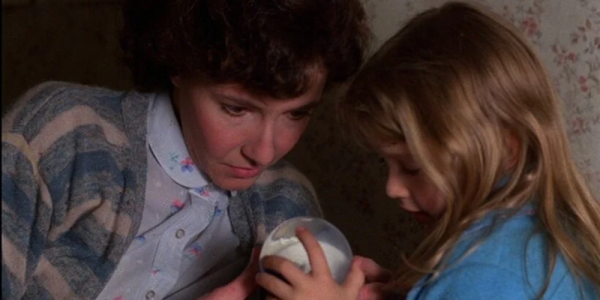
Ginny Grainger is working long hours while her husband Jack remains unemployed and dreams of opening a bicycle shop. Their children still believe Christmas should contain wonder, but Ginny sees bills, uncertain housing, limited money, and another season of expectations she may not be able to satisfy.
As a critic, I found this premise unusually honest for a family Christmas film. Ginny is not presented as cold because she dislikes decorations or refuses to sing. She is frightened. Every holiday promise feels dangerous because she knows exactly how little control the family possesses over its future.
The film then introduces Gideon, an angel who begins guiding the family through a series of events that become much darker than I expected. What follows is not a gentle lesson delivered through one magical evening. Ginny is forced to experience loss, helplessness, and the possibility that her family could disappear before she understands what Christmas belief actually means to her.
I admired the film’s willingness to make hope difficult. It does not treat belief as a cheerful mood. It treats belief as something Ginny must choose after the world has given her practical reasons to reject it.
Ginny Is Not a Cynic; She Is the Only Adult Looking at the Numbers
Mary Steenburgen plays Ginny with fatigue that feels physical. She moves through work, home, shopping, parenting, and family conversations as though every task has been placed on top of several unfinished tasks.
Her husband believes in the future. Her children believe in Santa. Ginny believes the mortgage payment will still be due after Christmas morning. I understood her immediately. Holiday films often create a practical adult whose skepticism exists mainly so that magic can prove them wrong. Ginny is more credible because her concerns are specific.
The family may lose its home. Jack has no stable income. Christmas gifts cost money they do not have. His bicycle-shop dream may be meaningful, but it does not solve the immediate problem. Ginny’s frustration therefore comes from responsibility. She has become the person expected to absorb everyone else’s hope while quietly calculating what happens if hope fails.
Steenburgen avoids making her unpleasant. Ginny still loves Jack and the children. Her love appears through work, planning, and attempts to prevent disappointment. Her mistake is believing that emotional protection requires removing wonder before wonder can make promises reality may not keep.
Jack’s Optimism Is Attractive Until Ginny Has to Finance It
Gary Basaraba’s Jack is warm, imaginative, affectionate, and deeply invested in the idea of opening a bicycle shop. His dream is not absurd. He understands bicycles, wants meaningful work, and imagines building a business that could give the family stability. The difficulty is timing. Ginny is facing immediate financial pressure while Jack speaks about future possibility. I found their conflict convincing because neither person is completely wrong. Jack’s dream may represent the path toward a better life. Ginny cannot afford to treat that path as guaranteed.
Jack also retains the emotional freedom to be hopeful partly because Ginny has accepted the practical burden. He can encourage the children’s belief while she worries about bills. The film does not criticize him as harshly as it could. His optimism is framed warmly, while Ginny’s caution becomes the emotional condition that magic must transform. I wanted more acknowledgment that positive thinking can become another form of pressure when someone else must manage the consequences.
The Grainger Home Feels Loved and Financially Fragile
The family home is modest, warm, and visibly lived in. It contains children’s belongings, practical furniture, Christmas decorations, and the evidence of ordinary family routines.
Nothing about the house appears luxurious, which makes the threat of losing it emotionally immediate. This is not an investment property or symbol of status. It is the structure holding the family’s daily life together.
I appreciated how the production design communicates scarcity without turning the family into a spectacle of poverty. They have food, clothing, and a home, but every unexpected expense matters.
Ginny’s anxiety is therefore located between survival and security. The family has enough to understand exactly what could be lost. Christmas decorations create a painful contrast. The house is supposed to represent warmth and celebration, yet Ginny cannot stop seeing its financial uncertainty.
Caleb Believes in Santa Because Childhood Still Allows Direct Requests
Caleb is young enough to believe that writing to Santa can create movement in the adult world.
He wants gifts, but his belief is connected with more than material desire. Santa represents an authority capable of hearing children when adults are too distracted or tired.
Ginny’s refusal to support that belief appears harsh from his perspective. She believes she is preventing false expectations. Caleb experiences her skepticism as the removal of one source of safety. I liked that the film does not make him unusually wise or emotionally polished. He is a child reacting to tension he cannot fully explain.
His belief becomes one of the forces Gideon protects. The angel is not interested only in gifts. He is preserving the child’s ability to imagine that kindness may arrive from outside the immediate crisis.
Abbie Sees More Than the Adults Think She Does
Abbie is old enough to notice the difference between what her parents say and what they fear. She understands that money is limited and that Ginny is unhappy, even if she cannot interpret every part of the family conflict. The children’s presence prevents the parents from discussing fear openly. Jack wants to protect them through optimism. Ginny wants to protect them through realism.
Neither strategy completely hides the truth. I found the children most convincing when they responded to mood rather than explanation. They can sense that Christmas is under pressure long before anyone tells them why.
Gideon Is an Angel Who Does Not Behave Like a Cheerful Mascot
Harry Dean Stanton plays Gideon with quiet seriousness. He does not arrive surrounded by comic confusion or excessive visual spectacle. Gideon observes, intervenes selectively, and appears to understand that Ginny’s crisis cannot be solved through one pleasant miracle. Stanton’s restrained performance gives the character unusual authority. He speaks gently, but he never appears sentimental about suffering.
I liked that Gideon does not simply tell Ginny to believe. He creates conditions where she must examine what disbelief has become. His methods are morally uncomfortable. The lesson involves exposing Ginny to devastating possibilities rather than offering patient explanation. This makes him more severe than many family-film angels. He is compassionate, but his compassion includes allowing pain to become fully visible.
The Film’s Magic Is Frightening Because It Removes Ordinary Protection
One Magic Christmas gradually moves Ginny into a reality where the family crisis becomes catastrophic. The film uses robbery, violence, separation, and apparent death to strip away her belief that emotional distance can protect her. I was surprised by how severe these events feel inside a Disney Christmas production. The story does not merely threaten to cancel a party or close a shop.
Ginny confronts the possibility of losing the people whose hopes have been frustrating her. The magical structure resembles a nightmare more than a traditional Christmas fantasy. Familiar places remain, but the moral logic changes around her. I found this effective because financial anxiety already makes ordinary life feel unstable. The fantasy takes Ginny’s fear and gives it physical form.
The Bank Robbery Changes the Film Completely
The robbery sequence is the point where One Magic Christmas abandons the safety of a gentle family drama. Until then, the conflict concerns money, unemployment, housing, and belief. Suddenly, the family faces immediate physical danger. I understood the narrative purpose. The robbery forces Jack into action and creates the tragedy that drives Ginny’s transformation.
Still, the tonal change is severe. The film moves from domestic anxiety to events that may frighten younger viewers expecting a comforting Christmas story. The robber is not developed as a complex character. He functions as the human force through which Ginny’s worst fear enters reality. I found the sequence more disturbing because the earlier financial problems were so grounded. Violence arrives inside a world that had felt ordinary and recognizable.
Jack’s Heroism Is Loving and Reckless
Jack responds to danger with courage. He sees another person threatened and acts rather than protecting himself. His decision is morally admirable, but it also reflects the same impulsive quality behind some of his earlier choices. Jack follows feeling immediately. Ginny calculates consequences. The film rewards his generosity emotionally while forcing Ginny to experience the practical cost.
I found that imbalance interesting. Jack becomes heroic in one decisive moment. Ginny must continue living with everything that follows. His action confirms that his optimism is not empty. He genuinely believes people should help one another. The tragedy is that his best quality can also remove him from the family depending on him.
Ginny’s Grief Is Presented as Disorientation Rather Than Noble Sadness
After the central tragedy, Ginny does not become beautifully reflective. She becomes desperate, confused, and incapable of accepting the scale of what has happened.
Mary Steenburgen gives these scenes raw emotional force. Her face appears to reject information before her words can respond. I appreciated the lack of graceful control. Ginny has spent the film maintaining order. Loss destroys the structure she depends on. Her earlier complaints now appear unbearable to her, not because they were invalid, but because she would exchange every financial problem for the return of her family.
The film uses this realization strongly, though it risks suggesting that people must experience catastrophe before they are allowed to value what they have. Ginny already loved her family. Her exhaustion did not prove otherwise.
The Story Is Hardest on Ginny Because She Was the Practical One
Jack’s optimism, Caleb’s belief, and Abbie’s hope are all treated as emotionally valuable. Ginny’s realism becomes the state that requires correction. I found this somewhat unfair. Her skepticism has developed because the family’s financial problems are genuine. The film eventually validates hope without solving the structural reasons she became exhausted.
Jack may return. The family may receive another chance. The bicycle shop may become possible. Yet the earlier burden placed on Ginny remains insufficiently examined. A more balanced film would allow her to recover belief while also requiring Jack to understand how much responsibility she has carried.
Harry Dean Stanton Makes Silence Feel Supernatural
Gideon rarely needs dramatic effects to appear otherworldly. Stanton’s stillness separates him from everyone around him. He watches people as though time operates differently for him.
I found his quiet presence more convincing than elaborate angel imagery would have been. He appears human enough to enter ordinary spaces while retaining emotional distance. His scenes with the children are gentle without becoming excessively cute.
With Ginny, Gideon remains compassionate but firm. He understands her pain and refuses to treat the lesson as optional. The character’s ethical logic remains mysterious. He can intervene in events but chooses not to prevent every moment of suffering immediately. That ambiguity gives the film spiritual weight beyond a simple magical reset.
Santa Exists as a Source of Grace, Not Proof
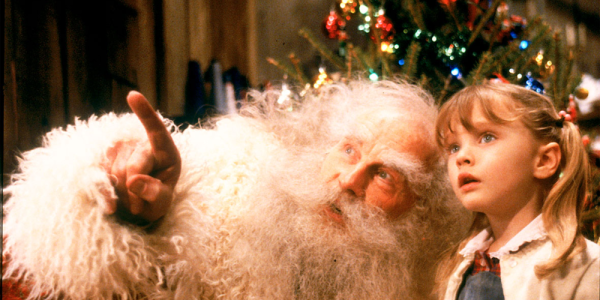
Santa Claus appears within the story, but the film does not treat his existence as the central mystery. The important question is whether Ginny can accept help, hope, and generosity after building her emotional life around disappointment. Santa represents grace because he offers something Ginny cannot earn through work or control through planning.
This is difficult for her. She trusts effort more than possibility. I liked that the film separates belief from intellectual certainty. Seeing Santa does not automatically repair Ginny’s relationship with hope. She must decide whether she can act according to belief when the outcome remains beyond her control.
The North Pole Sequence Feels Like a Different Emotional Climate
The North Pole is warmer, brighter, and more openly magical than Ginny’s world. This contrast is deliberate. Her life has become defined by cold calculation and fear, while Santa’s environment operates through generosity and abundance. The production design presents toys, decorations, workshops, and Christmas imagery with traditional warmth.
I found the shift slightly jarring after the darkness of the robbery and hospital material. The fantasy does not erase those events emotionally, even when the plot begins moving toward restoration. That discomfort gives the North Pole scenes value. Ginny enters a place of belief while still carrying the memory of what disbelief and loss felt like.
The Letter Matters Because Ginny Must Ask for Something
Ginny spends much of the film solving problems for other people and refusing to depend on possibilities she cannot verify. The act of writing or delivering a message to Santa requires a different posture. She must admit that she needs help.
This is the emotional breakthrough. Belief becomes less about accepting a magical person and more about surrendering the illusion of complete self-sufficiency. I found this moving because Ginny’s independence has become defensive. She has learned that expecting help often creates disappointment. Asking again requires courage.
The Reset Is Comforting and Morally Complicated
The film eventually restores what Ginny has lost, giving her another opportunity to approach Christmas and her family differently. This magical reversal delivers the emotional relief the audience needs after such severe events. I still found it complicated. If the tragedy is undone, what exactly remains real?
Ginny retains emotional knowledge, even if the other characters do not share the same experience. She has lived through a possible future and now understands what absence would mean. The reset therefore changes one person rather than simply erasing the story. I accepted the fairy-tale logic, though I remained uneasy that trauma functions as an educational device arranged by benevolent supernatural figures.
Ginny’s Transformation Is Not About Becoming Cheerful
The film does not require Ginny to become a permanently smiling Christmas enthusiast. Her change is quieter. She becomes willing to participate in hope without demanding proof that everything will work. She supports Caleb’s belief, relates differently to Jack’s dream, and allows the family’s Christmas rituals to carry emotional meaning again.
I appreciated that her intelligence and practical awareness do not disappear. Belief is added to her worldview rather than replacing thought. The strongest interpretation is that Ginny learns realism becomes incomplete when it accounts only for risk and never for possibility.
Mary Steenburgen Carries the Film’s Emotional Extremes
Steenburgen must play irritation, fatigue, fear, skepticism, affection, grief, confusion, wonder, and relief without making Ginny appear like a collection of lessons. She succeeds because the character’s reactions remain connected to responsibility.
Ginny is tired because she cares. She is skeptical because she wants to prevent pain. She becomes angry because hope appears to create obligations she cannot meet. Steenburgen’s grief scenes are especially strong. The performance does not soften loss into tasteful sadness. Even when the screenplay becomes emotionally manipulative, she keeps Ginny credible.
Gary Basaraba Gives Jack Warmth but Not Enough Accountability
Basaraba makes Jack easy to like. His affection for the children is visible, and his dream of opening a bicycle shop feels personal rather than irresponsible by definition. The screenplay rarely forces him to understand Ginny’s perspective fully. His hope is validated by the final outcome, while her doubt is treated as the main barrier to Christmas renewal.
I wanted a scene where Jack acknowledged that Ginny had been carrying the family’s financial fear largely alone. Without that conversation, the resolution risks suggesting that she needed more faith while he needed only another chance. The performances imply a more complicated marriage than the dialogue examines.
The Children Are Emotional Stakes More Than Fully Developed Characters
Caleb and Abbie matter deeply to Ginny’s transformation, but the film gives them limited independent development. Caleb represents belief. Abbie represents childhood awareness and vulnerability.
Their personalities appear through small moments, yet the story remains focused on what their presence means to Ginny. I would have welcomed more ordinary sibling interaction. Knowing them beyond the family crisis would make the later danger even more painful. The young performances are sincere enough to keep the emotional stakes effective.
The Film’s Christmas Atmosphere Is Beautiful and Uneasy
One Magic Christmas uses snow, decorated homes, department stores, trees, lights, winter streets, children’s letters, Santa imagery, and a traditional North Pole setting. These familiar elements never create complete comfort because financial stress remains visible beneath them. I liked the contrast between bright public decorations and Ginny’s private exhaustion.
Christmas exists everywhere visually while feeling absent emotionally. When wonder finally returns, the same decorations appear different because Ginny’s relationship to them has changed.
The Department Store Shows Christmas as Labor and Commerce
Ginny works inside a retail environment where Christmas creates additional pressure rather than relief. Decorations surround employees who remain responsible for customers, schedules, and sales. I appreciated this setting because it exposes the labor behind seasonal consumption.
For workers, Christmas can mean longer hours and greater emotional demands. Ginny’s skepticism therefore develops inside one of the places manufacturing public Christmas cheer. She sees the practical machinery while children see magic.
The Score Pushes Hard but Usually Earns the Emotion
The music supports sadness, wonder, danger, and final relief with a directness typical of 1980s family films. At times, it tells me exactly how to respond before the image has completed the work.
The stronger scenes need less assistance because Steenburgen and Stanton carry them effectively. The score remains important in connecting the domestic drama with the supernatural material. Without musical continuity, the film’s shifts between realism, nightmare, and North Pole fantasy might feel even more abrupt.
The Pacing Is Slower and Stranger Than Modern Christmas Films
The movie allows long stretches of domestic tension before revealing the full magical structure. Viewers expecting immediate Santa comedy may be surprised by how much time is spent on employment, money, marriage, and housing.
I appreciated that patience. It makes the fantasy feel like an intrusion into a developed life rather than the starting point. The middle becomes emotionally heavy, and the transition toward resolution can feel abrupt. Still, the unusual pacing helps the film retain a distinctive identity.
The Film Is Not Afraid to Upset Children
One Magic Christmas includes severe danger, apparent death, parental grief, financial insecurity, and children separated from their family. This is considerably darker than the title and Disney branding might suggest.
I respected the film’s seriousness while questioning whether every young viewer would find the eventual restoration sufficient. The story treats childhood as capable of confronting difficult emotions rather than requiring constant protection through comedy. Parents should understand that the film’s central lesson passes through intense distress.
What Frustrated Me
The film treats Ginny’s realism as the primary emotional problem even though her financial concerns are valid. Jack receives less accountability for leaving much of the practical burden to her. The angelic lesson uses extreme suffering in a way that can feel cruel rather than compassionate. The children function more as emotional stakes than independent characters.
The tone shifts sharply between domestic drama, crime, fantasy, and Christmas reassurance. The magical reset resolves the plot more easily than the family’s financial problems would realistically allow. Several emotional ideas are stronger than the screenplay’s explanations of them.
What the Film Gets Right About Christmas Anxiety
Christmas can increase fear rather than remove it. Families with limited money face public expectations to create gifts, meals, decorations, and memorable experiences. Parents may experience children’s excitement as another promise they are afraid of breaking.
Ginny’s emotional distance comes from the desire to prevent hope from becoming disappointment. The film understands that before challenging her. Its strongest message is not that practical problems are imaginary. It is that fear cannot be allowed to define every possible future.
Who Should Watch One Magic Christmas?
I recommend One Magic Christmas to viewers who enjoy darker holiday dramas, supernatural stories about second chances, family films centered on financial pressure, and Christmas narratives willing to place grief beside wonder. Mary Steenburgen gives a strong lead performance that makes Ginny’s skepticism understandable even when the film judges it too harshly.
Harry Dean Stanton fans will appreciate his restrained and slightly unsettling interpretation of an angel. Families should be prepared for intense material involving violence, apparent death, and children in danger. Viewers seeking a light Santa comedy may find the film far more serious than expected. Anyone who appreciates Christmas stories similar to It’s a Wonderful Life may recognize the structure of a person learning value through an alternate experience of loss.
My Final Verdict
One Magic Christmas is a dark, emotionally forceful, and deeply unusual family film that refuses to treat Christmas belief as easy comfort.
Mary Steenburgen gives Ginny enough exhaustion, intelligence, and love to prevent her skepticism from becoming a simple moral flaw. Harry Dean Stanton makes Gideon calm, mysterious, and more severe than the average Christmas angel. Gary Basaraba gives Jack warmth, though the screenplay does not examine his responsibility as critically as Ginny’s fear.
The film is uneven. Its supernatural lesson can feel cruel, the tone shifts sharply, and the magical restoration avoids several practical consequences. Younger viewers may find the central tragedy frightening.
I rate One Magic Christmas 8.2/10. It is not the holiday film I would choose for uncomplicated comfort, but its emotional honesty gives it lasting power.
Ginny does not lose Christmas because she stops believing in Santa. She loses it because fear has convinced her that hope is another bill she cannot afford. The miracle is not that her family returns. The miracle is that, after seeing how fragile everything is, she becomes willing to love it without demanding a guarantee.
Pros:
- Thoughtful storytelling that invites introspection
- Remarkable acting and sincere character portrayals
- Stunning cinematography that beautifully captures winter landscapes
- Evocative musical score that enhances emotional depth
- Timeless holiday themes that resonate with a wide audience
- Encourages viewers to appreciate everyday miracles and acts of kindness
Cons:
- Pacing may feel too slow for viewers seeking quick entertainment
- Limited plot complexity might not satisfy fans of fast-paced narratives
- The narrative’s predictability may not appeal to those looking for unexpected twists









Movie Reviews

Minecraft

Grand Theft Auto V

Toca Boca World

Roblox

Leave a comment
Your comment is awaiting moderation. We save your draft here
0 Comments