Review
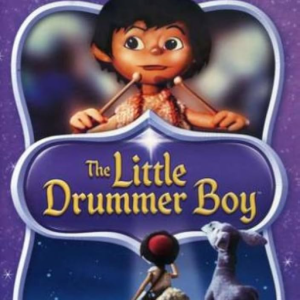
The Little Drummer Boy felt like a Christmas story built around grief before it becomes a story about hope. Aaron does not begin as a c...
The Little Drummer Boy: A Symphony of Holiday Heart and Timeless Reflection
The Little Drummer Boy felt like a Christmas story built around grief before it becomes a story about hope. Aaron does not begin as a cheerful child waiting for a holiday miracle. He begins angry, isolated, and unable to trust people after losing his family and home. His drum is one of the few things he still controls, and music becomes the only language he is willing to share freely.
That emotional starting point gives the film a different atmosphere from many classic Christmas specials. The story contains animals, songs, traveling performers, biblical imagery, and the journey toward Bethlehem, but it does not treat wonder as something immediately available to everyone. Aaron has to move through resentment before he can recognize kindness.
From my perspective as a gamer, The Little Drummer Boy resembles a short narrative campaign in which the main character begins with a powerful support ability but refuses to join the party. Aaron can calm animals and create joy through rhythm, yet he sees little reason to use that ability for people. His real progression is not learning how to play better. It is deciding that the world may still contain someone worth playing for.
Character Profile: Aaron, the Boy Who Stopped Trusting
Aaron’s anger is central to the story. He does not dislike humanity because he is naturally cruel. His hostility comes from loss.
After experiencing violence and separation, he decides that people are responsible for suffering while animals remain innocent. This belief gives him a clear emotional system: animals deserve tenderness, while humans deserve suspicion.
I found this understandable even when Aaron behaved harshly. A child without the power to repair what happened may create strict categories simply to make the world feel predictable again. His anger therefore functions like armor. It keeps others at a distance and protects him from the possibility of another attachment ending painfully.
The Drum Was More Than an Instrument
Aaron’s drum is connected to memory, identity, and control. It allows him to create something orderly inside a life disrupted by forces he could not stop. Rhythm follows rules. A beat can be repeated, adjusted, and completed. Human relationships are far less reliable.
I saw the drum as his primary equipped item. It does not produce physical strength or wealth. It gives him influence over mood, movement, and the animals who trust him. The instrument also allows Aaron to communicate without explaining his pain. He can perform while keeping his private history protected.
The Animals Formed His First Safe Party
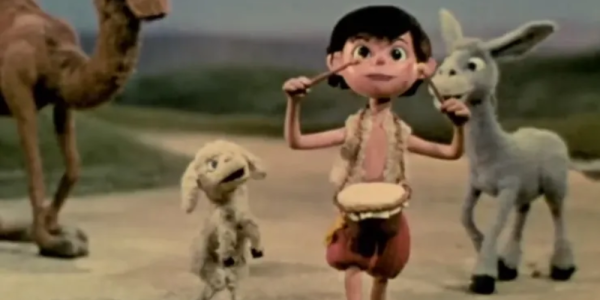
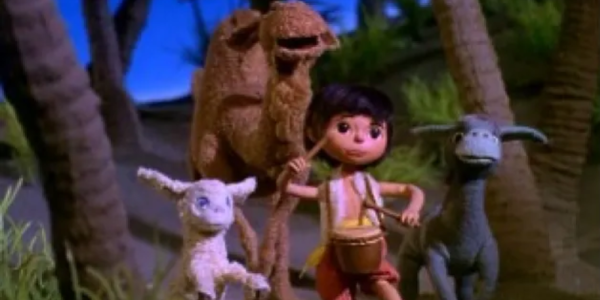
Aaron travels with animals who respond to his music and remain loyal to him. Their presence gives the film warmth while reinforcing his emotional preference for creatures over people. He does not need to explain himself to them. They do not ask him to forgive, behave politely, or describe what he has lost.
The animals accept his care and respond directly to his drum. From a gaming perspective, they are his trusted companions, each offering emotional support even when they do not solve the larger problem. Aaron feels safer with this small party because their loyalty appears uncomplicated.
Sam the Snowman Framed the Story Gently
The narration gives the film a storybook quality that softens some of its darker material. The narrator guides viewers through Aaron’s journey without pretending that every event is lighthearted.
I appreciated the contrast between the calm storytelling voice and the emotional severity of Aaron’s past. It allows younger viewers to enter a story involving grief and cruelty without removing the seriousness completely. The narrator also creates the feeling that Aaron’s experience has already become part of a larger Christmas legend.
Ben Haramed Saw a Talent He Could Sell
Ben Haramed recognizes Aaron’s unusual ability and includes him in a traveling performance. His interest is practical before it is compassionate. A boy whose drumming can make animals dance is valuable entertainment. This creates an uneasy relationship because Aaron needs food, movement, and some form of protection, while Ben sees a profitable act.
I did not view Ben as the story’s greatest source of evil, but he represents a world where talent can be appreciated without the person carrying it being understood. From Aaron’s perspective, this confirms his suspicion that people value what he can provide more than who he is.
The Traveling Show Became a Mobile Quest Hub
The performers move between towns and audiences, carrying their equipment, animals, and routines with them. This gives the film a sense of constant motion. Aaron has no stable home, so the caravan becomes a temporary base that can never feel fully secure.
Every new location offers food and opportunity while also exposing him to unfamiliar people. I liked how the performance structure allowed Aaron’s music to affect crowds even while he remained emotionally disconnected from them. He could create happiness without sharing it.
Aaron’s Gift Worked Even When His Heart Was Closed
One of the most interesting ideas in the film is that Aaron’s music already has positive power before he becomes kinder. His emotional pain does not remove his talent. He can still create beauty while feeling angry.
This makes the story more honest. Good art does not always come from emotionally peaceful people. The difference lies in intention. Early performances are tasks or survival tools. Later, Aaron chooses to offer music freely.
The Crowd Saw Entertainment, Not the Child
Audiences respond to the dancing animals and rhythmic performance, but their enjoyment does not necessarily create a relationship with Aaron. He remains separated from them by the structure of the show.
This reinforces his belief that human approval is temporary and transactional. People applaud while the act is useful, then return to their own lives. I found this emotionally important because Aaron is not healed by general attention. He needs a form of care that does not depend on performance.
The Biblical Setting Expanded the Story Beyond the Caravan
As the journey moves toward Bethlehem, Aaron’s personal story begins intersecting with a much larger event. The film shifts from one child’s grief toward the birth of Jesus, but it does not make Aaron irrelevant in the process.
His emotional struggle becomes one small human experience within a story about hope entering a difficult world. I liked that the special approaches the Nativity through the perspective of someone who does not begin with faith or excitement. Aaron reaches Bethlehem carrying anger rather than devotion.
The Three Wise Men Appeared Like High-Level Travelers
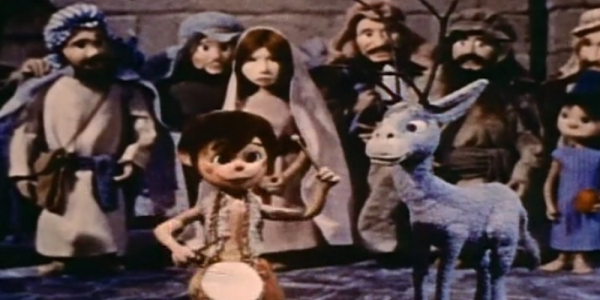
The Wise Men move with purpose, resources, and knowledge Aaron does not possess. They understand that they are following signs toward an important destination. To Aaron, they initially appear as powerful strangers traveling with valuable gifts.
From my gamer’s perspective, they resemble advanced quest characters already following a main storyline while Aaron remains occupied with a personal survival mission. Their presence shows that many different people are being drawn toward the same place for different reasons.
The Camel Added Humor Without Breaking the Tone
The animal characters provide some of the film’s lighter energy, especially when movement, stubbornness, or performance creates visual comedy. I appreciated these moments because the story needs relief from Aaron’s sadness.
The humor does not turn the animals into constant joke machines. They remain emotionally important to him. Their playfulness reminds viewers that Aaron still has access to joy, even when he refuses to recognize it in human company.
Music Functioned Like a Universal Interaction System
Aaron’s drumming crosses barriers that dialogue cannot. Animals respond, crowds gather, and emotional tension changes when he begins to play. The film presents music as something capable of reaching listeners before trust has been established.
From my perspective, the drum acts like an area effect that changes the behavior of everyone within range. It cannot solve every problem, but it creates a temporary space where fear and hostility become less dominant. Aaron’s development depends on realizing that this ability can be a gift rather than only a possession.
The Loss of Baba Changed the Mission Completely
When Aaron’s beloved animal companion is gravely injured, the story brings him into direct contact with helplessness again. This event is especially painful because Aaron has built his emotional world around the idea that animals are safe from the failures he associates with humanity.
Now someone innocent is suffering, and his drum cannot repair the injury. I found this the film’s most important emotional crisis. Aaron’s confidence in his own limited system collapses. Caring deeply means becoming vulnerable to loss, whether the relationship involves a person or an animal.
Healing Could Not Be Purchased With the Usual Reward
Aaron searches for help, but he lacks wealth or a valuable object to offer. This makes the gifts carried by the Wise Men important. Gold, incense, and myrrh are visible signs of value that fit the expectations of kings and sacred ceremonies. Aaron possesses none of them.
His crisis forces him to ask what he can give when material inventory is empty. From a gaming perspective, he reaches a quest gate requiring an offering and discovers that the accepted item may not be the one shown in the objective description.
The Stable Was Visually Modest but Emotionally Central
The place where Aaron encounters the infant Jesus is not designed like a royal court. It is humble, quiet, and occupied by a family without the visual power associated with kingship.
This contrast matters because Aaron has spent much of the story interacting with people who evaluate worth through money, performance, and status. At the stable, he meets a child who appears materially poor yet inspires gifts from powerful travelers. I liked the simplicity of the setting. It allows Aaron’s emotional choice to remain central.
“What Can I Give Him?” Became the Real Question
Aaron’s problem is not only that he lacks gold. He believes he may have nothing worthy to offer. This belief reflects his damaged self-image. He understands the value of his performance to audiences, but he does not yet see his music as a sincere expression of love. The film’s answer is that a gift becomes meaningful through intention rather than market value. Aaron can play. The ability that previously earned money and controlled performances becomes something offered without expectation of reward.
The Final Performance Was Not About Technical Skill
Aaron does not need to perform a new or more difficult composition to prove growth. The importance lies in why he plays.
For the first time, his drumming is directed toward someone without suspicion, resentment, or a business arrangement. He offers the best thing he possesses because it is genuinely his. I found this more effective than giving Aaron a magical object or sudden fortune. His gift already existed. The change occurs in his willingness to share it freely.
The Infant’s Response Changed Aaron’s Understanding of Worth
The child’s reaction communicates acceptance without requiring a speech. Aaron receives evidence that his gift matters even though it does not resemble the valuable offerings carried by others.
This moment challenges the transactional world he has experienced. The performance is not evaluated through money, status, or public applause. It is received as an act of love.
Baba’s Recovery Connected Compassion With Hope
The healing of Aaron’s animal companion provides the miracle he desperately wanted. I do not see the moment as a simple reward given because he completed the correct performance. That interpretation would make the gift feel like payment.
The emotional meaning is larger. Aaron has approached the stable without certainty, offered what he could, and encountered a form of compassion that does not exploit his talent. The recovery allows him to experience hope without needing to control every part of it.
Aaron’s Anger Did Not Disappear Through an Argument
No character defeats his bitterness by presenting a perfect explanation of suffering. The film changes him through experience.
He sees generosity, encounters people moving toward something sacred, becomes helpless before the suffering of a loved companion, and offers music when no other resource remains. This progression feels more believable than a single conversation asking him to forgive humanity immediately.
The Story Did Not Treat Grief as Disobedience
Aaron’s hostility creates problems, but the film does not suggest that sadness itself is wrong. He has genuine reasons to feel wounded. The transformation is not about forgetting what happened or pretending the world has always been kind. It is about allowing one new experience to exist beside the old pain. I appreciated that distinction because hope becomes shallow when it requires denial.
The Stop-Motion Style Gave the World Physical Weight
The Rankin/Bass animation makes every character feel like a small crafted object moving through a miniature environment. Clothing, fur, wood, sand, stone, and fabric have visible texture. The characters’ movement can be slightly stiff, but that quality gives the special much of its identity.
From my perspective, the film looks like a handcrafted game board brought to life one frame at a time. The physical appearance suits a story about humble gifts. Nothing looks effortless or digitally perfect. Every environment appears built.
Aaron’s Design Reflected His Emotional Defenses
His expression, posture, and controlled movements make him appear guarded even when he is surrounded by colorful performers and animals. The animation relies on small changes to communicate emotional progress.
A softened face or more open stance becomes important because Aaron spends so much of the story physically closed. I liked how the character design preserves his youth without making his anger look trivial.
The Animals Carried Personality Through Movement
Because the animal companions do not depend on complex dialogue, their identities come from timing, gestures, and reactions. One may appear cautious, another playful, and another deeply attached to Aaron.
Their physical behavior helps establish the trust missing from his human relationships. I found their presence essential. Without them, Aaron’s early rejection of humanity might make him emotionally inaccessible. His tenderness toward animals proves that he remains capable of care.
The Songs Worked Like Narrative Checkpoints
Music divides the film into emotional stages. Songs establish Aaron’s talent, his anger, the traveling show, the journey, and the final offering. The musical structure fits a story where the central character expresses himself through rhythm.
I appreciated that the songs do not all perform the same function. Some provide exposition, others create atmosphere, and the final number completes Aaron’s character arc. The special is short, so music allows it to move through large emotional and geographic changes efficiently.
The Title Song Contains Simplicity and Sadness
The central song is memorable because its structure is uncomplicated enough to feel like a child’s offering. The repeated rhythm mirrors the drum itself.
What gives it power is the contrast between modest sound and enormous emotional meaning. Aaron cannot present wealth or social status. He can present one honest performance. The song suggests that a sincere gift does not need to compete with grander offerings.
The Biblical Story Remained Accessible
The film introduces religious material through Aaron’s personal journey rather than stopping for a large theological explanation. Viewers encounter the Nativity as he does: gradually, through travelers, rumors, movement toward Bethlehem, and the final stable scene.
I found this approach effective because Aaron’s emotional problem gives the sacred event a human point of entry. The story is not only that an important child has been born. It is that this birth creates a moment where another wounded child discovers he still has something valuable to give.
The Special’s Darkness May Surprise Younger Viewers
The Little Drummer Boy includes grief, exploitation, danger, and the serious injury of a beloved animal. Its visual style may appear gentle, but the emotional material is not completely light. I respect that choice because Aaron’s final hope would have less meaning if the story avoided the pain shaping him. At the same time, younger children may find parts of his history and Baba’s condition upsetting. The film trusts its audience with sadness, much like several other classic holiday specials.
Ben Haramed Remained More Functional Than Complex
Ben helps move Aaron through the world and provides conflict around performance and profit. I wanted slightly more development showing whether he understood the emotional cost of using Aaron’s talent so casually. The character occasionally feels more like a narrative mechanism than a complete person. A deeper change in his behavior could strengthen the idea that Aaron’s journey affects the people around him rather than only himself.
The Plot Moves Quickly Between Major Events
The short runtime requires the film to introduce Aaron’s pain, establish the animal act, begin the journey, connect him with the Wise Men, create the crisis involving Baba, and reach the stable without much pause. Some transitions therefore feel sudden.
I occasionally wanted more quiet time between Aaron and his companions before the final crisis. Additional routine would make the threat of losing Baba even more painful. Still, the compressed storytelling gives the special the rhythm of a legend rather than a detailed adventure.
The Film Avoided Turning Aaron Into a Perfect Child
Even after the final experience, Aaron’s past does not disappear. He has learned that kindness exists and that his gift can serve a purpose beyond survival.
The story does not need to prove that he will never feel anger again. I prefer this interpretation because healing is not the same as deleting emotional history. Aaron receives a new path, not a rewritten childhood.
The Greatest Gift Was Not the Drum
The instrument is important, but the true gift is Aaron’s willingness to use it with an open heart. Before reaching Bethlehem, the drum belongs to his identity and livelihood. It helps him maintain distance while remaining useful. At the stable, it becomes an expression of connection. The object has not changed. The purpose has.
The Film’s Message Extends Beyond Artistic Talent
Not everyone can play a drum or perform for an audience, but the central idea remains accessible. A meaningful offering does not need to match another person’s wealth or status. Time, attention, kindness, effort, and honest presence can become gifts when given freely. The film uses Aaron’s music because it is the most personal thing he possesses. The lesson is not that every person must perform. It is that value can come from offering something sincere rather than something impressive.
The Nativity Changed the Scale Without Erasing Aaron
Stories connected to the birth of Jesus can make fictional characters feel secondary to the sacred event. The Little Drummer Boy keeps Aaron emotionally central by showing how that event changes one individual life. The larger story gives his personal pain context without declaring it insignificant. I appreciated that balance. Cosmic hope becomes meaningful through its effect on one grieving child and one injured animal.
Why the Final Smile Matters
Aaron’s emotional movement is communicated through a simple visible change. After spending much of the film guarded and hostile, his expression becomes capable of wonder and relief. The smile matters because it is not demanded by a crowd or produced for a paid performance. It appears after he gives something freely and receives compassion in return.
What I Would Expand in a Longer Version
I would spend more time with Aaron’s life before joining the caravan. Showing additional moments with his family and animals could deepen the contrast between the child he was and the angry performer he becomes. I would also develop Ben Haramed beyond the role of opportunistic showman. A clearer response to Aaron’s pain could add another human relationship to the story’s healing process.
The journey with the Wise Men could contain more conversation about why they are traveling and what each gift represents. This would make Aaron’s decision to offer music feel connected more directly to the offerings he sees. Finally, I would give Aaron and Baba one additional quiet scene before the injury. Their bond is understandable, but more shared time would strengthen the emotional crisis.
The Little Drummer Boy as a Role-Playing Quest
While watching, I imagined Aaron as a bard character who has rejected the social purpose of his class. He possesses a support ability capable of raising morale and calming creatures, yet he uses it mainly to survive.
His companions provide loyalty, but he refuses to recruit human party members because his trust statistic has fallen too low. The journey toward Bethlehem becomes a reputation quest. Aaron encounters different examples of greed, generosity, authority, and faith. The final stable scene does not reward him with stronger equipment. It changes the meaning of his existing ability.
The Special Chose Earnestness Over Irony
The Little Drummer Boy presents its religious and emotional message directly. It does not joke about Aaron’s offering or distance itself from the sincerity of the Nativity. That earnestness may feel old-fashioned, but it is also part of the film’s appeal. The story believes completely that a small gift offered honestly can matter. I found that conviction refreshing. The special does not apologize for wanting to move the audience.
My Final Beat in Bethlehem
The Little Drummer Boy stayed with me because it begins with a child who believes he has already learned the complete truth about humanity. People create pain, animals remain innocent, and trust only gives others another opportunity to take something away.
Aaron’s experiences support parts of that belief. Ben Haramed recognizes the commercial value of his gift. Audiences enjoy his performance without understanding him. The world continues placing vulnerable beings in danger. The film does not prove that every person is kind. It gives Aaron one encounter capable of challenging the certainty that nobody is.
From my perspective as a gamer, Aaron begins with a strong musical ability but an almost empty relationship tree. His animal companions remain loyal, yet he has no interest in expanding the party.
The journey toward Bethlehem places him near characters following a quest he does not understand. The Wise Men carry visible treasures. Aaron carries grief, a drum, and responsibility for the animals he loves.
When Baba is injured, Aaron reaches a problem that skill and anger cannot solve. He has no valuable item to exchange for healing and no argument capable of forcing the world to become fair. He can only offer what is genuinely his.
The final performance works because the drum has followed Aaron through every stage of his life. It once represented family, then survival, then public entertainment. At the stable, it becomes a gift. That change gives the story its emotional power.
The film’s pacing is compressed, some supporting characters remain simple, and the stop-motion movement may feel dated beside modern animation. Yet the handcrafted visual style, memorable music, and direct emotional message give the special a lasting identity.
The Little Drummer Boy does not argue that the smallest gift is automatically the greatest. It argues that sincerity creates a kind of value wealth cannot reproduce. Aaron arrives with no crown, gold, or social importance. He offers a rhythm played by a wounded child who has finally decided to trust one moment of kindness. The sound is modest. The emotional distance it crosses is enormous.
Pros:
- Heartfelt narrative that inspires reflection and emotional connection
- Stellar performances with nuanced character portrayals
- Beautiful cinematography that captures both intimate moments and expansive vistas
- Evocative musical score that effectively complements the film's themes
- Meticulous production design that authentically reflects the historical context
- Excellent digital accessibility across various platforms ensuring widespread viewer access
Cons:
- The pacing may feel slow for viewers seeking a more action-driven holiday film
- Some viewers might find the sentimentality and introspective tone overly heavy
- Certain historical details and period-specific aesthetics may not resonate with a modern audience









Movie Reviews

Minecraft

Grand Theft Auto V

Toca Boca World

Roblox

Leave a comment
Your comment is awaiting moderation. We save your draft here
0 Comments