Review
Poor Bunny! looked harmless when I first launched it. The screen was colorful, the controls were simple, and my character was an adorab...



Poor Bunny! Unleashed: A Journey Through Quirk, Artistry, and Community Innovation
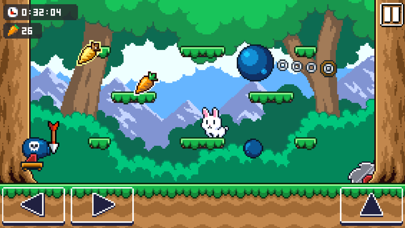
Poor Bunny! looked harmless when I first launched it. The screen was colorful, the controls were simple, and my character was an adorable rabbit whose main objective was collecting carrots. Within seconds, the arena began filling with spikes, blades, projectiles, and other hazards designed to turn that cheerful little playground into a survival test. The contrast between the cute presentation and relentless difficulty became the game’s strongest source of personality.
I could understand the entire control scheme almost immediately. The rabbit moves left or right, jumps between platforms, collects carrots, and tries to remain alive while traps activate around the arena. There are no complicated ability combinations or long tutorials standing between the player and the action. Poor Bunny! depends on precision, reaction speed, route selection, and the ability to stay calm when nearly every safe position becomes dangerous.
From my perspective as a gamer, this is the type of arcade experience that makes failure feel personal without becoming completely discouraging. A run may end after a few seconds, but restarting happens so quickly that I rarely have time to remain frustrated. I immediately remember the carrot I nearly collected, the platform I should have avoided, or the trap whose timing I misunderstood. That fast transition from defeat to another attempt gives Poor Bunny! its addictive rhythm.
A Rabbit Entered the Arena With No Defensive Equipment
The playable bunny has no weapon, armor, shield, or special attack capable of removing threats from the map. Survival depends almost entirely on movement, which makes positioning more important than aggression. I cannot defeat the traps or permanently clear an area; I can only learn their behavior and move around them. This creates a constant sense of vulnerability even after I become familiar with the controls.
I enjoyed this design because the rabbit’s limitations keep the objective clear. Every carrot collected is a small victory achieved while the arena actively tries to end the run. The character never becomes powerful enough to make the environment harmless, so improvement must come from the player. My reward for practice is not better equipment but greater control over panic.
The Carrots Function as Score, Bait, and Navigation
Carrots are the central collectible, but they serve several purposes at once. They increase the score, encourage movement across the arena, and tempt me toward positions I would otherwise avoid. A carrot appearing near an active trap creates an immediate decision between safety and progress. The game becomes interesting because standing still may preserve the run temporarily, but it will never produce a strong result.
I often lost because I treated every carrot as though it needed to be collected immediately. Sometimes waiting for a hazard to complete its cycle created a much safer route, while impatience placed the bunny directly beneath an incoming attack. Poor Bunny! rewards quick reactions, but it also rewards restraint. The best runs happened when I recognized that survival and scoring were connected without being identical.
The Arena Starts Simple and Quickly Becomes Hostile
During the first moments of a run, the arena may appear open and manageable. Platforms provide several movement options, while only a limited number of threats are active. This calm period never lasts long because additional hazards gradually enter the match and begin overlapping. A route that was safe a moment earlier can become unusable after another trap activates.
The increasing pressure gives each run a natural progression without requiring separate levels. Early gameplay tests basic movement, while later moments demand rapid adaptation to several threats at once. I liked how the arena becomes harder through combination rather than simply increasing the speed of one obstacle. The challenge comes from reading several dangerous systems simultaneously.
Spikes Turn Every Platform Into a Temporary Agreement
Platforms initially look like safe ground, but spikes can change that interpretation instantly. They may appear from surfaces, block landing areas, or force the bunny to leave before another hazard arrives. This makes every platform feel temporary rather than permanently secure. I can use one to recover my position, but I cannot assume it will remain available.
Spikes are effective because their function is visually obvious. I understand the danger immediately, yet avoiding it becomes difficult when the rest of the arena limits my movement. The trap rarely defeats me through confusion; it defeats me by appearing at the exact moment another threat removes my preferred escape route. Poor Bunny! repeatedly creates pressure through this kind of simple interaction.
Moving Blades Demand Timing Rather Than Speed
Rotating and moving blades introduce threats that occupy space according to predictable patterns. At first, I tried to outrun them whenever they approached, but constant movement often placed me in greater danger. Watching their rhythm produced better results because I could cross after the dangerous section moved away. The game repeatedly reminded me that fast input is useful only when it happens at the correct moment.
These blades also make jumping more complicated. A jump that avoids one trap may carry the rabbit into the path of another. I began considering the complete arc rather than only the takeoff position. Landing safely matters just as much as leaving the ground.
Projectiles Make the Entire Screen Relevant
Ground-based hazards allow me to focus mainly on nearby surfaces, but projectiles force attention toward the full arena. An attack may arrive from a direction that seemed irrelevant only seconds earlier. This creates situations where staring at the carrot or current platform becomes dangerous. I need to monitor the bunny and the surrounding space simultaneously.
The visual clarity usually helps me identify incoming threats, although later runs can become deliberately chaotic. Several projectiles crossing the arena while spikes and blades remain active create an overwhelming amount of movement. That chaos is part of the game’s identity, but successful survival still feels based on skill rather than complete randomness. The longer I played, the more patterns I recognized inside the apparent disorder.
The Jump Has More Responsibility Than It First Appears
Jumping is the bunny’s primary survival tool, but using it carelessly is one of the fastest ways to end a run. The jump controls vertical movement, changes platforms, avoids floor hazards, and creates access to carrots. It also temporarily commits the character to a trajectory that may be difficult to correct. Every jump therefore carries information about both the current danger and the expected landing zone.
I initially jumped whenever something approached, treating the action like a universal escape button. That strategy failed once hazards began appearing above and beside the bunny. Staying on the ground for another moment was often safer than entering the air. Poor Bunny! became more satisfying when I stopped using jumps reactively and began using them deliberately.
Momentum Makes Small Corrections Important
The movement feels responsive, but controlling a character during a crowded sequence still requires careful adjustment. A slightly longer press can move the bunny beyond a platform or place it too close to a trap. Small corrections become especially important when collecting a carrot near the edge of a safe area. The difference between success and failure may be only a brief moment of additional movement.
I liked that the controls remain simple while allowing visible improvement. There are no advanced commands to memorize, yet experienced players can move with far greater efficiency than beginners. Skill appears through route selection, controlled landings, and the confidence to remain near danger without overcorrecting. The game proves that mechanical depth does not always require many buttons.
Every Run Becomes a Short Story of Bad Decisions
Poor Bunny! produces memorable situations even though the matches are brief and the arena structure remains familiar. One run may end because I chased a carrot between two traps, while another collapses after I remain on the same platform for too long. Occasionally, several hazards align in a way that gives the bunny an unexpectedly safe route. Those moments create tiny narratives built entirely from movement and timing.
I often understood my mistake immediately after losing. The game rarely required a long explanation because the final screen showed exactly where my plan failed. This clarity made restarting easier because I already had a possible correction in mind. I might still repeat the same error, but the failure felt readable.
The Instant Restart Is Essential
An arcade game built around frequent defeat needs to return the player to action quickly. Poor Bunny! handles this well by keeping the delay between runs minimal. I can finish, recognize the mistake, and begin another attempt before the frustration has time to grow. This flow supports experimentation because one risky decision does not cost several minutes of preparation.
The restart system also creates the familiar promise that the next run will be better. I may believe that one unlucky trap prevented a new record, even when several earlier decisions placed me in that position. The game encourages this optimism by making another attempt almost effortless. Stopping becomes harder than starting again.
High Scores Create the Real Progression System
There is no traditional campaign required to make the experience rewarding. My main sense of progression came from surviving longer, collecting more carrots, and improving the personal record. A higher score proves that I handled the arena more effectively, even when the playable character and available controls remained unchanged. This creates a clean relationship between practice and visible improvement.
I enjoyed chasing my previous record because the goal was always understandable. The difference between scores could represent one additional carrot or an entire extended survival sequence. Near-record attempts became especially tense because I knew every safe decision mattered. Once I passed the old number, the pressure shifted toward extending the new record before the inevitable mistake arrived.
Collectible Bunnies Add Personality to Repeated Runs
Unlockable rabbit designs give players a cosmetic reason to continue collecting carrots. These characters do not need to change the mechanical balance to remain appealing. A different appearance can make repeated attempts feel slightly fresher while preserving the same skill-based structure. I liked browsing the available designs and selecting a bunny whose personality matched the mood of the next run.
The cosmetics also suit the game’s playful presentation. The arena may be filled with dangerous traps, but the playable characters remain cute and expressive. Unlocking another bunny feels like adding a new team member who will immediately face the same terrible conditions as everyone else. The collection system adds charm without distracting from the central survival challenge.
The Cute Art Style Makes Every Defeat Funnier
Poor Bunny! avoids realistic visual consequences and uses a bright cartoon presentation instead. This makes repeated failure easier to accept because the game treats each defeat as quick slapstick rather than serious suffering. The bunny remains adorable even while surrounded by absurdly excessive hazards. The visual contrast prevents the experience from becoming grim.
The colorful platforms, clear objects, and recognizable traps also improve readability. I can usually distinguish threats quickly without studying detailed textures. This clarity is important because the game frequently demands an immediate reaction. Decorative complexity would make later sequences much harder to understand.
The Music Supports Speed Without Controlling It
The soundtrack gives the game a light arcade energy that matches its visual tone. It encourages quick movement and repeated attempts without making every run feel overly dramatic. I appreciated that the music does not pretend the bunny is participating in an epic battle for the world. The situation remains playful even when the difficulty becomes intense.
After many attempts, repetition in the audio naturally becomes noticeable. However, the short structure means I was usually more focused on movement and hazards than on listening closely to every loop. The music performs its main task by keeping the experience energetic. It contributes to the game’s personality without demanding attention away from the arena.
Single-Player Mode Is the Cleanest Skill Test
Playing alone gives me complete responsibility for the result. There is no teammate to block movement, collect a carrot first, or create another source of chaos. This makes single-player runs useful for learning trap behavior and improving personal control. Every failure belongs entirely to my own decisions and reactions.
I found this mode the most satisfying for high-score attempts. The arena remains difficult, but the information is easier to process when only one bunny is moving. I can establish a rhythm and plan routes without adjusting to another player’s position. The experience becomes a direct conversation between me and the trap system.
Cooperative Play Creates Helpful Chaos
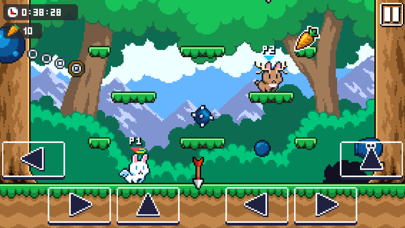
Co-op mode changes the atmosphere because another bunny is now trying to survive in the same dangerous space. Working together sounds beneficial, but limited platforms and overlapping movement can create new problems. One player may occupy the safest route while the other is forced toward a hazard. Even when both players understand the arena, coordination becomes another mechanic.
I enjoyed the shared reactions more than the possibility of perfect teamwork. A successful sequence feels better when both players escape together, while an immediate mutual defeat becomes funny rather than discouraging. Communication can improve survival, but spontaneous panic often produces the most memorable moments. The mode turns a focused arcade challenge into a social experience.
Versus Mode Changes Carrots Into Competition
Competitive play gives the same arena a more aggressive emotional structure. I am no longer concerned only with surviving and increasing the collective score. Another player is collecting carrots, occupying space, and attempting to remain active longer than I do. The traps remain the direct threat, but the opponent changes how I evaluate every opportunity.
A risky carrot becomes more tempting when taking it prevents the other player from scoring. This can encourage terrible decisions, which makes the mode entertaining. Winning may depend on mechanical skill, but patience and emotional control remain important. Watching another player take unnecessary risks can be more valuable than racing them toward every collectible.
Local Multiplayer Fits the Game Perfectly
Poor Bunny! works especially well as a game shared on one device because the controls are easy to explain. A new player does not need to study a long tutorial before becoming competitive. Within moments, both participants understand the objective and can begin blaming the traps or each other. The immediate accessibility makes it suitable for short casual sessions.
The game also creates natural spectator value. Even people who are not playing can understand when someone narrowly avoids danger or makes an obvious mistake. The bunny’s movement and the arena’s hazards communicate everything visually. This makes each run entertaining beyond the person holding the controls.
The Difficulty Comes From Overlapping Systems
None of the individual traps is especially complicated. A spike damages the bunny, a blade moves through an area, and a projectile travels along a readable path. Difficulty increases when several simple systems activate together. The player must solve a constantly changing movement puzzle without pausing the action.
I appreciated this approach because it keeps the rules understandable even during demanding moments. I rarely felt that the game had introduced an unexplained threat. Instead, I recognized every hazard and simply failed to process them quickly enough. The challenge feels honest because the necessary information is usually visible.
Randomness Prevents Complete Memorization
The arena does not become a fixed sequence that can be mastered only through remembering every upcoming event. Hazard combinations and carrot positions create enough variation to keep runs uncertain. I can learn general behavior and improve reactions, but I cannot follow one perfect route forever. This protects the game from becoming mechanical after several sessions.
Randomness occasionally creates situations that feel significantly harder than others. A carrot may appear in an inconvenient position while multiple traps limit every approach. However, the short run length prevents these moments from becoming deeply frustrating. Another attempt may produce an entirely different challenge.
Greed Is the Most Reliable Enemy
The traps may technically end each run, but greed usually creates the opportunity. I repeatedly moved toward carrots that were clearly placed in dangerous areas because the score increase felt close enough to justify the risk. The game understands how effectively a small reward can override good judgment. Every collectible becomes a test of whether I can evaluate danger honestly.
My best runs happened when I stopped interpreting caution as weakness. Missing one carrot did not end the attempt, while chasing it often did. The difficult part was remembering this lesson after several successful risky collections increased my confidence. Poor Bunny! repeatedly encourages the exact behavior it is prepared to punish.
Panic Creates More Problems Than the Traps
Later stages fill the screen with enough motion to make constant jumping feel necessary. Panic turns every threat into an immediate command, which leads to poorly planned movement. I often escaped one danger only to enter another because I reacted without considering the landing. The arena becomes easier to read when I resist the urge to move continuously.
Controlled pauses are surprisingly useful. Remaining still for one second can reveal the rhythm of a blade or allow a projectile to pass harmlessly. The game teaches that survival does not always belong to the fastest player. It belongs to the player who can separate real danger from visual pressure.
The Small Arena Encourages Efficient Movement
There is limited space, so every position has strategic value. The center may provide access to several routes but also attract attacks from multiple directions. Corners can feel secure briefly, yet they may become traps when escape paths close. Choosing where to stand becomes as important as deciding when to jump.
I began recognizing positions that offered flexibility rather than immediate comfort. A platform with two exits was usually more valuable than one protected from a single hazard. Good positioning reduced the number of emergency reactions required later. The game rewards planning even though each decision happens quickly.
Visual Clutter Is Part of the Late-Run Challenge
As hazards accumulate, the screen becomes increasingly busy. Moving traps, effects, carrots, platforms, and multiple rabbits can compete for attention. This visual density raises the difficulty naturally, but it can also make precise reading harder on a smaller display. I sometimes lost sight of the bunny for a fraction of a second during the most chaotic sequences.
The clear art direction prevents this issue from becoming constant. Characters and major threats use distinct shapes that remain recognizable under pressure. Still, I preferred playing on a screen large enough to separate overlapping elements comfortably. The game’s simplicity benefits from good visibility.
Sessions Can Be Short or Unexpectedly Long
A single run may last only seconds, making Poor Bunny! easy to launch during a short break. The problem is that one attempt rarely feels complete. A poor run invites an immediate correction, while a strong run creates confidence that an even better score is possible. Several minutes can turn into a much longer session through repeated restarts.
This structure makes the game highly accessible but also surprisingly sticky. There is always a natural stopping point after a run, yet every ending creates a reason to begin again. I found it easier to stop after achieving a new record than after failing near one. Success provides closure, while near-success creates unfinished business.
The Game Does Not Need a Large Story
Poor Bunny! provides a clear situation without constructing a detailed narrative around it. A cute rabbit wants carrots, and the environment responds with an unreasonable number of traps. That is enough to support the gameplay because the player creates the memorable events. Every run becomes a small personal story about confidence, greed, and survival.
I did not need a villain explaining why the arena exists or a campaign revealing the origin of every blade. Additional lore might be amusing, but it could also distract from the game’s directness. The absurdity works better when nobody tries to justify it. The title already communicates the appropriate reaction to the rabbit’s situation.
The Browser Format Makes It Easy to Revisit
The game’s lightweight structure suits quick access. I can enter a match without managing a large installation, complicated account system, or lengthy startup sequence. This accessibility supports the arcade design because the distance between deciding to play and controlling the bunny remains small. It feels like a modern version of opening a simple web game during a break.
The experience naturally depends on browser performance and input responsiveness. Stable controls are essential when one delayed movement can end a run. On suitable hardware, the game feels immediate and smooth enough for precise play. The minimal presentation helps it remain accessible across different devices.
Keyboard Controls Feel Direct
Using a keyboard gives movement a clear digital rhythm. Pressing left or right produces an immediate response, while the jump input becomes easy to repeat during fast sequences. I liked the certainty of these controls because the game rarely requires gradual analog movement. Most decisions involve direction, timing, and duration.
The simplicity also makes shared keyboard multiplayer possible without complicated setup. Players can learn their assigned keys quickly and begin competing almost immediately. Crowded keyboard layouts may be less comfortable during long sessions, but the short matches reduce that issue. The game prioritizes accessibility over elaborate input customization.
Controller Support Improves the Arcade Feeling
Playing with a controller makes Poor Bunny! feel closer to a compact console party game. The movement and jump controls fit naturally on a gamepad, while local multiplayer becomes more comfortable when each participant has separate hardware. I appreciated the cleaner physical space compared with sharing one keyboard. The experience felt especially suitable for playing on a larger screen.
Controller preference remains personal because the game does not require analog complexity. Keyboard input can be equally precise, particularly for experienced players. The important factor is responsiveness rather than the type of device. Poor Bunny! works because its entire control scheme can be understood through muscle memory very quickly.
The Game Rewards Observation Before Execution
Fast reactions help, but strong performance begins with noticing where danger is developing. A trap may provide a brief visual signal before activating, and recognizing that signal creates enough time to move safely. Players who react only after the threat becomes active have fewer options. This makes observation a genuine mechanical skill.
I gradually learned to look slightly ahead of the bunny rather than staring directly at it. Monitoring nearby platforms and likely carrot routes gave me more time to plan. The game became less chaotic once I stopped treating every event as a surprise. Experience converts visual noise into recognizable information.
There Is a Satisfying Rhythm to Strong Runs
During a good attempt, movement begins feeling almost musical. I jump as one trap retracts, collect a carrot, cross beneath a projectile, and land just before another platform becomes dangerous. Each action creates the position required for the next one. The arena remains threatening, but the bunny seems to move through it with temporary confidence.
These sequences are why I continued playing. They provide a sense of mastery that lasts only until one mistimed decision breaks the rhythm. Failure becomes more painful after such a smooth section, yet it also proves that a stronger score is possible. The game repeatedly offers brief glimpses of perfect control.
New Players and Experienced Players Can Share the Same Arena
The basic rules are simple enough that a beginner can compete with an experienced player immediately. The experienced player will usually survive longer, but randomness and multiplayer pressure can produce surprising outcomes. A skilled participant may take an unnecessary risk while the beginner remains in a safe position accidentally. This uncertainty keeps local matches entertaining.
The game does not require both players to understand a large roster, equipment system, or collection of advanced mechanics. Everyone operates under the same visible rules. Skill differences appear naturally through movement rather than hidden knowledge. This makes Poor Bunny! an effective choice for mixed-experience groups.
Cosmetic Progression Never Replaces Skill
Unlocking another bunny gives me a pleasant collection goal, but it does not solve the arena. The new character faces the same hazards and depends on the same controls. This preserves competitive fairness and keeps achievement connected to practice. I never felt that progression was quietly making the challenge easier.
I prefer this approach in a score-focused arcade game. Cosmetic rewards celebrate time spent without weakening the meaning of a personal record. A high score remains evidence of performance rather than accumulated upgrades. The collection supports the gameplay instead of replacing it.
Some Runs End Before They Become Interesting
The immediate danger means a careless opening can end an attempt almost instantly. Rapid restarts reduce the frustration, but several poor runs in succession can feel disposable. I sometimes wanted a slightly more forgiving opening period before the arena increased pressure. This would allow each attempt to develop a clearer rhythm.
However, early failure also reinforces the game’s identity. Poor Bunny! never promises a warm-up simply because the previous run ended quickly. I need to focus from the first movement. The arena treats every attempt as a complete challenge.
The Core Experience Can Become Repetitive
The same simplicity that makes the game accessible also limits its long-term variety. Players always collect carrots, avoid traps, and chase a stronger score inside a compact arena. Different modes and cosmetic bunnies create variation, but they do not completely transform the central loop. Extended solo sessions may therefore begin feeling repetitive.
I enjoyed the game most in short bursts or multiplayer sessions. Returning after a break restored the excitement more effectively than playing continuously for hours. Poor Bunny! is designed around concentrated arcade tension rather than a long campaign. Its limited scope feels intentional, though players seeking constant mechanical expansion may want more.
Additional Arenas Could Expand the Formula
I would enjoy seeing more arena layouts built around the same movement system. Different platform arrangements could create new safe zones, jump routes, and hazard combinations without complicating the controls. An icy arena might alter momentum, while moving platforms could force more dynamic positioning. Environmental variety would extend the game’s lifespan significantly.
The challenge would be preserving the clarity of the original setup. Too many special rules could weaken the immediate accessibility that makes Poor Bunny! effective. New arenas should change route planning rather than require long explanations. The best additions would remain understandable within the first few seconds.
Daily Challenges Could Give Runs More Direction
The high-score objective is strong, but optional challenges could encourage different playstyles. A task might reward collecting a specific number of carrots without jumping excessively or surviving while remaining within one area. Another could focus on multiplayer cooperation or a particular hazard combination. These objectives would create reasons to play differently without replacing the standard mode.
I would prefer challenges that remain optional and avoid creating excessive menu pressure. Poor Bunny! benefits from allowing players to enter immediately. Additional systems should support the arcade flow rather than surround it with constant reward notifications. The game’s clean structure is one of its strengths.
A Replay System Would Make Defeats More Entertaining
Many losses happen so quickly that I understand the mistake only after the bunny is gone. A short replay could show the final seconds and highlight how several hazards combined. This would be useful for improvement and amusing during multiplayer sessions. Watching a friend’s confident movement collapse into an obvious trap could become part of the entertainment.
The game already produces compact, shareable moments naturally. Replays or simple clip tools would make those moments easier to preserve. They would also emphasize that failure is part of the experience rather than something to hide. Poor Bunny! is often funniest at the exact moment a good plan fails.
The Title Perfectly Describes the Player’s Reaction
Every run places an innocent-looking rabbit inside circumstances that become increasingly unreasonable. The character has done nothing visible to deserve the arena, yet the traps continue arriving. This creates a mixture of sympathy and comedy that the title captures immediately. I often found myself reacting to a defeat with the same thought: that poor bunny never had a chance.
Of course, the rabbit usually did have a chance. I was the person who jumped toward the dangerous carrot or remained on the wrong platform. The title redirects blame toward the game even when the mistake belonged to me. That small emotional trick keeps failure lighthearted.
My Best Strategy Was Learning Not to Be Impressive
I initially wanted every movement to look fast and confident. I chased difficult carrots, jumped between hazards, and treated cautious routes as missed opportunities. This produced exciting moments but poor survival consistency. My scores improved when I began choosing simple, reliable movement over dramatic escapes.
Poor Bunny! rewards players who understand that survival does not need to look heroic. Remaining on a safe platform for another second can be smarter than crossing the arena for one carrot. The strongest run may contain fewer spectacular moments because good positioning prevents emergencies from developing. Discipline becomes more valuable than performance.
Why I Kept Sending the Bunny Back
Poor Bunny! succeeds because it removes almost every barrier between failure and another attempt. The controls are immediate, the objective is obvious, and the visual style makes repeated defeats entertaining rather than severe. I always understand what I am trying to improve, even when the hazard combinations prevent two runs from feeling identical. The game delivers a complete arcade loop without requiring a campaign, complicated build system, or large time commitment.
From my perspective as a gamer, the bunny enters each run with one movement kit and no way to fight back. Carrots provide the motivation, traps create the route puzzle, and the personal record supplies long-term progression. Every decision asks whether another point is worth entering a more dangerous position. The answer feels obvious until the collectible appears close enough to reach.
The game can become repetitive during extended solo play, and additional arenas or challenge types could expand its long-term variety. Visual density may also become difficult to read when several hazards overlap, especially on smaller screens. These limitations come from the same compact design that makes the game so accessible. Poor Bunny! chooses one mechanic and focuses on making it fast, readable, and replayable.
I enjoyed the single-player mode as a clean test of movement, but local multiplayer gave the concept its most entertaining form. Another rabbit creates competition, cooperation, blocked routes, and shared panic without adding complicated rules. Experienced players can chase high scores while beginners understand the objective almost immediately. That balance makes it easy to recommend as a quick party game.
My favorite moments were not always the longest runs. Sometimes the best sequence involved narrowly avoiding three traps, collecting one dangerous carrot, and then jumping directly into a blade I had completely forgotten. The game turns that failure into a joke and offers another attempt before embarrassment can become frustration. Few arcade experiences understand the value of instant forgiveness this well.
Poor Bunny! looks like a cute game about collecting vegetables, but its real subject is decision-making under pressure. The arena constantly offers small rewards in unsafe places and waits for confidence to become greed. I know another carrot is not worth ending the run, yet I continue moving toward it because the jump looks possible. The rabbit may be trapped inside the arena, but I am the one repeatedly choosing to send it back.
Pros:
- Vibrant and quirky art style with fluid animations.
- High degree of customization through mods and cheats.
- Rich replay value with secret levels and collectible artifacts.
- Strong community engagement and continuous updates.
- Wide accessibility across various platforms and unblocked play in restricted environments.
- Engaging gameplay mechanics that blend strategy, puzzles, and action.
Cons:
- A steep learning curve due to the complexity of gameplay mechanics.
- Inconsistencies in gameplay quality when relying heavily on community-created mods.
- Potential performance issues on devices with lower specifications.

How much storage do you need?
 Poor Bunny!







Recent Reviews

Minecraft

Grand Theft Auto V

Toca Boca World

Roblox

Leave a comment
Your comment is awaiting moderation. We save your draft here
0 Comments