Review
I have played through enough anniversary events in mobile games to know what usually happens. The lobby receives brighter decorations,...


Eight Years of Evolution: How Free Fire's Anniversary Update Redefines Mobile Gaming
I have played through enough anniversary events in mobile games to know what usually happens. The lobby receives brighter decorations, several limited bundles appear in the store, daily missions hand out tokens, and the whole celebration disappears before it has made any meaningful difference to the matches themselves. Free Fire: 8th Anniversary avoids part of that problem by turning its Infinity theme into something I could actually interact with.
The event still contains the expected reward tracks, collectible cosmetics, login incentives, and promotional menus. However, the Infinity Trains, Infinity Ring, special equipment, redesigned lobby, and anniversary variations in Battle Royale and Clash Squad make the celebration feel connected to the core game rather than placed on top of it.
Not every addition improves competitive balance. Some Infinity Items create sudden advantages that can feel excessive, while the number of event screens and currencies makes the interface busier than it needs to be. Even so, this anniversary gave me more reasons to alter my movement, landing strategy, and squad communication than a conventional collection of cosmetic rewards would have done.
The Infinity Theme Gives the Event a Clear Identity
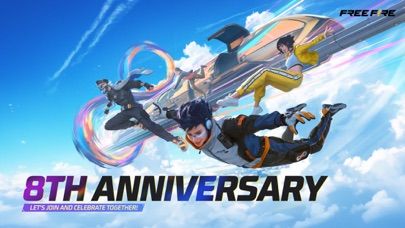
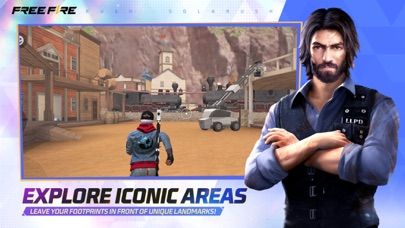
The eighth-anniversary presentation is built around the infinity symbol, glowing railway imagery, looping structures, and futuristic visual effects. It is a strong theme because it can be applied to maps, menus, transportation, outfits, and equipment without making every item look identical.
I noticed the difference immediately in the lobby. Free Fire has always treated player presentation as part of its appeal, but the anniversary environment feels more interactive than a static seasonal background. The customizable train lobby turns the waiting area into another place where players can display outfits and personal style.
This does not affect weapon handling or tactical depth, yet it matters in a game where squads spend a surprising amount of time gathering, inspecting cosmetics, and preparing for the next match. The train theme gives the group a recognizable shared space rather than another generic menu.
The visual design is deliberately loud. Neon effects, metallic surfaces, glowing lines, and animated decorations compete for attention. Players who prefer clean military presentation may find it excessive, but Free Fire has never depended on visual restraint. The anniversary understands the game’s identity and amplifies it rather than pretending to become a realistic tactical simulator.
Infinity Trains Change How I Approach the Opening Minutes
The Infinity Trains are the most important anniversary addition because they affect decisions inside a match. Instead of functioning only as decoration, the trains create temporary routes toward valuable combat zones and special equipment.
In my early matches, I treated every station as an obvious destination and rushed toward it without enough preparation. That approach usually turned the area into a crowded contest where several teams arrived with the same idea. The reward could be excellent, but reaching it safely required more awareness than simply following the event marker.
After several attempts, I began watching nearby landings and deciding whether the train was worth contesting. An aggressive squad can secure a station early and use the resulting advantage to control the surrounding area. A more cautious team can remain outside the main conflict, gather standard equipment, and intercept survivors after they leave the train route.
This creates a useful risk calculation. The anniversary content is attractive enough to influence movement, but it does not completely replace the rest of the map. I could ignore the train and still build a competitive loadout through ordinary exploration.
The best matches were those in which the train became part of a wider plan. One teammate watched the approach, another prepared Gloo Walls, and the remaining players focused on boarding or controlling the station. When everyone rushed independently, the special area became a quick way to lose coordination.
The Infinity Ring Adds High-Pressure Combat
The Infinity Ring provides a more concentrated arena where squads can compete for the anniversary’s strongest temporary advantages. Its value comes from compression. Free Fire matches already move quickly, but the ring creates an even more immediate contest for positioning and equipment.
I enjoyed the way it interrupted the usual rhythm of looting and rotation. Entering the area meant accepting that another team could appear almost immediately. There was less time to organize an ideal inventory, and short-range decision-making became more important.
The ring also rewards squads that communicate clearly. A player entering alone may secure an item, but escaping with it is another problem. Coordinated teams can establish angles, place defensive barriers, and decide whether to continue fighting or retreat once the objective has been collected.
The downside is that the ring can concentrate too much power around a small number of encounters. A squad that already wins the initial fight may leave with improved equipment and enough momentum to dominate later engagements. This can create a snowball effect, especially when experienced players understand the event mechanics better than casual participants.
I do not consider that automatically unfair. High-risk areas should offer meaningful rewards. The balance becomes questionable only when the reward is so strong that ordinary positioning and weapon skill become secondary.
Infinity Items Encourage Aggression
The anniversary equipment is designed to create dramatic moments rather than quiet statistical improvements. Items connected to Gloo Walls, recovery, weapon upgrades, and revival can immediately change the direction of a fight.
The temporary ability to place additional Gloo Walls is especially entertaining in close engagements. It allows a squad to cross exposed ground, divide enemy sightlines, or create a temporary maze around an objective. When used intelligently, it rewards quick construction and movement.
It can also produce visual clutter. Several players placing barriers in a confined space may turn a readable encounter into a confusing collection of walls, effects, and narrow openings. I occasionally won exchanges because an opponent became trapped inside the same defensive structure that was supposed to protect them.
Recovery-focused items give aggressive players more confidence to continue pushing after taking damage. This speeds up encounters but can reduce the value of slowly weakening an enemy team. A squad that successfully disengages and restores health may return before the attacking team has reorganized.
Upgrade Chips and enhanced equipment create another layer of temptation. I often had to decide whether improving my current weapon was worth remaining in a contested area. That decision is more interesting than collecting an automatic reward from a menu because it connects progression directly to danger.
Clash Squad Benefits From the Special Train Rounds
Clash Squad has always been my preferred mode when I want immediate combat without the longer preparation of Battle Royale. The anniversary’s special train rounds fit that format naturally because each advantage appears within a compact match structure.
The Boost Express can increase movement, damage potential, or recovery, encouraging both teams to contest the same space. The Weapons Express creates a direct fight over stronger equipment, while the Gloo Wall-focused variation changes how aggressively players can reshape the arena.
These rounds make individual matches less predictable. A standard Clash Squad encounter often develops around familiar purchases and repeated angles. Anniversary modifiers force players to respond to a new objective rather than repeating the same opening every round.
I enjoyed this variation in casual sessions, though I would not want every competitive match to depend on rotating bonuses. Part of Clash Squad’s appeal is its relatively clear economy and compact tactical structure. Too many temporary advantages can make a defeat feel connected to the event modifier rather than the decisions made before the fight.
As limited anniversary content, however, the train rounds succeed. They encourage experimentation without permanently rewriting the mode.
Solara Feels Designed for Faster Rotation
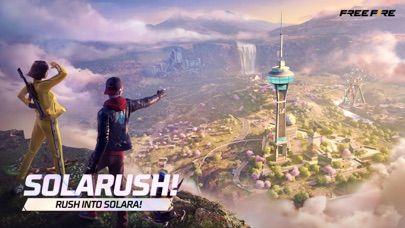
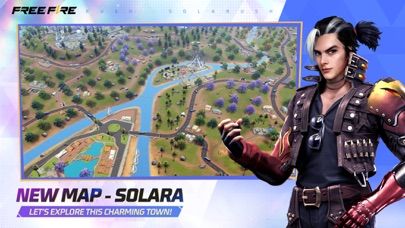
Solara gives the anniversary period a larger sense of change because it offers more than themed objects placed on an older battlefield. The map’s light-futuristic design, modern structures, interactive spaces, and movement systems make it feel noticeably different from Free Fire’s more established locations.
The Slide system became the feature I noticed most during regular movement. It allows rapid travel across sections of the map and gives rotation a sense of momentum. Instead of treating every journey as a sequence of running, vehicle searching, and exposed crossings, I could use the environment itself to reposition.
This is useful when escaping a collapsing zone or moving toward a teammate, but the routes are also predictable. A player entering a slide line becomes visible and may have limited control over the immediate path. Experienced opponents can watch exit points and prepare an ambush.
I quickly learned not to use every movement route simply because it was available. The fastest option is not always the safest. Sometimes walking around a landmark provides more control than arriving rapidly through a route another squad is already observing.
The system still improves the map’s personality. Solara does not feel like an older battlefield with different buildings. Its movement network affects how I read distance and opportunity.
Dynamic Lighting Changes Atmosphere More Than Strategy
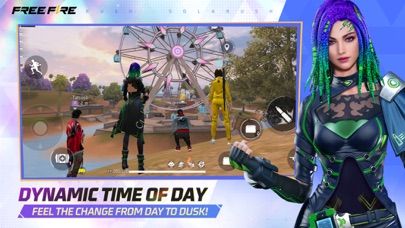
Solara’s transition from day toward dusk gives matches a more cinematic progression. Early areas appear bright and open, while later lighting creates a cooler, more dramatic atmosphere around landmarks and roads.
I enjoyed the visual change because Free Fire matches can otherwise feel environmentally static. Watching the map shift while the playable area becomes smaller makes the match feel as though it is moving toward a final stage rather than simply reducing its boundaries.
The effect on visibility is present but not consistently dramatic. Certain silhouettes and darker corners become slightly harder to read, particularly on smaller mobile screens. However, the lighting rarely transforms the match into a completely different tactical environment.
That is probably the correct balance. A more aggressive day-night system might look impressive while creating frustration for players using lower brightness or older devices.
As an atmospheric feature, the transition works. As a major strategic mechanic, it remains secondary to terrain, cover, and squad positioning.
The Anniversary Rewards Respect Active Players
The reward structure includes free items that can be earned through missions rather than placing every desirable collectible behind premium currency. The Beyond Infinity outfit, anniversary-themed Gloo Wall, emote, and profile items give active players visible proof that they participated.
I prefer this approach to events where the celebration is technically available to everyone but nearly every memorable reward requires repeated paid spins. Free Fire still contains monetized collections and premium anniversary items, yet the free track offers rewards with enough visual identity to feel worthwhile.
The community-selected Gloo Wall is one of the better examples. It reflects player participation outside ordinary matches and gives the anniversary a connection to the people who have supported the game.
The main weakness is repetition. Some missions ask players to perform familiar tasks across multiple days, creating progress through routine rather than discovery. I completed several objectives because I was already playing, not because the challenge itself was interesting.
This is common in mobile events, but a major anniversary could have included more unusual cooperative tasks tied directly to the train, Infinity Ring, or Solara landmarks.
The Event Interface Is Too Crowded
Free Fire’s menus have never been minimal, and the anniversary adds more banners, reward pages, mission tabs, promotional offers, collection screens, and timed notices.
During my first sessions, I spent too much time checking which task belonged to which event. A reward could require ordinary missions, a relay activity, a special mode, or a separate claim page. The amount of content creates value, but the presentation makes that value harder to understand.
I would prefer one central anniversary path showing all major rewards, dates, and requirements. Smaller promotions could remain separate, but the most important objectives should be visible without opening several overlapping menus.
The visual intensity also reduces the impact of individual rewards. When every screen contains glowing icons and countdowns, nothing feels completely special.
Once I learned the layout, navigation became easier. New or returning players may have a less comfortable experience, especially when they are also learning characters, weapons, pets, currencies, and regular seasonal systems.
The Celebration Works Best With Friends
The eighth anniversary repeatedly encourages squad participation, and the design makes sense. Train stations, Infinity objectives, relay rewards, and Clash Squad modifiers are more entertaining when players can discuss what they are doing.
Solo queue remains playable, but it exposes the usual communication problems. One teammate may rush the train, another may continue looting, and a third may chase a separate anniversary mission. The event gives squads more objectives, which also gives uncoordinated players more reasons to separate.
With friends, those same objectives create memorable decisions. We could nominate one player to collect a special item, decide whether to contest the Infinity Ring, and change the plan immediately when another squad arrived.
The event therefore celebrates the social part of Free Fire more successfully than a collection of individual login rewards would. Its strongest content creates stories inside matches rather than only progress bars outside them.
The Fast Match Structure Still Defines Free Fire
Even with the anniversary additions, Free Fire remains recognizable. Matches are compact, movement is responsive, combat begins quickly, and the battlefield continually pushes players toward another decision.
The new mechanics do not attempt to transform the game into a slower tactical shooter. Infinity Items reward rapid reactions, trains create mobile objectives, and Solara’s movement routes reduce downtime.
This consistency matters. Anniversary updates sometimes become so experimental that the game loses the qualities players originally enjoyed. Here, the event expands the existing rhythm rather than replacing it.
The result may not satisfy players who already dislike Free Fire’s speed, colorful presentation, or ability-driven combat. The eighth anniversary is a celebration of the established identity, not a reinvention designed to attract a completely different audience.
Weapon Encounters Remain Accessible but Visually Busy
Combat retains the sharp mobile rhythm that makes Free Fire easy to enter and difficult to master. A short encounter can involve rapid movement, character abilities, healing, Gloo Walls, weapon switching, elevation changes, and anniversary effects within seconds.
This density is exciting when I understand what every player is doing. It becomes harder to read when special items add additional barriers, recovery effects, and glowing animations.
On a larger screen with stable performance, most encounters remain understandable. On smaller devices, visual overload can hide important information. An enemy silhouette may disappear briefly behind a collection of walls, item effects, and themed environmental details.
The anniversary rarely damages the basic responsiveness, but it demonstrates how close Free Fire already is to the limit of readable visual information. Future updates should be careful not to confuse spectacle with clarity.
Performance Depends Heavily on the Device
Free Fire’s accessibility has always been one of its largest strengths. It is designed to run across a wide range of mobile hardware, and the anniversary content generally preserves that advantage.
However, the Solara environment, animated lobby, dynamic lighting, crowded anniversary effects, and special combat items can create more pressure than a standard match. Players using older devices may need to reduce visual settings to maintain consistent responsiveness.
I would always choose stable frame delivery over additional effects in a competitive match. A glowing train or richer shadow is not worth a delayed response during close combat.
Garena has managed to keep the new content recognizable at lower settings, though some of the anniversary atmosphere is naturally reduced. The event looks most impressive with higher visual quality, but its mechanics remain usable without it.
The Premium Collections Are Attractive but Aggressive
The anniversary includes premium outfits, weapon cosmetics, reactive effects, and Luck Royale-style rewards designed to attract collectors. The Golden version of the Criminal outfit and the P90 Evo design fit the Infinity theme well and clearly target longtime players familiar with the game’s cosmetic history.
I understand the appeal. Free Fire is partly a competitive shooter and partly a social collection platform. A rare outfit can matter because other players recognize its history or acquisition method.
The monetization becomes less comfortable when the interface creates urgency through limited availability and repeated promotional prompts. Anniversary excitement can make premium spending feel like participation rather than purchase.
I prefer setting a fixed budget before opening any randomized reward system. Cosmetics do not improve my positioning, communication, or aim, no matter how elaborate their effects appear.
The free anniversary rewards are strong enough that players can participate visibly without purchasing the premium collections. That distinction keeps the celebration from feeling completely locked behind spending.
The Event Balances Nostalgia With New Content
An eighth anniversary needs to recognize players who remember earlier versions of Free Fire without becoming a museum of old cosmetics. This event uses familiar characters, returning collectible ideas, community-designed content, and revised versions of iconic outfits while introducing new train-based mechanics.
I enjoyed spotting references to older eras of the game, but the celebration does not depend entirely on recognition. A new player can understand the Infinity theme without knowing the history of every bundle.
The reimagined collectibles are more successful when they add a new effect or visual direction. Simply recoloring an old item would feel like a low-effort reward. Reactive elements and stronger thematic design make the anniversary versions feel connected to the original without being identical. The overall balance is effective. Longtime players receive references, while newer players receive functional content that does not require years of context.
The Anniversary Occasionally Disrupts Competitive Fairness
Limited events are often allowed to be more chaotic than permanent ranked systems, but the Infinity advantages can still produce frustrating outcomes. A squad controlling the right objective may gain defensive resources, recovery, revival options, or weapon improvements that significantly affect later fights.
When I lost after ignoring the anniversary areas, I had to ask whether the opposing squad had simply played better or whether I had failed to engage with the event’s progression system. Usually, both were true.
The mechanics reward awareness. Players who understand the trains and ring should gain something for taking the risk. The problem appears when that gain removes too many opportunities for an opposing team to respond.
I would keep these features limited or heavily adjusted before placing them into a permanent competitive rule set. As anniversary experimentation, they are entertaining. As a long-term foundation, they would require careful balance work.
Returning Players Receive a Strong Reason to Reinstall
For someone who has not played recently, the anniversary offers a useful collection of reasons to return: a new map, free rewards, recognizable cosmetics, temporary modes, and a central theme that is immediately visible.
The first few sessions may feel overwhelming because several systems demand attention at once. After that initial confusion, the event provides a clear loop. Complete missions, explore Solara, contest the Infinity content, collect rewards, and experiment with the anniversary rounds.
The biggest benefit for returning players is that the update changes actual matches. A cosmetic-only anniversary might produce a few screenshots before the game feels exactly the same. The trains and map systems create new situations quickly.
Whether those players remain after the event depends on their relationship with Free Fire’s core combat and progression. The anniversary cannot solve every long-term balance or matchmaking concern. It can remind players why the game became popular: short sessions, accessible action, social squads, and constant movement.
New Players May Need Guidance
The anniversary is visually inviting, but Free Fire now contains a large amount of accumulated content. Characters have distinct abilities, weapons follow different upgrade paths, pets provide additional effects, and event items introduce temporary rules.
A completely new player can enter a match quickly, but understanding why another player survived, moved faster, recovered health, or placed several barriers may take longer.
The anniversary tutorial material explains its own features reasonably well, yet it exists beside many permanent systems. I would like to see clearer recommended loadouts and simpler event guidance for players entering during a major celebration. The fast match format makes experimentation relatively painless. Losing one round does not require a huge time commitment, and the next attempt begins quickly.
The Best Moments Feel Unscripted
The anniversary trailer, lobby, and reward screens create spectacle, but my favorite moments came from situations the event systems allowed rather than directly staged. A train station became the setting for a three-squad fight that continued into the surrounding buildings. A rushed Gloo Wall placement saved one teammate but trapped another outside. A quick slide route across Solara allowed our squad to escape the zone, only to deliver us directly into another team’s defensive position. These incidents matter because they belong to the players. The event supplies tools and locations, but the stories emerge from decisions and mistakes.
That is the difference between a memorable gameplay celebration and a decorative promotion. Free Fire: 8th Anniversary creates enough unusual conditions for matches to feel temporarily different.
An Anniversary With Genuine Gameplay Energy
Free Fire: 8th Anniversary is not a restrained or perfectly balanced update. The interface is crowded, premium promotions remain aggressive, and Infinity Items can produce power differences that will not appeal to every competitive player.
Its greatest success is that the celebration enters the battlefield. Infinity Trains change movement, the Infinity Ring creates dangerous objectives, special Clash Squad rounds disrupt familiar openings, and Solara offers faster rotation through its environmental systems.
The free rewards provide visible reasons to participate, while the customizable lobby and anniversary collections support the social identity that has always surrounded Free Fire. The event rewards active play more effectively than a simple sequence of login gifts.
I also appreciate that the update does not abandon the game’s basic strengths. Matches remain fast, movement remains direct, and the best results still depend on squad awareness, positioning, and the ability to react under pressure.
After eight years, Free Fire does not need an anniversary that pretends the game has become something completely different. It needs one that understands why players continue returning and gives those players new situations in which to use familiar skills.
This celebration does exactly that. It is noisy, colorful, occasionally chaotic, and filled with more menus than necessary. It is also one of those limited events that I remember through the matches themselves rather than only through the rewards I claimed afterward.
Pros:
- Stunning visual enhancements deliver a modernized aesthetic while remaining resource-efficient.
- Event-specific bonuses and customization options add meaningful rewards for committed players.
- Enhanced performance and low latency networking ensure smooth gameplay across diverse platforms.
- Improved matchmaking and balanced game modes cater to both casual and competitive players.
- Community-driven events and celebrations foster a sense of unity among players.
- The update provides enriched gameplay mechanics that blend strategy and spontaneity.
Cons:
- Some technical updates may require higher system resources than previous versions.
- Persistent challenges with cheat detection and mod conflicts indicate that maintaining a level playing field remains an issue.
- The increased focus on event-specific bonuses might alienate players seeking a purely competitive experience.

How much storage do you need?
 Free Fire: 8th Anniversary!







Recent Reviews

Minecraft

Grand Theft Auto V

Toca Boca World

Roblox
Leave a comment
Your comment is awaiting moderation. We save your draft here
0 Comments