Review
REMATCH looked unusual from the moment I first saw it because it does not try to compete with traditional football simulations on their...



REMATCH: Revolutionizing Competitive Gaming with Innovative Strategy and Community Engagement
REMATCH looked unusual from the moment I first saw it because it does not try to compete with traditional football simulations on their own terms. There are no carefully recreated leagues, licensed stadium broadcasts, complicated team-management screens, or long matches interrupted by throw-ins and free kicks. Instead, Sloclap takes the basic language of football and rebuilds it as a fast third-person multiplayer action game where I control one player, read the arena from ground level, and depend heavily on teammates who may or may not understand what the team needs.
That perspective changes nearly everything I normally expect from a football game. I cannot instantly switch to the defender standing closest to the ball or take control of the striker when a counterattack begins. I remain responsible for one body on the field, which means positioning, communication, anticipation, and patience matter as much as mechanical accuracy. A match can become exhilarating when five players recognize their roles, but it can also become deeply frustrating when everyone chases the ball like a crowd of excited children.
The Third-Person Camera Makes Every Touch Feel Personal
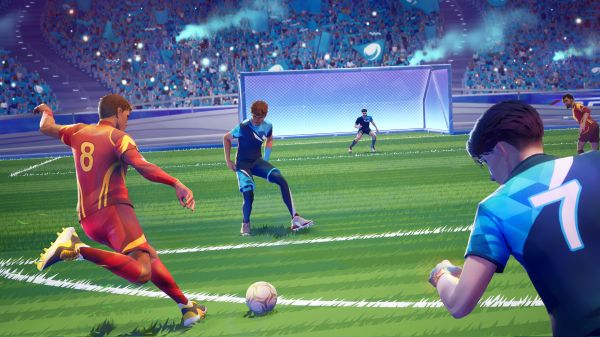
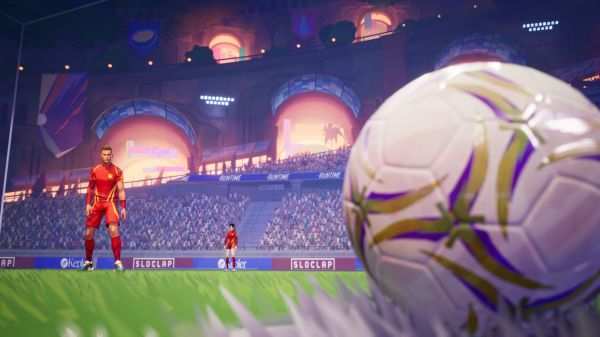
The most distinctive part of REMATCH is its close third-person viewpoint. I see the match from behind my footballer rather than from a high tactical camera, so the pitch feels larger and the spaces between players become harder to evaluate. Passing is no longer a simple matter of pressing a button toward a clearly visible teammate, because I must turn my character, control the camera, judge distance, and understand whether an opponent is about to close the lane.
This camera creates a physical connection with the action that most football games cannot match. Sprinting into open space feels urgent because I cannot see every defender behind me, while receiving the ball near the goal creates immediate pressure as the camera struggles to show both the target and approaching opponents. I often had to use quick camera movements and environmental awareness rather than relying on a complete tactical view of the field.
The limited vision also makes communication essential. A teammate may see a passing option that is completely outside my frame, and a defender can approach from an angle I never checked. When the team communicates well, these blind spots become manageable and even exciting, but silent matchmaking can turn them into a repeated source of lost possession.
One Player Means One Clear Responsibility
Controlling only one footballer gives every match a strong sense of personal responsibility. When I abandon my defensive position to join an attack, there is no instant character switch that allows me to repair the mistake. I must sprint back, trust another player to cover the space, or watch the opposing team use the opening I created.
This design makes good positioning feel more satisfying than simply scoring goals. A well-timed supporting run can pull a defender away from the ball, while staying near the center may prevent an easy counterattack even if I never touch possession. These contributions are less visible than a spectacular finish, but they often decide whether a team remains organized.
The problem is that the scoring systems and player behavior do not always encourage this discipline strongly enough. Many teammates naturally want to become the hero, so they rush forward, demand every pass, and ignore the empty defensive half. REMATCH is at its best when players understand that not touching the ball for several seconds can still be the correct decision.
Passing Requires More Thought Than It First Appears
The passing mechanics initially seem simple, but accuracy depends on direction, timing, power, body position, and the movement of the receiving player. I cannot assume the game will automatically correct a poor angle or gently guide every ball toward the most logical teammate. A pass played without checking the camera can travel into open space, strike the arena wall, or arrive behind the player who was already making a forward run.
This manual quality creates a high skill ceiling. Short passes between nearby teammates can build a controlled attack, while stronger passes can cross the pitch quickly if the lane is clear. Wall rebounds add another option, allowing the arena itself to become part of a passing combination rather than merely a boundary.
The controls occasionally produce moments that feel less intentional than I would like. A slight camera adjustment can change the direction more dramatically than expected, and a rushed input may create a weak touch when the situation requires urgency. With practice, these mistakes become less frequent, but new players should expect several matches in which basic possession feels less reliable than anticipated.
Shooting Rewards Angles Rather Than Automatic Assistance
Scoring in REMATCH is satisfying because the game asks me to create and execute the shot rather than relying on heavy assistance. I need enough space to aim, enough awareness to locate the goalkeeper, and enough control to place the ball where a defender cannot easily block it. A powerful attempt directly toward the center is rarely as useful as a carefully directed finish into the available corner.
The third-person perspective makes the final moment feel closer to an action game than a sports simulation. I am not selecting a general shot direction from above the pitch; I am physically turning the character and camera toward a target while opponents continue moving around me. The pressure can cause hesitation, and that small pause is often enough for a defender to close the angle.
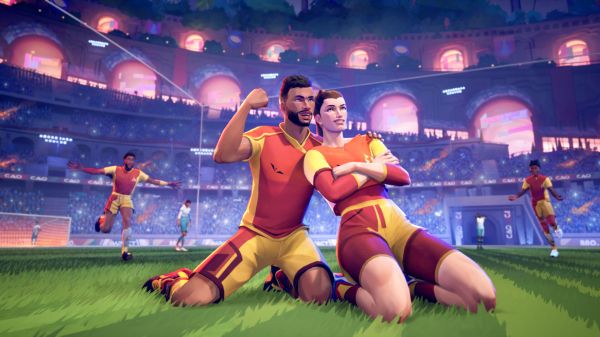
Goals feel especially rewarding after coordinated buildup. A clean sequence of passes followed by a controlled finish produces a genuine sense that the team created something together. By comparison, random rebounds and chaotic goal-line collisions can feel messy, although those unpredictable moments are also part of the game’s energetic personality.
Defending Is About Patience, Not Constant Tackling
My early defensive mistakes usually came from approaching every opponent too aggressively. I rushed toward the ball, attempted an immediate challenge, and left enough space for a simple pass or change of direction. REMATCH rewards defenders who slow down, protect the central route, and force the attacker toward a less dangerous angle.
Good defense often begins before the opponent receives the ball. By standing between the passer and the intended target, I can reduce available options and encourage a riskier decision. This requires reading body orientation and teammate movement rather than reacting only after possession has already changed.
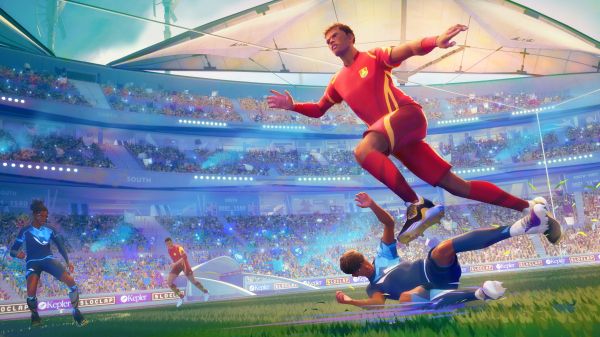
Successful tackles feel physical without turning the game into unrestricted fighting. The absence of traditional fouls allows stronger contact than a simulation would permit, but timing still matters because a missed challenge can remove me from the play completely. Defensive discipline is difficult to maintain in public matches, yet it becomes one of the most rewarding parts of coordinated team play.
Goalkeeping Creates a Different Kind of Pressure
The goalkeeper position is not permanently assigned in the same way as a traditional football simulation, and players may need to rotate into defensive responsibility depending on the situation. Standing near the goal changes the pace of the match because every mistake becomes immediately visible. A poorly timed movement or incorrect angle can turn an ordinary shot into an easy score.
I found goalkeeping stressful but satisfying when I approached it as positioning rather than pure reaction. Moving slightly forward can reduce the attacker’s available target, while staying too far from the line creates an opportunity for a quick shot around me. The walls and fast rebounds make the position even more demanding because the ball may return from an unexpected direction.
Teams frequently suffer when nobody wants to remain near the goal. Everyone moves forward, possession changes, and the opponent receives an almost empty target. REMATCH never forces players to behave responsibly, so a reliable defensive teammate can be more valuable than the most aggressive scorer.
The Closed Arenas Keep Every Match Moving
Removing throw-ins, corners, goal kicks, fouls, and offsides gives REMATCH an almost uninterrupted rhythm. The ball remains active after striking the walls, so every attempted clearance or inaccurate pass can immediately become part of another attack. There is little opportunity to pause mentally because the next dangerous moment may begin before the previous one feels complete.
This design makes short matches feel dense and energetic. A traditional football game may spend several minutes on restarts and slow buildup, while REMATCH continually pushes players toward movement and decision-making. Even when the ball travels away from my position, I need to consider where it may rebound and how quickly the situation can reverse.
The lack of stoppages also creates chaos. A defensive clearance can strike a wall and return directly toward the goal, while a missed shot may become an accidental pass to another attacker. These moments sometimes feel unfair, but they fit the game’s arcade structure and encourage players to remain involved until possession is genuinely secure.
Teamwork Is Both the Greatest Strength and the Greatest Problem
REMATCH can produce remarkable multiplayer football when a team understands spacing and cooperation. Passing triangles form naturally, defenders maintain useful depth, and attackers move into space instead of standing beside the ball. In those matches, every player appears connected to a shared plan even without complicated tactical commands.
Public matchmaking often provides the opposite experience. Several players chase possession, nobody covers the goal, and passes are attempted toward teammates who never expected to receive them. A single selfish player can repeatedly interrupt attacks by demanding the ball and attempting difficult shots from poor positions.
This dependence on strangers makes the experience inconsistent. The controls and arena may function well, yet the quality of the match still depends on whether other people are willing to cooperate. Playing with friends improves REMATCH dramatically because even basic communication about defense and positioning removes much of the unnecessary confusion.
Small-Sided Matches Make Every Player Important
The 3v3, 4v4, and 5v5 formats create different levels of pressure. Smaller matches provide more space but make each error more damaging because fewer teammates remain available to cover it. A lost ball in 3v3 can immediately produce a dangerous counterattack, while 5v5 allows more structured passing but also creates greater congestion near the goal.
I enjoyed 5v5 most when the team remained organized because it provides enough players for defensive coverage, midfield support, and attacking movement. Unfortunately, it also gives selfish players more opportunities to assume someone else will handle the responsibilities they ignore. The best format may depend less on mechanical preference and more on whether I am playing with a coordinated group.
Ranked matches increase the emotional pressure because individual errors affect progression. That intensity can encourage serious teamwork, but it can also produce blame and frustration when the team falls behind. REMATCH needs strong communication and reporting tools because competitive dependence on strangers can easily create an unpleasant environment.
The Movement Carries Sloclap’s Action-Game Experience
Sloclap’s history with Sifu is visible in the way players move, turn, accelerate, and interact physically. REMATCH does not feel like footballers sliding across a mathematical pitch. The characters have momentum, body orientation, and animation transitions that give each movement a sense of weight.
Sprinting into a pass, stopping sharply, and turning toward the goal creates a satisfying flow when the inputs connect correctly. The game also encourages movement without the ball, since a well-timed run can become as important as the final pass. I began enjoying the game more once I stopped waiting for possession and started treating positioning as an active mechanic.
The animation system is not always perfect. Players can collide awkwardly, the ball may respond strangely during crowded challenges, and certain transitions look less polished when several bodies occupy the same space. These rough moments do not destroy the experience, but they remind me that the physical simulation still needs careful refinement.
The Visual Style Chooses Clarity Over Realism
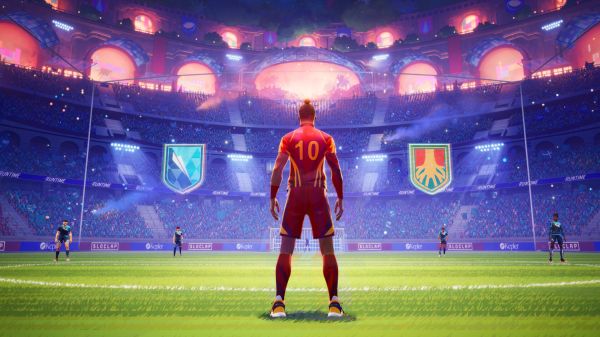
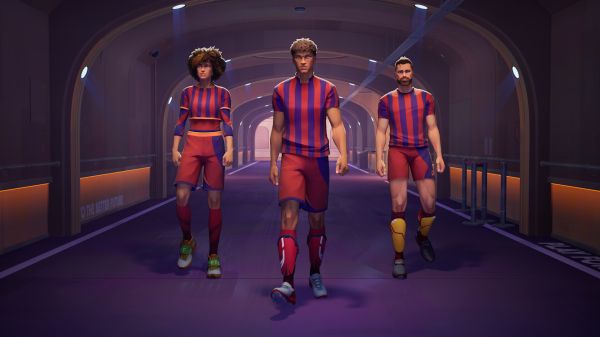
REMATCH uses clean futuristic arenas, stylized players, strong lighting, and clear visual boundaries instead of attempting realistic stadium presentation. This suits the arcade structure because I can quickly understand where the walls, goal, teammates, and opponents are located. The absence of a large audience also keeps attention focused on the match rather than on broadcast spectacle.
The player designs allow cosmetic customization without making every character look like a licensed professional athlete. Outfits and accessories give the game a social identity, although some cosmetic combinations can look disconnected from the physical intensity of the sport. The style is flexible enough to support seasonal additions without damaging the basic readability of the arena.
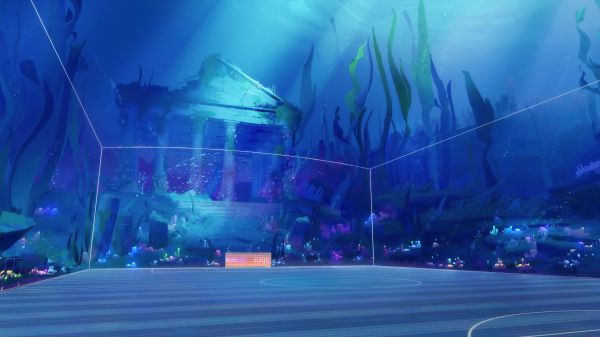
I would like more environmental variety over time. The closed pitches are functional, but repeated matches can begin to feel visually similar even when surface details change. New arenas should preserve competitive consistency while introducing stronger architectural identities and lighting conditions.
The Audio Helps Me Read the Match
The sound of the ball striking walls, feet, and goal structures contributes significantly to the game’s physical character. A strong pass has enough impact to feel different from a weak touch, while a rebound provides an immediate audio warning even when it occurs outside the camera frame. These details help compensate for the limited field of view.
Teammate communication is naturally more important than the soundtrack during competitive play. Clear voice chat can transform a match by warning about unmarked opponents, requesting a backward pass, or identifying who will cover the goal. Without communication, players often attempt to express intentions through movement alone, which is less reliable.
The general sound presentation is energetic without overwhelming the match. I rarely felt that music distracted from gameplay, although stronger arena-specific audio could give locations more personality. The current design correctly prioritizes the sounds needed to understand immediate action.
The Learning Curve Is Steeper Than the Simple Rules Suggest
REMATCH is easy to explain because the objective remains familiar: move the ball, support teammates, defend the goal, and score more often than the opposing team. Playing well is considerably more difficult because the third-person camera and manual control remove many conveniences found in traditional football games. A new player may understand the goal immediately while still struggling to pass accurately or maintain useful positioning.
The game needs strong tutorials that teach more than button inputs. Players should learn spacing, defensive rotation, safe passing options, and the importance of remaining behind the ball when teammates attack. Mechanical instruction alone cannot prevent the chaotic behavior that damages public matches.
I improved most by observing teammates and opponents rather than repeatedly attempting spectacular actions. Understanding when to slow the match, return the ball backward, or avoid joining an already crowded attack produced better results than learning one difficult technique. REMATCH rewards football intelligence, even though its visual presentation resembles a fast action game.
Progression and Cosmetics Need to Support the Game, Not Control It
As an online multiplayer title, REMATCH depends on seasonal content, unlockable cosmetics, and long-term progression to retain players. Customization can provide useful motivation because each person controls one visible footballer rather than an entire licensed squad. A distinctive outfit becomes part of how teammates and opponents recognize the player.
The danger is that battle passes and limited rewards can make the game feel more interested in daily engagement than match quality. Cosmetic progression should remain secondary to stable servers, responsive controls, fair matchmaking, and useful social systems. No outfit can compensate for repeated connection problems or teams formed from players with dramatically different skill levels.
I am comfortable with cosmetic monetization when the competitive mechanics remain equal. The game should avoid upgrades that affect speed, shot strength, stamina, or defensive effectiveness. REMATCH works because success comes from execution and teamwork, and paid competitive advantages would immediately damage that foundation.
Technical Problems Hurt More in a Precision Team Game
Online stability matters in every multiplayer game, but REMATCH is especially sensitive because passing and tackling depend on short timing windows. A delayed input can turn a controlled pass into a lost ball, while a brief connection problem may leave the goal completely exposed. When the match runs smoothly, the controls feel responsive and direct, but network inconsistency can make the same mechanics appear unreliable.
Animation and collision issues are also more noticeable because every player watches the same ball. A strange rebound or awkward body interaction can affect the entire match rather than one isolated encounter. These problems can be funny in casual play, but they become much harder to accept during ranked competition.
The long-term quality of REMATCH will depend heavily on continued technical support. New cosmetics and modes may attract attention, but players will remain only if the basic match experience becomes consistently fair and stable. Sloclap has created a strong mechanical idea that now requires the infrastructure expected from a serious online sport.
Cross-Platform Play Is Essential for the Community
A team-based game benefits from having the largest possible matchmaking population. Players need opponents at similar skill levels, teammates who understand their preferred format, and enough active users to avoid long waiting periods. Separating communities by platform weakens all of those goals.
Cross-platform support is therefore more than a convenient feature for friends using different systems. It improves matchmaking quality and gives the competitive scene a more unified foundation. Input balance and communication tools still require careful management, but the general benefit is significant.
REMATCH feels designed around social continuity. Players will form regular groups, recognize reliable teammates, and return because of the people they enjoy playing with. Anything that makes those connections easier directly improves the game’s strongest quality.
The Best Matches Create Genuine Football Stories
My favorite moments were not always the goals I scored. A desperate recovery run, a last-second block, or a simple backward pass that prevented a counterattack could feel just as important. Because I control one player, these moments belong to my individual performance rather than to an entire team I command from above.
One match can create a clear personal narrative. I may begin by chasing the ball too aggressively, recognize that the team lacks defensive coverage, and spend the remaining minutes protecting space while others attack. Another match may place me with disciplined teammates who exchange quick passes and create a goal that feels almost rehearsed despite being completely spontaneous.
These stories explain why the game remains compelling even after frustrating defeats. REMATCH creates situations in which cooperation becomes visible and immediately rewarding. The experience is not merely about winning; it is about feeling that several independent players briefly understood the same idea.
REMATCH Is More Action Game Than Traditional Simulation
Players expecting a replacement for EA Sports FC or another conventional football simulation may misunderstand what REMATCH offers. It does not attempt to recreate professional leagues, broadcast tactics, or detailed team management. Its closest relatives are competitive action games where mechanical execution and role awareness determine whether a group succeeds.
The football foundation remains important because passing, spacing, finishing, and defensive positioning still follow recognizable principles. However, the closed arena, constant rebounds, third-person camera, and direct control create a faster and more physical interpretation of the sport. It feels like football reduced to movement, cooperation, and pressure.
This narrower focus gives REMATCH a clear identity. It does not need hundreds of teams or thousands of licensed players to justify itself. It needs precise controls, strong servers, fair competition, and enough tactical depth to make improvement rewarding.
A Brilliant Concept That Depends on the People Beside Me
REMATCH is one of the most refreshing football games I have played because it asks me to think like one player rather than an invisible manager controlling everyone. The third-person perspective makes passing, defending, movement, and shooting feel immediate, while the closed arenas remove downtime and keep every rebound active. Sloclap has successfully translated its understanding of movement and physical action into a sport where positioning matters as much as quick reactions.
The game’s greatest strength is also its most difficult weakness. REMATCH depends completely on teamwork, and public matchmaking cannot guarantee that teammates will pass, defend, communicate, or remain in useful positions. A coordinated match can feel exceptional, while a selfish team can turn the same mechanics into several minutes of exhausting disorder.
Technical stability, matchmaking quality, progression design, and long-term content will determine whether the game remains healthy. The basic foundation is strong enough to support competitive play, casual sessions, seasonal events, and a dedicated community, but only if Sloclap continues prioritizing match quality over cosmetic volume. REMATCH does not need to become a larger football simulation; it needs to become the most reliable version of its own unusual idea.
I enjoy it most when I stop treating the match as a personal highlight reel. A simple pass, disciplined defensive position, or well-timed supporting run can be more valuable than an ambitious shot. When all players understand that principle, REMATCH becomes exactly what its title promises: not a recreation of traditional football, but an opportunity to play the sport again from a completely different perspective.
Pros:
- Engaging narrative that evolves with every rematch
- Meticulously designed controls ensuring responsive gameplay
- Vibrant visuals and immersive sound design adaptable to various hardware
- High replayability with diverse and challenging level designs
- Robust multiplayer community offering both competitive and cooperative modes
- Flexibility for modding and creative cheats that enhance exploration
- Innovative gameplay mechanics blending strategy and fast-paced action
Cons:
- Some community mods can disrupt the balance of competitive play
- Online connectivity might be challenging in restricted or less secure environments
- Performance may lag on older or low-end devices

How much storage do you need?
 REMATCH








Recent Reviews

Minecraft

Grand Theft Auto V

Toca Boca World

Roblox

Leave a comment
Your comment is awaiting moderation. We save your draft here
0 Comments