Review
Ostriv does not begin with a dramatic disaster, invading army, or desperate race against a visible countdown. It gives me several famil...


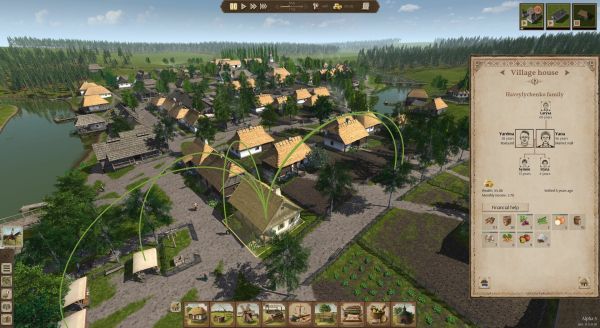

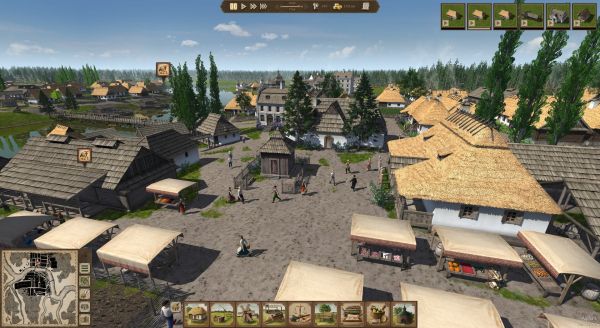
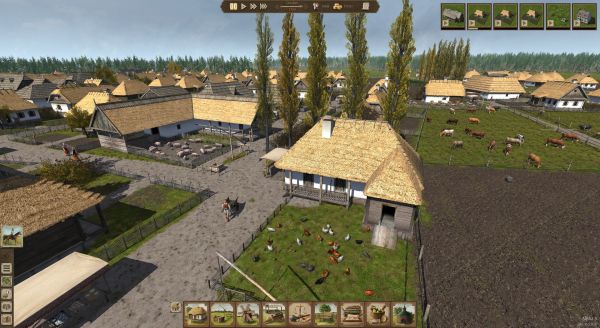


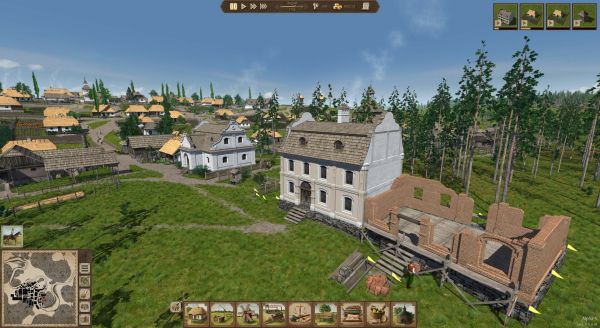

Ostriv: Where History, Strategy, and Community Converge
Ostriv does not begin with a dramatic disaster, invading army, or desperate race against a visible countdown. It gives me several families, a collection of basic resources, an open landscape, and the responsibility of turning that uncertain beginning into a functioning Ukrainian town. The challenge emerges quietly through labor shortages, seasonal demands, household budgets, food production, and the complicated relationship between private needs and public infrastructure. Instead of trying to impress me with immediate spectacle, the game asks whether I can create a settlement that looks natural and operates as a believable community.
I found the opening hours both calming and intimidating because almost every early decision affects several systems at once. Placing a forestry building determines where workers will travel, which trees will disappear, and how quickly construction materials can reach future projects. Building homes creates space for new families, but those families also require employment, food, water, market access, and eventually places for their children to work. Ostriv rarely presents one isolated problem, so expanding the town successfully requires understanding how individual parts support one another.
Freeform Construction Changes the Entire Character of the Town
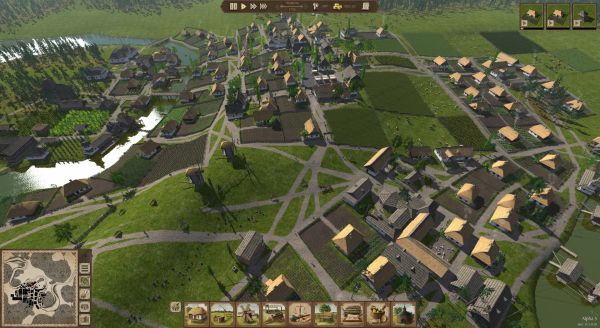
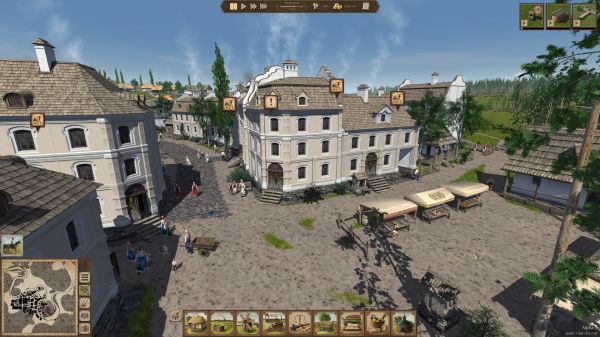
The absence of a rigid building grid is one of Ostriv’s most distinctive features. I can rotate structures freely, follow the shape of the terrain, create uneven streets, and allow houses to form neighborhoods that look as though they developed gradually rather than being designed from a perfect overhead plan. This freedom makes even a modest village visually personal because roads and pathways emerge from the actual movement of residents. Two players can use the same map and still produce settlements with completely different identities.
Free placement also makes poor planning more visible. A building positioned at an awkward angle may create a narrow route that slows carts, while excessive distance between workplaces and homes can waste valuable labor time. I occasionally created attractive areas that functioned badly because I focused on appearance without watching how people moved through them. Ostriv rewards organic design, but organic does not mean random, and the most convincing towns usually grow from a balance between beauty and practical access.
The roads created by regular movement are especially satisfying because they turn invisible behavior into part of the landscape. Residents naturally establish paths between homes, wells, workplaces, markets, and public buildings, gradually revealing whether my layout makes sense. A heavily used route tells me that a connection matters, while an empty decorative space may show that I planned for an activity that never developed. The town begins drawing its own map over the one I originally imagined.
Construction Feels Like a Physical Process
Buildings in Ostriv do not instantly appear when I spend abstract resources. Materials must be produced, transported, stored, and carried to the construction site before workers can complete each stage. A shortage of nails, clay, wood, or available labor can leave an important structure unfinished for months. Watching a building rise gradually makes expansion feel connected to the town’s actual productive capacity rather than to a simple menu transaction.
This process taught me to prepare before launching several projects at once. Placing too many construction sites can divide the workforce, consume transport capacity, and leave essential buildings incomplete when winter approaches. A new house may look like the most urgent need, but finishing a workshop or storage facility first may prevent a much larger economic delay. The game encourages patience by making rushed expansion visibly inefficient.
I also appreciate how the construction animation contributes to the historical atmosphere. Workers deliver individual loads, wooden frames take shape, roofs appear in stages, and unfinished structures remain part of the town’s visual landscape. Progress feels modest but tangible, which makes the completion of a major building genuinely rewarding. The system transforms waiting from an empty timer into a readable chain of labor.
Every Resident Is Part of the Economy
Ostriv simulates households rather than treating population as one interchangeable number. Residents live in specific homes, earn wages, purchase goods, travel to workplaces, form families, and respond to the economic conditions created by the settlement. A job vacancy may remain open because suitable workers live too far away or are already needed elsewhere. Population growth therefore creates opportunities and responsibilities rather than functioning as a simple score increase.
Household money matters because residents must be able to afford the products available at markets and shops. Setting wages too low may protect the town treasury but leave families unable to buy enough food, while excessive wages can strain public finances or distort the local economy. The balance is not always obvious because a decision that looks profitable at the administrative level may create hardship inside individual homes. I had to stop thinking only as a builder and begin paying attention to how money circulated through the settlement.
The detail gives the game emotional texture even though residents do not possess elaborate personalities or dramatic dialogue. I began recognizing families through where they lived, where they worked, and how their circumstances changed as the town expanded. A household near the center experienced the settlement differently from one built beside distant agricultural fields. These small differences make the population feel connected to geography rather than generated only to fill workplaces.
Labor Management Is a Constant Puzzle
The early settlement never seems to have enough workers for every task I want completed. Construction requires labor, farms need seasonal attention, workshops require specialists, carts need drivers, and public services must continue operating even when other industries become urgent. Hiring someone for one position may quietly weaken another part of the economy. Ostriv turns labor allocation into one of its most persistent and interesting management problems.
Seasonal employment makes the situation more complicated. Agricultural work may demand many people during planting and harvest periods but fewer workers during winter. A town that appears balanced in January may suddenly face severe shortages when several fields need attention at once. I learned to review staffing throughout the year rather than assuming that one arrangement could remain efficient permanently.
Women and men can also face different employment opportunities depending on the buildings available and the game’s historical systems. Creating suitable workplaces can improve household income and make better use of the population, but each new industry requires inputs, storage, and a market for its output. Expanding employment without considering the full production chain can produce another building that consumes resources without solving the original problem.
Farming Demands Planning Across Several Years
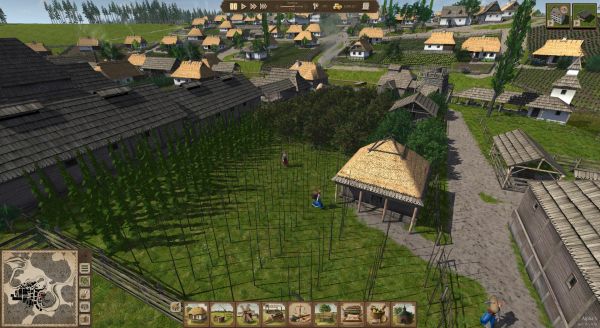
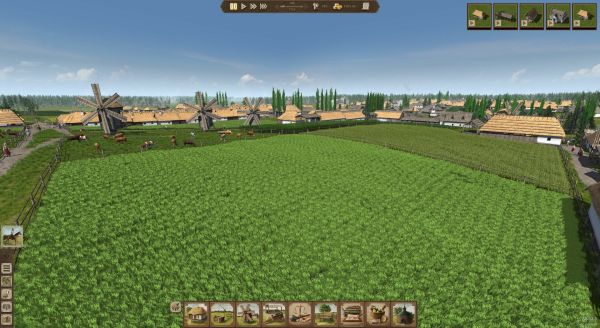
Agriculture in Ostriv is much more involved than placing a field and selecting one crop forever. Soil fertility changes according to what is grown, so crop rotation becomes essential for maintaining productive land. Different plants require different schedules and contribute differently to food supply, animal feed, and industrial production. A successful farm therefore depends on planning a cycle rather than maximizing one harvest.
I enjoyed studying fertility and arranging rotations because the system makes agriculture feel like knowledge rather than background automation. Growing the same crop repeatedly may provide a useful short-term result, but the field gradually becomes less effective and future harvests suffer. Fallow periods and alternative crops can restore or preserve productivity, requiring me to accept lower immediate output for long-term stability. This is exactly the kind of decision Ostriv handles well because no dramatic warning appears until the consequences are already developing.
Weather and labor availability add uncertainty to the plan. A theoretically excellent rotation can still fail when workers arrive too late, transport is insufficient, or storage remains full from the previous season. Harvested goods must move somewhere before they can feed residents or support another industry. The farm is not an isolated producer but one part of a network involving workers, carts, warehouses, markets, animals, and households.
Livestock Turns Food Production Into a Larger Chain
Animals provide valuable resources, but they also create ongoing demands that must be met throughout the year. Cattle, pigs, chickens, and other livestock need buildings, workers, feed, and enough space within the wider production system. Their outputs can support food supply, agriculture, and manufacturing, yet the benefits arrive only after careful preparation. Adding animals too early can create another hungry population that competes with residents for limited resources.
I found livestock satisfying because it links several industries that might otherwise remain separate. Grain can support animals, animals can provide food and useful materials, and agricultural by-products may gain new value once another production chain exists. This interconnectedness makes expansion feel meaningful rather than cosmetic. A new building can change how several older industries operate.
The difficulty lies in keeping the chain balanced. Producing large amounts of one resource does not help if transport or processing capacity cannot handle it. Animals may remain underfed while suitable goods sit in a distant storage building, or workers may spend too much time moving small loads between poorly positioned facilities. Ostriv constantly reminds me that having resources somewhere in town is different from making them available where they are needed.
Markets Reveal Whether the Economy Actually Works
Production alone does not guarantee that residents can obtain food and household goods. Products must reach market stalls or other distribution points, and those facilities require workers, supplies, and sensible placement. A warehouse filled with food can coexist with unhappy families when the distribution network is weak. Markets therefore become the visible meeting point between the settlement’s industries and its people.
I learned to place market areas where several neighborhoods could reach them without excessive travel. One central market may serve an early village, but expansion eventually creates distant households that spend too much time walking for basic purchases. Additional stalls can improve access, although each one also needs a worker and a reliable supply route. The best arrangement depends on population density, road patterns, and the location of storage buildings.
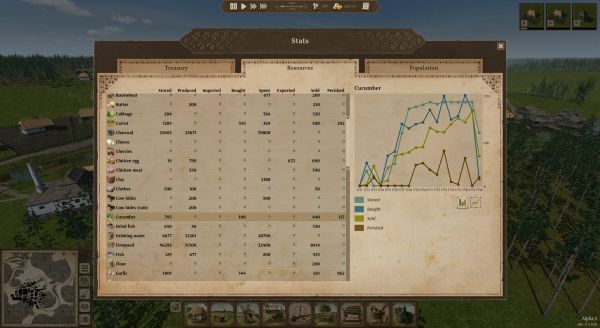
Watching the market system exposed weaknesses I had overlooked. A shortage at one stall might result from low production, poor transportation, insufficient storage, or a worker who lives too far away. The interface provides information, but understanding the true cause often requires following people and goods through the town. This investigative process makes economic management feel active rather than purely numerical.
Storage and Transportation Decide Whether Production Has Value
Ostriv makes logistics important without covering the map in conveyor belts or abstract routing lines. Goods move through human labor, carts, wagons, boats, and storage buildings, so distance has a measurable cost. A workshop may possess all the required inputs in theory but remain idle because nobody is available to deliver them. Efficient logistics can make a modest economy feel productive, while poor placement can waste the output of several industries.
Warehouses and granaries need thoughtful limits because filling every storage building with the same product creates hidden problems. Reserving capacity for essential goods helps prevent one abundant resource from occupying all available space. I often discovered that a production failure was actually a storage failure, with workers unable to deliver materials because the correct destination had no room. The game rewards careful organization but rarely requires unnatural micromanagement when the network is designed well.
Carts and wagons improve transportation, yet they introduce additional requirements such as animals, workers, and suitable infrastructure. Expanding logistics is therefore another economic decision rather than a free efficiency upgrade. A poorly used cart can consume labor without meaningfully improving distribution. Watching where transportation workers spend their time helped me decide which routes genuinely needed support.
The Economy Feels Local Rather Than Abstract
Many city builders allow money to function as a universal solution, but Ostriv keeps wealth connected to actual production and trade. The town can collect rent and taxes, pay wages, purchase imports, and sell excess goods, yet currency cannot immediately replace missing infrastructure. Buying a resource may solve a temporary shortage, but the settlement still needs storage, transport, workers, and a sustainable way to pay for future shipments. Economic stability comes from relationships between systems rather than from accumulating a large treasury alone.
Prices and wages require adjustment as the town changes. A policy that supported a small settlement may become inefficient after new industries and neighborhoods appear. Increasing household income can improve access to goods, but it may also affect the finances of public workplaces. I appreciated that the economic model encourages observation instead of offering one permanently optimal set of numbers.
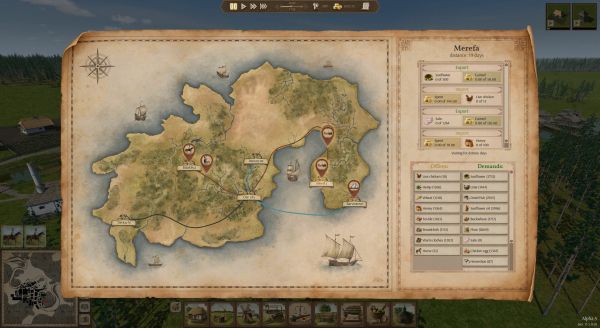
Trade becomes particularly valuable when local geography or production limits make complete self-sufficiency inefficient. Importing a missing input can unlock an industry, while exporting a reliable surplus can support public spending. The danger is building an economy dependent on one product or one trade route. Ostriv is forgiving enough to allow recovery, but poor diversification can turn a temporary shortage into a wider financial problem.
Seasonal Change Gives the Town a Natural Rhythm
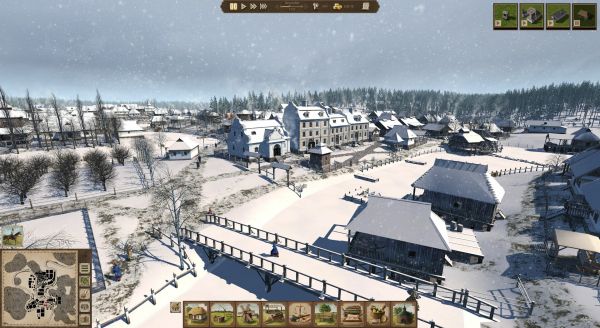
The changing seasons affect agriculture, construction, resource demand, and the visual character of the settlement. Winter is not merely a layer of snow placed over the same routine because farming slows and preparation becomes more important. Spring brings renewed work, summer supports production, and autumn creates pressure to complete harvests before conditions worsen. The calendar becomes part of management rather than a decorative feature.
I began organizing projects according to this rhythm. Winter could be used for construction, processing, and planning while fields required less labor, whereas planting and harvest periods demanded greater caution with new projects. This approach made the town feel as though it followed a yearly routine rather than operating at one constant speed. The settlement’s success depended on using quiet periods to prepare for busy ones.
The visual transition also creates attachment to the place. Buildings that looked temporary during the first summer became part of a familiar landscape after several winters. Trees disappeared, roads became more defined, and new districts changed the view from the original camp. Time is visible through both seasonal repetition and permanent development.
Housing Is More Complicated Than Providing Enough Buildings
Constructing houses allows new families to arrive and existing households to grow, but location and access affect how well those homes function. Residents need reasonable routes to employment, wells, shops, and public services. A beautiful residential district far from the economic center may create long daily journeys that reduce productivity. Housing policy therefore becomes part of labor and transportation planning.
Some homes provide private garden space, allowing families to produce additional food and contribute to local resilience. These plots create attractive organic neighborhoods, but they require more land than compact housing. Choosing between density and household production affects the visual and economic character of the settlement. I enjoyed combining different residential forms rather than treating one design as universally superior.
Population growth must remain connected to available work and food. Building many houses quickly can attract residents faster than industries can employ or feed them. The resulting town may look successful while household finances and market supplies deteriorate. Ostriv makes expansion feel safest when it follows actual capacity rather than an arbitrary population target.
Public Services Develop Gradually
The earliest settlement focuses on shelter, water, food, and construction materials, but larger populations create new expectations. Religious buildings, education, healthcare, administrative structures, and other services eventually become part of a stable town. Each addition consumes labor and resources while providing benefits that may not appear as direct production. The transition from survival camp to functioning community is one of the game’s most satisfying long-term developments.
I appreciate that public buildings are not simply decorative monuments unlocked at a specific population number. Their usefulness depends on access, staffing, funding, and the needs of residents. A service placed in the wrong location may remain underused or force people to travel excessive distances. Civic planning becomes another layer of the same spatial logic governing farms and workshops.
These structures also give the town a stronger identity. An early cluster of workplaces and houses gradually develops recognizable centers, public spaces, and neighborhoods. The settlement begins to look like a place where people might spend their entire lives rather than a temporary industrial project. That visual and social transformation provides a more meaningful objective than reaching one final upgrade.
The Citizens’ Daily Movement Brings the Settlement to Life
Residents can be observed leaving their homes, walking to work, transporting goods, shopping, and completing tasks across the town. Their movement gives scale to every planning decision because distance is experienced through actual journeys. A road that looks short from above may consume a significant portion of a worker’s day. Following one person can reveal more about a weak layout than staring at production statistics.
The simulation does not give every citizen a deep individual narrative, but their routines create believable collective behavior. Families live in specific locations and participate in the economy through their own circumstances. A child grows, adults change employment, and household composition affects financial needs. These systems provide enough continuity for the population to feel more human than a simple workforce counter.
I often slowed the game just to watch a busy market or construction site. Workers crossed paths, carts followed established routes, and unfinished buildings accumulated materials gradually. These scenes made successful planning visible in motion. A well-functioning town has a rhythm that can be seen before it is confirmed by the statistics.
The Historical Ukrainian Setting Gives Ostriv a Distinct Identity
Ostriv’s eighteenth-century Ukrainian setting separates it from the large number of city builders based on generic medieval Western Europe. Architecture, clothing, agricultural practices, and the shape of settlements create a visual character that feels specific without becoming a museum display. The game focuses on ordinary economic and domestic life rather than using history only as a background for warfare. This quieter perspective makes the setting particularly valuable.
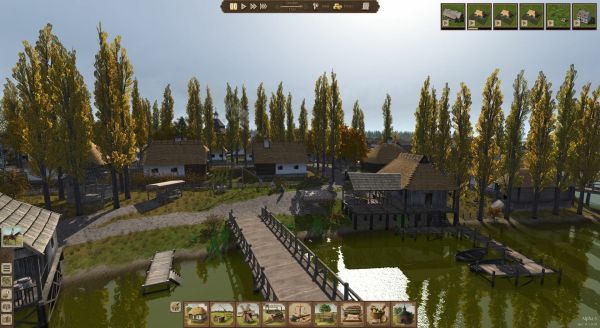
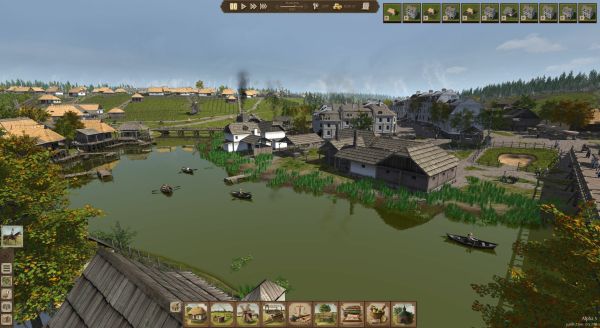
I like that the cultural identity emerges through buildings and daily activity rather than through constant explanatory text. White walls, thatched roofs, wooden structures, open fields, gardens, and irregular roads combine into an environment that is immediately recognizable. The town looks attractive, but it is not presented as an untouched rural fantasy. Every structure exists because residents need to live, work, trade, store goods, or support the community.
The setting also carries additional emotional weight because Ostriv is developed in Ukraine. That context does not need to become part of every mechanical discussion, yet it makes the preservation and creative interpretation of Ukrainian historical environments especially meaningful. The game communicates cultural confidence through detail rather than through grand declarations.
The Visual Presentation Is Quiet but Beautiful
Ostriv does not rely on dramatic weather effects, enormous monuments, or cinematic camera sequences to create beauty. Its strongest images come from irregular streets, smoking chimneys, fields changing color, workers moving between buildings, and neighborhoods gradually filling the landscape. The town often looks best when it has developed through practical necessity. Imperfection gives it character.
The building models contain enough detail to make close observation rewarding, while the broader visual design remains clear from a management perspective. Materials, fields, roads, carts, and construction stages are usually easy to recognize. Some animations remain modest, which is understandable for a developing independent project. The overall consistency matters more than individual spectacle.
Lighting and seasonal variation support the atmosphere without obscuring important information. A winter settlement feels colder and quieter, while summer creates greater movement across agricultural areas. I frequently used the camera to explore streets at a low angle because the town looked convincingly inhabited from that perspective. The ability to appreciate the settlement as a place makes careful planning more rewarding.
The Interface Requires Patience
Ostriv contains many economic relationships, and not all of them are immediately explained through the interface. Building panels show workers, resources, wages, production limits, and other information, but understanding why a system has stopped may require checking several connected structures. A workshop without inputs could indicate a production shortage, transport problem, storage limit, or labor issue. The investigation can be satisfying, although new players may struggle to identify the correct cause.
Some information would benefit from stronger summaries and alerts. A townwide view of critical shortages, travel efficiency, or household access could reduce the need to open many individual panels. The current interface often encourages learning through observation and experimentation rather than through direct guidance. This suits the game’s thoughtful pace but can make the opening hours more confusing than necessary.
I would not want automation to remove the importance of watching the settlement. Better information should support judgment rather than replace it. Ostriv is rewarding because the player learns to read the town, but that process works best when relevant data is available without excessive searching. Continued interface refinement could make the simulation more accessible without reducing its depth.
The Early Access Status Is Still Visible
Ostriv already offers a substantial and enjoyable management experience, but it remains a developing game. Some production chains and civic systems feel more complete than others, while certain late-game goals are less defined than the early growth of the settlement. Interface elements, balance, and optimization may continue changing as updates expand the simulation. Players expecting a fully finalized campaign structure should remember that the central experience is still being built.
The pace of development may feel slow compared with larger studios, yet the systems already present are unusually interconnected. New buildings and mechanics can affect labor, logistics, household economics, and town layout, so additions require more than placing another item in a construction menu. I prefer careful expansion to features that look impressive but remain disconnected from the simulation. The game’s existing identity is strong enough that updates can deepen it rather than constantly redesigning the foundation.
Bugs and unusual behavior can occur, particularly in larger settlements where many routes and production chains interact. Most of my enjoyment comes from planning and observation, so technical problems are especially noticeable when they interrupt a system I have spent hours organizing. Saving regularly remains sensible. Even with these limitations, the current version can support long and absorbing towns.
There Is No Need for Constant Crisis
Ostriv does not create tension through continuous disasters or aggressive opponents. Its problems usually emerge from imbalance, poor timing, or an economy that has grown beyond its supporting infrastructure. A food shortage may begin with a failed harvest, insufficient carts, or an unavailable worker rather than with a dramatic scripted event. This quieter form of pressure suits players who enjoy analysis more than emergency response.
The absence of warfare allows the town itself to remain the central subject. I am not building an economy mainly to support soldiers or defend walls. Workshops, farms, markets, schools, and homes matter because they improve the community’s ability to continue. This focus gives peaceful development enough depth to carry the game without requiring an external enemy.
Some players may miss dramatic objectives or clearly defined victory conditions. Ostriv expects me to create my own ambitions, such as building a self-sufficient settlement, developing a balanced trade economy, or designing a town with a particular visual character. The freedom is rewarding when I already enjoy the process. Players motivated mainly by scripted rewards may find the experience too open-ended.
Mistakes Usually Create Recoverable Problems
The economy can become unstable, but Ostriv often gives me enough time to understand and correct the situation. I can move workers, adjust wages, change production limits, trade for missing resources, or delay construction until the town recovers. Failure tends to develop gradually rather than arriving through one irreversible event. This makes experimentation less frightening without making planning irrelevant.
Recovery is most satisfying when I identify the true source of a problem. Increasing food production will not help if products cannot reach the market, and adding workers may fail when those employees spend too much time traveling. The game encourages diagnosis instead of repeatedly applying more buildings to every shortage. A smaller, efficient network can outperform a larger settlement built without attention to movement.
Serious mistakes can still damage a town for several seasons. Expanding population before securing food or employment may create a cycle of poverty and low productivity. Poor crop planning can reduce future harvests, while weak finances may limit the ability to import emergency supplies. The game is forgiving enough to teach but demanding enough to make recovery meaningful.
Ostriv Rewards Observation More Than Speed
I enjoyed the game most when I stopped trying to expand constantly. Watching residents, inspecting routes, reviewing storage, and waiting through a full seasonal cycle often revealed more than placing another industry immediately. Ostriv is built around delayed consequences, so rapid decisions can hide whether a previous change actually worked. Patience becomes a management skill.
The time controls allow me to accelerate quiet periods, but running constantly at maximum speed can make important patterns difficult to notice. A building may remain understaffed for months before I understand that workers live too far away. A market shortage may appear suddenly even though transport problems have been growing throughout the season. Slowing down helps the settlement communicate what it needs.
This pace makes Ostriv relaxing without making it empty. The town always contains small movements and unresolved relationships, even when no immediate crisis exists. I can improve a road layout, prepare the next crop rotation, balance household income, or redesign storage while waiting for a larger project. Progress remains continuous but rarely frantic.
A City Builder With a Genuine Sense of Place
Ostriv is one of the few city-building games where I remember individual streets and neighborhoods more clearly than upgrade tiers. Free construction, citizen movement, gradual road formation, and historically grounded architecture allow every settlement to develop a recognizable shape. The town becomes a record of both good planning and old mistakes. Areas that once stood at the edge may eventually become crowded centers surrounded by newer districts.
The economic systems give that visual growth practical meaning. Farms depend on rotation and seasonal labor, households need wages and accessible goods, industries require transport, and public services must remain connected to the people they support. Expansion cannot be separated from the daily movement of residents. A visually impressive town that ignores these relationships will struggle to function.
The game still carries the limitations of Early Access, including incomplete areas, occasional technical issues, and an interface that could explain certain relationships more clearly. Its quiet pace and lack of conventional victory conditions will not suit everyone. However, these weaknesses do not erase the strength of the central simulation. Ostriv already understands exactly what kind of city builder it wants to become.
I return to it because growth feels earned rather than granted. A new neighborhood represents produced materials, available workers, functioning roads, stable food supplies, and families ready to make the area their home. The most satisfying achievement is not constructing one impressive landmark but watching hundreds of small decisions become a believable Ukrainian town. Ostriv turns city building into an act of patient observation, and that patience gives every successful settlement a character that no rigid grid could produce.
Pros:
- Rich resource management and strategic gameplay
- Strong community mod support and customizability
- Cross-platform compatibility including unblocked access
- Stunning visuals and high-quality audio design
- Continuous updates with active developer-community engagement
- Highly immersive historical simulation with authentic detail
Cons:
- Potential performance issues on older hardware
- Mod and cheat usage can disrupt game balance if misused
- Steep learning curve for newcomers









Recent Reviews

Minecraft

Grand Theft Auto V

Toca Boca World

Roblox

Leave a comment
Your comment is awaiting moderation. We save your draft here
0 Comments