Review
PEAK turned a simple objective into one of the funniest and most stressful cooperative journeys I have played. My group only needed to...
Journey to the Summit: Unveiling the Innovative World of PEAK
PEAK turned a simple objective into one of the funniest and most stressful cooperative journeys I have played. My group only needed to climb a mountain and reach the summit, yet almost every ledge created another opportunity for somebody to fall, run out of stamina, misuse an item, or drag everyone else into a rescue attempt. The controls are easy to understand, but the mountain constantly exposes poor communication and unnecessary confidence. A route can look harmless from below and become a complete disaster once the whole team is hanging from the same narrow wall.
I expected the game to depend mainly on intentionally awkward physics and funny multiplayer accidents. Those elements are important, but PEAK also contains a surprisingly satisfying survival structure beneath the comedy. Stamina, hunger, injuries, inventory space, weather, environmental hazards, and limited climbing equipment all influence whether an expedition continues. The game creates humor naturally because the mechanics remain serious enough for every foolish decision to produce real consequences.
From my perspective as a gamer, PEAK feels like a cooperative roguelite built around movement rather than combat. The mountain is the main opponent, and it rarely needs enemies to make the journey dangerous. Every attempt becomes a sequence of route choices, resource decisions, physical mistakes, and improvised rescues. Reaching the summit feels meaningful because the game remembers every terrible moment that almost prevented the group from getting there.
The Beach Gave Me False Confidence
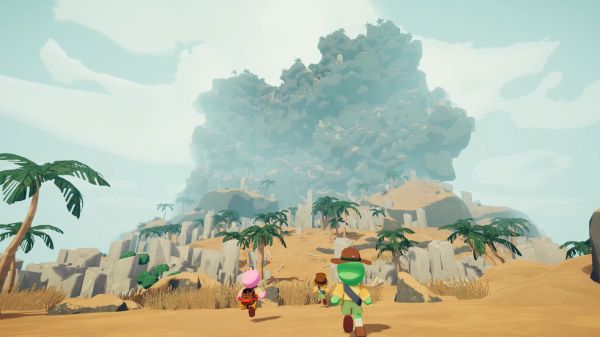
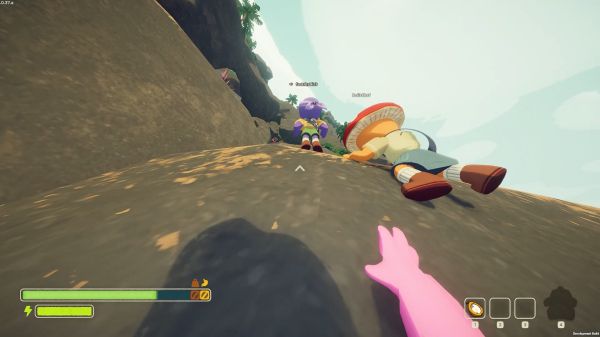
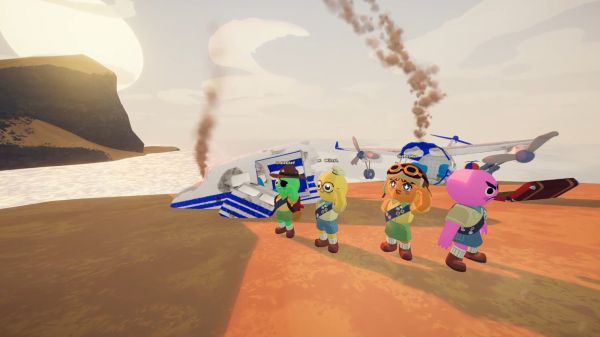
The opening area appears welcoming compared with everything waiting above it. There is space to move, the first climbs are manageable, and the team has time to experiment with grabbing, jumping, and helping one another. This creates the dangerous impression that the rest of the mountain will follow the same forgiving rules. PEAK uses that early comfort to teach the basics before beginning its real campaign against my stamina bar.
I spent the first few minutes climbing every small object simply because movement felt entertaining. Pulling myself over a ledge looked easy until I approached a surface at the wrong angle and watched the character struggle for grip. The game quickly taught me that vertical distance is only one part of a climb. Available stamina, body position, nearby resting points, and the possibility of assistance matter just as much.
Climbing Is Simple Until the Wall Refuses to End
The basic climbing mechanic is immediately readable because I grab the surface, move upward, and watch stamina decrease. Short walls require little planning, while longer sections become resource puzzles where I need to identify ledges and safe places to recover. A route that appears direct may be impossible without equipment or another player’s hand. The mountain constantly encourages me to look sideways instead of assuming the shortest path is the correct one.
I enjoyed how quickly the mechanic becomes physical and tense. When stamina approaches zero, the character’s weakening grip creates panic before the fall actually happens. Reaching a ledge with almost nothing remaining feels like completing an entire level, even if the team has only moved several meters upward. PEAK creates memorable victories from actions that would be automatic traversal in many other games.
Stamina Is the Real Health Bar
Traditional health still matters, but stamina controls nearly every important movement decision. Injuries, hunger, poison, temperature, and other conditions can reduce the amount available or make recovery more difficult. Losing part of the bar does not only make the character weaker in an abstract statistical sense. It removes possible routes from the mountain and turns previously manageable walls into dangerous obstacles.
This makes every setback remain relevant after the immediate event has ended. I might survive a bad fall, but the injury can follow me into the next climbing section and limit how far I can move without help. A poisoned character may remain active while becoming increasingly unreliable during difficult ascents. The game makes survival feel cumulative rather than resetting the team after each obstacle.
Resting Places Become More Valuable Than Treasure
A small ledge can look insignificant from a distance and become the most desirable location on the entire mountain once stamina begins disappearing. Reaching stable ground allows the character to recover, reorganize items, and evaluate the next route. These pauses also give the team time to check whether everyone actually survived the previous section. I began seeing the mountain as a network of recovery points rather than one continuous surface.
The safest route is often the one containing more places to stop, even if it requires additional horizontal movement. A direct climb can consume less time while leaving no opportunity to recover from one poor decision. PEAK rewards patience by making secure progress more valuable than impressive movement. My strongest expeditions involved many small pauses rather than one heroic rush.
Helping a Friend Up Feels Better Than Climbing Alone
The cooperative grabbing system turns other players into part of the climbing equipment. A teammate standing above can reach down, grab my character, and provide the final assistance needed to cross a difficult ledge. The interaction looks simple, yet it creates some of the game’s most satisfying moments. One player’s safe position can become the route that allows the entire group to continue.
Trust matters because a rescue can also place the helper in danger. Reaching too far or standing on an unstable edge may cause both players to fall. I learned to secure my own position before becoming confident about saving anyone else. PEAK regularly demonstrates that good intentions are not a substitute for balance.
Human Chains Are Effective Until One Person Panics
Several players can form an improvised chain across a difficult section, allowing the group to extend its reach beyond what one character could achieve. These moments make teamwork feel physical rather than represented through passive bonuses. Every person needs to maintain grip, manage stamina, and understand when to release. One poorly timed movement can transform the solution into a pile of falling scouts.
I enjoyed how naturally communication emerges during these situations. Someone needs to announce that stamina is low, ask another player to stop moving, or explain which direction the final person should climb. The resulting conversation often becomes louder and less useful as danger increases. PEAK understands that coordination usually becomes hardest at the exact moment it matters most.
Proximity Chat Makes Distance Emotionally Dangerous
Voice communication changes according to player position, so leaving the group can also mean losing the ability to hear it clearly. This gives physical distance a social consequence and makes separation more unsettling. A teammate who climbs ahead may suddenly become a faint voice above the rocks. Someone falling behind can disappear from the conversation before the group realizes how far away they are.
The system creates excellent comedy because voices fade naturally during accidents. I have heard a confident explanation become increasingly distant as the speaker slid down a slope. It also creates genuine tension when players become separated in a dangerous area. Finding one another again feels important because communication itself is a survival resource.
The Mountain Punishes Players Who Want to Be Heroes
PEAK constantly tempts one person to move ahead and prove that a difficult route is possible. Sometimes this produces useful information or establishes a rope for the rest of the team. More often, the scout reaches a position where returning is impossible and assistance cannot arrive easily. The group then has to decide whether the rescue is worth risking additional players.
I repeatedly learned that being first is less valuable than creating a route others can follow. A brilliant solo climb means little if the team remains trapped below without equipment. The strongest player is not always the one who reaches the highest position. It is often the person who remembers to place support for everyone else.
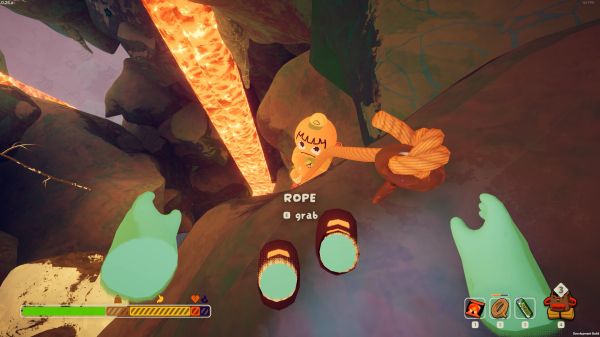
Ropes Turn Impossible Walls Into Shared Progress
Climbing ropes provide one of the clearest ways to convert personal success into team advantage. A player reaching a secure position can create a safer path for scouts who would otherwise lack the stamina to follow. The item feels powerful because it changes the structure of the route rather than providing only temporary statistics. One careful placement can preserve several other resources.
Limited supply prevents ropes from becoming an automatic answer to every wall. Using one early may create comfort while leaving the group unprepared for a more dangerous section later. I often carried useful equipment too long because I feared wasting it, then lost the run without ever deploying it. PEAK punishes careless consumption but also punishes excessive preservation.
Pitons Are Small Tools With Enormous Responsibility
Climbing spikes and similar equipment create temporary security on surfaces where natural resting points are unavailable. They can extend the distance a player travels by providing a moment to recover stamina. Their value becomes obvious during long vertical sections where one pause separates success from a complete fall. Placing one well feels like creating a checkpoint manually.
The tool still requires judgment because a poor placement may be difficult for teammates to reach. I learned to think about the path from below rather than only my current position. Equipment should solve the route for the group, not merely rescue the person holding it. This turns item usage into a form of level design performed during the climb.
The Anti-Rope Captures the Game’s Personality
Some of PEAK’s equipment follows familiar climbing logic, while other items feel deliberately absurd. The Anti-Rope is memorable because its behavior fits the game’s willingness to combine practical survival with strange physical comedy. Using unusual equipment can create spectacular progress or immediate confusion depending on the terrain. The team often needs to understand the item while already trusting someone to deploy it correctly.
I liked that the game does not explain every object through an exhausting tutorial. Discovery becomes part of the entertainment, especially when several players disagree about what an item probably does. The first experiment may waste valuable equipment, but it also creates a story the group remembers. PEAK often treats knowledge as something earned through preventable disasters.
Inventory Space Creates Arguments About Priorities
Every useful object competes for limited carrying capacity. Food, medicine, ropes, climbing tools, and strange consumables may all become essential later, but the team cannot take everything comfortably. This creates decisions about who carries which category and whether duplicate items justify the space. A well-organized group can distribute responsibility, while a chaotic group discovers too late that one missing player carried all the medical supplies.
I enjoyed the social pressure created by inventory management because it reflects trust. Giving another player an important object means believing they will remain nearby, remember it exists, and use it at the correct moment. That assumption is often optimistic. PEAK creates many failures not because the team lacked resources but because nobody remembered who was carrying them.
Food Is Never Just a Simple Healing Item
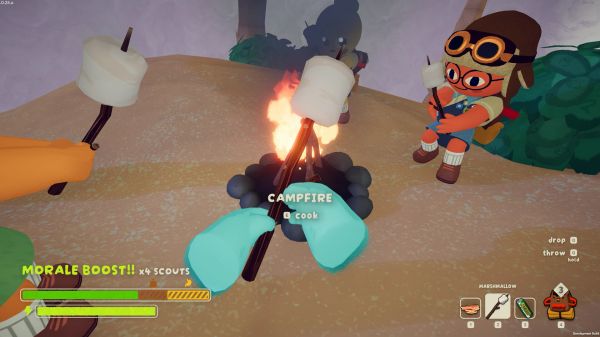
Scavenged food can restore useful resources, reduce hunger, or provide other benefits, but consuming unknown items may also create problems. The game presents many foods with enough visual personality to make experimentation tempting. A desperate scout may eat something questionable because the alternative is entering the next climb with reduced stamina. This turns every snack into a small risk assessment.
I liked that food supports both survival and comedy without becoming meaningless. Sharing a useful item can rescue another player, while consuming the wrong object may create a new condition that follows the team upward. The game constantly asks whether immediate relief justifies uncertain consequences. Hunger makes that question harder to answer rationally.
Questionable Berries Encourage Terrible Science
Finding unfamiliar plants usually produces a group discussion based on almost no reliable knowledge. One player may insist the berry is safe because of its color, while another remembers a previous run ending badly after something similar. Eventually, somebody eats it because experimentation needs a volunteer. The result becomes information the team may remember for future attempts.
This mechanic gives repeated play a useful knowledge layer. I gradually learned which foods supported recovery and which ones created avoidable danger. The information felt meaningful because it came from experience rather than a complete database provided at the beginning. PEAK turns the group into amateur survival researchers with very poor safety standards.
Injuries Make Mistakes Travel With Me
A fall does not always end the expedition immediately, which can be worse in a more interesting way. Surviving with an injury means continuing while movement and stamina are compromised. The group may need to spend medicine, redistribute equipment, or alter the planned route. One person’s mistake becomes a shared logistical problem.
I appreciated that the game allows damaged players to remain part of the climb. Carrying weakness upward creates tension and gives support items real value. It also produces moral decisions when the injured scout slows everyone during a dangerous section. PEAK can make a cooperative group feel heroic and brutally practical within the same minute.
Falling Is Funny Until the Character Keeps Falling
Short falls often produce harmless physical comedy, especially when the scout bounces or lands in an awkward position. The mood changes when the slope continues carrying the character away from the group. A small error can become a long uncontrolled descent that erases several minutes of progress. Watching a teammate disappear downward creates the exact mixture of laughter and horror that defines the game.
The mountain’s shape makes recovery uncertain because the falling player may land alive on a distant ledge. The group then needs to decide whether to continue upward, move downward for a rescue, or search for another route. Even survival can create a worse strategic position. PEAK makes vertical progress emotionally important because every lost meter feels painful.
Carrying Another Scout Is Equal Parts Heroism and Bad Planning
The game allows players to assist one another physically in ways that go beyond a simple revival button. A weakened or incapacitated teammate can become an object the group must move through dangerous terrain. Carrying someone reduces mobility and turns ordinary obstacles into cooperative puzzles. The rescued player remains part of the mission even when unable to contribute normally.
These moments created some of my favorite stories because the group suddenly developed a shared purpose stronger than reaching the next area. Nobody wanted to abandon the scout, but everyone understood that the rescue could end the entire run. The resulting climb becomes slower, less efficient, and much more memorable. PEAK makes friendship mechanically inconvenient, which gives loyalty real meaning.
Ghosts Keep Failure Social
Death does not always remove a player completely from the group’s experience. Ghostly participation allows eliminated scouts to remain present, communicate, and observe the surviving team. This reduces the boredom that often appears when one player leaves a cooperative run early. It also gives the dead player unlimited time to criticize decisions they no longer need to perform personally.
I enjoyed how ghosts preserve the social atmosphere while reminding everyone that the expedition has already gone badly. The surviving scouts continue under pressure, accompanied by voices offering encouragement or completely unhelpful commentary. A ghost may know where the group made a mistake but cannot always repair it directly. Failure becomes another role rather than immediate exclusion.
Revival Creates Hope Without Erasing the Cost
Opportunities to restore a fallen teammate give the group a reason to continue after losing someone. Reaching a revival point can transform the next section into a rescue mission rather than ordinary climbing. The surviving players must preserve themselves long enough to bring the team back together. This creates powerful comeback moments when an expedition that appeared finished becomes viable again.
The system does not make death harmless because the route to recovery may be difficult and the group has already lost resources. Revived players may return to a team in worse condition than before. I liked that recovery feels earned rather than automatic. PEAK lets the group repair failure without pretending it never happened.
The Daily Mountain Prevents One Perfect Route From Taking Over
The mountain’s changing layout gives repeated attempts a fresh strategic structure. Familiar mechanics return, but the exact sequence of walls, resources, and obstacles requires new decisions. Knowledge remains useful without becoming a complete solution. I can improve at reading terrain while still encountering a route I have never seen before.
This rotation supports the game’s social appeal because groups can return and discuss the new mountain together. One day may produce a relatively forgiving climb, while another layout feels personally hostile. The shared daily challenge gives success additional meaning because everyone attempting that version faces related conditions. PEAK creates community discussion without needing a complex competitive ranking system.
Repeated Attempts During the Same Day Build Real Route Knowledge
Although the mountain changes regularly, retrying the current layout allows the team to learn from immediate failure. A dangerous wall becomes more manageable once we know where equipment appears and which ledges are usable. The second attempt often feels significantly more organized because the group understands the general route. This creates a satisfying balance between procedural uncertainty and learnable structure.
I liked returning to the same problem with a revised plan. We could decide to preserve a rope, avoid one food item, or approach a cliff from another side. Failure becomes useful information rather than random punishment. The mountain remains difficult, but the team gradually earns familiarity with its specific version.
Each Biome Changes More Than the Background
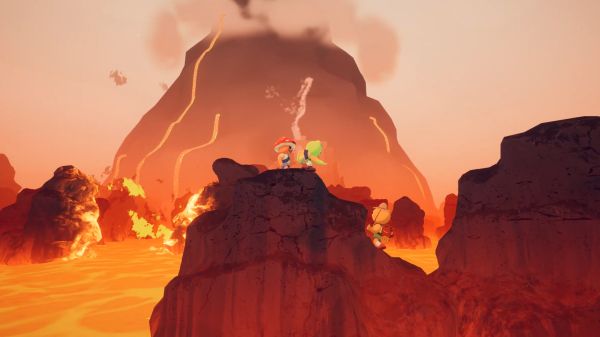
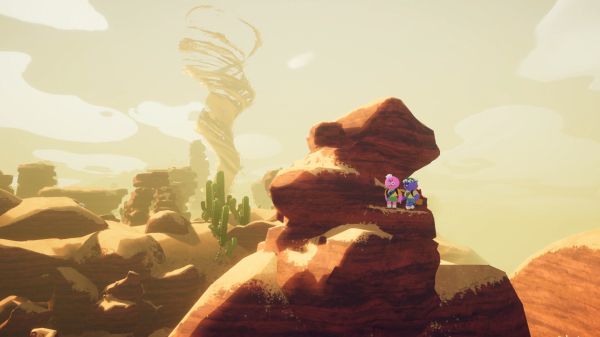
Progressing upward introduces environments with distinct visual identities and survival challenges. The transition creates excitement because reaching a new biome confirms that the group has completed a major portion of the climb. It also produces fear because previous strategies may no longer be sufficient. The mountain keeps introducing conditions that interact differently with movement and stamina.
I appreciated that the biomes feel like mechanical chapters rather than cosmetic layers. Terrain, visibility, temperature, hazards, and available resources can change how the team evaluates routes. A technique that worked reliably below may become dangerous higher up. PEAK constantly prevents confidence from becoming permanent mastery.
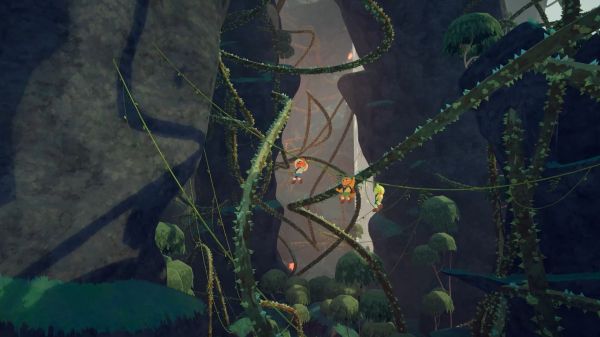
The Tropical Climb Hides Danger Inside Abundance
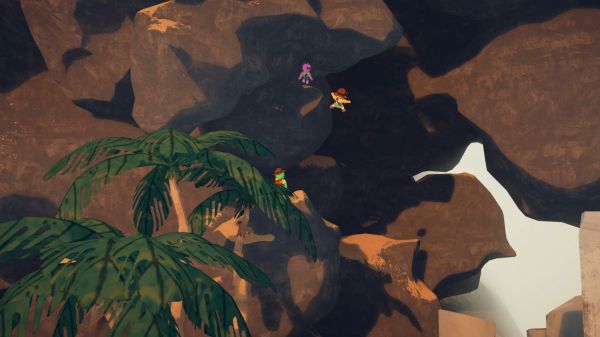
The greener areas appear full of life and useful resources, but they also introduce environmental threats that are easy to underestimate. Dense vegetation can obscure routes, dangerous plants, or the position of teammates. Food appears more available, yet not everything should be consumed without thought. The biome feels generous while quietly creating new reasons to lose stamina.
I enjoyed exploring these sections because the environment encourages curiosity. A plant or item may provide exactly what the team needs, but reaching it can require movement away from the safest route. The group often divides briefly to gather supplies and then discovers that regrouping is harder than expected. PEAK uses natural abundance to create both opportunity and separation.
Heat Turns Stamina Management Into a Wider Problem
Hotter regions make survival dependent on more than the immediate wall. Environmental conditions can affect how long the team operates comfortably and which routes remain practical. Shade, supplies, and efficient movement gain value because wasting time has a physical cost. The mountain begins punishing hesitation even when the players are standing safely.
This created a different rhythm from earlier areas where careful planning could continue indefinitely. The group must still think, but discussion needs to become more focused. Standing around while everyone argues about one item can weaken the entire expedition. PEAK makes climate another participant in the conversation.
Cold Makes Every Delay Feel Expensive
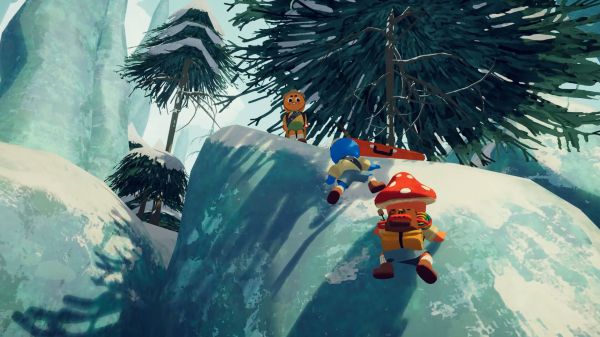
Higher frozen regions replace heat pressure with another environmental threat. Snow and ice affect visibility, route reading, and the urgency of finding safety. A character already weakened by injuries or hunger becomes especially vulnerable when the temperature creates additional strain. The climb feels increasingly hostile as the summit approaches.
I liked how the visual beauty of the snow contrasts with mechanical discomfort. The environment looks peaceful from a distance while demanding constant resource awareness. Reaching a sheltered location produces the same relief as completing a major objective. PEAK understands that survival games become convincing when comfort itself feels rewarding.
The Final Sections Test Everything Learned Below
Approaching the summit does not introduce one isolated final challenge and discard the previous systems. The game instead combines movement, stamina, item use, communication, and accumulated injuries into increasingly demanding situations. Every earlier mistake becomes visible because the team reaches the final climb with whatever resources and conditions remain. A poorly managed expedition may arrive near success without having enough strength to complete it.
This makes the final ascent emotionally effective. The summit is visible enough to create confidence, but the remaining distance still contains danger. Players begin speaking more carefully because nobody wants to waste a run that has survived so much. PEAK turns proximity to victory into another source of pressure.
The Summit Feels Earned Rather Than Awarded
Reaching the top produces satisfaction because the game has tracked the entire physical journey. I can remember the early falls, questionable meals, lost equipment, successful rescues, and teammates who nearly disappeared from the expedition. The summit is not only a final location; it is proof that the group managed its failures well enough to continue. Even a messy victory feels deserved.
I appreciated that success does not require the climb to look professional. My group could reach the top injured, disorganized, and missing most of its supplies. The result still mattered because survival was the only required standard. PEAK celebrates improvisation more than elegance.
Solo Play Changes the Entire Emotional Structure
Playing alone removes the communication problems and accidental interference created by friends. Routes can be planned without waiting, and every item remains under one player’s control. This makes the climb mechanically cleaner but emotionally colder. The silence exposes how much of PEAK’s identity comes from watching other people react to danger.
Solo attempts also make mistakes more severe because nobody is available to provide a hand or recover important equipment. I became more cautious and selective about routes when every failure belonged entirely to me. The experience still works as a climbing challenge, but it loses much of the spontaneous comedy. PEAK is enjoyable alone and significantly more memorable with a group.
Two Players Create the Strongest Sense of Partnership
A pair can coordinate more clearly than a full group while still benefiting from physical assistance. Every decision affects both players directly, and separation becomes immediately noticeable. One scout can establish a route while the other manages supplies or prepares the next rescue. The smaller team feels efficient without removing cooperative dependence.
I liked two-player sessions when I wanted a serious attempt at reaching the summit. Communication remained focused, inventory responsibilities were easy to remember, and narrow ledges created fewer collisions. The emotional pressure also increased because losing one teammate meant becoming completely alone. A pair creates less chaos but stronger individual responsibility.
Four Players Turn the Mountain Into a Comedy Machine
A full group provides more hands, inventory space, and possible rescue options. It also introduces more opportunities for blocked paths, duplicated mistakes, arguments, and accidental falls. Narrow ledges become crowded, while one person’s impulsive decision can redirect the entire team. The game’s physics and proximity chat become most entertaining under this pressure.
I found four-player sessions less efficient and often more enjoyable. The group produces stories constantly because every scout develops a temporary role. One becomes the climber, another carries food, someone protects all the ropes, and the final person consumes every suspicious object. PEAK gives these roles enough mechanical importance to make the jokes part of the survival strategy.
Character Customization Helps Me Identify the Problem Player
Cosmetic options allow each scout to develop a recognizable appearance. This is useful in a cooperative game where several characters may occupy the same ledge or fall through the same area. Visual identity helps the group understand who is carrying an important object and who needs assistance. It also makes every disaster easier to attribute correctly.
I enjoyed unlocking additional cosmetic options because they provide progression without changing the competitive balance of the climb. A more experienced player does not receive stronger hands or a larger stamina bar simply for owning more items. The rewards celebrate time spent while keeping survival dependent on decisions. The mountain remains equally willing to remove a well-dressed scout.
Badges Give Me Reasons to Play Differently
The badge system adds objectives beyond simply reaching the summit. Some achievements encourage unusual behavior, specific challenges, or mastery of systems I might otherwise ignore. They create goals for groups that have already completed a normal climb. Pursuing one badge can transform a familiar mountain into a completely different expedition.
I liked that these objectives support replayability without surrounding the game with an exhausting progression structure. A badge feels like evidence of a memorable accomplishment rather than another small number added to an account level. Cosmetic rewards provide a visible reminder of the challenge. PEAK keeps its progression playful and connected to actual experiences.
The Physics Produce Stories Without Feeling Completely Random
Characters wobble, grab surfaces awkwardly, collide, and respond to slopes in ways that create comedy. However, the controls remain consistent enough for skill to matter. I gradually became better at judging jumps, preserving stamina, and positioning the character before a difficult pull. The physics can surprise me without making every success feel accidental.
This balance is essential because a climbing game would become frustrating if movement had no reliable logic. PEAK allows mistakes to look ridiculous while usually revealing why they happened. A poor angle, late grab, or crowded ledge often explains the result. The game creates chaos from understandable systems rather than complete unpredictability.
The Visual Style Keeps Failure Light
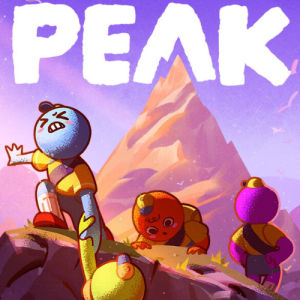
PEAK uses a colorful, stylized presentation that makes the mountain readable without chasing realism. Character designs are expressive, environments have strong identities, and important objects are usually easy to recognize. This supports quick decision-making during physically complicated situations. The game can become visually dramatic without losing its playful personality.
The soft character shapes also make injuries and falls funny rather than graphic. A scout tumbling down the mountain looks unfortunate but rarely disturbing. This allows the game to punish players repeatedly without creating a grim atmosphere. The presentation encourages laughter even when the expedition is clearly collapsing.
Animations Communicate Struggle Effectively
Climbing animations make stamina loss visible through movement and body language. A confident scout gradually appears less secure as the available energy disappears. This gives me information without requiring constant attention to interface elements. I can often recognize that a teammate needs help by watching their position and movement.
The physical expression also strengthens comedy because panic becomes visible before anyone explains it. A character hanging from one hand while rotating helplessly already tells the entire story. The voice chat then adds whatever emotional damage remains. PEAK combines animation and player reaction extremely well.
Sound Makes Every Accident Better
Environmental audio supports wind, weather, movement, items, and the changing conditions of each biome. The strongest sound element is still the human voice transmitted through proximity chat. Hearing someone breathe, shout instructions, or suddenly disappear into the distance gives physical events emotional weight. Many of my favorite moments would be far less memorable without that audio relationship.
The game also knows when to allow quietness. A difficult solo section can become tense when the voices of teammates are far below or no longer audible. Reaching them again restores both communication and comfort. Sound helps transform the mountain from a collection of surfaces into social space.
The Game Is Funniest When Nobody Is Trying to Create a Joke
PEAK does not need scripted comedy scenes because its mechanics naturally produce absurd outcomes. A player may deliver a serious explanation while standing on unstable terrain, forget their stamina level, and vanish halfway through the sentence. Another scout may attempt a heroic rescue and make the original situation significantly worse. The comedy comes from sincere effort failing physically.
I prefer this to games that depend heavily on repeated written jokes. The mountain creates new situations according to player decisions, so humor remains personal and difficult to reproduce exactly. My group remembers specific falls and arguments because they belonged to us. PEAK provides the stage and allows the players to become the comedy.
Communication Is More Important Than Mechanical Talent
A strong climber can establish routes and conserve stamina effectively, but one player cannot always manage every resource and rescue. Teams perform better when people explain what they are carrying, warn about hazards, and admit when they need assistance. Silence creates duplicated effort and forgotten equipment. Clear communication often saves more stamina than any consumable item.
I learned that useful communication needs to be brief during dangerous moments. Long explanations become impossible when someone is losing grip. Simple instructions about direction, stamina, and item placement work best. PEAK turns speaking clearly into another mechanical skill.
Too Much Communication Can Be Equally Dangerous
A full group may produce several voices offering conflicting instructions at once. The player climbing the wall then needs to decide which advice to follow while stamina continues decreasing. Panic makes everyone louder without necessarily making the information better. I have failed simple movements because the conversation became more complicated than the wall.
The strongest teams naturally develop moments when one person leads and others remain quiet. This structure does not need to be formal, but it helps during precise sections. PEAK reveals that cooperative success depends partly on knowing when not to speak. Silence can become a form of support.
The Game Creates Leadership Without Assigning a Leader
Different players take control according to the current problem. The strongest climber may lead a vertical route, while another person understands food, items, or environmental hazards better. Leadership moves naturally between members rather than remaining attached to one permanent role. This makes every scout potentially important.
I liked how the game rewards practical knowledge instead of account status. A player with fewer hours may recognize a safer path or remember what one object does. The group succeeds when it listens to the relevant person rather than automatically following the most confident voice. Confidence and competence are frequently different resources in PEAK.
Greed Creates Some of the Most Avoidable Failures
Useful supplies placed away from the main route tempt players into dangerous detours. One person may leave the group for food or equipment and discover that returning requires more stamina than expected. The item may be valuable, but the rescue can consume everything it was meant to save. PEAK repeatedly asks whether another resource is worth disrupting a stable expedition.
I often justified risky collection by claiming the team would need the object later. Sometimes this was correct, and the item became essential during a later climb. Other times the expedition ended during the attempt to obtain it. The game makes preparation and greed difficult to separate until the result is already known.
Overconfidence Is More Dangerous Than Low Stamina
Players usually recognize obvious resource problems and become cautious when the stamina bar is damaged. Confidence creates danger because it encourages unnecessary jumps, faster routes, and delayed equipment use. A group performing well may begin treating the mountain as solved. PEAK waits patiently for that attitude to produce a mistake.
My worst falls often happened immediately after a successful difficult section. Surviving one challenge made the next wall look easier than it was. The game maintains tension by allowing skill to improve without guaranteeing perfect execution. Every climb still requires attention.
Resource Hoarding Can End a Run With a Full Inventory
Limited equipment creates understandable pressure to preserve powerful items. I repeatedly carried ropes, healing supplies, and useful consumables through several sections because a future obstacle might need them more. The expedition then ended during a challenge those items could have solved. Saving resources becomes meaningless when the team does not survive long enough to use them.
The best groups recognize moments when an item converts danger into reliable progress. Using equipment may reduce future options, but surviving creates access to new resources and areas. PEAK rewards flexible planning rather than perfect conservation. An empty inventory at the summit is more successful than a full one halfway up.
Randomness Creates Uneven but Memorable Expeditions
Changing terrain and item distribution mean some attempts feel more generous than others. One mountain may provide useful food and equipment near obvious routes, while another demands careful climbing with limited support. This variation prevents every expedition from having identical difficulty. It can also make failure feel harsh when the available resources do not match the obstacles.
I generally accepted the unevenness because the game is designed around adaptation rather than strict competitive fairness. A difficult daily layout becomes a story and shared challenge. Easier routes provide opportunities to pursue badges or introduce new players. The changing mountain supports several different types of session.
Technical Problems Can Be More Harmful in a Physics Game
Online synchronization and physical interaction need to remain reliable because the game depends on precise grabbing and player positions. A connection problem during an ordinary conversation may be harmless, while the same interruption during a rescue can end the run. I occasionally encountered awkward movement or moments when another scout’s position appeared less stable than expected. These problems stand out because trust in the physics is central to climbing.
The lightweight visual style helps performance, but multiplayer conditions still depend on the players’ connections and systems. Most of my sessions remained playable enough for the intended chaos to feel natural. When something technical went wrong, it was sometimes difficult to separate the issue from ordinary PEAK physics. That ambiguity could be funny, although it was less entertaining near the summit.
The Low Price Matches the Focused Design
PEAK does not attempt to become an enormous survival platform containing hundreds of unrelated systems. It builds one strong cooperative loop around climbing, resource management, environmental pressure, and daily variation. The focused structure makes it easy to understand why the game became so replayable. I can complete an expedition, take a break, and return when the mountain changes.
The compact design also makes introducing friends easy. They do not need to study a long technology tree or unlock competitive equipment before joining. Basic movement can be explained during the first climb, while deeper knowledge develops naturally through failure. PEAK respects the social value of beginning together.
The Game Works Best With Friends Who Accept Failure
A group focused only on efficient victory may become frustrated when physics, poor communication, or one careless player destroys progress. PEAK is most enjoyable when failure becomes part of the entertainment rather than evidence that somebody has ruined the session. Reaching the summit still matters, but the route should be allowed to become ridiculous. The game rewards people capable of laughing before restarting.
This does not mean teamwork is irrelevant or every mistake should be celebrated. Progress becomes more satisfying when the group learns and improves. The ideal attitude combines genuine effort with forgiveness when the plan collapses. PEAK creates better stories when players care about success without treating it as the only valuable outcome.
What I Would Add to Future Expeditions
I would enjoy additional mountain conditions that change route planning without making the core controls more complicated. Strong winds, moving rock sections, or biome-specific cooperative obstacles could create fresh challenges. More unusual climbing equipment would also fit the game’s experimental personality. Every new item should remain easy to understand while allowing unpredictable uses.
A stronger system for reviewing completed expeditions could preserve memorable routes and accidents. Basic statistics showing rescues, falls, food consumed, or distance lost would create excellent post-run discussions. Replays might be difficult in a physics-heavy multiplayer game, but short automatic clips could capture the best disasters. PEAK already creates shareable stories naturally and would benefit from tools that help preserve them.
The Mountain Became a Test of Friendship
PEAK uses climbing to expose how a group responds to pressure. Some players become patient and supportive, while others disappear upward with the only rope. One person shares food immediately, and another keeps several items hidden until the expedition is almost over. The game makes personality visible through practical decisions.
I enjoyed how quickly these roles appeared even among people who had never discussed a strategy. The mountain reveals who communicates, who experiments, and who creates emergencies before becoming the loudest person requesting help. None of these roles needs to remain permanent across different attempts. A player responsible for one disaster may become the hero of the next expedition.
Reaching the Top Was Only Half the Reward
The summit provides the clear objective that gives every movement direction. However, the emotional reward comes from remembering how the group reached it. A clean climb can feel satisfying, while a chaotic success involving injuries, ghosts, and almost no remaining equipment becomes legendary. PEAK gives both outcomes meaning.
From my perspective as a gamer, the game succeeds because progression happens in two places. The scouts move physically upward, while the players develop knowledge, communication, and trust. A failed run may produce no summit but still improve the next attempt. Experience becomes the most reliable equipment the group carries.
Why PEAK Kept Calling Me Back
PEAK remained installed because it creates a complete cooperative adventure without demanding an enormous commitment. One expedition contains exploration, survival, improvisation, physical comedy, and enough tension to make success meaningful. The daily mountain keeps route knowledge temporary while allowing mechanical skill to improve. Every session begins with a familiar objective and develops into a different story.
From my perspective as a gamer, the climbing works because it is understandable without becoming trivial. I always know that I need to move upward, preserve stamina, and reach another safe surface. The difficulty comes from applying those simple rules while injured, hungry, separated, overloaded, or responsible for another player. PEAK adds complexity through circumstances rather than complicated controls.
The cooperative mechanics give physical meaning to teamwork. Friends do not merely provide passive bonuses or additional damage. They become hands, anchors, carriers, rescuers, scouts, and occasional sources of completely unnecessary danger. Helping someone over a ledge feels satisfying because the action is performed directly rather than resolved through an automatic prompt.
The survival systems prevent the physics comedy from becoming empty. Food matters, equipment matters, and injuries can reshape an entire attempt. A fall may be funny while still consuming supplies the group planned to use near the summit. The game allows laughter and consequence to exist in the same moment.
Solo climbing remains a valid challenge, but the full personality appears in multiplayer. Proximity chat makes distance meaningful, shared inventory creates trust, and rescues produce stories no scripted sequence could reproduce reliably. The mountain becomes a social space where every ledge can expose another communication problem. I rarely remembered the exact shape of a route as clearly as I remembered what my friends said while falling from it.
PEAK occasionally depends on teammates accepting its particular style of failure. Players who become angry after every accident may find the physics and procedural variation exhausting. Technical instability can also be damaging when precise movement is required. Even so, the focused design and immediate restart structure make another attempt easy to justify.
My favorite expedition was not the one with the cleanest climbing or best resource management. It was the run where the group arrived near the summit carrying injuries, missing equipment, and one scout who had already needed several rescues. Every remaining wall felt impossible, yet each player contributed one final useful action. Reaching the top felt less like completing a level and more like surviving a shared argument with gravity.
PEAK understands that cooperative games become memorable when players need one another mechanically and emotionally. The mountain is difficult enough to require teamwork but unpredictable enough to make teamwork funny. It gives every scout opportunities to become useful, selfish, heroic, or completely lost. Those roles can change several times before the summit appears.
The title describes the destination, but the destination is not the entire game. The real experience exists in the hands reaching down from ledges, the ropes placed for people below, the food divided between injured scouts, and the voices becoming quieter as somebody falls away from the group. PEAK made me care about climbing because every meter represented shared effort.
By the time I reached the summit, I was not thinking about mastering the mountain permanently. I was already wondering what the next version would do differently and which friend would make the first terrible decision. That desire to return is the clearest sign of the game’s success. PEAK turns one mountain into an endless supply of cooperative stories.
Pros:
- Dynamic multiplayer and community features for both cooperative and competitive play
- Stunning graphics and artistic design that create a visually appealing world
- User-friendly customization options with extensive mod support
- Smooth performance across various platforms and devices
- Rich storytelling combined with nuanced gameplay mechanics
- Immersive narrative experience that keeps players engaged
Cons:
- Occasional performance hitches on lower-end systems
- Limited in-game tutorials which can leave new players feeling unprepared
- Some puzzles and challenges may be overly complex for less experienced players









Recent Reviews

Minecraft

Grand Theft Auto V

Toca Boca World

Roblox

Leave a comment
Your comment is awaiting moderation. We save your draft here
0 Comments