Review
Fast Food Simulator gave me a familiar fantasy and then immediately showed me why that fantasy would be exhausting in real life. Runnin...



Fast Food Frenzy: Mastering Culinary Chaos
Fast Food Simulator gave me a familiar fantasy and then immediately showed me why that fantasy would be exhausting in real life. Running a fast-food restaurant sounds simple when reduced to taking orders, preparing meals, and collecting money, but the game connects those activities through a constantly moving chain of small responsibilities. Ingredients must be stocked, equipment must remain available, orders must be assembled correctly, customers expect reasonable service, and one overlooked task can slow the entire restaurant. The result is a management game that feels less like watching numbers increase and more like physically working inside the business I am trying to improve.
The first-person perspective is responsible for much of that appeal because I never control the restaurant from a comfortable overhead menu. I walk between counters, carry boxes, place ingredients, operate cooking equipment, prepare drinks, and deliver finished orders with my own character. Every improvement to the restaurant matters because I can feel how the layout affects my movement during a busy shift. A badly positioned refrigerator or inconvenient preparation table creates repeated delays that become painfully obvious once several customers order at the same time.
The First Shift Makes Everything Look Easier Than It Is
My earliest shift felt manageable because the menu was small and the restaurant had not yet developed enough complexity to overwhelm me. I could read an order, collect the necessary ingredients, cook the required items, and hand the finished meal to the customer without worrying about several production stations at once. That simplicity created confidence, but it also encouraged habits that became inefficient later. I placed supplies wherever space was available, ignored the importance of clear walking routes, and treated each order as an isolated task rather than part of a continuous service system.
The situation changed as the restaurant became busier and the menu expanded. One customer wanted a simple meal, another required several prepared components, and a third order arrived before I had finished cleaning up the previous process. Suddenly, every unnecessary movement mattered, and the casual arrangement of my kitchen became a serious obstacle. Fast Food Simulator is effective because it allows the same basic actions to become more demanding through volume and coordination rather than replacing them with unrelated mechanics.
Preparing Burgers Is Simple Until the Orders Begin Overlapping
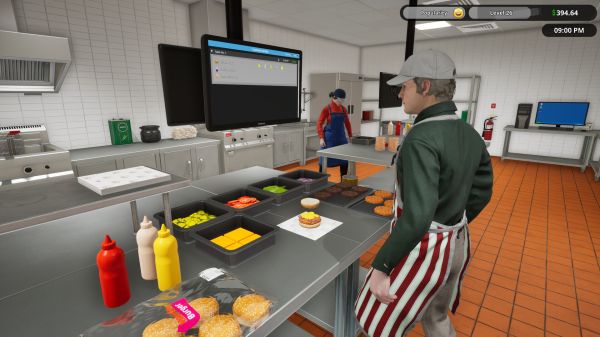
Burger preparation forms one of the central gameplay loops, and the individual steps are easy to understand. I gather the required ingredients, cook the meat, assemble the layers in the correct order, and make sure the final product matches the customer’s request. The satisfaction comes from completing this process smoothly while several other responsibilities compete for attention. A burger that would take only a short time in an empty restaurant can become a stressful project when another item is cooking, the drink station needs attention, and supplies are running low.
The assembly process rewards organization because frequently used ingredients should remain close to the preparation area. When everything has a logical location, I can move through an order almost automatically and recognize missing stock before it becomes an emergency. When the kitchen is poorly arranged, I repeatedly cross the room for one item and lose track of what has already been added. The mechanics are not difficult by themselves, but they become interesting through the pressure created by simultaneous orders.
I also enjoy the small risk of making an incorrect meal. Rushing may cause me to add the wrong ingredient, forget part of the order, or confuse two similar requests. The mistake rarely feels like a random punishment because I can usually remember the moment when I stopped checking the order carefully. Fast Food Simulator turns attention into a resource, and the busiest shifts are often decided by how effectively I divide it.
The Grill Creates a Constant Background Pressure
Cooking equipment demands attention even when I am performing another task. Food placed on the grill cannot simply be forgotten while I organize storage or prepare drinks, because timing affects whether it remains useful. This creates a persistent mental list of unfinished actions that follows me around the restaurant. I may be carrying an order toward the counter while already thinking about the next ingredients that need to be placed on the cooking surface.
The grill becomes much easier to manage when one player accepts responsibility for it during cooperative sessions. That person can maintain a steady supply of cooked items while teammates handle assembly and customer service. In solo play, I must constantly shift between production and presentation, which makes preparation more demanding. The equipment itself is straightforward, but its position within the larger workflow gives it strategic importance.
Overproducing can be just as inefficient as preparing too little. Filling the station with items that nobody has ordered may occupy useful space and consume stock without providing immediate value. Preparing only after an order arrives can also create long delays when demand suddenly increases. The most effective rhythm lies between those extremes, with enough ready components to handle common orders but not so many that the kitchen becomes cluttered.
Drinks Look Like an Easy Job Until Nobody Handles Them
The drink station initially appears less demanding than cooking because the process is quick and does not involve many ingredients. That assumption makes it one of the easiest responsibilities to neglect during a busy shift. A completed meal can remain unfinished because one drink has not been prepared, while every player assumes someone else will handle it. The delay feels especially frustrating because the missing task requires so little time once someone finally notices it.
This is where teamwork and clear roles become valuable. Assigning one person to monitor orders, prepare drinks, and complete deliveries can prevent finished food from accumulating behind the counter. In solo play, I learned to prepare drinks early when an order allowed it, reducing the number of details waiting at the final assembly stage. The game repeatedly demonstrates that small tasks become major problems when they are not clearly assigned.
Restocking Is the Work Nobody Wants but Everyone Needs
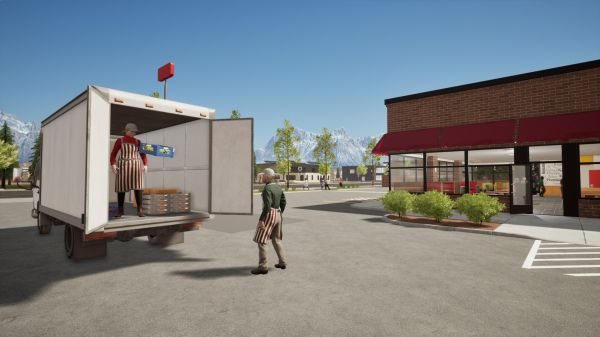
Receiving and organizing supplies is one of the least glamorous parts of Fast Food Simulator, yet the entire restaurant depends on it. Boxes arrive, ingredients must be moved into storage, and preparation stations need enough stock to survive the next rush. Ignoring this work creates a delayed problem because the kitchen may appear functional until one essential ingredient suddenly disappears. At that point, every active order involving that item becomes impossible to complete efficiently.
I began treating restocking as preventive maintenance rather than an interruption. Quiet periods became opportunities to check shelves, move boxes, refill stations, and organize the areas most likely to become crowded later. This preparation rarely produces an exciting moment, but it creates the conditions for a smooth service period. Fast Food Simulator understands that management success is often built during the minutes when nothing appears urgent.
The physical transportation of supplies gives the system weight. I do not simply click a button and watch a stock number increase because products must move through the actual restaurant space. Poor storage placement adds unnecessary walking to every delivery, while clear access routes make restocking faster. The layout therefore affects both customer service and the less visible logistics supporting it.
The Restaurant Layout Becomes a Puzzle I Can Walk Through
One of my favorite parts of the game is improving the restaurant according to the problems I experienced during previous shifts. A counter may look attractive but block the most direct path between storage and preparation. A refrigerator may be close to one station while forcing another worker to cross the kitchen repeatedly. The correct layout is not only the one that fits the available space, but the one that supports the sequence in which tasks are actually completed.
I started thinking in terms of routes rather than individual objects. Ingredients should move from storage to preparation without crossing the area used for finished orders, while employees should be able to reach cooking stations without colliding constantly. The customer-facing counter needs quick access to drinks and completed meals, but it should not interfere with supply movement. These considerations make customization a functional part of management rather than a purely decorative feature.
The first-person camera makes every design error personal because I physically experience the additional steps. In an overhead tycoon game, a minor inefficiency may appear as a small reduction in productivity. Here, I walk around the same badly positioned object dozens of times and begin resenting my own planning. The frustration is useful because it teaches me to redesign the space according to real workflow.
Solo Play Feels Like Managing Several Jobs at Once
Fast Food Simulator can be played alone, but the experience becomes significantly more demanding because every responsibility belongs to one person. I take orders, prepare ingredients, cook items, make drinks, assemble meals, serve customers, restock supplies, and deal with any unexpected problem without assistance. The constant switching gives solo sessions a strong sense of personal achievement, especially when a busy shift ends successfully. It also makes weaknesses in the automation and interface more noticeable because there is nobody available to cover a delayed task.
Solo play works best when I prepare carefully and keep the menu within the capacity of the current kitchen. Expanding too quickly creates more order variations than one player can comfortably handle. A larger menu may promise better income, but every new item introduces additional stock, equipment, and decision-making. The game rewards controlled growth because operational complexity can increase faster than physical space or personal attention.
I enjoyed the challenge, but the experience can become repetitive when one shift requires many identical journeys between stations. Cooperative play naturally divides that movement among several people, while solo play concentrates it all into one routine. Better assistants and deeper automation can reduce some of this pressure, although they also change the feeling of personally operating the restaurant. The balance between hands-on work and management support remains important to the game’s long-term development.
Cooperative Play Is Where the Restaurant Truly Comes Alive
Playing with friends transforms Fast Food Simulator from a demanding job simulation into a chaotic communication game. One person may manage the grill, another may assemble meals, and someone else may handle customers and drinks. When those roles remain clear, the restaurant begins operating like a connected machine. Orders move through the kitchen quickly, supplies are replaced before running out, and each player can focus on improving one part of the workflow.
The comedy begins when that coordination disappears. Two people may prepare the same order while another request receives no attention, or a teammate may move an important ingredient without telling anyone where it went. Players collide in narrow areas, finished food is placed on the wrong surface, and a simple problem produces several competing solutions. These mistakes are frustrating enough to matter but often funny enough to become the most memorable parts of the session.
Voice communication dramatically improves the experience because the restaurant changes too quickly for silent coordination to remain reliable. Announcing that an ingredient is low, confirming who has accepted an order, or asking another player to prepare a drink can prevent unnecessary duplication. The game gives every team a natural reason to communicate constantly. Success depends less on individual speed than on whether everyone understands what the restaurant needs at that moment.
Public Lobbies Can Be Entertaining and Completely Unpredictable
Joining unfamiliar players creates a different kind of challenge because I cannot assume that everyone shares the same expectations. Some players immediately select a station and work efficiently, while others experiment with equipment, rearrange objects, or behave as though the restaurant is a playground. The unpredictability can be enjoyable during casual sessions, but it becomes difficult when I am trying to improve the business seriously. One disorganized teammate can interrupt several systems at once.
Text and voice chat help, although communication does not guarantee cooperation. A player may ignore an assigned role or continue expanding the menu while the kitchen is already struggling. The host needs enough control to protect the restaurant from destructive behavior without making every public session feel restrictive. Social management becomes almost as important as food preparation.
I prefer playing with a regular group because each person gradually develops a specialty. One friend becomes reliable at cooking, another remembers stock levels, and someone else remains calm enough to organize the counter during a rush. Familiarity reduces the need to explain every decision and allows the team to focus on improving efficiency. Fast Food Simulator is enjoyable alone, but its strongest personality emerges from shared responsibility.
Customer Orders Create Pressure Through Accumulation
Individual customers rarely present a complicated challenge, but several active orders create a demanding queue. Each request occupies mental space because I must remember which components are already prepared and which still need attention. Completing the easiest order first may free space quickly, while beginning the most complicated one earlier can prevent a larger delay. The best choice changes depending on available ingredients and the positions of other players.
The order display is essential, but crowded situations can still become difficult to read. Similar meals may be confused, and partially completed requests can occupy multiple surfaces around the kitchen. A strong team develops a consistent method for separating orders and communicating progress. Without that structure, the restaurant fills with food that may be useful but no longer has a clear destination.
I appreciate how the game creates urgency without depending entirely on artificial disasters. The pressure comes from ordinary work arriving faster than the team can complete it. Every order is reasonable alone, but their combination exposes weaknesses in staffing and layout. This form of difficulty fits the simulation because success depends on improving the system rather than surviving a random event.
Progression Makes the Restaurant More Profitable and More Difficult
Earning money allows the business to unlock equipment, menu options, decorative items, and other improvements. This creates a satisfying sense of growth because the restaurant gradually develops from a basic operation into a busier and more capable establishment. New equipment can remove old limitations, while additional products provide more ways to serve customers. Every expansion, however, also introduces another responsibility.
I learned not to treat every unlock as something that should be activated immediately. Adding a new product can require more ingredients, storage space, preparation steps, and staff attention. The financial reward may look attractive, but the existing kitchen must be able to support the added complexity. Growth feels most successful when it follows operational readiness rather than the simple availability of money.
This gives progression a useful strategic quality. I am not merely purchasing stronger equipment according to a fixed upgrade path. I am deciding what kind of restaurant the current layout and workforce can manage. A smaller menu served consistently may outperform a larger one that causes delays and mistakes.
Money Is Easy to Understand but Still Influences Every Decision
The financial system is accessible enough that I rarely need to study complicated accounting screens. Income comes from successfully serving customers, while supplies, equipment, upgrades, and customization consume the money earned. The simplicity keeps attention on physical restaurant work rather than turning the game into a spreadsheet. At the same time, careless purchasing can slow progression and leave the business poorly prepared for future shifts.
I often had to decide whether to invest in efficiency or appearance. A decorative improvement might make the restaurant more personal, while better equipment could immediately reduce delays. Expanding storage may not feel exciting, but it can prevent repeated supply problems. These choices give money practical meaning because every purchase changes either the workflow or the identity of the restaurant.
The economy could become deeper as development continues, particularly through operating expenses, staff costs, maintenance, and more varied customer behavior. Too much complexity could distract from the cooperative cooking loop, so any additions should support the physical work rather than replace it. The current system works because financial growth and restaurant activity remain closely connected.
Customization Gives the Business a Personal Identity
Restaurant customization allows me to change the space beyond simple functional upgrades. Furniture, decoration, colors, and layout choices can transform the business into something that feels designed by the players operating it. This matters in cooperative sessions because the restaurant becomes a shared project rather than a disposable level. Returning to a familiar interior creates continuity between shifts.
I prefer customization options that also affect movement or organization because they create meaningful design decisions. Decorative objects should enhance the environment without narrowing important routes or hiding useful surfaces. The first-person perspective makes visual clutter more noticeable than it would be from above. A beautiful restaurant can become irritating when every shift requires navigating around unnecessary obstacles.
Character customization supports the social side in a similar way. Distinct appearances make teammates easier to recognize during crowded moments and allow each player to express a role within the restaurant. These features do not change the mechanical challenge, but they make long-term cooperative play feel more personal. A simulator based on repeated shifts benefits from giving the players and their workplace a recognizable identity.
AI Employees Can Reduce Pressure but Need Careful Management
Hiring or using automated help can make the restaurant more manageable, especially for solo players. Assistants can handle repetitive responsibilities and give me enough time to focus on planning, expansion, or more complicated orders. Their value depends heavily on pathfinding and the clarity of the layout. An employee who repeatedly takes an inefficient route may consume space without solving the problem I hired them to address.
I enjoy the transition from doing every task personally to supervising a larger operation. The restaurant begins feeling less like one demanding shift and more like an actual business with distributed responsibilities. That change should not happen too quickly because hands-on preparation is one of the game’s strongest features. Automation works best as a reward for understanding a task before delegating it.
AI behavior can occasionally appear confused when several items or destinations are available. Workers may hesitate, select an unexpected route, or fail to prioritize the task that appears most urgent to me. These issues are especially noticeable during busy periods when one delayed action affects several orders. Continued improvements to employee behavior will be important for players who want to build larger restaurants without relying entirely on multiplayer partners.
Cleaning and Maintenance Could Add More Depth
A working restaurant involves more than cooking and serving, and additional maintenance systems can make the simulation feel more complete. Cleaning surfaces, handling waste, maintaining equipment, and responding to hygiene problems would add another layer of preparation. These activities should remain meaningful without becoming repetitive chores that interrupt every order. The challenge lies in connecting maintenance to efficiency and customer satisfaction rather than using it only as a timer.
I enjoy simulation details when they create planning choices. Cleaning during a quiet period could prevent larger problems during a rush, while delaying equipment maintenance might provide short-term productivity at the risk of future failure. Such systems would fit naturally beside restocking because both reward preparation before demand increases. The restaurant should feel like a physical workplace whose condition changes according to how it is managed.
The Physics Create Both Comedy and Frustration
Objects possess enough physical presence to make handling them feel more direct than selecting icons from an inventory. Boxes, ingredients, equipment, and completed meals occupy actual space and can create clutter when placed carelessly. This produces many amusing cooperative moments because one player’s attempt to organize the kitchen may be undone by another person dropping items in the middle of a route. The restaurant can become a visible record of the team’s panic.
Physics can also create awkward interactions. An object may be difficult to place precisely, ingredients can occupy unexpected positions, and crowded counters may make selection less reliable. These issues become more frustrating when an order is waiting and the correct item cannot be handled smoothly. The controls work best when the environment remains organized and surfaces are not overloaded.
I would not remove the physical quality because it gives the game much of its personality. Perfectly automated placement would make the restaurant cleaner but less entertaining. The ideal balance would preserve the possibility of harmless chaos while reducing moments when object behavior interferes with deliberate actions. A simulator should allow mistakes without making basic interaction feel uncertain.
The Visual Style Is Functional Rather Than Spectacular
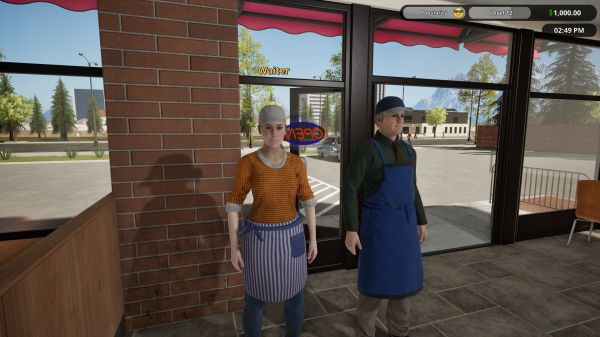
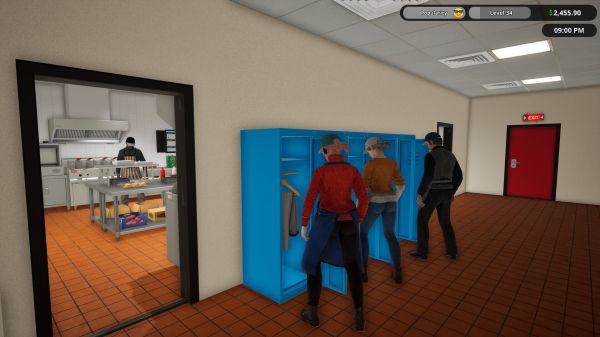
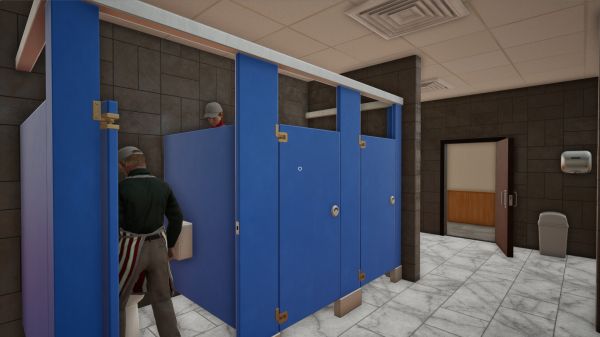
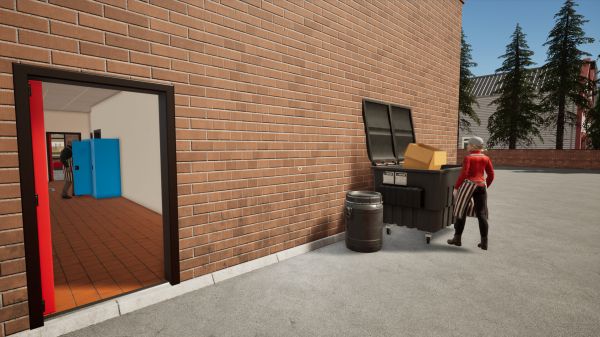
Fast Food Simulator uses a clean three-dimensional presentation that makes equipment, ingredients, counters, customers, and teammates easy to recognize. The graphics are not designed to create a luxurious restaurant or highly detailed culinary spectacle. Their main responsibility is supporting a readable workspace where several tasks may occur at once. This functional approach suits the game because clarity matters more than visual realism during a crowded shift.
Food preparation has enough visual detail to make assembly satisfying, particularly when the finished order looks organized and complete. The restaurant gradually becomes more attractive through customization, although some environments and character animations still reveal the project’s Early Access status. Repetition in customers and general presentation can also make longer sessions feel visually familiar. More environmental variety would give expansion a stronger sense of change.
Performance matters more than decorative detail because delays or unstable frame delivery can directly affect physical interaction. The game generally benefits from its restrained presentation, which allows the kitchen to remain responsive even when several players and orders are active. Optimization should remain a priority as additional systems, equipment, and customer behavior are introduced.
The Soundscape Helps Me Track Work Outside My View
Audio provides useful information because the first-person camera prevents me from seeing the entire restaurant at once. Equipment sounds, customer activity, teammate movement, and the general noise of service help me understand what is happening behind me. A familiar cooking sound may remind me that an item needs attention before I return to the station. The restaurant feels active because several processes remain audible even when they are outside the camera frame.
Voice chat naturally becomes the most important audio feature in cooperative play. Teammates can warn about low supplies, announce completed components, and identify which order they are handling. Clear communication reduces unnecessary movement more effectively than many equipment upgrades. The game creates enough simultaneous information that talking feels like part of the simulation rather than an optional social feature.
More varied equipment and customer sounds could improve readability further. Distinct audio cues would allow experienced players to recognize problems without repeatedly checking every station. The challenge is avoiding an overwhelming mix during peak demand. Useful sounds should support attention rather than compete for it.
The Best Shifts Develop a Satisfying Rhythm
A successful restaurant shift feels almost musical once the team understands its roles. Orders arrive, ingredients move toward preparation, cooked items reach assembly, drinks are completed, and finished meals leave the counter without unnecessary pauses. Every player remains busy, but nobody feels completely overwhelmed because the workload is distributed logically. These moments make the restaurant feel like a system the team has learned to perform together.
The rhythm can collapse quickly when one station falls behind. Missing ingredients delay assembly, delayed assembly causes completed items to accumulate, and crowded surfaces make future orders harder to organize. Recovering requires deciding which problem should be solved first rather than attempting everything simultaneously. The game is most satisfying when a team recognizes the source of disorder and restores control through communication.
This rise and fall of efficiency creates the strongest emotional arc in each session. The shift begins calmly, pressure increases, mistakes create temporary chaos, and the team either recovers or finishes surrounded by unfinished work. No scripted story is necessary because the restaurant itself produces a clear beginning, crisis, and result. The memories come from how the players responded when the plan stopped working.
Repetition Is Both the Foundation and the Main Risk
Restaurant work depends on repeated actions, and Fast Food Simulator does not hide that fact. I prepare familiar ingredients, travel between the same stations, restock the same shelves, and complete variations of similar customer requests. Repetition becomes enjoyable when I can perform those actions more efficiently or coordinate them with other players. It becomes tiring when progression does not introduce enough new decisions.
The game needs menu additions, equipment, layouts, customer types, and management systems that change how I think rather than simply increasing the number of items handled. A new ingredient is most valuable when it requires a different preparation method or creates another meaningful station. Adding many nearly identical recipes may increase content without improving depth. Continued development should focus on new workflow challenges rather than volume alone.
Cooperative play naturally reduces repetition because human behavior creates unexpected situations. Friends make mistakes, develop strategies, change roles, and turn ordinary tasks into conversations. Solo players depend more heavily on mechanical variety because the restaurant itself must provide most of the entertainment. The long-term experience should support both groups without making either feel secondary.
Early Access Is Visible but the Core Idea Already Works
Fast Food Simulator remains in Early Access, and several areas still feel capable of substantial expansion. AI behavior, object interaction, progression balance, visual variety, customer reactions, and management depth can all become more polished. Bugs and unusual physics may interrupt otherwise successful shifts, particularly when the restaurant contains many objects or players. The game already provides a complete central loop, but it does not yet feel like the final version of that loop.
The encouraging part is that the foundation is easy to understand and naturally expandable. New recipes, appliances, employee systems, restaurant locations, delivery methods, and customer demands can be added without changing the central identity. The developers do not need to reinvent the game because physically operating a fast-food restaurant is already enjoyable. Future updates mainly need to make the workflow smoother, deeper, and more varied.
Players who require a perfectly polished simulation may prefer to follow development before committing to a long campaign. Those comfortable with occasional roughness can already find many entertaining sessions, especially with friends. The current content is strongest as a social experience rather than an endlessly detailed solo management game. Its value depends heavily on whether the repeated work feels satisfying to the player.
Fast Food Simulator Understands Why Cooperative Work Can Be Fun
The game does not make restaurant work entertaining by pretending every task is exciting. Restocking, carrying boxes, preparing drinks, and organizing counters remain ordinary responsibilities. They become engaging because each task affects teammates and contributes to a visible shared result. A completed shift feels earned by the group rather than awarded to one player for pressing the correct buttons.
Failure is also shared. When the restaurant becomes disorganized, every player can usually identify a series of decisions that contributed to the problem. Someone expanded the menu too quickly, another ignored supplies, and two people repeatedly handled the same station while another remained empty. These failures encourage discussion and create reasons to redesign the restaurant before the next attempt.
The strongest cooperative games make simple actions meaningful through dependence, and Fast Food Simulator achieves that consistently. My work matters because another player is waiting for the item I am preparing. Their work matters because I cannot complete an order without it. The restaurant succeeds when individual tasks form one reliable chain.
A Chaotic Restaurant Simulator With a Strong Cooperative Core
Fast Food Simulator is most enjoyable when I treat it as both a management game and a physical workplace. The restaurant must be designed efficiently, supplied correctly, and expanded carefully, but every plan eventually has to survive direct first-person operation. A layout that appears logical can fail once several players begin moving through it, while a simple kitchen can perform extremely well when every station has a clear purpose. The connection between planning and physical movement gives the game its strongest identity.
Solo play offers a demanding test of organization because one person must manage every part of the service process. Cooperative play is less predictable but far more entertaining, turning ordinary restaurant work into a constant exchange of instructions, mistakes, and improvised solutions. Friends can transform one busy shift into a memorable story simply by misunderstanding who was supposed to prepare the drinks. The social chaos is not separate from the simulation; it is one of the most convincing parts of it.
The Early Access version still needs greater variety, improved AI, smoother object handling, and deeper long-term management. Repetition can become noticeable, particularly when playing alone, and technical roughness sometimes interrupts the satisfying workflow. None of those issues changes the fact that taking an empty restaurant and turning it into a functioning team operation already feels rewarding. The core loop is clear, accessible, and capable of supporting significant future growth.
I return because every shift offers another opportunity to make the restaurant slightly more efficient than before. Moving one refrigerator, changing one teammate’s role, preparing stock earlier, or simplifying the menu can completely change the next service period. Fast Food Simulator turns burgers, boxes, drinks, and crowded counters into a cooperative systems puzzle. When the kitchen finally works and orders leave the counter in a steady rhythm, the satisfaction feels less like completing a level and more like watching a real team discover how to work together.
Pros:
- Smooth and intuitive gameplay mechanics that enhance player engagement
- Engaging storyline with well-integrated easter eggs and hidden features
- Customizable mods and cheat options allow for varied gameplay experiences
- Vibrant visuals and realistic sound design create an authentic atmosphere
- Cross-platform compatibility and unblocked access make it widely accessible
- Responsive developer support and an active community improve long-term enjoyment
- Immersive fast food simulation that captures real-life restaurant challenges
Cons:
- Higher difficulty and resource management challenges might overwhelm new players
- Some hidden mods and cheats lack clear, accessible documentation
- Occasional technical glitches may interrupt gameplay









Recent Reviews

Minecraft

Grand Theft Auto V

Toca Boca World

Roblox

Leave a comment
Your comment is awaiting moderation. We save your draft here
0 Comments