Review
Project Zomboid does not begin by asking whether I can save the world, discover a cure, or defeat the person responsible for the outbre...
Navigating the Apocalypse: The Adaptive World of Project Zomboid
Project Zomboid does not begin by asking whether I can save the world, discover a cure, or defeat the person responsible for the outbreak. It calmly informs me that my character will die and then gives me enough freedom to decide how long that process will take. That brutally honest premise changes the way I approach every cupboard, broken window, abandoned vehicle, and distant sound. Survival is not presented as a heroic campaign with a guaranteed conclusion, but as a temporary victory built from hundreds of cautious decisions.
My first characters rarely survived long enough to create memorable stories. One attracted a crowd while attempting to enter a house, another ignored a minor injury until exhaustion made movement difficult, and another confidently drove into an area I had never explored before. These endings were frustrating, but they rarely felt random because I could usually identify the exact decision that began the collapse. Project Zomboid makes failure educational by allowing consequences to develop slowly enough for me to understand them.
Character Creation Is the First Survival Challenge
Creating a survivor involves more than choosing an appearance and selecting a convenient profession. Traits shape strength, fitness, sleep, appetite, hearing, vision, weight, emotional responses, and the speed at which important skills develop. Every useful advantage must normally be balanced by a weakness, so character creation becomes an early test of how honestly I understand my own playstyle. A trait that looks manageable on the menu may become a constant problem once food is scarce or a long escape demands more endurance than expected.
I enjoy this system because it does not offer one universally correct build. A strong survivor can carry more equipment and handle physical confrontations better, while a quiet burglar may avoid those confrontations and access vehicles earlier. A skilled carpenter can establish a secure base more quickly, but that advantage means little if I cannot find food or manage panic during the first week. The most effective character is usually the one whose strengths support a clear plan rather than the one with the longest collection of positive traits.
Negative traits are especially interesting because they encourage calculated arrogance. I may accept poor fitness because I intend to remain cautious, choose weak eyesight because I expect to fight during the day, or take a strong appetite because I assume food will remain plentiful. The game patiently waits for that assumption to become false. A build feels clever only until the world creates the exact situation it was designed to avoid.
The Isometric View Creates Both Clarity and Danger
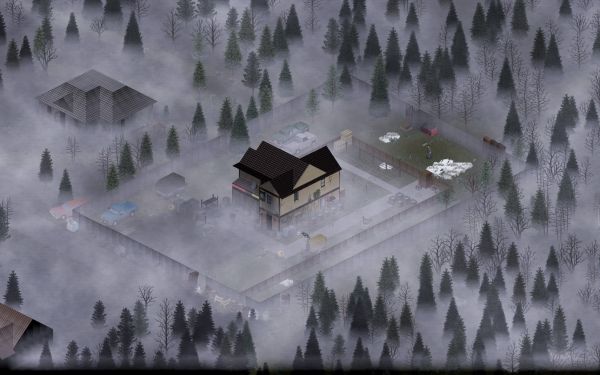
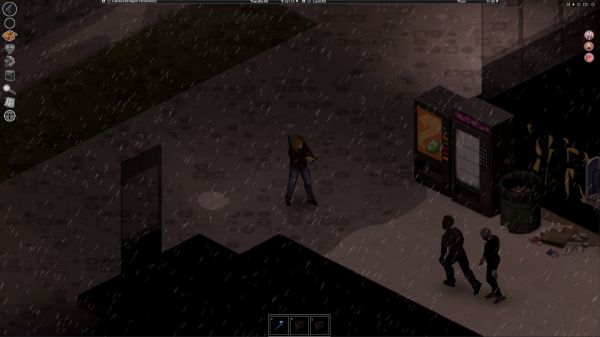
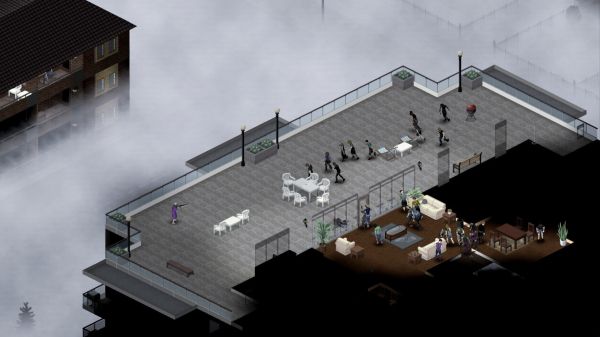
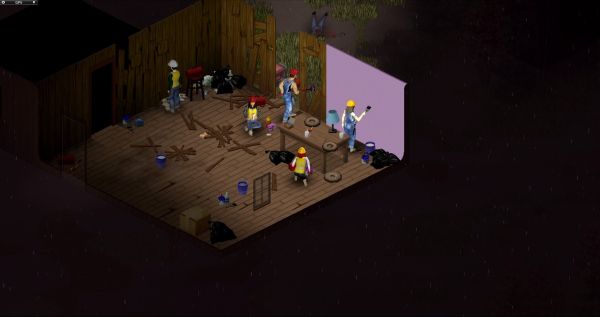
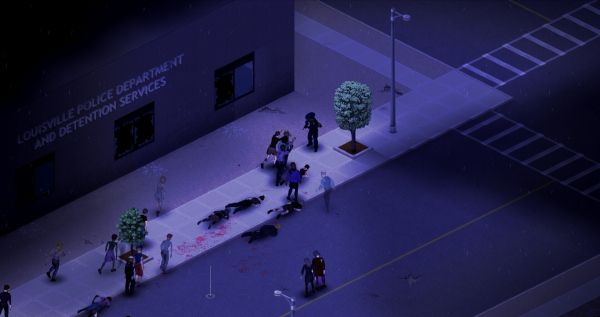
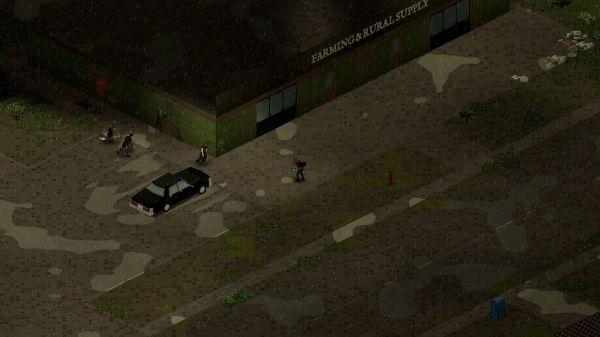
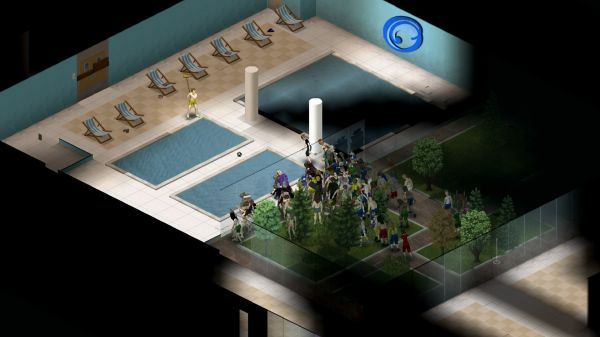
Project Zomboid uses an isometric perspective that allows me to study rooms, streets, fences, vehicles, and groups of infected from above. At first, this viewpoint appears more informative than the camera in a first-person survival game. I can inspect several windows, estimate the size of a crowd, and plan a route around buildings before moving. The danger comes from assuming that the camera shows everything my character can perceive.
Walls disappear to reveal interiors, objects overlap, and infected can approach from angles hidden by structures or environmental clutter. My character’s field of vision matters independently of my own view, which means an apparently empty space may contain a threat that has not been properly observed. Turning around, checking corners, and pausing before opening a door become essential habits. The camera gives strategic information without removing the need for physical awareness.
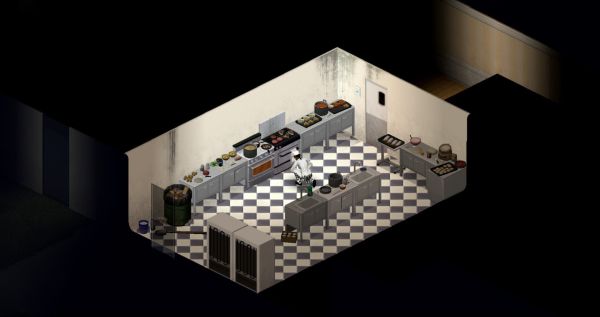
This perspective also makes the world resemble a detailed simulation board where every object has a potential function. A kitchen is not simply decorative scenery because it may contain food, containers, knives, cleaning supplies, and appliances. A garage may hold tools, fuel, replacement parts, or a vehicle that requires repairs before it becomes useful. The isometric presentation encourages me to read buildings as systems rather than backgrounds.
Combat Punishes Confidence More Than Inexperience
Basic combat is easy to understand because I can push an infected away, attack with a weapon, or strike a target that has fallen. Surviving repeated encounters requires much more discipline. Distance, fatigue, panic, weapon condition, character skill, clothing, nearby obstacles, and the number of enemies all influence whether a simple confrontation remains manageable. The moment I begin assuming that one more enemy will not matter is usually the moment a safe fight becomes dangerous.
I learned to respect small groups because combat consumes resources even when I avoid injury. Weapons deteriorate, clothing becomes damaged, noise attracts attention, and physical exhaustion reduces my ability to escape. A victory that leaves my character tired in an unfamiliar neighborhood may be strategically worse than avoiding the fight entirely. Project Zomboid constantly reminds me that defeating enemies is not the same as improving my situation.
The controls can initially feel stiff, particularly when turning, aiming, and moving around furniture or narrow doorways. That stiffness becomes part of the tension because my survivor is not an effortless action hero capable of correcting every poor position. Attacks require commitment, and backing into a wall can be disastrous. Once I understood the rhythm, combat became satisfying precisely because it remained dangerous.
Every Building Becomes a Tactical Puzzle
Entering an unfamiliar house is one of the simplest activities in Project Zomboid, yet it produces some of the strongest tension. I usually begin by walking around the exterior, checking visible rooms, listening for movement, and identifying more than one exit. A closed bathroom or bedroom door can hide several infected, while a broken window may reveal that somebody else has already entered. The game turns ordinary domestic architecture into a sequence of uncertain decisions.
Opening doors quickly is tempting because most rooms contain nothing dangerous. That repetition creates carelessness, which makes the rare crowded room more effective. I may search ten quiet houses and begin treating the eleventh as another routine stop, only to discover a threat standing directly behind the door. Project Zomboid uses long periods of normality to weaken the habits that keep me alive.
Windows provide additional choices. Breaking one creates access but produces noise and dangerous glass, while climbing through carelessly may cause an injury that affects movement. Doors can be damaged, locked, or blocked by furniture, and an apparently secure room may have multiple external windows. No building is completely safe until I have inspected it, and even then safety remains temporary.
Looting Is About Priorities, Not Collecting Everything
The world contains an enormous variety of useful objects, and my early instinct was to carry as many of them as possible. I filled bags with tools, food, clothing, books, medical supplies, containers, and items that might become useful much later. The result was a slow, exhausted survivor carrying enough equipment to make escape difficult. Project Zomboid taught me that recognizing value also means recognizing what can be left behind.
Inventory management is deliberately physical. Objects have weight, bags reduce carried load by different amounts, and items must be placed where I can access them quickly. A bandage buried inside a container is less useful during an emergency than one stored in a convenient pocket. A heavy weapon may appear powerful, but carrying it alongside several tools can quietly reduce endurance and mobility.
The best supply runs begin with a specific purpose. I may search houses for food, visit a warehouse for building materials, or enter a medical facility because my existing supplies are running low. This focus makes it easier to leave before the area becomes dangerous. Entering without a plan usually leads to staying too long because every shelf appears to offer one more useful object.
Hunger and Thirst Are Only the Beginning
Project Zomboid tracks needs and conditions with enough detail to make survival feel like maintaining a complicated human system. Hunger, thirst, fatigue, temperature, pain, boredom, stress, panic, illness, and physical exhaustion can overlap and influence performance. None of these systems is especially difficult when managed alone. The challenge comes when several minor problems begin reinforcing one another.
A tired character may fight less effectively, which increases the chance of injury and makes travel slower. Wet clothing can reduce comfort and contribute to illness, while panic affects accuracy during a moment when precision matters most. Carrying too much increases exhaustion, and exhaustion makes escaping a crowd more difficult. The game creates danger through combinations rather than relying only on sudden attacks.
I appreciate that these needs encourage routine. Eating, resting, washing clothing, organizing supplies, reading, exercising, and maintaining equipment become meaningful parts of a survivor’s life. These activities may sound uneventful, but they produce attachment because I am not merely directing a combat unit. I am maintaining a person whose ordinary habits determine whether the next emergency can be survived.
Injuries Create Some of the Game’s Best Stories
An injury in Project Zomboid is not always an immediate ending. A cut may require cleaning and bandaging, while deeper wounds can demand more specialized treatment and longer recovery. The real danger often comes from the circumstances surrounding the injury. A damaged hand affects combat, an injured leg changes movement, and pain can make sleep or escape more difficult.
I once survived an encounter without being bitten but suffered enough damage that returning to my base became a separate survival challenge. The route that had seemed short earlier became exhausting, and every sound forced me to consider whether hiding was safer than continuing. Reaching the building did not end the problem because food, clean bandages, and rest were still required. The injury transformed an ordinary journey into a story without the game needing to create a scripted mission.
This is where Project Zomboid’s slower pace becomes valuable. Damage has time to influence planning rather than disappearing after a quick healing animation. Recovery can require several uneventful days, but those days make the survivor feel vulnerable and human. A character who escapes an attack may still spend the following week living with its consequences.
Infection Makes Every Close Encounter Terrifying
The possibility of infection changes the emotional meaning of damage. A survivor may escape a crowd, close every door, clean each wound, and still face uncertainty about what happens next. The game does not always provide immediate certainty, so a character’s behavior after an injury becomes shaped by suspicion. I may continue preparing the base while privately wondering whether the work will benefit only the next survivor.
This uncertainty makes protective clothing valuable without turning it into guaranteed armor. Layers can reduce exposure, but they also affect temperature and movement. No equipment removes the need for distance and caution. The safest fight is still the one I never allow to become close.
The system can feel harsh because a long-running character may be lost through one brief mistake. That severity is fundamental to the game’s identity. Project Zomboid becomes meaningful because survival time cannot be separated from accumulated risk. The longer a character lives, the more every unnecessary encounter threatens a history I have personally built.
Building a Base Creates Comfort Without True Security
Finding a suitable home produces one of the strongest shifts in a playthrough. I begin moving supplies into containers, covering windows, improving doors, organizing food, and creating spaces for different activities. The building gradually stops feeling like random scenery and becomes a place shaped by my decisions. Returning after a dangerous trip can provide genuine relief.
That comfort is never complete. Noise may attract infected, generators require fuel and maintenance, food supplies decline, and a single damaged entrance can expose the interior. Fire is another threat, particularly when cooking or electrical systems are handled carelessly. A base reduces certain risks while creating new responsibilities.
Location matters as much as construction. A remote farmhouse may provide land and isolation but make supply trips longer, while an urban building offers resources near large populations of infected. Upper floors can be easier to defend but harder to escape. I rarely find a perfect location because each choice changes the kind of danger I am accepting.
Carpentry Feels Like Survival Progress Rather Than Decoration
Carpentry is one of the clearest ways to transform the environment. Barricades, walls, containers, stairs, and other structures allow me to improve a temporary shelter or create something more ambitious. Skill development takes time, reading, practice, and access to tools. This investment makes each completed improvement feel connected to the character’s experience.
The building interface can be awkward, especially when placement depends on perspective or nearby objects. Materials must be collected, transported, and stored, turning even a small project into several supply runs. I enjoy that physical requirement because walls do not appear from an abstract resource pool. Every plank and nail represents work performed somewhere else.
Construction also encourages dangerous optimism. Once a base becomes organized, I may begin planning larger walls, farms, storage areas, or escape routes. Those plans make the future feel possible even though the game has already promised that the character will eventually die. Building is valuable not because it defeats mortality, but because it gives survival a purpose beyond extending a number.
Vehicles Expand the World and Multiply the Problems
Finding a working vehicle changes the scale of a playthrough. Distant warehouses, towns, farms, and service stations become realistic destinations rather than exhausting walking trips. A car can carry supplies, offer temporary protection, and provide a rapid escape when a location becomes crowded. It can also create enough noise to attract attention from a large area.
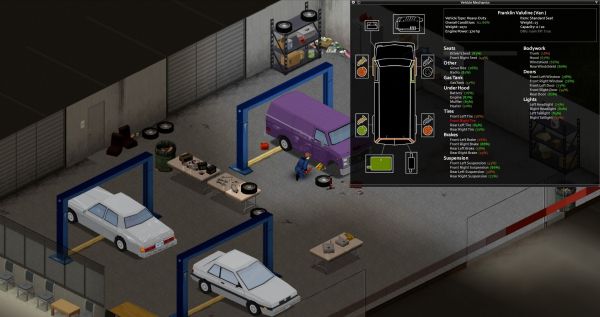
Vehicles require fuel, keys or alternative access, engine condition, battery power, tire maintenance, and enough driving skill to avoid destroying them. Crashing into obstacles damages both the vehicle and potentially the survivor, while driving quickly on unfamiliar roads can end a successful run in seconds. The temptation to use speed as protection is strong, but damaged roads and abandoned cars punish confidence.
I enjoy maintaining a vehicle because it becomes another valuable object with a personal history. A car covered in damage may still represent several successful journeys and emergency escapes. Losing it far from the base can create an entirely new problem, especially when the supplies inside are too heavy to carry home. Mobility provides freedom without removing dependence.
Electricity and Water Turn Time Into an Enemy
The early days of a playthrough can feel deceptively comfortable because houses still contain running water, working lights, and refrigerated food. These systems encourage me to behave as though society has paused rather than ended. Eventually, those conveniences disappear, and every habit built around them must change. The transition is one of the game’s strongest examples of environmental storytelling through mechanics.
Water storage becomes important before the taps fail, and perishable food should be used or preserved while refrigeration remains available. Generators can restore electricity to selected areas, but they require manuals, fuel, outdoor placement, and continued maintenance. A survivor who spends the early game only collecting weapons may discover that long-term survival depends on preparations that looked boring at first.
This gradual collapse gives the apocalypse a sense of progression without scripted chapters. The world becomes harder because infrastructure stops supporting the people left inside it. I feel the passage of time through dark houses, empty fuel stations, spoiled food, and the growing value of skills that once seemed optional.
Farming and Food Preservation Create a Different Game
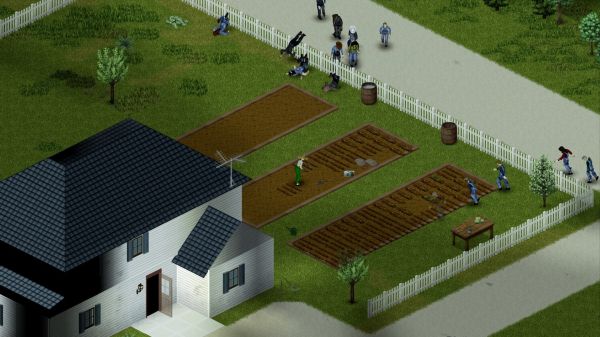
Once immediate survival becomes stable, food production can replace constant scavenging as the central concern. Farming requires seeds, tools, water, suitable space, and enough patience to protect crops until they are ready. Weather, disease, and location affect the process, preventing it from becoming a completely automatic source of food. A garden is an achievement, but it is also another system that needs attention.
Fishing, trapping, cooking, and food preservation provide alternative paths. These mechanics allow different survivors to create distinct routines depending on their skills and environment. A remote character may rely on natural resources, while an urban survivor continues searching stores and residential buildings. Neither approach remains completely safe because each requires travel, time, or exposure.
I like how long-term food systems change the emotional rhythm. The early game is defined by panic and immediate need, while established survival involves planning weeks ahead. Waiting for crops or preparing preserved food creates a sense that the character is attempting to rebuild ordinary life. That hope makes later loss more painful.
Books and Television Turn Knowledge Into a Resource
Skill books do not instantly grant mastery, but they improve the rate at which related experience is gained. This means knowledge must be combined with actual practice. Reading about carpentry makes construction more efficient, but the character still needs tools and materials. The design gives education value without reducing skill development to menu selection.
Television programs can provide useful early experience, creating a daily schedule during the opening stage of the outbreak. Choosing to remain inside for a broadcast may be safer than exploring, but every hour spent watching is an hour not used to secure supplies. The decision feels wonderfully ordinary and slightly absurd. The world is ending, yet my survivor may still sit in front of a television because the cooking program could become valuable later.
These systems make literacy and time management strategically important. A character who survives through knowledge can become more capable without fighting constantly. Project Zomboid respects preparation as a form of skill, which separates it from survival games where progress depends mainly on defeating stronger enemies.
Sound Is Often More Dangerous Than Sight
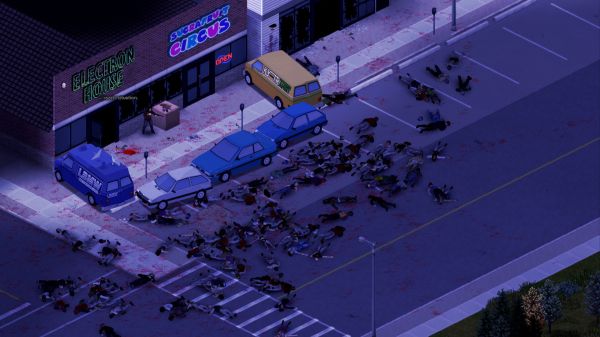
A house alarm can transform a careful supply run into an emergency. Breaking glass, firing a weapon, starting an engine, or making noise inside a building may draw infected from places I cannot currently see. Sound travels beyond the limits of the camera, which makes every loud action a decision about future danger. The immediate area may remain quiet while a larger problem slowly approaches.
The audio design supports this tension through distant impacts, alarms, weather, doors, footsteps, and the low noise of infected outside. I often stop moving simply to listen before opening another door. Silence is useful information, but it never proves that an area is completely safe. A quiet building may contain threats that have not yet been disturbed.
Firearms demonstrate the system most clearly. They can solve an immediate problem while announcing my location to a much larger population. Carrying a weapon feels reassuring, but using it may create an encounter far beyond the one I intended to handle. Power and danger remain connected.
Weather Changes More Than the Appearance of the Map
Rain, fog, temperature, and seasonal change affect travel, visibility, clothing, farming, and physical comfort. Weather rarely feels like a decorative filter because it changes the preparation needed for ordinary tasks. A journey that was safe during clear daylight may become difficult when fog limits awareness or cold increases the importance of appropriate clothing. The environment creates pressure without behaving like a conventional enemy.
Winter becomes a long-term objective rather than a background theme. Food production changes, warm clothing becomes more valuable, and unnecessary exposure carries greater cost. Surviving until winter feels like an achievement, but surviving through it requires planning that should have begun months earlier. Project Zomboid rewards players who think beyond the current day.
The seasonal system also gives long-running characters a stronger sense of history. Returning to a familiar road after the weather has changed makes the same location feel different. A base surrounded by crops and summer light can later become a cold structure requiring fuel, stored food, and careful routine. Time leaves visible consequences.
The Map Feels Enormous Because Travel Has Consequences
Project Zomboid does not need constant cinematic landmarks to make exploration meaningful. Towns, residential areas, highways, farms, shops, industrial zones, forests, and isolated buildings are valuable because each location offers different resources and risks. Distance matters because travel consumes time, fuel, food, endurance, and daylight. A point on the map is not merely content waiting to be visited.
I enjoy planning expeditions more than arriving at the destination. The route must account for blocked roads, possible crowds, vehicle condition, storage capacity, and an alternative place to sleep if returning becomes impossible. An unplanned detour can consume enough fuel to threaten the entire journey. Exploration remains exciting because I cannot treat the world as harmless space between objectives.
Familiarity gradually becomes one of the survivor’s greatest advantages. I begin remembering which streets are blocked, which buildings were cleared, and where useful supplies remain. The map transforms from an unknown environment into personal knowledge. Losing a character also means losing the practical confidence built through that experience.
Multiplayer Turns Survival Into Social Negotiation
Playing with other people changes the emotional structure of Project Zomboid. Tasks can be divided, supply runs become safer, and a base can develop more quickly when different survivors focus on separate skills. One player may repair vehicles, another may cook, and another may handle construction. Cooperation makes long-term plans feel more achievable.
Human players also create new problems. Supplies can be wasted, vehicles damaged, doors left open, and noise produced at the worst moment. A friend who panics during an encounter may endanger everyone nearby. The game encourages trust while providing countless opportunities for that trust to be tested.
Deaths become more memorable in multiplayer because survivors leave behind both equipment and social history. A group may recover a friend’s belongings, modify the base after losing its builder, or continue using a vehicle associated with a failed expedition. The absence of a player character can remain visible in the world. This produces stories that scripted campaigns would struggle to create.
The Modding Community Dramatically Extends the Experience
Project Zomboid supports an enormous range of community modifications covering vehicles, maps, weapons, clothing, interfaces, professions, animations, balance, quality-of-life changes, and completely altered survival rules. Mods can make the game harsher, more convenient, more realistic, or more focused on a particular fantasy. This flexibility allows players to build a version that supports the experience they enjoy most.
I prefer beginning with the standard systems before installing major mechanical changes. Understanding the original balance makes it easier to recognize whether a modification improves the experience or removes a challenge that was intentionally meaningful. Smaller interface improvements can be useful earlier, especially when they make large inventories easier to manage. Large content collections are more enjoyable once the basic survival loop already feels familiar.
Compatibility becomes the main disadvantage, particularly after major updates. A long mod list can create errors, broken saves, unusual balance, or multiplayer difficulties. Maintaining the collection becomes a separate hobby. The creative freedom is impressive, but stability usually improves when I resist installing every interesting item at once.
The Interface Often Feels Like Part of the Difficulty
Project Zomboid contains many detailed systems, and the interface must expose a large amount of information. Inventory windows, containers, health panels, crafting lists, vehicle mechanics, building options, and contextual menus can cover significant parts of the screen. Learning where information is located becomes part of learning the game. This complexity is understandable, but not every interaction feels as efficient as it should.
Moving items between multiple containers can become repetitive, particularly after a large supply run. Crafting sometimes requires checking several menus to understand which tool, surface, or component is missing. Building placement may behave unpredictably from the isometric perspective. These frustrations are rarely dramatic, but they accumulate during long sessions.
The game is strongest when complexity comes from survival decisions rather than interface navigation. Improvements that reduce unnecessary clicking would not weaken the simulation. They would allow the detailed mechanics to remain demanding without making organization feel like administrative work.
The Visual Style Is Modest but Extremely Functional
Project Zomboid does not depend on realistic facial animation or cinematic presentation. Characters are viewed from a distance, environments use readable shapes, and many important details are communicated through icons, animation, sound, and text. The visual style allows large numbers of objects, interiors, vehicles, and infected to exist within one consistent world. Its restraint supports simulation rather than spectacle.
The animation can occasionally appear awkward, especially during crowded combat or when characters interact with complex spaces. Clothing, equipment, blood, weather, lighting, and environmental damage still create a strong sense of physical change over time. A clean survivor in an untouched house looks completely different after days of travel and repeated encounters. The world records activity visually even without expensive cinematic detail.
I quickly stopped thinking about the graphics as limited because the game provides so much readable information. A broken window, open door, abandoned vehicle, blood trail, or displaced object may reveal that something happened before I arrived. Visual storytelling emerges from simulation and player behavior rather than scripted decoration.
The Slow Moments Are Essential to the Horror
Project Zomboid contains long periods in which nothing dramatic happens. I may spend an evening cooking, repairing clothing, organizing shelves, reading, or preparing supplies for the next day. These routines are not interruptions between the important scenes. They are what make the dangerous scenes important.
Calm creates attachment to the survivor and the base. A carefully arranged kitchen or repaired vehicle represents time invested in a future that may never arrive. When an alarm, injury, or unexpected crowd interrupts that routine, the threat reaches more than a health bar. It threatens a life I have slowly organized.
The game understands that constant action would reduce fear. Danger becomes meaningful because there are ordinary things worth protecting. I do not fear death only because the run will end. I fear losing the unfinished wall, the stocked freezer, the repaired car, and the plans written across the map.
Permadeath Gives Every Decision Emotional Weight
When a survivor dies, the world can continue. A new character may enter the same map, locate the previous base, and recover equipment from the body if reaching it is possible. This creates continuity without removing loss. Skills, personal progress, and the exact history of the character are gone even when the material possessions remain.
Returning to an old base with a new survivor feels strangely uncomfortable. The supplies are useful, but they belong to a life that ended. A weapon may carry memories of a successful escape, while a vehicle may remain parked exactly where the previous character left it. The world remembers more than the new character logically should.
This system creates a choice between continuing the same world and beginning again. Continuing turns death into part of a larger settlement history, while restarting preserves the purity of one character’s story. Both approaches are valid because Project Zomboid does not define survival through a conventional victory screen. Meaning comes from the rules I choose to impose on failure.
Build 42 Deepens an Already Demanding Simulation
The expanded systems increase the number of ways a survivor can interact with the world, produce resources, develop skills, and establish a long-term routine. Greater environmental variety and more detailed crafting make wilderness and rural survival more viable than simply moving between houses and shops. The world feels less like a collection of containers and more like a place whose materials can be transformed through knowledge and labor. This direction suits the game’s commitment to systemic survival.
Additional depth also increases the learning burden. New players already need to understand health, combat, food, vehicles, building, traits, weather, and population behavior. More crafting stages and specialized interactions can make simple objectives harder to read. Complexity is valuable when it creates meaningful choices, but it should remain supported by clear interfaces and useful explanations.
I enjoy the broader possibilities because they extend the middle and late stages of a run. A stable survivor has more reasons to develop specialized spaces, search for knowledge, and create sustainable production. The challenge is ensuring that this depth remains accessible enough to inspire experimentation rather than requiring constant external reference.
Project Zomboid Creates Stories Without Writing Them for Me
The game rarely needs conventional quests because its systems continually create personal objectives. A vehicle needs a replacement part, medicine is running low, winter is approaching, or a distant warehouse may contain tools required for a building project. These practical needs give each journey context. The story emerges from why I left, what happened outside, and whether I returned.
A failed expedition can be more memorable than a successful one. I may abandon a vehicle, hide inside an unfamiliar building, and spend the night waiting for enough daylight to move. Another survivor might later recover the supplies or discover the original character. The game creates continuity through consequence rather than scripted revelation.
This storytelling is one of Project Zomboid’s greatest strengths. The characters do not deliver dramatic speeches, but their homes, injuries, skills, possessions, and final locations describe what happened to them. Each run becomes a record of decisions made under pressure.
A Difficult Survival Game That Respects Preparation
Project Zomboid can feel unforgiving, awkward, and overwhelming. Its interface demands patience, combat punishes small positioning errors, and a successful character may disappear because of one careless door or unnecessary fight. Long sessions can include more organizing and planning than direct action. Players looking for constant rewards or a traditional campaign may find the experience exhausting.
For me, those same qualities make it one of the most convincing survival games available. Food matters because it expires, vehicles matter because they require maintenance, shelter matters because the world continues changing, and knowledge matters because physical strength cannot solve every problem. Progress is measured through capability and preparation rather than a simple increase in combat power.
The game’s greatest achievement is making ordinary caution feel heroic. Closing curtains, carrying clean water, checking a rear exit, stopping before exhaustion, or deciding not to enter a crowded building can preserve a character more effectively than any dramatic attack. Survival depends on respecting boring decisions before they become urgent.
Project Zomboid tells me from the beginning that the survivor will eventually die, yet that promise does not make effort meaningless. It gives every repaired wall, successful harvest, rescued friend, and quiet evening inside a secure home temporary value. I keep beginning new runs because the destination is already known, but the life created on the way there never unfolds in exactly the same manner.
Pros:
- Extensive customization options allowing for diverse play styles
- Robust modding community that enhances replayability and creativity
- Realistic simulation of daily life and character needs
- Engaging visual and sound design that creates a unique atmosphere
- Multi-platform availability with flexible download and installation options
- Immersive and dynamic survival gameplay that continuously challenges players
Cons:
- Occasional bugs and performance issues can disrupt gameplay
- Complex interface and simulation details may overwhelm some users
- Steep learning curve especially for new players








Recent Reviews

Minecraft

Grand Theft Auto V

Toca Boca World
Roblox

Leave a comment
Your comment is awaiting moderation. We save your draft here
0 Comments