
Review
Disney Dreamlight Valley first attracted me with a simple fantasy: I could live in a colorful village alongside familiar Disney and Pix...

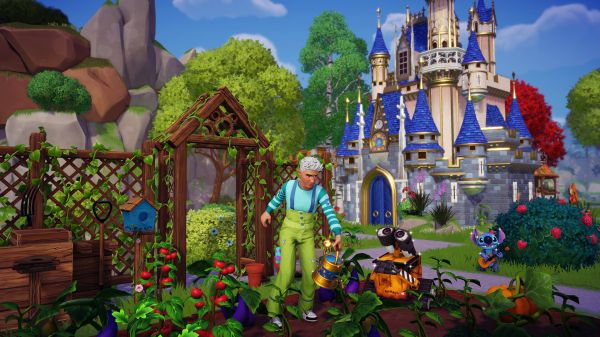


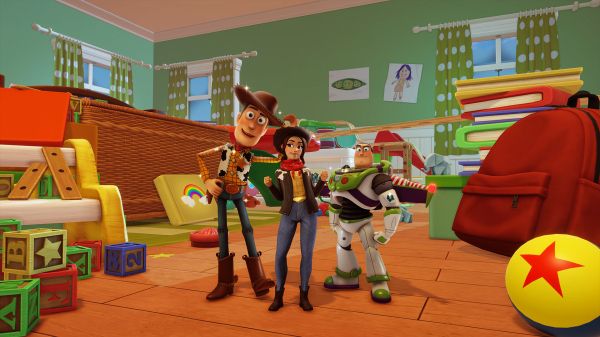

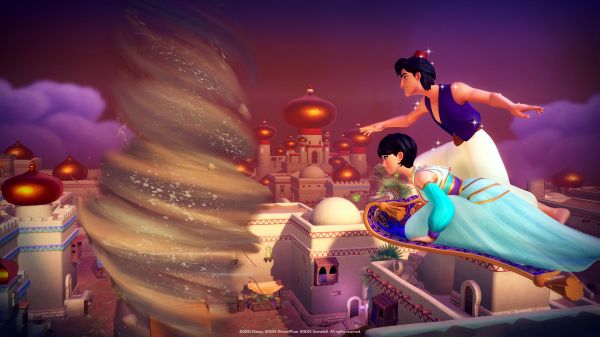
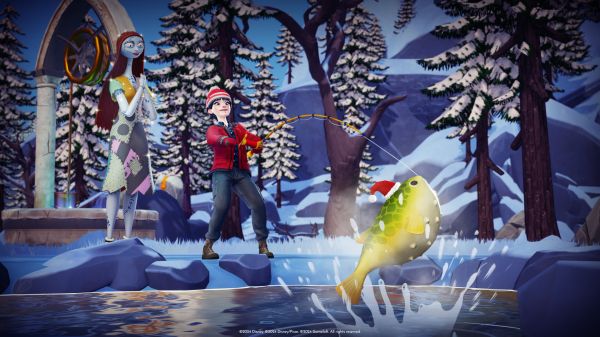
Embark on a Journey of Magic and Creativity in Disney Dreamlight Valley
Disney Dreamlight Valley first attracted me with a simple fantasy: I could live in a colorful village alongside familiar Disney and Pixar characters, decorate a house, grow vegetables, and complete small quests without the pressure of combat or competitive multiplayer. After spending substantial time in the Valley, I discovered that the game delivers that fantasy, but it also turns every friendship and decoration project into a chain of errands. Mickey may ask for a meal, Scrooge may need materials, another character may want an entire house placed in a crowded biome, and I may suddenly realize that the flowers required for a quest have not respawned yet. The result is comforting, repetitive, charming, and occasionally exhausting in exactly the way many long-term life simulators are.
What keeps me returning is the sense that my Valley belongs to me. I can move buildings, redesign paths, create themed neighborhoods, fill rooms with furniture inspired by specific films, and decide whether villains live beside princesses or remain far away in a suspicious swamp. The story gives me reasons to unlock new areas and characters, but the strongest motivation eventually becomes personal ownership. I am not merely restoring a fictional town; I am slowly constructing a Disney space that reflects which characters, visual styles, and daily activities I enjoy most.
The Opening Gives Disney Nostalgia a Surprisingly Personal Purpose
The story begins when my character returns to a place connected with childhood memories and enters Dreamlight Valley, a once-happy community damaged by a mysterious force called the Forgetting. Night Thorns cover the land, villagers have disappeared into separate Realms, and those who remain have lost important parts of their memories. Merlin quickly places me at the center of the restoration effort, which means I must clear obstacles, recover magical energy, reopen biomes, and convince characters to return. The setup is simple enough for a broad audience, yet it carries a gentle sadness because the damaged Valley represents forgotten imagination rather than a conventional fantasy kingdom under attack.
I liked how the game connects Disney nostalgia with adulthood without turning the entire experience into a lecture about growing older. The Valley exists because childhood wonder was once meaningful, but the story does not demand that I reject adult responsibility and live permanently inside fantasy. Instead, it suggests that creativity, play, and emotional memory still deserve space in an adult life. That theme gives the main narrative more weight than I expected from a game that also asks me to gather twenty pieces of softwood for a decorative bench.
My Daily Routine Became the Real Core of the Game
Most of my time is spent performing a familiar cycle of activities: collecting herbs, mining rock spots, fishing in colored ripples, harvesting crops, checking Scrooge McDuck’s store, feeding animals, cooking meals, opening chests, and speaking with villagers. None of these actions is mechanically complex, but they overlap in a way that creates a pleasant rhythm. I may begin by searching for iron, notice that pumpkins are ready to harvest, stop to photograph a DreamSnaps entry, and then remember that Remy needs a meal delivered. The game is particularly good at turning one planned task into five smaller distractions without making the session feel completely directionless.
This routine can become meditative when I am playing without urgency. The music remains gentle, the environments are easy to navigate once wells are unlocked, and gathering materials provides steady progress toward furniture or quests. Problems emerge when a specific objective depends on rare resources, fixed respawn times, weather conditions, or a character who refuses to stand where the quest expects. At that point, the peaceful routine begins to feel like waiting for a checklist to permit further progress.
Friendship Quests Are the Main Reward for Collecting Characters
Every major villager has a friendship level that increases through conversation, gifts, shared activities, restaurant service, and quest completion. I can assign most characters a role such as mining, gardening, fishing, digging, or foraging, then invite them to accompany me while I perform that activity. This system gives practical value to spending time with a favorite character because companions can provide bonus materials and improve friendship progress. It also produces charming moments when someone like WALL-E follows me silently through the Valley while helping with an enormous vegetable harvest.
The friendship quests are where the characters receive most of their individual personality. Some stories involve restoring a home, resolving tension between villagers, recovering an object from a film, or helping a character adapt to the Valley. The writing rarely reaches the emotional complexity of a major narrative game, but it usually captures recognizable traits without relying entirely on famous quotations. I enjoyed these quests most when they created unexpected interactions between characters from unrelated franchises, allowing the Valley to feel like a shared community rather than a collection of isolated promotional appearances.
Some Villagers Feel Alive, While Others Become Moving Quest Markers
The strongest characters have distinctive routines, expressive animations, memorable homes, and quests that connect their original stories with the Valley. Donald’s constant frustration, Stitch’s chaotic energy, Remy’s obsession with food, and WALL-E’s gentle curiosity remain clear even when they are wandering through the same plaza. Watching villagers speak to each other or react to nearby objects adds warmth to otherwise ordinary travel. These small details help maintain the illusion that life continues when I am not directly controlling every interaction.
Other characters become less convincing after their friendship storyline ends. They walk between fixed locations, repeat dialogue, visit the restaurant, shop at Scrooge’s store, and wait for the next update to give them relevance. The Valley can become crowded with famous faces while still feeling strangely static because villagers rarely develop beyond their assigned content. I would welcome more dynamic community events, changing relationships, and conversations that respond to my decorating choices or completed story milestones.
The Main Story Is More Thoughtful Than the Fetch Quests Suggest
The mystery of the Forgetting gradually becomes connected to the player character’s own history, emotional pain, and relationship with the Valley. I appreciated that the game eventually examines loneliness, regret, and the danger of treating difficult feelings as something that should simply be removed. Its themes remain accessible, but there is more emotional intention beneath the cheerful presentation than the opening hours reveal. The story understands that restoring a place does not mean returning it to a state where sadness never existed.
Unfortunately, the delivery of that story is frequently interrupted by ordinary resource requirements. An emotionally important character may reveal a painful memory, then ask me to craft several objects requiring materials spread across multiple biomes. The shift from personal reflection to inventory management can reduce momentum. Disney Dreamlight Valley often has meaningful ideas, but it distributes them through a structure designed to keep me performing daily tasks for a long time.
Unlocking Realms Feels Like Opening Small Disney Exhibitions
The Dream Castle contains doors leading to Realms based on Disney and Pixar properties. These areas introduce characters through compact questlines before allowing me to invite them back to the Valley. Entering a Realm is exciting because the art direction, music, environmental references, and character animations immediately establish a recognizable world. Even when the space is small, it creates a welcome break from repeatedly crossing the same Valley biomes.
Realm design varies noticeably in ambition. Some locations contain several rooms, puzzles, unique mechanics, and enough detail to feel like short standalone adventures. Others function mainly as attractive stages where I complete a few errands before placing another house in the Valley. I always enjoy seeing a new door become available, but I have learned not to expect every Realm to offer the same depth or duration.
The Valley Is a Better Creative Tool Than a Carefully Designed World
The base Valley is divided into distinct biomes, including peaceful meadows, beaches, forests, snowy heights, sunlit plateaus, and darker magical regions. Each area has its own resources, animals, music, weather, plants, and visual identity, which makes unlocking a new biome feel meaningful. At first, I appreciated the developer-created layouts and natural pathways. Later, I began treating the entire map as raw material for my own construction plans.
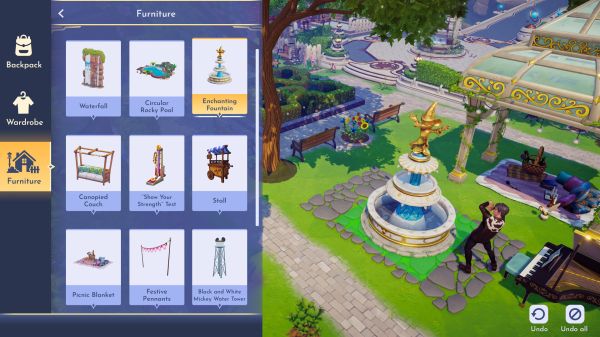
Furniture mode allows buildings, trees, paths, fences, decorations, lighting, and many natural features to be repositioned. This freedom is one of the game’s greatest strengths because I can redesign nearly everything without permanently losing access to important locations. It is also one of the easiest ways to lose an evening. I may enter furniture mode intending to move one house and emerge much later after rebuilding an entire plaza around symmetrical fountains, market stalls, and carefully placed shrubs.
Decoration Is Powerful but Still More Awkward Than It Should Be
The game provides thousands of decorative items across Disney themes, general furniture sets, event rewards, quest unlocks, crafted objects, and premium purchases. I can create royal gardens, amusement parks, spooky districts, restaurants, farms, outdoor cinemas, or highly specific spaces inspired by one film. The range is impressive, and recent quality-of-life improvements have made large collections easier to search and organize. When the tools cooperate, designing a finished area is deeply satisfying because every path and object changes how the Valley feels during ordinary play.
The controls can still become frustrating, especially when placing small objects, aligning paths, working near biome borders, or navigating a crowded area. Camera movement and object selection do not always behave predictably, while collision boundaries can prevent arrangements that look visually possible. Decorating with a controller requires patience, and performance may decline when an area contains many detailed objects. The freedom is substantial, but it is not as smooth as a dedicated building game.
My House Became a Warehouse With Several Beautiful Rooms Attached
Home customization includes additional rooms, multiple floors, wallpapers, flooring, furniture, storage, and themed layouts. I initially tried to make every room look coherent, creating a kitchen, bedroom, study, and several Disney-inspired spaces. Eventually, resource management invaded the design. Chests multiplied, crafting materials required organization, and one room became a storage system disguised as interior decoration.
This tension between aesthetics and utility appears throughout the game. I want a home that looks elegant, but I also need convenient access to ingredients, gems, fish, flowers, event items, and materials from several expansions. Improved storage options help, though managing a mature inventory still takes time. The game encourages collecting nearly everything while providing just enough inconvenience to make organization a continuing project.
Farming Is Simple, Profitable, and Capable of Taking Over My Valley
Gardening requires digging plots, planting seeds, watering crops, and waiting for them to mature. Different crops grow faster in particular biomes, while gardening companions can increase harvest yields. The process is easy to understand and provides ingredients, quest materials, and one of the most reliable ways to earn Star Coins. Once I gained access to highly profitable crops, money stopped feeling scarce and began feeling like a question of how much repetitive harvesting I was willing to perform.
Large farms create their own problems. Planting and harvesting many plots takes time, character animations can slow the process, and a profitable routine may reduce a varied life simulator to agricultural repetition. I enjoyed farming most when maintaining moderate themed gardens rather than maximizing income through enormous fields. The economy allows optimization, but the most efficient method is not always the most enjoyable one.
Cooking Is More Useful Than Its Interface Is Enjoyable
Cooking combines ingredients into meals that can restore energy, satisfy quests, serve restaurant customers, provide gifts, or sell for profit. Discovering recipes naturally can be enjoyable because ingredient categories allow experimentation, and many dishes are recognizable from Disney films or real cuisine. Meals also provide the Well Fed bonus, which improves movement speed and allows a useful sprinting glide. Keeping a few strong dishes in my inventory makes daily exploration considerably smoother.
The cooking process becomes tedious when a quest or event requires many repeated meals. Selecting ingredients, confirming the recipe, watching the short animation, and repeating the sequence does not remain interesting indefinitely. Autofill and recipe lists reduce friction, but batch cooking should be more flexible across the game. Remy may appreciate careful cuisine, but after preparing the same dish repeatedly, I begin operating more like an overworked cafeteria.
Energy Creates Structure Without Becoming a Serious Survival Mechanic
Mining, digging, fishing, gardening, and clearing obstacles consume energy, which can be restored by eating or returning home. The basic blue energy bar is generous enough that I rarely feel punished, especially once stronger meals become easy to prepare. Eating cooked food adds a second golden bar and unlocks faster movement, turning energy management into a useful performance bonus rather than a constant threat. I like this system because it rewards preparation without demanding that I manage hunger, sleep, or health in a severe way.
The inconvenience appears early, when ingredients are limited and repeated trips home interrupt gathering. Later, the mechanic becomes almost trivial because high-value meals are easy to carry. This creates an uneven curve where energy matters most before the game has fully explained its advantages, then becomes routine. It supports the life-sim rhythm, but it never develops into a particularly deep system.
Mining and Fishing Are Reliable, Though Rarely Exciting
Mining nodes appear around each biome and provide stone, coal, ore, gems, and region-specific materials. Fishing uses colored ripples to indicate different reward groups, while open water can also contain basic catches. Both activities are quick, readable, and useful across quests, crafting, cooking, and income. Assigning a companion to the relevant role improves efficiency and gives me a practical reason to rotate villagers.
Repetition eventually weakens both systems. Mining routes become memorized circuits, and fishing depends more on location and ripple color than on skill. I do not dislike performing either activity, but I rarely seek them out without a material objective. They function well as pieces of the daily routine rather than activities capable of supporting a full session alone.
Resource Requirements Sometimes Feel Designed to Delay Me
Many quests require crafted furniture, rare flowers, specific gems, large quantities of wood, or materials obtained from limited daily interactions. These requirements create reasons to explore and maintain a stocked inventory, which is appropriate for the genre. The problem appears when a quest asks for an amount far beyond what ordinary play has provided. I may understand the objective immediately but remain unable to continue until resources respawn or I repeat the same route several times.
This is where the game’s live-service heritage becomes visible. Some friction encourages long-term engagement, but not all waiting feels meaningful. A satisfying quest should test knowledge, planning, creativity, or exploration rather than simply measure whether I stored enough iron earlier. Experienced players reduce this problem by hoarding everything, which turns storage management into a defense against future quest design.
Scrooge McDuck’s Store Is Exciting Until the Displays Start Repeating
Scrooge’s store offers a rotating selection of clothing and furniture, giving me a reason to check the shop regularly. Early in the game, nearly every visit contains something new, and purchasing a distinctive item can inspire an entire decoration project. The store also fits Scrooge perfectly as a character, connecting his personality with a practical progression system. Expanding the building improves its selection and gives the plaza an attractive central landmark.
Long-term players eventually encounter repetition, empty clothing spaces, and days where none of the available furniture is useful. A rotating store can create pleasant anticipation, but it can also restrict access to items through luck rather than accomplishment. Search tools and catalogue ordering help once something has been unlocked, though initial discovery remains inconsistent. I still visit regularly, but the excitement is less reliable after building a large collection.
DreamSnaps Gives Decoration a Social Purpose
DreamSnaps presents themed photography challenges in which players arrange clothing or furniture, submit an image, and vote on other entries. This system gives my collection a reason to exist beyond private decoration because I must interpret a theme using available items and environmental staging. Preparing a strong image involves outfit selection, lighting, camera angle, background control, and removing characters who decide to stand in the worst possible position. The process can be genuinely creative, particularly when a broad theme encourages unusual solutions.
Rewards include Moonstones, making participation valuable even when I am not confident about ranking highly. Voting is quick and exposes me to impressive community designs, though the comparison format can favor immediately readable images over subtle ideas. DreamSnaps is one of the game’s better live systems because it connects creativity, social comparison, and premium currency without requiring direct competition. It also provides a weekly objective that feels more personal than another material-gathering task.
Multiplayer Is Useful but Much More Limited Than the Shared World Suggests
Valley Visits allow players to enter another person’s Valley, view decorations, collect certain items, and access multiplayer-related features. Cross-play allows friends on different platforms to connect, although platform account rules can still affect specific save functionality. Visiting a carefully designed Valley is inspiring because the same furniture catalogue can produce completely different worlds. It also makes the game feel less isolated after many hours of solo routine.
The interaction remains limited compared with a true cooperative life simulator. Guests cannot freely participate in every quest, activity, or editing system, and visits often feel closer to guided tours than shared adventures. I would like stronger cooperative activities, community events, and tools for building or completing objectives together. Multiplayer is a pleasant addition, but it is not the main reason I would recommend the game.
The Art Direction Protects the Game From Visual Inconsistency
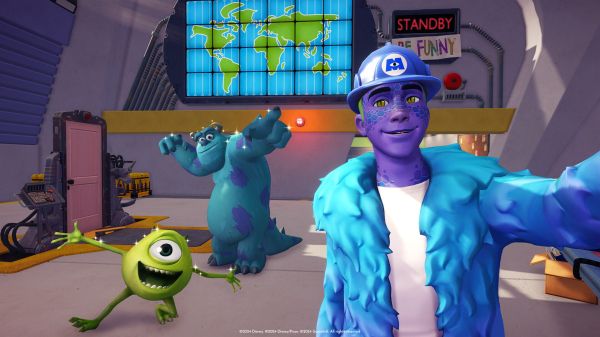
Disney Dreamlight Valley combines characters from animated films, modern computer animation, and different artistic periods inside one stylized three-dimensional world. This could have looked chaotic, yet the game uses consistent materials, lighting, proportions, and environmental design to make the cast feel broadly compatible. Characters remain recognizable while being adjusted to the Valley’s shared visual language. Seeing Mickey, Moana, Buzz Lightyear, Elsa, and Scar occupy the same plaza becomes surprisingly normal after a few hours.
The environments use strong color separation and readable silhouettes, which helps navigation and decoration. Weather, sunsets, fog, and night lighting can make familiar biomes look dramatically different, especially after I have added my own lights and pathways. Some textures and character animations lack the refinement of a high-budget linear adventure, but the overall presentation remains attractive. Its strength comes from warmth and recognizability rather than technical realism.
The Soundtrack Knows When Nostalgia Should Remain in the Background
Each biome has calm environmental music, while familiar melodies associated with particular Disney properties appear in subtle arrangements. I appreciate that the soundtrack usually avoids turning every minute into an aggressive parade of recognizable songs. The melodies support the fantasy of living near these characters rather than constantly reminding me that they belong to famous brands. Entering a Realm or approaching a character’s home can still provide a satisfying musical connection.
Repetition becomes noticeable during long sessions because the game is designed for many hours of routine play. I sometimes lower the music volume and use my own background audio while farming or decorating. Character voices are used selectively, with short lines and reactions rather than fully voiced conversations. This keeps the game manageable across frequent updates, though it can make major story scenes feel less cinematic than they deserve.
Performance Has Improved, but a Large Valley Can Still Struggle
The game has received many patches addressing crashes, quest blockers, interface problems, performance, and platform-specific issues. My experience is generally stable, but the level of smoothness depends heavily on platform, object density, and the complexity of the Valley. Large decorated areas can produce frame-rate drops, delayed object loading, or camera discomfort. Menus may also slow when furniture and clothing collections become very large.
Quest bugs are especially frustrating because progress often depends on one character, item, or environmental trigger appearing correctly. The developers have fixed many such issues, yet a continuously expanding game inevitably creates new interactions between old and new content. I recommend maintaining cloud saves carefully and avoiding unnecessary interruptions during major quest transitions. Disney Dreamlight Valley is far more polished than it was during early access, but it still occasionally reminds me that its systems are growing faster than a static release.
The Game Is Not Free-to-Play, but It Still Uses Free-to-Play Pressure
Disney Dreamlight Valley requires an initial purchase, and larger expansions or Adventure Packs are sold separately. It also contains Moonstones, a premium currency used for cosmetic items, bundles, premium Star Path access, and other optional content. None of these purchases gives me stronger tools or an advantage in traditional competitive play. The monetization is therefore not pay-to-win, but that description does not automatically make it generous.
The Premium Shop frequently contains attractive houses, character styles, furniture sets, companions, and clothing that fit naturally into the game’s strongest activity: customization. Because decorating and collecting are central motivations, cosmetic purchases can feel more significant here than in a game where appearance is secondary. DreamSnaps and other rewards provide ways to earn Moonstones, which reduces pressure for patient players. Even so, the combination of a paid base game, paid expansions, passes, packs, and rotating premium items can become expensive for anyone who wants a complete collection.
Star Paths Can Be Motivating or Feel Like Seasonal Homework
Star Paths operate as limited-time reward tracks with themed duties and cosmetic rewards. I enjoy them when the theme matches characters or furniture I already want because ordinary activities gain an additional purpose. A session of mining, cooking, talking to villagers, and completing Dreamlight duties can produce steady progress across several goals. The limited timeframe also creates a shared seasonal rhythm within the community.
The weaker duties require excessive repetition, depend on slow daily interactions, or use deliberately vague wording that encourages external searching. Limited availability creates pressure to play before rewards disappear, even when I would prefer to focus on permanent quests. Premium unlocks and token management add another commercial layer to the event. Star Paths are best when they reward varied normal play rather than transforming the Valley into a schedule of chores.
The Expansions Add Valuable Worlds but Fragment the Experience
Paid expansions introduce new locations, characters, resources, mechanics, stories, furniture, and recipes. I enjoy entering a major expansion because it recreates the early-game feeling of discovering unknown biomes and filling an empty map with new routines. New tools and resource categories can refresh systems that have become automatic in the base Valley. The additional environments also provide more decoration space, which becomes increasingly important as the cast grows.
Fragmentation is the cost. Materials, quests, shops, and characters may be spread across several large maps, increasing travel and inventory complexity. A new player looking at the complete catalogue can also struggle to understand which edition, expansion, or Adventure Pack contains a desired character. Optional paid content is reasonable for a game receiving long-term support, but the expanding structure needs clear communication and stronger integration between worlds.
Honeyglow Woods Shows Both the Promise and Risk of Smaller Paid Adventures
Honeyglow Woods introduces a themed land inspired by Winnie the Pooh, with Pooh, Piglet, Eeyore, new areas, friendship quests, honey-related recipes, beekeeping, and additional decorative content. I enjoy the idea of a concentrated adventure focused on one beloved universe because it can provide stronger visual and narrative consistency than a broad expansion mixing several properties. The Hundred Acre Wood atmosphere fits Dreamlight Valley particularly well, emphasizing gentle exploration, friendship, collecting, and playful environmental interaction. Bringing these characters back to my main Valley also gives the content value after its story is complete.
The concern is how many separate paid layers the game can support before the experience begins to feel divided into a marketplace of character access. Adventure Packs may offer more focused stories, but they also create another category beside the base game, expansions, Premium Shop bundles, and Star Paths. The value depends heavily on personal affection for the featured property. A Winnie the Pooh fan may see a meaningful miniature expansion, while another player may see characters removed from the free update schedule and placed behind an additional purchase.
Accessibility Comes From Familiarity and Low Mechanical Pressure
The controls are simple, the objectives are generally clear, and failure rarely removes major progress. Children, casual players, and people unfamiliar with complex games can understand gathering, farming, cooking, decoration, and friendship systems without mastering quick reactions. Disney characters provide immediate emotional context, making the world easier to approach than an entirely unfamiliar life simulator. The game is also flexible enough to support short daily visits or much longer building sessions.
Some interface and text-heavy quest design may still challenge younger players, especially when objectives depend on resource categories or multi-stage crafting. Inventory management becomes increasingly complicated, and the number of currencies, menus, event systems, and content packs can overwhelm newcomers. The game is mechanically gentle but structurally busy. A patient player will learn it gradually, while someone expecting a completely effortless Disney experience may be surprised by how much organization is required.
My Biggest Frustrations
The resource grind is my most consistent annoyance, especially when a quest requires large quantities of materials with limited spawn rates. Inventory and storage management remain too important for a game that encourages constant collecting, while cooking and crafting become repetitive when performed in large batches. Villagers occasionally block doors, stand inside decoration areas, or refuse to position themselves correctly for photographs. These are small problems individually, but a long play session can combine them into substantial friction.
The monetization is my other major concern. I do not need premium purchases to complete the main story, but the game constantly presents attractive cosmetics and limited-time rewards inside an experience I already paid to access. Paid expansions can be worthwhile, yet the growing number of separate content categories makes the full package increasingly expensive. Disney Dreamlight Valley remains generous with free characters and updates, but it also knows exactly how emotionally powerful a familiar costume or house design can be.
Who Should Play Disney Dreamlight Valley?
I recommend Disney Dreamlight Valley to players who enjoy Disney and Pixar characters, life simulators, decorating, resource collection, gentle stories, daily routines, and games that can remain active for hundreds of hours. It is especially suitable for someone who likes setting personal goals rather than pursuing one difficult endgame challenge. Building a themed Valley, completing friendship stories, designing outfits, and gradually expanding a collection provide more lasting satisfaction than mechanical mastery. The game also works well as a comfortable secondary title that I revisit between more demanding releases.
I would be more cautious recommending it to players who dislike fetch quests, inventory organization, repeated resource routes, limited-time events, or cosmetic stores. Anyone seeking deep farming simulation, complex economic management, demanding puzzles, or unrestricted cooperative multiplayer will find stronger options elsewhere. The Disney licence provides enormous charm, but it does not completely hide the repetitive structure. Enjoyment depends on whether meeting a favorite character makes another gathering task feel worthwhile.
My Final Verdict
Disney Dreamlight Valley is a warm, ambitious, and commercially complicated life simulator that succeeds because it gives familiar characters a place inside my own creative routine. Its friendship quests, flexible decoration, attractive biomes, steady updates, and huge furniture catalogue create a world that can remain personally meaningful long after the main story slows down. The emotional themes surrounding memory and the Forgetting give the adventure more substance than its cheerful appearance suggests. At its best, the game makes an ordinary evening of gardening, cooking, and rebuilding a plaza feel like time spent inside a Disney story I helped design.
The experience is weakened by repetitive resource requirements, awkward building controls, storage pressure, uneven technical performance, limited multiplayer interaction, and monetization that reaches far beyond the initial purchase. Paid expansions and Adventure Packs can add strong content, but they also make the complete game increasingly fragmented and expensive. I rate Disney Dreamlight Valley 8.4/10. I continue returning not because every daily task is exciting, but because after enough time, the Valley stops feeling like a collection of Disney properties and starts feeling like a messy, carefully decorated home that happens to contain a talking duck with serious anger-management problems.
Pros:
- Highly customizable environment offering extensive creative freedom
- Visually stunning landscapes paired with immersive sound design
- Supports modding, cheat systems, and downloadable content, enhancing replayability
- User-friendly interface coupled with comprehensive tutorials for beginners
- Wide platform availability including PC, Mac, and Android, ensuring accessibility
- Engaging narrative that blends classic Disney magic with modern gaming elements
Cons:
- Learning curve can be moderately challenging for newcomers
- In-game purchases might encourage microtransactions to enhance gameplay
- Occasional performance issues on older hardware








Recent Reviews
Minecraft

Grand Theft Auto V

Toca Boca World

Roblox

Leave a comment
Your comment is awaiting moderation. We save your draft here
0 Comments