
Review
The Christmas Shoes is the kind of film that reveals its emotional destination almost immediately. A young boy wants to buy a pair of r...
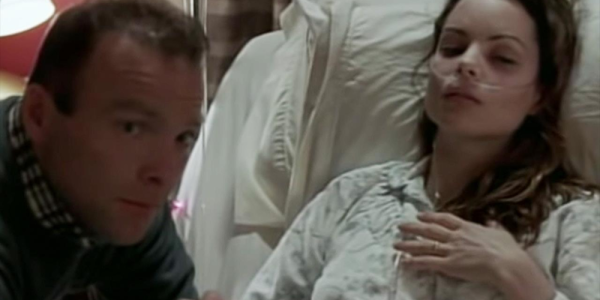

A Reflective Journey Through Redemption and Holiday Spirit in The Christmas Shoes
The Christmas Shoes is the kind of film that reveals its emotional destination almost immediately. A young boy wants to buy a pair of red shoes for his seriously ill mother. A successful lawyer has become detached from his family while devoting nearly all of his energy to work. Their lives move toward a Christmas Eve encounter designed to change the adult man’s understanding of love, time, and responsibility.
I cannot describe the film as subtle. Its music, dialogue, symbolic objects, and parallel storylines repeatedly announce the feelings the audience is expected to experience. The screenplay builds toward grief with such visible determination that resisting the intended emotional response can sometimes become easier than surrendering to it.
Yet the film’s directness is also part of its identity. The Christmas Shoes does not want to analyze sorrow from a distance. It wants to place ordinary family moments beside the possibility of irreversible loss and ask whether people recognize their value before time removes them.
What gives the story more substance than its premise might suggest is the contrast between two families. The Andrews family possesses limited time but strong emotional connection. The Leighton family appears materially secure but is gradually losing its intimacy through neglect. Christmas brings those separate lives together not through magic, but through one small act of generosity inside a department store.
Robert Leighton Has Confused Providing With Being Present
Rob Lowe plays Robert Leighton as a man who believes professional success is a form of devotion. He works long hours, pursues an important case, and assumes that financial stability should communicate everything his family needs to know about his commitment.
The problem is not that Robert lacks affection. He loves his wife, Kate, and their daughter, Lily. He simply treats that love as something secure enough to survive indefinite postponement.
I found this distinction important. Robert is not introduced as an openly cruel husband or indifferent father. He is recognizable precisely because his neglect is organized around respectable priorities. Work provides a socially acceptable reason to miss conversations, arrive late, and remain mentally absent even when physically at home.
Lowe plays him with controlled confidence. Robert speaks as though each professional demand is temporary and each family disappointment can be corrected later. His calmness becomes increasingly frustrating because the audience can see how often later has already been promised.
The character’s emotional failure lies in assuming that intention and presence are interchangeable. He intends to make time for his family. He intends to listen more carefully. He intends to become involved once the current case is complete. The film gradually demonstrates that postponed care may become indistinguishable from absence.
Kate Is Tired of Competing With an Invisible Office
Maria del Mar gives Kate Leighton a restrained frustration that keeps the marriage conflict from becoming simple melodrama. Kate does not want Robert to abandon his career or apologize for being ambitious. She wants to stop feeling as though the family receives only the time left after work has claimed everything else.
Her disappointment has clearly developed over years rather than through one missed event. She can predict Robert’s explanations before he offers them. Every apology sounds familiar because it is followed by another repetition of the same behavior.
I appreciated that Kate’s anger is not presented as unreasonable impatience. Robert’s work may be important, but importance does not remove the emotional consequences of his choices.
The film occasionally uses Kate primarily to state the lesson Robert needs to learn. More private attention to her own life, needs, and compromises would have made the marriage more balanced. Still, del Mar gives the character enough dignity to resist becoming merely the dissatisfied wife waiting for her husband’s transformation.
Her willingness to consider a life beyond the existing marriage gives the conflict real stakes. Robert cannot assume that love guarantees permanent access to the people he has neglected.
Maggie Andrews Refuses to Let Illness Define Her Family
Kimberly Williams-Paisley plays Maggie Andrews with warmth and restraint. Maggie is seriously ill, but the film does not introduce her only as a symbol of approaching loss. She is a wife, mother, teacher, and emotional center of the household.
Her illness changes the family’s routines, yet she continues attempting to protect the ordinary quality of Nathan’s childhood. She wants him to remember affection, music, school, and family rituals rather than only hospitals and fear.
Williams-Paisley is most effective when Maggie’s calm briefly reveals the effort required to maintain it. She understands more about her condition than she always says aloud, and her optimism is not the same as denial.
I found the scenes between Maggie and Nathan more moving when the dialogue remained simple. A look, touch, or interrupted routine communicates the family’s situation more honestly than a speech about the meaning of love.
The film sometimes idealizes Maggie to strengthen the tragedy. Her patience, kindness, and emotional clarity leave relatively little space for anger or resentment. A more complex portrayal might have allowed her to express frustration at losing time rather than remaining primarily concerned with comforting others. Even so, Williams-Paisley gives the role enough human texture to prevent Maggie from becoming only the reason other characters learn a lesson.
Nathan Understands Loss Through a Child’s Literal Logic
Max Morrow plays Nathan as a child who knows something terrible is happening but does not possess the emotional language to process it completely. He listens to adult conversations, notices changes in his mother’s condition, and attempts to construct a practical response to a situation beyond his control. The shoes become that response. Nathan believes his mother should look beautiful when she reaches heaven, so he decides to buy a pair she once admired.
The idea is emotionally direct and intentionally innocent. Nathan cannot change the medical outcome, but he can give his mother something. The purchase becomes a way of participating in a process from which children are often protected or excluded.
Morrow avoids making Nathan excessively polished. His emotions remain immediate, and his reasoning carries the mixture of literal belief and imaginative tenderness associated with childhood.
I was particularly affected by the way he treats the shoes as urgent. Adults may see a nonessential purchase. Nathan sees one final responsibility he has chosen for himself. The character’s innocence is sometimes used too deliberately to intensify the audience’s sadness, but the performance remains sincere enough to carry the material.
Jack Andrews Shows the Exhaustion of Watching Someone Disappear
Hugh Thompson plays Jack Andrews as a husband trying to remain strong while recognizing that strength cannot repair his wife’s condition. His daily life has become divided between work, caregiving, parenting, and the emotional task of preparing for an outcome he does not want to accept.
Jack’s grief is quieter than Nathan’s because he understands the full situation. He cannot convert fear into one simple mission. He must continue making decisions while knowing that no practical action will produce the result he wants.
The film allows him moments of anger and helplessness, though Maggie remains the more developed adult within the family. I wanted greater attention to how Jack experiences the approaching loss privately, away from the need to reassure his son.
Thompson nevertheless communicates the strain through posture and silence. Jack often looks like a man measuring his words because one honest sentence might release more emotion than he can manage.
His relationship with Nathan gives the story an important secondary concern. Both father and son are losing the same person, but they cannot grieve in the same way. Jack must support Nathan while confronting the possibility that he will soon be parenting alone.
The Film Contrasts Scarcity of Time With Abundance of Money
The Andrews family has limited financial resources and even less time. The Leightons possess professional security and material comfort, yet Robert behaves as though time is endlessly renewable.
This contrast structures the entire film. Nathan struggles to purchase one pair of shoes, while Robert can easily provide the missing money. What Robert lacks is not the ability to help. It is the awareness necessary to recognize why the moment matters.
I find this thematic arrangement effective, though somewhat obvious. Money cannot save Maggie, repair Robert’s marriage, or restore missed experiences. It can only become useful when directed by attention and compassion.
The department-store encounter forces Robert to stop treating time and money as abstract resources. Nathan’s urgency makes visible the emotional reality Robert has avoided inside his own home. The film’s message is not that wealth or ambition are inherently corrupt. Robert’s failure comes from allowing professional achievement to replace human participation.
The Courtroom Storyline Gives Robert’s Neglect a Respectable Mask
Robert is involved in a legal case that demands concentration and offers professional advancement. The case gives him a credible reason to remain preoccupied, preventing the character from appearing simply lazy or selfish.
This is dramatically useful because harmful priorities often arrive disguised as responsibility. Robert can tell himself that he is working for the family, protecting his career, and fulfilling obligations to clients.
The courtroom material is less emotionally compelling than the family drama, but it serves as a contrast between institutional success and personal failure. Robert can construct arguments, analyze evidence, and persuade others while remaining unable to communicate honestly with his wife.
I occasionally felt that the professional storyline occupied time that could have deepened the Andrews family or Kate’s perspective. Its purpose is clear long before the case reaches resolution. Still, the legal setting reinforces Robert’s belief that every problem can be managed through logic and control. Nathan’s situation cannot be solved through either.
The Christmas Shoes Become a Symbol Before They Become a Gift
The red shoes carry several meanings across the film. They represent Maggie’s femininity and the ordinary pleasure of wearing something beautiful. For Nathan, they become preparation for heaven. For Robert, they become evidence of a love more urgent than anything inside his professional life. The object is deliberately sentimental, but it works because it remains physically simple. Nathan is not searching for a miraculous cure or an extravagant present. He wants one pair of shoes.
The price creates the practical conflict. Nathan’s emotional purpose exceeds his financial ability, placing the adult cashier and nearby customers in a situation where ordinary commercial rules become morally uncomfortable. I appreciate how the film uses the store as a place where value is measured in two incompatible ways. The register recognizes price. Nathan recognizes meaning. Robert’s decision to pay does not make him heroic. It represents the first moment in which he stops observing another person’s need from a distance.
The Department-Store Scene Is Manipulative and Effective
The encounter at the checkout counter is the sequence for which the film is best remembered. Nathan does not have enough money, the shoes are being held, Christmas Eve is ending, and Robert stands nearby with the ability to resolve the immediate problem.
Every element is arranged to produce maximum emotion. The child’s desperation, the red shoes, the holiday setting, the dying mother, and Robert’s emerging recognition all converge in one public place.
I was fully aware of the construction, yet the scene still affected me. Emotional manipulation is not automatically a failure when the performances and thematic preparation support it.
Morrow’s Nathan is not asking Robert to understand an abstract moral lesson. He simply needs help completing something for his mother. Lowe allows Robert’s reaction to move from impatience to attention and finally shame.
The scene works because Robert gives money but receives the greater change. Nathan leaves with the shoes. Robert leaves with the knowledge that he has been living as though the people he loves will always remain available.
Robert’s Transformation Risks Becoming Too Convenient
One encounter cannot realistically repair years of neglect. The film occasionally behaves as though witnessing Nathan’s grief gives Robert immediate emotional clarity strong enough to transform his marriage.
I understand why the story uses a concentrated revelation. Christmas dramas often organize change around one decisive moment in which a character finally sees the life he has been avoiding.
The difficulty is that insight and behavior are not the same. Robert may understand his failure, but Kate has heard promises before. The marriage requires sustained change beyond the holiday.
The film gestures toward this through Robert’s later decisions, but the conclusion remains reassuring rather than skeptical. Kate’s trust begins returning more quickly than his history appears to justify.
Lowe helps by playing Robert’s realization as humiliation rather than triumph. He does not look proud of having learned the lesson. He looks disturbed by how close he came to losing his family without noticing.
The Andrews Family Is More Than a Lesson for Robert—But Not Always Enough
A major risk in the screenplay is that Maggie, Jack, and Nathan may exist primarily to improve a wealthier stranger. Their tragedy becomes the event through which Robert rediscovers gratitude.
The film attempts to avoid this by giving the Andrews family independent scenes and relationships. I see Maggie at home, Nathan at school, Jack struggling privately, and the family attempting to maintain ordinary routines.
These moments matter because they allow the family to exist outside Robert’s perspective. Maggie is not simply the dying woman attached to a pair of shoes, and Nathan is not only the child waiting at the cash register. Even so, the structure inevitably turns their pain into a catalyst for Robert. His transformation receives clearer long-term resolution than the Andrews family’s grief.
I would have preferred more attention to Jack and Nathan after Maggie’s death, allowing their future to carry equal dramatic weight. The film remains primarily interested in how their experience changes Robert.
Maggie’s Illness Is Treated With Reverence Rather Than Medical Detail
The Christmas Shoes is not primarily a medical drama. Maggie’s condition is presented through increasing weakness, family concern, and the awareness that treatment will not restore her health. This keeps the focus on relationships, but it also creates emotional abstraction. The physical and practical realities of serious illness remain softened for television. Maggie often appears composed enough to offer wisdom to everyone around her. I wanted more scenes acknowledging fear, pain, anger, and the loss of independence.
The film’s reverence makes her easy to love but less psychologically complicated. She becomes an idealized source of grace at the moment when a fuller portrait might have been more difficult and more moving. Williams-Paisley introduces enough strain into the performance to suggest the emotions the screenplay leaves unexplored.
The Friendship Between the Families Exists Before Robert Recognizes It
The film gradually reveals connections between the Andrews and Leighton families. Their children, schools, community, and social circles overlap more than Robert initially understands. This reinforces the idea that he has not been absent only from his household. He has also stopped noticing the community surrounding it.
Kate is more aware of these relationships because she participates in daily family life. She knows teachers, parents, schedules, and emotional histories that remain invisible to Robert. I found this contrast convincing. Domestic presence creates knowledge. A parent cannot understand a child’s world entirely through occasional summaries. Robert’s discovery of these connections becomes another form of shame. The tragedy is not distant. It has been unfolding near his own family while he remained focused elsewhere.
The Christmas Setting Intensifies Every Absence
Christmas is traditionally associated with family gatherings, gifts, music, memory, and the promise of being together. The approaching death of Maggie turns each of those expectations into something painful. The Andrews family knows this may be their final Christmas with her. Ordinary rituals acquire urgency because they may become future memories. For the Leightons, the holiday exposes Robert’s absence. A season centered on togetherness makes professional detachment harder to excuse.
The film uses decorations, school events, shopping, music, and church imagery to reinforce this contrast. At times, the seasonal symbolism becomes too insistent, but it gives the story a coherent emotional environment. Christmas does not create the problems. It removes the possibility of pretending they can remain unaddressed indefinitely.
The Music Pushes Harder Than the Performances Need
The film is inspired by the song “The Christmas Shoes,” and music naturally occupies a central place in the production’s emotional strategy.
The score repeatedly signals sorrow, tenderness, and spiritual meaning. During several scenes, the music begins emphasizing emotion before the actors have completed creating it themselves. I found this excessive at times. Lowe, Williams-Paisley, Morrow, and del Mar are capable of carrying quieter moments without constant musical reinforcement. The title song has undeniable thematic relevance, but its familiarity may also make the narrative feel like an extended illustration of lyrics rather than a fully independent drama.
The strongest musical moments are those connected to Maggie’s own relationship with music and family. They feel integrated into her life rather than applied from outside to instruct the audience.
Faith Is Present as Comfort Rather Than Theological Debate
Nathan’s belief that his mother will go to heaven gives the shoes their central purpose. The film treats this faith gently and without significant doubt.
Religion provides language through which the family can discuss death with a child. Heaven does not remove grief, but it allows Nathan to imagine continued care beyond physical separation. The story does not explore theological uncertainty or anger toward God in much depth. Its faith is designed to comfort rather than challenge.
This approach suits the intended audience, though it contributes to the film’s emotional simplicity. Jack and Maggie might reasonably experience spiritual conflict, but the screenplay keeps their belief relatively stable. Nathan’s interpretation remains the most effective because it is concrete. He cannot imagine heaven abstractly, so he imagines his mother arriving in beautiful shoes.
Rob Lowe’s Best Moments Come After Robert Stops Explaining Himself
Robert spends much of the film defending his priorities. He explains why work matters, why a meeting cannot wait, and why his family should understand the pressure he faces.
After the department-store encounter, those explanations lose their force. Lowe becomes more effective when Robert grows quiet. His shame does not require a large speech. The character has finally recognized that every justification has been built on the assumption of unlimited time. I particularly value the scenes in which he observes Kate and Lily rather than immediately demanding forgiveness. Attention itself becomes a new behavior.
Lowe’s restrained performance prevents the final transformation from becoming completely sentimental. Robert does not emerge as a perfect husband. He appears as a man frightened by the person he has allowed himself to become.
Kate’s Decision Requires More Than Christmas Emotion
The film wants the audience to hope that Kate and Robert will remain together. Their family has genuine love beneath the frustration, and Robert’s awakening suggests change is possible.
Still, Kate’s hesitation deserves respect. She has experienced the pattern for years, and one emotional Christmas Eve cannot guarantee that work will not reclaim Robert’s attention once the crisis passes. I appreciated the moments when she refuses to be immediately reassured. Her resistance prevents Robert’s insight from functioning as an automatic reward. The eventual reconciliation is hopeful, though somewhat accelerated. The film prioritizes the possibility of renewal over the slower reality of rebuilding trust.
A stronger ending might have emphasized a first step rather than a complete emotional restoration. The marriage is saved not because every problem has been solved, but because Robert has finally begun acting as though solving it matters.
The Film’s Greatest Strength Is Its Emotional Clarity
The Christmas Shoes does not hide its themes. Time is limited. Family requires presence. Material success cannot compensate for emotional absence. Small acts of kindness can redirect a life.
This clarity makes the film accessible, but it can also make it feel predetermined. Characters occasionally speak in lessons rather than natural conversation, and symbolic moments are repeated until their meaning cannot be missed. Yet clarity is not the same as insincerity. The film genuinely believes that people may fail to notice what matters until another person’s loss breaks through their routine.
I found the story most effective when it trusted small behavior: Nathan counting money, Maggie watching her family, Jack pausing before entering a room, Kate recognizing another broken promise, or Robert finally choosing not to leave.
A Holiday Tearjerker That Earns Some of Its Tears
The Christmas Shoes is constructed to produce sadness, and the construction is often visible. The dying mother, earnest child, red shoes, troubled marriage, Christmas Eve deadline, spiritual imagery, and emotional music form an almost overwhelming concentration of sentimental material.
Viewers resistant to melodrama may find the film too insistent. Its dialogue can become overly explanatory, Maggie is idealized, and Robert’s transformation occurs more quickly than the history of his marriage would realistically allow.
Still, the performances provide genuine feeling beneath the mechanism. Kimberly Williams-Paisley gives Maggie warmth without reducing her to complete fragility. Max Morrow makes Nathan’s mission emotionally credible through a child’s literal understanding of loss. Hugh Thompson communicates the exhaustion of a husband preparing to continue alone.
Rob Lowe carries the parallel story with useful restraint. Robert is not an obvious villain. He is a man whose respectable choices have gradually produced an emotionally empty life. His encounter with Nathan matters because it shows him the final consequence of believing that love can always be expressed later.
I do not consider The Christmas Shoes one of the most subtle or formally accomplished holiday dramas. Its music presses hard, its symbolism is obvious, and its moral progression rarely allows ambiguity.
Yet the central image remains effective: a child standing at a checkout counter, short of money and desperate to complete one final act of love. Robert believes he is helping the boy buy a gift. The deeper transaction is that Nathan gives him something far more disruptive—the knowledge that time with the people we love is never guaranteed simply because we have not yet decided to use it.
Pros:
- Heartfelt narrative that promotes themes of redemption and forgiveness
- Strong character development with nuanced performances by the cast
- Deliberate pacing that allows for deep emotional reflection
- Beautifully crafted visuals that evoke nostalgic holiday charm
- Subtle orchestration in the score that amplifies the emotional resonance
- Cultural authenticity in depicting traditional Christmas celebrations
Cons:
- Pacing may feel slow for viewers accustomed to faster-paced storytelling
- Overt sentimentality might not appeal to those seeking more understated narratives
- Limited engagement for audiences who prefer high-energy or action-packed holiday films









Movie Reviews

Minecraft

Grand Theft Auto V

Toca Boca World

Roblox

Leave a comment
Your comment is awaiting moderation. We save your draft here
0 Comments