Review
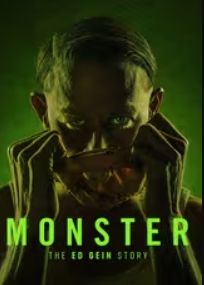
Monster: The Ed Gein Story does not present itself as a restrained reconstruction of a notorious criminal case. From its opening episod...

The Haunting Intersection of Humanity and Horror: A Deep Dive into Monster: The Ed Gein Story
Monster: The Ed Gein Story does not present itself as a restrained reconstruction of a notorious criminal case. From its opening episode, the series enters Ed Gein’s fractured perception and allows memory, fantasy, historical fact, cultural mythology, and cinematic influence to bleed into one another. Rural Wisconsin becomes both a physical landscape and an extension of a disturbed mind, while the farmhouse at the center of the story gradually loses its identity as a home and becomes a private museum of obsession.
I found the season most compelling when it treated Gein not as an isolated curiosity but as the beginning of a cultural feedback loop. His crimes influenced writers and filmmakers; their fictional creations transformed him into a recognizable archetype; audiences consumed those images; and popular culture eventually returned to the real man with expectations shaped by the characters he inspired. The series is therefore not only interested in what Gein did. It is interested in why society continues looking at him.
That ambition gives the production greater thematic range than a conventional biographical crime drama. It also creates substantial problems. The season frequently crosses the line between examining exploitation and participating in it. Scenes designed to criticize the commercialization of suffering are staged with the same polished intensity, famous performers, and provocative imagery that make such commercialization profitable.
The contradiction appears intentional, but recognizing a contradiction does not automatically resolve it. Monster: The Ed Gein Story repeatedly asks whether audiences have helped create the mythology surrounding men like Gein, yet it rarely considers withholding the exact spectacle those audiences have been trained to expect.
Charlie Hunnam Removes His Familiar Screen Confidence
Charlie Hunnam’s transformation is not limited to makeup, posture, or vocal adjustment. He suppresses much of the natural authority that has defined several of his previous roles. His Ed Gein rarely appears comfortable inside his own body. He moves cautiously, holds his shoulders with an uncertain stiffness, and reacts to ordinary conversation as though every social exchange requires translation.
The voice is initially the most noticeable element of the performance. Hunnam adopts a thin, hesitant rhythm that can sound almost childlike before suddenly becoming colder. The choice risks becoming an external imitation, particularly during scenes in which the series pushes Gein toward grotesque comedy. Over time, however, the voice begins functioning as part of the character’s defensive structure. Ed speaks softly because softness helps him appear harmless, even when his private thoughts have moved far beyond the emotional boundaries of the people around him.
I was more interested in Hunnam’s silences. His face often remains passive while his attention becomes intensely focused. He watches women, objects, clothing, household rituals, and images from popular culture with the concentration of someone attempting to understand identity through surfaces.
The performance does not ask me to mistake vulnerability for innocence. Hunnam allows Ed’s social discomfort to coexist with manipulation, resentment, and desire. The character may appear unable to participate normally in the world, but he is not without agency. His isolation becomes dangerous partly because he builds an internal reality in which every impulse can be assigned a private justification.
The Wisconsin Farmhouse Becomes a Psychological Prison
The Gein property is the season’s most important location. It is geographically isolated, visually severe, and emotionally dominated by Ed’s mother long after her physical presence is gone.
The production design emphasizes enclosed rooms, worn surfaces, religious objects, old furniture, and spaces preserved beyond their natural use. The house appears to resist time. Instead of changing with its inhabitants, it stores previous versions of the family.
I found the preserved rooms especially disturbing because they reveal Ed’s refusal to accept ordinary absence. He does not remember through photographs and stories alone. He attempts to keep the material environment from acknowledging that a person is no longer there.
The farmhouse gradually becomes a place where categories collapse. Domestic objects acquire new meanings. Clothing is separated from the people who once wore it. Religious language becomes entangled with shame, punishment, and desire. Memory is treated as something that can be physically reconstructed.
The series often frames Ed within doorways, behind windows, or at the far end of narrow interiors. These compositions reinforce the sense that he is both trapped by the house and protected by it. Outside, he must respond to other people’s expectations. Inside, he can construct a world that obeys only his associations.
Laurie Metcalf Turns Augusta Into More Than a Familiar Monster-Mother
Laurie Metcalf approaches Augusta Gein with absolute conviction. Her performance is severe, theatrical, and frighteningly controlled. Augusta speaks about sin as though she can see contamination spreading through every ordinary human desire.
A lesser portrayal might have reduced her to a single explanation for her son’s later behavior. Metcalf gives Augusta a more complicated authority. She is not simply cruel for the pleasure of cruelty. She believes she is protecting her children from a world she considers irredeemably corrupt.
This belief makes her more dangerous. Punishment becomes care in her private moral system. Shame becomes education. Isolation becomes evidence of maternal devotion.
Metcalf gives Augusta an almost physical command over a room. Her voice changes the posture of everyone around her. Even when she is absent, Ed appears to anticipate her judgment, as though she has been installed permanently inside his consciousness.
I appreciated that the series shows Ed’s dependence without declaring that maternal domination offers a complete explanation for his crimes. Augusta contributes language, fear, misogyny, and emotional isolation. She does not remove his responsibility.
The performance becomes less persuasive when Augusta appears primarily as a supernatural figure inside Ed’s visions. Metcalf is most effective when the character remains human enough to have made choices. Turning her into a symbolic demon can simplify the family history the series initially presents with greater complexity.
The Mother-Son Relationship Is Built From Worship and Resentment
Ed’s attachment to Augusta is not presented as uncomplicated love. He needs her approval, fears her judgment, resents her control, and attempts to preserve her after losing access to her.
The season repeatedly connects his later obsessions to this unresolved bond. Women become associated with attraction, contamination, punishment, and maternal authority at the same time. He searches for closeness while reproducing the emotional logic that made closeness terrifying.
I found the scenes between Hunnam and Metcalf more effective than many of the explicit horror sequences. Their conversations contain the structure of the later tragedy before any criminal act is shown. Ed learns that the body is shameful, women are dangerous, desire leads to punishment, and obedience is the only available proof of goodness.
Yet the series sometimes presents this psychological pattern with too much confidence. Human behavior rarely follows one clean symbolic path. The desire to connect every object, action, and fantasy back to Augusta creates dramatic unity but risks turning interpretation into certainty.
The most unsettling possibility is not that Augusta single-handedly created the adult Ed. It is that her influence found a receptive personality, an isolated environment, and a community unable or unwilling to recognize what was developing nearby.
Adeline Watkins Exposes the Season’s Most Questionable Creative Freedom
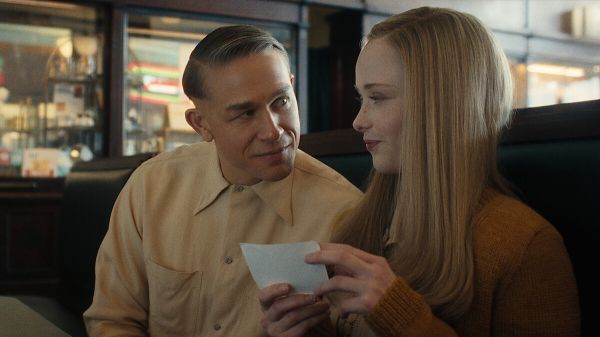
Suzanna Son plays Adeline Watkins as an emotionally volatile counterpoint to Augusta. She is curious where Augusta is condemning, sexually direct where Augusta is repressive, and fascinated by the darkness Ed keeps hidden from most people.
Son gives the character unpredictability. Adeline can appear affectionate, opportunistic, lonely, ambitious, or cruel within the same episode. Her relationship with Ed becomes a private performance in which each person uses the other to explore an identity unavailable in public.
As drama, the pairing generates tension. As historical representation, it becomes much more troubling. The series gives Adeline a degree of involvement and influence that transforms her into an accomplice, muse, projection, and alternative maternal figure.
I understand the narrative purpose. Adeline externalizes parts of Ed’s fantasy life, gives him someone to speak with, and allows the season to dramatize desire without relying entirely on internal monologue. The character also connects private crime with the developing culture of fame and sensational publicity.
The cost is substantial. A real person becomes flexible material inside a psychological theory. The show’s interest in unreliable memory does not remove its responsibility to distinguish invention from evidence.
Son’s performance remains compelling, but the writing surrounding her illustrates the central ethical weakness of dramatized true crime: uncertainty can be turned into whatever produces the most provocative scene.
The Season Frequently Leaves Reality Without Warning
Monster: The Ed Gein Story uses hallucinations, imagined conversations, distorted chronology, cinematic recreations, and fantasy sequences to place the audience inside Ed’s unstable perception.
This approach can be artistically effective. A literal procedural structure might create false confidence that the historical record offers complete psychological access. The fractured form acknowledges that Ed’s inner life cannot be reconstructed with certainty.
The problem is that the series does not always establish when it has moved from documented event into invention. A scene may begin with historical figures, shift into fantasy, and return to apparent fact without changing its visual authority.
I often had to ask not what the character believed, but what the series wanted me to believe had actually occurred. That uncertainty can generate productive discomfort, though it can also allow the production to present sensational material without accepting full responsibility for it.
The most successful fantasy scenes reveal something about Ed’s self-image. He imagines connection with figures who reflect, normalize, or celebrate him. These encounters show how a lonely man can use cultural images to create an audience for himself.
The weaker scenes feel included because the series wants another startling visual or famous historical reference.
Psycho Becomes Part of the Story’s Moral Argument
Tom Hollander’s Alfred Hitchcock introduces a second narrative layer: the transformation of real horror into popular entertainment. The making of Psycho becomes a case study in how selected details from Ed Gein’s story enter fiction and emerge as something more culturally influential than the original crime.
Hollander does not attempt a purely affectionate impersonation. His Hitchcock is observant, controlling, dryly amused, and aware that discomfort can be converted into audience attention.
The series draws parallels between director and subject. Both arrange bodies, spaces, and reactions. Both understand the power of what remains unseen. Both become part of an industry built around managing fear.
I found this comparison intellectually stimulating but historically slippery. The production often behaves as though Gein’s direct influence on Hitchcock, Anthony Perkins, and the making of Psycho was more immediate and psychologically intimate than the available evidence supports.
As meta-commentary, the scenes are clear. The story of Gein becomes raw material, and Hollywood turns raw material into mythology. Norman Bates eventually becomes more recognizable than the man who indirectly helped inspire aspects of him.
The irony is that Monster performs the same operation while criticizing it. It uses Gein to revisit Hitchcock, horror history, celebrity, and audience fascination, creating another stylish fiction from incomplete reality.
Anthony Perkins Is Used to Connect Performance With Concealment
Joey Pollari’s Anthony Perkins is presented as an actor whose own concealed identity informs his interpretation of Norman Bates. The series draws connections between social performance, private shame, and the act of playing a man divided between public gentleness and hidden disturbance.
This material has thematic relevance. Monster is deeply interested in masks: the identities people perform, the objects Ed creates, and the fictional figures Hollywood builds from real violence.
Pollari gives Perkins sensitivity and nervous intelligence. His scenes suggest a performer trying to understand why the role feels personally dangerous without being able to discuss every reason openly.
Yet the series again crosses from interpretation into confident invention. Historical people are arranged into conversations designed to serve the season’s theory about sexuality, horror, and cultural repression.
The result is dramatically coherent but ethically unstable. The show understands that hidden identity can be shaped by social punishment, yet it uses private lives as thematic material with limited restraint.
The Texas Chain Saw Massacre Expands Gein Into an American Myth
The series later turns toward the creation of The Texas Chain Saw Massacre, presenting Gein’s legacy as something that evolves with the country. Rural isolation, family violence, economic fear, war, and distrust of institutions become part of a new cinematic language.
I liked the decision to distinguish the films inspired by Gein rather than treating them as copies of one another. Psycho transforms fragments of the case into psychological suspense. The Texas Chain Saw Massacre uses related imagery to create a more chaotic vision of national decay.
The season suggests that fictional monsters reveal the anxieties of the period creating them. Gein becomes less a direct template than a collection of cultural possibilities: the remote house, the unstable relationship with femininity, the transformation of human remains into objects, and the apparently harmless man concealed within ordinary rural life.
These passages broaden the season beyond biography. They also contribute to its fragmented structure. Each excursion into film history pulls attention away from the people directly affected by Gein’s actions.
The cultural legacy receives elaborate staging, while several victims remain defined primarily through their connection to him. This imbalance is not accidental, but the season does not fully escape it by acknowledging it.
The Victims Remain at the Edge of a Story About Their Erasure
The anthology has repeatedly faced the problem of centering the person responsible for suffering while claiming to critique public fascination with him. Monster: The Ed Gein Story continues that tension.
The women connected to the case are often presented through Ed’s obsessions, fantasies, and symbolic needs. Their bodies become evidence of his psychology and raw material for the season’s visual language.
Vicky Krieps brings humanity and unease to Ilse Koch, but the broader structure frequently uses women as mirrors reflecting male pathology. They represent maternal authority, sexual freedom, victimhood, cinematic inspiration, or public curiosity.
I wanted the series to spend more time reconstructing lives that existed independently of Gein. Who were these women before they entered the story attached to his name? What communities, relationships, routines, and ambitions disappeared when their identities were absorbed into a criminal legend?
The season occasionally gestures toward this absence. It understands that popular culture remembers the offender more clearly than the harmed. Yet it continues giving him the most elaborate interiority, the greatest amount of screen time, and the most prestigious performance.
The Rural Community Is Presented as Both Innocent and Complicit
Plainfield is depicted as a place where people know one another, depend on local familiarity, and interpret eccentricity through long-established impressions. Ed appears odd but useful, socially awkward but not immediately threatening.
This environment helps explain how suspicion can be delayed. People often judge danger according to recognizable social performance. A quiet local man who performs small jobs and speaks politely may not fit the image of someone capable of extreme acts.
The series also examines the community’s response after the farmhouse is discovered. Horror becomes spectacle. Officials, neighbors, journalists, and curious visitors transform the property into an attraction.
I found these scenes among the season’s sharpest. Public disgust quickly coexists with appetite. People condemn Ed while wanting to see the house, hear every detail, and possess a piece of proximity to the story.
The farmhouse becomes valuable because suffering occurred there. This conversion of crime scene into tourist object anticipates the true-crime economy the series itself inhabits.
Law Enforcement Is Shown Struggling to Understand the Scale of the Discovery
When authorities finally enter Gein’s private world, the series shifts from psychological suggestion into procedural shock. Familiar rural officers encounter evidence that exceeds the categories through which they understand local crime.
The reactions are intentionally physical. People become nauseated, silent, confused, and uncertain about what they are seeing. The farmhouse cannot be processed as one conventional crime scene because it contains years of hidden activity and objects whose original identities have been destroyed.
The show is effective when it focuses on the inability to name what has been found. Language becomes part of the horror. An object looks familiar until its material is understood. The direction sometimes lingers too long, turning discovery into a guided tour. The camera’s curiosity begins resembling the curiosity the season later condemns.
A more restrained approach might have allowed reactions, sound, and partial images to preserve the dignity of those whose remains became objects. The series instead chooses explicit confrontation, trusting shock to communicate the moral rupture.
The Visual Design Alternates Between Winter Naturalism and Gothic Excess
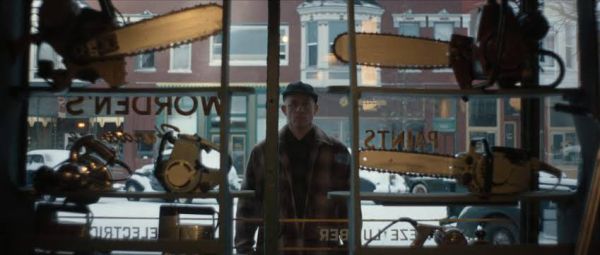
The exterior photography gives rural Wisconsin a severe beauty. Snow, open fields, bare trees, weathered buildings, and long roads emphasize distance between households. The landscape appears quiet enough to conceal almost anything.
Inside the farmhouse, realism gradually gives way to gothic composition. Shadows deepen, objects accumulate, and rooms seem detached from ordinary time. The house becomes less a documented location than a symbolic chamber constructed from repression and memory. I found this contrast visually effective. The outside world looks cold, exposed, and indifferent. The interior is crowded with private meaning.
The production sometimes overstates the darkness. Heavy visual symbolism, carefully arranged objects, and ominous framing can make the farmhouse feel designed for a prestigious horror series rather than inhabited over years by an isolated farmer.
The artificiality may be intentional, reflecting Ed’s mythologized inner world. Still, the line between psychological expression and aesthetic beautification remains uncomfortable.
The Sound Design Makes Ordinary Domestic Noise Unstable
Floorboards, fabric, tools, radio broadcasts, animals, wind, and breathing are given unusual prominence. Familiar sounds become threatening because the audience knows the environment contains meanings unavailable to casual visitors.
The radio is particularly important. It connects Ed to a world beyond the farm while allowing that world to enter without requiring real social interaction. Voices arrive as entertainment, news, authority, and imagined companionship.
Music is used more aggressively during fantasy and cultural-history sequences. The score frequently signals that reality has become unstable before the visual language confirms it. I preferred the quieter passages. Hunnam’s breathing or the movement of an object across a table can create more unease than a loud musical announcement. The season understands that terror often grows from waiting for an ordinary sound to reveal an extraordinary source.
The Series Is More Interested in Cultural Guilt Than Legal Judgment
Once Ed is arrested, the drama does not become a straightforward courtroom story. The season is less interested in establishing guilt than in examining what happens when a person’s crimes become public property.
Psychiatrists, investigators, journalists, filmmakers, and audiences all attempt to define him. Each definition serves a different purpose. Medicine seeks diagnosis. Law seeks responsibility. Journalism seeks narrative. Entertainment seeks an image that can be reproduced.
Ed’s own explanations remain unstable. He can appear confused, evasive, childlike, or strangely proud depending on who is asking and what recognition the conversation offers.
I found this emphasis more compelling than a procedural conclusion. The season asks whether society’s desire to understand a person can become another form of possession.
Yet the show rarely applies the same suspicion to its own authority. It questions every institution’s version of Ed while presenting its own elaborate psychological interpretation with considerable confidence.
The Later Episodes Turn Gein Into an Impossible Cultural Celebrity
As the story moves beyond the initial discovery, Ed becomes increasingly aware that his name has entered public mythology. The season explores the strange possibility that a socially isolated man may receive his greatest recognition through acts that should have resulted only in horror and condemnation.
Hunnam’s performance changes subtly. Ed remains awkward, but moments of satisfaction appear when he realizes that famous fictional characters contain traces of his story.
This creates one of the season’s most unsettling ideas: notoriety can provide identity to someone who felt invisible. The culture that condemns him also confirms that he mattered.
The series uses imagined conversations and cross-generational encounters to dramatize this recognition. Some are conceptually effective, while others push the season toward self-conscious fantasy.
Ed becomes less a historical figure and more a ghost wandering through the horror genre. That transformation serves the show’s cultural argument, but it also reproduces the process through which a criminal becomes larger than his victims.
The Ham-Radio Material Captures Loneliness Without Excusing It
Radio communication offers Ed a controlled version of social contact. He can listen, speak, and imagine relationships without enduring the full unpredictability of physical presence. The device reflects his larger approach to people. He desires connection but prefers forms that allow him to control distance and interpretation. I found these scenes useful because they reveal loneliness without presenting loneliness as innocence. Isolation may contribute to Ed’s internal world, but many isolated people do not violate others.
The season is careful at its best to distinguish explanation from excuse. Ed’s emotional deprivation, maternal domination, possible mental illness, and social alienation provide context. They do not transform his actions into an unavoidable tragedy for him alone. The radio becomes a symbol of connection without mutual intimacy. Voices enter the farmhouse, but nobody truly sees what exists inside it.
The Series Sometimes Mistakes Provocation for Psychological Depth
Monster: The Ed Gein Story frequently stages disturbing images with technical precision. Makeup, lighting, sound, production design, and Hunnam’s performance combine to create moments designed to remain in the viewer’s memory.
Not every memorable image reveals something new. Several sequences repeat the same ideas about maternal obsession, identity, bodies, and cultural fascination through increasingly extreme variations.
I occasionally felt the series wanted to shock me into believing it had reached deeper psychological territory. Explicitness can confront denial, but it can also become another aesthetic surface.
The strongest psychological scenes are often quieter: Ed responding to Augusta’s judgment, attempting ordinary conversation, studying a piece of clothing, or realizing that another person has interpreted his behavior correctly. Those moments leave uncertainty. The more elaborate horror imagery frequently tells me exactly what association I am expected to make.
Hunnam and Metcalf Carry the Season Beyond Its Sensationalism
Despite my reservations about the writing, the central performances repeatedly restore human tension. Hunnam avoids making Ed purely theatrical, even when the direction invites grotesque exaggeration. Metcalf gives Augusta enough conviction to make her influence emotionally credible rather than merely symbolic.
Their scenes create a closed moral universe. Augusta defines corruption, Ed absorbs the definition, and both become dependent on the system they have built. He needs her judgment because judgment is one of the few forms of attention he understands.
When the season leaves this relationship for extended cultural detours, it often loses dramatic concentration. The Hitchcock and horror-history material is intellectually relevant, but the emotional core remains inside the farmhouse.
The tragedy is not simply that a domineering mother raised a disturbed son. It is that love, fear, shame, religion, dependence, and resentment became inseparable inside a family with almost no corrective influence from outside.
The Title Monster Becomes an Accusation Directed at the Audience
The anthology title initially appears to identify its subject. Ed Gein is the monster whose story is being dramatized. As the season develops, the word expands.
The press turns him into a product. Officials allow the farmhouse to become spectacle. Hollywood transforms fragments of reality into profitable fiction. Audiences continue seeking more detailed access to the crimes.
The show suggests that the cultural machine surrounding Gein helped construct the version of him remembered today. The monster is not invented from nothing, but he is enlarged, simplified, and repeatedly reproduced.
I found this argument persuasive and uncomfortable. The season exists because the name still attracts attention. Charlie Hunnam’s transformation, the elaborate sets, and the historical film references all depend on the same fascination being criticized. The production never resolves its own participation. Perhaps it cannot. A series about the ethics of looking still requires viewers to look.
The Final Movement Replaces Closure With Cultural Continuation
The last episode does not treat Gein’s confinement as the end of the story. His direct ability to harm others may be restricted, but the images connected to him continue traveling through cinema, television, journalism, and public imagination.
This is a fitting structural choice. A legal ending would be inadequate for a season primarily concerned with legacy. Ed’s cultural afterlife becomes larger than his actual rural existence ever was.
The series imagines him encountering that legacy with a mixture of confusion and satisfaction. He becomes aware that fictional figures have inherited parts of his mythology while becoming more famous than he could have imagined.
I found this conclusion disturbing because it denies the comfort of believing that society rejected him completely. His actions became material. Material became entertainment. Entertainment became tradition. The final emphasis is not on whether Ed understood himself. It is on how confidently everyone else claimed to understand him—and how profitable those claims became.
Monster: The Ed Gein Story leaves the farmhouse standing inside American popular culture long after the physical building and the people connected to it are gone. Each new retelling enters the same rooms, rearranges the evidence, and promises that this version will finally reveal what the previous versions missed.
Pros:
- Mesmerizing cinematography and art direction that evoke a palpable sense of dread
- Stellar performances from both lead and supporting actors that bring emotional depth
- Immersive sound design and an evocative score that enhance the overall experience
- Wide accessibility across multiple online platforms allowing for streaming, downloading, and viewing flexibility
- Strong narrative and unorthodox storytelling that challenges traditional formats
- Deep exploration of complex themes such as isolation and mental health
Cons:
- Graphic content and unsettling imagery might be off-putting for viewers seeking lighter entertainment
- Not suitable for viewers sensitive to intense psychological and disturbing themes
- Non-linear narrative structure may confuse or alienate some audiences









Movie Reviews

Minecraft

Grand Theft Auto V

Toca Boca World

Roblox

Leave a comment
Your comment is awaiting moderation. We save your draft here
0 Comments