
Review
Santa Claus Is Comin' to Town takes one of Christmas culture’s most familiar figures and builds his identity from a series of surprisin...
From Stop-Motion Magic to Enduring Holiday Spirit: The Timeless Legacy of Santa Claus Is Comin’ to Town
Santa Claus Is Comin' to Town takes one of Christmas culture’s most familiar figures and builds his identity from a series of surprisingly rebellious choices. Kris Kringle does not become Santa because a magical council appoints him or because he inherits an established workshop. He becomes Santa by repeatedly delivering toys after an authoritarian mayor has declared them illegal.
That detail changed the special for me. I remembered the songs, the red hair, the stop-motion puppets, the Winter Warlock, and the image of Kris moving through chimneys. I had forgotten how much of the story is about one cheerful young man refusing to accept a cruel law.
The production explains several familiar Santa traditions in less than an hour. It gives reasons for the red suit, beard, chimney entrances, stockings, flying reindeer, North Pole home, Christmas Eve deliveries, and the name Santa Claus.
This could have felt like a mechanical checklist. Instead, most traditions emerge from obstacles. Kris uses chimneys because the doors are guarded. He begins operating at night because daytime deliveries have become dangerous. Children hang stockings because toys need a secret destination.
As a critic, I found that structure clever. Christmas customs are not presented as decorative habits invented for marketing. They develop as methods of preserving generosity under pressure.
S.D. Kluger Makes the Story Feel Like a Memory Shared Over Hot Chocolate
The special is narrated by S.D. Kluger, a cheerful mail carrier who answers questions about Santa while travelling through snow with his animal companions.
Fred Astaire gives Kluger an easy, conversational warmth. He does not sound like an official historian presenting verified facts. He sounds like a trusted older relative who knows that the best explanation may require a song, a detour, and a few details that cannot be proven.
I enjoyed the framing because it allows the story to move quickly. Kluger can connect events, explain changes in time, and guide younger viewers through mythology without making every character deliver exposition. His presence also gives the special a sense of oral tradition. Santa’s history is something passed between generations rather than stored in one authoritative record.
The narration occasionally becomes too convenient. Whenever the story needs to introduce another familiar tradition, Kluger can simply explain how it happened. Astaire’s voice keeps this from becoming dry. He gives the transitions personality and makes the familiar title song feel like the natural destination of the entire story.
Kris Begins as an Abandoned Baby and Grows Up Surrounded by Work
Kris arrives as an infant left near the home of the Kringle family, a group of toy-making elves. They adopt him, raise him, and teach him their craft. This beginning gives Santa a chosen family rather than a royal bloodline. Kris becomes important because of the values he learns, not because he was born into a supernatural position.
The Kringles create toys but cannot deliver them successfully to children. Their work remains isolated in the forest until Kris volunteers to cross the mountain and enter Sombertown. I liked that his first heroic act is logistical. He sees useful objects sitting on shelves and asks why they are not reaching the people for whom they were made.
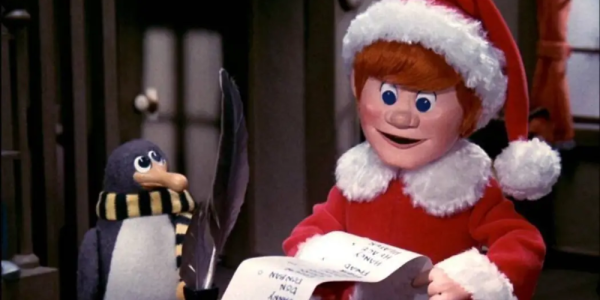
The workshop is warm, colorful, and filled with handmade detail. Toys have visible texture and slight irregularity. They look created rather than manufactured. Kris therefore grows up understanding gifts through labor. A toy is not simply a magical object appearing without cost. Someone carved, painted, assembled, and transported it.
Mickey Rooney Gives Young Kris More Confidence Than Wisdom
Mickey Rooney voices Kris with energy, optimism, and a complete lack of preparation for how hostile the world outside the Kringle home can be. Kris enters Sombertown expecting children and adults to welcome toys. He has grown up inside a community where making others happy is ordinary behavior. Rooney makes that innocence active rather than passive. Kris is not confused for long after discovering injustice. He begins thinking about how to move around it.
His confidence can appear almost reckless. He crosses dangerous territory, confronts powerful figures, and promises children that he will continue delivering gifts before he has solved the practical problems.
I found that impulsiveness useful. The fully established Santa is usually portrayed as calm, wise, and endlessly prepared. Young Kris needs enough inexperience to make the transformation meaningful. Rooney also gives him a slight theatrical quality. Kris speaks and sings as though enthusiasm itself may persuade the world to cooperate.
Sombertown Is a Place Where Happiness Has Become Suspicious
Sombertown is designed around gray buildings, rigid rules, guarded doors, and citizens accustomed to obeying authority. The children appear especially constrained. Toys are not merely scarce. Their desire to play is treated as disorder requiring correction. I found the town’s emotional atmosphere more disturbing than I remembered. The problem is not simply one unpleasant mayor. Adults have accepted a system where joy requires permission.
The muted environment makes Kris’s clothing and toys visually disruptive. Color itself begins to look rebellious. The town’s name is direct, but effective. Sombertown has become emotionally somber because its institutions reward control over imagination.
The special does not explain how the community reached this condition or why citizens continue obeying Meisterburger. The fairy-tale structure does not require a detailed political history. What matters is that repression has become ordinary enough that one bag of toys appears revolutionary.
Burgermeister Meisterburger Is Ridiculous Until He Gains Legal Authority
Burgermeister Meisterburger is introduced as pompous, impatient, physically awkward, and convinced that his position gives every personal preference the force of law. His hatred of toys begins after stepping on one and injuring himself. From this minor humiliation, he declares toys illegal throughout Sombertown.
The cause is absurd, but the consequences are real. Guards confiscate toys, children are threatened with punishment, and Kris becomes a wanted man for distributing harmless gifts.
Paul Frees gives Meisterburger a loud, exaggerated authority that suits a fairy-tale dictator. He stretches words, issues commands, and behaves as though disagreement is evidence of stupidity.
I laughed at the character while recognizing the uncomfortable logic beneath him. Personal resentment becomes public policy because nobody around him can prevent it. His law is not supported by evidence, public need, or moral reasoning. It exists because power allows him to convert discomfort into prohibition.
The Toy Ban Makes Kris a More Interesting Hero
Kris could have remained a cheerful delivery worker moving gifts from one location to another. Meisterburger’s law forces him to define what he believes. He might obey, return to the forest, and conclude that Sombertown’s children are beyond his responsibility. Instead, he decides that an unjust law should not determine whether children receive kindness.
This gives the special an unexpectedly strong moral position. Legality and goodness are not treated as identical. Kris does not respond by attacking Meisterburger physically. He changes routes, disguises his movements, recruits allies, and continues delivering toys.
I appreciated that his rebellion remains consistent with his character. He resists through generosity. The town attempts to control children by removing pleasure. Kris answers by making pleasure harder to suppress.
Jessica Begins Inside the System Before Recognizing Its Cruelty
Jessica is introduced as a schoolteacher who initially follows Sombertown’s rules. She knows the toy ban is severe, but she is reluctant to challenge authority openly.
This makes her more interesting than a character who immediately agrees with Kris about everything. Jessica has responsibilities, social expectations, and a position that can be threatened. Defiance costs her more than it costs a visitor who can return to the forest. Robie Lester gives Jessica kindness mixed with caution. She is sympathetic to the children before she becomes willing to act against the law.
I liked that Kris’s influence is not romantic alone. He demonstrates that resistance is possible. Jessica begins reconsidering the difference between maintaining order and participating in harm. Her development happens quickly because the special has limited time, but the emotional direction is clear. She moves from quiet disapproval to active support.
My World Is Beginning Today Gives Jessica a Life Beyond Romance
Jessica’s major musical number accompanies her decision to change. The song is not simply about falling in love with Kris. It is about recognizing that the life she has accepted is smaller than the one she could choose. I found the sequence gentle and visually beautiful. The natural environment changes around her as she imagines a future defined by possibility rather than obedience.
The special’s songs often explain emotions directly, but this one earns its place because Jessica has spent earlier scenes containing herself. Her transformation is internal before it becomes public. She must first believe that another way of living exists.
The romance with Kris develops rapidly, as relationships often do in compact holiday specials. Their shared values make the pairing more convincing than physical attraction alone. Jessica believes children deserve kindness. Kris gives that belief a practical mission.
The Winter Warlock Is Frightening Mainly Because Everyone Has Accepted His Reputation
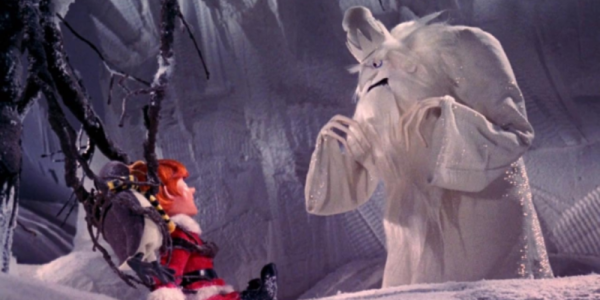
Before reaching Sombertown, Kris must cross territory controlled by the Winter Warlock. The character is introduced through warning, shadow, cold weather, and a reputation for hostility. Keenan Wynn gives him a deep, threatening voice that makes the early confrontation feel dangerous within the special’s gentle world. The Winter Warlock appears powerful enough to stop Kris completely. He controls the environment and has no reason to allow strangers through.
Kris responds by giving him a toy train. This is one of the special’s defining moments. The apparent villain is not defeated through force. He is reminded of a part of himself that isolation has buried. I found the transformation emotionally simple but effective. The Warlock’s cruelty is connected with loneliness rather than pure malice.
One Toy Changes the Winter Warlock Because It Is Given Without Fear
Kris does not give the Winter Warlock a present as payment for safe passage. He offers it because he senses that the man has never received one. The act surprises the Warlock because everyone else approaches him through fear, avoidance, or hostility. A gift creates a relationship where none existed. The Winter Warlock’s hard exterior begins collapsing almost immediately. The change is visually dramatic and emotionally direct.
I normally resist stories where one kind gesture reforms a dangerous character instantly. Here, the fairy-tale simplicity fits the format. The toy does not erase the Warlock’s power. It changes how he chooses to use it. His later role in helping Kris demonstrates that kindness can produce practical alliances, not only private emotional improvement.
Put One Foot in Front of the Other Is the Special’s Best Message
The song “Put One Foot in Front of the Other” accompanies the Winter Warlock’s attempt to change. Its advice is almost comically basic: begin moving, continue moving, and eventually the direction of your life will change.
I found this simplicity more useful than a large speech about redemption. The Warlock does not need to become perfect immediately. He needs to take the first action that differs from his old pattern. The stop-motion movement supports the idea physically. Walking appears slightly awkward and deliberate, making each step visible.
The song has survived because its message extends beyond Christmas. Personal change can feel impossible when imagined as one enormous transformation. It becomes manageable when reduced to the next decision.
The special applies that lesson repeatedly. Jessica changes through one act of defiance. The Warlock changes through one accepted gift. Kris builds a tradition through one delivery after another.
Kris’s Red Suit Begins as Family Clothing Rather Than a Brand
The Kringle family dresses Kris in red clothing connected with their own style and identity. This makes the future Santa suit feel inherited from a home rather than designed as an advertising symbol.
I appreciated that the costume develops gradually. Young Kris looks different from the older, bearded Santa recognized by the narrator’s audience. The red suit becomes practical because it is warm and visually connected with the people who raised him. Its eventual cultural importance does not erase its intimate origin. Santa carries his adoptive family’s identity into every later Christmas.
Topper Gives Kris Companionship Without Becoming a Constant Joke
Kris travels with a small penguin named Topper, who follows him from the Kringle home into danger. Topper provides visual charm and occasional comic reaction, but he does not speak or dominate the story.
I appreciated this restraint. Modern family animation often gives every animal sidekick a stream of jokes and contemporary references. Topper communicates through movement and loyalty. His presence makes Kris’s journey feel less solitary. The character also adds physical scale. The small penguin beside the taller puppets emphasizes the handmade, storybook quality of the production.
The Reindeer Learn to Fly Because the Story Needs Hope to Become Mobile
As the authorities increase pressure on Kris, ordinary transportation becomes insufficient. The Winter Warlock helps the reindeer gain the ability to fly. The explanation is brief and follows fairy-tale logic rather than a complex magical system. I liked that flight emerges as another response to restriction. When roads are blocked and doors are watched, generosity moves into the sky.
The reindeer are not developed as individual characters in the way later Santa stories often present them. They function more as part of the growing mythology. Their flight changes the scale of Kris’s mission. He is no longer one man helping one town. The possibility of reaching children everywhere becomes visible.
Chimneys Become a Solution to State Surveillance
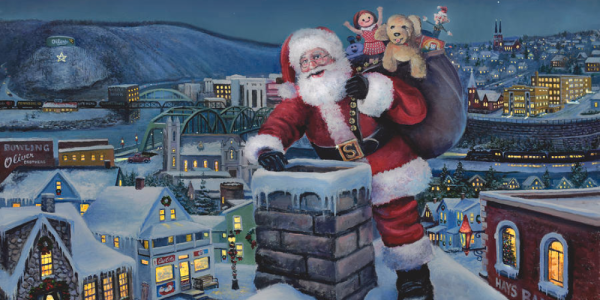
The famous chimney tradition begins because guards watch the doors and windows of Sombertown’s homes. Kris enters from above, avoiding the controlled entrances. I found this origin especially amusing. One of Santa’s most whimsical habits develops from practical evasion. The chimney is not selected because it is charming. It is selected because authority has failed to imagine it as a route.
This pattern gives the special its intelligence. Traditions become adaptive responses rather than random mythology. The physical limitations are ignored cheerfully. Kris fits through chimneys because the story requires belief, not architectural analysis.
Stockings Begin as Secret Delivery Containers
Children hang stockings so Kris can place toys somewhere accessible after entering through the chimney. Again, a familiar Christmas custom grows from logistical necessity. I enjoyed how the special creates a chain of cause and effect. One prohibition produces another adaptation, and each adaptation becomes tradition.
The explanation is simple enough for children while still satisfying adults interested in how the mythology is assembled. The special occasionally tries to explain too many customs in rapid succession. The charm survives because each explanation is connected with character action.
Kris’s Beard Marks Time, Experience, and the Cost of Hiding
Kris begins as a clean-shaven young man with red hair. The familiar white beard develops later as years pass. The transformation communicates time efficiently. The cheerful courier becomes an older figure shaped by repeated work and continued resistance. His appearance also changes during periods when he must avoid capture. Disguise and age gradually overlap until the public image of Santa emerges.
I liked seeing Santa’s identity constructed rather than revealed fully formed. The beard eventually becomes more than a physical feature. It separates the legendary figure from the young man who first carried toys across the mountain.
The Name Santa Claus Emerges Through Love and Language
Kris Kringle eventually becomes known as Santa Claus through his relationship with Jessica and the affectionate names connected with different traditions. The special treats identity as something accumulated through family, community, marriage, and public memory. He does not abandon the name Kris entirely. Each name represents a different stage of the person he becomes. I found that gentler than an official renaming ceremony. Santa Claus grows into the title because people need language for the role he has created.
The Special Is More Political Than Its Warm Reputation Suggests
Sombertown bans toys, arrests dissenters, monitors homes, and uses public punishment to discourage resistance.
Kris builds an underground delivery network. Jessica provides information and assistance. The Winter Warlock uses magic to bypass restrictions. Children participate through secret signals and stockings. Viewed plainly, the story is about organized resistance to authoritarian control.
The production softens these ideas through songs, colorful puppets, and comic exaggeration. The underlying conflict remains clear. I admired the way the special introduces civil disobedience without turning into a lecture. Kris does not explain political theory. He identifies an unjust rule and continues doing what he believes is right.
Its View of Children Is Protective but Slightly Idealized
The children of Sombertown want toys, play, and freedom from Meisterburger’s rules. They respond to Kris with immediate gratitude, reinforcing the special’s belief that generosity naturally creates goodness. I found the emotional simplicity appropriate, though the children remain more symbolic than individual.
They represent the human need for imagination and play. Meisterburger sees those needs as threats to order. The special does not explore conflict between children or the possibility that gifts can create competition. Its moral structure is deliberately clear.
The Animagic Style Still Feels Handmade
The stop-motion puppets move with slight stiffness, visible weight, and physical limitation. Their hands, faces, clothes, and hair do not attempt realistic motion. I find that quality essential to the special’s charm. Every movement appears constructed frame by frame. The sets resemble miniature theatrical stages. Snow has texture, buildings have painted detail, and forests feel assembled from tangible materials.
Modern animation can produce smoother movement and more complex expression. Smoothness would not automatically improve this world. The physical imperfections make the characters feel like toys telling a story about the importance of toys. Some viewers may find the animation dated or eerie, particularly in close-ups. I found its slight strangeness inseparable from its personality.
The Character Designs Communicate Morality Quickly
Kris is rounded, colorful, open-faced, and constantly moving. Meisterburger is angular, heavy, and visually dominated by his official clothing. The Winter Warlock begins tall, dark, and sharp before becoming softer after his change. These designs are not subtle. Younger viewers can understand character roles immediately.
I appreciated the visual clarity while noticing how closely appearance and morality are connected. Threatening characters look threatening before they act. The Winter Warlock complicates this slightly by changing behavior without becoming an entirely different figure. His earlier visual identity remains part of him.
The Songs Do Most of the Emotional Explanation
Santa Claus Is Comin' to Town uses music to introduce characters, explain motivation, support transformation, and connect the story with the famous title song. “The First Toymakers to the King” establishes the Kringle family’s pride and purpose. “No More Toymakers to the King” turns Meisterburger’s order into comic authoritarian performance. “Put One Foot in Front of the Other” gives redemption a practical rhythm, while “My World Is Beginning Today” expresses Jessica’s awakening.
I found several songs memorable because they perform clear narrative work. They are not pauses inserted only to lengthen the special. A few numbers state emotions so directly that dialogue might have provided greater nuance. The compact format benefits from musical efficiency.
The Title Song Arrives as a Summary of the Legend
The famous “Santa Claus Is Comin' to Town” song contains warnings about behavior, lists, observation, and Santa’s approaching arrival. The special builds a story explaining why those ideas became associated with him. By the time Kluger performs the song, the lyrics feel connected with events rather than attached as a familiar finale.
I enjoyed hearing the number after watching Kris develop his delivery system and public identity. The surveillance language within the song can sound slightly threatening when examined literally. The special keeps the tone playful, presenting Santa’s knowledge as part of moral encouragement rather than control.
The Compact Runtime Helps the Mythology and Limits the Characters
The special moves rapidly from Kris’s infancy to adulthood, rebellion, romance, marriage, aging, and worldwide Christmas tradition. This speed keeps the story energetic. Almost every scene adds another part of the mythology.
The cost is emotional depth. Kris and Jessica’s relationship develops quickly. The Winter Warlock changes almost instantly. Sombertown’s citizens receive little individual attention. I accepted those limitations because the production behaves like a filmed storybook rather than a detailed feature drama. The pacing becomes rushed near the end, when several major traditions must be explained before the title song completes the narrative.
Burgermeister’s Defeat Is Historical Rather Than Dramatic
Kris does not overthrow Meisterburger through one climactic confrontation. The ruler’s power fades as time passes, laws change, and the Meisterburger family disappears from authority.
I found this resolution unexpectedly mature. Oppressive figures often imagine their rules will remain permanent. History eventually turns them into strange names inside old stories. Kris’s tradition survives because people continue practising it. Meisterburger’s prohibition disappears because fear cannot preserve it forever.
The victory belongs to endurance rather than force. This ending also prevents Kris from becoming a warrior. His mission remains delivering gifts, not seizing political power.
Jessica Becomes Mrs. Claus Without Losing Her Earlier Courage
Jessica joins Kris, supports the delivery mission, and eventually becomes Mrs. Claus. The special treats marriage as a partnership built through shared opposition to injustice. I appreciated that she contributes before becoming associated primarily with the domestic title. She risks punishment and helps sustain the mission.
Still, her later identity is largely absorbed into Kris’s legend. The special gives limited information about her independent role after marriage. This reflects the period in which the production was made. Mrs. Claus is supportive, loving, and important, but the public mythology remains centered on her husband.
What Has Aged Poorly
The gender roles are traditional. Jessica’s independent development eventually narrows into the familiar supportive-wife position. Several cultures and naming traditions are combined casually to explain Santa mythology, reflecting a broad American interpretation rather than historical precision. The special equates visual appearance with character morality more directly than contemporary animation usually would.
Some scenes may feel slow to children accustomed to faster editing, while others move through major emotional changes too quickly. The idea that Santa watches children constantly can feel less comforting when viewed outside the playful context.
What Still Works Beautifully
The central moral remains strong: an unjust rule does not become right simply because an authority figure announced it. Kris responds to hostility through persistence, creativity, and generosity rather than revenge. The Winter Warlock’s development presents change as a sequence of manageable actions. Jessica demonstrates that quiet disagreement matters only when it eventually becomes a choice.
The stop-motion craft gives the world a handmade identity perfectly suited to a story about toy makers. The songs remain memorable because they carry story and character rather than functioning as empty seasonal decoration.
Who Should Watch Santa Claus Is Comin' to Town?
I recommend Santa Claus Is Comin' to Town to families, fans of classic stop-motion animation, viewers interested in Santa origin stories, and anyone who enjoys compact Christmas mythology explained through music and fairy-tale logic. Younger children can follow the clear conflict between Kris and Meisterburger, though the Winter Warlock may appear frightening at first.
Adults may notice the themes of authoritarian control, civil disobedience, social conformity, and historical change beneath the cheerful surface. Viewers seeking realistic Santa history should treat the special as imaginative folklore rather than factual explanation. Anyone uncomfortable with older animation may need time to adjust to the puppet movement and character designs.
My Final Verdict
Santa Claus Is Comin' to Town remains one of the most inventive Santa origin stories because it turns familiar holiday customs into solutions created under pressure.
Mickey Rooney gives Kris youthful confidence and warmth. Fred Astaire makes S.D. Kluger an inviting guide, while Paul Frees creates a wonderfully ridiculous symbol of authority in Burgermeister Meisterburger. Keenan Wynn gives the Winter Warlock enough sadness to make his rapid transformation emotionally satisfying, and Robie Lester allows Jessica to develop from cautious teacher into active ally.
The special moves too quickly through several relationships, its gender roles show their age, and its moral divisions are deliberately simple. The stop-motion style may appear stiff to modern viewers, but that physical quality remains central to its appeal.
I rate Santa Claus Is Comin' to Town 8.8/10. It is funny, musical, visually distinctive, and more rebellious than its gentle reputation suggests.
Kris Kringle does not become Santa because everyone welcomes him. He becomes Santa because the doors are locked, the roads are guarded, the toys are forbidden—and he keeps finding another way inside.
Pros:
- Innovative stop-motion animation that showcases meticulous craftsmanship
- Heartfelt narrative that touches on themes of hope, redemption, and kindness
- Timeless appeal that continues to resonate with audiences of all ages
- Memorable musical score that enhances the emotional depth of each scene
- Rich visual detail that creates an immersive winter wonderland
- Family-friendly content with a message that unifies viewers across generations
Cons:
- Pacing may seem slow for viewers accustomed to rapid modern editing
- The traditional animation style might not appeal to fans of digital animations
- Limited character development for secondary characters may leave some viewers wanting more depth








Movie Reviews

Minecraft

Grand Theft Auto V

Toca Boca World

Roblox

Leave a comment
Your comment is awaiting moderation. We save your draft here
0 Comments