
Review
Crown for Christmas gave me the comforting feeling of entering a holiday game where the main character accidentally accepts a much larg...
Crown for Christmas: A Cinematic Celebration of Love, Renewal, and Festive Magic
Crown for Christmas gave me the comforting feeling of entering a holiday game where the main character accidentally accepts a much larger quest than the job description suggested. Allie Evans believes she is traveling to a European castle to work as a governess. Instead, she becomes responsible for a grieving princess, disrupts royal routines, and gradually changes a household that has become more efficient than emotionally alive.
The premise is familiar: an ordinary American woman enters a royal environment, clashes with tradition, earns the affection of a guarded child, and develops feelings for a widowed king. What made the film enjoyable for me was not the possibility of becoming royalty. It was the way Allie’s presence forces several characters to reconsider the roles they have been performing.
From my perspective as a gamer, Allie begins with no royal reputation, limited resources, and almost no understanding of the castle’s social mechanics. Her advantage is that she does not treat every rule as sacred. She asks whether a tradition still helps the people expected to follow it, which turns out to be more disruptive than openly challenging the throne.
Quest Log: Employment Lost Before Christmas
Allie’s story begins with a practical setback rather than a romantic dream. She loses her hotel job shortly before Christmas and immediately faces the financial uncertainty that follows. This opening matters because she does not travel to Winshire in search of luxury or a royal husband. She accepts the position because she needs work.
Danica McKellar gives Allie an energetic professionalism that makes the transition believable. She is disappointed and frustrated, but she does not spend long waiting for someone else to repair the situation. When an opportunity appears, she evaluates it quickly and takes the risk.
In gaming terms, Allie’s original workplace closes the current mission line without warning. The governess position becomes a new campaign offered by a stranger with suspiciously impressive rewards and very little practical information.
The Castle Was Beautiful but Emotionally Underpopulated
Winshire’s royal residence contains decorated halls, formal dining rooms, servants, valuable objects, and enough space to make Allie’s previous life feel very far away.
The castle is visually designed to deliver the fantasy expected from a royal Christmas movie. There are grand staircases, winter landscapes, formal clothing, and rooms prepared for tradition.
Yet the building initially feels more ceremonial than warm.
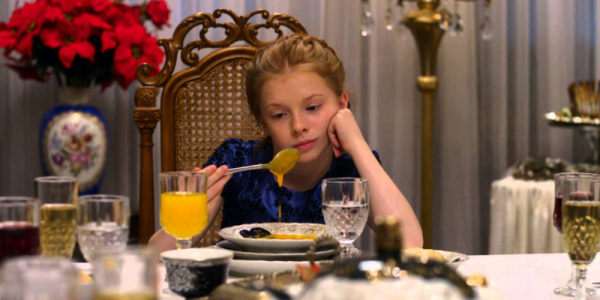
People move through it according to schedules and responsibilities. Meals follow protocol. Staff members know their place. The princess receives supervision, but not always the kind of attention she actually needs.
I saw the castle as an upgraded base with excellent architecture and low morale. Every system works, but the people inside have stopped asking whether the system still serves them.
Allie Entered Without the Required Etiquette Skill
Allie quickly discovers that royal employment involves expectations extending far beyond childcare. Clothing, speech, movement, dining, scheduling, and access to different parts of the castle all carry rules. She is not naturally disrespectful. She simply comes from an environment where directness is more valuable than ceremony. This creates several light comedic moments because Allie behaves normally while the royal staff interprets normal behavior as unusual confidence.
I liked that she does not become instantly polished after one lesson. Her discomfort remains visible, especially when formal events require her to perform a version of herself designed for the room. Allie’s lack of etiquette becomes useful because it allows her to notice emotional problems everyone else has learned to step around politely.
Princess Theodora Was Not a Simple Troublemaker
Theodora is introduced through her resistance to governesses and expectations. She is intelligent, observant, and fully aware that adults often approach her as a problem requiring management.
Her behavior can be disruptive, but the film gradually reveals that it is connected to grief and loneliness.
Theodora has lost her mother and lives within an environment where nearly every relationship is affected by rank. Servants care for her, teachers instruct her, and her father loves her, but the structure surrounding them makes emotional honesty difficult.
I appreciated that the film does not present Theodora as a child who needs stricter discipline before becoming lovable. She needs boundaries, but she also needs someone who recognizes that bad behavior may be the only form of control currently available to her.
The First Governess Encounters Were a Reputation Test
Allie begins with a disadvantage because Theodora expects her to leave like the others. The princess tests rules, creates disruptions, and watches how quickly the new adult becomes angry or discouraged.
From my perspective, Theodora behaves like a non-player character whose trust meter is hidden. Traditional discipline may produce immediate obedience while lowering the long-term relationship score.
Allie succeeds because she does not respond only to the visible misbehavior. She tries to understand what Theodora is protecting. This does not mean she permits everything. Her strongest moments involve combining warmth with clear expectations.
Allie Used Play as a Form of Communication
Instead of maintaining constant distance, Allie creates activities that allow Theodora to relax. She participates rather than only supervising. Play becomes important because the princess’s daily life contains many adults who evaluate her. Allie gives her experiences where the outcome is not tied to royal performance. I enjoyed the scenes where ordinary fun interrupts castle formality. Their simplicity makes them feel more valuable than expensive surroundings.
Allie understands that a child may speak more honestly while doing something enjoyable than while sitting through a serious conversation. The bond forms through repeated attention rather than one dramatic emotional speech.
King Maximillian Was Trapped Inside His Own Role
Rupert Penry-Jones plays Maximillian as a king who is controlled, responsible, and emotionally restrained. He is not an arrogant ruler waiting for an ordinary woman to teach him basic kindness. His problem is that duty has become the safest way to avoid grief.
Maximillian manages public obligations, household decisions, and expectations about the future. Remaining busy allows him to function without fully confronting the emotional distance developing between him and his daughter.
I found him more interesting when the film showed this limitation quietly. He cares about Theodora, but he often approaches her through schedules and delegated responsibility. As a gamer, I saw Maximillian as a character who has invested every point in leadership and duty while leaving the family dialogue tree almost untouched after his wife’s death.
The King and the Governess Began With Conflicting Objectives
Maximillian wants stability. Allie wants Theodora to feel safe enough to become emotionally open. Those objectives should support each other, but their methods initially conflict. The king trusts structure because structure has preserved the household. Allie believes some of that structure is contributing to Theodora’s isolation.
Their disagreements create romantic tension without requiring either character to behave maliciously. Maximillian sees an employee changing routines she does not fully understand. Allie sees a father allowing protocol to replace direct connection.
I liked that their attraction develops partly through respect. Maximillian notices that Allie’s unconventional choices produce real progress with his daughter.
The Staff Functioned Like a Royal Tutorial System
Allie’s adjustment depends heavily on the people who understand castle life. Staff members explain traditions, correct mistakes, provide clothing, and help her navigate situations where one social error can become public. These characters also reveal the human side of the palace. They are employed within a formal institution, but they develop opinions, loyalties, and affection for the royal family.
I appreciated the distinction between staff members who protect tradition because they value it and those who use tradition to protect status. The castle is not governed only by written rules. It is governed by people deciding how strictly those rules should be interpreted.
Mrs. Claiborne Guarded the Existing Order
Mrs. Claiborne represents the part of palace life that views Allie’s influence as dangerous. Her resistance is not difficult to understand. Royal households depend on predictability, and Allie arrives with no experience while quickly becoming emotionally important to the princess and king. From Mrs. Claiborne’s perspective, informality can become instability.
The problem is that protecting the system may require ignoring whether the people inside it are happy. I found her most effective when she behaved like a person defending a worldview rather than a cartoon antagonist. Allie threatens more than one event or relationship. She suggests that status and tradition should not determine every personal choice.
Lady Celia Looked Like the Approved Story Route
Lady Celia represents the future Maximillian is expected to choose. She understands royal society, appears appropriate beside him, and fits the political and ceremonial expectations of the position. Allie cannot compete with those qualifications through status.
This creates a familiar romantic contrast, but the more interesting question is not which woman appears more charming. It is whether Maximillian views marriage as a personal relationship or another responsibility to complete correctly.
Lady Celia fits the approved route because she requires no redesign of the existing royal system. Allie represents uncertainty, emotional honesty, and a future that cannot be justified only through tradition.
The Engagement Was Treated Like a Strategic Alliance
The possibility of Maximillian marrying Lady Celia carries expectations larger than romance. A royal marriage affects image, continuity, politics, and public stability. This gives the king reasons to distrust his own attraction to Allie. Choosing her could appear impulsive or irresponsible to people who expect the monarchy to prioritize institution over emotion. I liked this pressure because it makes the relationship conflict more than a simple misunderstanding. Maximillian is not deciding only who makes him happier during Christmas. He is deciding whether personal happiness can be part of responsible leadership.
Theodora Recognized the Romance Before the Adults Did
Children in romantic films often notice emotional changes adults attempt to hide, and Theodora is especially observant. She sees how her father behaves around Allie and how Allie’s presence changes the emotional atmosphere of the castle.
Her interest is not based only on wanting a new mother. She wants the two people she trusts to stop retreating behind professional roles. I appreciated that Theodora’s support carries emotional risk. If the relationship fails, she may lose Allie entirely. This makes her investment in the romance more vulnerable than playful matchmaking initially suggests.
The Christmas Market Opened the Map Beyond the Palace
When the story moves into the village, the royal setting becomes connected to ordinary community life. Markets, local decorations, food, music, and public gatherings offer Maximillian an environment where he can temporarily behave less like a monarch. Allie is more comfortable in these spaces because social interactions are direct. People participate in Christmas rather than perform it ceremonially.
I enjoyed the contrast between the castle’s formal beauty and the village’s communal warmth. The market functions like an open-world area after several missions inside a restricted royal base. Characters can move more freely, encounter local residents, and see how the kingdom exists outside administrative reports.
Allie’s American Directness Was Both Strength and Risk
Allie says things other people might soften, delay, or avoid completely. This honesty helps her connect with Theodora and challenge Maximillian. It also creates situations where she underestimates the consequences of speaking inside a royal environment.
I liked that the film does not treat directness as automatically superior to diplomacy. Allie occasionally needs to learn that timing and context matter. Maximillian needs to learn that diplomacy can become an excuse never to state what he wants. Their relationship develops through movement toward the middle rather than one character completely adopting the other’s style.
Christmas Traditions Became Relationship Checkpoints
The film uses decorating, gifts, formal events, village activities, and family rituals to track changes inside the castle. At first, traditions are scheduled obligations. As Allie becomes involved, they gain greater emotional participation.
I enjoyed how the same activity can feel different depending on who is included. A royal Christmas event may be visually perfect but emotionally distant. A simple private moment can create stronger connection. The movie does not reject tradition. It asks whether tradition remains alive when people follow it only because they are expected to.
The Snowball Fight Temporarily Removed Rank
Physical play gives Maximillian an opportunity to interact with Allie and Theodora outside formal roles. A snowball fight does not require a king, governess, and princess. It requires participants willing to become cold, competitive, and slightly undignified. These scenes work because they provide evidence of the family dynamic the film is building toward.
Maximillian appears lighter when he is not managing public expectations. Theodora experiences her father as emotionally available. Allie becomes part of the group without needing an official title. From my perspective, the sequence temporarily disables rank-based dialogue restrictions.
Music Helped Allie Cross Social Boundaries
Music gives Allie another way to contribute to the castle without relying on royal knowledge. A performance can create shared attention across rank and background. It allows emotion to enter a formal room without requiring anyone to state it directly.
I liked the way musical moments support the film’s warmth without turning the story into a full musical. Allie’s abilities come from her own life rather than being magically acquired after arriving in Winshire. She influences the palace because she brings existing strengths into a new environment.
The Royal Ball Was the Main Social Boss Encounter
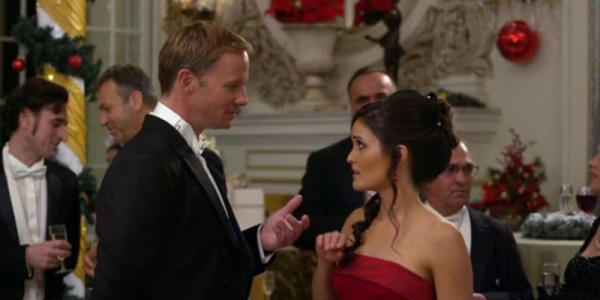
The formal Christmas event brings together nearly every source of pressure in the story. Allie must appear inside a world that has already decided what kind of person belongs beside a king. Clothing, introductions, dancing, public observation, and relationship expectations all become part of the challenge. From a gamer’s perspective, the ball is a dialogue-heavy boss level where reputation matters more than physical ability.
Allie cannot solve the encounter by being the most sincere person in the room. She must navigate ceremony while remaining recognizably herself. The visual transformation associated with the ball is enjoyable, but I was more interested in how uncomfortable the attention made her. Becoming visually compatible with royal society does not mean she feels secure inside it.
The Dress Did Not Create Allie’s Value
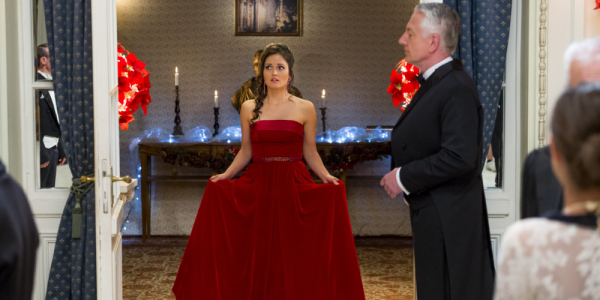
Royal romances often include a moment when the ordinary heroine appears in formal clothing and everyone finally recognizes her beauty. Crown for Christmas uses that familiar image, but Allie has already changed the household before the transformation.
Theodora trusts her because of time and attention. Maximillian respects her because she challenged him and helped his daughter. The staff members who support her have already seen her character. The dress changes how the room perceives Allie, not what she has earned. I appreciated that distinction because it keeps the romance from suggesting that she becomes worthy only after matching royal aesthetics.
Dancing Created Intimacy Under Public Observation
A royal dance is both private and public. Maximillian and Allie can communicate through proximity and movement, yet everyone in the room is watching. This makes the scene emotionally tense. Their growing connection can no longer remain entirely hidden inside family activities. Maximillian must choose how much affection to reveal while standing inside the environment most invested in his expected future. I liked that the dance functions as a temporary possibility rather than an immediate resolution. It shows how naturally they fit before social pressure separates them again.
Allie’s Position Was Always Vulnerable
Allie may become emotionally important to the king and princess, but she remains an employee without long-term security. One decision from the household can remove her from the castle.
This imbalance matters because Maximillian can explore the relationship while remaining in his home, surrounded by staff and protected by status. Allie risks losing her job, income, connection with Theodora, and place in the community. I found the romance more convincing when the film acknowledged that emotional closeness did not erase institutional power.
The Misunderstanding Was Built From Real Fear
The film eventually uses separation and incomplete communication, as holiday romances often do. What prevents the conflict from feeling entirely artificial is that Allie has strong reasons to believe she does not belong in Maximillian’s future. She sees royal expectations, the approved marriage, and the social gap between their lives. Waiting for the king to make a decision could leave her humiliated and unemployed.
Maximillian, meanwhile, has spent years placing duty before personal desire. Silence feels safer than making a choice that may destabilize the life he manages. The misunderstanding works because both characters act according to established fears, even when one honest conversation could resolve much of the situation.
Theodora Became the Emotional Cost of Separation
If the romance involved only Allie and Maximillian, leaving the castle would still be painful. Theodora makes the decision much harder. Allie has become a trusted adult in the princess’s life. Their bond exists independently of the romance. This means a failed relationship between the adults risks creating another loss for a child already shaped by grief. I appreciated that the film gives this consequence emotional weight. Allie cannot simply disappear without affecting someone who never controlled the romantic situation.
Maximillian Needed to Make a Decision as a Man, Not Only a King
The king’s final development depends on separating responsibility from emotional avoidance. He has treated personal desire as potentially selfish because leadership requires sacrifice. The film challenges the assumption that choosing an emotionally honest life automatically makes him a worse monarch. Maximillian already knows how to perform duty. His more difficult task is accepting vulnerability when no formal rule can guarantee the outcome. From my gamer’s perspective, he has completed every leadership mission except the optional personal quest that changes the ending of the entire campaign.
The Proposal Had to Cross More Than Physical Distance
The final romantic gesture works because Maximillian must leave the safety of royal procedure and speak clearly. Allie cannot remain in uncertainty while he studies the political consequences forever. The proposal is not only an expression of love. It is a public rejection of the idea that the correct royal future must be selected entirely by status.
I enjoyed the fairy-tale satisfaction of the moment, though its speed reflects the compressed logic of a television holiday romance. In real life, joining a royal family would involve far more discussion about culture, responsibility, privacy, and Theodora’s adjustment. The movie chooses emotional completion over administrative realism.
The Crown Symbolized Responsibility More Than Luxury
The title suggests wealth, status, and romantic fantasy, but the crown inside the story carries obligations. Becoming part of the royal family would not simply give Allie beautiful clothes and a castle. It would require public duties, adaptation, and continued care for people living within a system she has only started to understand.
I liked that Allie’s suitability comes from her willingness to serve without becoming emotionally distant. She values people before titles, which is precisely why the title becomes possible.
Danica McKellar Made Allie Easy to Follow
McKellar gives Allie a combination of optimism, impatience, warmth, and practical confidence. She is energetic without seeming completely unaffected by uncertainty. Her strongest scenes involve Theodora because the relationship allows her to express care without the formal romantic dialogue expected around Maximillian.
I also appreciated that Allie occasionally looks overwhelmed. A person transported from ordinary hotel work into a royal castle should not behave as though the transition is effortless. Her charm comes from adapting without pretending she already knows everything.
Rupert Penry-Jones Kept the King Restrained
Maximillian could easily have become either excessively cold or immediately romantic. Penry-Jones maintains a quieter progression. The king’s interest appears through attention, softened expressions, and willingness to remain in conversations that challenge him. This restraint suits a character trained to control public emotion. When Maximillian eventually acts more openly, the change feels significant because he has spent most of the film speaking through responsibility.
Ellie Botterill Gave Theodora Real Emotional Weight
Theodora is central to the story’s success. Without a convincing relationship between the princess and Allie, the romance would feel like an attractive fantasy built around palace scenery. Ellie Botterill gives the character enough intelligence and sadness to make her behavior feel motivated. Theodora can be playful and difficult, but the performance repeatedly shows that she is evaluating whether adults will remain. Her trust is therefore the film’s most meaningful reward.
The Castle Looked Like a Christmas Storybook
The production design embraces polished holiday fantasy. Snow, stone architecture, formal interiors, Christmas trees, candles, village stalls, and royal clothing create a world designed for seasonal escapism.
The environments do not aim for historical realism. They combine modern comfort with traditional visual cues so the castle can feel old without becoming inconvenient for the romantic plot. I enjoyed that artificial quality because it matches the film’s purpose. Crown for Christmas is not attempting to document real monarchy. It is constructing a temporary storybook kingdom where emotional warmth can repair a formal household.
Winshire Was More Atmosphere Than Geography
The fictional kingdom is defined through the castle, village, traditions, and royal family rather than detailed politics or history. I never received a complete sense of its economy, governmental structure, or relationship with neighboring countries. That limitation did not damage the romance, but it made the setting feel like a contained holiday map rather than a fully developed nation. The film needs Winshire to provide royal expectations, winter beauty, and social contrast. It performs those functions effectively.
The Movie’s Familiarity Was Part of the Appeal
Crown for Christmas follows a route experienced holiday-romance viewers will recognize quickly. An ordinary heroine loses her job, accepts an unusual position, bonds with a child, challenges a reserved royal figure, appears at a formal event, encounters an approved romantic rival, leaves after a misunderstanding, and receives a final declaration.
I could predict many of these checkpoints. Prediction did not make the experience useless. The pleasure came from seeing how the cast moved through the familiar route and whether the relationships created enough warmth to justify the ending.
The Romance Developed Faster Than the Family Bond
Allie’s relationship with Theodora receives several practical scenes of interaction, correction, and trust. The romance with Maximillian has less time to develop privately because royal obligations and the Christmas schedule keep interrupting them. I believed their attraction and mutual respect, though the final commitment arrives faster than the emotional groundwork might support outside fairy-tale logic.
The family dynamic helps bridge that gap. Maximillian is not attracted to Allie only because she is different from royal women. He sees how she changes his daughter’s life and his own relationship with Theodora.
Lady Celia Needed Slightly More Complexity
Lady Celia largely represents the socially approved obstacle to Allie’s future. Giving her stronger emotional motivation could have made the conflict more interesting. She might genuinely care for Maximillian, feel pressured by her own family, or understand royal duty differently from Allie.
Instead, the film often uses her presence as visual evidence that Allie does not belong. The story remains functional, but a more complex Lady Celia would strengthen Maximillian’s choice. He would be selecting between two credible futures rather than rejecting an obviously colder route.
The Staff Could Have Received More Personal Stories
Several supporting characters help Allie adjust and influence the atmosphere of the castle, but most remain connected primarily to their functions. I would have liked one or two additional scenes showing how the royal household’s emotional distance affected the staff. Allie’s changes would then feel like a broader transformation of the castle rather than a private shift involving only the king and princess. Even so, the staff provides necessary warmth and helps the environment feel inhabited.
The Film Never Became Too Cynical for Its Premise
A realistic exploration of monarchy would introduce intense concerns about class, public scrutiny, political legitimacy, and the power imbalance between a king and an employee. Crown for Christmas touches those issues lightly but never allows them to overwhelm the fairy tale. I accepted this because the film clearly aims for hopeful escapism. Its world is built around emotional sincerity being capable of crossing institutional boundaries. The story is more interested in whether Maximillian can become present for his daughter than in how Parliament might respond to his engagement.
The Christmas Message Was About Reopening the Household
The castle does not need additional decorations. It needs emotional participation. Allie’s influence encourages Theodora to trust, Maximillian to reconnect, and the household to treat Christmas as something experienced rather than scheduled. This gives the holiday setting a real function. Christmas becomes the moment when routines are interrupted long enough for people to notice what grief has removed from their lives.
Allie’s Greatest Skill Was Seeing the Person Behind the Position
She sees Theodora as a grieving child rather than a difficult princess. She sees Maximillian as a widower and father rather than only a king. She also expects them to see her as more than an employee or unsuitable outsider. This mutual recognition creates the film’s central emotional argument. Titles can organize relationships, but they cannot replace them. From my perspective, Allie repeatedly activates hidden character quests because she speaks to people everyone else treats as fixed roles.
Theodora Was the Real Heir to the Film’s Change
The romance gives Allie a place in Winshire, but Theodora receives the most important emotional future. She regains a stable adult connection and sees her father choose engagement over distance. The castle can become a home again rather than only the location where she is raised. I liked that Allie does not replace the princess’s mother. The film cannot erase that loss. She offers a new relationship with its own identity.
Why I Accepted the Fairy-Tale Ending
The proposal is fast, the royal adjustment is simplified, and several practical complications remain outside the frame. Yet the ending works within the emotional logic the film establishes.
Allie does not earn the crown by mastering etiquette or defeating a rival. She earns trust by caring for Theodora, challenging Maximillian honestly, and bringing warmth into a household organized around avoiding pain. The king does not choose her only because she makes Christmas more exciting. He chooses a future where duty no longer requires emotional isolation.
My Final Evening in Winshire
Crown for Christmas delivered exactly the kind of seasonal fantasy its title promised: a snowy castle, an ordinary heroine, a widowed king, a guarded princess, royal expectations, and a romance capable of changing the line of succession.
It is not an unpredictable film. I could see the major route early, including the developing family bond, formal dance, romantic obstacle, separation, and royal declaration.
What kept me involved was the warmth created between Allie and Theodora. Their relationship gives the story a stronger foundation than attraction alone could provide.
From my perspective as a gamer, Allie begins the film after losing her starting job and accepting what appears to be a temporary side quest. She enters Winshire without the etiquette skill, royal reputation, or equipment needed for the environment.
She progresses because she possesses something the castle cannot teach: the ability to question whether people are being cared for or merely managed.
Theodora responds because Allie offers attention without treating affection as another formal duty. Maximillian changes because he sees that leadership and emotional openness do not have to cancel each other.
The film simplifies monarchy and compresses romance into a holiday timetable, but it understands the appeal of its fantasy. The crown is not presented only as a prize given to the heroine. It represents entry into a family that needs her influence as much as she needs a new future.
Allie arrives in Winshire expecting employment. She leaves the old version of the castle behind by helping its residents become less royal with one another and more human.
By Christmas morning, the palace has not lost its ceremonies, traditions, or titles. It has simply gained enough warmth for those things to feel like parts of a home rather than barriers between the people living there.
Pros:
- Heartwarming narrative that explores themes of love, self-discovery, and renewal
- Visually stunning winter landscapes that evoke the magic of the holiday season
- Nuanced performances with authentic chemistry among the cast
- Well-crafted balance of humor and reflective dialogue
- High-quality technical execution including editing and sound design
- Multiple viewing options available across various streaming and download platforms
Cons:
- The episodic narrative structure may feel fragmented to some viewers
- Subdued humor might not appeal to those expecting more conventional holiday comedy
- The focus on introspection and subtle sentimentality may not meet the expectations of viewers seeking high-energy entertainment









Movie Reviews

Minecraft

Grand Theft Auto V

Toca Boca World

Roblox

Leave a comment
Your comment is awaiting moderation. We save your draft here
0 Comments