Review
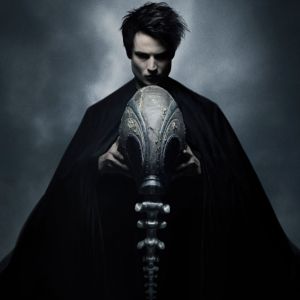
The Sandman felt like entering a fantasy game after its main kingdom had already fallen. Dream is not introduced at the height of his p...

Dreamweaving Realities: A Cinematic Journey through The Sandman
The Sandman felt like entering a fantasy game after its main kingdom had already fallen. Dream is not introduced at the height of his power, calmly ruling the realm people visit while sleeping. He begins as a prisoner, stripped of his tools and separated from his responsibilities for more than a century. When he finally escapes, the victory does not restore anything automatically. His kingdom is damaged, many subjects have disappeared, and the waking world has spent generations suffering the consequences of his absence.
That opening gave the series an unusual emotional direction. Dream is one of the Endless, an ancient being who controls forces beyond ordinary human understanding, yet his first meaningful objective is restoration. He must locate missing equipment, recover authority, rebuild damaged places, and determine whether the ruler returning to the throne is capable of changing with his kingdom.
From my perspective as a gamer, The Sandman resembles a story campaign built around an overpowered character whose greatest limitations cannot be improved through combat statistics. Dream has immense supernatural ability, access to countless worlds, and command over dreams themselves. His real weaknesses are pride, emotional distance, and an attachment to rules he often interprets more rigidly than anyone around him.
Dream Journal Entry: The King Returned Too Late
The Dreaming should be the safest possible location for Morpheus. It is his home, his domain, and an environment shaped partly by his will. Instead, his return reveals an abandoned hub area.
The palace is damaged, the landscape has lost stability, and only a limited number of loyal figures remain. Lucienne has preserved what she could, but even her competence cannot replace the presence of the realm’s ruler.
I liked that Dream’s absence had consequences beyond his personal suffering. He was imprisoned unjustly, yet the series does not pretend that being a victim removes his responsibilities once he becomes free.
Dream initially behaves as though reclaiming his symbols of office will be enough. He expects the old systems to reactivate once the rightful ruler returns. Lucienne understands that the realm needs more than authority. It needs attention, trust, and reconstruction.
The damaged Dreaming therefore becomes a visual representation of Dream’s emotional state. It remains beautiful, powerful, and capable of recovery, but large parts of it have been neglected for too long.
Inventory Recovery: The Sand, Helm, and Ruby
The first season gives Dream a clear sequence of objectives by separating him from the tools that support his power. His pouch of sand, ceremonial helm, and ruby have passed into the hands of other beings during his imprisonment.
This structure gave the early episodes the feeling of a dark fantasy quest line. Each item exists in a different environment and requires a different kind of confrontation.
The sand connects Dream to human addiction, memory, and desire. The helm leads him into Hell, where authority is measured through ceremony, ancient rules, and verbal challenges. The ruby has been altered by John Dee, turning an object designed to focus Dream’s power into something dangerously independent of him.
I appreciated that recovering each item revealed more than its mechanical purpose. The tools carry history, and the people who possess them have already been changed by that history.
Dream cannot simply select the objects from a menu after defeating an enemy. He must confront what happened while he was absent.
Tom Sturridge Made Stillness Feel Powerful
Dream rarely behaves like a traditional action protagonist. He does not fill every scene with movement or explain his feelings openly. Tom Sturridge often communicates through posture, controlled speech, and an expression that suggests Dream is evaluating events according to rules nobody else can see.
This restraint suited the character. Dream is ancient enough that ordinary urgency does not always affect him in the expected way. He can wait, observe, and speak with the confidence of someone who remembers civilizations that no longer exist.
The danger is that such distance can make a protagonist emotionally inaccessible. Sturridge avoids that problem by allowing small changes to matter. A pause before answering, a lowered gaze, or a shift in tone can reveal more than a dramatic speech.
I noticed how differently Dream behaves depending on the person in front of him. With enemies, he becomes formal and threatening. With Lucienne, his authority is mixed with defensiveness. Around Death, he becomes more recognizably vulnerable. With Hob Gadling, centuries of emotional avoidance appear inside conversations that occur only once every hundred years.
Lucienne Was the Person Actually Running the Realm
Lucienne is introduced as Dream’s librarian, but that title does not capture the scale of her work during his absence. She preserves knowledge, protects remaining residents, and holds the damaged Dreaming together without knowing whether its ruler will ever return.
Vivienne Acheampong gives Lucienne warmth without reducing her authority. She respects Dream, but she is not afraid to challenge decisions that endanger the realm.
From my gamer’s perspective, Lucienne is the administrator who kept the server active while its owner disappeared. When Dream returns, he expects full control because the realm belongs to him. Lucienne knows that ownership and responsible management are not the same thing.
Their disagreements became some of my favorite parts of the series. Dream often interprets advice as doubt about his authority. Lucienne offers it because she has spent more than a century dealing with the consequences of his absence.
Her loyalty is active rather than obedient. She wants the Dreaming to survive, even when protecting it requires telling its king that he is wrong.
Matthew the Raven Became the New Player’s Guide
Matthew enters the Dreaming without fully understanding what has happened to him. He once lived as a human, and becoming Dream’s raven places him inside a supernatural hierarchy filled with rules nobody has explained clearly.
This makes him useful for the audience. Matthew asks questions that ancient beings consider obvious and reacts to danger with a recognizably human sense of fear.
Patton Oswalt’s performance gives him enough humor to lighten Dream’s severe atmosphere without turning every scene into comedy.
Matthew also offers the kind of loyalty Dream does not know how to request. He stays nearby, comments on bad plans, and occasionally refuses to accept that Dream should face everything alone.
In a game party, Matthew would be the companion whose combat value appears limited but whose dialogue prevents the protagonist from becoming emotionally silent for an entire campaign.
The Corinthian Was a Nightmare Who Refused His Assigned Role
The Corinthian is one of Dream’s creations, designed as a nightmare who exposes darkness within human minds. During Dream’s imprisonment, he escapes into the waking world and develops a life based on appetite, influence, and violence.
Boyd Holbrook gives him an easy confidence that makes the character dangerous before he reveals anything supernatural. He can enter ordinary social spaces, speak politely, and present himself as someone worth trusting.
His glasses become part of that controlled identity. They conceal the feature that would expose him immediately while allowing him to move through human society with minimal resistance.
I found the Corinthian compelling because he does not view himself as a malfunctioning creation. He believes Dream limited him unfairly. Freedom, from his perspective, means defining his own purpose rather than serving as one element inside another being’s design.
This creates a conflict larger than simple obedience. Dream must confront the fact that he creates conscious beings and still expects them to remain functions.
The Convention Turned Admiration Into Horror
The gathering attended by the Corinthian is one of the series’ darkest ideas because it presents terrible people using professional language, social rituals, and community identity to normalize their actions.
The event resembles an ordinary convention. Participants use aliases, attend discussions, share experiences, and admire respected figures. The structure is familiar enough to make the subject more disturbing.
The Corinthian becomes an inspirational figure because he has achieved a level of control and reputation others want to imitate.
Dream’s intervention works not only as punishment but as revelation. He removes the stories the attendees use to protect themselves from understanding what they are.
From my perspective, the sequence behaves like an area where every enemy has equipped a glamour effect. Dream does not defeat them through a larger display of force. He disables the effect and forces them to see their own character statistics clearly.
Johanna Constantine Brought Practical Frustration Into the Occult
Johanna Constantine operates between ordinary human problems and supernatural threats. She is knowledgeable, capable, sarcastic, and visibly tired of discovering that every job contains a complication the client failed to mention.
Jenna Coleman gives Johanna enough confidence to stand beside Dream without appearing overwhelmed by his identity. She understands that powerful supernatural beings still need services from people willing to enter dangerous locations.
The search for Dream’s sand exposes the personal cost of her work. Magical objects do not remain neutral when they enter human relationships. They create dependency, obsession, and damage that cannot always be reversed cleanly.
I liked that Johanna’s competence did not make her invulnerable. She can identify demons and negotiate with dangerous forces while remaining affected by guilt and attachment.
Hell Looked Like a Political Realm, Not a Combat Arena
Dream’s journey into Hell could have become a straightforward battle through demons. Instead, the series presents the realm as a court governed by hierarchy, tradition, and public displays of authority.
Gwendoline Christie’s Lucifer possesses calm power. She does not need to behave wildly because everyone around her already understands the consequences of disobedience.
The confrontation over Dream’s helm becomes a contest of concepts rather than weapons. Each response must overcome the previous one by representing something capable of surviving or defeating it.
I enjoyed this sequence because it treats imagination itself as a combat system. Power comes from choosing an idea the opponent cannot contain.
Dream wins through hope, but the victory carries political consequences. Lucifer does not forget being challenged publicly, and Dream’s success creates another future conflict.
John Dee Wanted a World Without Lies
John Dee is frightening because his stated objective sounds almost reasonable. He believes human suffering is created by dishonesty, so he uses the ruby to remove people’s ability to hide their desires and resentments.
David Thewlis plays him with a fragile intensity. John can appear calm, polite, and genuinely curious about people. His certainty becomes more dangerous because he believes he is improving the world.
The diner episode demonstrates the flaw in his plan with brutal clarity. Lies can cause damage, but they can also represent privacy, restraint, imagination, kindness, and the time needed to understand an emotion before acting on it.
John removes every social filter and treats the resulting chaos as proof that people were always corrupt.
From my perspective, he activates a server-wide command that disables all dialogue moderation and then assumes the immediate result reveals everyone’s most authentic self.
The Diner Episode Felt Like a Closed-System Experiment
The diner provides a limited cast, enclosed location, and steadily increasing supernatural influence. John observes the people inside as though testing a theory.
At first, their conversations reveal ordinary frustrations. Relationships contain disappointment, secret attraction, professional ambition, and insecurity.
As the ruby’s effect increases, nuance disappears. Thoughts become commands, impulses become actions, and people lose the distance required to choose how they respond.
The episode is difficult to watch because the characters are not established heroes or villains. They are ordinary people whose hidden conflicts are forced into the open without compassion.
John calls this honesty. The series presents it as control.
Dream Won by Refusing the Expected Power Struggle
John believes that possessing the ruby gives him control over Dream’s power. His confidence depends on the assumption that Dream will protect the object.
Instead, John destroys it and unknowingly releases the power back to its original owner.
I appreciated this resolution because Dream wins through understanding the object more completely than the person using it. John treats the ruby as the source. Dream knows it was always an extension.
The confrontation also shows restraint. Dream has reasons to punish John severely, but he recognizes how much of the situation began with manipulation, isolation, and damage created by other people.
Mercy becomes evidence that Dream may be capable of becoming a different ruler.
Death Was Warmer Than the Lord of Dreams
Death’s introduction changes the emotional temperature of the series immediately. Kirby Howell-Baptiste presents her as direct, compassionate, humorous, and completely comfortable with her responsibility.
She performs a role most people fear, yet she approaches individuals with patience. She does not treat mortality as a reason to distance herself from human life.
Dream, whose realm depends on human imagination, often appears less connected to humanity than his sister.
Their walk through the waking world becomes an emotional tutorial. Death does not lecture Dream about becoming kinder. She lets him observe how she meets people at the end of their lives.
From my gamer’s perspective, Death is the veteran player who understands that extraordinary power does not reduce the importance of each individual interaction.
The Baby Scene Defined Death’s Character
One of Death’s early encounters involves a life that has barely begun. The scene is quiet, brief, and emotionally devastating.
Death does not alter the rule or pretend the moment is fair. She remains present.
This showed me the difference between her and Dream. Dream often relies on responsibility as a reason to suppress emotion. Death accepts responsibility while allowing compassion to remain visible.
She has performed her role countless times, but familiarity has not made every person interchangeable.
Hob Gadling Turned Immortality Into a Recurring Appointment
Hob Gadling’s story begins when he declares that dying is a habit people accept without sufficient resistance. Dream and Death decide to let him continue living, and Dream meets him in the same location once every century.
The structure allows the series to move through history while preserving one relationship. Clothing, language, wealth, politics, technology, and social position change around Hob, but the scheduled meeting remains.
I loved these scenes because immortality is explored through ordinary human adaptability. Hob experiences success, poverty, grief, moral failure, curiosity, and cultural transformation without becoming completely detached from life.
Dream claims the meetings are an experiment. Hob recognizes that they have become friendship.
The emotional turning point occurs when Dream reacts defensively to that interpretation. Admitting friendship would require acknowledging that he returns because he wants connection rather than information.
One Hundred Years Was Dream’s Version of a Delayed Reply
Dream’s relationship with Hob demonstrates how differently an immortal being can experience time. Walking away from one meeting may feel like a temporary reaction to Dream. For Hob, the next opportunity to repair the relationship requires a century.
This makes Dream’s pride especially costly. His emotional distance is not measured only in uncomfortable days or weeks. Other people can spend entire lives waiting for him to reconsider.
When Dream finally returns and acknowledges the friendship, the moment works because Hob kept the possibility open without pretending the absence caused no pain.
Rose Walker Entered With an Ability She Did Not Request
Rose begins as a young woman searching for her missing brother and becomes connected to a cosmic conflict involving dreams, family history, and unstable boundaries between realms.
Her identity as a dream vortex gives her extraordinary importance, but not the training needed to control it.
I saw her as a character who discovers that she is carrying a world-level mechanic while still trying to complete a deeply personal objective.
Rose’s power brings people together inside dreams, but it can also weaken the structure separating individual minds. What feels like connection can become destruction when the boundaries disappear completely.
Her story challenges Dream because his rules define her as a threat before he fully understands her as a person.
The Bed-and-Breakfast Party Felt Like a Found-Family Campaign
Rose’s temporary home is populated by people with distinct identities, habits, and emotional needs. Their relationships create warmth inside a season filled with predatory threats and cosmic danger.
Hal, Barbie, Ken, Chantal, Zelda, and the other residents make the waking world feel textured beyond Dream’s central conflict.
I appreciated these characters because they give Rose something worth protecting that is not connected only to blood relations. Community forms through shared space and mutual attention.
The house also becomes vulnerable because the walls between dreams are weakening. Private fears and desires begin crossing boundaries that normally keep each person’s inner world separate.
Gault Questioned the Purpose of Nightmares
Gault is another creation who leaves the Dreaming, but her rebellion differs from the Corinthian’s. She does not escape because she wants unlimited freedom to harm people. She wants to become a dream capable of helping them.
Dream initially treats this desire as disobedience. He created Gault for one purpose and believes changing that purpose would threaten the order of his realm.
I found their conflict essential because it exposes the rigidity behind Dream’s creativity. He can design entire beings from imagination, yet he struggles when those beings develop imaginations of their own.
Gault’s eventual transformation demonstrates that the Dreaming becomes stronger when its residents are allowed to grow.
Lyta’s Dream Became Too Real
Lyta Hall’s grief gives the series another way to explore the emotional attraction of dreams. Inside sleep, she can continue interacting with her late husband. The dream offers comfort that waking life cannot provide.
As the barrier between realms weakens, that comfort begins creating physical consequences.
I found Lyta’s story unsettling because the dream is not presented as a simple trap. Her desire to remain there is understandable. The alternative requires accepting a loss she does not feel ready to survive.
Dream responds according to rules rather than empathy, creating a conflict whose consequences extend far beyond the first season.
He views the situation as an unstable violation of his realm. Lyta experiences it as another attempt to take away her family.
Desire Played the Longest Game in the Family
Desire is one of the most dangerous characters because direct confrontation is rarely necessary. Mason Alexander Park gives them charm, theatrical confidence, and the pleasure of someone who already knows which emotion will move another person.
Desire understands that Dream’s pride can be used against him. Rather than attack his kingdom openly, they create conditions where his own rules may force him toward destruction.
The rivalry between the siblings feels ancient and intensely personal. Their conflicts are not only disagreements about responsibility. They are attempts to prove which Endless understands living beings more completely.
Dream believes desire creates disorder. Desire recognizes how often Dream’s decisions are motivated by wants he refuses to name.
The Endless Family Meeting Was More Dangerous Than a Battlefield
The second season expands the family dynamic by bringing Dream together with Destiny, Death, Desire, Despair, and Delirium.
The meeting is formal, but every exchange carries history. Each sibling embodies a universal force while also behaving like a member of a family that has preserved resentment across ages.
I enjoyed the contrast between cosmic identity and familiar dysfunction. An Endless may control a concept affecting every living being and still become defensive when an older sibling mentions a past mistake.
Destiny treats events as part of an already written pattern. Death tries to maintain emotional balance. Desire provokes. Despair watches pain closely, while Delirium moves through conversation according to associations others cannot follow.
Dream wants to appear controlled. His siblings understand him too well for the performance to work completely.
Destiny’s Book Made Free Choice Feel Complicated
Destiny carries a book containing everything that has happened and will happen. His relationship with it creates a strange form of authority. He knows the path, yet he still walks it.
From a gamer’s perspective, Destiny has access to the complete strategy guide but cannot necessarily alter the campaign it describes.
His presence raises questions about responsibility. If an event is already recorded, does choosing it still matter? The series never reduces this into an easy answer.
Dream’s tragedy depends partly on the fact that he repeatedly encounters warnings and still makes decisions according to his established nature.
Delirium Made Chaos Feel Emotionally Precise
Delirium speaks through changing images, interrupted ideas, and associations that other characters may initially dismiss as meaningless.
Her perception is unstable, but not empty. She notices emotional truths that more orderly minds avoid.
I liked how the visual world sometimes adjusts around her. Color, objects, and language respond to a consciousness that does not experience reality through a fixed sequence.
Her search for the missing Destruction gives the second season a more personal quest. She wants her brother back, while Dream initially treats the journey as an opportunity to repair another relationship.
Their different motives create tension. Delirium needs companionship and honesty. Dream carries a private objective he does not reveal clearly.
Destruction Refused the Role Assigned to Him
Destruction is important even during his absence because he represents the possibility that an Endless can abandon a responsibility.
He has not ceased to exist as a concept. Destruction continues without its formal ruler.
That fact challenges Dream’s belief that duty requires permanent submission to one identity. Dream treats his role as inseparable from himself. Destruction demonstrates that leaving is possible, although departure creates consequences for everyone left behind.
The search therefore becomes more than locating a missing family member. It becomes a confrontation with an alternative Dream finds difficult to accept.
Orpheus Turned Dream’s Rules Into Personal Tragedy
The story of Orpheus reveals the most painful consequences of Dream’s emotional rigidity. Their relationship combines parental love, disapproval, grief, pride, and a refusal to forgive at the moment forgiveness might have changed everything.
Dream often speaks of rules as though they exist outside him. The Orpheus story shows how frequently he chooses the strictest interpretation because it protects him from vulnerability.
I found these scenes among the most important in the series because they explain why Dream’s past is not a collection of distant mythological events. His decisions remain alive inside people who have waited centuries for resolution.
When Dream finally accepts what Orpheus asks of him, the act carries emotional compassion and cosmic consequence at the same time.
A Blood Crime Activated the Final Quest Line
Dream’s action concerning Orpheus attracts the attention of the Furies, who exist to avenge family blood crimes.
Their judgment does not depend on Dream’s emotional reasoning. A rule has been violated, and they respond according to their nature.
This mirrors the way Dream has judged others throughout the series. He has often enforced laws without allowing personal context to change the outcome.
Now he faces beings who apply the same kind of inflexible authority to him.
From my perspective, Dream activates a hidden consequence attached to a decision he knows cannot be undone. The final campaign is not caused by a random enemy. It emerges from the accumulated logic of his own world.
Lyta Became the Door the Furies Needed
Lyta’s grief, anger, and history with Dream make her vulnerable to manipulation by the Furies. Her pain is real, even when other forces direct it toward a larger purpose.
I appreciated that the series does not require Lyta to become a simple antagonist. She believes Dream threatens everything she loves because her earlier experiences support that belief.
Dream’s failure to communicate compassionately has created emotional evidence against him.
The Furies do not invent her anger. They give it direction.
The Dreaming Became a Siege Map
When the final conflict reaches Dream’s realm, the Dreaming changes from a damaged kingdom under reconstruction into a home facing systematic destruction.
Residents who once existed mainly as supporting figures become people with their own reasons to remain loyal, flee, argue, or protect one another.
Lucienne’s leadership becomes especially important. Dream may possess the greatest power, but the realm’s survival depends on relationships he did not build alone.
The siege feels personal because I had already spent time inside these locations. The palace, library, gardens, gates, and homes are not abstract fantasy environments. They represent the work performed since Dream’s return.
Dream’s Greatest Enemy Was His Definition of Himself
Across both seasons, Dream encounters repeated evidence that change is possible. Nightmares can become dreams. Humans can survive centuries and remain curious. Endless beings can abandon roles. Old enemies can accept new relationships.
Dream changes in small ways, but he continues believing that certain boundaries define what he must be.
This is the tragedy at the center of the series. He is not incapable of growth. He grows enough to understand the damage he caused but not always enough to imagine a life beyond the identity responsible for it.
His sense of duty contains genuine nobility. It also becomes a structure through which he limits every possible future.
Dream’s Final Choice Was Not a Simple Defeat
The ending of Dream’s story is difficult because it contains surrender, responsibility, transformation, and exhaustion at the same time.
He does not merely lose a battle. He recognizes that preserving the Dreaming may require an outcome his pride would once have considered impossible.
I did not interpret the choice as proof that he failed to change. His final actions demonstrate more compassion and responsibility than the ruler introduced at the beginning.
The tragedy is that his transformation arrives through an ending rather than a continued reign.
Daniel Represented Continuity Without Repetition
The arrival of a new Dream shows that the office and the individual are connected but not identical.
The Dreaming requires a ruler, yet that ruler does not need to reproduce every habit, resentment, and limitation of Morpheus.
This idea changes the meaning of the entire series. Dream frequently behaved as though altering himself would threaten the structure of reality. The transition demonstrates that reality can preserve the function while allowing the person occupying it to change.
From my gamer’s perspective, the role continues through a new character build. The abilities remain connected to the same domain, but the personality, relationships, and possible choices are not predetermined completely.
The Funeral Allowed Every Realm to Respond
The gathering after Dream’s departure brings together gods, humans, nightmares, family members, former allies, and beings from worlds that rarely share the same space.
The variety of guests reveals the scale of Dream’s influence more effectively than another display of supernatural power could.
Some remember him with love, others with anger, and many with a mixture of both. The ceremony does not simplify his life into one moral interpretation.
I found this appropriate. Dream has helped people, abandoned them, inspired them, frightened them, and changed them. No single speech can contain every version of him.
The Bonus Story Gave Death Her Own Day
The final bonus episode shifts attention from Dream’s cosmic tragedy to Death’s practice of becoming mortal for one day every century.
This experience prevents her from becoming detached from the lives she collects. She accepts hunger, uncertainty, physical limitation, and the knowledge that one ordinary day can matter intensely.
The story reinforces why Death has always seemed more emotionally grounded than Dream. She does not only observe humanity from an immortal distance. She deliberately enters its vulnerability.
Her connection with Sexton gives the episode a smaller scale, but the emotional stakes remain significant. A person who sees little value in continuing life spends time with someone who understands its ending better than anyone.
Death does not offer a simplistic argument that every problem will disappear. She demonstrates that a life can contain uncertainty and still produce moments worth experiencing.
The Series Looked Best When Reality Became Slightly Wrong
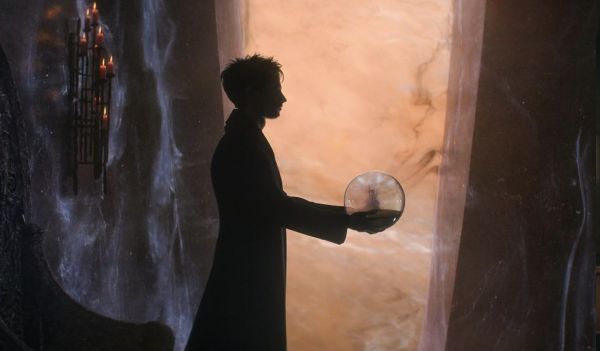
The Sandman contains castles, demons, gods, historical settings, supernatural creatures, and enormous fantasy environments. I admired that scale, but some of my favorite visuals were quieter.
A familiar street becomes empty at the wrong moment. A doorway leads somewhere impossible. A person’s eyes reveal that the figure speaking is not entirely human. A room feels too large for the building containing it.
These subtle distortions capture the logic of dreams more effectively than visual spectacle alone.
Dreams often feel convincing while I am inside them because only one element is wrong at a time. The series recreates that sensation by allowing ordinary environments to remain recognizable until their rules shift.
The Historical Episodes Expanded Dream Without Excusing Him
Stories set in ancient Greece, Elizabethan England, revolutionary France, and other historical periods reveal how Dream’s relationships extend across human history.
These episodes provide visual variety, but their real value comes from showing that Dream’s emotional patterns are not recent.
He has carried pride, responsibility, curiosity, and loneliness through many eras. Time alone has not corrected them.
I appreciated that immortality is not treated as automatic wisdom. An ancient being can repeat the same defensive response for centuries because experience only teaches someone who is willing to reinterpret it.
Shakespeare’s Bargain Turned Art Into a Contract
Dream’s relationship with William Shakespeare explores the cost of artistic ambition. Shakespeare receives extraordinary creative ability, but the gift is connected to an agreement whose full consequences extend beyond personal success.
The stories produced through that arrangement influence humanity and the supernatural world, yet Dream often evaluates the contract according to fulfillment rather than emotional cost.
This fits his larger character. He respects promises deeply, sometimes more deeply than the people bound by them.
From my perspective, Dream treats contracts like permanent quest conditions. Once accepted, they remain active even when the person who accepted them changes.
The Sound Design Made Power Feel Quiet
The Sandman does not always announce magic through loud effects. Voices, wind, distant movement, whispers, and changes in environmental sound often communicate that a powerful being has entered.
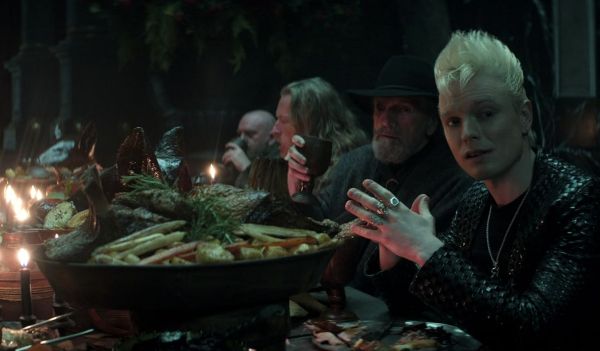
Dream’s speech carries unusual weight, while Lucifer’s calm delivery makes Hell feel controlled rather than chaotic. The Corinthian’s scenes use ordinary sound to support his ability to move through human environments unnoticed.
I found the quieter approach more effective than constant spectacle. Ancient power should not need to prove itself during every conversation.
The Episodic Structure Matched the Source’s Storybook Nature
The series does not behave like one continuous adventure in which every episode ends at the next objective marker. Some chapters follow Dream directly, while others focus on humans or supernatural figures affected by his realm.
The tone can move from horror to historical fantasy, family drama, mythology, romance, or philosophical conversation.
This variety occasionally creates uneven pacing. A viewer invested in one storyline may need to pause while the series enters another century or follows a different character.
For me, the structure became part of the appeal. The Sandman is not only one person’s biography. It is a collection of stories about the influence of dreams.
Some Fantasy Exposition Felt Heavier Than the Dream
The world contains complicated family relationships, cosmic rules, political histories, magical objects, and characters whose identities may have several names.
Most of the time, the performances and environments helped me follow these ideas. There were moments when dialogue carried too much explanatory responsibility.
The series worked better when it allowed me to infer a relationship through behavior rather than describing every part of its mythology immediately.
Dream’s world is strongest when it feels older and larger than the information available to me.
The Human Stories Gave Cosmic Events Their Scale
Dream and his siblings operate across ages, but the series repeatedly returns to individuals whose lives may last only a few decades.
This contrast prevents immortality from making human experience look insignificant. A single dream can alter one relationship, one decision, or one person’s ability to continue living.
Death understands this instinctively. Dream has to learn it through repeated contact with people he initially considers temporary.
The show’s emotional success depends on these smaller stories. Without them, the Endless would become impressive concepts moving through decorative worlds.
Why The Sandman Stayed in My Mind
I kept watching The Sandman because its central character possesses almost unlimited imaginative power while struggling with the most ordinary emotional challenge: admitting that he needs other people.
Dream can enter sleeping minds, create living beings, negotiate with gods, travel across realms, and reshape his kingdom. He cannot easily apologize, forgive, release an old grievance, or accept that responsibility may require changing the rules he once created.
From my perspective as a gamer, the series begins as a restoration campaign. Dream escapes imprisonment, recovers legendary equipment, returns to his damaged base, and defeats threats created during his absence.
Completing those visible objectives does not finish the story. The hidden campaign concerns the ruler himself.
Lucienne challenges his authority without abandoning him. Matthew offers companionship he never requested. Death demonstrates that duty and kindness can exist together. Hob waits long enough for Dream to recognize friendship. Gault proves that a creation can outgrow its first purpose. Orpheus reveals the cost of pride preserved across centuries.
Each relationship offers Dream another possible version of himself.
The tragedy is not that he never changes. He changes slowly, painfully, and often after the damage has already become permanent. By the end, he understands more about compassion than the prisoner introduced in the first episode, but understanding does not erase every consequence created by his earlier decisions.
The Sandman remained memorable for me because it treats dreams as more than escapes from reality. Dreams preserve grief, reveal desire, create art, offer comfort, and occasionally become prisons. They can help a person imagine a different future, but they can also keep someone attached to a past that no longer exists.
Dream rules all of those possibilities while remaining trapped inside his own idea of duty.
His final journey is therefore not about whether he has enough power to save the Dreaming. It is about whether a kingdom built from change can continue being ruled by someone terrified of changing completely.
The answer is beautiful, severe, and appropriately dreamlike. The realm survives. The story continues. The dreamer does not remain the same.
Pros:
- Rich visual storytelling and immersive cinematography
- Innovative narrative blending myth with human emotion
- Stunning production design with meticulous attention to detail
- Outstanding performances enhancing deep character arcs
- Original soundtrack that amplifies the dreamlike atmosphere
- Unique integration of CGI and practical effects creating a surreal yet tangible world
Cons:
- Narrative complexity can challenge viewers expecting a straightforward plot
- The atypical storytelling structure might confuse first-time viewers
- Pacing issues in transitions between introspective moments and action sequences









Movie Reviews

Minecraft

Grand Theft Auto V

Toca Boca World

Roblox

Leave a comment
Your comment is awaiting moderation. We save your draft here
0 Comments