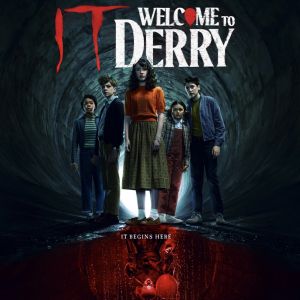
Review
IT: Welcome to Derry understands something essential about Stephen King’s fictional town: the clown is not the only monster living ther...

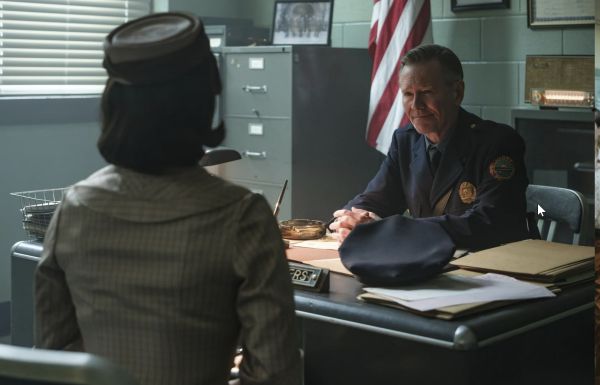
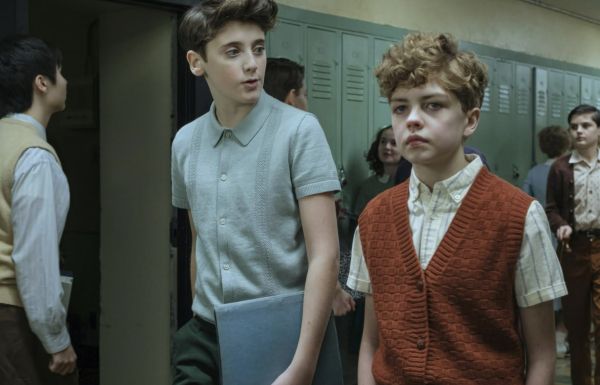
Journey into the Dark: An In-Depth Exploration of IT: Welcome to Derry
IT: Welcome to Derry understands something essential about Stephen King’s fictional town: the clown is not the only monster living there. Pennywise may be the supernatural force feeding beneath the streets, but Derry itself creates the conditions that allow him to survive. Its adults ignore missing children, its institutions protect convenient explanations, and its residents repeatedly turn cruelty into ordinary behavior.
As a critic, I found that idea more unsettling than any individual creature effect. A red balloon announces danger clearly. A smiling neighbor who decides not to ask questions is harder to identify and far more common.
The series takes place in 1962, twenty-seven years before the events surrounding the young Losers’ Club in the 2017 film. This earlier setting gives the story a different social atmosphere. America is preparing for modernity, building military power, celebrating postwar confidence, and insisting that respectable communities are orderly. Derry uses that public image to hide fear, racism, abuse, disappearance, and institutional indifference.
I did not feel that I was simply watching another group of children repeat the structure of IT. Welcome to Derry divides attention between young characters investigating disappearances and adults confronting political, military, racial, and supernatural systems. That broader perspective gives the series ambition. It also creates one of its main weaknesses: the story sometimes moves between too many forms of danger before allowing any one of them to become fully intimate.
The Opening Episode Refused to Protect Me With Familiar Rules
The premiere begins by encouraging the assumption that certain young characters will become the season’s central group. They investigate a missing friend, enter places adults would rather they avoid, and display the combination of fear and curiosity expected from a story connected with IT.
The episode then demonstrates that familiarity offers no safety.
I admired the cruelty of that decision. Modern franchise storytelling often introduces characters with the confidence that branding will protect them long enough to complete a recognizable arc. Welcome to Derry uses my knowledge of the earlier films against me.
The movie-theater sequence establishes the show’s willingness to push body horror, childhood terror, and surreal imagery beyond ordinary television restraint. It is loud, excessive, and designed to leave no uncertainty about the seriousness of the threat.
At the same time, the shock creates a structural problem. After presenting such an aggressive opening statement, later episodes must keep finding new ways to surprise me. Not every scare can carry the same force, and the series occasionally substitutes increased visual extremity for deeper tension.
I was frightened most effectively when the show slowed down. A sound emerging from a drain, an empty corridor, an adult choosing not to believe a child, or a figure standing where nobody should be produced more lasting discomfort than several elaborate attacks.
Lilly Bainbridge Carries Fear Like a Public Accusation
Clara Stack’s Lilly becomes one of the season’s most important emotional centers. She has already experienced loss before the central mystery fully develops, and Derry interprets her distress through suspicion rather than compassion.
Lilly knows she has encountered something impossible. The adults around her see trauma, instability, attention-seeking, or danger. The more urgently she tries to explain herself, the easier it becomes for authority figures to describe her as unreliable.
I found this dynamic painfully convincing. Children in horror stories are often ignored because adults cannot see the supernatural evidence. Lilly faces an additional problem: the town has already created a story about who she is. Every emotional reaction becomes proof supporting that story.
Stack gives Lilly visible fragility without making her passive. She is frightened, occasionally overwhelmed, and desperate for someone to confirm that her memory is real. She also continues searching after learning that discovery may expose her to more pain.
Her strongest scenes are not always the largest horror sequences. I was more affected by the moments when she understood that telling the truth could place her in greater danger than remaining silent.
The series sometimes places too much symbolic weight on her. Lilly represents grief, social isolation, institutional control, and childhood resistance simultaneously. Stack carries that material impressively, though the screenplay occasionally explains her emotional function more directly than necessary.
Ronnie Has No Luxury of Treating the Mystery Like an Adventure
Amanda Christine’s Ronnie Grogan enters the investigation with personal stakes that distinguish her from a conventional curious child. Her father becomes connected with the town’s violence and accusations, forcing Ronnie to search for supernatural truth while navigating very real institutional danger.
She cannot separate Pennywise from the human systems surrounding him. Proving that a creature exists might help her father, but the explanation is so impossible that presenting it could make the adults dismiss her completely.
I appreciated Ronnie’s anger. Children in supernatural stories are often written as frightened but morally pure investigators. Ronnie is exhausted by injustice before she has enough language or power to confront it effectively.
Her friendship with Lilly develops through mutual need rather than instant affection. Both girls understand what it means to know something adults have decided not to hear. Christine gives Ronnie toughness without hiding fear. She can challenge another child in one scene and become visibly young again when the threat reaches her home.
The series is strongest when it allows Lilly and Ronnie to disagree. Shared danger does not automatically create identical responses. Lilly’s trauma turns inward, while Ronnie often directs pain toward action.
Will Hanlon Connects the Series to IT Without Becoming a Reference Only
Will Hanlon is the son of Leroy and Charlotte Hanlon and the future father of Mike Hanlon. That family connection matters to viewers familiar with IT, but the character works because the series gives him a life before his place in franchise history.
Blake Cameron James plays Will as thoughtful, observant, and interested in science. Moving to Derry places him inside a town where rational explanation is valuable but incomplete.
Will wants to understand systems. He examines evidence, notices patterns, and attempts to approach fear through information. Pennywise attacks precisely this confidence by creating experiences that refuse stable measurement. I liked the way Will’s perspective complements Lilly and Ronnie. Lilly understands emotional terror, Ronnie understands social threat, and Will often searches for structural explanation.
His family also makes the danger generational. I already know that Mike Hanlon will later become the member of the Losers’ Club most committed to remembering Derry’s history. Welcome to Derry suggests that this responsibility did not appear from nowhere. Memory, research, and resistance move through the Hanlon family even when the town repeatedly encourages forgetting.
Leroy Hanlon Enters Derry Already Familiar With Human Hostility
Jovan Adepo’s Major Leroy Hanlon arrives at Derry Air Force Base as an accomplished Black officer who must repeatedly prove authority to men already determined to resent him.
His military storyline initially appears separate from the children’s investigation. The connection gradually becomes clearer as the base, local history, and supernatural power begin overlapping. Adepo gives Leroy discipline without emotional emptiness. He understands when anger would be justified and when displaying that anger could be used against him.
I found his controlled reactions more powerful than open confrontation. Every respectful title withheld, every suspicious glance, and every decision to question his competence belongs to a system he recognizes immediately. Leroy’s relationship with Will is complicated by his desire to protect the family through strength and order. He wants his son to adapt, remain alert, and avoid becoming a target.
Derry makes that parental strategy nearly impossible. The threat is not located in one person or place. It exists in the base, the town, the schools, the streets, and the history everyone has agreed not to discuss. The series occasionally keeps Leroy separated from the central supernatural story for too long. His military investigation is important, but early episodes can feel as though two different series are waiting to collide.
Charlotte Hanlon Notices That Respectability Is Derry’s Favorite Disguise
Taylour Paige’s Charlotte is one of the first adults willing to identify that something is morally wrong with the town beyond individual prejudice. She arrives with experience as a teacher and civil-rights activist, giving her a language for systems that other characters treat as isolated incidents. Charlotte sees how Derry turns silence into social expectation. People may not openly defend cruelty. They simply advise patience, discourage questions, and describe public confrontation as a greater threat than the original injustice.
Paige brings direct emotional force to the role. Charlotte does not accept that survival requires permanent politeness. I was especially interested in the tension between Charlotte and Leroy. They share commitment to family but have different ideas about how to respond to danger. Leroy understands the risks attached to challenging military authority. Charlotte understands the risks of allowing authority to define what is discussable.
Their disagreements feel connected to love rather than manufactured marital conflict. Both want to protect Will, but neither possesses enough information to guarantee safety. Charlotte’s storyline also prevents the series from treating racism as atmospheric historical detail. It affects housing, policing, employment, credibility, and the ability to move through public space without being interpreted as a threat.
Pennywise Does Not Create Derry’s Hatred; He Uses It
One of the most important ideas in both Stephen King’s novel and this series is that IT does not invent every act of human violence. Derry already contains resentment, prejudice, greed, and cowardice. Pennywise encourages these impulses, amplifies fear, and benefits from the town’s willingness to forget. That distinction matters because it prevents supernatural evil from becoming an excuse for human behavior.
I never interpreted the racist violence surrounding the Black Spot as something caused entirely by a clown. The men involved possess their own ideology and make their own decisions. IT feeds on the result. Human hatred creates terror, terror creates victims, and public silence protects the cycle.
The series sometimes makes this relationship visually obvious through supernatural influence. I preferred the more ambiguous moments when I could not determine exactly where ordinary cruelty ended and Pennywise began. That uncertainty gives Derry moral weight. Blaming everything on one creature would make the town easier to forgive.
The Black Spot Is More Than Franchise History
The Black Spot comes from one of the most disturbing historical sections of King’s novel. It is a nightclub serving Black military personnel and local residents, making it both a place of celebration and a target for racist violence.
Welcome to Derry expands this history into a major dramatic foundation rather than presenting it as a brief flashback. I appreciated the attention given to the space before tragedy defines it. Music, conversation, romance, community, and temporary freedom make the Black Spot valuable as a living environment.
This is essential. Destruction means more when I understand what people built there and why the place mattered. The series also connects supernatural horror with historical terror carefully enough that Pennywise does not replace human responsibility. The violence is frightening precisely because it belongs to recognizable American history.
At times, I worried that the show was using racial trauma as part of a horror attraction. The direction approaches fire, panic, and attack with the same visual intensity used for supernatural spectacle. The strongest scenes remain centered on people rather than imagery. When the series focuses on choices, failed protection, and the cost of survival, the Black Spot becomes more than another famous location from the source material.
Dick Hallorann Expands the King Connection Without Feeling Completely Forced
Chris Chalk plays a younger Dick Hallorann, the character later associated with the Overlook Hotel and the psychic ability known as the shining. His presence establishes a direct connection between IT and The Shining, but Dick has a legitimate place in Derry’s Black Spot history from King’s novel. Chalk gives him intelligence, caution, and the weariness of someone who has spent years receiving information other people cannot perceive.
Psychic ability is not presented as a convenient superpower. It exposes Dick to memories, images, and emotional violence without guaranteeing that he can control the result. I liked how his storyline expands the supernatural language of the series. Pennywise’s influence is not limited to visible creature attacks. Memory, perception, trauma, and psychic intrusion become battlefields.
The military’s interest in Dick adds another form of exploitation. An institution sees extraordinary ability and immediately considers how it might be used strategically. Some franchise references are more distracting. Locations and names connected to the wider King universe can feel like signals asking viewers to recognize them. Dick works because his role serves the story even without recognition.
General Shaw Mistakes Containment for Understanding
James Remar’s General Shaw represents the institutional desire to transform the unknown into a usable asset. Military leadership believes that if the force beneath Derry can be located, studied, or contained, it may become strategically valuable.
This is an appropriately arrogant response. Pennywise is ancient, psychologically invasive, and capable of manipulating perception. The military approaches it as though sufficient technology and discipline can turn horror into a controlled resource. I enjoyed the way this storyline connects Cold War thinking with supernatural danger. The period is filled with fear that power belongs to whoever discovers and controls the next weapon first.
Shaw’s confidence becomes another form of denial. He accepts that something impossible may exist while refusing to accept that it operates beyond his authority. The military plot occasionally becomes too complicated relative to the emotional simplicity of children being hunted. Its value appears when the two scales meet: national power proves as vulnerable to fear as one frightened child.
Bill Skarsgård Still Makes Pennywise Feel Physically Incorrect
Bill Skarsgård returns to a role already strongly associated with his face, voice, posture, and unpredictable rhythm. The challenge is significant. Viewers know the smile, eyes, costume, balloons, and vocal changes. Familiarity naturally reduces surprise. Skarsgård responds by making Pennywise less dependent on sudden appearance. The character can remain still, observe, speak softly, or allow a smile to last longer than social expression should permit.
I continue to find his physical control impressive. His face appears to reorganize itself around appetite. Small changes in the eyes or jaw create the sense that the clown is a temporary mask being operated by something with incomplete knowledge of human behavior. The series wisely delays his full presence. IT takes multiple forms, using each victim’s fear rather than appearing only as the familiar clown.
When Pennywise finally becomes central, the return carries excitement but also a risk. The more often I see him, the more he becomes a franchise figure rather than an unknowable threat. Welcome to Derry occasionally celebrates the iconography too openly. Red balloons and smiles can function as marketing recognition rather than horror. Skarsgård remains effective enough to recover much of the danger.
The Other Forms of IT Are More Disturbing When They Feel Personal
Pennywise is only one appearance adopted by the entity. The series uses distorted bodies, familiar people, historical images, animals, voices, and impossible physical events to attack specific fears. The best transformations begin with emotional information. A creature is frightening because it connects with grief, guilt, isolation, or a memory the character cannot control. I was less affected by forms designed mainly around visual grotesqueness. The effects are technically ambitious, but complexity does not automatically create fear.
A personal voice coming from the wrong location can be more disturbing than a large creature filling the screen. The show occasionally reveals too much. Once I can study the complete design, my attention shifts toward effects construction rather than the character’s terror. Andy Muschietti’s visual instincts favor sudden movement, stretched anatomy, unnatural speed, and images that become larger as they approach. Those techniques remain effective, though they are now familiar from the two films.
The Children Do Not Feel Like Replacement Losers
The obvious danger of an IT prequel is repetition. A group of isolated children discovers supernatural evil while adults fail to help them. Welcome to Derry uses that foundation but gives its young cast different social and emotional structures. Lilly is already carrying public suspicion. Ronnie’s family becomes connected to legal injustice. Will enters through the Hanlon family and the experience of being a Black child in a hostile town. Marge worries about social belonging and the cost of separating herself from popular cruelty.
The group does not possess the immediate warmth of the Losers’ Club. Their alliances feel more unstable, which suits a story about children learning whether trust is safe. I sometimes missed the humor and relaxed friendship that made the 2017 film’s group so memorable. Welcome to Derry applies pressure early and rarely allows the children to exist without approaching danger. A few more ordinary scenes would have strengthened the later losses. Horror needs knowledge of what life looks like before fear occupies everything.
Marge Shows How Fear of Exclusion Can Become Complicity
Matilda Lawler’s Marge is especially interesting because her danger is not defined only by supernatural attack. She wants social acceptance and understands that remaining close to Lilly may damage it. This creates a recognizable moral weakness. Marge may know that cruelty is wrong while still fearing the consequences of opposing it publicly. I appreciated that the series does not make every young protagonist immediately brave. Courage becomes meaningful only because social survival encourages the opposite.
Marge’s conflict reflects Derry on a smaller scale. The town’s adults repeatedly know enough to suspect that something is wrong but choose the safety of belonging. Lawler makes her hesitation frustrating without making the character impossible to forgive. She is young, frightened, and learning that neutrality often supports the more powerful side.
Derry’s Adults Are Frightening Because Most of Them Think They Are Normal
The series contains openly violent and prejudiced adults, but its broader criticism is directed toward ordinary people who maintain the town’s silence. Teachers, medical workers, police officers, military personnel, shopkeepers, and neighbors repeatedly interpret events in ways that protect familiar systems. A child’s testimony becomes misbehavior. A disappearance becomes a family issue. Racist hostility becomes unfortunate tension. Institutional violence becomes procedure. This pattern allows Pennywise to operate without needing to erase every witness. Derry erases meaning socially.
I found the town most effective when no single adult appeared responsible. Evil survived through distributed decisions: one person ignored a sign, another accepted a convenient accusation, and someone else decided involvement would create trouble. The series occasionally writes authority figures too broadly, making their cruelty obvious enough that I wonder why other characters tolerate them. Subtler indifference is more convincing and more disturbing.
The 1962 Setting Creates Pressure Beyond Nostalgia
The production design captures cars, clothing, schools, military spaces, homes, cinemas, diners, and public streets without making the period appear safe or charming. Color and architecture communicate the public confidence of the era, while character experience reveals instability underneath it.
Cold War anxiety shapes the military storyline. Civil-rights conflict shapes the Hanlon family’s movement through Derry. Gender and age determine who receives credibility. I liked that the period is not used only to provide old songs and attractive objects. The date changes what characters can report, which institutions they can challenge, and how quickly information travels.
Children cannot record supernatural events easily or contact one another constantly. Adults control most communication channels. The series occasionally introduces modern emotional language into dialogue. I understood the desire for clarity, but certain conversations sound more contemporary than their environment.
The Cinematography Makes Derry Look Diseased Beneath the Surface
The visual design moves between controlled suburban spaces and environments that feel damp, dark, narrow, or physically unstable. Homes and public buildings often appear orderly until the camera reveals a corridor, basement, drain, tunnel, or back room where the town’s hidden life becomes visible. I appreciated the recurring contrast between warm public light and cold private terror. Derry can look welcoming from the street while becoming threatening as soon as a character is isolated. The camera frequently places children beneath large structures, emphasizing how little control they possess over the environments built by adults.
Some horror sequences use aggressive camera movement and rapid effects that reduce spatial clarity. Confusion is intentional, but I occasionally lost the physical relationship between victim and threat. The quieter compositions are stronger. A figure placed deep in the background or a familiar room containing one incorrect object can create tension before editing announces danger.
The Sound Design Makes Empty Space Feel Occupied
Welcome to Derry uses voices, music, drainage sounds, machinery, distant movement, and sudden silence to suggest that the entity is present before it appears. Children hear things adults cannot or will not acknowledge. Sound therefore becomes evidence that cannot be shared easily. I found voices especially effective. IT can imitate familiarity, turning recognition into a trap.
The Black Spot sequences use music differently. Performance creates community and momentary safety before violence transforms the same space. At times, the soundtrack pushes too hard toward impact. Loud audio cues announce shocks that the image had already prepared successfully. The series is more frightening when it allows me to question whether a quiet sound matters.
The Score Sometimes Fights the Silence
The music connects the series with the emotional and supernatural language of Muschietti’s films. It supports childhood vulnerability, approaching danger, and the scale of Derry’s repeating cycle. I enjoyed recurring motifs that suggest old terror returning through a different generation.
However, the score occasionally explains fear too aggressively. Strings rise, low sound builds, and the scene communicates clearly that a scare is approaching. Pennywise is most effective when the characters and audience lack preparation. Music that announces his arrival can reduce that uncertainty. The period songs add social texture, particularly in public spaces. Their familiarity can also become disturbing when cheerful music continues over threatening imagery.
The Series Is Violent, but Its Cruelest Moments Are About Helplessness
Welcome to Derry contains intense creature imagery, injury, fire, blood, transformed bodies, and children in severe danger. The violence establishes that the series is not offering protected nostalgia. Important characters can disappear or suffer before I have organized them into expected roles. I was less affected by the amount of blood than by situations where characters knew the truth and could not make anyone act.
Ronnie’s inability to defend her father through believable evidence, Lilly’s treatment by adults, and Charlotte’s confrontation with institutional racism create fear without requiring supernatural effects. The series sometimes escalates physical imagery after emotional terror is already effective. I occasionally felt that the show did not trust discomfort unless it became visually extreme.
The Mystery Works Better Than the Explanations
Early episodes create several questions involving missing children, military research, Derry’s history, Dick Hallorann’s abilities, Pennywise’s cycles, and the nature of the force beneath the town.
I enjoyed following these threads because each character possessed only part of the information. As the season approaches its ending, the series begins explaining ancient structures, containment ideas, supernatural rules, and historical connections more directly. Some explanation is necessary, especially when military characters are actively attempting to understand the entity.
Too much detail makes IT appear manageable. The more precisely characters describe its boundaries and mechanisms, the less it resembles an ancient force operating beyond human categories. I prefer mythology when it provides patterns rather than complete instructions. Derry’s twenty-seven-year cycle is frightening because repetition is clear while the full reason remains larger than one explanation.
The Military Storyline Gives the Season Scale and Steals Time From Intimacy
The Air Force material distinguishes Welcome to Derry from the films. It connects supernatural terror to Cold War institutions, weapons research, secrecy, and national ambition. This is intellectually interesting. The idea that officials would attempt to control a fear-producing entity is completely believable within the period. The storyline also consumes substantial attention. Meetings, missions, experiments, and command conflicts sometimes interrupt the children’s more emotionally immediate investigation.
I occasionally felt that I was moving between a Stephen King childhood horror story and a military conspiracy drama. The two strands eventually support the same theme: adults believe control is possible because admitting vulnerability would threaten their identity. Still, the season could have benefited from a more focused early structure. Several episodes spend considerable time positioning pieces rather than deepening the central relationships.
The Pacing Is Uneven Because Every Story Wants to Be the Main Story
Eight episodes provide more room than a feature film, but Welcome to Derry fills that room aggressively. There are missing children, family conflict, racial violence, military secrecy, psychic ability, institutional abuse, historical mythology, friendship drama, and Pennywise’s return.
Individual episodes can contain excellent scenes while feeling structurally scattered. A powerful emotional moment may be followed immediately by exposition from another storyline. I was rarely bored, but I was not always fully absorbed. Momentum is not the same as emotional concentration.
The later episodes benefit once the separate plots begin converging. Characters who appeared to inhabit different genres finally understand that they are facing different expressions of the same danger. I would have sacrificed some franchise mythology for additional time with the young group and the Hanlon family living ordinary life before the crisis became total.
Knowing the Future Makes the Story More Tragic
As a prequel, the series cannot create complete uncertainty. I know Pennywise will remain in Derry. I know another cycle will occur. I know Mike Hanlon’s generation will need to confront the creature decades later. This removes one form of suspense but creates another. Success can only be partial. The characters may save individuals, expose part of the truth, or interrupt one event. They cannot permanently repair the town.
I felt this most strongly around the Hanlon family. Their resistance becomes part of a history that Mike will inherit, yet Derry will still force him to rediscover much of it. The town’s supernatural forgetting turns victory into fragile memory. Even survivors may lose the ability to understand what they survived. This is more tragic than a simple defeat. People can act bravely, pay an enormous price, and still watch the larger system restore itself.
The Franchise Connections Range From Meaningful to Distracting
The Hanlon family history deepens Mike’s later role. Dick Hallorann connects different forms of psychic horror across King’s work. The Black Spot gives necessary dramatic space to material referenced in the novel.
These connections feel earned because they affect the season’s themes. Other references can feel like objects placed for recognition. A familiar name, location, or visual symbol briefly reminds me that a larger franchise exists.
I do not object to shared-universe storytelling when the connection changes character or meaning. Recognition alone is not dramatic substance. The series occasionally appears aware that audiences are searching every frame for King references. That awareness can make Derry feel less like a town and more like a catalog of future stories.
The Finale Gives Closure Without Pretending the Cycle Is Over
The final episode brings the children, Hanlons, military operation, Dick Hallorann, and Pennywise mythology into direct collision.
I appreciated that survival does not become complete victory. The entity’s history is larger than one group, and the town’s moral corruption cannot be repaired through a single confrontation. The young survivors carry different forms of damage. Knowing the truth does not guarantee that memory will remain stable or that adults will accept their account.
The Hanlons’ decision about their future contains both hope and frustration. Their connection to later events means the audience understands consequences the characters cannot fully see. The ending also signals that Derry contains many historical cycles capable of supporting future seasons. I am interested in those periods, although I hope later storytelling avoids turning every tragedy mentioned in King’s novel into a predictable franchise installment.
What Frustrated Me Most
The first problem is narrative overcrowding. Several storylines are strong enough to lead an entire season, and their competition weakens focus. The second is the tendency to replace psychological dread with large visual horror. The creature designs are ambitious, but the series is more effective when fear enters through grief, memory, and social abandonment.
Pennywise’s iconography is occasionally presented too proudly. Red balloons, familiar expressions, and recognizable poses can feel like expected brand moments. The young characters need more quiet friendship. Constant danger limits my ability to understand who they might have been without it.
The military mythology becomes too explanatory in places, reducing some of IT’s unknowable quality. Finally, the show’s treatment of historical racial violence is powerful but occasionally close to spectacle. Human experience should remain more important than the visual scale of destruction.
What the Series Does Better Than the Films
The longer format allows Derry to become a system rather than only a setting. Schools, hospitals, police, military authority, neighborhoods, shops, and families all participate in the town’s culture of silence. The series also gives adult characters meaningful investigative roles. Parents are not simply absent or incompetent. Leroy, Charlotte, Dick, and others confront different parts of the danger.
Historical context receives more attention. Racism, military ambition, and social conformity are not brief background details. The entity’s cycle feels generational. I understand more clearly that the Losers’ Club was one group inside a much longer history of resistance and forgetting.
What the Films Still Do Better
IT from 2017 creates a stronger central friendship. The Losers’ Club feels like a group whose ordinary time together matters beyond defeating Pennywise. The film’s narrower structure also gives each child’s fear clearer emotional space.
Welcome to Derry is broader and more politically ambitious, but it sometimes sacrifices intimacy for mythology. Pennywise also benefited from greater novelty in the first film. By this series, viewers understand many of Skarsgård’s physical and vocal techniques.
Who Should Watch IT: Welcome to Derry?
I recommend the series to viewers who enjoyed Muschietti’s IT films, readers interested in the historical sections of King’s novel, and horror fans who appreciate stories about communities protecting evil through silence. The series is especially rewarding for viewers interested in the Hanlon family, the Black Spot, Dick Hallorann, and Derry’s repeating cycles.
Anyone expecting Pennywise to dominate every episode may find the deliberate buildup frustrating. The clown is central, but the series spends substantial time with military and family storylines. Sensitive viewers should expect severe horror imagery, children in danger, racist violence, institutional abuse, and emotionally intense depictions of grief. Viewers unfamiliar with the films can follow the main plot, though several family and mythology connections carry greater weight with prior knowledge.
My Final Verdict
IT: Welcome to Derry is an ambitious, uneven, and frequently disturbing expansion of Stephen King’s most famous cursed town.
Its greatest success is understanding that Pennywise survives because Derry repeatedly chooses silence. The entity feeds on fear, but institutions decide whose fear deserves attention.
Clara Stack and Amanda Christine give the children’s storyline emotional urgency. Jovan Adepo and Taylour Paige make the Hanlon family central rather than ornamental franchise history. Chris Chalk expands Dick Hallorann meaningfully, while Bill Skarsgård proves that Pennywise can remain disturbing even after the character has become culturally familiar.
The season suffers from overcrowded storytelling, uneven pacing, excessive explanation, and occasional dependence on visual extremity. Its military conspiracy sometimes pulls attention away from the relationships that give horror emotional cost.
I rate IT: Welcome to Derry 8.4/10. It does not consistently match the focused friendship or immediate fear of the first IT film, but it gives Derry greater historical and political depth.
Pennywise frightened me whenever he appeared. Derry frightened me more whenever he did not need to.
Pros:
- Multifaceted narrative blending horror with coming-of-age elements
- Stellar performances from both child and adult actors
- Innovative cinematography that enhances the eerie atmosphere
- Meticulous sound design that intensifies the viewing experience
- Deep thematic exploration of community, history, and trauma
- Well-paced and engaging storyline with unexpected twists
Cons:
- The complex plot may be confusing for some viewers
- Dark themes might limit the audience demographic
- Some scenes may feel slow for those preferring constant high-paced thrills









Movie Reviews

Minecraft

Grand Theft Auto V

Toca Boca World

Roblox

Leave a comment
Your comment is awaiting moderation. We save your draft here
0 Comments