Review
Seinfeld is the kind of series I can start without remembering where I left off. There is rarely a season-long crisis waiting for resol...
Seinfeld Unfiltered: Discovering the Art of Everyday Absurdity
Seinfeld is the kind of series I can start without remembering where I left off. There is rarely a season-long crisis waiting for resolution, no carefully protected mythology, and almost no pressure to watch the episodes in a perfect order. I can enter Jerry’s apartment, hear George explain why a completely ordinary interaction has destroyed his life, watch Kramer arrive with a plan nobody requested, and understand the entire situation within minutes.
That accessibility makes the show look simple. Four friends live in New York, complain about minor inconveniences, date people for questionable reasons, and repeatedly create problems that a more patient person could have avoided. Yet the writing turns these small situations into complicated social puzzles. A delayed phone call becomes a question of power. A restaurant reservation becomes a moral crisis. A gift, greeting, parking space, coat, pen, or loaf of bread can expose an entire system of unspoken rules.
As a gamer, I see Seinfeld as an open-world social simulator where the characters have excellent knowledge of hidden mechanics and terrible judgment about when to exploit them. They understand etiquette well enough to identify every violation, but not well enough to behave generously when the rules become inconvenient.
Jerry’s Apartment Was the Main Menu
Jerry’s apartment is the location where most situations are introduced, analyzed, and made worse. Characters enter with information from the outside world, convert it into an argument, take food from the kitchen, and leave with a plan that usually increases the original problem.
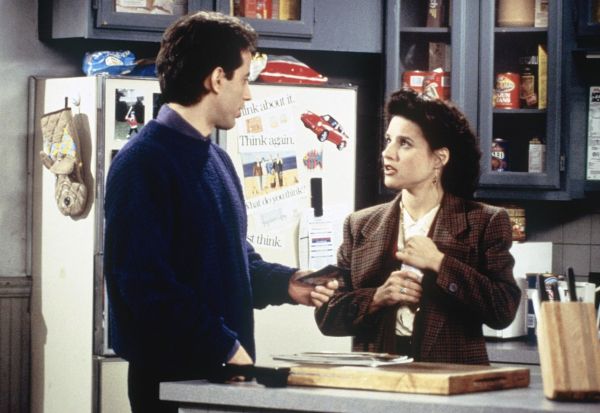
The apartment feels less like a private home and more like a shared command center. Jerry owns it, but Kramer enters without warning, George treats it as a secondary residence, and Elaine appears whenever she needs advice, distraction, or access to Jerry’s refrigerator.
I like how little the room changes. Its familiarity gives the dialogue more space to work. The couch, counter, table, bicycle, kitchen shelves, and front door become permanent pieces of a stage where endless variations of social conflict can unfold.
The door is especially important. Kramer’s entrances have physical energy, while George often arrives already speaking, as though his crisis began several blocks earlier and the audience has joined in the middle of it.
From my perspective, the apartment functions like a hub area where party members regroup between side missions. The problem is that nobody uses the hub to recover. They use it to recruit others into the next mistake.
Jerry Played the Observer Until Observation Became Participation
Jerry often appears to be the most stable member of the group. He has a successful career, a clean apartment, predictable habits, and enough emotional distance to recognize when George, Elaine, or Kramer is behaving irrationally.
That stability is partly an illusion.
Jerry may not panic as loudly as George or improvise as dangerously as Kramer, but he is highly judgmental. Small habits, physical details, speech patterns, and social mistakes can make him lose interest in another person immediately.
His comedy career gives him a natural observer’s role. He studies behavior and converts irritation into material. This also allows him to avoid emotional investment. If a relationship becomes uncomfortable, he can analyze it instead of experiencing it directly.
I found Jerry most entertaining when his belief in his own reasonableness collapsed. He might begin as the commentator on someone else’s bad decision, then reveal that his own standards are just as arbitrary.
In game terms, Jerry acts like the player who claims to be watching the team fail from a safe position, only to discover that he accepted the quest, selected several dialogue options, and is now responsible for the outcome.
George Costanza Turned Self-Sabotage Into a Playstyle
George is one of the most fascinating sitcom characters because he can identify his own flaws with surprising accuracy and still choose the action most likely to activate them.
He lies when the truth would be easier. He creates backup explanations for lies that nobody has questioned. He interprets neutral behavior as rejection, prepares for humiliation before it happens, and then behaves in a way that makes humiliation unavoidable.
What keeps George from becoming exhausting is that his panic usually contains a recognizable emotional truth. He wants respect, affection, professional success, and evidence that other people do not consider him insignificant.
He simply tries to obtain those things through manipulation, performance, avoidance, and increasingly complex stories.
George frequently approaches life as though everyone else has access to a hidden advantage. Attractive people, confident coworkers, wealthy friends, and successful strangers appear to have discovered rules that exclude him.
His response is not steady improvement. It is tactical dishonesty.
The Costanza Decision Tree
Many George storylines follow a pattern that feels almost interactive:
- an ordinary problem appears;
- George imagines the most humiliating interpretation;
- someone suggests a reasonable response;
- George rejects it because it requires vulnerability;
- he invents an alternate plan;
- the plan briefly appears successful;
- one unnecessary detail exposes the deception;
- George blames the original situation.
I enjoy this structure because the disaster is rarely random. The audience can see the safe route, but George views safety as another form of defeat.
Elaine Benes Refused to Become the Sensible Friend
Elaine can appear more socially capable than the three men around her. She works in professional environments, maintains relationships outside the group, and often recognizes when Jerry, George, or Kramer has crossed a line.
The series wisely refuses to make her the permanent voice of reason.
Elaine is competitive, impatient, proud, and capable of becoming obsessed with a small insult. She can defend social fairness in one scene and pursue personal revenge in the next.
I liked that she was allowed to be messy without being reduced to a romantic function. Her work problems, friendships, family history, dating standards, and personal ambitions generate stories independent of Jerry.
Her physical comedy is also essential. Elaine can communicate frustration through movement before saying anything. A forced smile, sudden shove, aggressive exit, or unusual dance can become the entire point of a scene.
As a party member, she has the highest social awareness but not necessarily the highest self-control.
Kramer Entered With a New Expansion Pack Every Week
Kramer lives across the hall, but he seems to operate according to a completely different economy, schedule, and understanding of personal boundaries.
He can begin an episode with a business proposal, medical concern, social connection, invention, legal theory, or unexplained object. The rest of the group may initially dismiss him, yet his strange information often becomes relevant later.
Michael Richards gives Kramer a physical rhythm unlike anyone else in the series. He does not simply enter a room. He arrives as though momentum has carried him through the door before the rest of his body agreed.
I enjoyed the uncertainty around his life. Kramer appears to have time for everything despite rarely having a conventional job. He knows people in unexpected industries, has access to unusual locations, and participates in activities that are explained only when the story needs them.
In gaming terms, Kramer is the player who ignores the main campaign, completes obscure side quests, and arrives with a rare item nobody knew existed.
The Group Was a Team Without Loyalty Bonuses
Jerry, George, Elaine, and Kramer spend enormous amounts of time together, but their friendship rarely resembles unconditional support.
They listen to each other’s problems, provide advice, share information, and participate in schemes. They also mock weakness, exploit opportunities, abandon one another under pressure, and remember embarrassing details for future use.
This emotional limitation is central to the show’s identity. The characters are close enough to know exactly where each person is vulnerable and selfish enough to use that knowledge.
I never doubted that they enjoyed one another’s company. Their friendship survives partly because they share a similar level of moral flexibility.
A more compassionate person might become exhausted by the group. These four understand the pleasure of analyzing strangers, debating etiquette, and converting someone else’s discomfort into entertainment.
Dating Functioned Like Quality Assurance Testing
Relationships in Seinfeld often fail because one character discovers a small detail that becomes impossible to ignore. The issue may involve eating, clothing, vocabulary, laughter, appearance, profession, personal history, or an unusual habit.
Once identified, the detail expands until it replaces the entire person.
Jerry is especially skilled at this. He treats dating like a testing process where one defect can disqualify an otherwise successful match.
George approaches relationships with the opposite problem. He may idealize someone before the relationship begins, then panic when intimacy creates expectations.
Elaine’s standards can be practical, emotional, or completely situational. She often wants independence but becomes competitive when someone else appears less interested.
The series is funny because these judgments are exaggerated versions of real behavior. People do notice minor incompatibilities. Seinfeld removes the politeness that usually hides how quickly attraction can be affected.
New York Was a System of Limited Space
The city is not only a background. Its density creates many of the show’s conflicts. Apartments are close together, restaurants are crowded, streets are difficult to navigate, parking spaces become valuable, and strangers regularly enter one another’s personal space.
A small mistake has witnesses. A private conversation can be overheard. A person someone wants to avoid may appear in the same diner, cinema, building, or subway car.
I enjoyed how the series uses city geography to create pressure. Characters cannot simply leave an uncomfortable interaction without risking another one outside.
The limited space also gives minor resources surprising value:
- a good apartment;
- a parking spot;
- a restaurant table;
- a clean public bathroom;
- a quiet seat;
- a short checkout line;
- a reliable route across town.
These are not heroic objectives, but Seinfeld presents them with the urgency of survival mechanics.
Monk’s Café Was the Dialogue Arena
The diner provides a public alternative to Jerry’s apartment. Characters can analyze events while remaining surrounded by waiters, customers, and strangers who may become part of the discussion.
The booth gives the group a stable position from which to judge the rest of the city. Food is secondary. The real activity is reviewing social encounters.
I like how quickly the characters can transform a harmless observation into a full debate. A greeting, tip, seat, menu item, or relationship detail becomes evidence in a larger theory about human behavior.
The diner conversations often function like strategy meetings. George presents a problem, Jerry identifies the obvious flaw, Elaine questions the ethics, and Kramer proposes a solution from another reality.
Newman Was the Perfect Recurring Rival
Newman does not need to appear in every episode to influence Jerry’s mood. His name alone can change the atmosphere.
Wayne Knight makes Newman both ridiculous and strangely capable. He complains, schemes, delivers dramatic speeches, and treats his postal job as a source of power, resentment, and institutional knowledge.
Jerry’s hostility toward him is funny because the reason is never important enough to justify the scale of the reaction. Their conflict feels ancient despite being built from small annoyances.
Newman works as a rival because he resembles the group more than they would admit. He is selfish, observant, opportunistic, and fascinated by other people’s failures.
From my perspective, he is an enemy character created from the same skill tree as the protagonists.
George’s Parents Increased the Difficulty Setting
Frank and Estelle Costanza explain a great deal about George without excusing him. Their home is filled with shouting, accusation, panic, and emotional competition.
Frank turns simple subjects into declarations. Estelle reacts to information as though every event confirms a personal disaster. George has learned that attention arrives through escalation.
I found their scenes exhausting in the intended way. The volume rises quickly, and the original topic often disappears beneath older complaints.
Returning to his parents’ home places George inside the environment where many of his defensive habits make sense. He becomes both an adult arguing with them and a child anticipating the next outburst.
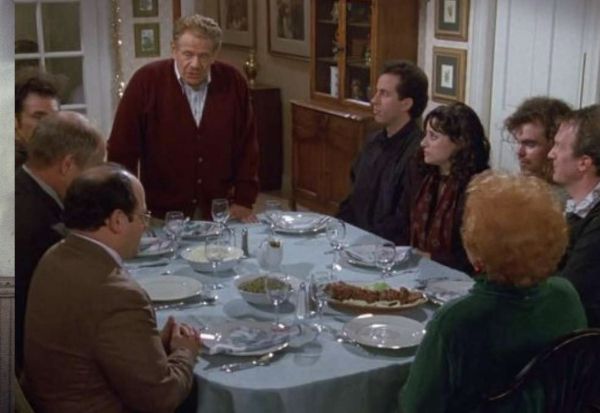
Festivus Felt Like User-Generated Holiday Content
Festivus is one of the best examples of the series turning a character’s strange family history into a fully developed system.
The holiday has its own object, rituals, complaints, physical challenge, and emotional logic. Frank Costanza has rejected commercial tradition and replaced it with something even more aggressive.
I saw Festivus as a custom seasonal event designed by one frustrated player and forced onto the entire household.
The airing of grievances fits Seinfeld perfectly because the show’s characters already collect complaints throughout the year. Festivus simply creates an official ceremony for them.
Peterman Spoke From an Adventure Novel Nobody Else Could Read
J. Peterman gives Elaine’s workplace a distinctive tone. He describes clothing, travel, history, and ordinary business decisions with the voice of someone narrating an expedition.
His stories frequently seem disconnected from the immediate issue, yet he delivers them with enough confidence that employees accept the delay.
I enjoyed how Peterman’s language contrasts with Elaine’s directness. She wants clear instructions, approval, or a decision. He offers atmosphere.
He turns the catalog business into mythology, making ordinary products sound as though they were recovered from distant regions after emotional trials.
Steinbrenner Was Authority Without a Face
George’s employment with the Yankees gives him access to an organization larger and more prestigious than he seems prepared to navigate.
George Steinbrenner is often shown from behind, speaking rapidly while George stands nearby trying to understand what is expected.
The incomplete visual presentation makes him feel less like one person and more like the physical form of executive unpredictability.
George survives at work not because he becomes fully competent but because the organization is strange enough to reward unusual behavior.
His employment storylines repeatedly suggest that professional success may depend less on merit than on timing, confusion, and the ability to remain present while management changes direction.
The Opposite Was a Temporary Character Respec
One of George’s most memorable experiments begins when he decides that his instincts have consistently failed him. He chooses to do the opposite of what he would normally do.
The results are immediate. Honesty, confidence, and reversed decision-making create opportunities that avoidance and anxiety had prevented.
From a gaming perspective, George temporarily resets his character build. Instead of adding new abilities, he inverts his default inputs.
The idea works because George already understands what the correct behavior might be. His problem is that fear usually directs him elsewhere.
The episode also reveals the instability of success. Even when George improves, the larger group remains governed by changing fortune.
“The Contest” Turned Restraint Into Competitive Sport
The contest among the main characters demonstrates how Seinfeld could build an entire episode around a subject without relying on explicit language.
The rules are understood, the stakes are personal, and every character becomes suspicious of the others.
What begins as a private challenge quickly changes how they interpret daily life. Ordinary sights become hazards, and information about another participant becomes strategically valuable.
I appreciated the writing precision. The episode depends on implication, reaction, and vocabulary that communicates the situation without reducing it to repetition.
As with many Seinfeld plots, the characters create suffering by converting a private issue into a social competition.
“The Chinese Restaurant” Proved Waiting Could Carry an Episode
The restaurant episode builds tension from delay, hunger, impatience, and the belief that another person is receiving unfair priority.
There is no large adventure. The characters wait for a table.
The experience becomes increasingly urgent because they have another event to attend and no reliable information about when they will be seated.
I enjoy how the episode captures the psychological effect of uncertain waiting. A specific delay might be manageable. An undefined delay consumes attention.
The host becomes a gatekeeper whose information controls the entire group’s mood. Every new arrival appears to threaten their position in the queue.
“The Parking Garage” Turned a Familiar Place Into a Maze
Losing a car inside a parking structure is a simple problem with perfect sitcom potential. The environment repeats itself, landmarks are weak, and every failed route makes the original position harder to remember.
The characters separate, reunite, argue, carry purchases, and become physically exhausted while attempting to locate one vehicle.
From my perspective, the garage is a procedurally generated dungeon built from concrete, fluorescent lights, and incorrect confidence.
The episode works because everyone believes the next turn will solve the problem. Hope survives just long enough to justify another bad direction.
“The Marine Biologist” Delivered a Perfect Delayed Payoff
George pretends to be a marine biologist because Jerry has described him that way to a former classmate. The lie initially appears manageable because George assumes the profession will remain a conversational detail.
The story gradually places him closer to a situation where real expertise may be required.
The final reveal brings separate plot elements together with remarkable precision. George’s dramatic account works because the series has spent the episode constructing both the lie and the unlikely event that tests it.
I admire the scene as a piece of narrative engineering. Information introduced for one joke becomes the solution to another storyline without feeling forced.
“The Soup Nazi” Made Ordering Food a High-Stakes Interaction
The soup stand is popular because the product is exceptional, but access depends on following a strict procedure.
Customers must know the order, move correctly, avoid unnecessary conversation, and accept the owner’s authority.
The scene turns purchasing lunch into a timing challenge. The reward is valuable enough that customers tolerate rules they would reject elsewhere.
Elaine’s refusal to participate respectfully creates a conflict between personal dignity and access to the resource.
I found the situation funny because everyone agrees the rules are unreasonable and continues returning anyway.
“The Puffy Shirt” Showed the Danger of Passive Agreement
Jerry agrees to wear an unusual shirt because he cannot hear the request clearly and responds without understanding it.
The problem grows because correcting the misunderstanding would require an uncomfortable conversation. Jerry delays until the shirt becomes part of a public appearance.
This is classic Seinfeld structure. A minor communication failure becomes permanent because politeness prevents immediate honesty.
The shirt itself is funny, but the stronger joke is how many people cooperate with a situation they know is wrong because nobody wants to be the first to say so directly.
Seinfeld Treated Etiquette Like Unwritten Law
The series repeatedly asks questions that sound trivial until several characters disagree:
- How long must someone keep a greeting card?
- Who owns an available parking space?
- When is a gift inappropriate?
- How many times can a person re-gift something?
- Does ordering food create an obligation to tip?
- When does waiting become abandonment?
- How close must a friendship be before a favor becomes mandatory?
The humor comes from treating these questions with legal seriousness. Every character searches for precedent, motive, and hidden obligation.
Seinfeld understands that modern social life depends on rules people rarely state until someone violates them.
Food Was Never Just Food
Meals, snacks, and restaurant orders frequently become sources of conflict. Food can represent generosity, status, tradition, control, romance, or disrespect.
A piece of fruit may reveal neighborhood rules. A marble rye can become a required item in a family deception. Soup can demand obedience. A candy bar can affect professional reputation.
I enjoyed how food creates physical objectives inside dialogue-heavy stories. Characters must obtain, return, hide, share, or protect something edible while managing the social meaning attached to it.
The Show Rarely Allowed a Good Deed to Remain Simple
Whenever a character attempts to help someone, the action usually contains pride, self-interest, or an expectation of recognition.
A favor becomes evidence in a future argument. A gift creates debt. Advice becomes an opportunity to control the result.
This does not mean the characters never care. It means their generosity is often mixed with the desire to manage how other people perceive them.
I found this more honest than a sitcom world where every misunderstanding ends with a clear moral lesson and permanent growth.
Nobody Learned Enough to Break the Format
Seinfeld’s characters occasionally recognize that they have behaved badly. What they rarely do is change in a lasting way.
George may discover that honesty works, then return to deception when honesty becomes uncomfortable. Jerry may identify his emotional distance without becoming more available. Elaine may regret an impulsive action and repeat the pattern in another form.
Kramer changes direction constantly, which prevents his lack of development from feeling static. He is always moving, even when the movement returns him to the same position.
The absence of traditional growth protects the comedy. Permanent improvement would remove many of the traits generating conflict.
The Final Judgment Fit the Series Better Than Redemption
The finale brings past characters back and places Jerry, George, Elaine, and Kramer in a situation where their history of observation without intervention becomes legally relevant.
The structure has limitations, but the central idea suits the series. The group has spent years treating other people as stories, annoyances, and material.
They are finally forced to hear how those interactions looked from outside their circle.
A sentimental ending would have required the characters to discover that friendship made them better people. The series chooses a harsher joke: their friendship may have protected them from recognizing how they behaved.
The closing conversation confirms that even consequences cannot prevent them from returning to familiar subjects.
The Stand-Up Segments Framed the Early Series
Jerry’s stage material originally connected the fictional events to observational comedy. A social situation would occur, then the performance would extract the rule hidden inside it.
I liked the relationship between the two forms. The sitcom showed characters trapped inside an inconvenience, while the stand-up converted that inconvenience into a general theory.
As the series developed, the stories became strong enough to require less framing, but the observational perspective remained.
The Acting Made Selfishness Enjoyable to Watch
The main cast understands how to make unpleasant behavior funny without asking me to approve of it.
Jerry Seinfeld’s controlled delivery gives the group a stable rhythm. Jason Alexander makes George’s desperation physically visible. Julia Louis-Dreyfus can move from confidence to outrage in a second. Michael Richards treats the environment as something his entire body must negotiate.
The supporting actors are equally important. Newman, Frank, Estelle, Peterman, Puddy, Bania, Jackie Chiles, and many others arrive with distinct voices and expectations.
The world feels large because minor characters do not exist only to deliver information. They bring their own rules into contact with the main group.
Puddy Was Calm in a Way That Made Elaine Less Calm
David Puddy’s emotional simplicity contrasts with Elaine’s tendency to analyze relationships. He can sit quietly, stare ahead, and accept long periods without conversation.
Elaine often interprets this calm as a problem requiring investigation.
I enjoyed their dynamic because Puddy does not compete with her intensity. He allows it to move around him.
His interests, phrases, clothing, and direct reactions make him memorable without requiring complicated motivation.
Jackie Chiles Turned Legal Language Into Performance
Jackie Chiles treats every possible case as both an injustice and an opportunity for dramatic description.
His vocabulary gives Kramer’s accidents and schemes a temporary appearance of legal importance.
From my perspective, Jackie is a specialist non-player character who can convert almost any mistake into a lawsuit, provided Kramer stops interfering with the strategy.
Their partnership repeatedly fails because Kramer cannot resist speaking, settling, or making an independent decision at the worst moment.
The Series Made Repetition Feel Like Recognition
Certain phrases, behaviors, entrances, locations, and relationship patterns return throughout the show. The repetition creates familiarity without requiring every joke to be identical.
I know how George will react to perceived disrespect, how Jerry will respond to an unusual habit, and how Elaine’s expression changes when patience ends.
The pleasure comes from seeing the established behavior activated by a new situation.
It resembles replaying a game with the same character builds on a different map. The abilities are familiar, but the environment changes the outcome.
Why Seinfeld Still Works for Me
I return to Seinfeld because it understands that ordinary life contains endless low-stakes conflict. Most days do not involve dramatic villains or heroic sacrifices. They involve unclear invitations, unwanted conversations, delayed service, workplace embarrassment, difficult relatives, strange neighbors, and decisions about whether correcting someone is worth the discomfort.
The series takes those moments seriously enough to examine them and lightly enough to expose their absurdity.
From my perspective as a gamer, Jerry, George, Elaine, and Kramer share a social sandbox filled with hidden rules. They earn no experience points for kindness, receive no reliable morality indicator, and cannot reload after an embarrassing conversation.
They understand how the systems work but keep trying to gain advantages through technicalities. Jerry searches for compatibility without compromise. George wants rewards without vulnerability. Elaine wants independence without losing influence. Kramer wants access to every possibility without respecting boundaries.
Their plans fail because people are not systems that can be optimized completely.
Seinfeld remains memorable not because nothing happens, but because it recognizes how much can happen when four highly observant people become emotionally invested in something everyone else would consider unimportant.
A reservation, shirt, soup order, parking space, answering machine, holiday card, library book, or misplaced car can become the central objective because the characters attach pride to it.
The show rarely asks me to admire them. It asks me to recognize them.
That recognition can be uncomfortable. I have avoided conversations, judged harmless habits, replayed minor insults, and treated an inconvenience as though it revealed something important about another person.
Seinfeld turns those impulses into comedy by removing the self-awareness that normally keeps them private.
The characters finish most episodes with little growth, damaged relationships, and another story to tell at the diner. Then they return to Jerry’s apartment, open the refrigerator, and prepare to analyze the next person who behaves exactly as badly as they do.
Pros:
- Timeless observational humor that remarkably captures everyday life
- Innovative narrative structure with interwoven stand-alone episodes
- Engaging character development that provides relatable and authentic humor
- Broad accessibility via streaming, downloading, and various unblocked online platforms
- Cultural relevance and enduring influence on modern media
- Simple yet effective visual and auditory design enhancing the overall experience
Cons:
- Humor may not resonate with audiences seeking conventional plot structures
- Some jokes rely on subtle nuances that can be easily missed on first viewing
- The series' minimalist narrative may not appeal to viewers preferring more action-driven stories









Movie Reviews

Minecraft

Grand Theft Auto V

Toca Boca World

Roblox

Leave a comment
Your comment is awaiting moderation. We save your draft here
0 Comments