Review
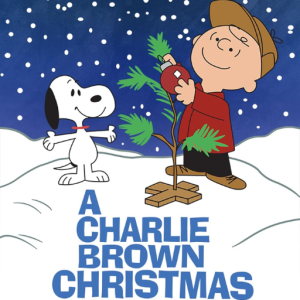
A Charlie Brown Christmas feels like a holiday special built around a player who has entered a cheerful seasonal event but cannot under...

Embracing Nostalgia: Unraveling the Enduring Magic of A Charlie Brown Christmas
A Charlie Brown Christmas feels like a holiday special built around a player who has entered a cheerful seasonal event but cannot understand why none of its rewards improve his mood. Lights cover the neighborhood, children rehearse a Christmas play, decorated trees appear everywhere, and almost everyone seems ready to participate in the celebration. Charlie Brown looks at the same environment and feels more isolated than before.
That emotional honesty is what keeps the special meaningful for me. It does not begin by asking whether Christmas can be saved from a villain, a storm, or a missing gift. It asks why a person can feel unhappy during a season that constantly tells everyone to be joyful.
The story is brief, but it moves through loneliness, commercial pressure, friendship, embarrassment, faith, and the search for something genuine inside a holiday covered by expectations. From my perspective as a gamer, Charlie Brown is not trying to complete a difficult external mission. He is trying to identify the real objective after the interface has filled his screen with distractions.
Seasonal Event Status: Cheer Everywhere, Progress Nowhere
Charlie Brown notices that Christmas is approaching, but the usual signs of the season do not create excitement for him. Snow, decorations, cards, music, and parties are present, yet he remains convinced that something is missing.
I immediately understood the frustration behind his mood. When everyone around a person appears happy, sadness can begin feeling like another personal failure. Charlie Brown does not only feel low. He worries that he is responding to Christmas incorrectly.
The other children rarely give him room to explore that feeling. They dismiss him, tease him, or offer solutions based on what they enjoy. Their confidence makes his uncertainty look unnecessary.
The special never treats Charlie Brown’s sadness as a joke that needs to disappear quickly. His confusion becomes the central reason the story exists.
Lucy’s Booth Offered Advice Without Support
Charlie Brown visits Lucy’s psychiatric booth because he wants someone to explain why he feels unhappy. The setup is funny because serious emotional help has been reduced to a small neighborhood business with a fixed price.
Lucy listens, but her approach is more diagnostic than compassionate. She searches for a label, asks questions, and appears excited by the possibility of identifying an unusual fear.
I saw the booth as a dialogue system where Charlie Brown selects the option for emotional support and receives a list of status conditions instead.
Lucy eventually suggests that involvement in the Christmas play might give him purpose. The recommendation is not entirely bad. Charlie Brown does need connection and meaningful activity. The problem is that Lucy treats participation as a quick correction rather than asking what he actually needs from the group.
Quest Accepted: Direct the Christmas Play
Becoming director gives Charlie Brown a visible role and temporary authority. He enters the auditorium with a task, a cast, and the possibility of creating something meaningful.
The position initially appears like the perfect solution. Instead of watching other people celebrate, he can help organize the celebration himself.
The children do not respond as a cooperative team. They talk over him, ignore instructions, argue about roles, and turn rehearsals into opportunities for individual performance.
Charlie Brown has received the title of director without the influence required to direct anyone.
This felt familiar from team-based games where one player is assigned leadership after the group has already decided to follow its own plan. The role exists in the interface, but the party does not respect it.
The Cast Treated Rehearsal Like Free Play
The rehearsal scenes are full of movement, music, jokes, and recognizable personalities. The children dance when they should be preparing, complain about casting decisions, and show more interest in themselves than in the purpose of the play.
These scenes are entertaining because every child follows a consistent personal logic. Lucy wants control. Snoopy turns performance into imagination. Schroeder cares about music. Frieda remains concerned about her naturally curly hair. Pig-Pen carries his cloud of dust into a production that requires him to represent ancient history.
The group contains energy but lacks direction. Charlie Brown repeatedly attempts to bring everyone back to the objective, and each attempt disappears beneath another distraction.
The play becomes a smaller version of the holiday around them. Everyone is participating, but few people are asking what the activity means.
Lucy Behaved Like the Real Party Leader
Lucy gives Charlie Brown the directing role, yet she continues controlling rehearsals, casting decisions, and social pressure. She appears comfortable assigning responsibility as long as she keeps authority.
I found her dynamic with Charlie Brown both funny and painful. She knows he wants approval, which makes him easier to influence. She can tell him to become confident and then immediately undermine that confidence in front of everyone.
Lucy is not presented as purely malicious. She believes she understands people and situations better than they understand themselves. Her certainty makes her insensitive.
In gaming terms, she is the player who appoints someone else as squad leader but continues issuing every command through voice chat.
Schroeder’s Piano Created the Special’s Safest Space
Whenever Schroeder begins playing, the mood changes. The music gives the characters something to respond to without requiring explanation.
Charlie Brown often struggles to communicate what feels wrong, but the piano communicates mood instantly. It can make the room playful, reflective, or quietly hopeful.
Schroeder takes music seriously, even when Lucy uses his piano as a place to flirt, complain, or discuss commercial Christmas songs. His focus gives him a kind of stability missing from the rest of the rehearsal.
I appreciated how the score supports the story without forcing every emotional moment into obvious sentiment. Jazz gives the special movement and warmth while leaving space for uncertainty.
Linus Carried Security Everywhere
Linus is rarely separated from his blanket. Other characters may see it as a childish dependency, but the object gives him comfort and helps him move through situations with unusual calm.
What interests me is that Linus often appears more emotionally secure than characters who criticize him. He has a visible source of comfort, while they hide their insecurities behind confidence, teasing, or performance.
From my perspective, the blanket functions like a permanently equipped support item. It does not remove every challenge, but it helps Linus maintain balance.
His friendship with Charlie Brown is similarly stabilizing. Linus does not always know how to solve Charlie Brown’s sadness, yet he remains present rather than dismissing it.
Snoopy Was Playing a Completely Different Game
While Charlie Brown searches for meaning, Snoopy approaches Christmas as a creative event filled with decoration, performance, and possible rewards.
His doghouse becomes the center of a lighting competition. He imagines dramatic roles, dances during rehearsal, and treats every environment like a stage.
Snoopy’s behavior is funny because he appears unaffected by the emotional rules controlling everyone else. Charlie Brown worries about commercialization while Snoopy enthusiastically participates in it.
I do not read Snoopy as selfish in a serious way. He represents play without overthinking. The problem is that his carefree energy cannot answer Charlie Brown’s question.
Snoopy has mastered the event activities. Charlie Brown is still searching for the main story.
The Mailbox Delivered a Small but Effective Defeat
Charlie Brown checks his mailbox hoping to find Christmas cards. The empty result confirms his fear that other people have forgotten him.
This is one of the special’s quietest painful moments because nothing dramatic happens. There is no argument or public humiliation. Charlie Brown simply receives no evidence of connection.
The mailbox becomes a reward chest that opens without producing an item.
His disappointment also shows why the play matters so much. Charlie Brown is not only searching for holiday meaning in an abstract sense. He wants to feel included in the lives of other people.
Commercial Christmas Had Filled Every Available Slot
The special repeatedly contrasts Charlie Brown’s desire for sincerity with the consumer language surrounding him. Sally writes a letter to Santa containing detailed gift expectations. Snoopy decorates for a prize. Lucy discusses real estate and money. The children want a large artificial tree that looks impressive on stage.
Commercial activity is not presented as the only problem. Decorations and gifts can still be enjoyable. The problem is that they have become substitutes for meaning rather than expressions of it.
Charlie Brown senses the emptiness but cannot explain it clearly. He knows that something feels wrong when Christmas is reduced to winning, receiving, and displaying.
I liked that the special raises this concern without creating a complicated speech against shopping. It simply shows how quickly the holiday’s visible systems can replace its emotional center.
Sally’s Letter Turned Belief Into a Transaction
Sally asks Charlie Brown to help write her message to Santa. Her requests are direct and practical. She knows what she wants and expects Christmas to deliver it.
When the list becomes inconvenient, she suggests money as an acceptable alternative.
The scene is funny because she treats Santa like a remote vendor with flexible payment options. She does not appear greedy in a threatening way. She has simply absorbed the idea that Christmas success can be measured by what arrives.
Charlie Brown’s reaction shows his frustration with the larger culture. Even his younger sister speaks the language of acquisition more confidently than he can speak about meaning.
The Search for a Tree Became a Test of Judgment
Lucy sends Charlie Brown to find a Christmas tree for the play. She gives him a simple requirement: choose something large, modern, and visually impressive.
The tree lot is filled with artificial options that reflect the group’s expectations. They are bright, polished, and designed to create an immediate effect.
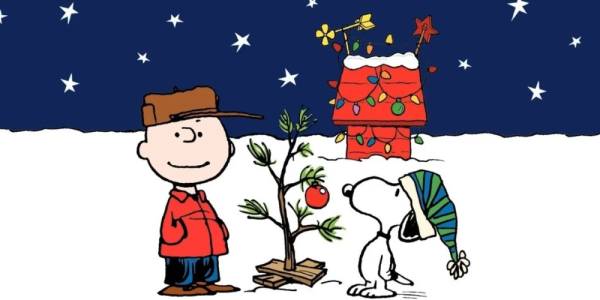
Charlie Brown notices one small natural tree standing apart from the others. It is thin, fragile, and unable to support much decoration.
His choice is emotionally predictable even though it is strategically dangerous. Charlie Brown identifies with the tree before considering whether the cast will approve.
From my gamer’s perspective, he ignores the high-stat cosmetic options and selects the weakest item because its description feels personally meaningful.
The Little Tree Was More Than a Symbol
The tree reflects Charlie Brown’s position within the group. It appears inadequate according to the standards everyone has already accepted. It does not dominate the room or create instant excitement.
Charlie Brown believes that care might reveal something valuable in it. This is the same hope he carries for himself.
I appreciated that the tree is not magically transformed immediately. It bends under the weight of one ornament, confirming that Charlie Brown’s choice has practical limitations.
The story does not argue that sincerity automatically produces competence. Charlie Brown chooses with compassion, but he still lacks the knowledge and support needed to help the tree alone.
The Group’s Laughter Was the Lowest Point
When Charlie Brown returns with the tree, the other children laugh. Their reaction combines frustration, conformity, and the relief of finding another reason to blame him.
Charlie Brown had hoped the tree would communicate what he could not explain. Instead, it becomes further evidence that the group considers him incapable.
This scene hurt more than the earlier teasing because Charlie Brown has made an honest choice. He did not forget the task or refuse to participate. He selected the tree because he saw value in it.
The group evaluates only appearance and immediate usefulness.
At this point, the directing mission has failed, the cast has rejected his decision, and his search for meaning has produced another humiliation.
“Can Anyone Tell Me What Christmas Is All About?”
Charlie Brown’s question finally identifies the real objective. He is not asking how to improve the play, decorate the stage, or obtain a better tree. He wants someone to explain why the holiday exists beneath all the activity.
Linus responds by stepping onto the stage and reciting the biblical account of the birth of Jesus.
The scene changes the rhythm of the entire special. Movement stops. The stage becomes simple. Music and jokes temporarily give way to spoken words.
I found the restraint powerful. Linus does not debate commercial culture or criticize the other children. He answers the question directly from the tradition at the center of the holiday.
Linus Dropping the Blanket Changed the Scene
During the recitation, Linus briefly releases his blanket. The gesture is small, but it gives the moment additional meaning.
The character who carries security everywhere is able to stand without it while speaking about reassurance and hope.
I did not need the film to explain the symbolism. The action communicates confidence more clearly than another line of dialogue could.
Linus later picks the blanket up again, which I also appreciate. One meaningful moment does not require him to abandon a source of comfort permanently.
Growth is not presented as the destruction of vulnerability.
The Special Did Not Separate Faith From Friendship
Linus provides the verbal answer, but the story does not end with Charlie Brown simply accepting information and becoming happy.
He still needs the community to change its behavior.
This is important because meaning cannot remain only an idea. The children must decide whether they will continue mocking Charlie Brown and the tree or participate in creating something better.
The special connects spiritual reflection with practical care. The message becomes visible when the group follows Charlie Brown, repairs the tree, and supports the person they previously dismissed.
Charlie Brown’s Ornament Was Too Heavy
After leaving the auditorium, Charlie Brown tries to decorate the tree himself. He places one ornament on it, and the thin branches bend.
The moment reflects his repeated experience throughout the story. He finds something he wants to protect, applies the solution he believes is expected, and watches it appear to fail.
Charlie Brown immediately assumes he has damaged the tree beyond repair.
His reaction shows how little confidence remains. One setback becomes confirmation that he ruins everything.
From my perspective, he treats a temporary physics problem as a permanent failure state.
The Children Finally Chose Cooperation
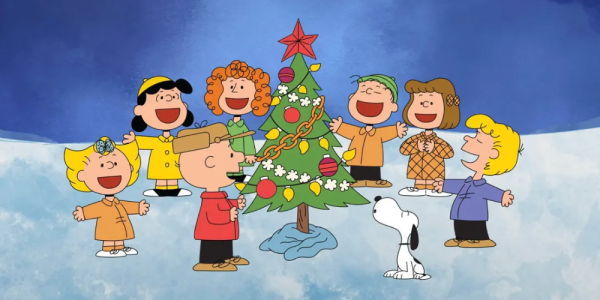
After Charlie Brown leaves, the other children examine the tree differently. Linus wraps his blanket around its base, giving it stability, while the group adds decorations from Snoopy’s doghouse.
The tree changes because several characters contribute what they already possess. Linus provides support. Snoopy’s excessive decorations become useful. The group provides attention and effort.
No single person performs a miracle. The transformation is cooperative.
I liked that the children do not replace Charlie Brown’s tree with a superior one. They work with his choice and reveal the potential he saw in it.
Snoopy’s Decorations Received a Better Purpose
Earlier, Snoopy decorated his doghouse to win a competition. The lights and ornaments represented spectacle and reward.
When the children use those decorations on the tree, the same objects gain a different meaning. They become part of a collective act of repair.
The special therefore does not claim that decorations are inherently shallow. Their value depends on intention.
A light can be used to attract attention, win a prize, or help turn a neglected tree into something welcoming.
The Tree’s Transformation Remained Slightly Magical
Once decorated, the little tree appears fuller and stronger than before. The visual change exceeds what the materials should realistically accomplish.
I accepted this easily because the transformation expresses a shift in perception as much as a physical improvement.
The tree may not have changed completely. The group has changed how it sees the tree.
What looked inadequate in isolation appears beautiful when supported and placed inside a caring context.
The Apology Was Delivered Through Action
The children do not give Charlie Brown a long formal apology. They prepare the tree, wait for him, and greet him together.
Their behavior communicates recognition more effectively than a speech would. They have accepted his choice and corrected the damage caused by their earlier reaction.
This does not erase every instance of teasing or guarantee that Charlie Brown’s social life will become easy. The Peanuts world rarely changes that completely.
For one moment, however, the group understands what he was trying to protect.
“Hark! The Herald Angels Sing” Became the Shared Ending
The final song brings the children together without making Charlie Brown perform or direct them. The play has effectively disappeared, but the group finally creates the sincere Christmas moment he wanted.
The singing is imperfect and simple. That quality suits the story better than a polished production would.
Charlie Brown no longer needs to control the event. He stands among the group rather than outside it.
The ending works because belonging becomes the reward. The tree matters, the song matters, and the religious message matters, but their emotional force comes from being shared.
The Animation Never Hides Its Simplicity
The visual style is minimal compared with more elaborate Christmas productions. Backgrounds can be sparse, movement is limited, and characters retain the clean shapes of the comic strip.
I find that simplicity comforting. The special does not overwhelm its emotional story with visual detail.
Small gestures carry unusual weight because the screen is not crowded. A lowered head, slow walk, open mailbox, or dropped blanket becomes easy to notice.
The snow-covered environments also create enough empty space for Charlie Brown’s loneliness to feel visible.
The Children Sound Like Children
The voice performances have a natural, occasionally uneven quality that gives the special much of its identity.
Lines are not always delivered with the polished rhythm of professional adult actors imitating children. Pauses, emphasis, and speech patterns can feel slightly unpredictable.
I like this because it prevents the group from sounding too controlled. Their conversations retain the awkwardness and bluntness of childhood.
The natural delivery also makes Linus’s stage speech stand out. He sounds prepared but not artificially grand.
The Jazz Score Creates Warmth Without Forcing Happiness
Vince Guaraldi’s music is one of the main reasons the special feels both festive and reflective. The piano can support playful dancing, quiet sadness, and peaceful winter scenes without changing the overall identity of the soundtrack.
I appreciate that the music does not respond to Charlie Brown’s sadness with exaggerated tragedy. It gives him room to feel uncertain while keeping the world gentle.
“Christmas Time Is Here” captures this balance especially well. The melody is beautiful, but it contains enough melancholy to match Charlie Brown’s experience.
The score understands that nostalgia and sadness can exist inside celebration without cancelling it.
The Dancing Scene Has No Need for Realism
The children’s rehearsal dance is one of the special’s most recognizable sequences. Each character repeats an individual movement with complete confidence.
The animation is simple, yet the personalities remain clear. Some dance energetically, others move with unusual precision, and Pig-Pen creates dust even inside the auditorium.
I see the scene as a collection of idle animations activated simultaneously. Nobody is coordinating with the group, but the combined movement becomes memorable.
It also shows why Charlie Brown struggles as director. The cast is having too much fun with its own behavior to follow a structured production.
Charlie Brown Is Not Rewarded With Permanent Confidence
The ending gives Charlie Brown support, but it does not transform him into a different person. He remains sensitive, uncertain, and vulnerable to rejection.
I value this restraint. A single successful Christmas moment cannot resolve every insecurity that shapes his life.
The group’s acceptance matters because it is temporary and specific. Charlie Brown receives evidence that his judgment was not completely wrong and that the others can recognize his sincerity.
That small victory feels more believable than a total personality upgrade.
The Special Questions Celebration Without Rejecting It
A Charlie Brown Christmas is sometimes described mainly as a criticism of holiday commercialization. That theme is important, but I do not think the story argues against gifts, decorations, plays, music, or fun.
Those elements become empty when they operate without attention, generosity, or meaning.
Snoopy’s lights are initially connected to competition, then become part of helping the tree. The play begins as chaos but brings the children into the same room. The tree is a visual object that becomes meaningful through care.
The special restores purpose rather than removing celebration.
The Little Tree Was Not Valuable Because It Became Beautiful
It would be easy to interpret the ending as proof that Charlie Brown made the right choice because the tree eventually looked attractive.
I think the more important point comes earlier. Charlie Brown valued the tree when it still looked weak.
The group’s decoration confirms his judgment, but his compassion did not depend on the successful transformation.
He chose the tree because it needed someone, not because he knew it would impress everyone later.
Why I Still Return to This Quiet Christmas
I revisit A Charlie Brown Christmas because it understands how easily holiday expectations can make loneliness feel sharper. Charlie Brown is surrounded by activity, yet none of it answers his need for meaning or connection.
From my perspective as a gamer, he begins inside a seasonal event filled with visible objectives: direct the play, manage the cast, obtain a tree, decorate the stage, and participate in the celebration. He attempts each task, but the experience keeps failing because he has not found the hidden objective.
The real mission is not producing a perfect Christmas performance. It is recognizing value where the group sees weakness and turning belief into care.
Linus provides the answer in words. Charlie Brown expresses it through the tree. The children complete it through cooperation.
The special remains powerful because it does not require a large adventure. No character travels to the North Pole, defeats a holiday villain, or recovers a missing sleigh. The central crisis occurs inside one child who cannot understand why celebration feels empty.
The solution is equally modest. A friend speaks honestly. A neglected tree receives support. A group of children decides to stop laughing and begin helping.
That simplicity gives the ending its warmth. Charlie Brown does not discover that sadness has no place at Christmas. He discovers that sadness does not have to be faced alone.
The little tree survives because several people finally support it. For one quiet winter night, Charlie Brown does too.
Pros:
- Timeless storytelling that appeals to audiences of all ages.
- Minimalist animation style that adds to its charm.
- Iconic jazz soundtrack that enhances the film's emotional depth.
- Universal message about the true meaning of Christmas.
- Thoughtful critique of modern consumerism.
- Nostalgic journey that connects generations through simple yet profound artistry.
Cons:
- The simple animation style may feel outdated to contemporary viewers.
- The deliberate pacing might seem slow for those accustomed to high-energy narratives.
- Limited visual effects may not satisfy viewers looking for modern cinematic flair.









Movie Reviews

Minecraft

Grand Theft Auto V

Toca Boca World

Roblox

Leave a comment
Your comment is awaiting moderation. We save your draft here
0 Comments