Review
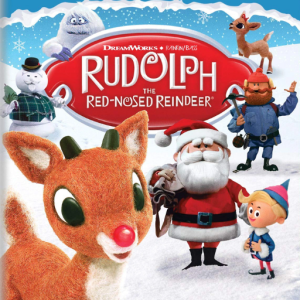
Rudolph the Red-Nosed Reindeer feels like a holiday adventure built around a character whose most visible weakness eventually becomes t...
Rediscovering Holiday Magic: The Enduring Charm of Rudolph the Red-Nosed Reindeer
Rudolph the Red-Nosed Reindeer feels like a holiday adventure built around a character whose most visible weakness eventually becomes the ability nobody else can replace. I knew the basic story long before rewatching the special: Rudolph is mocked for his glowing red nose, leaves home, meets other outsiders, and later helps Santa complete his Christmas Eve journey. What surprised me was how much of the story is about social acceptance rather than the famous final flight.
Rudolph does not begin by dreaming of becoming a hero. He wants something much simpler. He wants to participate without being laughed at, join the other young reindeer, and feel that his family is proud of him. His nose becomes a problem only because everyone around him agrees to treat it as one.
From my perspective as a gamer, Rudolph begins the story with an unusual passive ability that the entire community mistakenly classifies as a negative status effect. The world rewards conformity, so nobody asks whether his difference might be useful until the environment creates a challenge that standard abilities cannot solve.
Character Creation Assigned Rudolph One Unremovable Trait
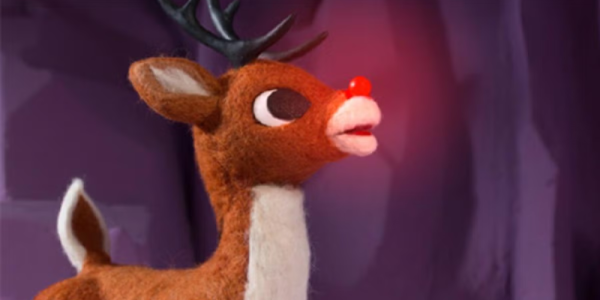
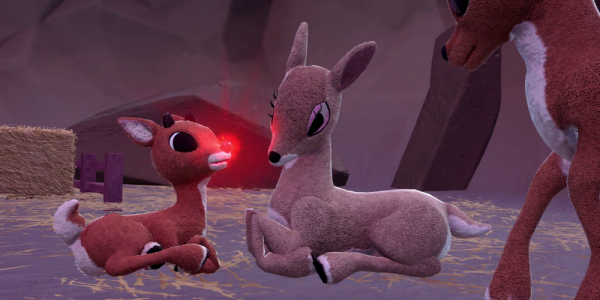
Rudolph’s bright nose is visible from the moment he is born. It cannot be hidden permanently, adjusted through effort, or replaced with a more socially acceptable feature.
His parents react with concern rather than celebration because they immediately understand how the other reindeer may respond. Donner tries to cover the nose, teaching Rudolph that acceptance may depend on disguising part of himself.
I found this emotionally effective because Rudolph learns embarrassment before he fully understands why he should be embarrassed. The discomfort does not originate inside him. It is introduced by people who treat his appearance as a social risk.
The temporary cover works like a cosmetic item equipped to satisfy the rules of a competitive lobby. Rudolph can enter the group only as long as nobody sees his real design.
The Reindeer Games Were a Failed Multiplayer Trial
The reindeer training sequence initially gives Rudolph a chance to prove that ability matters more than appearance. He performs well, flies successfully, and receives attention from Clarice.
For a brief moment, it appears that skill may protect him.
Then the cover falls away.
The other young reindeer stop evaluating his performance and focus entirely on the glowing nose. The coach removes him from participation, and the group quickly accepts exclusion as the correct response.
This scene felt like joining a team, completing the mechanical challenge successfully, and then being removed because the character model does not match the preferred class.
Rudolph learns that competence is not always enough when a community has already decided which differences are unacceptable.
Clarice Was the First Character Who Did Not Need Proof
Clarice’s kindness matters because she responds to Rudolph before his nose becomes useful. She does not wait for Santa to approve him or for a crisis to demonstrate his value.
Her affection gives Rudolph a glimpse of acceptance that is not based on performance. She likes him when he is nervous, inexperienced, and still trying to hide part of himself.
I appreciated this distinction. Many characters respect Rudolph only after his ability saves Christmas. Clarice recognizes his worth before the reward system changes.
Her encouragement temporarily increases his confidence enough to affect how he flies. The story presents emotional support as something capable of changing physical performance.
Leaving Home Was Not a Heroic Plan
Rudolph does not begin his journey because he wants adventure. He leaves because remaining near the other reindeer has become painful.
The decision is closer to retreat than rebellion. He has been rejected publicly and does not believe the community will reconsider.
I found this more believable than a confident declaration of independence. Rudolph is young, ashamed, and unsure where he belongs. He moves away from the known map because the starting area no longer feels safe.
His journey becomes heroic later, but the emotional starting point is loneliness.
Hermey Had Chosen the Wrong Character Class
Hermey is introduced as an elf who does not want to make toys. His real interest is dentistry, a profession that everyone around him considers inappropriate for his assigned role.
I immediately connected with his frustration because the workshop treats identity like a fixed class system. Elves make toys. Reindeer pull sleighs. Deviating from the role is interpreted as failure rather than specialization.
Hermey has not failed to understand his duties. He understands them and knows they do not fit him.
His decision to leave parallels Rudolph’s journey, although the cause is slightly different. Rudolph is rejected for a trait he cannot change. Hermey is rejected for an ambition he refuses to abandon.
Together, they form a party based not on shared abilities but on shared exclusion.
Rudolph and Hermey Formed the Ideal Outsider Team
Their friendship develops quickly because neither needs a long explanation of what it feels like to be treated as defective.
Rudolph provides mobility, caution, and emotional sensitivity. Hermey brings practical thinking, confidence in his unusual interest, and a stronger willingness to challenge established expectations.
They do not solve each other’s problems immediately. Rudolph still feels ashamed of his nose, and Hermey still lacks a place where his dentistry matters.
What changes is that neither character is alone while searching for that place.
In a cooperative game, they would look like an unbalanced team to outsiders. One character has a glowing navigation ability nobody respects, while the other has invested every skill point in dentistry during a toy-manufacturing campaign. The story gradually proves that unusual builds become valuable when the map changes.
Yukon Cornelius Joined With Maximum Confidence
Yukon Cornelius enters with enough energy to make the wilderness feel temporarily manageable. He is loud, adventurous, and constantly searching for valuable minerals.
His confidence contrasts with Rudolph and Hermey’s uncertainty. They are trying to discover where they belong, while Yukon behaves as though every new location belongs inside his next story.
I enjoy how much of his personality is communicated through movement and repeated habits. He throws his pickaxe, inspects the result, and interprets the world according to his search for fortune.
He becomes the party’s experienced explorer, although his confidence does not always correspond to reliable information. Yukon is useful partly because he is willing to move forward when everyone else is afraid.
The Abominable Snow Monster Changed the Tone
The Bumble gives the journey a direct physical threat. Before his appearance, the main danger comes from rejection, cold weather, and uncertainty. The monster introduces pursuit.
His large size and aggressive movement make Rudolph’s group appear especially vulnerable. None of them is prepared for direct combat.
I liked that the Bumble is frightening without completely abandoning the special’s playful tone. His design is large and intimidating, but still visually connected to the handcrafted world.
The creature also creates a problem that Hermey’s strange career choice will eventually help solve. Dentistry stops looking irrelevant once teeth become part of the threat.
The Island of Misfit Toys Was the Story’s Emotional Center
The Island of Misfit Toys is one of the most memorable locations because it expands Rudolph’s personal experience into a larger pattern. He is not the only character rejected for failing to match an expected design.
The toys are functional, expressive, and capable of bringing joy, but each has one unusual feature that prevents it from being selected. A train has square wheels, a boat cannot remain afloat, and other toys possess names, shapes, or behaviors that make them difficult to categorize.
From my perspective, the island resembles a storage area filled with items removed from the main game because they do not fit standard inventory descriptions.
The problem is not always that the toys have no value. The problem is that nobody has taken the time to imagine the right recipient.
King Moonracer Managed a Refuge, Not a Solution
King Moonracer protects the unwanted toys, giving them a place where they will not be destroyed or discarded. His island is compassionate, but it is still isolated.
The toys remain safe without receiving the purpose they want. They were created to belong to children, not only to survive together away from everyone else.
I found this distinction important. A protected space can reduce harm, but it does not automatically correct the system that produced exclusion.
King Moonracer asks Rudolph to tell Santa about the island because acceptance still requires someone with access to the larger world.
Rudolph therefore receives his first responsibility beyond his own pain. Other outsiders now depend on him to carry their message.
Rudolph Left the Party to Protect It
After realizing the Bumble may follow his glowing nose, Rudolph decides to leave his friends behind. He believes separation will keep them safe.
This is a classic protective mistake. Rudolph makes the decision alone because he assumes his presence creates danger and his absence will solve it.
I understood the logic, but it also showed that he had not fully escaped the lesson taught by the other reindeer. He still sees his difference primarily as a burden carried by everyone nearby.
Instead of trusting the group to choose whether the risk is worthwhile, he removes himself.
The decision turns his journey into a longer period of isolation and delays the emotional progress created by friendship.
Time Passed, but Rudolph’s Main Problem Remained
When Rudolph grows older, he becomes more capable and physically mature. His nose, however, remains visible.
This progression prevents the story from suggesting that childhood difference simply disappears with age. Rudolph becomes stronger without becoming more conventional.
He eventually returns home because he still cares about his family and wants to know what happened after he left.
The discovery that his parents and Clarice searched for him changes the meaning of his earlier departure. He believed he had removed a burden. They experienced his absence as a loss.
The Rescue Mission Finally Used Every Party Member
When Rudolph finds his family and Clarice trapped by the Bumble, the story shifts into a direct rescue mission.
Rudolph’s light helps him locate and approach the danger. Yukon provides physical courage and creates a distraction. Hermey uses his dentistry knowledge to remove the monster’s teeth.
This is one of the most satisfying parts of the story because abilities previously mocked or dismissed become essential.
Hermey does not defeat the threat by suddenly becoming a better toy maker. He contributes by using the skill he always wanted to develop.
The party succeeds because the characters remain different.
Removing the Bumble’s Teeth Was a Strange but Logical Solution
Hermey’s dentistry becomes the key to reducing the monster’s danger. The solution is comic, memorable, and perfectly connected to his established interest.
I liked that the story rewards specialization. Hermey’s skill was not secretly valuable because it could be converted into toy-making. It was valuable on its own.
The sequence also turns the Bumble from an unstoppable predator into a manageable creature. His threat level depends partly on the tools available to him.
From a gamer’s perspective, Hermey identifies the boss’s primary weapon and disables it through a profession everyone previously treated as useless.
Yukon’s Fall Looked Like a Permanent Party Loss
Yukon appears to sacrifice himself during the confrontation, falling with the Bumble into the landscape below.
The moment is brief but emotionally effective because his confidence had made him feel almost indestructible. Seeing him disappear forces Rudolph and Hermey to continue without the party member who had guided them through much of the wilderness.
His later return fits the special’s hopeful tone, but the temporary loss gives the rescue real emotional cost.
Yukon’s survival also leads to another important development: the Bumble can become useful once fear and aggression are no longer the only way other characters interact with him.
The Bumble Became More Than a Monster
After losing his teeth, the Bumble does not remain a permanent enemy. Yukon returns with him and explains that the creature can be trained and included. This is a surprisingly generous resolution. The story could have treated the monster as a threat that needed to be eliminated. Instead, it finds a role for him. The Bumble’s strength, once separated from predatory behavior, becomes useful in a community setting. This continues the special’s larger theme. A trait can be dangerous, inconvenient, or misunderstood in one context and valuable in another. Even the monster receives an opportunity to participate rather than remain isolated forever.
Santa Initially Failed the Acceptance Test
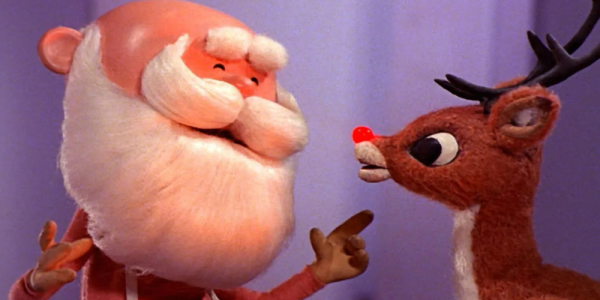
Santa is often remembered as the character who recognizes Rudolph’s value, but his earlier behavior is less admirable. When Rudolph’s nose is revealed at the reindeer games, Santa does not defend him. He accepts the coach’s judgment and treats the glowing nose as an obstacle to sleigh participation.
I found this important because it prevents the community’s rejection from being blamed only on children. Authority figures help define which differences are considered unacceptable. Santa changes his position only when the weather creates a practical need. This makes the final invitation emotionally complicated. Rudolph receives respect, but much of it arrives after his usefulness becomes undeniable.
The Storm Changed the Entire Meta
The severe weather creates a problem that conventional reindeer skills cannot solve. Flying strength, navigation experience, and holiday preparation are meaningless if Santa cannot see the route. Suddenly, Rudolph’s nose is no longer a cosmetic abnormality. It is the only available visibility tool.
The environment does not change Rudolph. It changes how everyone evaluates him. In gaming terms, the update alters the meta overnight. An ability previously considered undesirable becomes essential for the main objective. I found this satisfying as a story payoff but slightly uncomfortable as a model of acceptance. Rudolph deserved kindness before the storm. The crisis proves his utility, not his humanity.
Rudolph’s Decision to Help Showed Real Growth
Rudolph could reasonably refuse Santa’s request. The same community asking for help had mocked him, excluded him, and allowed him to leave in shame. He agrees because Christmas affects people beyond the reindeer who mistreated him. Children are waiting, the misfit toys need homes, and the larger mission matters.
This decision makes him heroic. The nose provides the ability, but the choice provides the character. Rudolph does not lead the sleigh because he finally receives permission to exist. He leads because he decides to use his difference for people who need him.
The Sleigh Flight Was the Reward Screen Everyone Remembers
Rudolph moves to the front of the team, placing the feature he once tried to hide in the most visible position possible. The visual reversal is complete. The nose that caused exclusion now guides the entire Christmas mission.
I enjoyed the simplicity of the solution. Rudolph does not need a complicated training montage or new equipment. The ability has been available from the beginning. The change occurs in confidence, purpose, and social recognition. The flight also gives him a role based on something uniquely his. He is not replacing another reindeer by becoming more conventional. He contributes something the existing team cannot reproduce.
The Misfit Toys Finally Received Destinations
Santa’s visit to the island fulfills Rudolph’s promise and gives the toys a chance to be matched with children. I like that the toys are not repaired into standard designs before being distributed. Their unusual features remain. The solution is not transformation into conformity. It is finding recipients capable of valuing them. This makes the delivery more meaningful than simply clearing inventory from the island. Each toy has waited for evidence that a place exists where its difference will not cancel its purpose.
The Stop-Motion Style Gives the World Its Warmth
The handcrafted animation is central to the special’s identity. Snow, fur, fabric, wood, toys, buildings, and characters all appear physically constructed. Movement has a slight stiffness that modern animation might try to remove, but that texture gives the special much of its charm.
The environments resemble miniature holiday displays brought to life. Mountains, forests, workshops, and islands feel like places I could almost reach into and touch. From a gamer’s perspective, the world looks like a handcrafted adventure map where every prop has been built individually rather than generated from a large asset library.
The Character Designs Communicate Their Roles Immediately
Rudolph’s round face, small body, and glowing nose make him appear vulnerable and visually distinct. Hermey’s hairstyle and expression separate him from the other elves before he explains his ambition. Yukon’s large beard, equipment, and exaggerated movement communicate adventure. The Bumble’s scale identifies him as a physical threat. King Moonracer’s wings and formal presence establish authority.
The designs are simple enough for young viewers to read but specific enough to remain memorable decades later. Even the misfit toys communicate their problems visually. I understand why each has been rejected before receiving a complete explanation.
The Songs Function as Character Menus
The musical numbers often reveal what a character wants more efficiently than ordinary dialogue could. Rudolph’s loneliness, Clarice’s affection, Hermey’s career ambition, Yukon’s confidence, and the elf workshop’s routine all receive distinct musical identities.
I liked how the songs divide the story into emotional stages. They introduce locations, summarize conflicts, and make the characters’ goals easy to remember. Some songs carry more narrative importance than others, but the overall structure gives the special the feeling of a storybook campaign with musical checkpoints.
“A Couple of Misfits” Defines the Entire Party
The song shared by Rudolph and Hermey works because neither character has solved the problem when they sing it. They are still outside the communities where they began. What they gain is companionship and a new way to describe themselves.
Calling themselves misfits could sound like accepting an insult. Instead, the label becomes a basis for solidarity. They recognize that being mismatched with one environment does not mean being without value everywhere.
The Special Shows Its Age in Complicated Ways
Some dialogue, relationship dynamics, and authority figures reflect the period in which the special was produced. Donner’s approach to Rudolph, Santa’s early reaction, and certain gender expectations can feel harsher or narrower when viewed now. I do not think these elements remove the story’s value, but they affect how I interpret it.
The special wants to celebrate difference, yet much of Rudolph’s acceptance arrives only after his difference becomes useful to the dominant group. That tension makes the story more interesting rather than completely undermining it. I can appreciate the emotional message while recognizing its limitations.
Acceptance Based on Utility Is Not Complete Acceptance
The central victory is satisfying because Rudolph finally receives respect and a meaningful role. However, the timing raises an important question. Would the reindeer have apologized if the weather had remained clear?
The story does not fully answer this. Rudolph becomes celebrated because the community needs his nose. Clarice, Hermey, and his family provide more personal forms of connection, though even the family initially participates in hiding the trait. For me, the stronger lesson is not simply that every difference will eventually become useful. Some differences may never solve a global crisis. People still deserve dignity before their value becomes profitable or convenient.
Rudolph Never Needed His Nose Fixed
Many characters initially behave as though the glowing nose is a defect requiring concealment. No actual cure is discovered because none is necessary. The story changes the social interpretation of the trait rather than the trait itself.
This is one reason the final image remains powerful. Rudolph leads openly. The nose is no longer covered, dimmed, or treated as embarrassing. His journey is not about becoming normal. It is about no longer allowing other people’s definition of normal to determine whether he participates.
Why I Still Follow the Red Light
I return to Rudolph the Red-Nosed Reindeer because its world is visually comforting while its central conflict remains emotionally recognizable.
Rudolph, Hermey, the misfit toys, and even the Bumble are all judged according to whether they fit a predefined role. The story gradually creates new contexts where their differences can exist without apology.
From my perspective as a gamer, the special follows a party made from characters rejected by the default class system. Rudolph has a glowing navigation ability. Hermey has a medical specialization. Yukon possesses exploration skills and fearless confidence. The misfit toys have unusual designs that require different users rather than deletion.
The final mission succeeds because the party does not abandon those traits.
Rudolph’s nose is the most visible symbol, but the story’s emotional power comes from something less spectacular: the relief of meeting someone who does not require concealment.
Clarice offers that acceptance. Hermey shares it. The Island of Misfit Toys expands it into a community. Santa and the other reindeer arrive at it late, after circumstances force them to reconsider.
The special remains hopeful because Rudolph does not become cruel after rejection. He has every reason to refuse the community that hurt him, yet he chooses to guide the sleigh and remember the toys still waiting for homes.
His heroism is therefore larger than a glowing nose. It comes from using the very difference that caused his loneliness to create a path for other outsiders.
Rudolph begins the story trying to hide his light. He ends it using that light so nobody else is left behind in the storm.
Pros:
- Timeless holiday narrative with a strong message of acceptance and self-worth
- Classic animation style that emphasizes handcrafted artistry and charm
- Memorable character development that resonates with viewers of all ages
- Kid-friendly content with a G rating suitable for family viewing
- Engaging soundtrack that enhances the emotional and festive atmosphere
- Wide availability on various streaming and download platforms ensuring easy access
Cons:
- Animation and visual effects may seem dated compared to modern CGI techniques
- Simplistic storytelling techniques might not appeal to viewers seeking complex plots
- Pacing issues in certain segments due to the style and era of production






Movie Reviews

Minecraft

Grand Theft Auto V

Toca Boca World

Roblox

Leave a comment
Your comment is awaiting moderation. We save your draft here
0 Comments